
Can a Durable Chicken Feeder Pan Reduce Feed Waste in Large-Scale Poultry Production Systems?
Yes — a durable chicken feeder pan can meaningfully reduce feed waste in large-scale poultry production. Research from Wageningen University indicates that feed accounts for 60–70% of total poultry production costs, and poorly designed feeders can waste up to 30% of distributed feed through spillage, contamination, and billing behavior. A well-engineered feeding pan with anti-spill grills, adjustable depth settings, and food-grade materials controls these losses directly at the point of consumption. For commercial poultry operations managing tens of thousands of birds, this translates into measurable cost recovery and improved feed conversion ratios (FCR).
Understanding Feed Waste in Poultry Production: Causes and Consequences
One of the highest costs in industrial chicken farming is the waste of feed. It helps to know where the losses are coming from before thinking about how to fix them.
Primary Causes of Feed Spillage
A lot of birds scratch and eat out of pans with shallow or wide edges. This behavior gets worse very quickly in high-density broiler or layer houses. If the feeder pan is too low, it will collect litter and droppings, which will make the food even less safe to eat, so farm workers will have to throw away the dirty parts.
Contamination and Disease Risk
Infection-causing germs like Clostridium perfringens and coccidia can grow on wet or dirty feed that is left on the floor. The Poultry Science Association says that coccidiosis outbreaks caused by dirty litter are still the main reason why floor-rearing systems lose money. This is because of poor hygiene management at the feeders.
Financial and Environmental Impact
Wasted feed not only raises the cost of inputs, but it also causes runoff of too much nitrogen and phosphorus, which could mean fields don't follow EPA rules about agricultural discharge. In the US, operations that take care of groups of more than 125,000 birds are regulated as CAFOs, and waste from feed directly affects environmental responsibility.
Why Durability Matters: Features of an Effective Chicken Feeder Pan?
It's not just about price when choosing the right feeder pan. Whether a pan manages trash or adds to it depends on the quality of the materials used, the shape of the design, and how well it cleans.
Material Quality and Corrosion Resistance
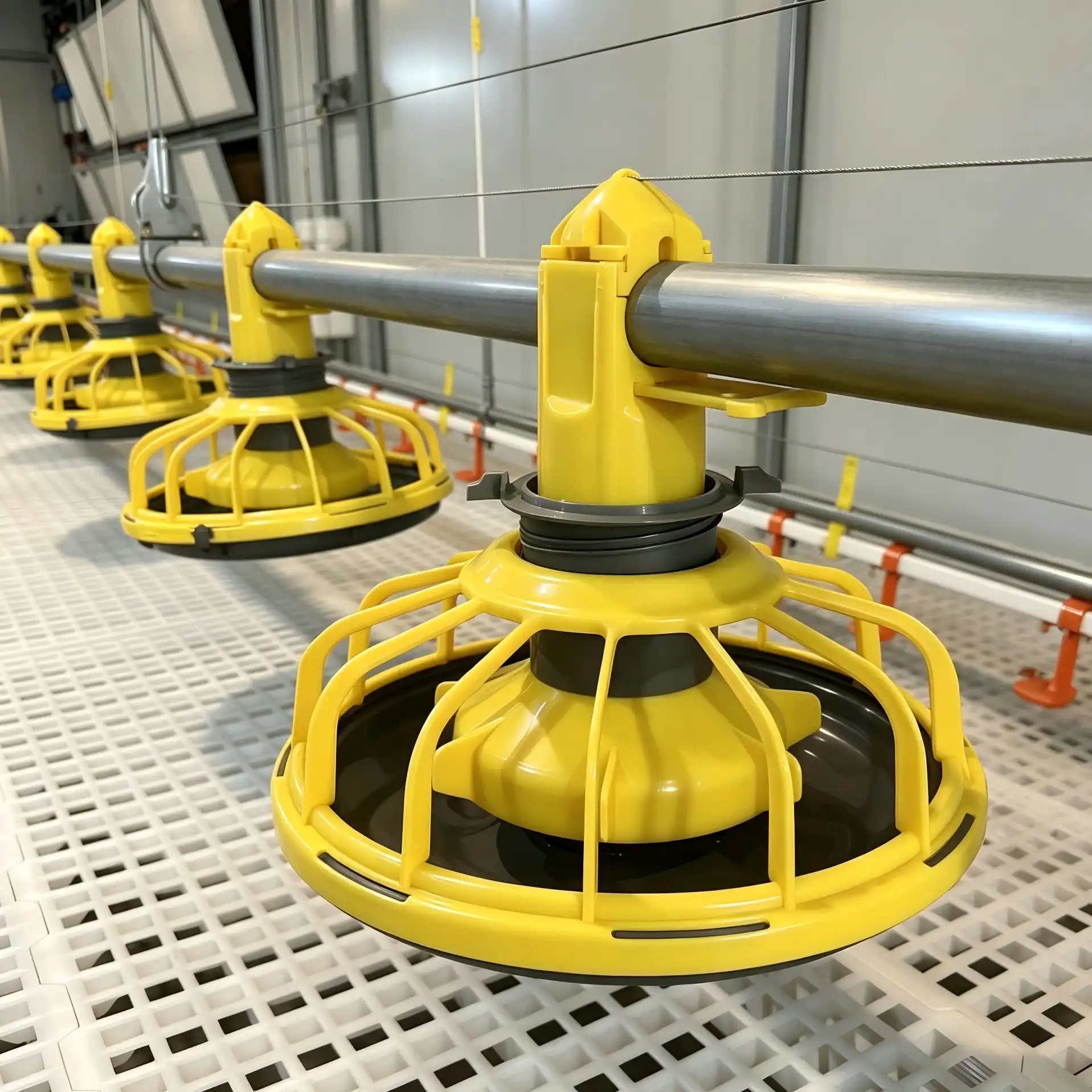
High-impact virgin polypropylene (PP) is the standard material for chicken food pans right now. In contrast to recovered plastics, pure PP doesn't break down when exposed to disinfectants like glutaraldehyde and chlorine-based solutions. Its non-porous finish stops biofilm from forming, which is important between flock rounds when biosecurity cleaning rules are used.
Anti-Waste Design Geometry
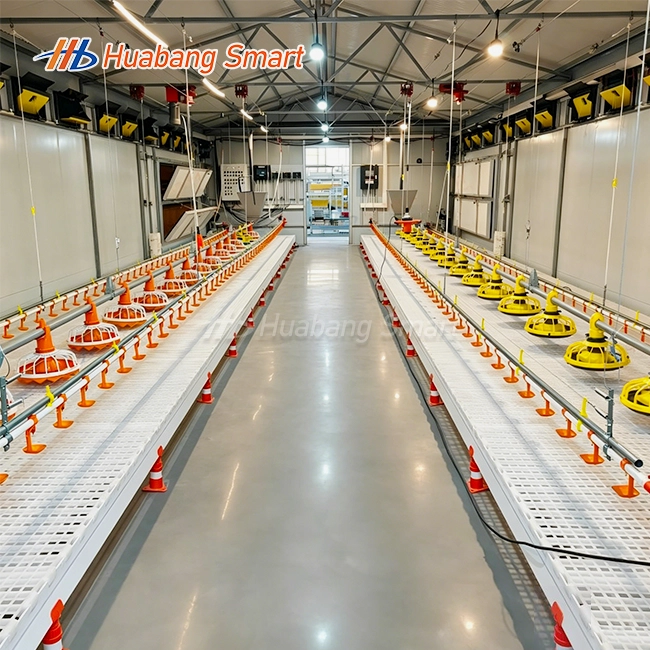
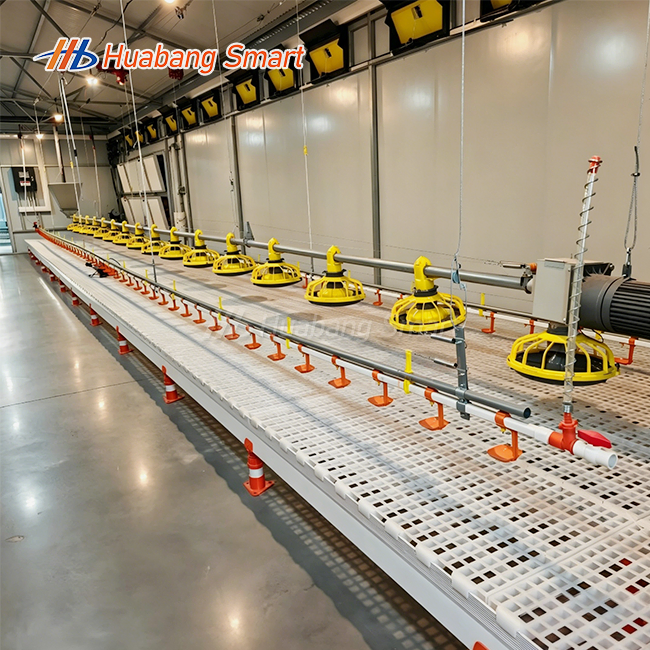
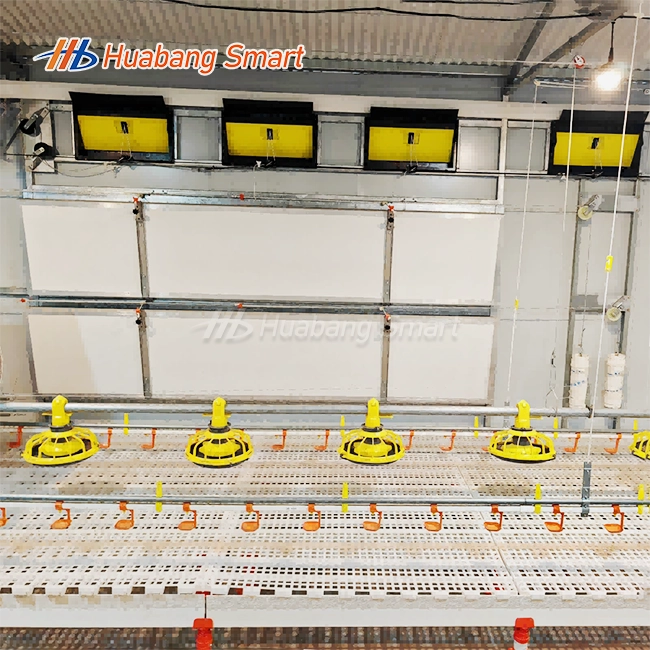
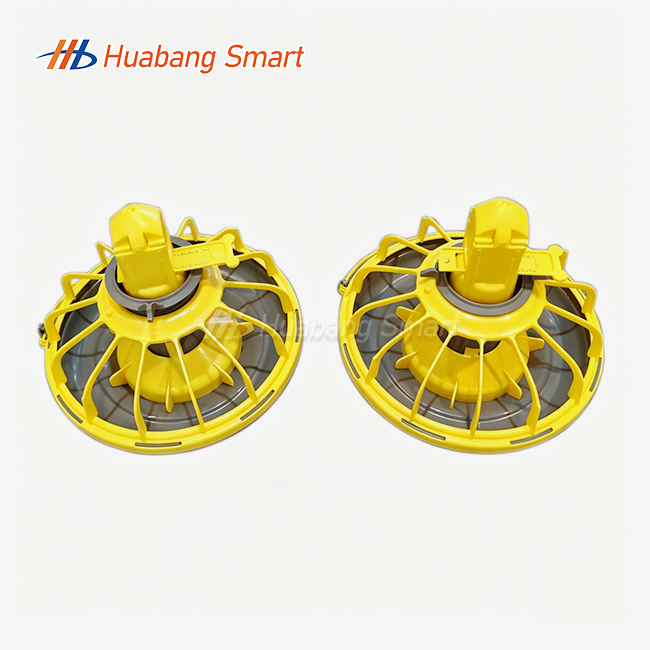
A Chicken Feeder Pan's diameter, rim height, and grill space all work together to cut down on billing waste. A 16-cell grill design, like the one used in Huabang Smart's Pan Feeding System, divides the pan into controlled feeding areas so that each bird doesn't have to move as much food. The 330mm pan width gives birds of all kinds enough room to get to the food without leaving extra surface area unattended.
Ease of Cleaning and Maintenance
A pan that is harder to clean is cleaned less often. Flock-to-flock biosecurity can be supported by swing-down or open-bottom pan designs that allow full drainage during high-pressure washing without having to disassemble the pans in a very labor-intensive way. Maintenance downtime is also cut down with feeder systems that have fewer mechanical parts at the pan level.
Comparative Analysis: Durable Chicken Feeder Pan vs. Alternative Feeding Solutions
Not every feeding system works the same way at different production levels. It's easy to see how durable feeder pans stack up against other options:
- Trough feeders: Inexpensive upfront but generate significantly higher spillage due to open access. Pest contamination is harder to prevent, and cleaning requires manual wiping across extended surfaces.
- Portable pan feeders: Provide scheduling flexibility for small operations but are not cost-effective at scale. They require regular repositioning and do not integrate with automated feed delivery lines.
- Chain feeding systems: Common in layer operations, they distribute feed continuously but offer limited per-bird intake control and require frequent tension adjustments.
— Feeders in troughs: Not expensive at first, but they cause a lot more spillage because they are easy to get to. It's harder to keep pests from getting in, and cleaning involves wiping long areas by hand.
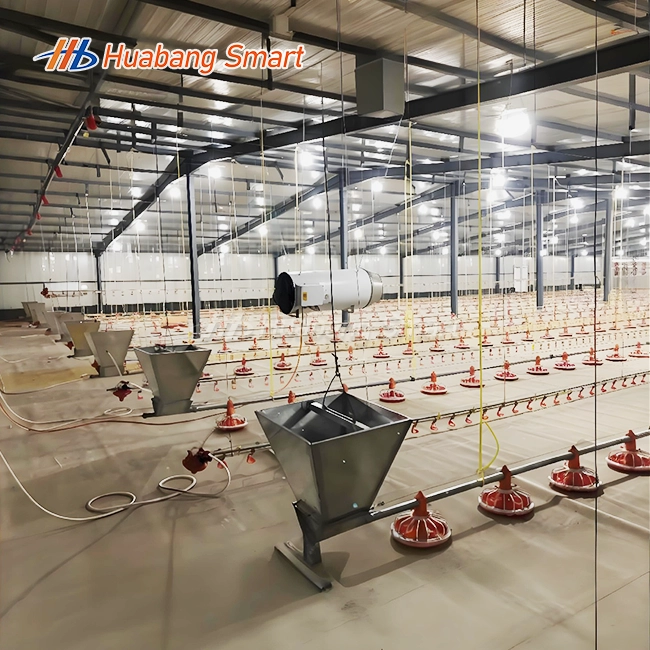
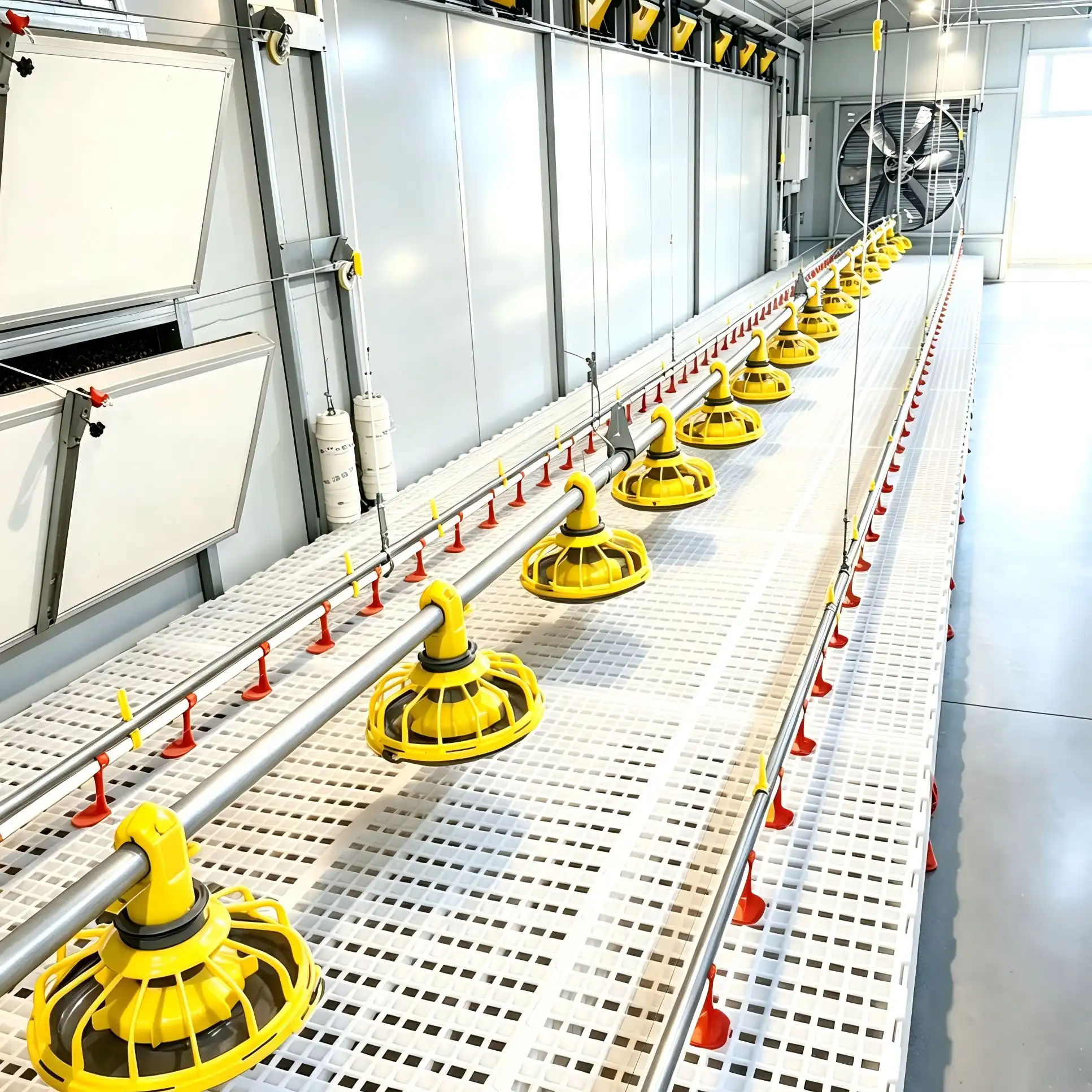
Fully automated feeder pans, especially those that are built into auger-driven distribution lines, are the best way for commercial-scale operations to control waste, make sure flocks are uniform, and cut down on labor. The Pan Feeding System from Huabang Smart is a good example of this type. It can send up to 1,400 kg of feed per hour through a 75mm PVC feed pipe, which means it can cover big homes without any help from a person. The auger drive technology gets rid of dead spots in the feed line. This keeps a flock's growth from being uneven and lowers the feed adjustment margin that farmers usually include to make up for uneven distribution.
Best Practices to Maximize Feed Efficiency with Durable Chicken Feeder Pans
The quality of the equipment does not guarantee results on its own. How feeders are set up and kept affects how much money is saved.
Correct Pan Height and Placement
The hoop height should match the bird's crop level at each stage of growth. When birds get bigger, Huabang Smart's high-precision winch system changes the pan height all the time, making it easier for them to reach and spreading out food. If the pan is too low, it collects trash. If it's too high, birds have to strain, and bills eat outward.
Routine Cleaning Schedules
Each Chicken Feeder Pan should be taken apart completely, washed with high-pressure water, and dried before being put back together. Because Huabang Smart's pans are made from food-grade fresh PP, they can withstand harsh disinfectant routines without cracking or discoloring. This means that between production rounds, there is a full biosecurity restart.
Smart System Integration for Feed Monitoring
When workers connect feeder pans to timed control systems, they can set exact feeding windows instead of having to run continuous feed lines. The Huabang Smart Pan Feeding System has control modules that let farmers set feeding times and keep an eye on data. This lets them know how much food the animals are eating so they can change their feed based on their growth stage. This method, based on data, cuts down on overfeeding, which is a common cause of waste on the floor of broiler grow-out facilities.
Procurement and Supply Considerations for Durable Chicken Feeder Pans
There are more than just unit price that procurement teams look at when they are choosing feeder pan suppliers.
Supplier Certifications and Manufacturing Standards
For industrial poultry equipment to join the U.S. or European markets, it must first be certified by ISO 9001 and meet CE standards. These certifications show that manufacturing tolerances and material quality control are always the same. Huabang Smart has both ISO 9001 and CE approvals, as well as 49 key technology patents that show that their production is consistent.
Customization and System Compatibility
Different farmhouses have different widths, ceiling heights, and the way their feed lines are set up. One-size-fits-all products are hard to integrate, which slows down commissioning and costs more money. Huabang Smart works with both OEM and ODM designs, changing the pipe width, pan height range, and control compatibility to fit with the system that is already in place. Their pan system is easy to set up and expand in the future because it is made of lightweight, flexible pieces.
Total Cost of Ownership vs. Unit Price
Over a five-year production cycle, a cheaper pan that breaks down in 18 months costs more than a brand-new PP pan that has been used for more than 8–10 years. When making a budget for buying feeder pans, you should include how often they need to be replaced, how long they will be down while they are being replaced, and the cost of feed waste caused by worn or broken pans. The Pan Feeding System from Huabang Smart comes with a 1-year guarantee and after-sales support, which lowers the risk during the initial installation time.
Conclusion
Large-scale chicken farming has a cost that can be controlled: feed waste. The Chicken Feeder Pan is one of the easiest places to do this. When pans are properly designed, they have anti-waste grills, food-grade materials, changeable height systems, and smart integration that stop spills and poisoning before they happen. When purchasing managers and farm operators look at upgrades, automated, long-lasting pan systems are always shown to be the most cost-effective way to increase FCR and lower operational losses.
FAQ
How many birds can one 330mm feeder pan serve?
Industry guidelines recommend one feeder pan per 35–50 broilers during the finisher stage. A 330mm pan with 16 feed cells, like the Huabang Smart model, provides adequate access points to reduce competition and crowding stress at feeding time.
Can feeder pans be used for both broilers and layers?
Yes. Huabang Smart's Pan Feeding System is designed for broilers, chickens, and layers. Pan depth and grill adjustment allow operators to configure access based on bird size and feed type.
What is the minimum recommended feed pipe diameter for large-scale houses?
A 75mm diameter PVC feed pipe, as used in Huabang Smart's system, supports high-volume throughput up to 1,400 kg/h — sufficient for large commercial houses without flow restriction.
How often should feeder pans be replaced?
Virgin PP pans typically last 8–10 years under standard operating conditions. Replacement is usually triggered by grill wear, cracking from UV exposure, or biofilm accumulation that cleaning cannot resolve.
Does pan height adjustment require shutting down the feeding line?
No. Huabang Smart's winch-based height adjustment operates independently of the feed auger, allowing height changes during active production without interrupting feeding cycles.
Partner With Huabang Smart for Proven Feeding Pan Solutions
Since 2012, Huabang Smart has helped chicken farms in more than 100 countries. Our Pan Feeding System is made from food-grade fresh PP and has a 330mm 16-cell pan with a feed capacity of 1,400 kg/h and smart control integration. It was designed to cut down on waste and make flocks more regular. As a reputable Chicken Feeder Pan maker, we offer full customization, help with installation, and certified service after the sale. To get a detailed plan for your business, email our team at admin@huabangsmart.com or go to poultrycage.com right now.
References
1. Wageningen University & Research. (2022). Feed Efficiency in Poultry Production: Economic and Environmental Drivers.
2. Poultry Science Association. (2021). Coccidiosis Management in Commercial Broiler Flocks: Litter Quality and Disease Incidence.
3. U.S. Environmental Protection Agency. (2023). CAFO Regulations and Agricultural Nutrient Management Guidelines.
4. North, M. O., & Bell, D. D. (2019). Commercial Chicken Meat and Egg Production (6th ed.). Springer Science & Business Media.
5. Aviagen Group. (2022). Ross Broiler Management Handbook: Feed Management and FCR Optimization.
6. Journal of Applied Poultry Research. (2020). Impact of Feeder Design on Feed Wastage and Growth Performance in Broiler Chickens. Oxford University Press.

USER EVALUATE
Here is the customer's evaluation of us