



Chicken Feeder and Waterer Placement for Less Feed Waste and Spillage
Proper placement of a chicken feeder and waterer system is one of the most direct ways to cut feed costs and reduce water waste on a commercial poultry farm. Research from the University of Georgia Cooperative Extension shows that feed accounts for 60–70% of total poultry production costs, meaning even a 5% reduction in feed waste produces measurable savings at scale. Strategic positioning — based on bird height, flock density, and barn layout — determines how much feed actually reaches the bird versus the floor. This guide gives procurement managers and farm engineers a practical framework for making placement decisions that protect both flock health and operating margins.
Understanding the Problem of Feed Waste and Water Spillage
Losses of feed and water are not random; they happen in predictable ways that are linked to where the equipment is placed and how the system is designed. By getting to the bottom of the problems, buying teams can choose the right tools and make models that cut down on waste from the start.
Why Height Matters More Than Most Operators Realize
Birds scratch and lick food off of the litter when feeders are too low. Younger birds can't get to drinks that are too high up, so they dry out. To keep food from spilling, the National Chicken Council says to put feeder pans at the height of the bird's back. On farms that have to fix things by hand, a lot of the daily feed loss is due to incorrect height.
How Flock Behavior Drives Spillage?
Chickens eat other chickens to get food. When there are a lot of birds in an area, they crowd around eating spots and push food away. Open-trough waterers let birds peck, splash, and poop on the water. You can't control these behaviors with punishment alone; the design and placement of the tools need to direct behavior toward efficient use.
The Cost Impact on Commercial Operations
It costs 100 kg per day for a group of 50,000 broilers to waste just 2 grams of feed per bird. That's 4,200 kg of lost feed per house over the course of 42 days. At the current price of corn-soy feed in the U.S., that loss can be more than $1,500 per cycle per house, and that amount adds up quickly for operations with more than one house.
Key Principles for Effective Poultry Feeder and Drinker Placement
It's not enough to just choose a good placement once. It needs to be changed often because birds grow and the weather changes with the seasons.
Match Equipment Height to Growth Stage
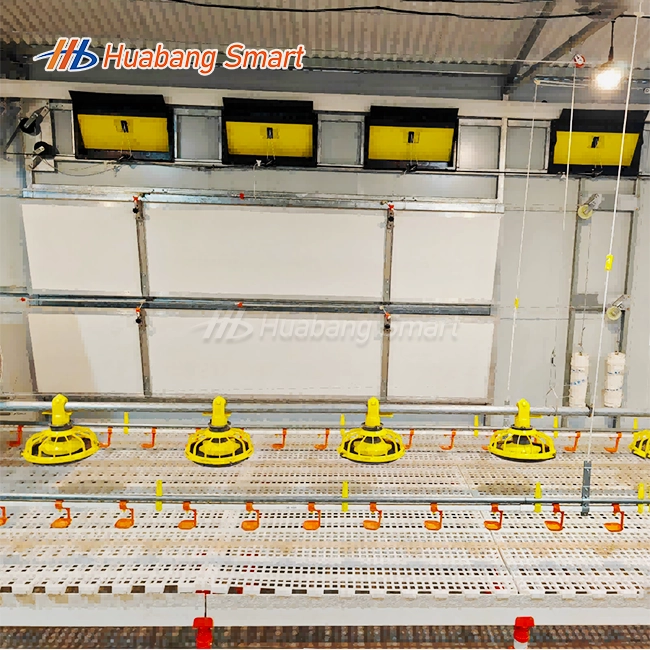
During the broiler grow-out, the feeder and drinker height should be checked and changed at least once a week. When it comes to nipple drinker devices, the trigger point should be at eye level for most of the group. The tip of a pan feeder should line up with the back of the bird. When this one change is made regularly, it lowers both feed scatter and neck strain at the same time.
Distribute Points Evenly Across the House
Grouping feeding and watering equipment together causes traffic jams that make things more competitive, stressful, and messy. One nipple drinker should be there for every 12 to 15 birds in a broiler house, and the lines should be evenly spaced across the whole width of the house. Even distribution cuts down on waste caused by aggression and helps the flock grow evenly.
Separate Feed and Water Zones Strategically
If you put the drinker lines right above the feeder pans of a Chicken Feeder And Waterer, water will drip into the feed, making it go bad faster and encouraging mold growth. Leaving at least 30–45 cm of space between feeder pans and drinker lines greatly lowers the chance of feed contamination, which keeps the feed's nutritional value and lowers the number of times it is thrown away.
Types of Poultry Feeding and Watering Systems and Their Placement Guidelines
Understanding how different system types behave in practice helps engineering teams specify the right equipment for each house configuration.
Nipple Drinker Systems
Nipple drinker lines are the current standard in commercial broiler and layer production. The Huabang Smart nipple drinker system uses 304 stainless steel triggers with 360° activation, meaning birds can drink from any angle without wasting water. Each unit supports 12–15 chickens, and the closed-loop architecture prevents contamination from dust, fecal matter, and feed particles. Flow rates are adjustable from 0.3 to 2.5 L/min for standard applications, with configurations scaling to 10–20 L/min for high-density operations.
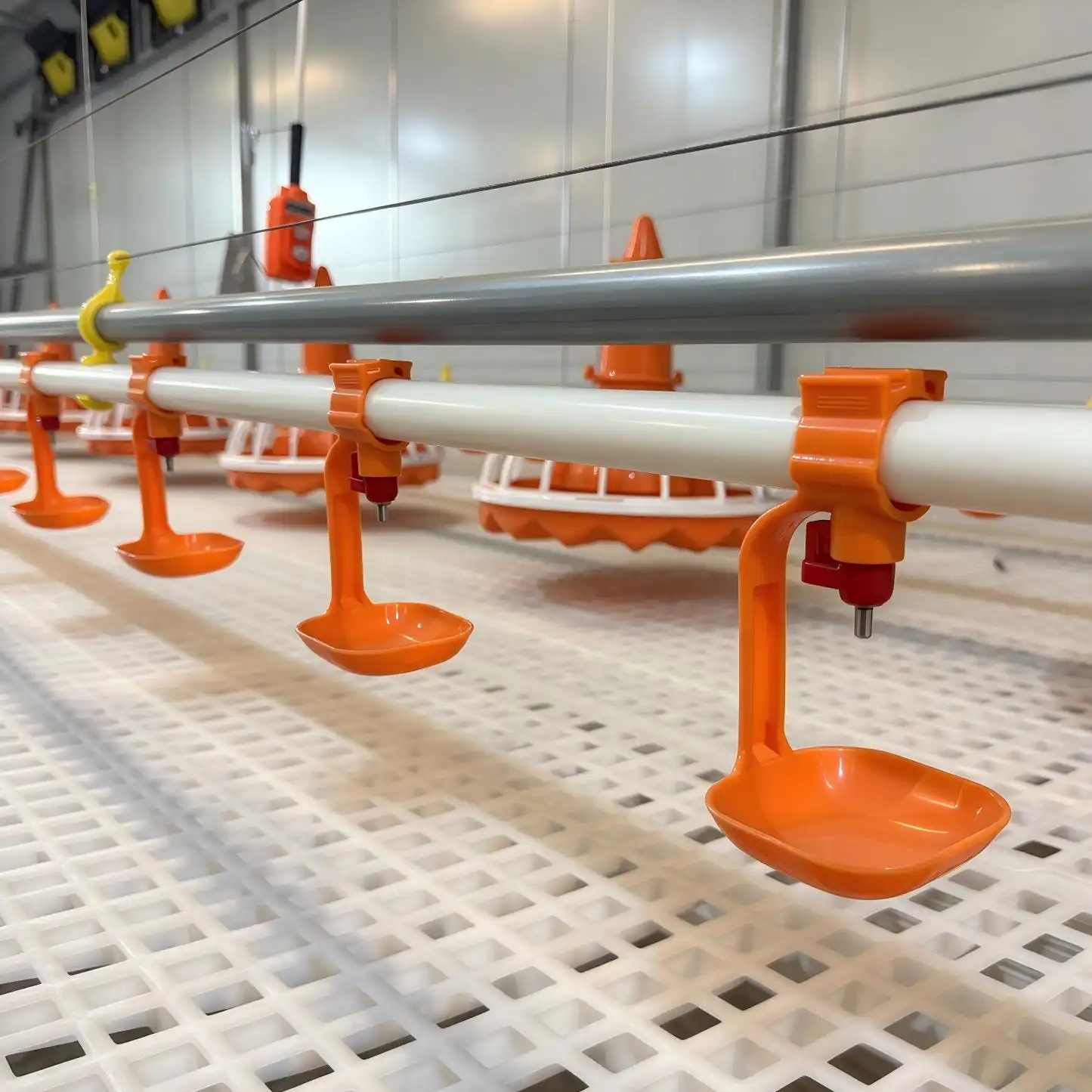
Here are the core technical parameters of the Huabang Smart nipple drinking system:
- Material: 304 stainless steel — corrosion-resistant for 5+ years in high-humidity barn conditions
- Bird capacity: 12–15 chickens per nipple, suitable for broilers, layers, and breeders
- Trigger design: 360° activation — releases water only when a bird activates the trigger, preventing passive dripping
- Flow rate options: 0.3–0.8 L/min / 1.5–2.5 L/min / 10–20 L/min, adjustable by production stage
- Pipeline material: Corrosion-resistant PVC/PP, with customized layout configurations available
These features work together to reduce water consumption by over 30% compared to conventional open-trough systems, which directly lowers litter moisture levels and ammonia buildup — two of the most damaging environmental factors in enclosed poultry housing.
Pan Feeder Systems
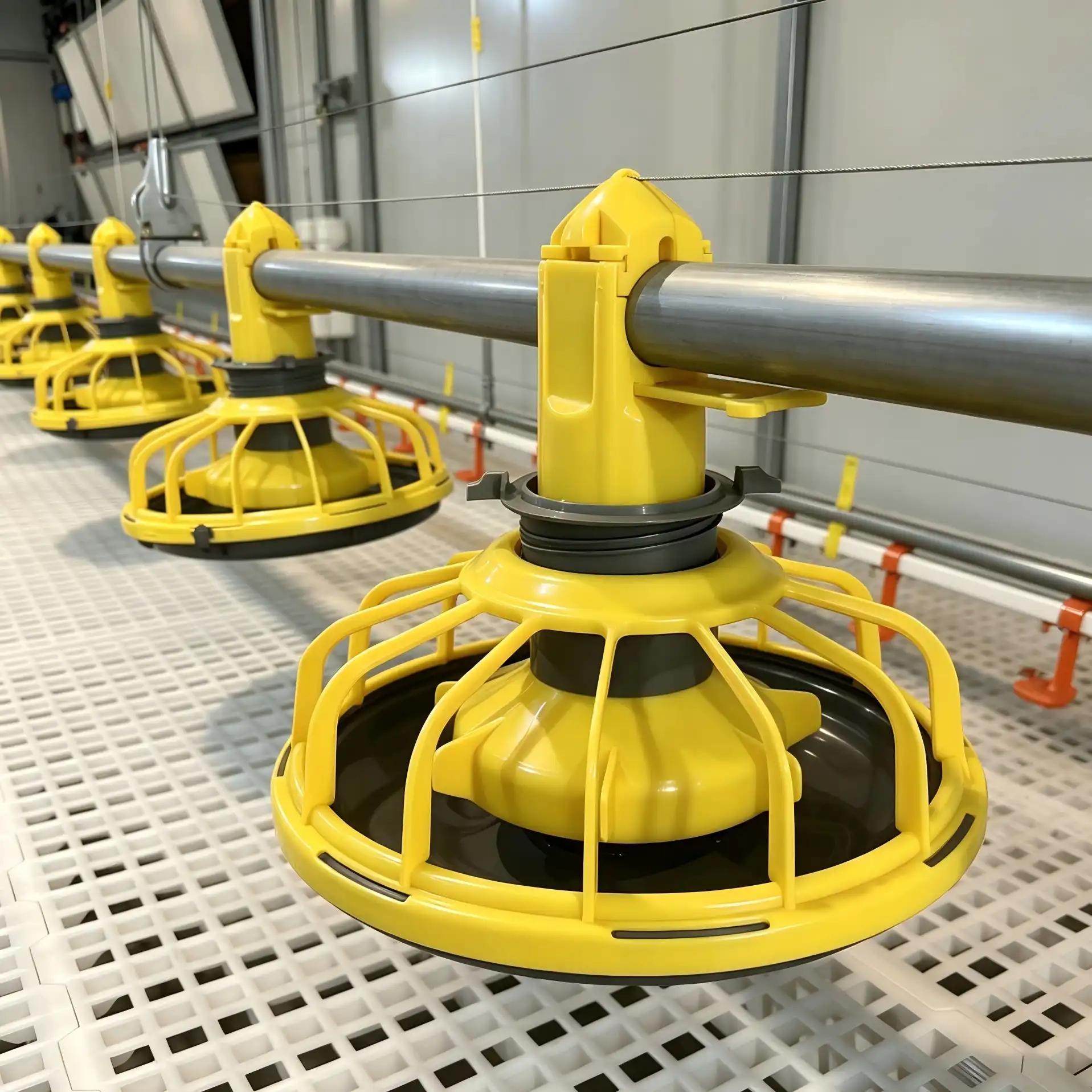
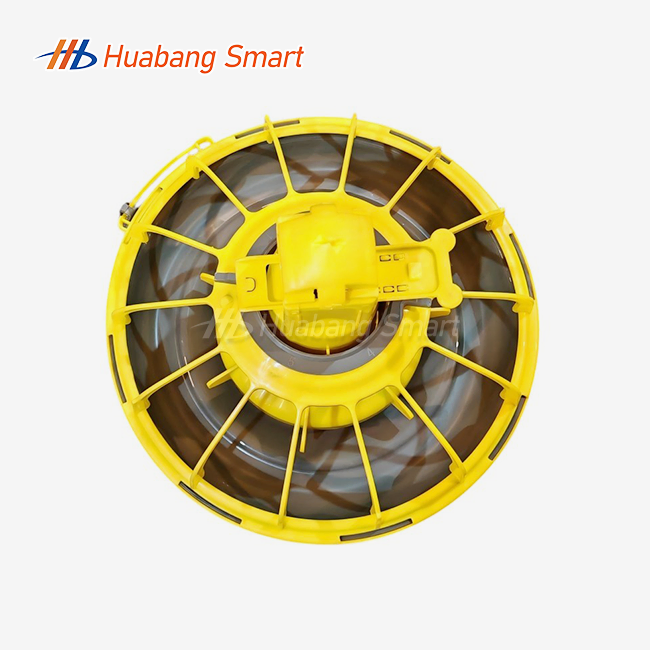
Automated pan feeders deliver measured feed portions from a central auger line, reducing manual labor and overfeeding. Fixed positioning along a feed track ensures consistent delivery intervals. The key placement rule for pan feeders is to keep them at back height and verify alignment after each height adjustment during the grow-out cycle.
Manual and Trough Systems
Manual trough feeders remain common in smaller operations or in regions with limited automation infrastructure. These require more frequent monitoring and adjustment. They are prone to contamination from fecal matter and rain in open housing. Elevated mounting with anti-roost collars and drip guards reduces contamination risk when automated options are not yet installed.
Practical Steps to Minimize Feed and Water Losses Daily
Operating procedures that are always followed protect the money that was spent on good tools and placement.
Inspect and Adjust Heights Weekly
A weekly check of the bird's height on a Chicken Feeder And Waterer stops waste from building up as the birds get bigger. Write the weekly target heights on the poles or suspension cables so that farm workers can check the settings without having to guess. Keeping track of changes also helps future flock planners figure out which stages of growth produce the most waste.
Install Drip Trays and Anti-Splash Guards
Drip trays under the nipple lines catch any passive drips that happen when the pressure changes. Anti-splash cups around the nipple triggers stop water from spraying out to the side while you're drinking. Both additions are inexpensive changes that make a noticeable difference in the amount of moisture in the litter within a week of being put in.
Monitor Flock Behavior as an Early Warning System
Birds that gather in one part of a drinker line mean that there is a blockage or uneven pressure in another part. Birds that avoid a feeder pan are a sign of a problem with the mechanism or with the feed. Behavioral observation is a free monitoring tool that can stop small daily losses that add up to big monthly costs if it is used right away.
Procurement Considerations for Poultry Feeding and Drinking Equipment
It's not just about unit price when choosing a provider. When making big purchases, you need to think about how long the system will last, how customizable it is, and how much help is available after the sale.
Evaluate Material Standards Against Barn Conditions
Every day, ammonia, water, disinfectants, and physical damage are put on equipment in barns. The structure of equipment made from 304 stainless steel nipple parts and UV-stabilized PVC pipelines stays strong for more than 5 years of use. Before approving a supplier, procurement teams should ask for material certifications and data from accelerated weathering tests.
Prioritize Suppliers with Custom Engineering Capability
The layout of two barns is never the same. If a supplier offers customized pipeline design, they will make a system that fits the exact size and flock density of each home instead of forcing a standard layout onto a space that isn't standard. Because of this, Huabang Smart's engineering team includes full plan design, installation instructions, and video help with every project.
Assess Total Cost of Ownership, Not Unit Price
A cheaper unit that needs to be replaced often or makes a lot of water and feed waste costs more over five years than a better system that has been shown to last longer. To find the total value of procurement, you should add up the savings in work, the better conversion of feed, and the lower prices of veterinary care.
Conclusion
Putting the Chicken Feeder And Waterer in the right place is a technical choice that has direct cost effects. Getting the height, spacing, and system design right from the start cuts down on wasteful feeding, water use, and litter conditions. It also helps the health of the flock throughout the entire production cycle. The numbers always show the same thing: systems that are well-placed and well-designed pay for themselves through lower input costs and higher outputs. The best returns on infrastructure investments are seen by procurement teams that think of choosing and placing tools as an integrated engineering problem instead of a simple buying checkbox.
FAQ
What height should a nipple drinker be set at for broilers?
Set the nipple trigger so that it is about eye level for the majority of the birds in the group. On average, this means that the drinker sits at an angle of 35 to 45° when a bird of average size reaches up to drink. As the birds get bigger during the grow-out cycle, you should change the height at least once a week. One of the main reasons for passive water dripping and wet litter formation is the wrong height.
How many nipple drinkers does a commercial flock need?
For broiler and layer farms, one nipple drinker for every 12 to 15 birds is the norm. That's about 1,400 to 1,700 nipple units for a house with 20,000 birds. Huabang Smart's system is especially made to meet these density requirements. Under standard production conditions, each nipple can hold up to 15 chickens.
Can nipple drinker systems work in both cage and floor-rearing setups?
Yes. Modular nipple drinker systems with adjustable suspension hardware can be used in cage rows, floor-rearing pens, and aviaries with more than one level. It is important to make sure that the pressure and flow rate of the pipes fit the shape of the installation. Huabang Smart can make custom pipeline layouts for any type of housing, and their snap-fit connectors make it possible to make changes in the field without using any special tools.
How does a sealed nipple system reduce disease transmission?
With closed-loop delivery, exterior pollutants like feces, dust, feed particles, and pathogens in the air can't get into the water supply. Open troughs, on the other hand, get biofilm and algae within hours of being filled. A precision nipple system's sealed design keeps the water clean between cleaning processes, lowering the number of pathogens birds are exposed to every day.
Upgrade Your Poultry Operation with Huabang Smart's Chicken Feeder And Waterer Manufacturer Solutions
For more than 17 years, Huabang Smart has sold commercial-grade equipment for feeding and watering chickens to farms in more than 100 countries. Our Chicken Feeder And Waterer systems are made of 304 stainless steel components, are ISO9001 and CE certified, and are delivered within 30–60 days with full installation support. You can get a custom layout proposal for your farm by emailing our technical team at admin@huabangsmart.com or going to poultrycage.com.
References
1. Fairchild, B. D., & Ritz, C. W. (2012). Poultry Drinking Water Primer. University of Georgia Cooperative Extension Bulletin.
2. North, M. O., & Bell, D. D. (1990). Commercial Chicken Production Manual (4th ed.). Van Nostrand Reinhold.
3. Lott, B. D., & May, J. D. (1984). Feed and water consumption patterns of broilers at high environmental temperatures. Poultry Science, 63(7), 1346–1350.
4. Xin, H., & Puma, M. C. (2001). Drinking water quality for poultry. Iowa State University Extension Publication.
5. Aviagen Group. (2022). Ross Broiler Management Handbook. Aviagen Ltd.
6. Mench, J. A., & Tienhoven, A. V. (1986). Farm animal welfare. American Scientist, 74(6), 598–605.

USER EVALUATE
Here is the customer's evaluation of us
YOU MAY LIKE
 VIEW MOREH Type Layer Chicken Cage
 VIEW MOREChicken Coop Feeder And Waterer
 VIEW MOREChicken Feeder And Waterer Set
 VIEW MOREPoultry Chicken Feeder
- VIEW MORECommercial Chicken Feeders
 VIEW MOREAutomatic Chicken Cage For Broiler
 VIEW MOREAutomatic Broiler Chicken Cage
 VIEW MORECooling Pads For Poultry Houses