
Chicken Tractor for Egg Layers: Ventilation, Shade, and Predator Protection
When managing a commercial laying flock, housing design directly affects egg yield, bird health, and operational costs. A well-engineered Chicken Tractor For Egg Layers addresses three factors that fixed coops consistently fail to manage: airflow, thermal regulation, and security against predators. This guide walks through what separates a high-performance mobile laying system from a standard enclosure, helping procurement managers and farm operators make decisions grounded in technical reality rather than guesswork.
Understanding Chicken Tractors for Egg Layers: Core Benefits and Design Principles
What Makes a Mobile Laying System Different?
Mobile chicken housing goes along a set path through pastures, while coops stay in one place. This keeps pathogens from building up in the soil, leaves grazing land with an even layer of nitrogen from the manure, and makes sure the hens can always get live food. A study by the American Pastured Poultry Producers Association found that hens that are kept in fixed runs have higher cortisol levels and less stable laying cycles than hens that are kept on pasture that is rotated.


Why Ventilation Is Non-Negotiable?
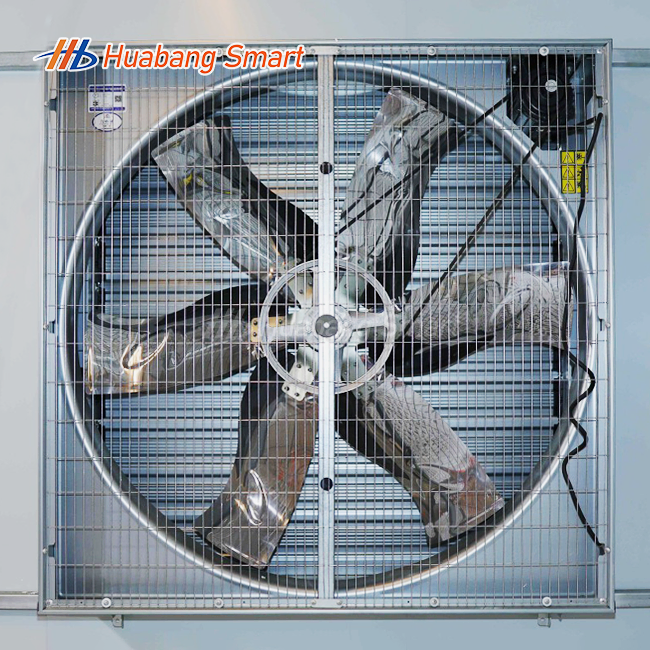
One of the easiest ways to make eggs is to make sure there is enough airflow. If there is more than 25 parts per million of ammonia around hens, it makes their stomachs hurt, and they eat less. Mesh side walls and an elevated center frame keep the air moving back and forth. For instance, Huabang Smart's 5cm higher center design creates a thermal chimney effect that moves warm air filled with ammonia up and out without any mechanical help.
Shade and Predator Security as Production Variables
There is a direct link between hens eating less and eggs being bigger and better when the temperature rises above 85°F. Panels on the roof that block UV rays keep the temperature inside between 65°F and 75°F, which is the perfect range. To keep people safe, raccoons, foxes, and weasels can't get in because of aluminum-zinc-coated mesh screens that can stand up to a 50-pound pull force. In the U.S., these animals often pose a threat to businesses that sell pasture.
How to Choose the Best Chicken Tractor for Egg Layers in 2024: Criteria and Comparisons
Sizing and Capacity Alignment
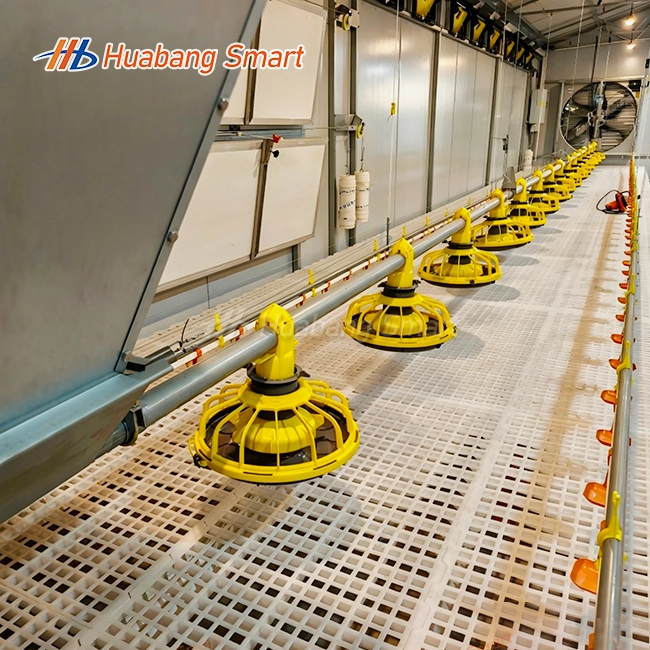
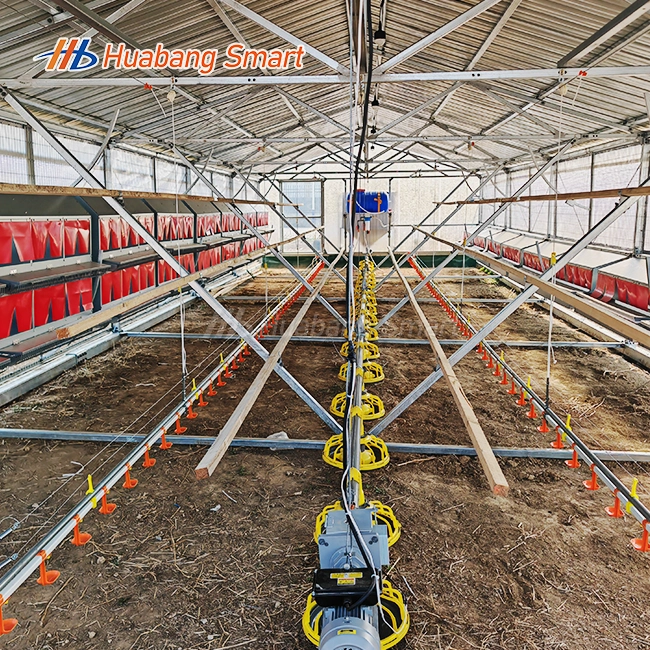
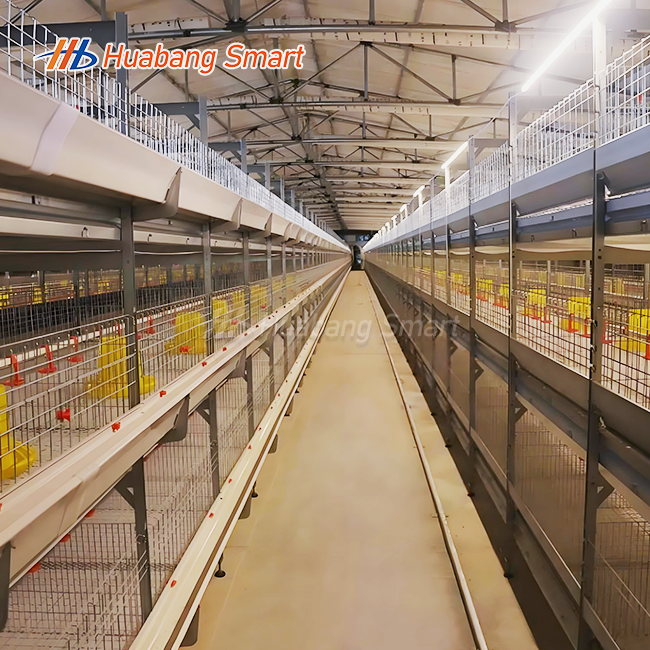
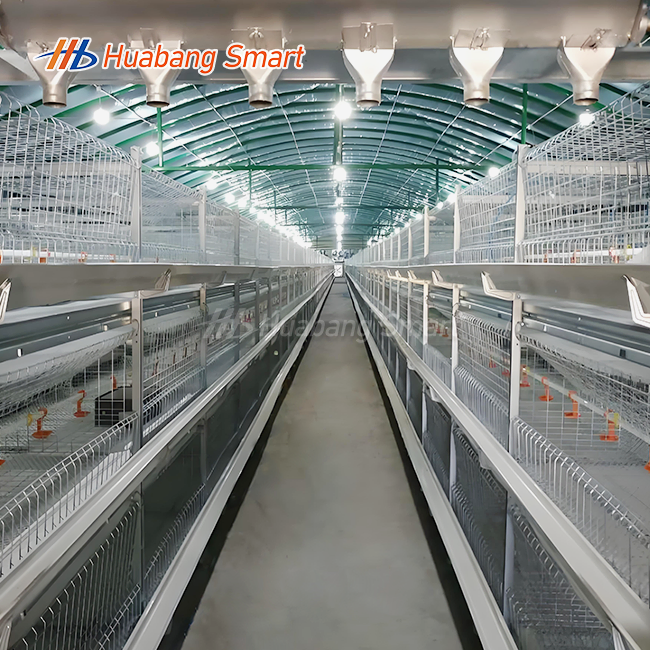
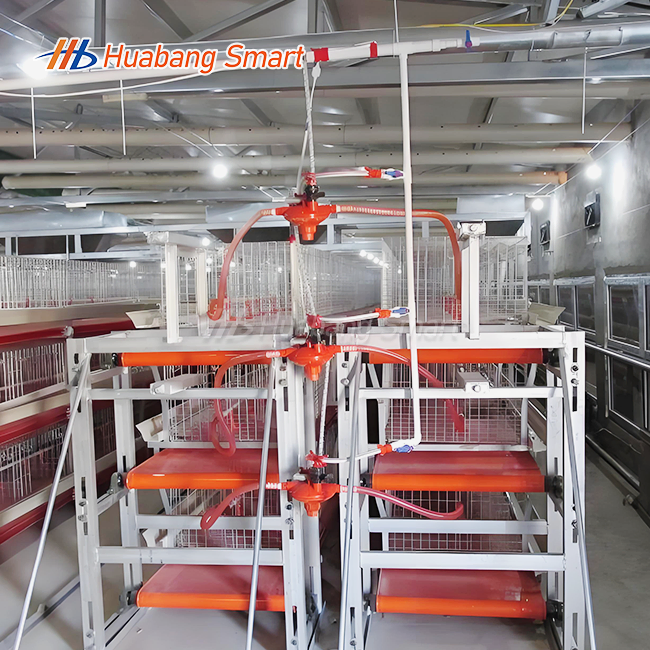
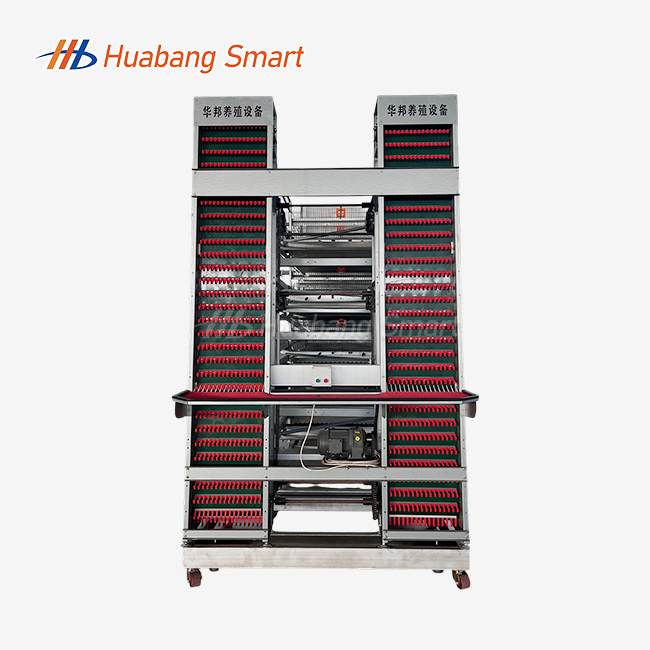
In the business, each hen gets four square feet of floor space in a mobile unit. Huabang Smart's H-type layer battery cage system can hold between 90 and 200 birds per set, and it can be set up with 3 to 8 levels of tiers. They can then make sure that the unit's capacity fits the flock size correctly without having to spend too much on extra floor space.
Mobile Laying Systems vs. Traditional Coops
Traditional fixed coops need to be deep cleaned more often, have a higher risk of disease spread from litter buildup, and need more work every day. All three of these issues are built into cell phones. The table below shows the difference in how they work:
- Labor Input: Mobile systems reduce daily labor by up to 80% through automated feeding, watering, egg collection, and manure removal.
- Biosecurity: Rotation breaks parasite cycles naturally, reducing the need for chemical treatments.
- Soil Management: Evenly distributed manure improves pasture fertility, replacing synthetic fertilizer inputs over time.
- Egg Quality: Hens foraging on diverse forage produce eggs with higher carotenoid content, resulting in deeper yolk color and stronger shells.
Spreading dung evenly on pastures with a Chicken Tractor For Egg Layers makes them more fertile, and over time, it replaces fertilizer that people make.
When hens eat a lot of different plants, they lay eggs with more pigments. This makes the yolks darker and the shells tougher.

Electric vs. Manual Mobility Models
Workers on farms can move heavy, multi-tiered units that aren't too heavy more easily with the help of electric movement systems. It costs less to set up manual methods, and they are less likely to break down. When taking care of more than 500 birds per unit, electric drive systems, flat-free tires, and wheels that can be greased work best for daily rotation compliance.
Implementing Chicken Tractors in Commercial Egg Production: Best Practices and Maintenance
Rotation Frequency and Pasture Management
According to studies from Penn State Extension, moving laying hens to a new field every one to three days keeps the quality of the forage at a level that works well with feed and stops the animals from overgrazing. Commercial farms use GPS-tracked rotation maps to figure out the best times for pasture recovery and to keep track of how the soil is getting better over time.
Structural Maintenance Protocols
A mobile laying unit will last a lot longer than most in its field if you take good care of it. To make sure it lasts a long time, here are the most important tests:
- Frame Inspection: Check all 275g hot-dip galvanized steel welds and joints quarterly for surface oxidation, particularly in coastal or high-humidity climates where salt exposure accelerates wear.
- Mesh Integrity: Inspect aluminum-zinc coated mesh panels monthly for deformation or separation at frame connection points; each joint should hold under at least 50 lb of lateral pull force.
- Ventilation Channels: Clear debris from the elevated center ventilation gap every two weeks to maintain consistent airflow and prevent ammonia buildup inside the unit.
- Wheel and Movement Systems: Lubricate hub bearings annually and confirm the unit moves with less than 25 lbs of lateral force to protect workers from strain injuries during daily rotation.
For the frame, check every three months for surface rust on all 275g hot-dip galvanized steel joints and welds. This is especially important near the coast or in places with a lot of humidity, where salty air speeds up wear.

Feeding Strategy for Grazing Flocks
Make sure the unit moves with less than 25 pounds of lateral force and grease the hub bearings once a year to keep workers from getting strain injuries from turning the unit every day.
Innovative and Eco-Friendly Solutions in Chicken Tractors for Egg Layers
Solar-Powered Ventilation and Lighting
When solar panels are added to Chicken Tractor For Egg Layers, they no longer need to be plugged into the power grid. This makes the cost of energy per unit much lower. Fans that are driven by the sun move the air around during the hottest parts of the day without using the farm's power grid. The photoperiod lasts 16 hours a day when you add more LED lights that are set to run on a solar timer. This is known to keep laying rates high without raising the cost of electricity.
Modular, Lightweight Construction for Scale
Huabang Smart's system is made up of 3 mm extra-thick hot-dip galvanized steel frames that are put together in different ways. Since farms can have 3, 4, 5, 6, or 8 tiers, they can add more as their bird count grows. Each module's 120 × 120 × 45 cm size was chosen to be a good compromise between strength and reasonable unit weight. So, even if there are more levels, the forces used for movement continue to be safe.
Smart Security and Remote Monitoring
When you add IoT devices, you can see the temperature, humidity, and ammonia levels, as well as feed usage data, from your phone in real time. Automatic alarms let farm managers know right away when natural factors go beyond what is safe. This amount of remote supervision is very helpful for businesses that have more than one site or for projects in other countries where supervision can't always be found on-site.
Procurement Guide: Where and How to Buy Chicken Tractors for Egg Layers?
Evaluating Suppliers by Certification and Track Record
It's not necessary for a mobile layer housing system to be ISO9001 or CE-compliant if a business needs a large-scale one. Huabang Smart has 49 registered technology patents and certifications to back up its systems. For 17 years, the business has been making things and sending them to more than 100 different countries. The fact that they can make things in 30 to 60 days helps EPC firms and farm investment groups plan their projects ahead of time.
Purchasing Routes: New, OEM, or Custom Build
For purchase managers who are comparing the costs and benefits of different buying choices, this list is helpful:
- New standard units offer the fastest delivery and documented performance benchmarks, ideal for operations scaling quickly.
- OEM/ODM configurations allow buyers to specify dimensions, tier count, automation level, and material grades based on existing farm infrastructure—Huabang Smart accepts custom drawings and engineering requirements.
- Volume wholesale orders qualify for factory-direct pricing with dedicated logistics coordination, reducing per-unit landed cost for distributors and large farm groups.
When a supplier gives on-site installation, video advice, and local expert support as part of their after-sales services, the project is much less likely to go wrong. This is especially true for buyers from other countries who are overseeing farm builds in other countries.
International Logistics Considerations
When you buy things from other countries, the speed of delivery, the paperwork for customs, and the help you get with setting up your purchases are just as important as the quality of the items themselves. Full material certificates, third-party inspection reports, and installation guides in more than one language come with every order from Huabang Smart. In the U.S., Southeast Asia, the Middle East, Africa, and Eastern Europe, the company has service networks. So, from the time an order is approved until it is fully commissioned after installation, buying managers only need to talk to one person.
Conclusion
A Chicken Tractor For Egg Layers engineered for airflow, shade, and predator resistance is not a premium option—it is an operational requirement for farms that take egg quality and flock health seriously. From the 275g hot-dip galvanized steel frame and aluminum-zinc coated mesh to automated egg collection and IoT environmental monitoring, every design decision in a well-built unit connects directly to production outcomes. Huabang Smart's systems have demonstrated this connection in operations across more than 100 countries, supported by 49 patents and full ISO9001 and CE certification. The right mobile layer housing pays for itself through labor reduction, lower disease incidence, and consistent egg yield.
FAQ
What ventilation rate does a mobile layer unit require?
The standard recommendation is 1.5 to 2.0 CFM per hen. Huabang Smart's 5cm elevated center structure creates passive airflow that meets this threshold without requiring mechanical fans under moderate ambient conditions.
How does a mobile housing system protect against digging predators?
A horizontal mesh skirt—known as a predator apron—extends flat along the ground perimeter. This design makes it structurally impossible for foxes, dogs, or raccoons to dig beneath the frame. All mesh-to-frame connections on Huabang Smart units are tested to withstand 50 lb of pull force.
Can these systems operate through U.S. winter conditions?
Yes. Polycarbonate wind-break panels and insulated nesting box attachments maintain a stable internal microclimate even when outdoor temperatures fall below freezing. The aluminum-zinc coated mesh also resists ice-related corrosion better than standard galvanized wire.
What customization options are available for large-scale buyers?
Huabang Smart accepts OEM and ODM orders with custom tier counts (3–8), frame dimensions, automation levels, and material specifications. Buyers can submit engineering drawings for factory-adapted configurations.
How quickly does a flock adjust to daily rotation?
Most laying flocks acclimate within 3–5 days. The fresh forage available after each move tends to reduce stress-related behaviors and supports more consistent laying cycles compared to fixed environments.
Ready to Upgrade Your Laying Operation? Contact Huabang Smart Today
The mobile layer housing systems that Huabang Smart plans and builds are made to work well on a large scale. Our team can help you find a source for a Chicken Tractor For Egg Layers for all of your project sites or just one farm that you want to grow. We give expert advice, make unique configurations, and offer full help after the sale, both in the factory and in the field. If you want to know more about our products or get a project review, email us at admin@huabangsmart.com or visit poultrycage.com.
References
1. American Pastured Poultry Producers Association. Pastured Poultry Production Standards and Welfare Guidelines. APPPA, 2021.
2. Karcher, D.M., and Mench, J.A. "Housing and Management of Laying Hens." Poultry Science, 2022.
3. Penn State Extension. Pasture Management for Small-Scale Poultry Flocks. Pennsylvania State University, 2020.
4. National Institute of Food and Agriculture. Sustainable Poultry Production Practices in the United States. USDA NIFA, 2021.
5. Lay, D.C., et al. "Hen Welfare in Different Housing Systems." Poultry Science Journal, 2019.
6. Damron, B.L. Poultry Nutrition and Feeding Management for Small Flocks. University of Florida IFAS Extension, 2020.

USER EVALUATE
Here is the customer's evaluation of us