



H Type 3 Tier Broiler Chicken Cage for Space-Efficient Poultry Housing
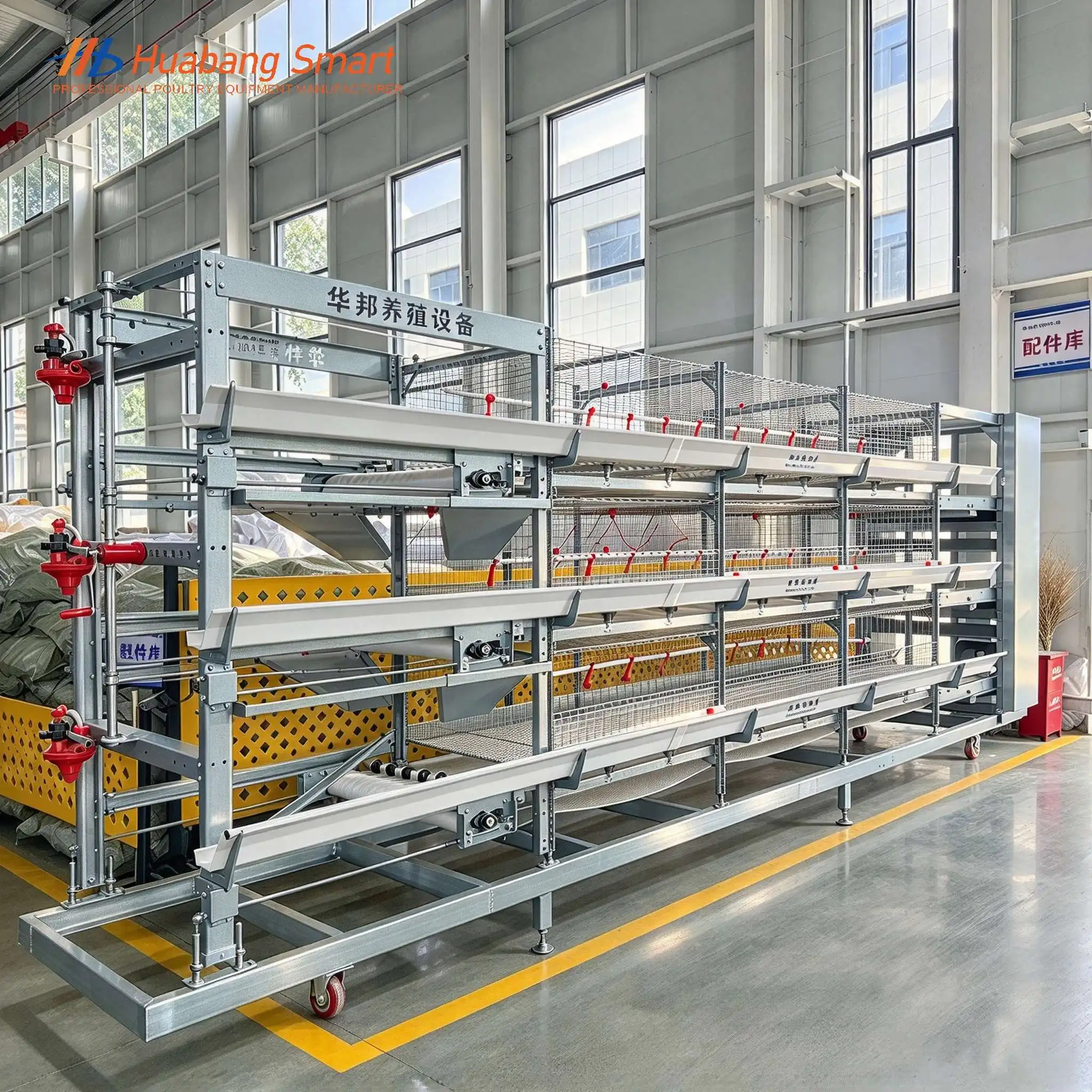
An H Type 3 Tier Broiler Chicken Cage is a vertical housing system with three levels of cages stacked on top of each other on a galvanized steel frame in the shape of an H. This lets a farm raise more broilers on the same amount of floor space. We build it at Huabang Smart with 275 g/m² hot-dip galvanized steel, PP manure belts, automatic feeding, and nipple drinking. Depending on the weight goal, each 125 cm x 100 cm x 45 cm unit can hold 15 to 18 broilers. This guide tells you how the design works, how to size it, what makes it cost more or less, and how to judge a supplier before you buy.
What the H Type 3 Tier Broiler Chicken Cage Is and Why It Matters?
How the Three-Tier H-Frame Works?
Three cage levels are stacked on top of each other on vertical steel columns that make up the H-frame. The H layout, on the other hand, has room for a central feeding track and a manure belt under each tier. The rigid frame keeps the middle span from sagging, so the cage floors stay level during the 42-day growth cycle. Feed and water don't spill onto level floors, which keeps the area clean and dry. This is not the same as a three-row house, where cages are lined up next to each other on one level. You can add more space in a three-tier system without adding more land. Instead, you use the height of the buildings. It is also true that cooler air tends to settle at lower levels while warmer air rises. This is why climate zoning with tunnel ventilation works.
Why Space-Efficient Housing Matters for U.S. Broiler Farms?
The US raises a lot of broilers, one of the most in the world, and the USDA keeps track of that every year. There are still a lot of businesses that have to deal with rising labor costs, limited land, and strict buyer hygiene standards. These problems can be solved with a three-tier broiler cage, which adds more housing space within the same building footprint. Plans from Huabang Smart show that a three-tier layout in a 1,000 m² house (about 10,800 square feet) can produce the same amount of space as 3,000 m² of floor rearing. Before you start a project, make sure you know what the rules are for the housing that some U.S. processors and retail programs set.
Core Components: Feeding, Drinking, and Manure Removal
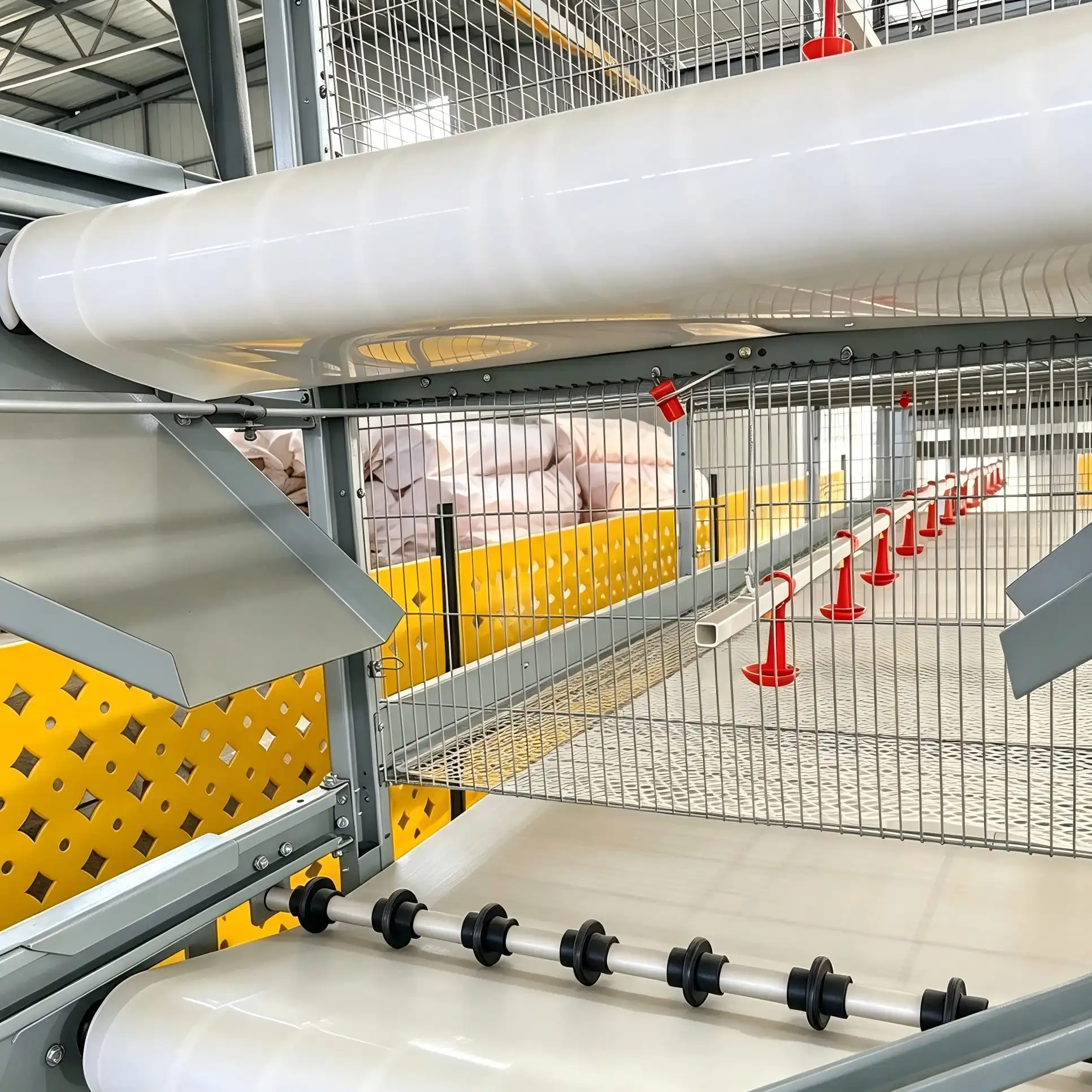
Running along the middle track is an automatic chain feeder that is controlled by a PLC and feeds all three levels at the same time. Nipple drinker lines have height and pressure regulators that can be changed. Each nipple gets 60–80 ml of water per minute, which keeps spills and humidity to a minimum. Below each level, a PP manure belt runs on a set schedule, usually twice a day, to keep the ammonia level low. A lot of broiler guides, like Aviagen's Ross handbook, say that 20 ppm is the upper limit and that lower is better. Weight sensors in some cage units keep track of daily growth data so that managers can find problems quickly.
Dimensions, Capacity, and Technical Specifications
Unit Size and Tier Spacing
It's 125 cm long, 100 cm wide, and 45 cm high, which is about 49 × 39 18 inches. You can choose a height of 45 cm, 48 cm, or 50 cm. The 50 cm between tiers in the tropical configuration helps the heat escape. A 5 cm raised center helps air flow and keeps things cool. There are also versions of the H-type line with 3 to 8 tiers, but this guide only talks about the three-tier model. Before you place your order, make sure that these measurements match the clear height, aisle width, and floor clearance of your building. Send us the plans for your house, and our engineers will look over them to make sure there are no surprises on the day of installation.
Calculating Total Bird Capacity
To find the total capacity, multiply the number of cages by the number of birds per unit. One row with 100 units and 15 birds per unit can hold 1,500 birds per tier, or 4,500 birds spread out over three tiers. The range of 15 to 18 birds depends on the weight that will be killed, such as 2 kg vs. 2.8 kg (4.4 lb vs. 6.2 lb). There are limits to how much you can stock. In the European Union, Council Directive 2007/43/EC sets a minimum limit of 33 kg/m² for broilers. Some buyers in the United States have their own rules about animal welfare. The temperature and ventilation must also match the number of birds you want to see. Huabang Smart can handle operations with 1,000 to more than 50,000 birds.
Steel Quality, Galvanizing, and Factory Testing
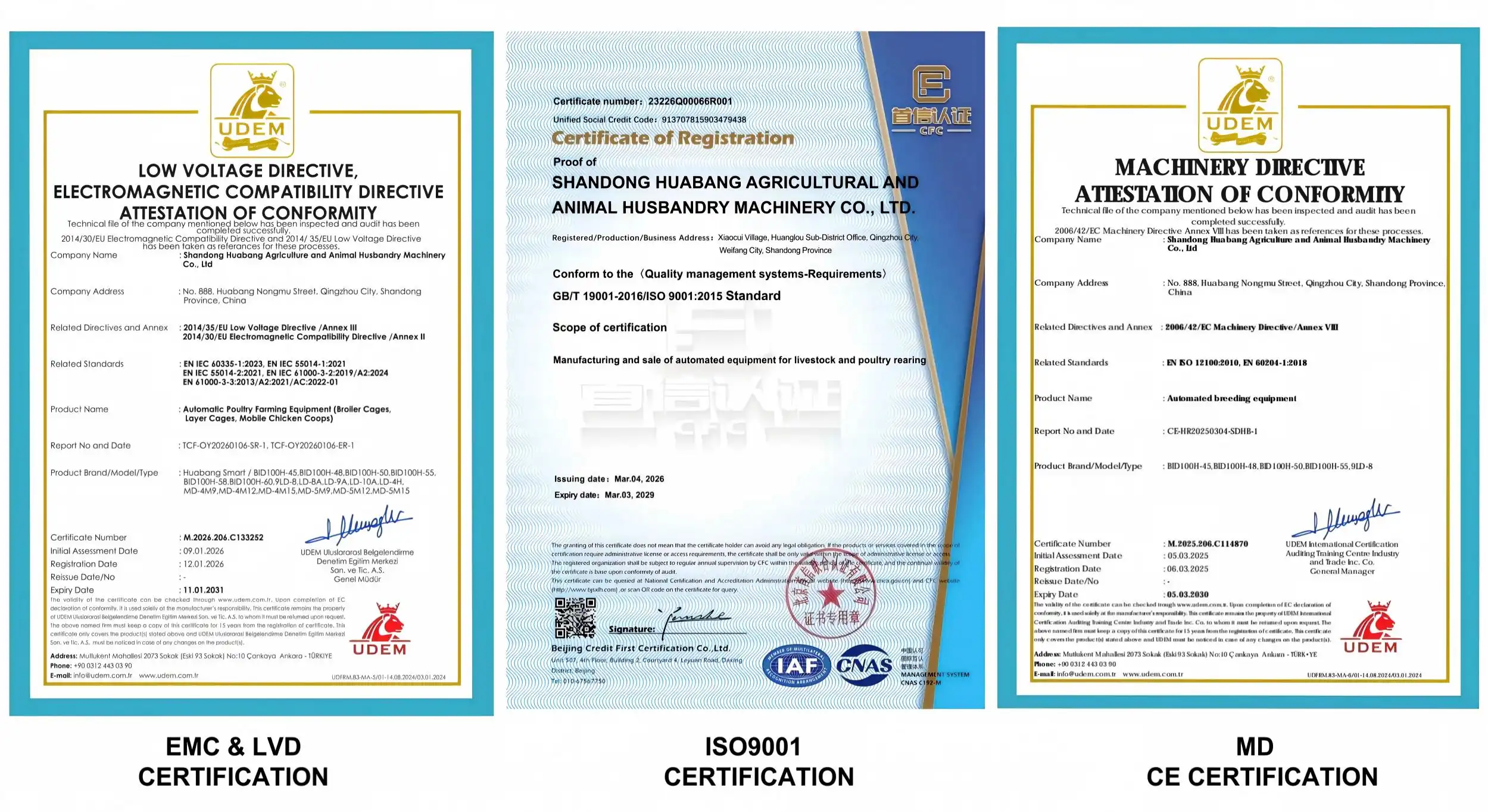
The frame of an H Type 3 Tier Broiler Chicken Cage is made of extra-thick 3 mm hot-dip galvanized steel that has a 275 g/m² zinc coating. In homes with constant ammonia, humidity, and manure, thicker cage panels make the structure stronger and less likely to rust. Some of the quality checks we do are an ultrasonic coating thickness test, a tensile test (where mesh joints must be able to handle at least 500 N), and a salt spray test that lasts for 72 hours. We also check the surfaces for zinc slag and sharp edges that could hurt birds, and we put motors and belt-centering parts through endurance tests. The system is certified by ISO9001 and CE, and Huabang Smart has 49 patents on core technologies. Our product data says that with proper care, it can last up to 15 years.
Benefits, Limitations, and Housing System Comparison
Practical Benefits for Labor, Hygiene, and Space
The main benefits are cleanliness, density, and less work. According to Huabang Smart's product data, their floor systems can hold up to 300% more animals than regular ones, and they can cut labor costs by 70% when feeding and cleaning up the manure are done automatically. Birds can't touch droppings that are separated by slats, which stops the spread of germs like coccidia, E. coli, and Salmonella. Each level is its own clean area, and the raised structure keeps birds away from rodents and wild birds that can spread diseases like avian flu and Newcastle. Biofilm doesn't stick to smooth galvanized surfaces, and modular parts can be taken apart for deep cleaning between flocks. A 2018 review by Naseem and King found a link between ammonia in poultry houses and the health of birds and workers. This is why it's important to remove manure often.
Limitations to Plan For
I want to be clear about the pros and cons. A cage system costs more up front than deep litter, needs to be set up correctly, and needs to be connected to a steady source of water and electricity. No matter how much space the cage has, problems with management and animal welfare can happen if there isn't enough airflow, too much stocking weight, or automation that isn't matched up. The staff also needs training because they have to check the feeders, belts, and drinkers every day. Some sites may not be possible because of the building load, ceiling height, or local rules. The return on investment goes up as the flock size goes up. Based on our product data, modular layouts work best for farms with more than 30,000 birds. However, smaller farms can still use them. Checking out the site before buying it saves you a lot of money in repairs later on.
Comparison With Four-Tier Cages and Deep Litter
Four-tier cages can hold more birds per house, but they need to be built taller, have better ventilation, and be harder to get to. Most of the time, deep litter systems have simpler infrastructure and cost less to set up, but they take up more floor space and keep birds in contact with litter. Between them is a three-tier H-frame that makes good use of space without needing to be as tall as taller stacks. The level of automation is also important. Setups that are manual, semi-automatic, or fully automatic require different amounts of work, upkeep, and power. Before you decide, look at the size of the farm, the number of workers available, the size of the building, the rules, your budget, and your plans for growth. Huabang Smart also has versions with 3 to 8 tiers, so you can compare different options from the same company.
Selection, Installation, and Climate Adaptation
How to Choose the Right System?
Start by setting goals for the number of birds, the breed, the market weight, the production cycle, and the size of the building. Next, check the type of steel, the weight of the galvanizing, the quality of the welds, how well they hold weight, and whether spare parts are available. Make sure that the automation you use fits your power supply, technical skills, and cost of labor. Fully integrated PLC-controlled lines are often preferred by larger farms and EPC contractors. Smaller operations, on the other hand, can start with a modular layout. Get installation plans, a detailed list of configurations, training plans, warranty terms, and export documents from each supplier. Before you commit, Huabang Smart provides site planning, product design, configuration lists, and sample provision. You can also use tunnel or cross ventilation with these cages.
Installation Steps and Commissioning
Get the house ready for an H Type 3 Tier Broiler Chicken Cage before the equipment comes. Make sure the floor is level, that the drainage and electrical work is done, and that the ceiling height, ventilation openings, service aisles, and manure discharge routes are all checked. Installers then build up from the base frame to the tier connectors, feeders, drinker lines, cross-bracing, and manure belts. As you go, check the alignment, row spacing, tightness of the fasteners, tension of the belt, water pressure, and feed distribution. With the help of a professional crew, the modular design makes it possible to set up and start using a 20,000-bird house in 10–15 days. Don't load or operate the machine until the birds come. Also, teach your staff how to do inspections, cleaning, emergency stops, and preventative maintenance. We offer video installation guides as well as installation on-site.
Climate and Regional Adjustments
The right arrangement changes because of the climate. When it's above 35°C (95°F) and humid, we use 50 cm between tiers and bigger cross-ventilation holes to help the heat escape. In cold places, frame changes that work with insulation and enclosed side panels that keep heat in while still letting air flow during the summer are needed. We use dust-resistant bearings and UV-stabilized manure belt material in dry, sunny places. For markets in the European Union, we set up systems to be around 33 kg/m² and add monitoring alerts. U.S. farms are in both hot and cold states, so let us know where you are, and we'll change the design to fit.
Cost, Manufacturer Support, and Maintenance
What Shapes the Price?
The price is based on the capacity, the number of tiers, the galvanizing specification, the feeding and drinking equipment, the removal of manure, the level of automation, the environmental controls, the installation, and the export requirements. Check out the whole project cost, not just the price of each cage. The final amount you spend is affected by things like ocean freight, insurance, import duties, building changes, electrical work, ventilation, spare parts, and upkeep. For U.S. projects, make sure you know the voltage and frequency (60 Hz) early on so that the controllers and motors will work with your power supply. Send the house's size, desired capacity, market weight, automation preference, destination port, voltage, installation needs, and preferred Incoterm to get a correct quote. Standard equipment, options, logistics, warranty, lead time, and payment terms are all broken out in our quote. It usually takes 30 to 60 days to make something.
Working With a Direct Manufacturer
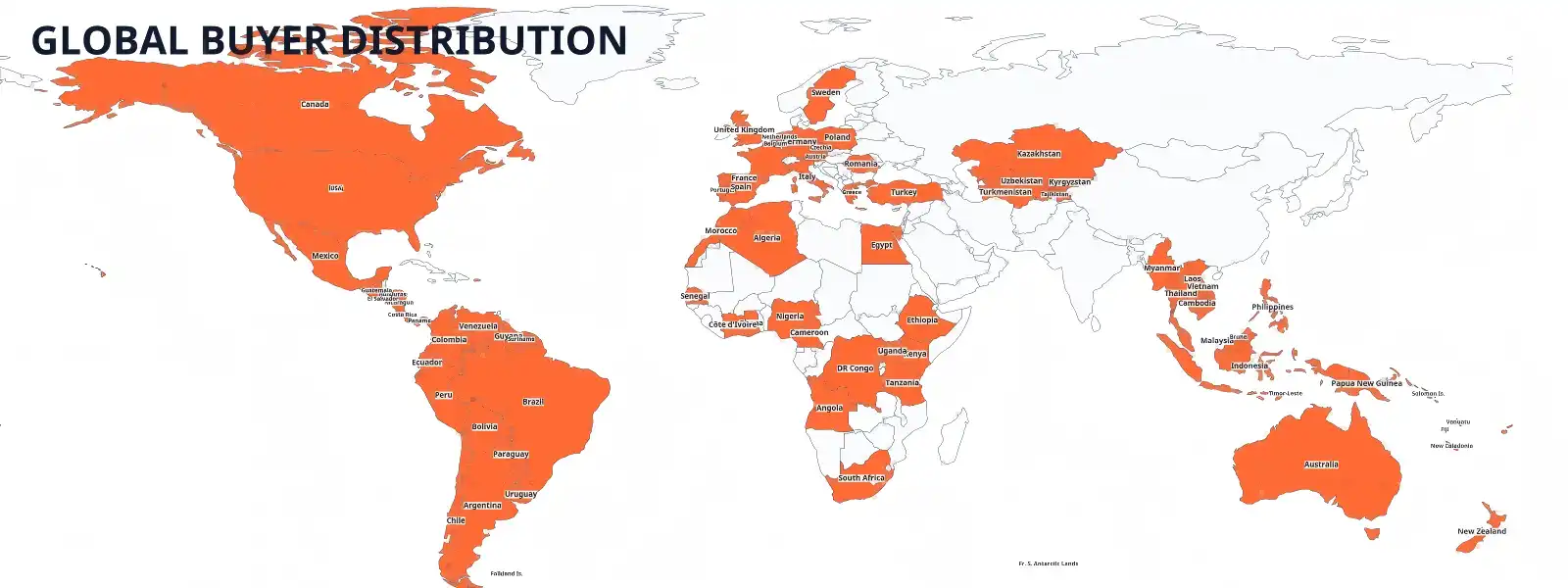
We started Huabang Smart in 2012 in Qingzhou, Shandong, and we design, build, and support our own systems. You can talk to engineers directly when you buy from the source factory, and the parts you get will be the same every time. Our clients come from more than 100 different countries, and we have ISO9001 and CE certifications. We do OEM and ODM work, and we can even build things from your own drawings. Customization can include things like sizes, spacing between tiers, row layout, feeders, electrical standards, packaging, and labeling. There is a 12-month warranty, and we offer local support after the sale in other countries. Still, check out any supplier by asking for drawings, manuals, certificates, lists of spare parts, and references from projects that are similar to the one you are looking at.
Maintenance Routines and Performance Indicators
Check the water pressure, nipple drinkers, bird behavior, mortality, weight uniformity, manure buildup, damaged mesh, loose fasteners, and strange motor noise every day and once a week. As planned, clean the water pipes, feed lines, hoppers, filters, and sensors, and check the belts, sensors, alarms, emergency stops, and backup systems. Take the modular parts apart between flocks to clean them with high-pressure water and quaternary ammonium. Keep an eye on the feed conversion ratio, average daily gain, mortality, water-to-feed ratio, work hours, energy use, downtime, and how often the manure is removed. You can fix small problems before they get worse by looking at recorded trends. Check your results against the performance goals set by your breed supplier.
Conclusion
The H Type 3 Tier Broiler Chicken Cage has three levels that can be stacked on top of each other on an H-frame. This makes the housing capacity bigger without making the building bigger. 125 cm x 100 cm x 45 cm units that can hold 15–18 birds, 3 mm hot-dip galvanized steel with a 275 g/m² zinc coating, automatic feeding, nipple drinking, and twice-daily manure removal are some of the things that make it valuable. It costs more up front than deep litter, but it makes better use of space, requires less work, and keeps the birds cleaner. It doesn't need as much building height as four-tier systems. The outcomes depend on accurate calculations of capacity, stocking weights that don't go over the welfare limits, steady power, careful installation, and regular maintenance. Making changes to the climate and checking the supplier's drawings, certifications, warranty, and training are the last parts of the buying decision.
FAQ
How many broilers does each cage unit hold?
Each 125 cm x 100 cm x 45 cm unit can hold 15 to 18 broilers, depending on how much they need to weigh to be killed. Make sure that the final stocking weight fits with your welfare plan at all times.
Can small farms use a three-tier system?
Yes. The modular design lets operations begin with as few as 1,000 birds, but facilities with more than 30,000 birds usually see the best return on investment.
How long do production and installation take?
It usually takes 30 to 60 days to make something. A 20,000-bird installation and commissioning takes about 10–15 days with a professional team and a house that is ready to go.
What warranty and support come with the system?
We offer a 12-month warranty, video installation guides, on-site installation, farming advice, and support in your home country after the sale.
Does Huabang Smart support OEM designs?
Yes. We can do OEM and ODM work, and we can even build cages from your drawings. You can get a sample before you place a bulk order.
Request an H Type 3 Tier Broiler Chicken Cage Quotation From Huabang Smart
Looking for a company that makes H Type 3 Tier Broiler Chicken Cages and has experience exporting? Huabang Smart has systems that are ISO9001 and CE-certified, as well as OEM and ODM design, on-site installation, and a warranty that lasts for 12 months. Send the size of your house, the number of birds it can hold, the market weight, and the port of arrival to ginny260831@gmail.com or huabangsmart002@gmail.com, and our engineers will make a layout and project quote. To learn more about the product, go to poultrycage.com.
References
1. Poultry Development Review, Food and Agriculture Organization of the United Nations, 2013
2. Ross Broiler Management Handbook, Aviagen, 2018
3. Council Directive 2007/43/EC Laying Down Minimum Rules for the Protection of Chickens Kept for Meat Production, Council of the European Union, 2007
4. Scientific Opinion on the Welfare of Broilers on Farm, EFSA Journal, 2023
5. Ammonia Production in Poultry Houses Can Affect Health of Humans, Birds, and the Environment, Environmental Science and Pollution Research, 2018
6. Poultry – Production and Value 2023 Summary, USDA National Agricultural Statistics Service, 2024

USER EVALUATE
Here is the customer's evaluation of us
YOU MAY LIKE
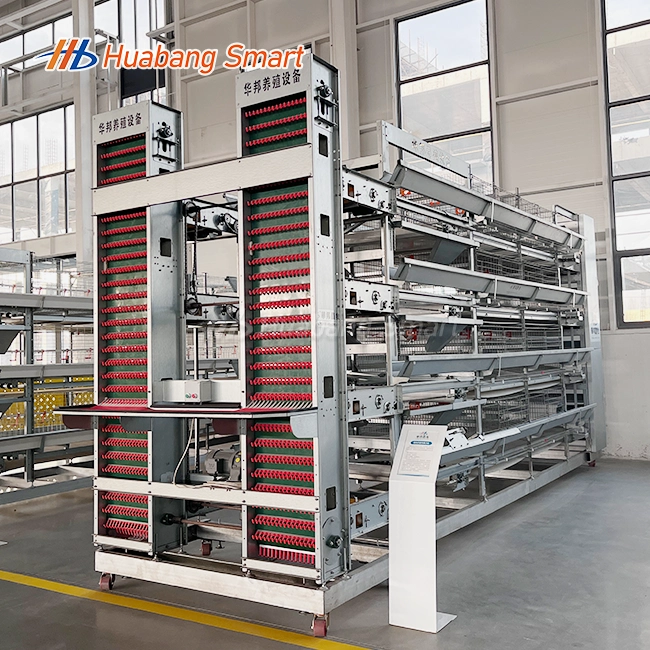 VIEW MOREH Type Layer Chicken Cage
 VIEW MOREautomatic roll out nesting box for laying hens
 VIEW MOREbreeder chicken nesting box
 VIEW MOREroll out chicken nesting box
 VIEW MOREPoultry Cooling Pad
 VIEW MOREAutomatic Feeder For Chicken
 VIEW MOREMobile Chicken Coop On Wheels
 VIEW MOREPoultry Cages For Layer Chickens