
How to Plan Cage Layouts for High-Capacity Egg Layer Poultry Farms
You should start with the building, not the cage catalog, when planning how to set up the cages for big egg farms. Find the columns, the height, the usable floor space, and the airflow holes. To find the right cage positions, divide your flock goal by the rate at which you can use the space. Most of the time, A-type or H-type frames work best in most climates. Make sure there are lots of clear paths for the staff, feed, eggs, and manure. Chicken Cages Egg Layer Poultry Farms work best when they plan to feed, water, collect eggs, clean up manure, and let air flow along a straight line. Below, I'll list each step and what you should check before you place your order.
When I think about layout, I think of engineering and purchasing. This is because it affects daily tasks like getting feed and water to animals, handling eggs, performing maintenance, and keeping animals safe. This guide will help you compare systems, find out how much they can really hold, look at different suppliers, and avoid making mistakes in design that will cost you a lot of money.
Define Farm Requirements and Calculate Cage Capacity
Set Production Targets and Regulatory Limits
Before making a layout, there is always a clear goal in mind. Write down the planned flock size, the number of eggs they will lay, when they will be replaced, how they will be worked, and how they will grow. Take some extra time to clean and fix things. Rules are also very important. California's Proposition 12 says that hens whose eggs are sold in that state must have enough space. When people go to stores to buy eggs, they often ask for United Egg Producers certification or eggs that have not been kept in cages. Before you approve a layout, make sure you know the rules for fire safety, stocking density, welfare, and manure. This is because each state and customer has their own rules. Fixed layouts cost a lot more to fix than layouts that were planned correctly to begin with.
Survey the Building Before Choosing Equipment
A site survey can help you avoid the most expensive surprises. Write down the clear length, width, and height of the building. Then, make marks on the electrical panels, drains, doors, fire exits, columns, and holes for airflow. The height tells you how many levels you can have and still have room for lights and lifts to the upper levels. The floor has to be flat and drain well for manure to move, and fans, belts, and feed lines can only do so much work. Even a sketch with measurements and a few photos can help an engineer make a rough plan. The people who plan sites at Huabang Smart look at how big the land is, how much electricity it can provide, and your biosecurity needs. Then, they make a list of the parts, when they need to be put in, and how they can connect to the system you already have.
Calculate Capacity and Cage Dimensions
Divide the number of cage spots needed by the number of birds you want to keep by the rate at which the cages can hold them. To give you an idea, a target with 100,000 birds and a 95% success rate needs about 105,300 spots. Don't use the 95% rate that was used for planning. Instead, make your own rate based on how your house is run and how it looks. Next, match the roles to the cage's size. Our unit can hold between 90 and 200 birds in one set. It's 1.2 m x 1.2 m x 0.45 m, which is 3.9 ft x 3.9 ft x 1.5 ft. Each bird can live in an area of 430 to 450 cm², which is 67 to 70 square inches. Compare that number to the laws in your state and with the buyer. Then, count the aisles, levels, and rows to make sure the building has enough space.
Select the Right Cage System for a High-Capacity Layer Farm
Compare A-Type and H-Type Layouts
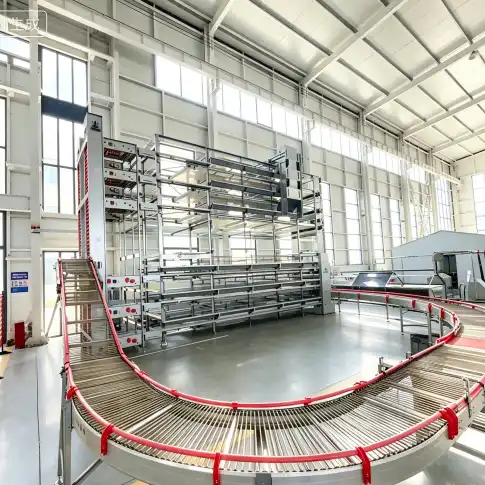
When you stack A-type cages, they look like a ladder with steps. That shape makes it easier for air to move between floors, which is good for open tropical homes and projects that need to start with less money. H-type cages can be stacked on top of each other vertically. This makes it easier to connect egg belts, feeder belts, and manure belts in climate-controlled houses and gives each square meter of floor space to more birds. Chicken Cages Egg Layer Poultry Farms from Huabang Smart are H-type battery cages for layers that collect eggs on their own. We also make A-type plans for places that are warm. When it comes to enclosed homes in mild areas where the main costs are labor and space, I lean toward H-type.
Choose Tier Count and Housing Style
There is more work, more airflow, and more space where tiers are added to Chicken Cages Egg Layer Poultry Farms. Our systems have 3, 4, 5, 6, and 8 levels. Three- and four-story homes fit better on lower lots and are easier to light, check, and air out. A house with six or eight levels has more birds per square foot, but the birds need taller roofs, better airflow, and safe ways to get to the upper levels. The type of house is also important. It costs more for better cages, aviaries, and cage-free systems, but they have to meet state and retailer rules. Before you decide, find out where your eggs will be sold. In some states, like California and Massachusetts, eggs from regular cages can't be sold.
Match Materials to Your Climate
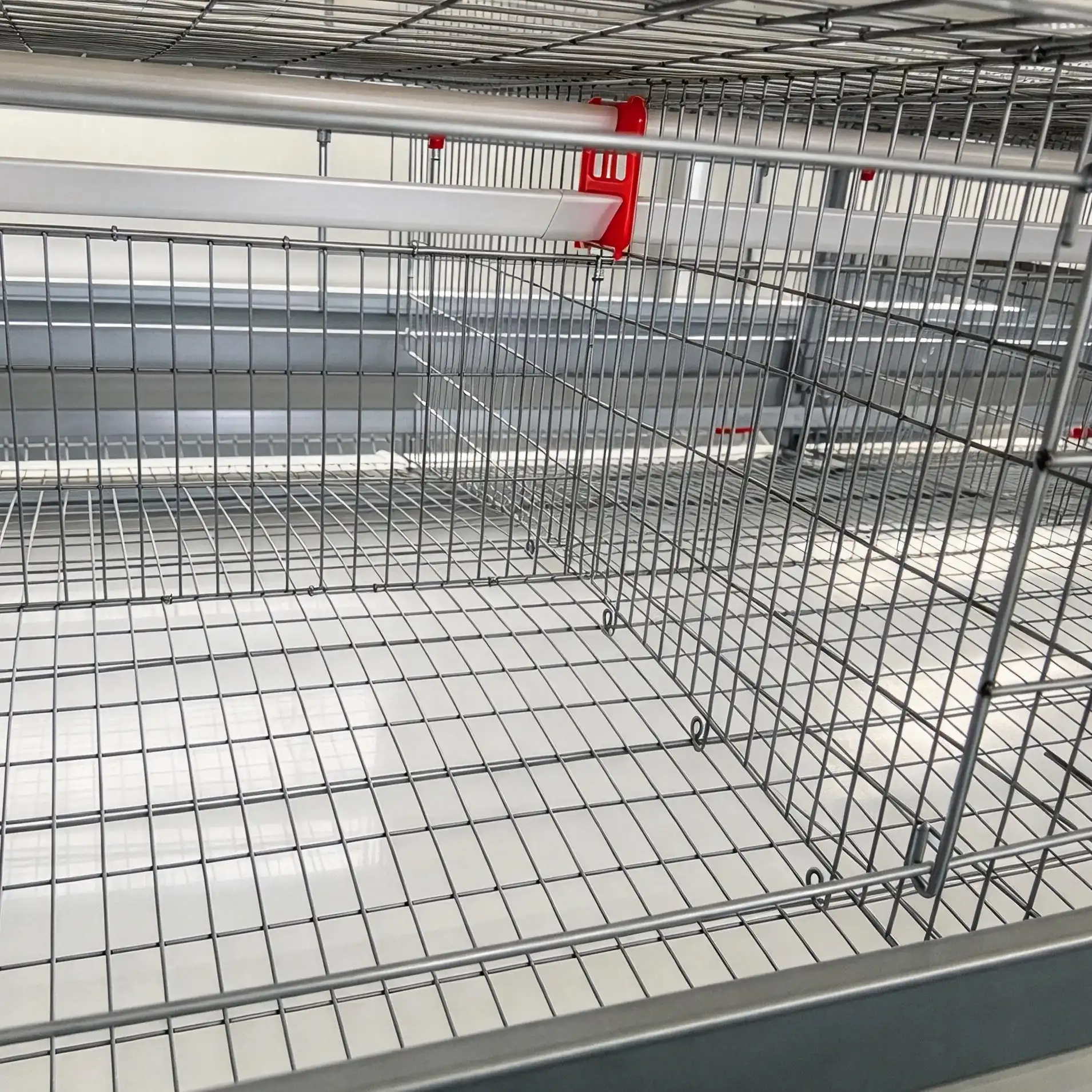
Ammonia, humidity, and chemicals used to clean dishes can all damage steel. The frames we use are made of hot-dip galvanized Q235 steel that weighs 275 g/m². Aluminum and zinc are used to cover the wire mesh panels. When built in high-ammonia homes, this type of construction lasts 15 to 20 years. Cold-galvanized options, on the other hand, usually start to break down after 3 to 7 years. The diameter of the wires is between 2.15 mm and 3.8 mm, which is the right size for both foot comfort and load capacity. At least 45 to 50 kg is put on each weld to see how strong it is. Galvanized steel will last longer than stainless steel, but it will cost more and rust. To compare the two, use cleaning chemicals, budget, and service life.
Design the Row Layout, Workflow, and Supporting Systems
Plan Rows, Aisles, and Traffic Flow
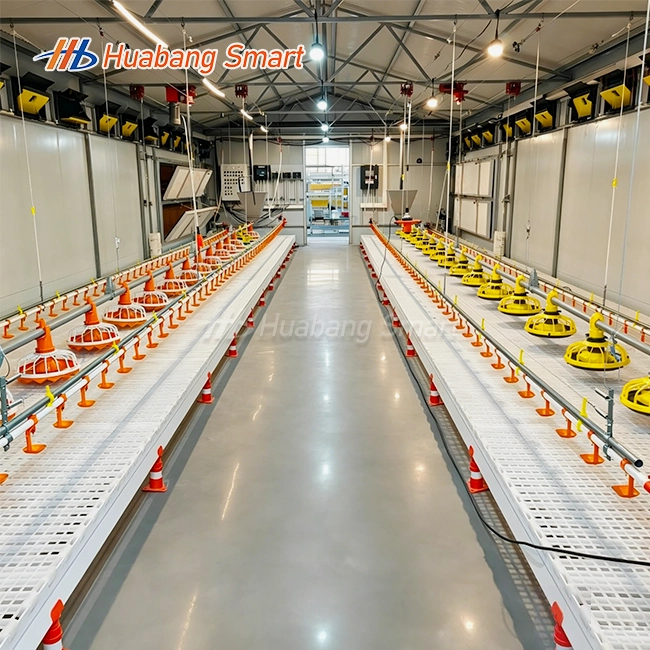
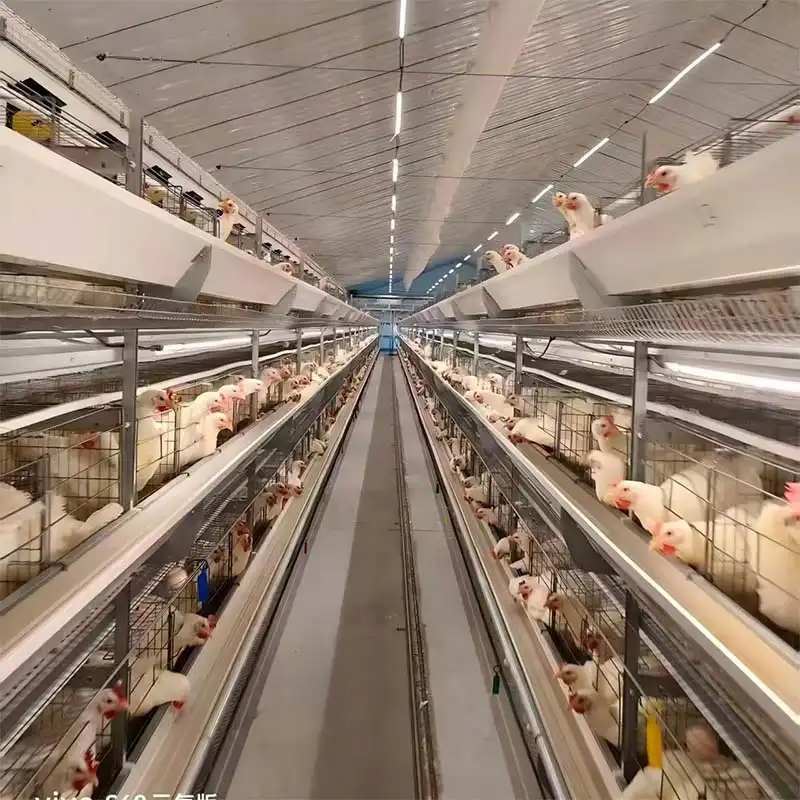
The house's long axis should line up with the cage rows so that airflow and equipment can move in straight lines. There should be the same amount of space between rows, and the main aisles should be big enough for carts, forklifts, and emergency exits. As much as the building will allow, make sure that the clean routes for food, eggs, and staff are kept separate from the waste routes for animal waste and eggs. You should give the control panels, feed silos, water treatment, spare parts, packing, and manure transfer their own areas near the ends of the house. In the end, make room on the floor and in the utilities for extra rows or a second house. It's easy to add more space later if there was room for it in the first plan.
Integrate Feeding and Drinking
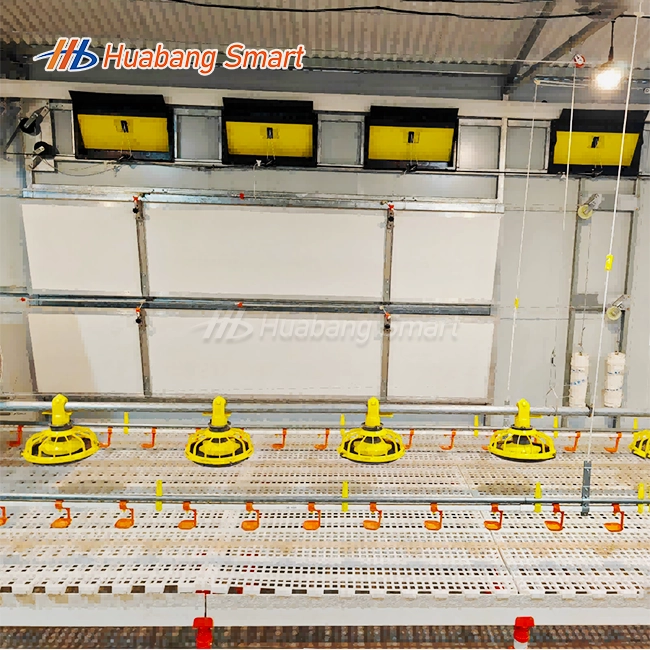
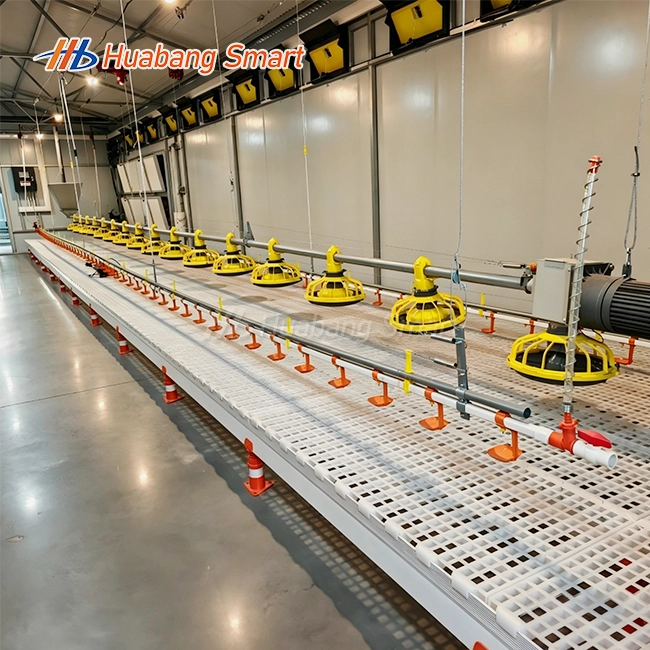
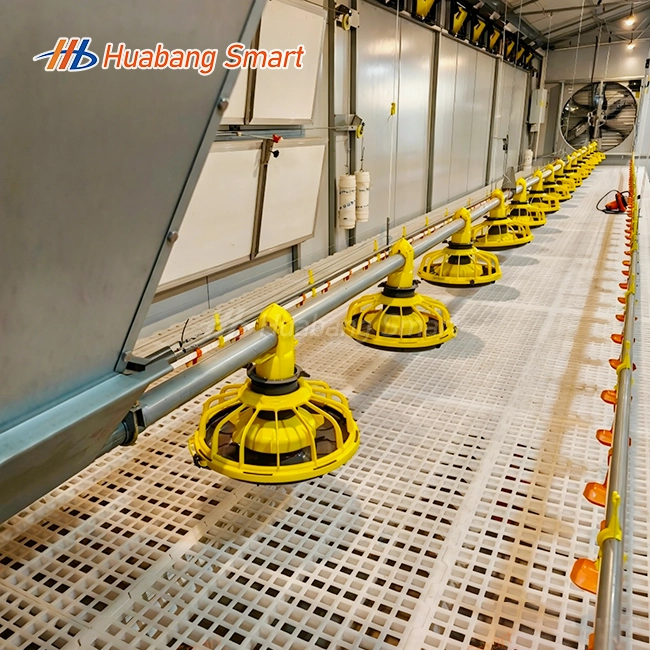
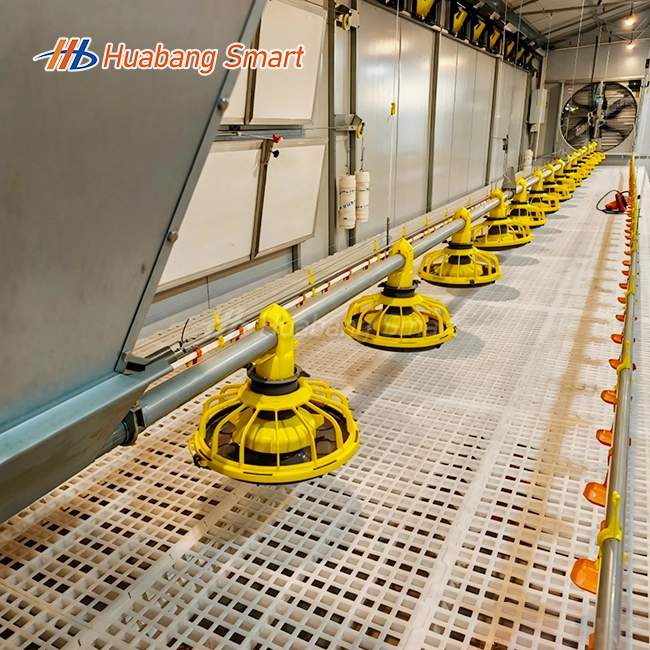
There should be no breaks in the water and feed lines that go through each tier. With automatic feeding, the right amount is given at the right time. This saves time for staff because they don't have to walk as far. The clean, steady water that nipple drinkers give off doesn't spill out much, which keeps manure dry. Staff can get to filters, pressure regulators, and medication points without having to go into the bird area if they are placed near the front door of the house. Sort the manual, semi-automatic, and automatic options by the number of birds, the amount of money you want to spend, and how well you know how to take care of them. In our systems, feeding, watering, and getting rid of manure are all done automatically. This saves up to 80% on labor costs.
Coordinate Egg Collection and Manure Removal
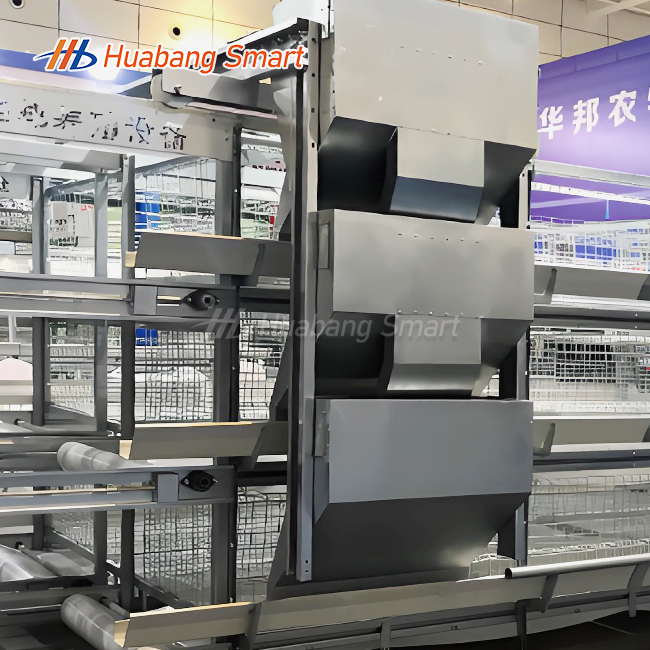
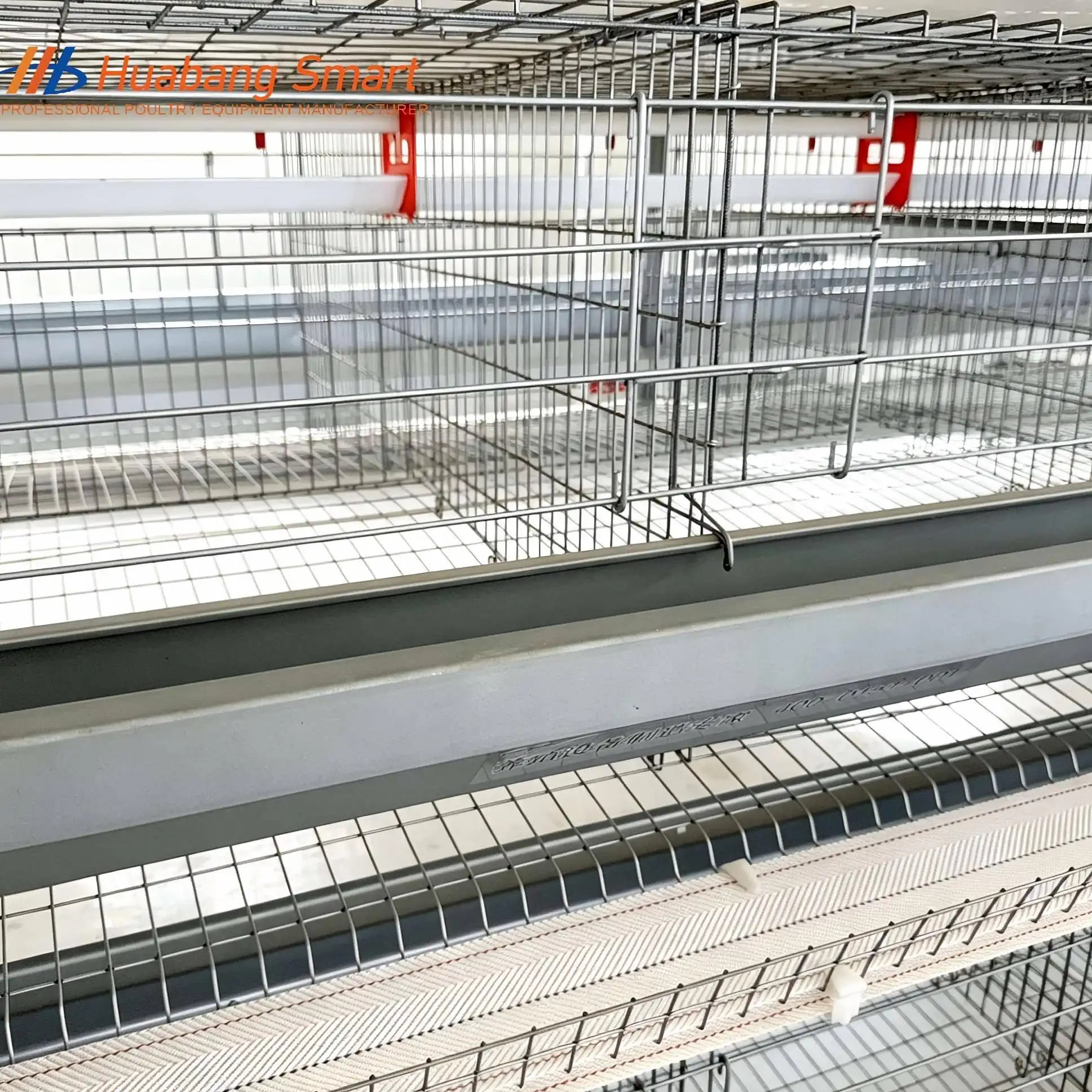
Due to a 7-degree slope, the floors of our cages make it easy for the eggs to roll onto the collection belt. This is how less than 0.3 percent of eggs break. Because the eggs are taken straight to the area where they are graded, they don't get broken as often. Create lifts and moving belts so eggs never have to wait or go far. The waste is moved to a cross-conveyor and out of the house by a manure belt on each level. This helps keep the amount of ammonia low. Plastic trays that are safe for food don't let bacteria grow. It is easy to take care of. Every week, check the belt tension and every month, oil the motors. Look at how easy it is to reach each motor and roller before you decide how far apart the rows should be.
Plan Environment, Safety, and Layout Options by Farm Size
Plan Ventilation and Lighting
How air moves through Chicken Cages Egg Layer Poultry Farms is based on how many levels there are and how far apart the rows are. Plan for air intakes, exhaust fans, or tunnel ventilation to make sure that the airflow is even on all levels. Watch out for the temperature, the humidity, and the ammonia as well. Watch how much feed is being used, the temperature, the humidity, the ammonia level, and the quality of the feed with our optional IoT sensors. The information can be read on your computer or phone, so you can quickly change the environment. In the same way, take care of the lights. Make the photoperiod so that the light is the same everywhere and there are no dark spots or glare. Pay attention to how much light and how long the days are that your breeder, like Hy-Line, tells you to give your pet.
Build In Biosecurity and Worker Safety
The first step in biosecurity is to lay out the area. Give the staff a controlled entrance with a place to change and wash their hands. They should also have a place to keep sick birds away from healthy birds and a way to get from the younger flocks to the older ones. In the US, folks who have at least 3,000 laying hens must follow the Salmonella Enteritidis rule (21 CFR Part 118) from the FDA. It talks about testing, cleaning, and getting rid of rodents, so make sure there is plenty of space in the areas that need to be cleaned. Just as important is making sure workers are safe. To make sure everyone stays safe, there should be handrails, emergency stops, non-slip floors, wires that are covered, and written rules for maintenance. There are no sharp edges on our cages that could hurt the hens or break the eggs. They have smooth wire joints instead.
Compare Layouts by Farm Size and Total Cost
Most small and medium-sized farms start out with an A-type layout because it's cheap, easy to run, and there are many ways to make it bigger. Many-tiered H-type systems that feed, collect eggs, clean up manure, and keep an eye on the animals work best for large commercial farms. Our modular plans can be used on farms with as few as 500 birds or as many as 100,000 birds. For buyers and distributors who buy from more than one house, making specs the same is important so that spare parts work with all of them. Next, look at the total cost of ownership, which includes the price of the chicken, the cost of labor, repairs, how well the feed works, how many eggs are broken, and how long it takes to get a new chicken. A weak cage can cost less than a cheap one over fifteen years if it breaks often or eggs are lost because of cracks.
Evaluate Suppliers, Avoid Mistakes, and Follow a Project Plan
Evaluate Chicken Cage Manufacturers
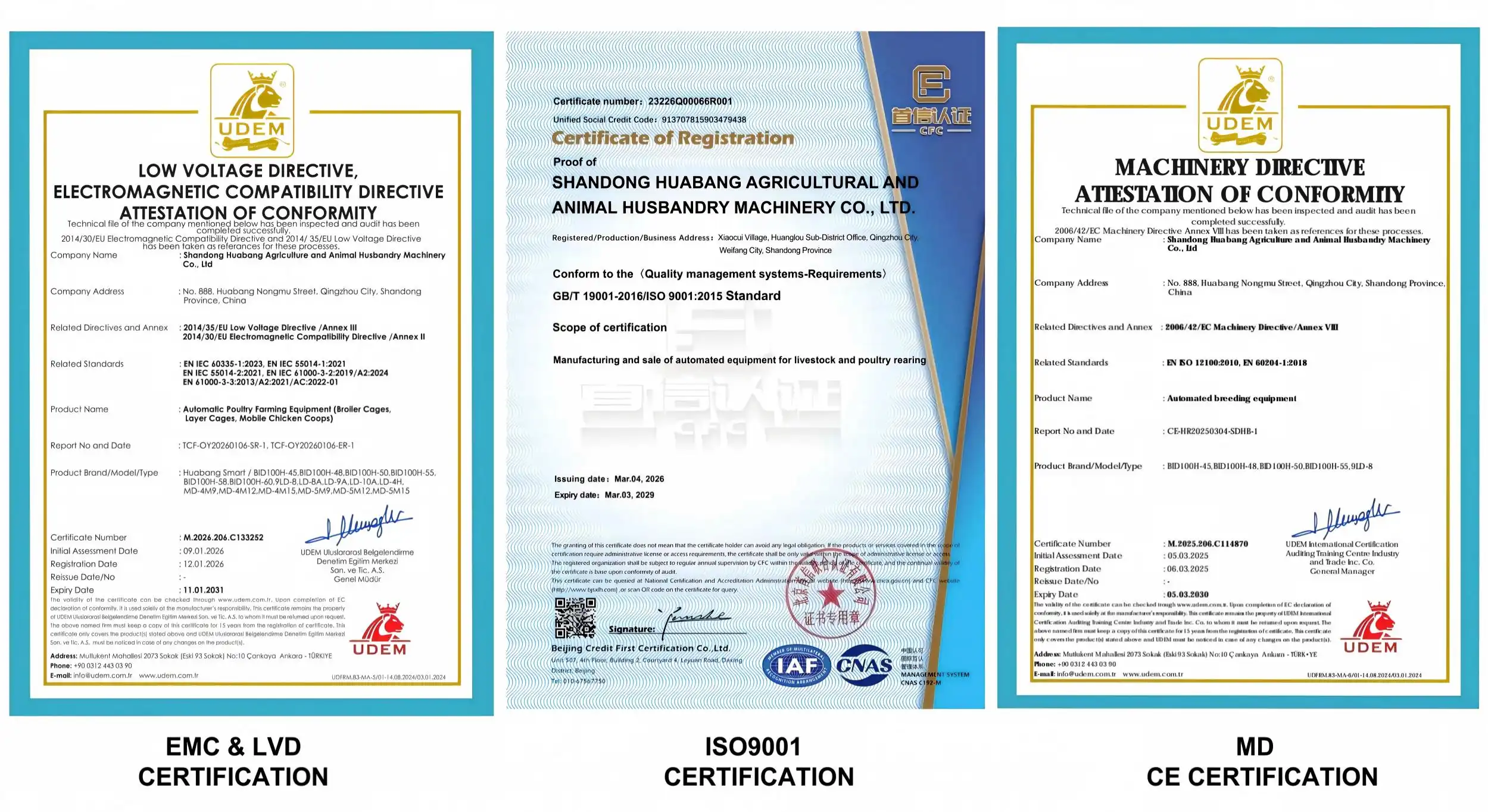
Ask each supplier for size charts, details about the material, the thickness of the zinc, load figures, and details about how well their products work with machines. See the steps to make sure the quality is good. Some of the tests we do are ultrasonic thickness checks for zinc, surface smoothness checks, and automation stress tests that last for 48 hours. You should find out if it has ISO 9001 and CE certification, what the warranty covers, and if there are any spare parts you can get. It has 49 patents on core technologies and is approved by ISO 9001 and CE. It also comes with a one-year warranty. It takes 30 to 60 days to make, and we offer video installation guides, on-site setup, and support in more than 100 countries after the sale. When you compare quotes, you should not just look at the top price. Besides the technical value, you should also look at the delivery, compliance support, and the total cost of the project.
Avoid Common Layout Mistakes
Five mistakes happen most of the time. They make work take longer and block emergency exits because the aisles are too narrow. You can get row conflicts if you buy cages before you measure the building. When airflow is blocked, pockets of heat or ammonia build up. When automation is put in place without service clearance, it takes longer to fix things. Weather doesn't matter; you get the wrong kind of cage. It's easy to fix: finish the site survey, make a rough layout, check the airflow, make plans for how to get in case of an emergency, and figure out how much it will cost to own the whole thing. If you only look at price, you end up spending more on labor, repairs, and new things. They are mostly easy to find during a quick review of the design with your supplier before production, when it's still cheap to make changes.
Follow a Step-by-Step Implementation Plan
First, get plans for the building, flock targets, weather reports, labor statistics, and the rules in your area. Next, draw a rough plan of the layout and mark where the lines will go for food, water, eggs, and manure. Then check the airflow and lighting. Get bids from suppliers that include prices, schedules, drawings, lists of equipment, and warranties. Before giving the go-ahead, make sure there is enough space, safety, clearance, and system compatibility. Finish setting up the machine, training staff, calibrating it, and testing it after it has been delivered. After that, make a plan for regular maintenance. You can get samples from our team to make sure you like the wire, coating, and welds before you place a full order.
Conclusion
When making plans for Chicken Cages Egg Layer Poultry Farms, it's best to start with the building, the flock goal, and the rules in your area. The climate, building height, and level of automation all affect the cage sizes, tier counts, and A- or H-type frames. Based on a site survey and a simple capacity formula, the number of cage positions is set. Wide aisles, separate paths for trash and clean items, and room for growth keep everyday work organized. The best way to feed, water, collect eggs, and get rid of manure is in a single line, with planned lighting, ventilation, biosecurity, and worker safety. Use galvanized materials, check your suppliers, and stick to a staged implementation plan to get your farm to its full capacity and keep it there for many years.
FAQ
Why do large farms often choose automatic H-type cages?
More birds can fit on an H-type system's floor space, and it's easy to connect them to systems that feed the birds automatically, move the eggs, and clean up the waste. What gets chosen in the end will still depend on the budget, the height of the building, state laws, the weather, and the cost of labor.
How do I calculate chicken cage capacity for egg production?
To find the right place for the cages, divide the number of birds you want to keep by the number of cages that can be used at once. First, check that the rows, levels, and aisles of the building fit. Then, check to see if the 430 to 450 cm² per bird is enough for your area.
Are galvanized chicken cages for layers worth the cost?
On the other hand, cold-galvanized items usually break after three to seven years in homes with a lot of ammonia. Hot-dip galvanizing at 275 g/m² lasts for fifteen to twenty years. Look into the coatings and warranties of each supplier.
Request a Custom Cage Layout and Project Quotation
Are you going to build a new house or fix up the one you already have? Send an email to ginny260831@gmail.com or huabangsmart002@gmail.com telling them what kind of building you have, how many birds you want to send, where you want them sent, and when you want them delivered. We make Chicken Cages Egg Layer Poultry Farms and can give you a preliminary layout, capacity calculation, equipment list, and quote. We offer services that are certified by ISO 9001 and CE, come with a one-year warranty, and include on-site setup help. Go to poultrycage.com to find out more about the item.
References
1. United Egg Producers, Animal Husbandry Guidelines for U.S. Egg Laying Flocks, 2017
2. California Proposition 12, Prevention of Cruelty to Farm Animals Act, 2018
3. U.S. Food and Drug Administration, Prevention of Salmonella Enteritidis in Shell Eggs During Production, Storage, and Transportation (21 CFR Part 118), 2009
4. Lay, D.C. Jr. et al., Hen Welfare in Different Housing Systems, Poultry Science, 2011
5. Hy-Line International, Hy-Line W-36 Commercial Management Guide, 2020
6. International Organization for Standardization, ISO 9001: Quality Management Systems — Requirements, 2015

USER EVALUATE
Here is the customer's evaluation of us