
How Do Layer Hen Cages Improve Commercial Egg Production?
Layer hen cages improve commercial egg production by transforming manual, low-density housing into a high-precision industrial process. By isolating hens from manure contact, delivering feed with measured accuracy, and enabling vertical stacking of birds, these systems address the three biggest drains on profitability: labor, feed waste, and egg breakage. Research consistently shows that structured cage housing reduces feed conversion ratios by 10–15% compared to floor rearing, while automated egg collection keeps breakage rates below 0.3%. For large-scale operations, the compounding effect on daily output, flock uniformity, and biosecurity is substantial.
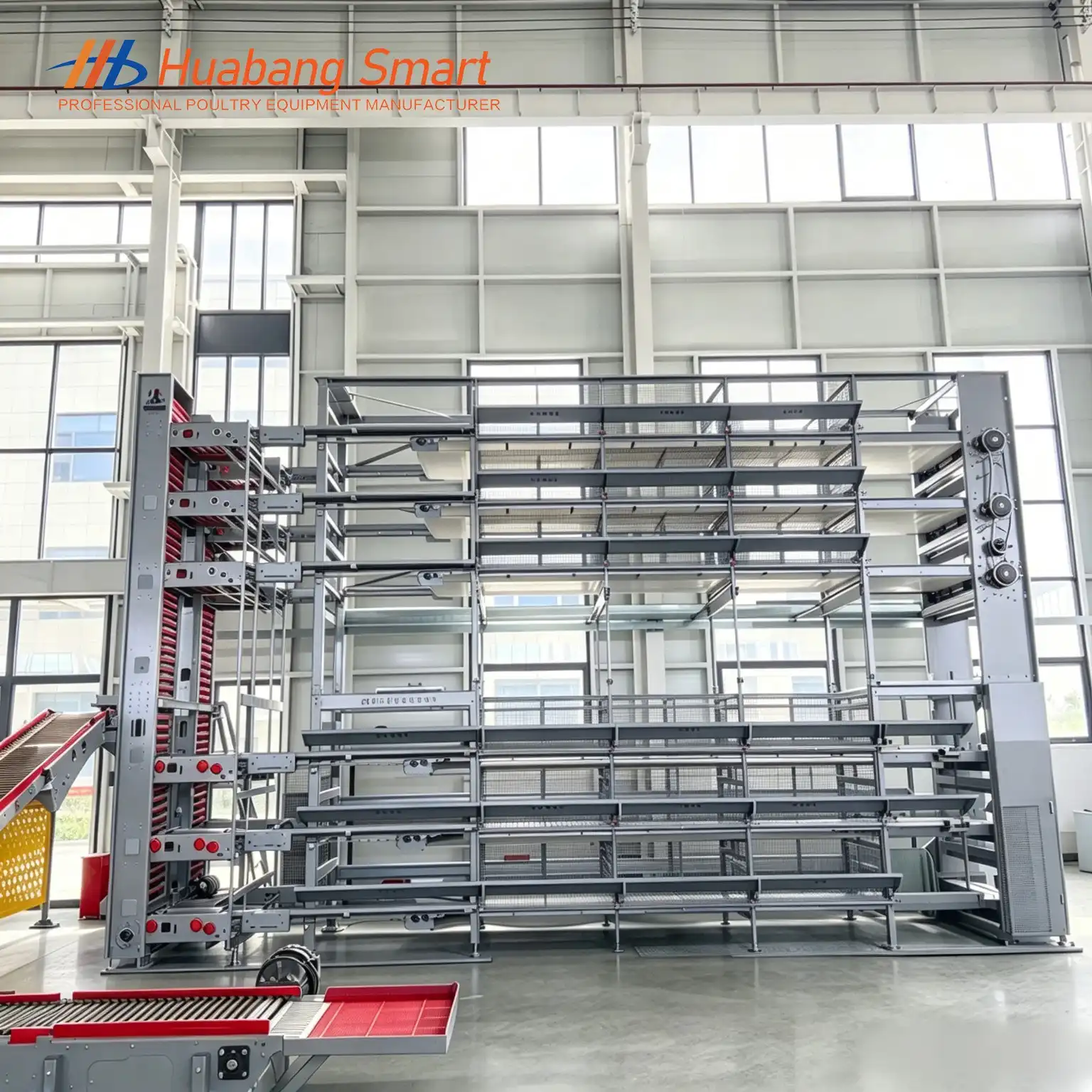
Understanding Layer Hen Cages and Their Role in Egg Production
From Battery Systems to Automated Infrastructure
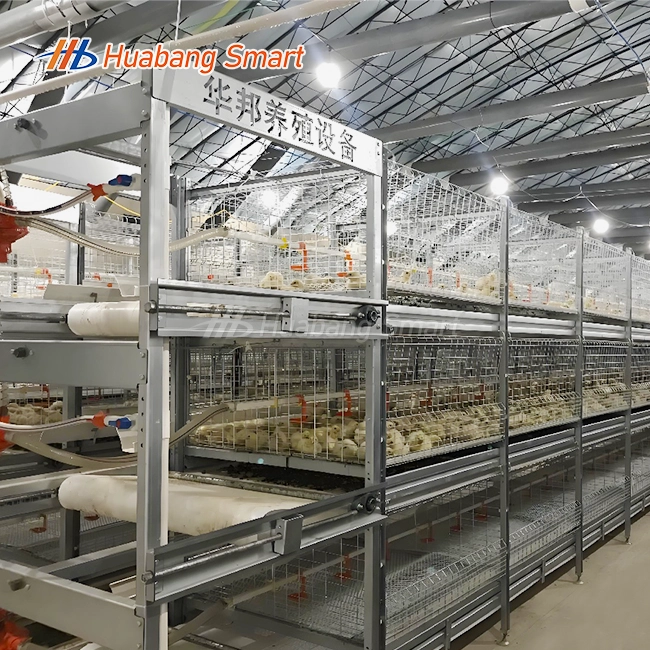
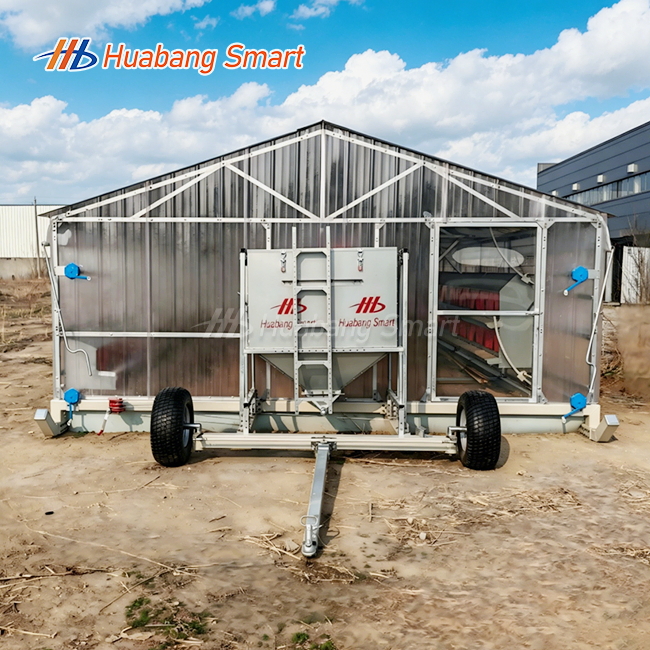
The wire battery cages of the 1950s are a far cry from the housing we have now for chickens. Modern systems for making eggs have automatic feeding rails, nipple drinker lines, manure belt conveyors, and Internet of Things (IoT) weather monitors built around a main cage structure. A layer cage system turns a barn into a controlled production space where all the factors that affect egg production can be seen and changed right away.
This change is important because it changes the meaning of "efficiency" on a commercial farm. When compared to floor raising, early battery systems required less work, but they still needed a lot of help from people to feed, water, and collect eggs. Modern systems that are fully integrated get rid of most of that need for human intervention. That's why farms with 50,000 birds or more are treating the cage system as the core of their entire business, not just a housing option.
Why Biosecurity Starts with the Cage Structure
One of the most useful protection methods is to keep hens away from areas where manure builds up on the ground. Floor systems can have up to 15% of eggs break, and germs like Salmonella spread quickly through litter contact. Ammonia levels stay below 20 ppm in cages with sloped wire floors and automatic manure removal. This keeps the flock from getting respiratory diseases and improves the consistency of laying across a production cycle.
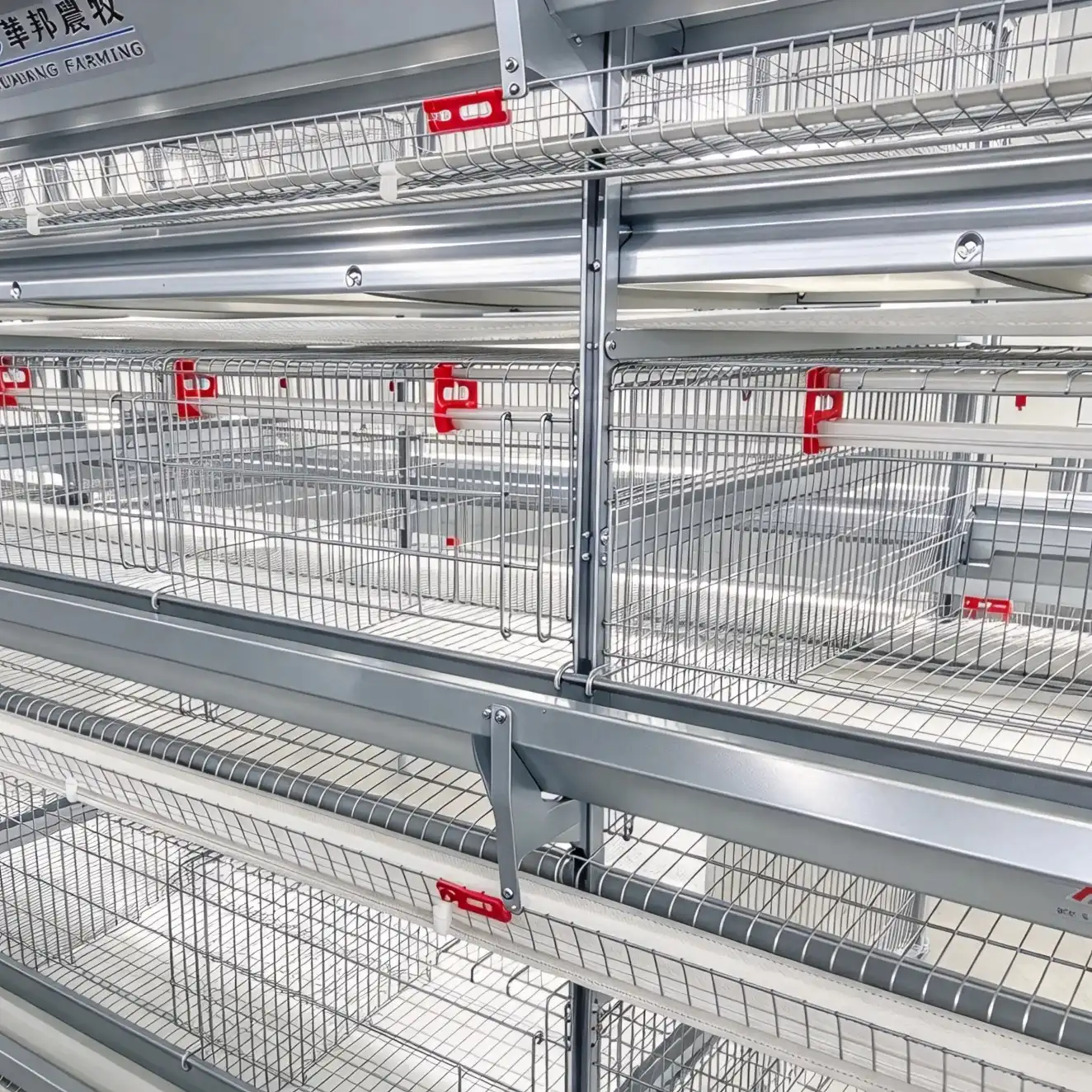
Design and Features That Enhance Production Efficiency
Material Integrity Is Non-Negotiable
High humidity, ammonia gas, hydrogen sulfide, and constant moisture around the cage frame make poultry housing one of the most corrosive working environments. For long-term structural performance, Q235 steel wire with a hot-dip galvanized coating of ≥275g/m² is the standard for durable Layer hen cages. Cold-galvanized replacements used in Layer hen cages usually rust within five to seven years, which can make the total cost of purchase much higher. Choosing galvanized Layer hen cages can therefore help reduce corrosion-related maintenance and support reliable long-term operation.
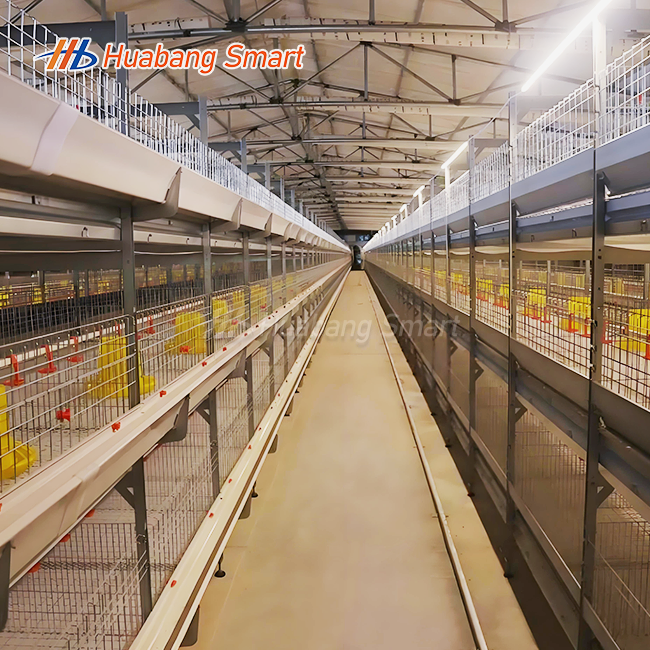
The H-type battery cage system from Huabang Smart has an aluminum-zinc wire mesh and a frame that is hot-dip galvanized to 275g/m². The mesh bends when it's loaded (200–500 kg), which keeps the eggs from being shocked as they roll toward the collection belt. The cage floor is set to a 7–9° slope, which is the right amount of slope to balance the speed at which the eggs roll with the damage they can cause when they hit something. This ensures that the breakage rate stays below 0.3%.
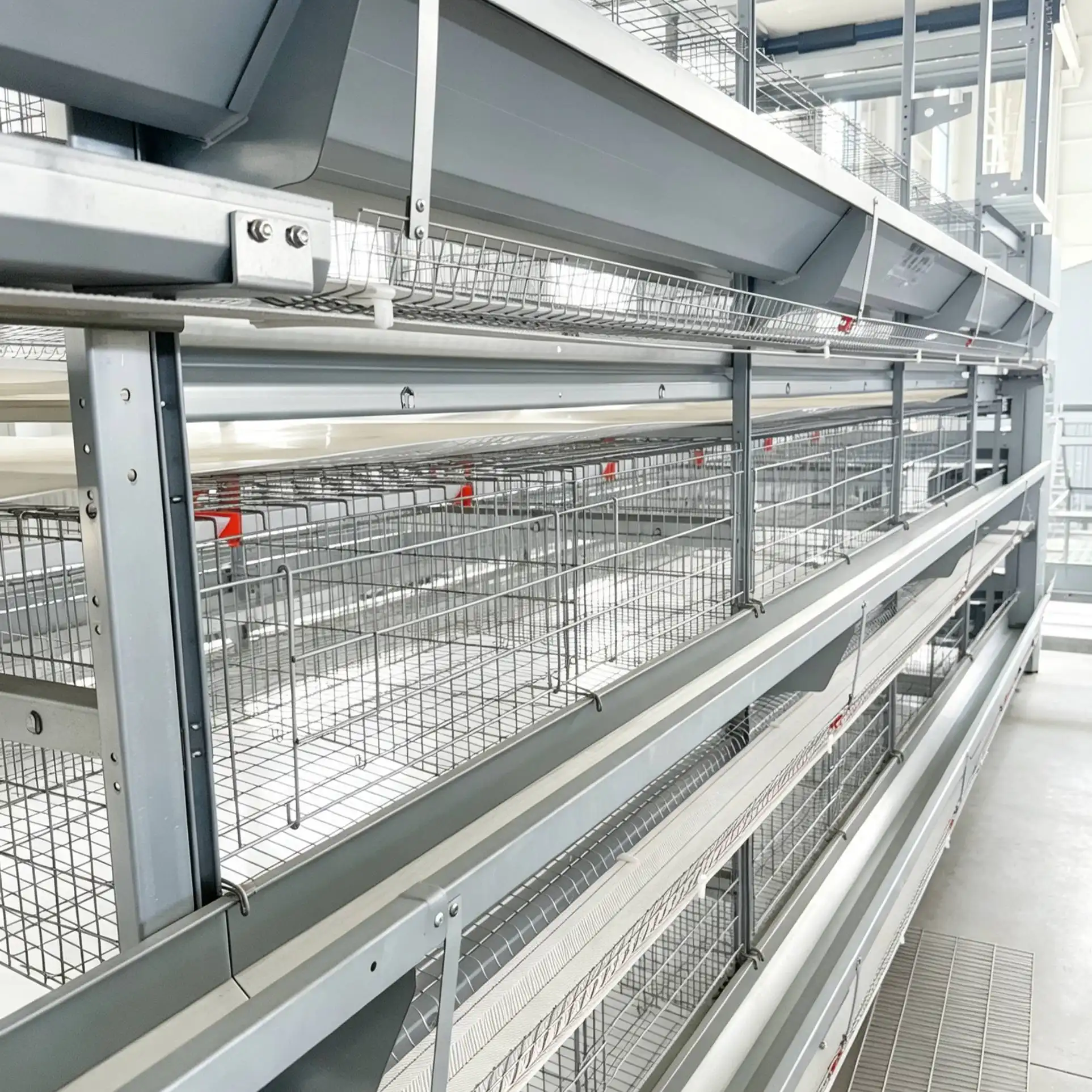
Automation Features That Directly Reduce Labor Costs
25 to 40 percent of the total cost of running a typical chicken farm is labor. If you take away the need for people to feed, water, and collect eggs, the economics of scale change completely. There are a few main robotic features that come with a fully integrated cage system.
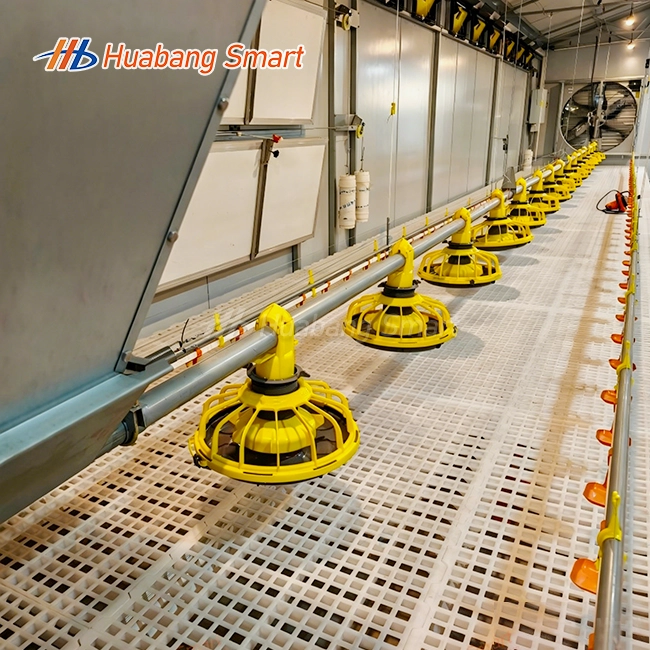
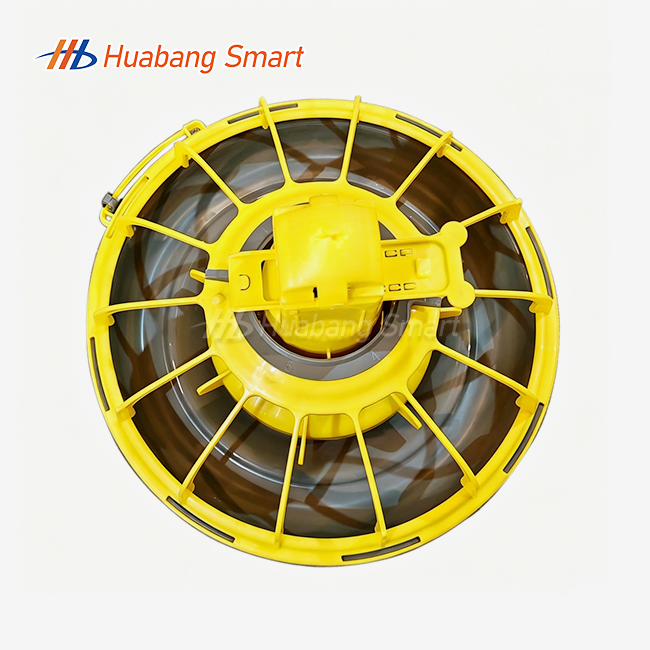
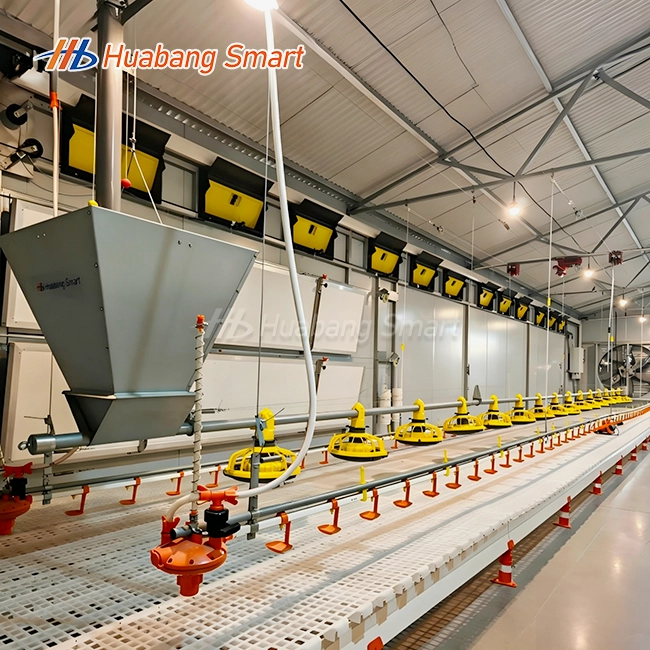
- Precision feeding trolleys deliver feed with ±0.5g accuracy across every tier, eliminating the over-feeding and under-feeding variance that drives poor flock uniformity.
- 360° nipple drinker lines provide continuous, spill-free hydration, keeping litter dry and reducing the ammonia load that damages respiratory health.
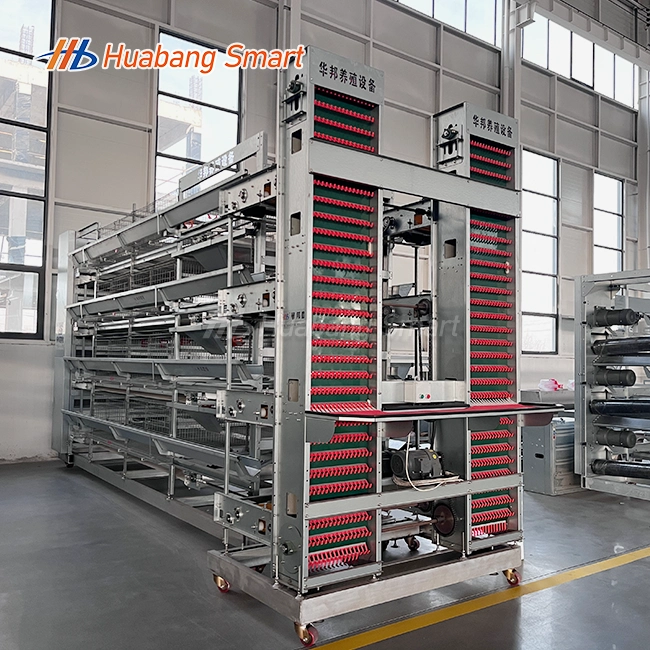
- Mechanical egg collection belts transport eggs from every tier to a central grading point without human handling, maintaining shell cleanliness and traceability.
- Automated PP manure belts remove waste daily, keeping ammonia concentrations under the 20 ppm threshold that affects both bird health and worker safety.
When compared to manual systems, these built-in features can cut the need for farm work by up to 80%, which directly speeds up the return on investment for large-scale farm projects.
Scalability Through Modular Configuration
There are 3-, 4-, 5-, 6-, or 8-tier ships on a single H-type set that can hold 90 to 200 birds. Because it is modular, the parts that go into a 500-bird sample installation and a 100,000-bird industrial complex are the same. This protects the investment in buying the parts if the business grows. With cage sizes of 1.2 × 1.2 × 0.45 m per unit, plan engineers can make the best use of barn space without having to change the structure parts for each project.
Comparing Cage Systems to Other Housing Methods
H-Type vs. A-Type vs. Free-Range: A Practical ROI Comparison
The housing method a farm picks affects how many animals it can have at once, whether it can be automated, and how much it will cost to maintain over time. Up to 200 birds can live in one square meter of floor space in an H-type vertical battery system using Layer hen cages, which stack levels vertically in climate-controlled closed houses. A-type ladder systems using Layer hen cages work well in naturally ventilated tropical areas where barn height is limited because they provide a moderate level of density and make it easier to see birds. For farms seeking efficient space utilization and practical management, properly configured Layer hen cages can support different housing requirements.
Free-range and aviary systems are needed more and more for EU export markets and high-end retail certifications, but they require a lot more space, keep fewer animals, and have more complicated rules for managing diseases. The cost of producing eggs in a cage is still much cheaper for those who want to sell their eggs in bulk or sign big contracts with institutions. The regulatory environment of the target market is what makes the decision possible. Experienced suppliers take this into account from the very beginning of a project.
How to Choose and Procure the Right System
Evaluating Suppliers Beyond Price
Cage systems take a long time to buy because decisions have to be made about structural, mechanical, electrical, and environmental engineering all at the same time. A provider that only sends the metal frame without checking for ventilation issues, electrical load planning, or the right order of installation adds risk to the project further down the line. ISO9001 production standards and CE compliance are base standards for trustworthiness, but recorded global installation experience in a range of climates and barn configurations is a more reliable sign.
Since 2012, Huabang Smart has designed and built systems for keeping chickens. These systems are now used in more than 100 countries. Because the company can do both OEM and ODM, cage designs can be changed to fit current barn sizes, regional voltage standards, and climate-specific needs. For example, in Southeast Asia, buildings must be resistant to typhoons, and cold-climate installations need insulated panel systems. The whole automatic system comes with an international guarantee that lasts for one year, and the production cycle of 30 to 60 days helps EPC workers who are working to tight deadlines keep projects on track.
Maintaining Cage Systems for Long-Term Performance
Sanitation Protocols That Protect Flock Health and Cage Longevity
A properly constructed hot-dip galvanized cage system can work for 15 to 20 years, but only if it is kept clean and receives regular mechanical maintenance. Wire surfaces, feed troughs, and drinker lines in Layer hen cages need to be cleaned regularly between production cycles to prevent biofilm from forming and pathogens from remaining active across cycles. To maintain proper airflow specifications, ventilation intakes and exhaust fans in Layer hen cage systems need to be checked every three months. This is especially important in high-humidity tropical installations, where dust and moisture can accelerate component wear. Regular maintenance of Layer hen cages can therefore help extend service life and maintain reliable performance.
With optional IoT sensor sets, farm managers can check temperature, humidity, ammonia levels, feed consumption, and egg-laying rates from afar using a mobile app or a PC screen. Early spotting of changes in feed intake habits can often detect health problems days before they show clinical signs. This lets action be taken that stops death rates from rising and keeps production going.
Conclusion
For large-scale commercial egg production, the equipment needs to work with industrial accuracy for 15–20 years. Automated Layer hen cages solve the problems of labor, hygiene, and making the best use of space that can make it difficult for modern chicken farms to remain profitable. Three things set long-term assets apart from short-term maintenance burdens: the quality of the materials, the level of automation, and the ability of the supplier to provide service. When it comes to per-bird feed efficiency, mortality rates, and egg quality stability, farms that invest in approved, fully integrated Layer hen cages systems can achieve more consistent results than yard and aviary operations. The choice about what to buy ultimately comes down to how to allocate the investment, and for large-scale industrial production, reliable Layer hen cages can provide a practical foundation for efficient and controlled egg production.
FAQ
What zinc coating weight should I specify for a poultry cage?
The industry standard for long-term corrosion resistance in high-ammonia environments is a minimum of 275g/m² applied through hot-dip galvanizing. This coating mass delivers 15–25 years of structural integrity, compared to 3–7 years for cold-galvanized alternatives.
How does cage housing affect feed conversion ratio?
By restricting unnecessary movement and ensuring precise trough delivery, cage systems typically improve FCR by 10–15% compared to floor rearing, translating directly to lower feed costs per dozen eggs produced.
Can automation be retrofitted into an existing barn structure?
Modular cage designs allow automated feeding rails, drinker lines, and egg collection belts to be integrated into existing structures following a site assessment. The key variable is barn height and floor load capacity, both of which an engineering team evaluates before configuration.
What tier configuration is most appropriate for a tropical climate?
A-type ladder configurations with natural ventilation generally suit high-humidity tropical environments, while H-type vertical systems perform better in climate-controlled closed houses where mechanical ventilation manages heat and ammonia concentration.
What after-sales support should procurement teams require?
A minimum expectation includes a one-year warranty on the complete automated system, video installation guides, on-site technical supervision availability, and accessible spare parts inventory. Suppliers with documented global installation networks offer measurably lower project risk.
Upgrade Your Egg Operation — Contact Huabang Smart Today
Layer hen cage systems are made by Huabang Smart for farms of all sizes, from small pilot projects with 500 birds to large industrial complexes with 100,000 birds. We are a certified manufacturer of Layer Hen Cages with ISO9001 and CE credentials, 49 core patents, and more than 12 years of experience deploying products around the world. We offer complete solutions, from planning the site to commissioning and providing support after the sale. If you email admin@huabangsmart.com with the size of your barn and your output goals, you will get a custom system setup within 48 hours.
References
1. Lay, D. C., et al. — Poultry Science, 2011
2. United Egg Producers — Animal Husbandry Guidelines for U.S. Egg Laying Flocks, 2017
3. Shields, S., & Raj, M. — Animals (MDPI), 2010
4. Appleby, M. C., et al. — Poultry Science, 2002
5. USDA Economic Research Service — Egg Markets Overview, 2023
6. FAO — Poultry Development Review: Poultry Sector United States, 2013

USER EVALUATE
Here is the customer's evaluation of us