
How H Type Layer Chicken Cages Improve Space Use in Large Poultry Farms
Large-scale egg production facilities face a constant pressure: how do you fit more birds into limited floor space without sacrificing flock health or operational efficiency? The H Type Layer Chicken Cage answers that question directly. By stacking birds vertically across 3 to 8 tiers within a single building footprint, this system increases usable housing capacity by over 300% compared to flat-floor or A-type arrangements. Paired with automated feeding, watering, egg collection, and manure removal, it turns floor space into a fully productive, precisely managed production zone.
Understanding the H Type Layer Chicken Cage and Its Design Features
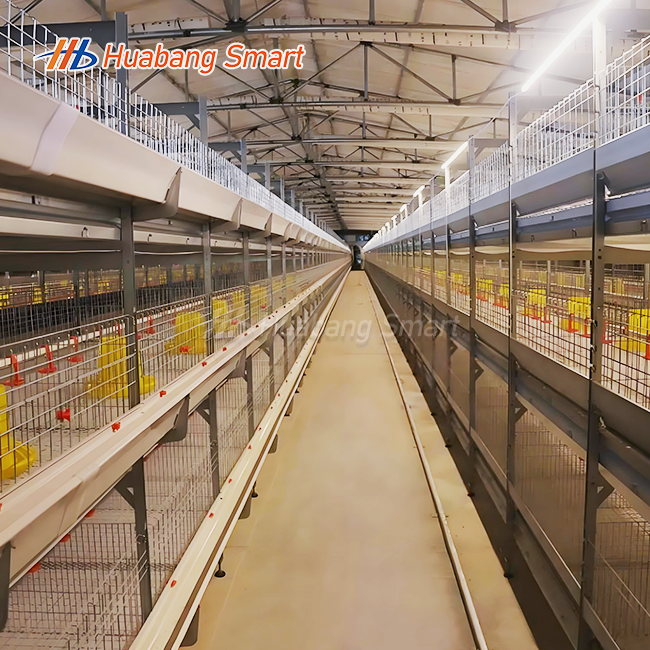
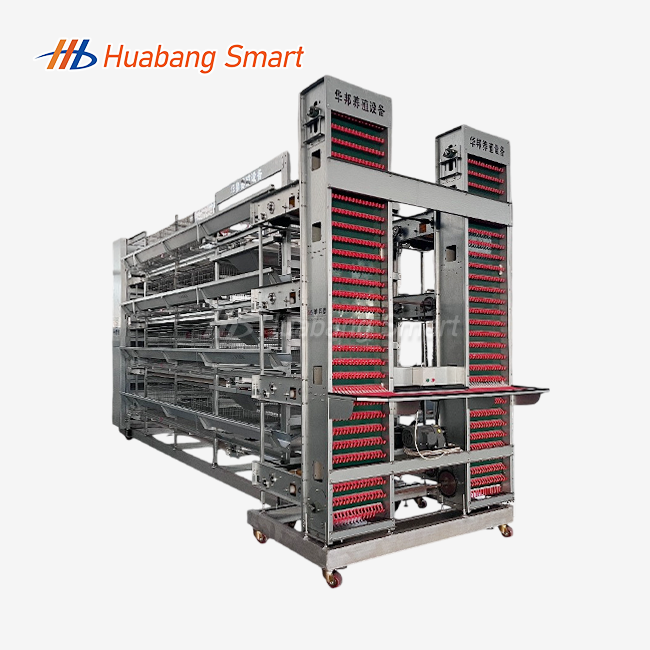
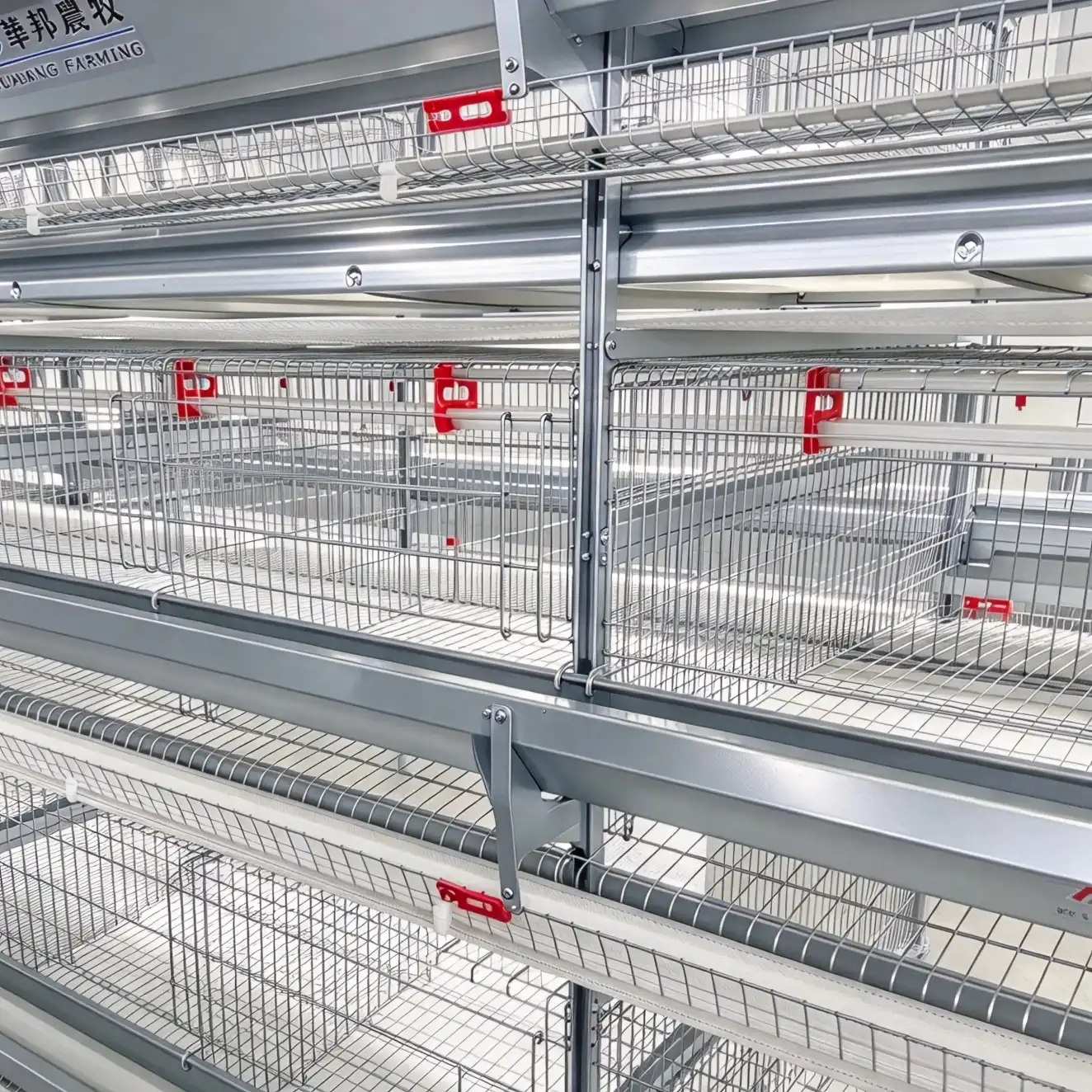
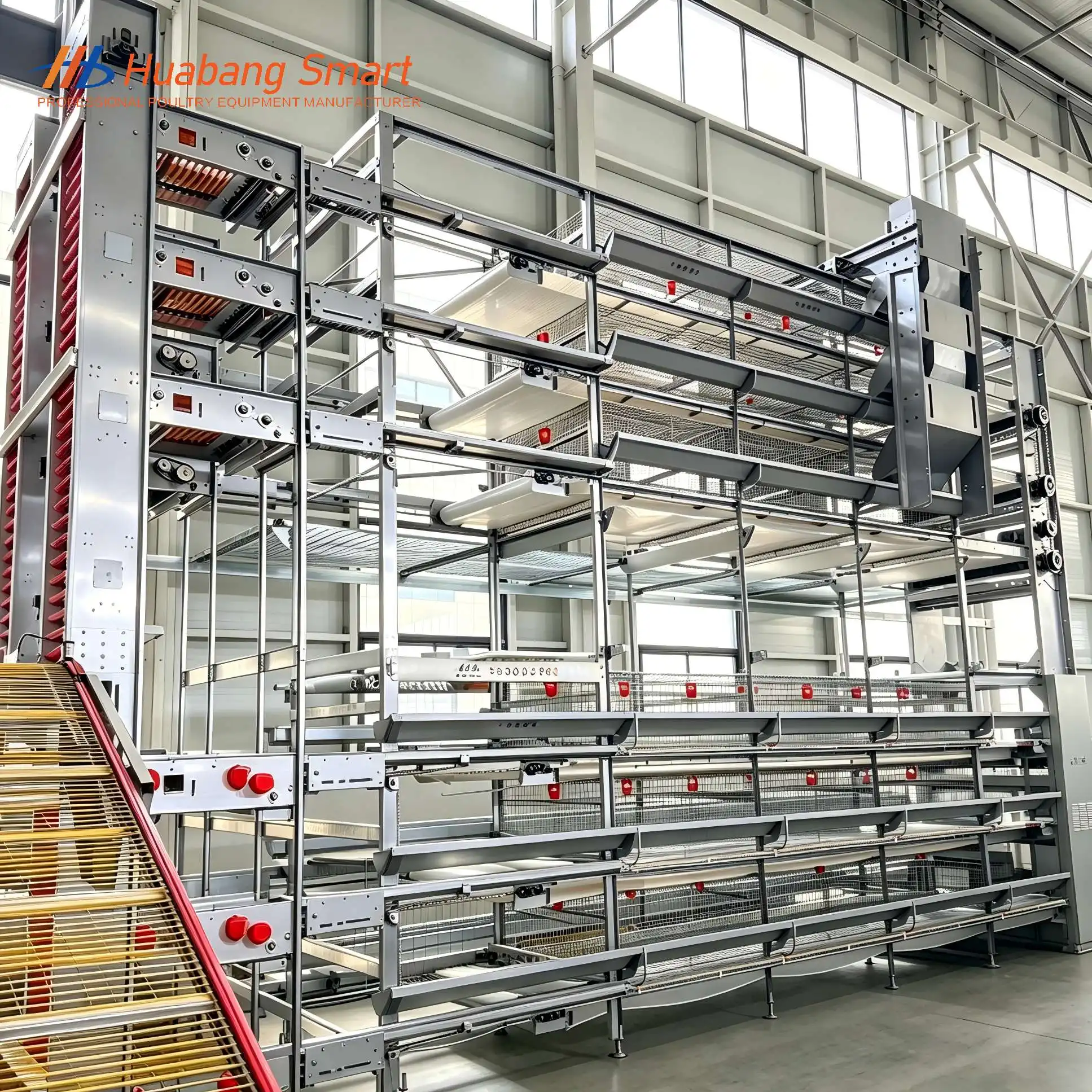
The H-type cage system is a vertically-stacked intensive housing structure purpose-built for commercial egg production. Its column-frame design differs fundamentally from A-type and conventional battery cages, which fan outward and waste aisle space. Here, every tier sits directly above the last, with dedicated PP manure belts, feed troughs, and egg collection rails at each level.
Structural Materials and Build Quality
Each cage unit measures 1.2 × 1.2 × 0.45 meters and is fabricated from Q235 bridge-grade steel treated with 275 g/m² hot-dip galvanization. Wire diameters run from 2.5 mm to 4.0 mm depending on position. This construction withstands continuous ammonia exposure for 15 to 20 years, confirmed through 72-hour salt spray testing on every production batch.
Modular Vertical Configuration
The system ships in configurable tiers — 3, 4, 5, 6, or 8 levels — allowing farm engineers to match the cage height to existing barn clearance. A 500-bird operation can start at three tiers and add levels as production grows, without rebuilding infrastructure. This flexibility makes the H-type system a practical choice for phased capital investment.
Integrated Automation at Every Tier
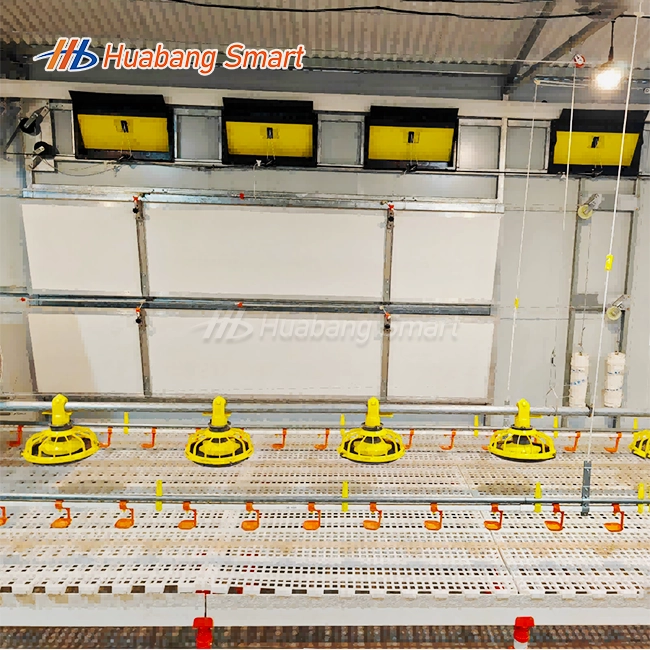
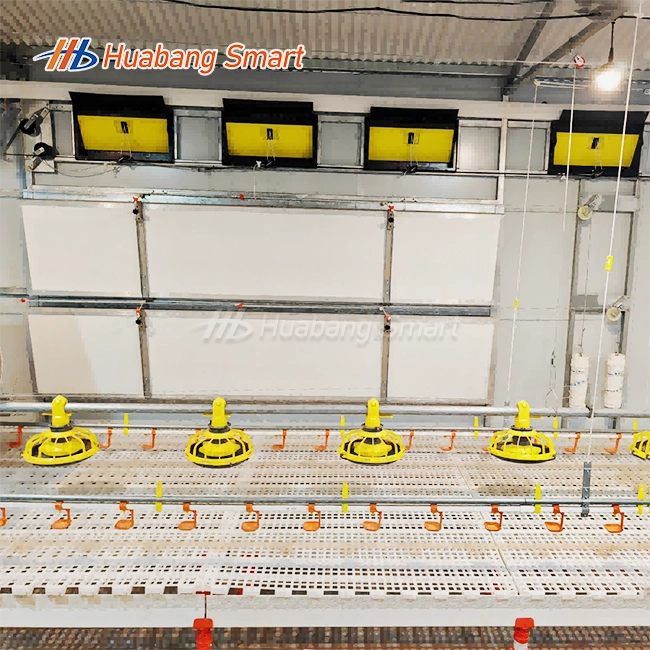
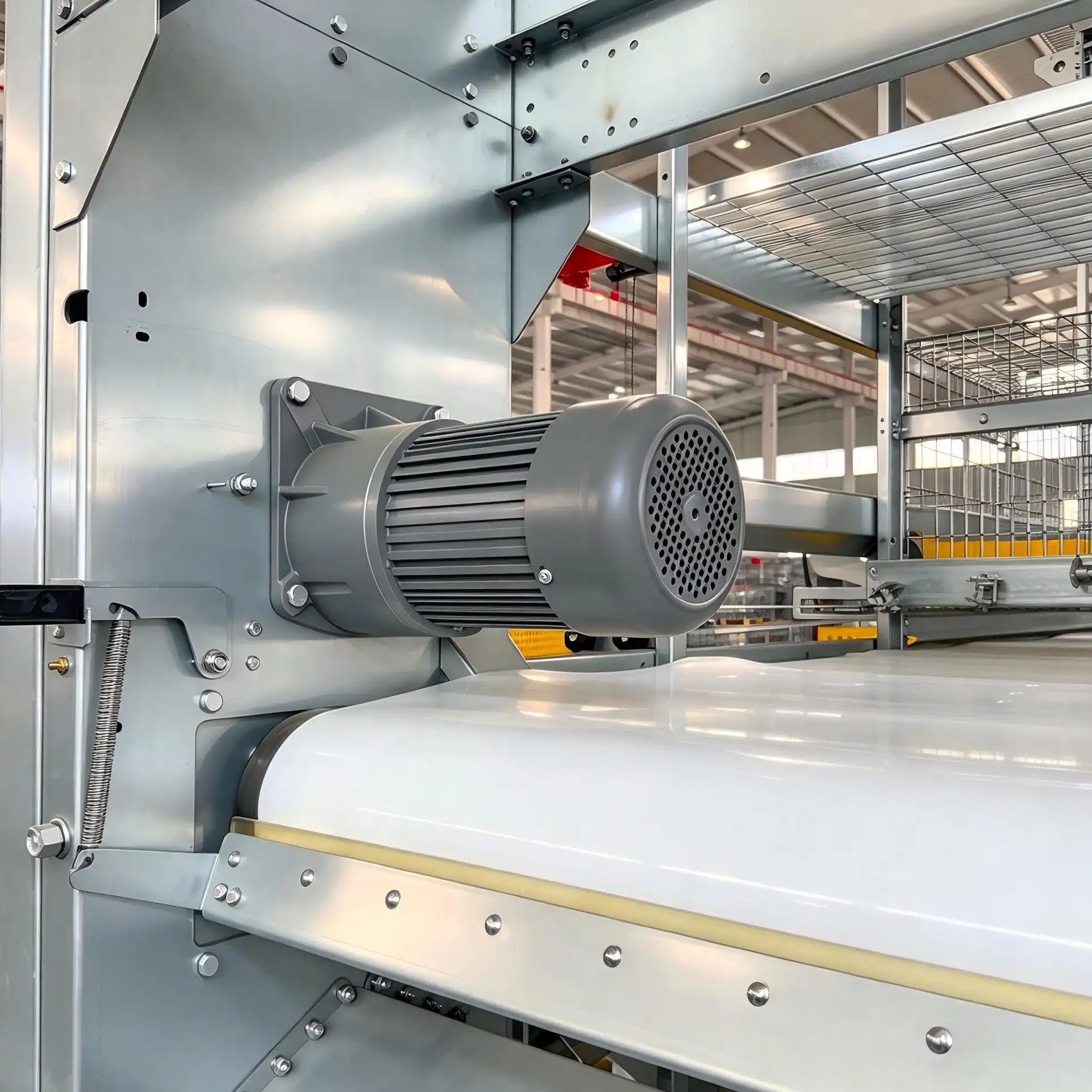
Each tier includes its own automated feeding line, nipple drinker system, PP manure conveyor belt, and a 7-degree-angled bottom mesh that channels eggs to the collection rail without manual handling. This design eliminates repetitive manual labor across all production cycles while keeping egg breakage below 0.3%.
Advantages of Using H Type Layer Chicken Cages Over Traditional Systems
When it comes to floor space, traditional A-type cages need even more than open-floor styles. When you switch to an H-type arrangement, you can figure out how the costs of using space change.
These are the main ways that this system helps big companies make more money and get more done:
- Space recovery of 300%+: By stacking birds vertically rather than spreading them horizontally, the same barn floor now houses three times the flock — without expanding the building envelope or acquiring additional land.
- Labor reduction up to 80%: Automated feeding, egg collection, and manure removal replace manual rounds. Farm staff shifts from physical labor to monitoring and management tasks, reducing overall headcount requirements.
- Egg breakage rate under 0.3%: The precision 7-degree mesh slope and smooth aluminum-zinc wire surfaces guide eggs to collection belts without shell contact damage — a critical yield protection metric for commercial operations.
- Service life of 15–20 years: Hot-dip galvanized steel frames, validated by welding tensile tests confirming support loads above 60 kg per unit, deliver a long asset life that justifies the initial capital outlay.
Because of these performance metrics in the H Type Layer Chicken Cage, the return on investment is better. For every egg laid, farms with 100,000 or more birds say their systems are cheaper and pay for themselves faster than systems that need more land and more workers.
Comparing H Type Layer Chicken Cages to Other Cage Systems
Procurement managers evaluating cage systems generally compare H-type against A-type cages and conventional flat battery cages. Each system carries different cost, space, and operational profiles.
H-Type vs. A-Type Cages
A-type cages slope outward from a central spine, which creates an inherently wider footprint per bird. Manure from upper tiers falls onto lower cages, increasing contamination risk and cleaning frequency. H-type cages use dedicated per-tier manure belts, eliminating cross-tier contamination entirely and maintaining better air quality throughout the house.
H-Type vs. Conventional Battery Cages
Standard battery cages typically reach only 3 to 4 tiers, capping stocking density. They also rely on centralized manure pits that require manual cleaning cycles. The H-type system's automated PP belt transport removes waste continuously, which lowers ammonia levels and reduces layer mortality rates through consistent biosecurity.
Cost and Certification Transparency
Huabang Smart's H-type system carries ISO 9001 and CE certifications, which matter in B2B procurement contexts where compliance documentation is reviewed during technical evaluation stages. The 12-month international warranty and available OEM/ODM customization allow procurement teams to tailor both specifications and commercial terms to their project requirements.
Installation, Maintenance, and Lifespan of H Type Layer Chicken Cages
You need to plan ahead to set up a multi-tier cage system in a big chicken house. This is where support from suppliers helps EPC workers and farm project managers decide what to do.
Pre-Installation Planning and Layout
Before the equipment is sent, Huabang Smart gives you detailed layout plans, configuration lists, and plans for the site. Project deadlines can be met because production rounds last between 30 and 60 days. It takes a lot less time to put together the modular cage units on-site because they are already cut out and labeled.
Routine Maintenance Protocols
As part of daily upkeep for an H Type Layer Chicken Cage, any dirt or dust is removed from the feed belt tracking alignment, the nipple drinker flow rates, and the egg collection rails. The zinc layer on high-contact areas is checked every month to make sure it is stable. As long as the system is in use, the steel frame won't need much maintenance because it doesn't rust at the material level.
After-Sales Support and Warranty
There is a 12-month guarantee on the system, and you can always get video installation guides, help with installation, and chicken care tips. The technical team at Huabang Smart helps customers with everything, from planning the system to making sure it works after it's been set up. They make sure farms stay open from the start of the first output run.
How to Procure H Type Layer Chicken Cages: Supplier Insights
If you want to buy a big cage system, you should look at more than just the price per unit. Technical capacity, manufacturing verification, and post-sale support infrastructure all have an impact on how operations turn out in the long run.
Verify Manufacturing Credentials
Since its start in 2012, Huabang Smart has had its main office in Qingzhou, Shandong Province. It is approved by both ISO 9001 and CE and has 49 patents on important technologies. For 17 years, the company has been planning and making things. Their items have been used in more than 100 countries. International buying teams know they can trust them because of how many times they have exported goods.
Customization and OEM/ODM Capability
The weather, the size of the barn, and the type of flock all have different effects on the farm. Huabang Smart can do full OEM/ODM production, which means they can make unique cage sizes, tier setups, and automation module specs based on what the customer wants. When EPC workers have this much freedom, they can make whole farm systems instead of just fitting a standard product into a non-standard area.
Sample Service and Global Logistics
Clients can ask for samples to look at before committing to a full project order. For projects in Southeast Asia, the Middle East, Africa, and Eastern Europe, the company offers installation guides in more than one language and takes care of shipping for orders from other countries.
Conclusion
The lack of space is one of the worst things about industrial chicken farming. That problem is solved by H Type Layer Chicken Cage designs, which make the room up high useful for housing. It takes up more than 300% less room on the floor for each bird. Because these systems feed, water, pick up waste, and collect eggs all by themselves, they keep hygiene up to date, cut down on labor costs, and protect the quality of egg yields on a large scale. Farmers, EPC contractors, and procurement managers looking for capital equipment for large-scale laying operations can get more out of the infrastructure they already have with the H-type system. It is a well-known and tried-and-true method.
FAQ
What is the stocking capacity of an H-type layer cage system?
There are different ways to set up the tiers, so one full set can hold anywhere from 90 to 200 hens. They come in three to eight levels, and more than 100,000 birds can live in one chicken coop if they are put together in multiple rows.
How does the H-type cage manage manure?
A separate PP polyethylene belt moves things from one level to the next. No matter what, the waste is always being moved out of the house by the belt. So that the laying process stays stable, this keeps the air clean.
What is the expected egg breakage rate?
When the method is set up right, less than 0.3% of eggs break. Eggs don't break when they're put on the collection rail because the bottom mesh is 7 degrees offset and the surface is made of smooth aluminum-zinc wire.
How long does the cage system last?
If you take good care of them, hot-dip galvanized steel frames can last 15 to 20 years. A salt spray test is done on every batch of output for 72 hours before it is sent out to make sure it won't rust.
Does Huabang Smart support international installation?
Yes. The business provides video installation guides, on-site installation help, and tips on how to handle chickens for projects in other countries. There is also a 12-month guarantee on the whole setup.
Partner with Huabang Smart for Your Next Poultry Project
Huabang Smart makes H Type Layer Chicken Cage systems for making a lot of eggs for sale. They have been making these products for 17 years, and more than 100 countries use them. They are ISO 9001 and CE approved. Our team can help you with everything, from planning the layout to running the facility once it's set up. This is true whether you are a H Type Layer Chicken Cage maker partner, an EPC contractor, or a farm investment group building a new facility. Right now, you can email us at admin@huabangsmart.com or visit poultrycage.com to get a full plan or a taste of our offer.
References
1. Appleby, M. C., Mench, J. A., & Hughes, B. O. (2004). Poultry Behaviour and Welfare. CABI Publishing.
2. Bell, D. D., & Weaver, W. D. (2002). Commercial Chicken Meat and Egg Production (5th ed.). Springer Science & Business Media.
3. FAO. (2014). Poultry Development Review. Food and Agriculture Organization of the United Nations.
4. Lay, D. C., Fulton, R. M., Hester, P. Y., Karcher, D. M., & Mench, J. A. (2011). Hen welfare in different housing systems. Poultry Science, 90(1), 278–294.
5. National Chicken Council. (2023). US Broiler and Egg Production Statistics. National Chicken Council.
6. Xin, H., Berry, I. L., Tabler, G. T., & Costello, T. A. (2001). Heat and moisture production of poultry and their housing systems. Transactions of the ASAE, 44(6), 1851–1857.

USER EVALUATE
Here is the customer's evaluation of us