



How to Select Battery Cages For Poultry Chicken Layer Farms?
Battery Cages For Poultry Chicken Layer farms: First, think about how many chickens you want to have, how big your house is, the rules in your area about egg production, and how you will hire people to help you. Then, use the same technical drawings to contrast the type of cage, the number of tiers, the level of automation, the quality of the coating, and the support from the supplier. Buyers can avoid redesigns and get fair prices if they make these points clear before they ask for quotes. This guide explains each step in simple terms, from how to build the cage and how much it can hold to how to keep it in good shape. That way, you can compare any offer to clear numbers. I'll also tell you more about the Huabang Smart H-type system.
Understand Battery Cages For Poultry Chicken Layer and Define Your Farm Needs
How Battery Cages Work for Laying Hens?
When eggs are being raised for sale, battery cages are made of wire sections that can be moved around and put together in rows and tiers. There is a 7–9-degree slope on the floor of each compartment. This keeps the eggs from rolling onto the droppings or onto a collection belt. Birds stay away from waste and diseases that live in the soil because manure falls through the wire and onto a belt. With floor systems, it's harder to tell how much feed and eggs are being used. With fixed lines for feed, water, and eggs, you can get a better idea. They have a floor slope of 7 to 9 degrees and break less than 0.3% of eggs. This is how our H-type layer systems are built.
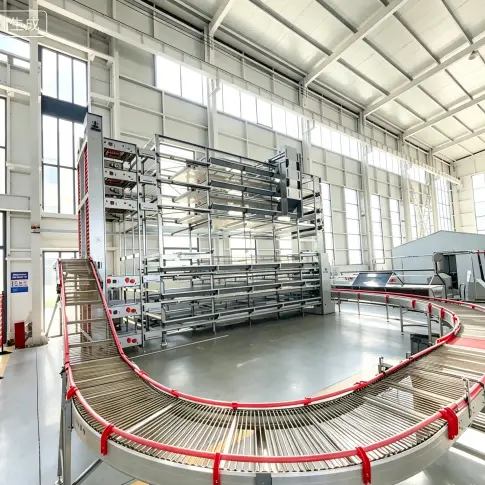
Layer Battery Cage System Structure
The box is not the only part of a full setup. It has wire mesh sections, feed troughs, nipple drinkers, egg-collection belts, manure belts, walks, and sensors that can be added if needed. The frame is made of stainless steel. The frame is extra-thick 3 mm hot-dip galvanised steel, and the mesh is finished with aluminum-zinc. There is 5 cm more space in the middle so that more air can flow through it. Feed tubs are made of PVC with strengthened sides to cut down on waste, and dung bands are made of PP polypropylene. When you compare prices from different sources, it helps to know which parts belong with which price so you can find them.
Define Farm Requirements Before You Compare Quotes
Write a project outline first. How long, wide, and tall is the house? How many doors and air vents does it have? Pick a flock size goal and leave room for the flock to grow and for paths to appear. Make a plan for where the utilities, feed bins, egg rooms, and manure handling areas will go. Then check out the rules of your market. You can't sell eggs from regular boxes in some U.S. states, like California and Massachusetts. Also, United Egg Producers rules say that each hen needs to have its own area. Make sure you know what the sellers and state officials want before you spend. This company can give you exact plans, capacity estimates, and bills of materials if you give them a clear brief.
Compare Cage Types, Tier Options, and Capacity
A-Type and H-Type Layer Cages
A-type cages stack in a stepped pattern that lets air flow and makes it easy to get in and out. In places with a lot of dampness and warm weather, we use them in homes with open sides. H-type cages can be stacked vertically, so they can hold more birds per square foot of floor space. You can also feed the birds, collect their eggs, and clean up their poop all from one place. If you have 50,000 to 100,000 birds in your house, H-type is the best choice. A multilayer H-type battery is the most important part of our system. The kind should be picked based on the weather, building height, and workload, not on price.
Tier Options: 3, 4, 5, 6, or 8 Tiers
The amount of space, airflow, and daily access can change based on the tier count. You can set up our H-type system in 3, 4, 5, 6, or 8 tiers, and you can change each one to suit your needs. For places with low ceilings or basic temperature control, having fewer steps makes it easy to check on and change the flow of air. Birds need good airflow, safe access for workers, and enough building height. More floors mean more birds per square foot of floor space. There are both small and large operations, with more than 100,000 layers. Small operations have only 500 birds. Tell each supplier to draw the tier layout with your real ceiling height in mind. This way, you can be sure that the airflow and walkways will still work.
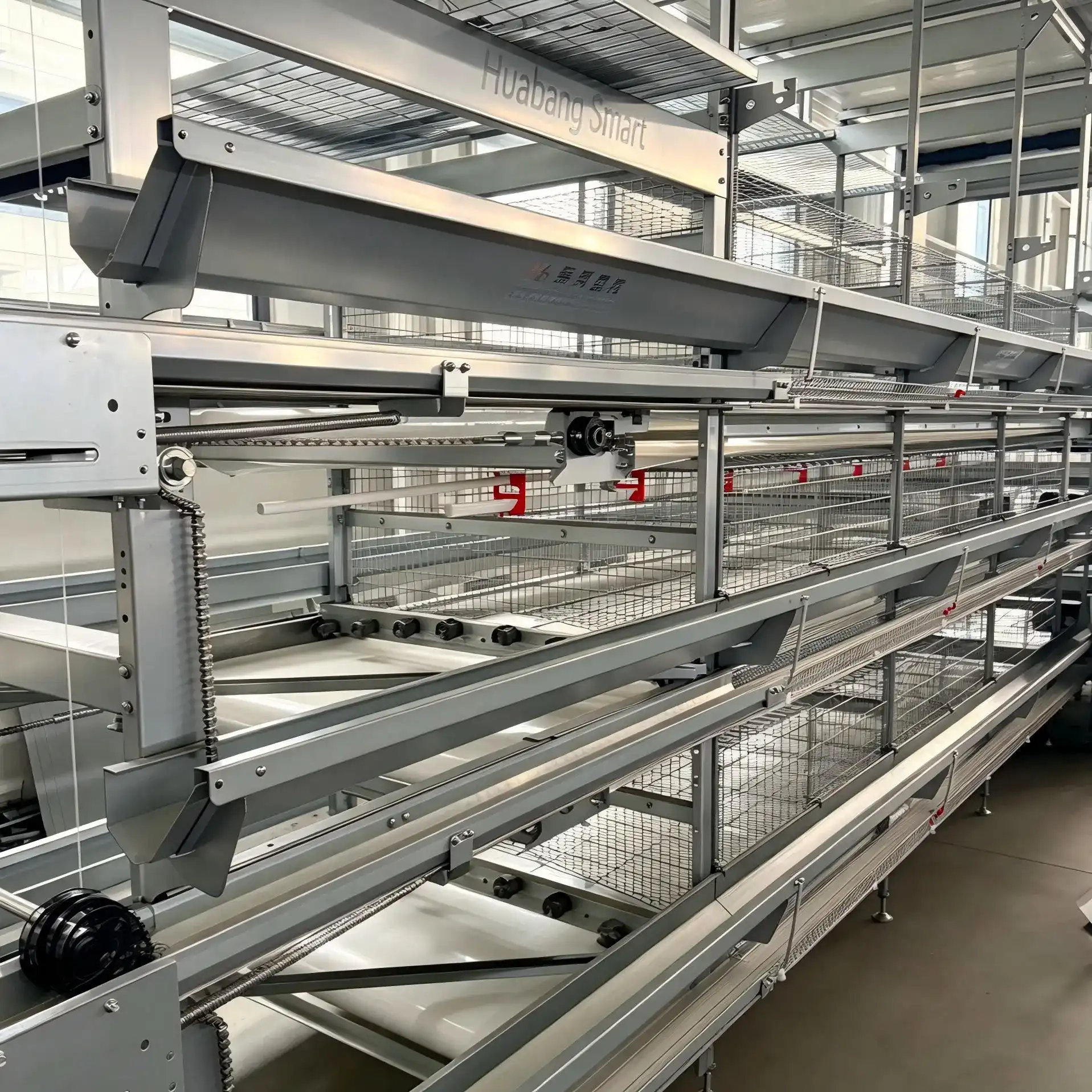
Cage Dimensions and Chicken Capacity
Each of our Battery Cages For Poultry Chicken Layer modular units is 1.2 m x 1.2 m x 0.45 m, which is 3.9 ft x 3.9 ft x 17.7 in. Based on how it's put together, a set can hold a certain number of birds. There is 450 to 550 cm² of floor space for each bird, which is 70 to 85 square inches. To find the number of tiers and rows, increase the number of compartments per row by the number of hens that can fit in each compartment. Look at the drawing from the buyer, the supplier, and the state rules and compare it to the result. People, egg elevators, manure belts, and airflow all need space, so an ideal maximum should never be used instead of a plan that works. For smaller Leghorns or bigger breeds that are used for more than one thing, the lines may be shorter or taller.
Evaluate Automation, Materials, and Biosecurity
Automatic Feeding, Watering, Egg Collection, and Manure Removal
Four daily tasks are linked by a battery cage system for laying hens that can run on its own. Animals are fed at set times, given water with little spillage by nipple drinkers, moved eggs to the processing area without touching them, and have their manure belts run at set times. People don't have to do as much work with our fully automatic design as with other systems. This lets staff focus on keeping an eye on things. When you are looking at different offers, you should find out how consistent the feed distribution is, how much water pressure and filtration there is, how much the conveyor can hold, and when the belts run. Feeding by hand costs less at first, but every day it takes more work and needs to be watched more closely.
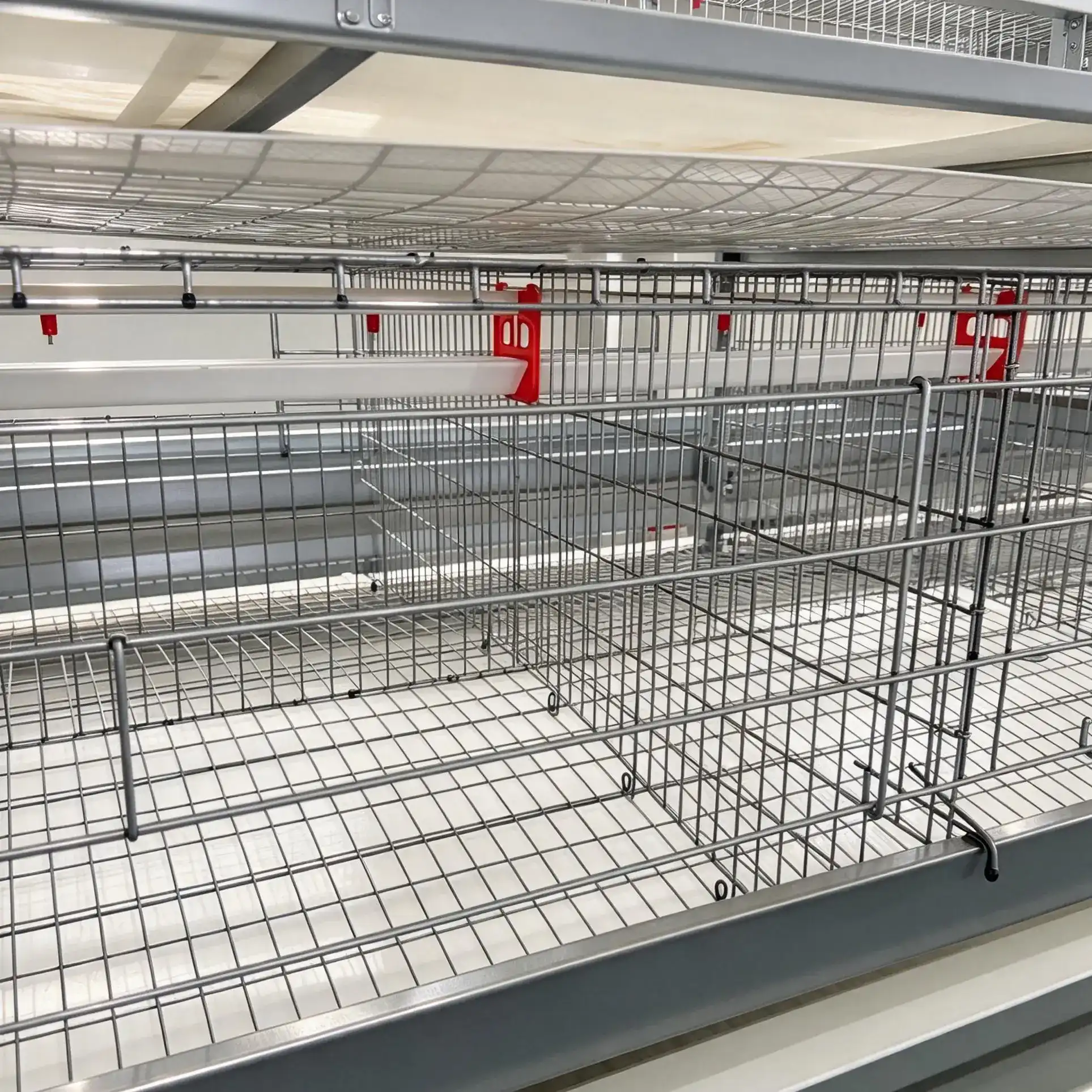
Material, Coating, and Durability
Ammonia and water can damage steel quickly, so the coating's quality has a big effect on how long it lasts. We hot-dip galvanise our parts out of Q235 steel at 275 g/m², and we can also coat them with anything up to 500 g/m². The mesh is made of aluminium and zinc, and our tests show that it will last between 15 and 25 years. Hot-dip systems can last up to 25 years with the same amount of ammonia, but cold-galvanized systems may only last 5 to 7 years. For hot-dip coatings, make sure the sellers can show you proof of the coatings they've used, and for salt spray coatings, make sure they test to ASTM A123. We check the thickness of zinc with ultrasound, do salt spray tests that last 72 hours, and do zero-burr exams.
Biosecurity, Ventilation, and Smart Monitoring
The shape of the cage changes the airflow and how clean it is. To keep feathers and skin safe, the surfaces are smooth and free of burrs. The space between the wires lets manure fall away from the birds. It's also important to keep ammonia under control. Pollution Research published a review in 2018 that says ammonia from chicken coops is bad for birds, workers, and the environment. Give each level of the cage the right-sized vents to go with it. If you choose to use them, our IoT sensors can check the temperature, humidity, and ammonia levels. Their readings are sent to phones or computers, and they let you know if they change. A big house can stay at 24°C all the time by controlling the temperature. Check to see how well each provider's plan works with your airflow.
Match the System to Your Farm, Budget, and Supplier
Farm Scale, Labor, and Total Cost of Ownership
For small or new farms, a three-tier system is a good place to start because it's easy to keep up and get replacement parts. Most of the time, H-type lines with a lot of space and full automation are needed on large business farms. Any size, look at the total cost of ownership instead of just the item's price. Things like shipping, putting it together, power, labour, extra parts, maintenance, downtime, and service life should all be thought about. A method that cuts work by up to 80% can change the costs, so wages often make the difference. But your results will depend on how well you take care of your flock and how much people in the area earn. Also, it's important that the eggs are good, since more premium-grade eggs have clean shells and few breaks.
Supplier Evaluation Checklist
They do more for you than just offer a catalogue and a good price. Before you pick a company to make battery cages for laying hens, check out these items.
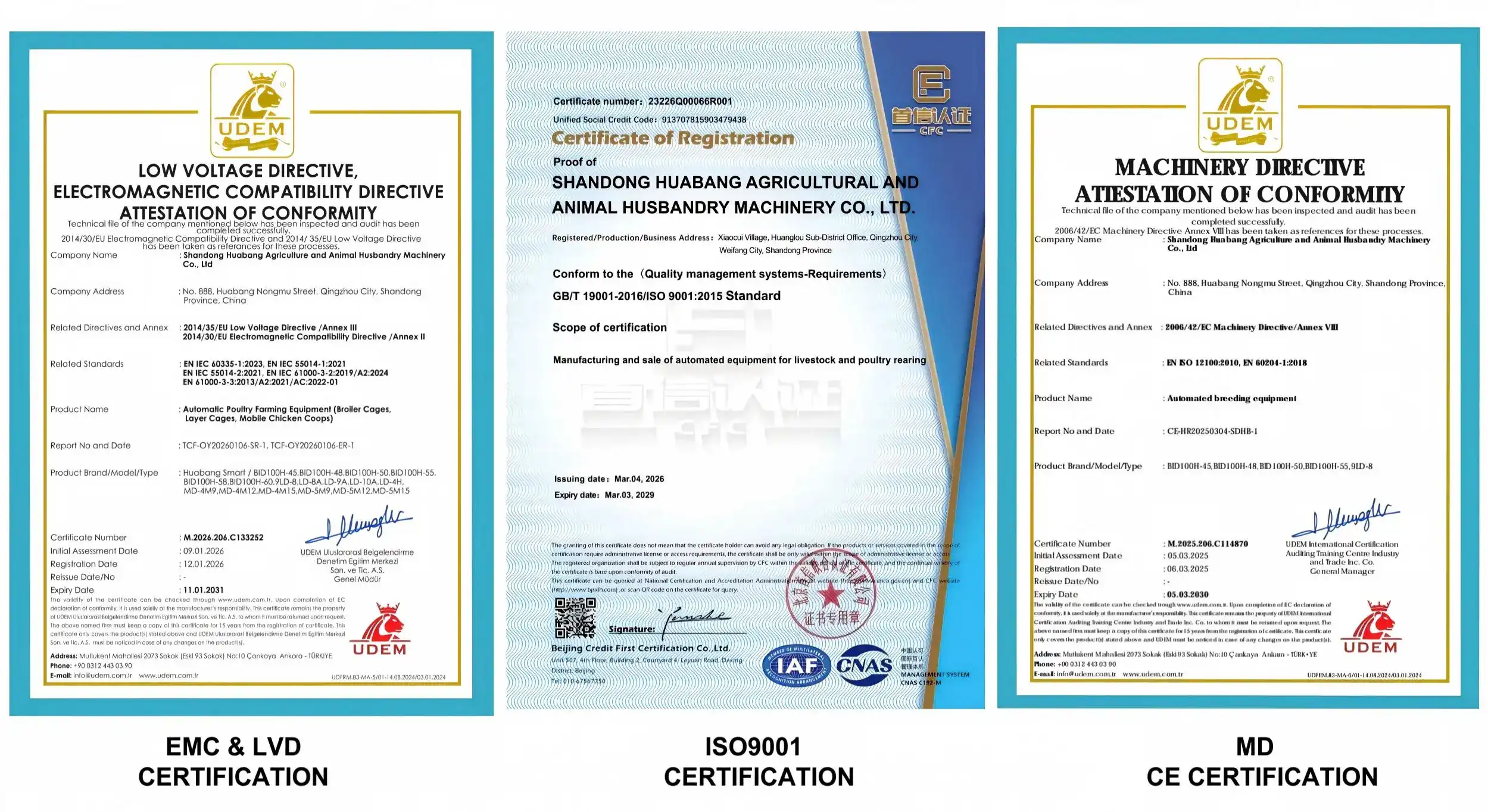
- To show that the product was made and is of good quality, ask for test reports, inspection records, and certificates. The company Huabang Smart has 49 patents on key technologies and is certified to ISO 9001 and CE. It has been designing and making products for 17 years. Before you sign the order, you should find out more about the finish and see pictures of how it was put on other jobs.
- For technology documents, you should ask for a list of the equipment that will be used, how to install it, the terms of the warranty, and when the equipment will be delivered. Make sure that every supplier follows the same rules. It will be easy to tell the difference between the materials, automation, and services after this. We promise to make things in 1 year and in 30 to 60 days.
- Support for projects and services: Make sure that other countries have help with planning the site, setting it up, training, and getting help after the sale. People from more than 100 countries buy from us, and we offer video installation tips, on-site installation, examples, and local after-sales help in other countries. Find out who will be in charge of technical questions after arrival as well.
You can compare prices in a fair way with these checks.
Common Mistakes to Avoid
A lot of people choose the cheapest Battery Cages For Poultry Chicken Layer without making sure it meets their needs. Others are working out capacity without looking at how the building is laid out, waiting to decide on automation until after the system is set up, and not thinking about things like walkway space, airflow, or extra parts. If you buy a cheap system, it might be harder to upgrade or lose eggs, cost more to fix, and break down more often. For less risk, ask for detailed project plans, a full bill of materials, written technical specs, clear service terms, and a clear way to handle things after the sale. Before building the system, find out if you can OEM or ODM it. This will help you if you want to sell it or add it to another system. The technical team from your company can send us plans, and we'll make changes based on those plans.
Plan Installation, Maintenance, and Your Buying Process
Installation and Commissioning
For installation, you will need the provider of the cages, the building team, an electrician, the provider of the water system, and your farm team. The floor of the house needs to be level, and the connections for water, electricity, airflow, drainage, lights, and moving trash need to be planned out. The installers set up the motors, sensors, control panels, feed lines, drinkers, and conveyors. Before the birds come, the team lines up, checks, cleans, and sets up the whole thing. Putting the belts in the right place is very important because it keeps the eggs from getting tiny cracks. We plan the site, give in-depth setup lists and video installation tips, and then set it up ourselves, so teams from other countries know what to do from the first day.
Long-Term Maintenance and Spare Parts
Take care of it before you buy it. Check the screws, tires, bearings, welds, doors, and drinkers every so often and write down what you find. For automatic lines, the motor drives are oiled once a month, and the dung belt is checked to make sure it is tight. Make sure you have extra belts, drinkers, and motor parts on hand, and ask the seller how quickly they can ship other parts. Our systems are guaranteed for one year, and our expert team helps customers with everything, from planning the system to keeping it running after it's been set up. It's also easier to clean and fix things between groups when they have smooth surfaces and parts that can be taken off.
A Step-by-Step Selection Process
Use the same run order for every job. To begin, write down your production goals, flock size, building conditions, labour needs, and growth plans. Second, compare A-type and H-type patterns, tier numbers, and whether the process is fully automated, slightly automated, or done by hand. Third, look over the technical plans to make sure they show the correct sizes, weights, materials, air fit, and how the things are connected. Fourth, get similar quotes that include prices for transporting, setting up, training, and warranty for the equipment. Fifth, make sure you agree with the layout, the bill of materials, the commissioning plan, and the training schedule before the making starts. Tech and business decisions are easy to keep track of with this order. Problems are found on paper instead of in the chicken coop, which keeps the cost of changes low.
Conclusion
When picking Battery Cages For Poultry Chicken Layer Farms, it's more important that the system fits the farm than how much it costs. First, write down the size of the group, the house, and the market rules. Next, pick the type of cage and the number of levels. Make sure the numbers you get match the plans for the cage. Feeding, watering, collecting eggs, and getting rid of manure can all be done automatically, which saves time. The service life of ammonia-heavy houses is determined by the tests, the thickness of the coating, and the quality of the steel. Air flow, sensors, and a smooth surface all help with biosecurity and egg quality. Not only the price of the item itself, but also the total cost of ownership, supplier documents, planning the installation, and getting spare parts are very important. With a well-organised plan and similar lines, you can avoid common mistakes and make a system that will last.
FAQ
What is the best cage type for a layer farm?
The rules, the number of birds, the height of the building, the amount of work that needs to be done, and the need for technology all play a role. Homes that are big and wet may do better with the A-type, while homes with open sides that are in warm, wet places may do better with the H-type.
How do I calculate how many hens a cage system holds?
There are tiers and rows. To find them, multiply the number of compartments per row by the number of hens in each compartment. You should see how the number fits with area rules and the supplier's plans. Ninety to two hundred birds can fit in our H-type sets.
How long do galvanized layer cages last?
Hot-dip galvanised systems can last 20 to 25 years in the same amount of ammonia, but cold-galvanized systems may only last 5 to 7 years. Our list has years from 15 to 25.
Can the cages be customized?
Yes. Based on drawings, we can do OEM and ODM work, and we can change the height and wire spacing to fit different breeds.
Request a Layer Battery Cage Recommendation from Huabang Smart
Ready to compare options? Send Huabang Smart your flock size, house dimensions, destination, preferred tiers, automation level, and delivery date, and we will return a capacity calculation, layout drawing, equipment list, and quotation. As a direct-source Battery Cages for Poultry Chicken Layer manufacturer with ISO9001 and CE certifications, 17 years of experience, and installation support, we adapt each system to your project. Email ginny260831@gmail.com or huabangsmart002@gmail.com today.
References
1. United Egg Producers, Animal Husbandry Guidelines for U.S. Egg Laying Flocks, 2017
2. California Proposition 12, Prevention of Cruelty to Farm Animals Act, 2018
3. Poultry Science, Lay et al., "Hen Welfare in Different Housing Systems," 2011
4. Environmental Science and Pollution Research, Naseem and King, "Ammonia Production in Poultry Houses Can Affect Health of Humans, Birds, and the Environment," 2018
5. ASTM International, ASTM A123/A123M Standard Specification for Zinc (Hot-Dip Galvanized) Coatings on Iron and Steel Products, 2017
6. ASTM International, ASTM B117 Standard Practice for Operating Salt Spray (Fog) Apparatus, 2019

USER EVALUATE
Here is the customer's evaluation of us
YOU MAY LIKE
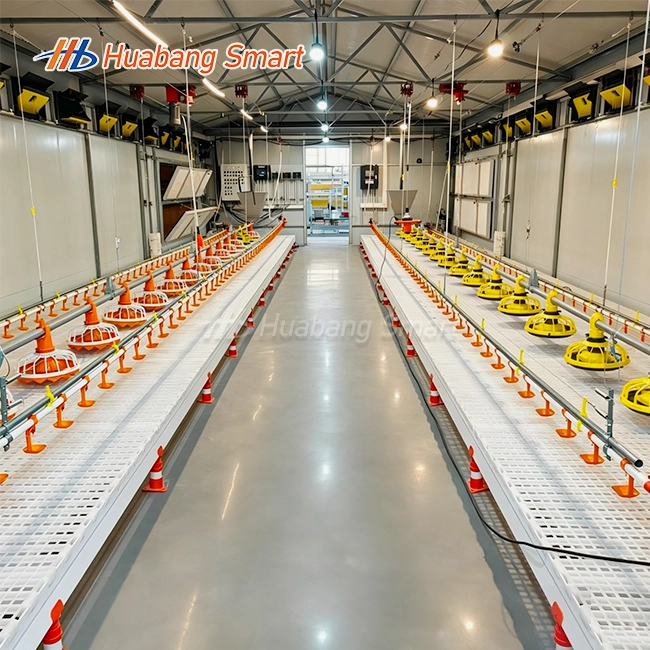 VIEW MOREAutomatic Chicken Feeder System
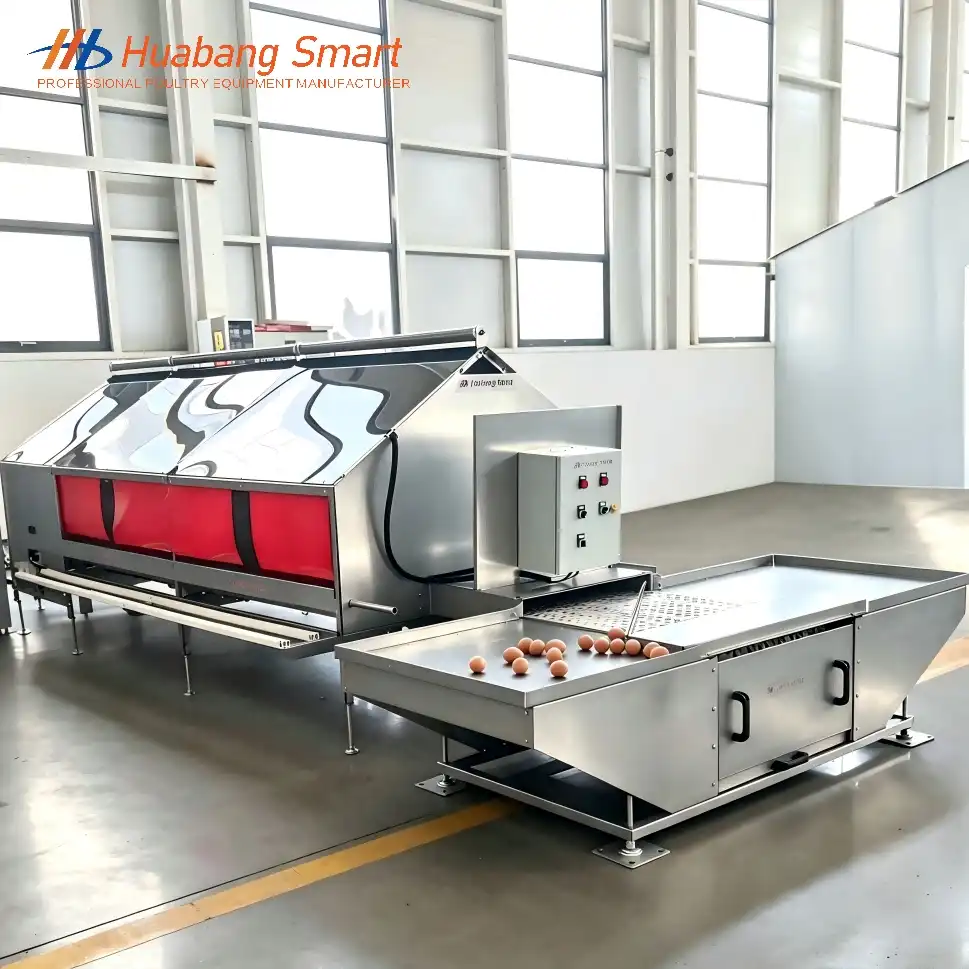 VIEW MOREautomatic roll out nesting box for laying hens
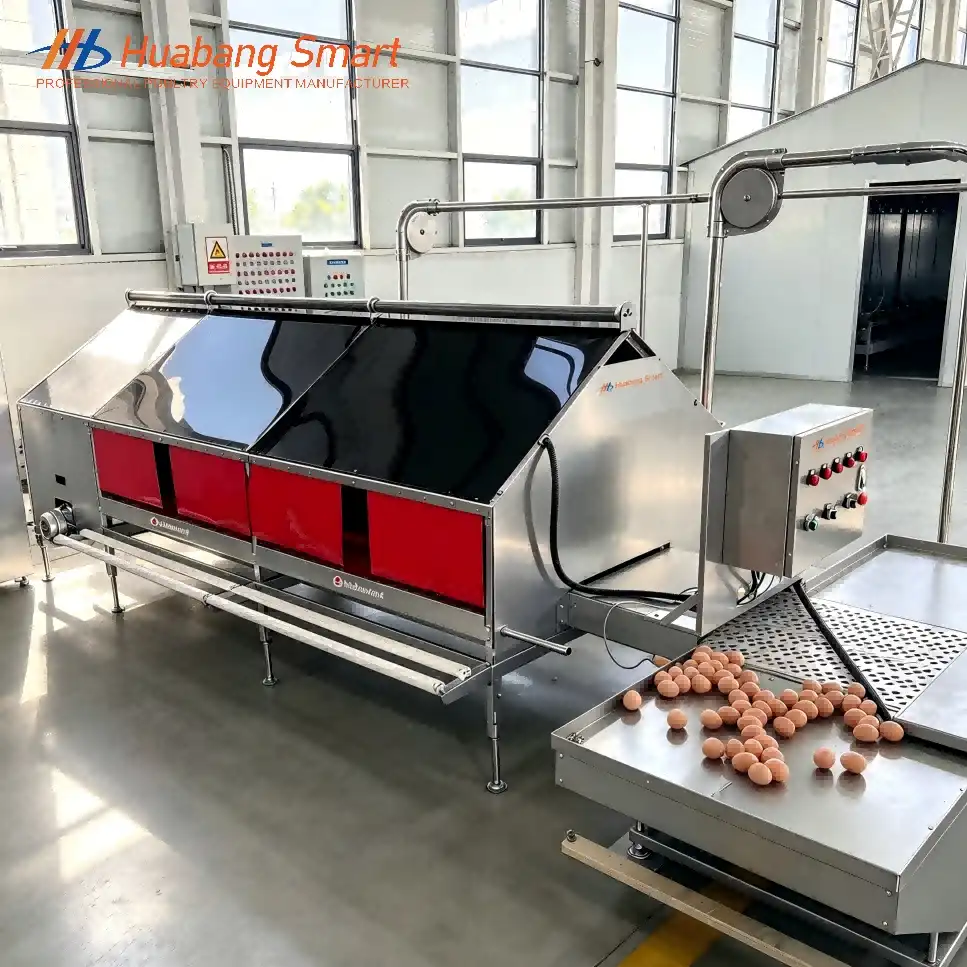 VIEW MOREautomatic nest system for layers
(1)_1793071559822.webp) VIEW MOREanti egg pecking nesting box
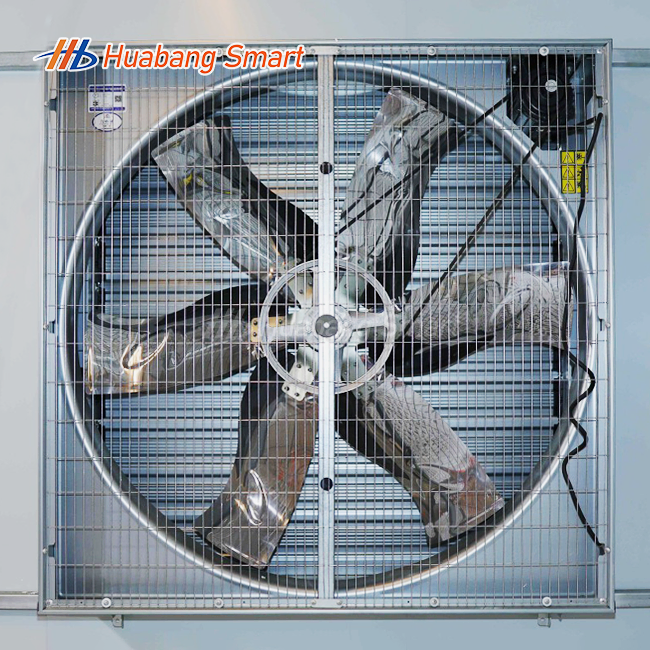 VIEW MORECooling Fan For Farm
 VIEW MOREAutomatic Chicken Feeder And Waterer
 VIEW MOREElectronic Chicken Feeder
 VIEW MOREChicken Cage Broiler Automatic