
Automatic Poultry Drinking System for Large-Scale Broiler Farms and Floor-Rearing Houses
An automatic poultry drinking system is a pressure-regulated water delivery network that supplies clean water to birds on demand through nipple drinkers, water cups, or bell-type outlets. For large-scale broiler farms and floor-rearing houses, it replaces manual bucket filling with a closed-loop pipeline that runs continuously, controlled by pressure regulators and smart monitoring modules. Research published by the University of Georgia Cooperative Extension confirms that broilers consume roughly twice their feed weight in water daily, making consistent water access directly tied to growth rate and flock survival.
Understanding Automatic Poultry Drinking Systems: Principles and Benefits
Water is not a secondary input in broiler production — it is the single largest daily nutrient. Before automated watering became standard, farmhands refilled open troughs multiple times per day, introducing contamination at each step. A properly designed poultry nipple drinking line closes that pathway entirely.
How the System Works
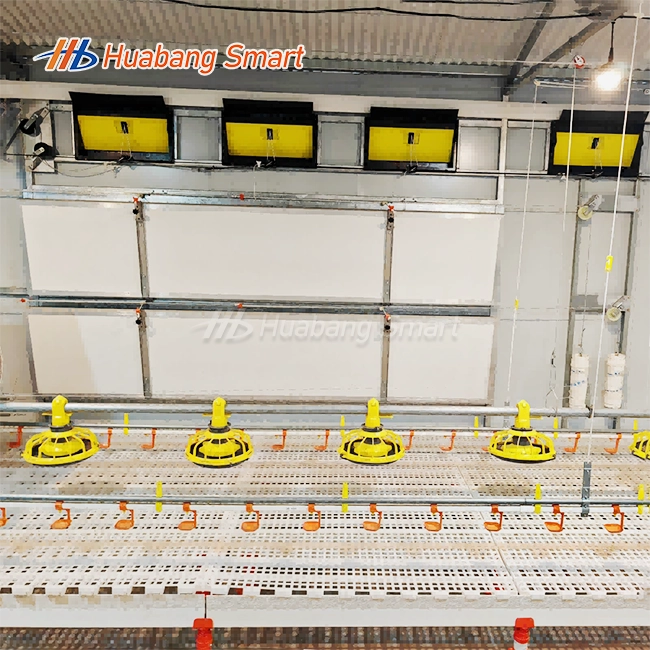
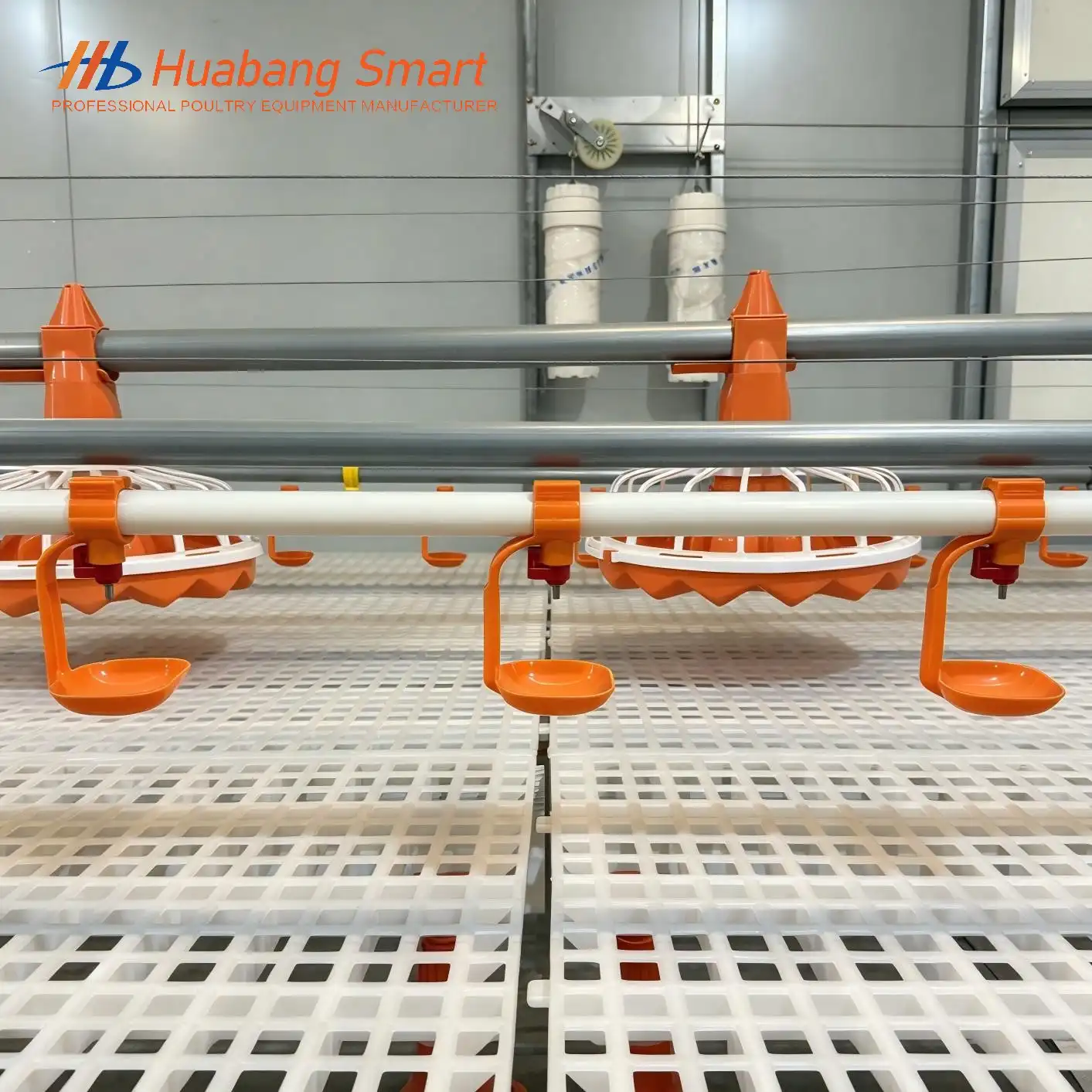
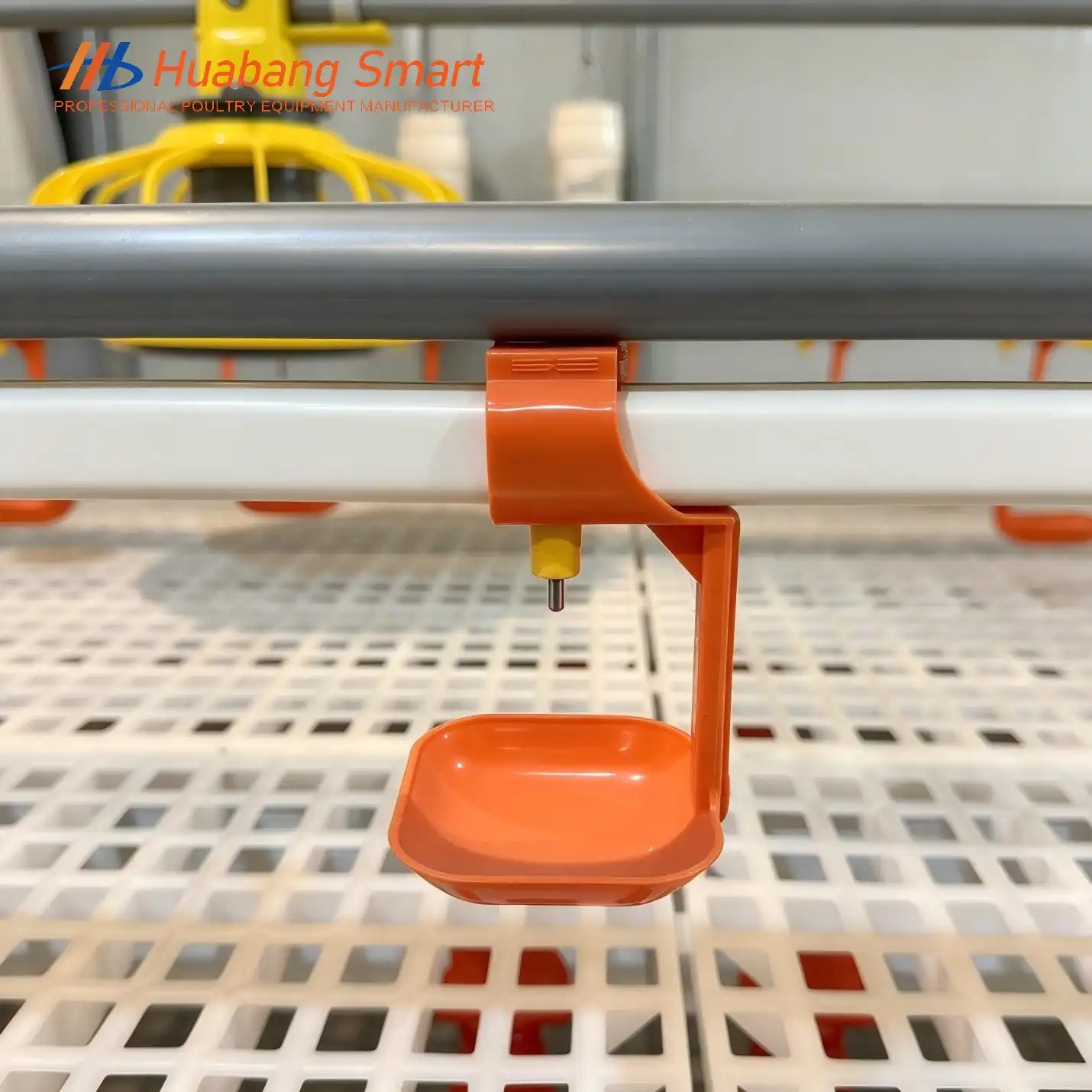
Water flows from a header tank or mains supply through a pressure regulator into a distribution pipe. Each nipple drinker or water cup sits at a fixed interval along the pipe, releasing water only when a bird touches the trigger pin. Residual water collects in thickened water cups beneath each nipple, preventing floor spillage that creates wet litter conditions linked to footpad dermatitis and coccidiosis.
Why Automation Outperforms Manual Watering
Automated systems deliver water at a consistent pressure regardless of flock size or time of day. In contrast, manual systems depend on worker schedules, leaving birds without water during shift gaps. According to Aviagen's Broiler Management Guide, even four hours of water deprivation can reduce final body weight by up to 2%, a measurable production loss per cycle.
Hygiene and Disease Reduction
Closed pipelines prevent dust, feed particles, and fecal matter from entering the water supply. This reduces bacterial load at the point of delivery, which lowers medication costs and mortality rates across a production cycle.
Types of Poultry Drinking Systems and Comparative Analysis
Not every watering solution suits every farm layout. Procurement managers evaluating a poultry water supply system should weigh system type against flock density, house dimensions, and maintenance capacity.
Nipple Drinkers vs. Cup and Bell Systems
Nipple drinkers are the dominant choice for modern broiler houses because they are a key component of an Automatic Poultry Drinking System, delivering water only on contact and keeping litter dry. Bell drinkers hold an open water surface that collects debris and requires daily adjustment. Cup-type systems with residual water collection represent a middle ground, particularly well-suited to floor-rearing houses where younger chicks need easier access.
Round Pipe vs. Square Pipe Configurations
Pipe shape affects both hydraulics and structural performance. Round pipes deliver a softer water flow and allow flexible mounting angles, making them easy to clean. Square pipes resist bending under long-span installations, provide tighter joint sealing, and carry higher load capacity without axial rotation — an important factor in houses exceeding 100 meters in length.
Key Evaluation Criteria for 2024 Procurement
When comparing drinking line systems currently available on the market, three factors consistently separate reliable products from underperforming ones:
- Material grade: A 304 stainless steel nipple valve resists corrosion from water additives such as acidified water or hydrogen peroxide. UV-resistant plastic housings prevent degradation in naturally lit houses, extending service life beyond five years under normal conditions.
- Valve precision: A high-sensitivity 360° trigger mechanism, such as the sealed double-valve design used in Huabang Smart's nipple drinkers, activates with minimal force and reseals completely after release, preventing continuous drip that saturates litter.
- Pressure regulation compatibility: Systems that pair with adjustable pressure regulators allow farm managers to fine-tune flow rate by bird age — lower pressure for day-old chicks and progressively higher flow for market-weight birds.
These criteria directly affect Feed Conversion Ratio (FCR), litter condition scores, and per-cycle medication expenditure, all of which procurement managers should request data on before finalizing supplier selection.
Installation and Maintenance: Ensuring System Longevity and Efficiency
A technically sound Automatic Poultry Drinking System installed incorrectly will still underperform. Installation quality and ongoing maintenance determine whether the system delivers its rated service life.
Liftable Drinking Lines and Height Adjustment
In floor-rearing broiler houses, birds grow from day-old chicks to 2.5 kg market weight in approximately 42 days. A liftable drinking line allows the operator to raise the nipple height incrementally, keeping the trigger pin at shoulder height for birds at every growth stage. This single feature measurably improves water intake consistency and reduces floor leakage caused by birds activating nipples at the wrong angle.
Anti-Perching Wire and Structural Protection
An anti-perching wire fitted above each drinking line prevents birds from roosting on the pipe, which causes the line to bow under concentrated weight and can misalign nipple spacing. It also reduces fecal contamination directly above the water delivery points, maintaining the sanitary advantage that closed-pipe systems provide over open troughs.
Water Quality Management and Flushing Protocols
Biofilm accumulates inside pipes regardless of material quality. The standard protocol calls for end-of-cycle flushing with a chlorine dioxide or hydrogen peroxide solution during the house cleanout period. Daily flushing at the end cap during production removes sediment before it reaches nipple valves. A water volume monitor installed at the header allows farm staff to track daily consumption per house. A sudden drop in recorded volume often indicates a blocked line segment or a failed pressure regulator — both detectable without disassembling the system.
Procurement Considerations for Large-Scale Operations
Buying a poultry watering system as a single equipment purchase is rarely efficient at scale. Large broiler operations and EPC contractors typically procure complete drinking line systems as part of a floor-rearing equipment package, with site planning and commissioning included.
Supplier Selection Criteria
Certification status is a baseline filter. ISO 9001 and CE certifications confirm that the manufacturer's production processes meet internationally audited quality standards. Beyond certification, buyers should evaluate whether the supplier offers OEM or ODM capacity for custom pipe lengths or modified nipple spacing, and whether technical documentation is available in the buyer's working language.
ROI Framework for Automated Drinking Systems
The return on investment for a liftable drinking line system comes from three measurable areas: reduced labor hours for daily water management, lower litter replacement costs due to drier floor conditions, and decreased per-cycle mortality from improved hydration and reduced pathogen exposure. For a 50,000-bird broiler house, farms transitioning from manual watering to automated nipple lines report labor reductions of 60–70% in daily water management tasks.
One-Stop Sourcing and 3D House Design
Huabang Smart provides free farm layout design as part of its one-stop service package. This includes custom chicken-house blueprints, full-range floor-rearing equipment supply, and full-site commissioning — from scheme planning through equipment debugging. Procurement managers working on new-build or retrofit projects can request a 3D house design that integrates the Automatic Poultry Drinking System, feeding systems, and ventilation into a single coordinated layout before any equipment ships.
Future Trends in Poultry Watering Technology
The next generation of poultry drinking systems moves beyond mechanical pressure regulation into data-driven water management.
Smart Control and IoT Water Monitoring
A smart control module connected to flow sensors at each drinking line segment can log water consumption data in real time, flag anomalies automatically, and adjust pressure settings remotely. This replaces the daily manual check with a continuous data stream accessible from a farm management dashboard. Huabang Smart's water volume monitor integrates directly with this architecture, giving operations managers consumption data per house per hour without on-site inspection.
Sustainability and Water Efficiency
Closed nipple systems already reduce water waste compared to open troughs, but pressure optimization can cut consumption further. Properly calibrated regulators matched to bird age reduce overflow events by up to 40%, according to equipment trials documented in Poultry Science journal.
Upgrade Path for Existing Farms
Farms running older bell or trough systems can retrofit liftable nipple drinking lines without rebuilding house infrastructure. Round pipe systems with flexible mounting brackets adapt to most existing ceiling structures, making the transition lower in cost than a full system replacement.
Conclusion
A well-specified automatic poultry drinking system is one of the highest-return investments available to broiler farm operators. Dry litter, consistent hydration, and reduced labor are outcomes that compound across every production cycle. The technology is mature, the ROI is documented, and the installation path is straightforward when paired with an experienced supplier. Huabang Smart's liftable drinking lines, 360° nipple drinkers, anti-perching wire, and smart water monitoring combine into a system built for the demands of large-scale commercial production.
FAQ
How often should nipple drinkers be cleaned?
During active production, flush the end cap daily to clear sediment. Inspect individual nipples weekly for drip or blockage. Between cycles, perform a full system disinfection using hydrogen peroxide or chlorine dioxide. This schedule prevents biofilm accumulation and maintains consistent flow rates across the drinking line.
Can automatic drinkers work in smaller floor-rearing houses?
Yes. Dual water lines and custom pipe lengths mean the system scales down to match smaller house footprints. Huabang Smart supplies round and square pipes in custom sizes, so even a 500-bird rearing house can use the same nipple drinker technology as a 50,000-bird commercial facility.
How does water quality affect system performance?
Hard water with high mineral content causes scale buildup on nipple valves over time, reducing trigger sensitivity and increasing drip frequency. Installing an inline filter at the header tank and periodically descaling with a diluted acid solution keeps valves functioning accurately. Stainless steel 304 valves handle water treatment additives better than standard carbon steel alternatives.
What is the ideal nipple spacing for broilers?
Industry practice places one nipple per 8–12 birds for broilers. At standard density in a commercial floor-rearing house, this typically means one nipple every 25–30 cm along the drinking line, adjusted for house width and water pressure.
Get Your Custom Drinking Line Quote from Huabang Smart
Huabang Smart has been designing and manufacturing automated poultry watering equipment since 2012, holding 49 core technology patents and CE certification. As a direct-source automatic poultry drinking system manufacturer, we supply liftable drinking lines, smart water monitors, anti-perching wire kits, and full floor-rearing equipment packages with free 3D house design included. Contact our technical team at admin@huabangsmart.com or visit poultrycage.com to request a project-specific configuration and competitive quote for your farm or EPC project.
References
1. Aviagen Ltd. Broiler Management Guide. Aviagen Group, 2022.
2. Pesti, G.M., & Bakalli, R.I. "Water Consumption and Its Relationship to Feed Intake and Body Weight in Broilers." Poultry Science, 1996.
3. Lacy, M.P. Broiler Management. University of Georgia Cooperative Extension, 2002.
4. Xin, H., & Shao, J. "Water Use and Water Quality Management in Poultry Production." Journal of Applied Poultry Research, 2002.
5. Bilgili, S.F. "Litter Condition and Broiler Performance." World's Poultry Science Journal, 2010.
6. National Chicken Council. Animal Welfare Guidelines for Broilers. National Chicken Council, 2021.

USER EVALUATE
Here is the customer's evaluation of us