
Automatic Poultry Drinking System Supports Cleaner Coops and More Consistent Water Supply
A well-designed automatic poultry drinking system does more than just deliver water — it directly affects flock health, coop hygiene, and daily labor demands. For commercial poultry operations managing tens of thousands of birds, the difference between a manual watering setup and a properly engineered automated system shows up in mortality rates, litter condition, and long-term production costs. This article walks through how these systems work, what makes them worth the investment, and how to choose and source the right solution for your operation.
Understanding Automatic Poultry Drinking Systems: How They Work and Key Components
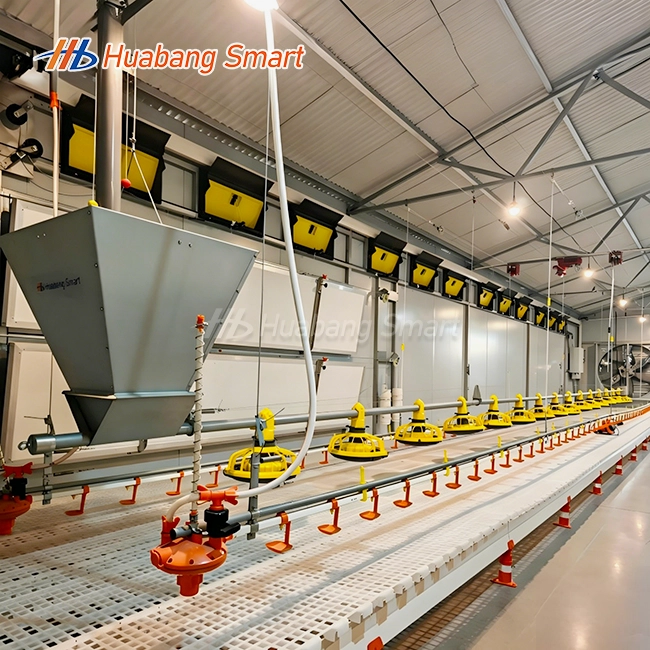
Modern poultry watering systems replace open troughs and manual buckets with a closed-loop delivery network that supplies clean water on demand. Understanding the core components helps farm engineers and procurement managers make accurate system comparisons.
Nipple Drinkers and Double-Valve Technology
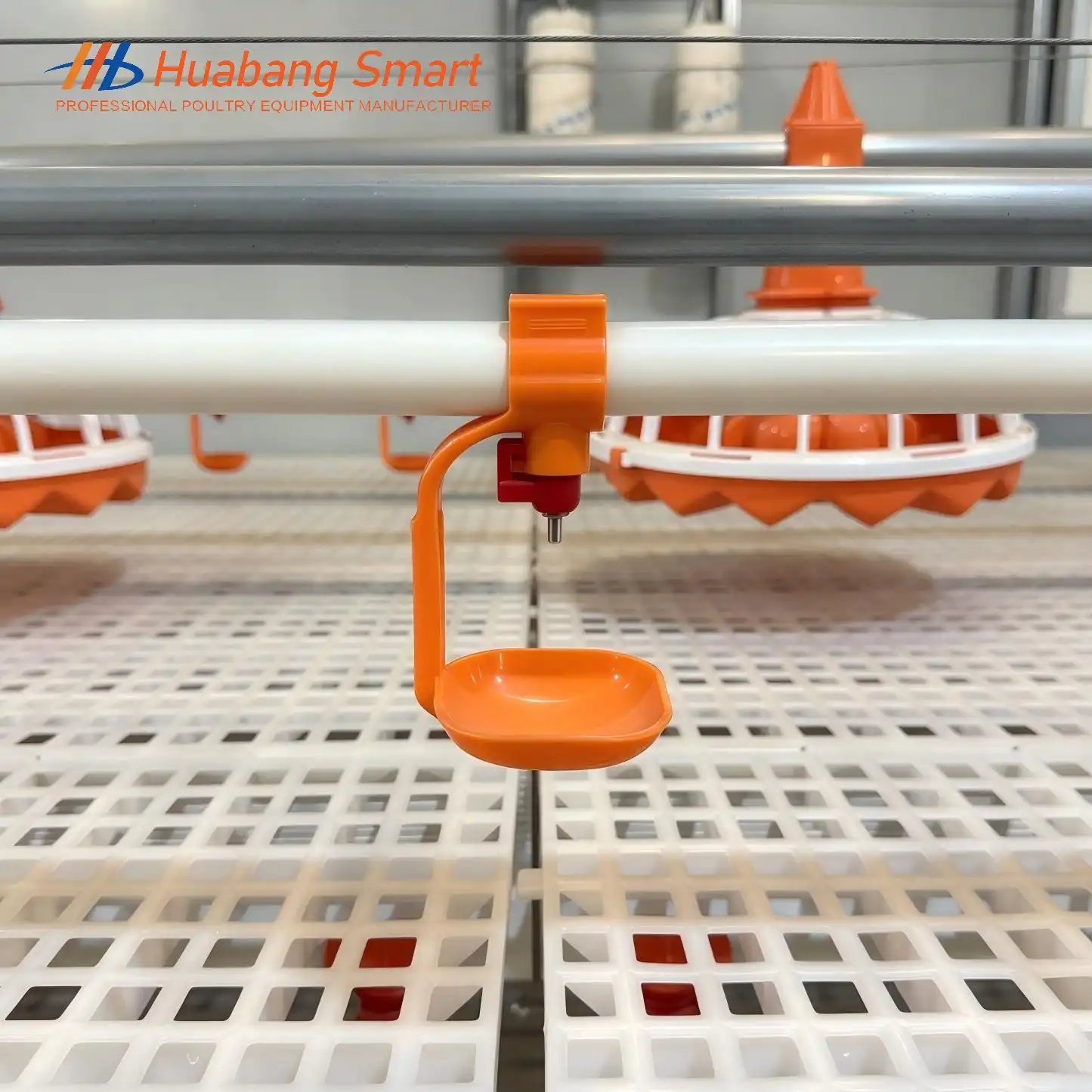
Huabang Smart's 360° poultry nipple drinkers use a sealed, leak-proof double-valve structure. Each nipple is made with a stainless steel valve and UV-resistant plastic body, giving it strong corrosion resistance and a long service life. The 360° sensitivity means birds can trigger water flow from any angle, reducing frustration and improving consumption rates across the flock.
Water Cups and Residual Water Collection
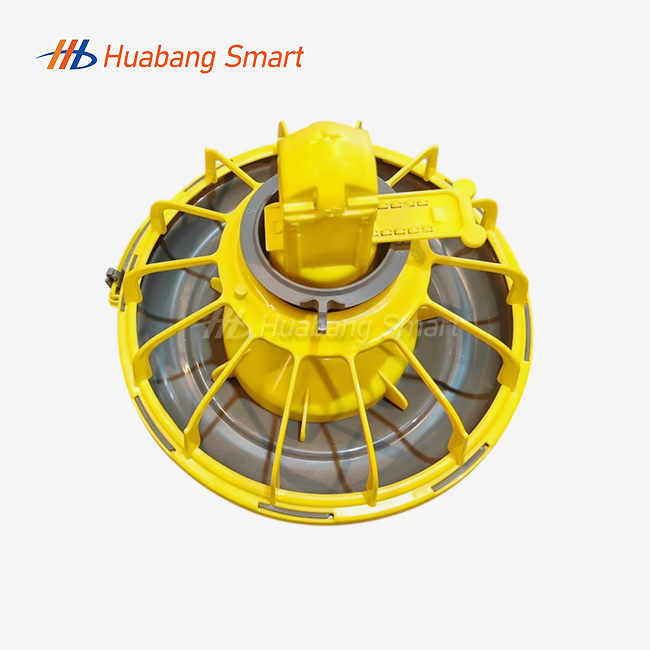
Fitted with 304 stainless steel precision nipple drinkers and thickened water cups, the system captures residual water after each drinking event. This prevents floor saturation and keeps bedding dry. Water cups support a touch-activated outlet mechanism that delivers clean, stable water without dripping between uses — a direct factor in reducing bacterial growth on the coop floor.
Pipeline Options: Round and Square Configurations
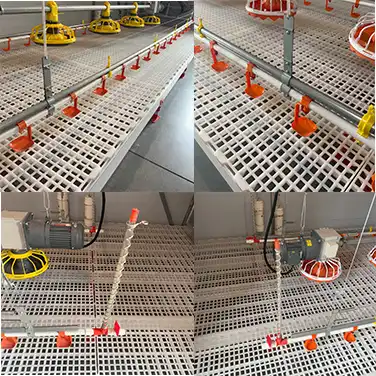
Custom-sized round and square water pipes are both available. Round pipes produce a soft water flow and are easier to clean, with flexible mounting options suited to a variety of house layouts. Square pipes offer higher bending resistance, tighter sealing, and greater load capacity without rotation risk. Both configurations work for floor-raised and cage-type setups, and both support dual water lines to cover operations of any scale.
Benefits of Using Automatic Poultry Drinking Systems in Commercial Operations
The operational value of switching to an Automatic Poultry Drinking System becomes clear quickly, especially on farms managing high bird density. The gains span hygiene, labor reduction, and bird performance.
Here are the core advantages farms consistently report after installation:
- Dry litter and cleaner coops: Because water cups collect residual droplets and the double-valve design prevents leakage, wet litter problems drop significantly. Dry litter directly reduces ammonia buildup, which is one of the leading causes of respiratory disease in broiler flocks.
- Reduced labor dependency: With automated pressure regulation and self-contained delivery lines, farm staff no longer spend time refilling open drinkers or monitoring water levels manually. This cuts daily labor hours and reduces the chance of human error.
- Consistent hydration for better growth: Birds with continuous access to clean water show measurably better feed conversion ratios (FCR). Research published in Poultry Science confirms that water restriction, even brief, negatively affects weight gain and immune response.
- Lower disease risk: Closed-system nipple drinkers prevent wild bird droppings, dust, and feed debris from entering the water supply — a major biosecurity advantage over open trough systems.
These advantages translate into measurable production gains at scale. For farm owners evaluating ROI, the combination of lower disease incidence and reduced labor costs typically offsets system investment within one to two production cycles.
Types of Automatic Poultry Drinking Systems and How to Choose the Right One
Not every drinking line setup suits every farm. Selection depends on species, house structure, climate, and flock density.
Liftable Drinking Lines for Flexible Management
Huabang Smart's liftable drinking line system allows operators to adjust pipe height as birds grow. This is particularly important for broiler operations where body size changes rapidly over a 42-day cycle. Proper drinker height prevents birds from spilling water by pressing upward on the nipple, which is a common cause of wet litter in fixed-height systems.
Smart Control and Water Volume Monitoring
The Automatic Poultry Drinking System integrates smart control capability with a water volume monitor that tracks daily intake across the house. Operators receive real-time data on consumption patterns, which can signal early health issues — a drop in water intake often precedes visible illness by 24 to 48 hours. This IoT-compatible monitoring connects to centralized farm management software for multi-house oversight.
Anti-Perching Wire for Hygiene Protection
An anti-perching wire is installed above the drinking line to prevent birds from roosting on the pipes. Birds perching on water lines deposit droppings directly onto nipple heads, creating contamination points. The anti-perching wire is a straightforward addition that protects water quality and extends cleaning intervals.
Installation, Maintenance, and Troubleshooting: Ensuring System Longevity and Efficiency
A drinking line is only as reliable as its installation quality and maintenance routine. Huabang Smart provides video installation guides, on-site commissioning support, and local after-sales service in overseas markets to address this directly.
Site Preparation and Initial Setup
Proper installation starts with accurate house layout planning. Huabang Smart offers free farm layout design, including custom chicken-house blueprints and drawings calibrated to your specific floor-rearing equipment. Full-site commissioning covers overall scheme planning and equipment debugging before first use.
Routine Cleaning and Biofilm Prevention
Cleaning drinking lines every one to two weeks prevents biofilm formation inside pipes. End-line flush valves built into the system allow operators to purge stagnant water and debris without dismantling components. The smooth internal finish of Huabang Smart's supply pipes reduces organic adhesion, making each cleaning cycle faster and more effective.
Pressure Regulator Inspection and Leak Management
The pressure stabilization module paired with the Automatic Poultry Drinking System drinking line maintains consistent, low-pressure output across the full length of the pipe. Regular inspection of valve integrity and water cup seals catches small issues before they become operational failures. If a nipple drinker shows persistent dripping, the most common cause is debris lodged in the stainless steel ball valve — a high-pressure flush through the bypass mode resolves this in most cases.
Procurement Guide: How to Source and Purchase the Best Automatic Poultry Drinking System
Sourcing a commercial drinking line system requires more than comparing per-unit costs. System reliability, integration capacity, and supplier service depth matter significantly for large-scale projects.
Evaluating Supplier Credentials
Huabang Smart holds ISO9001 and CE certifications and carries 49 core technology patents. With 17 years of design and manufacturing experience and a production cycle of 30 to 60 days, the company supports OEM and ODM orders with custom designs based on client drawings. These credentials signal supplier stability and product compliance for international procurement teams.
Turnkey Project Capability and 3D House Design
For EPC contractors and farm developers, Huabang Smart provides a genuine one-stop service: site planning, product design, detailed configuration lists, 3D house design, full-range floor-raising equipment supply, and on-site installation. This reduces coordination complexity and shortens project timelines. Customers do not need to source individual components from multiple vendors.
Pricing, Volume Orders, and After-Sales Support
Direct factory pricing, fast delivery, and full certification documentation support large-scale procurement decisions. Volume orders qualify for customized pricing structures. After-sales support includes overseas installation guidance and long-term technical assistance — factors that matter significantly for government-backed agricultural programs and international farm development projects in Southeast Asia, the Middle East, Africa, and Eastern Europe.
Conclusion
Water delivery quality sits at the foundation of poultry production performance. A properly specified Automatic Poultry Drinking System keeps coops drier, reduces disease pressure, cuts daily labor requirements, and gives farm managers real-time visibility into flock health. Huabang Smart's product line addresses each of these needs through purpose-engineered components, smart monitoring capability, and a full-service delivery model. For farm owners, EPC contractors, and procurement managers evaluating system upgrades, the combination of technical specification and service depth makes a measurable difference in long-term operational results.
FAQ
How often should poultry drinking lines be cleaned?
Cleaning every one to two weeks is the standard recommendation for commercial operations. Biofilm builds up inside pipes over time and can harbor pathogens that affect flock health. End-flush valves built into Huabang Smart's system simplify this process considerably.
Can the system support both floor-raised and cage-type coops?
Yes. Both round and square pipe configurations are available to match different house structures. The liftable drinking line feature also allows height adjustment for floor-raised broiler houses as the flock ages.
How does the water volume monitor work?
The smart control module tracks water consumption data in real time and flags abnormal patterns. A drop in consumption of more than 15–20% over a 24-hour period often indicates early-stage illness or equipment issues. This early warning capability reduces flock mortality.
What causes nipple drinkers to leak after installation?
In most cases, debris from pipe installation gets lodged in the stainless steel ball valve. Running a high-pressure flush through the bypass mode clears the obstruction. If leaking continues, inspect the double-valve seal for physical damage.
Does Huabang Smart support overseas installation?
Yes. The company provides video installation guides, full-site commissioning, and on-site installation support in international markets, along with local after-sales service in key regions.
Get Your Poultry Watering System Quote from Huabang Smart Today
Huabang Smart offers automatic poultry drinking system solutions built for commercial performance — from liftable drinking lines and smart water monitoring to 3D house design and complete turnkey delivery. As a direct-source automatic poultry drinking system manufacturer with ISO9001 and CE certification, we back every project with engineering support and long-term after-sales service. Contact our team today at admin@huabangsmart.com or visit poultrycage.com to request a custom farm design and equipment quote.
References
1. Poultry Science — Bell, D. D., & Weaver, W. D. (2002). Commercial Chicken Meat and Egg Production (5th ed.). Springer.
2. World's Poultry Science Journal — Xin, H., & Zhang, Q. (2001). Drinking system management and its effect on broiler performance and litter condition. Vol. 57(2).
3. Journal of Applied Poultry Research — Lott, B. D., & Donald, J. O. (1999). Water consumption and watering system management in commercial broiler production. Vol. 8(1).
4. Poultry Science — Dozier, W. A., & Thaxton, J. P. (2006). Effects of water quality and delivery systems on broiler performance. Vol. 85(4).
5. Biosystems Engineering — Banhazi, T. M., & Black, J. L. (2009). Livestock farming: A suite of electronic systems to ensure the application of best practice management on livestock farms. Vol. 104(4).
6. Transactions of the ASABE — Gates, R. S., & Xin, H. (2001). Environmental management and automated monitoring systems in commercial poultry production. Vol. 44(3).

USER EVALUATE
Here is the customer's evaluation of us