
Why Choose Automatic Feeders For Chickens Systems?
If you manage a commercial poultry operation, you already know that feed accounts for roughly 65–70% of total production costs. Choosing the right feeders for chickens is not a minor equipment decision — it directly shapes your feed conversion ratio (FCR), flock uniformity, labor budget, and long-term profitability. Automatic chicken feeding systems address these variables at once, delivering precise, timed rations across thousands of birds without manual intervention. This guide breaks down what makes automated pan feeding systems worth the investment and how to choose the right one for your operation.
Understanding the Need for Automatic Chicken Feeders
There are real problems with feeding by hand that get worse quickly when done on a large scale. It's helpful to know exactly where traditional methods fail before looking for ways to fix them.
The Labor Problem With Manual Feeding
Feeding 20,000 broilers by hand takes hours of work every day for another person. That time cost goes up when you have more than one house, shift, or place. According to research from Wageningen University, 15–25% of the total costs of running a conventional chicken farm are related to labor. Automated feeding directly lowers this number.
Feed Waste and Contamination Risks
When you feed them by hand, the troughs are more likely to get too full, which causes food to spill out onto the litter. Pathogens like Clostridium perfringens and Eimeria (the organism that causes coccidiosis) can grow in wet, dirty feed that is left on the floor. Stopping this saves both the health of the flock and the feed budget at the same time.
Consistency and Growth Uniformity
Uneven weight gain in a flock is caused by eating at different times. If you raise broilers and want them to all be the same weight for killing, this variation costs a lot. Automated systems deliver food at set times throughout the day, making sure that all the birds have the same chance to eat, which is essential for meeting harvest goals on time.
Core Benefits of Using Automatic Chicken Feeders
By switching to automation, you can see measurable improvements in a number of operational areas. These are the main reasons why automatic food systems are a good investment:
- Labor Reduction: Automated systems can cut feeding-related labor by up to 70%, freeing workers for health checks, biosecurity tasks, and record-keeping.
- Feed Savings: Anti-waste designs significantly reduce spillage. A well-engineered feeder grill keeps feed inside the pan and litter dry, cutting daily feed loss per bird.
- Biosecurity Improvement: Sealed feed lines and enclosed delivery systems reduce the exposure of feed to droppings, rodents, and airborne contamination.
- Flock Uniformity: Timed, consistent delivery eliminates competitive feeding behavior and supports even growth across the house.
- ROI Timeline: Most large-scale operations recover the system investment within 18–30 months through combined savings in labor, feed, and veterinary costs.
These benefits of Feeders For Chickens directly lead to lower costs per kilogram of meat or eggs produced, which is the most important factor for farm owners and investment directors when they are looking at new capital equipment.
Types of Automatic Chicken Feeders and Materials
Not every mechanical method works well for every job. Knowing the choices helps buying managers find tools that work for their needs.
Pan Feeding Systems for Broilers and Layers
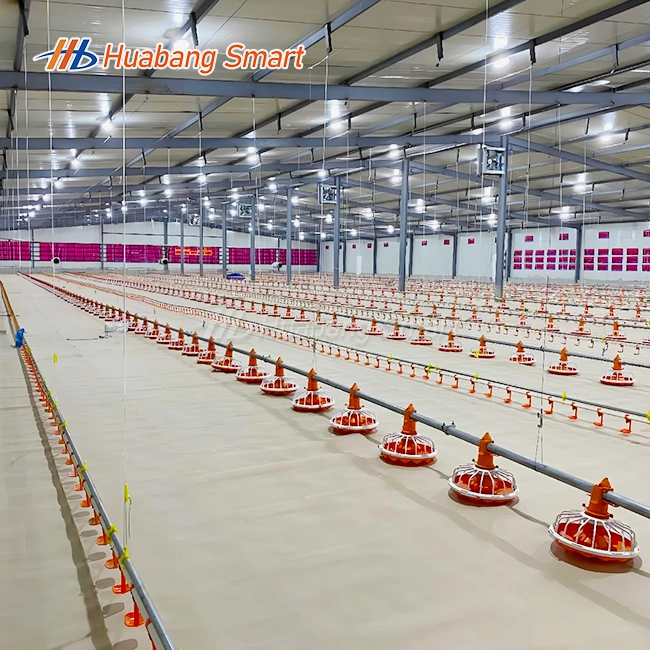
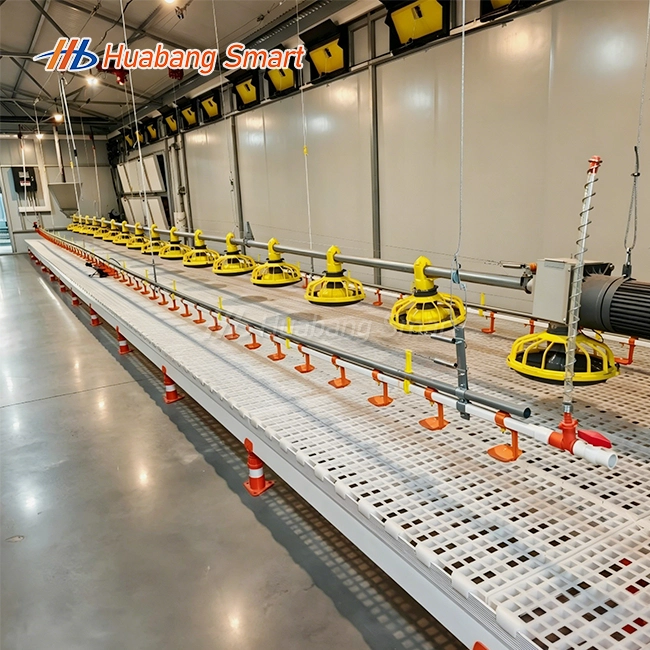
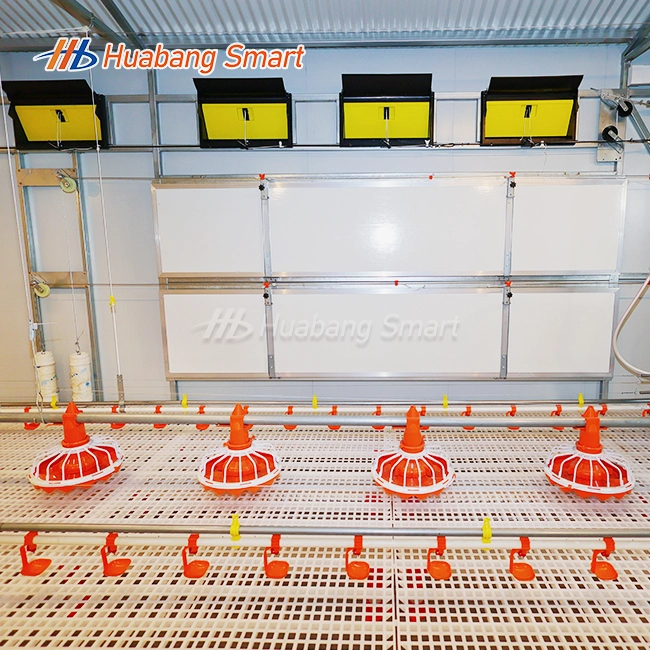
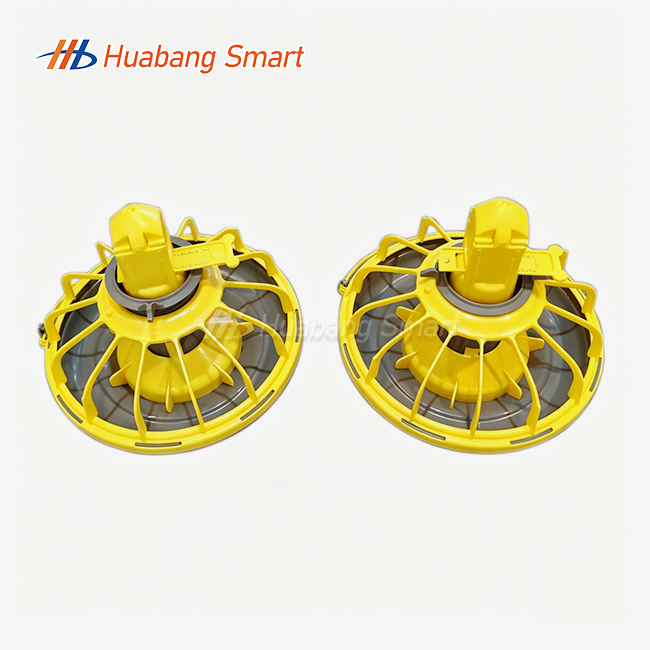
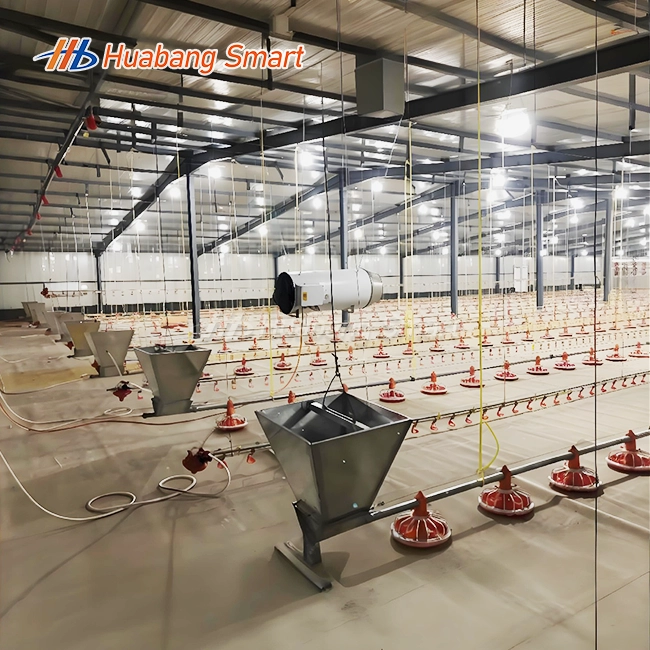
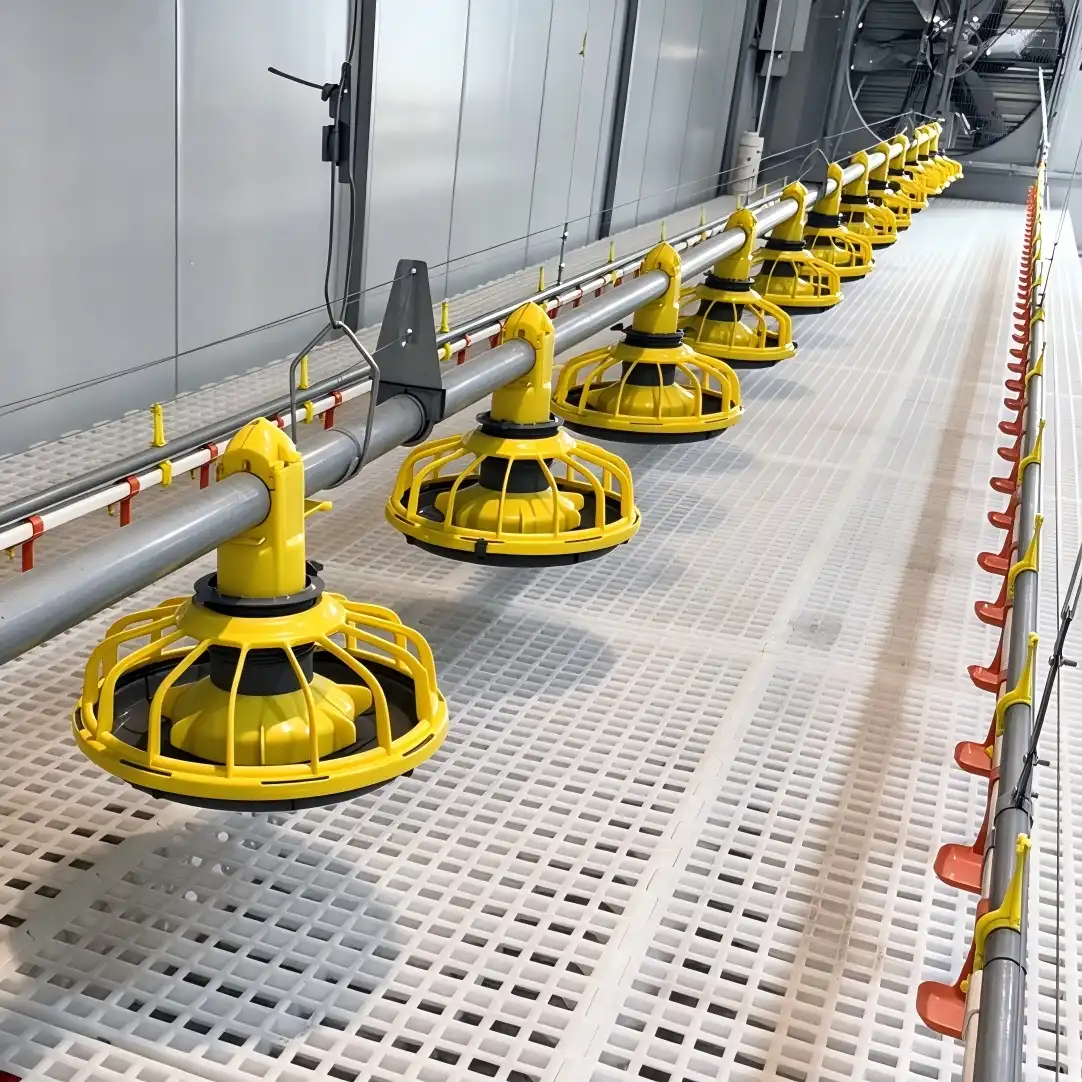
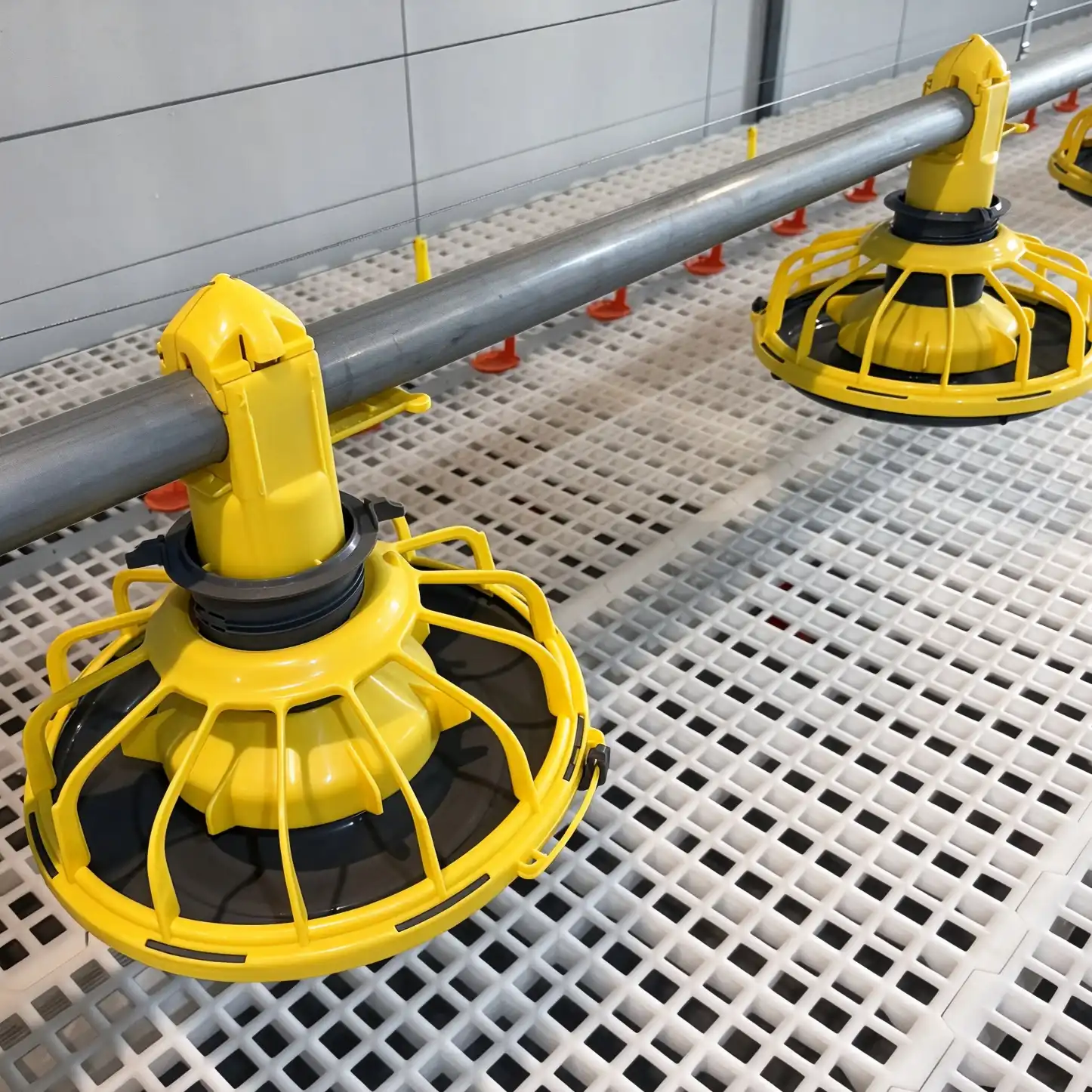
Pan feeding devices are the standard for broilers and layers that are raised on the ground. The Huabang Smart Pan Feeding System is a fully automatic system that was made to do this job. Up to 1,400 kg of feed can be sent through a 75 mm diameter PVC feed pipe with a 3.6 mm wall thickness. The feed is then evenly distributed to 330 mm diameter feeding pans, each of which has 16 separate feed compartments. This system can handle everything from chick starting to grower pellets, so it can be used for both broiler and layer production.
Material Standards and Food Safety
The pans are made from fresh polypropylene (PP), which is a food-grade material that is safe, doesn't smell, and doesn't react with ammonia or metal. This is important in places where cleaning chemicals and high humidity are always present. Poor quality plastic can lose compounds over time or break when exposed to UV light. Virgin PP doesn't have either of these problems and keeps its structure strong even after years of daily washing.
Key Design Features That Affect Performance
There are a few technical features that set a good feeder apart from one that pays for itself:
- Precision Height Adjustment: A high-precision winch system raises or lowers the feed line as birds grow, keeping pan height level with the birds' backs — the correct position for minimizing feed scatter and neck strain.
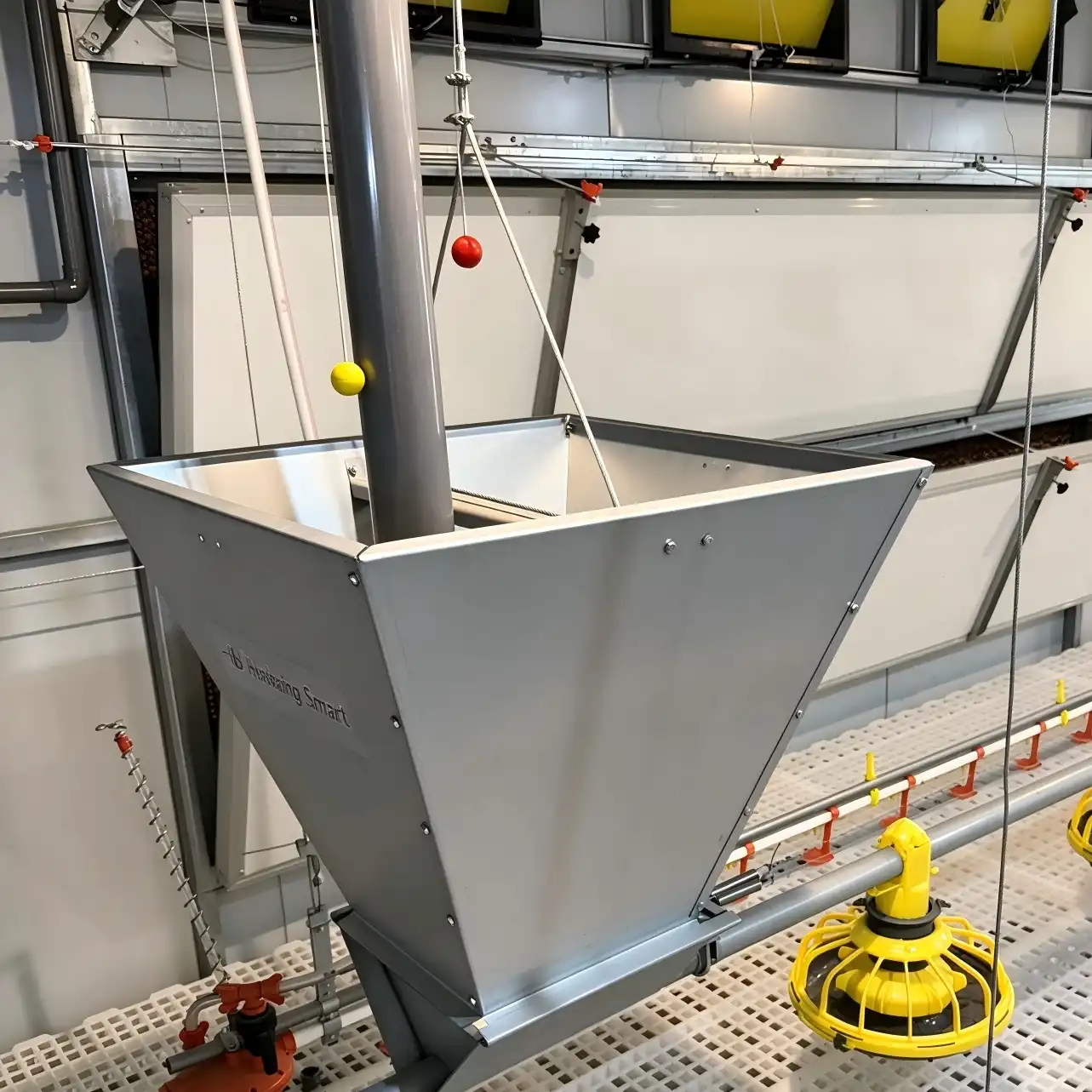
- Auger Drive Technology: Uniform auger rotation eliminates dead zones in the feed line, ensuring birds at the far end of the house receive the same ration as those near the hopper.
- Anti-Waste Grill Design: The optimized grill geometry keeps feed inside the 16-cell pan, reducing litter contamination and lowering coccidiosis risk.
- Smart Control Compatibility: The system integrates with timed feeding controllers and data monitoring platforms, supporting scheduled feeding programs and growth performance tracking.
- Modular Construction: Lightweight components allow fast installation and disassembly, making the system practical for both permanent houses and seasonal operations.
All of these design features work together to make sure that the product works reliably every day during the whole production cycle.
How to Select the Right Automatic Feeder for Your Business Needs?
Choosing Feeders For Chickens requires matching equipment specifications to your farm's actual conditions. A few evaluation criteria make this process more structured.
Capacity and Flock Size Matching
The Huabang Smart Pan Feeding System's 1,400 kg/h throughput supports large commercial houses with high stocking densities. For procurement managers working across multiple houses or sites, confirming that the system's output rate aligns with your target feeding window — typically 4–6 hours of active feeding per day — is the first calculation.
OEM, Customization, and Supplier Support
For EPC contractors and agricultural engineering firms building farms across different climates and regions, supplier flexibility is as important as product performance. Huabang Smart supports OEM and ODM configurations, including custom feed pipe lengths, pan spacing, and control system integration. The company has been manufacturing poultry equipment since 2012, holds ISO9001 and CE certifications, and carries 49 core technology patents. Production lead times run 30–60 days, and technical teams provide full support from system design through post-installation maintenance.
Warranty and After-Sales Coverage
The Pan Feeding System carries a 1-year warranty. For international buyers, Huabang Smart provides video installation guides, on-site installation support where applicable, and ongoing after-sales service — factors that reduce risk for buyers sourcing equipment across borders.
Installation, Maintenance, and Troubleshooting Tips for Automatic Feeders
A food system that is well taken care of will keep working well for years. A few useful habits can help you keep your money safe.
Correct Installation for Peak Efficiency
For day-old chicks, the pan height should be low to begin with. As the group grows, the height should be raised. Huabang Smart's Pan Feeding System has a winch system that makes this change easy and doesn't require any tools. To keep the auger load from being uneven, the feed lines should be put in level.
Routine Cleaning and Inspection
Visually checking the auger drive parts, pan connections, and feed pipe joints once a week keeps small problems from turning into ones that stop operations. Biofilm on pan surfaces can be removed once a month with approved disinfectants. This keeps feed fresh.
Troubleshooting Common Issues
Feed bridging in the bin normally means that the feed has a lot of water in it; check the storage conditions first. Uneven fill across pans is usually a sign of an auger speed that is too fast or too slow, or a partial blockage in the feed pipe. Instead of changing parts, most problems can be fixed by cleaning and recalibrating the drive unit.
Conclusion
Automatic feeding systems used to be extras that weren't required, but now Feeders For Chickens are for any commercial poultry farm that wants to stay in business. They cut down on the need for work, protect the quality of the feed, make the flock more uniform, and give measured results over time. The Huabang Smart Pan Feeding System is well-designed and has a high throughput capacity. It is made of food-grade materials and can be adjusted to the perfect height. It also works with smart controls. The numbers always show the same thing to procurement workers, farm owners, and EPC contractors who are thinking about what tools to buy next: automation pays off.
FAQ
How do automatic pan feeders reduce feed waste?
The 16-cell pan design and anti-waste grill keep feed contained during bird feeding. Birds access individual compartments rather than scattering feed across a flat surface, which keeps litter dry and reduces waste significantly.
Are these systems suitable for both broilers and layers?
Yes. The Huabang Smart Pan Feeding System is designed for both broilers and layer chickens in floor-rearing setups. Pan height adjusts throughout the growth cycle to match bird size.
Can the feed pipe length be customized?
Huabang Smart supports custom configurations, including feed pipe length, system layout, and control integration. OEM and ODM orders are accepted based on farm-specific drawings and requirements.
How do I prevent feed from getting damp in the line?
Use weather-sealed hopper covers and ensure the feed line runs indoors without exposure to direct humidity sources. The PVC feed pipe's 3.6mm wall thickness provides structural protection, but storage and supply conditions also matter.
What is the minimum order for commercial procurement?
Huabang Smart handles project-based orders rather than single-unit retail. Contact admin@huabangsmart.com with your farm size, house dimensions, and flock type for a detailed system proposal and commercial pricing.
Partner With Huabang Smart for Your Poultry Feeding System
Since 2012, Huabang Smart has sold automatic tools for feeding chickens to farms in more than 100 countries. Our chicken pan feeding system can handle up to 1,400 kg/h and is made with food-grade fresh PP pans, an anti-waste design, and smart control compatibility. It is designed for large-scale businesses that need stable results every day. We offer reasonable prices, full customization, and project help from start to finish as a direct factory and verified Feeders For Chickens manufacturer. To get a system proposal right away, email admin@huabangsmart.com with details about your farm or go to poultrycage.com.
References
1. Weeks, C. A. & Nicol, C. J. — Poultry Science, 2006
2. Lacy, M. P. — Broiler Management Guide, University of Georgia Extension, 2002
3. Tauson, R. — Feed Distribution Systems in Poultry Production, Acta Agriculturae Scandinavica, 2005
4. Puma, M. C. & Xin, H. — Livestock Environment Engineering, ASABE, 2001
5. Bokkers, E. A. M. & Koene, P. — Applied Animal Behaviour Science, 2003
6. National Chicken Council — U.S. Broiler Performance and Feed Efficiency Data Report, 2022

USER EVALUATE
Here is the customer's evaluation of us