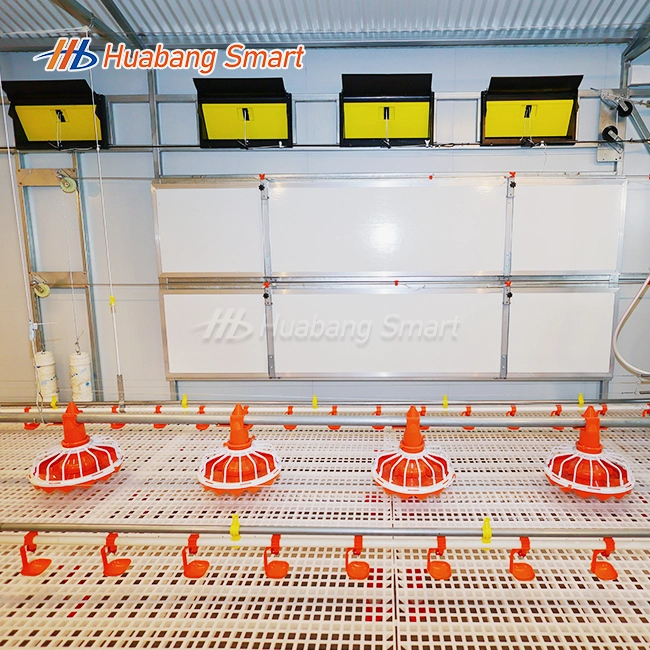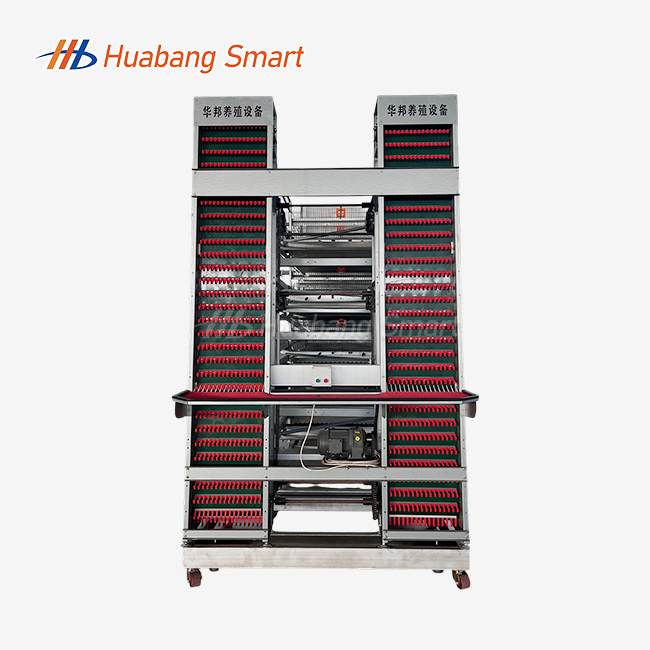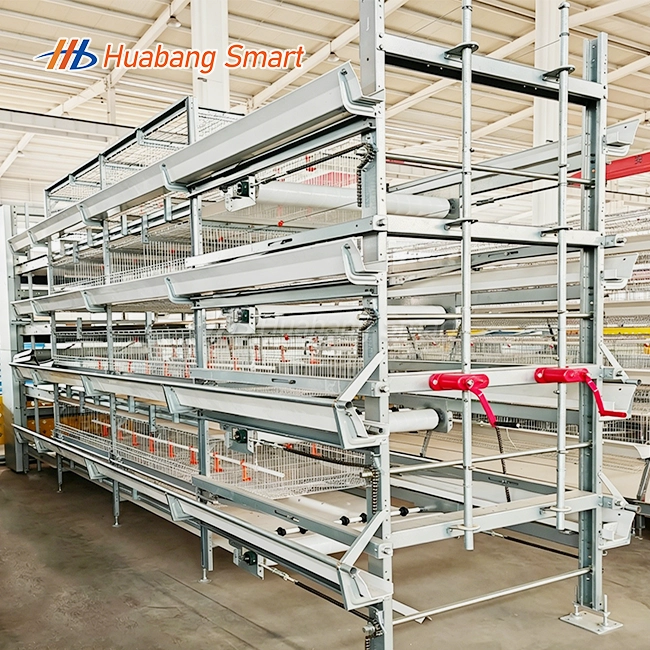

Cages for Broiler Chicken: Floor Design, Access, and Cleaning
When farm operators ask about improving broiler production outcomes, the conversation almost always returns to three fundamentals: how the floor is built, how workers and birds access the system, and how cleaning gets done. Cages for broiler chicken that are designed with these three priorities in mind consistently outperform conventional housing in disease control, feed conversion, and labor efficiency. At Huabang Smart, we have worked with commercial poultry operations across more than 100 countries, and this guide draws directly from that field experience.
Understanding Broiler Chicken Cage Floor Design: Key Principles and Recommendations
Why Floor Material Determines Long-Term Performance
The floor is where birds spend every hour of their 42–45-day growth cycle, so material choice does have real effects. Galvanized wire mesh is still the standard for large-scale operations because it lets manure fall through right away, blocking the path for coccidiosis and necrotic enteritis to spread from feces to the mouth. A study in the journal "Poultry Science" shows that slatted or mesh floors lower the risk of coccidiosis-related deaths by up to 20% compared to deep litter systems.
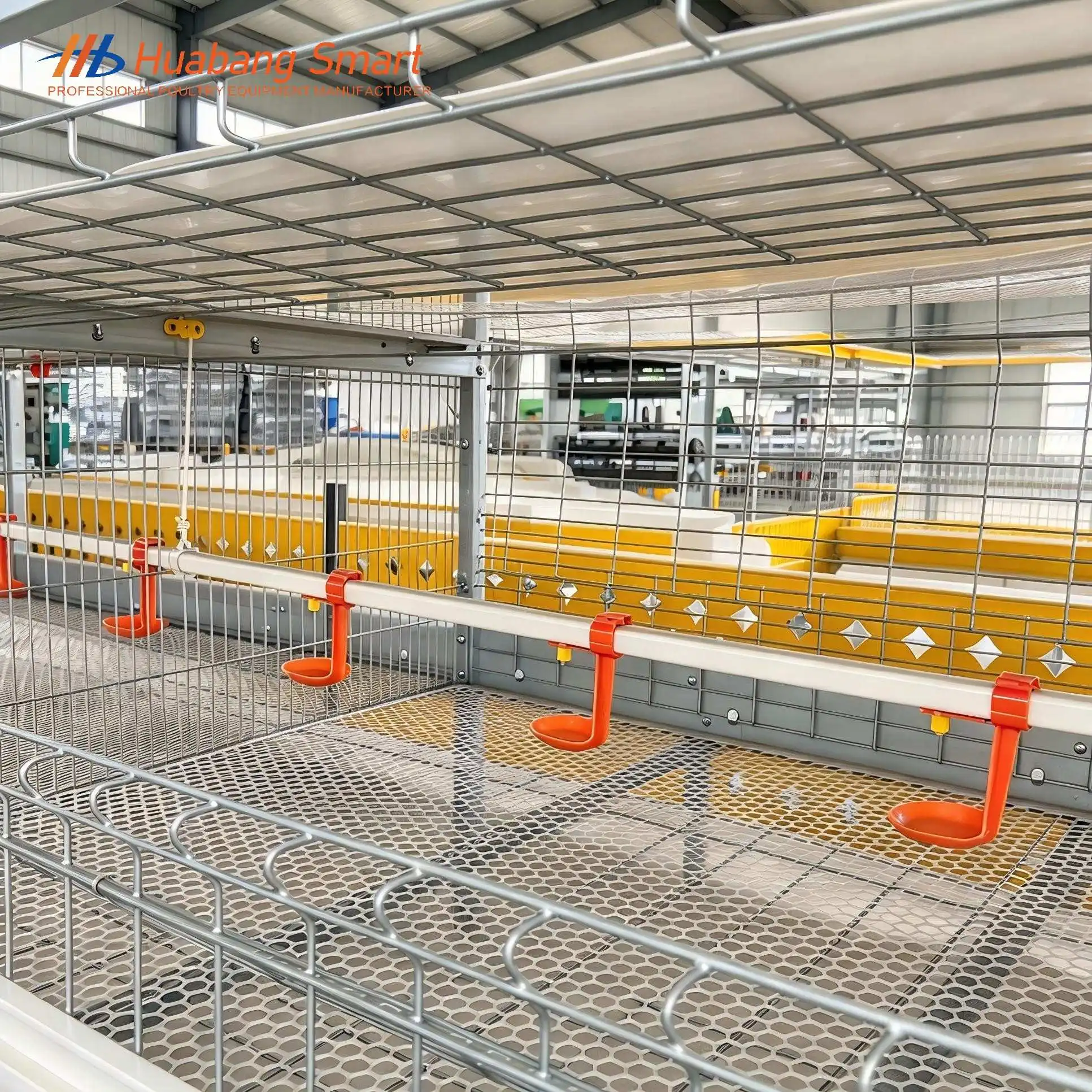
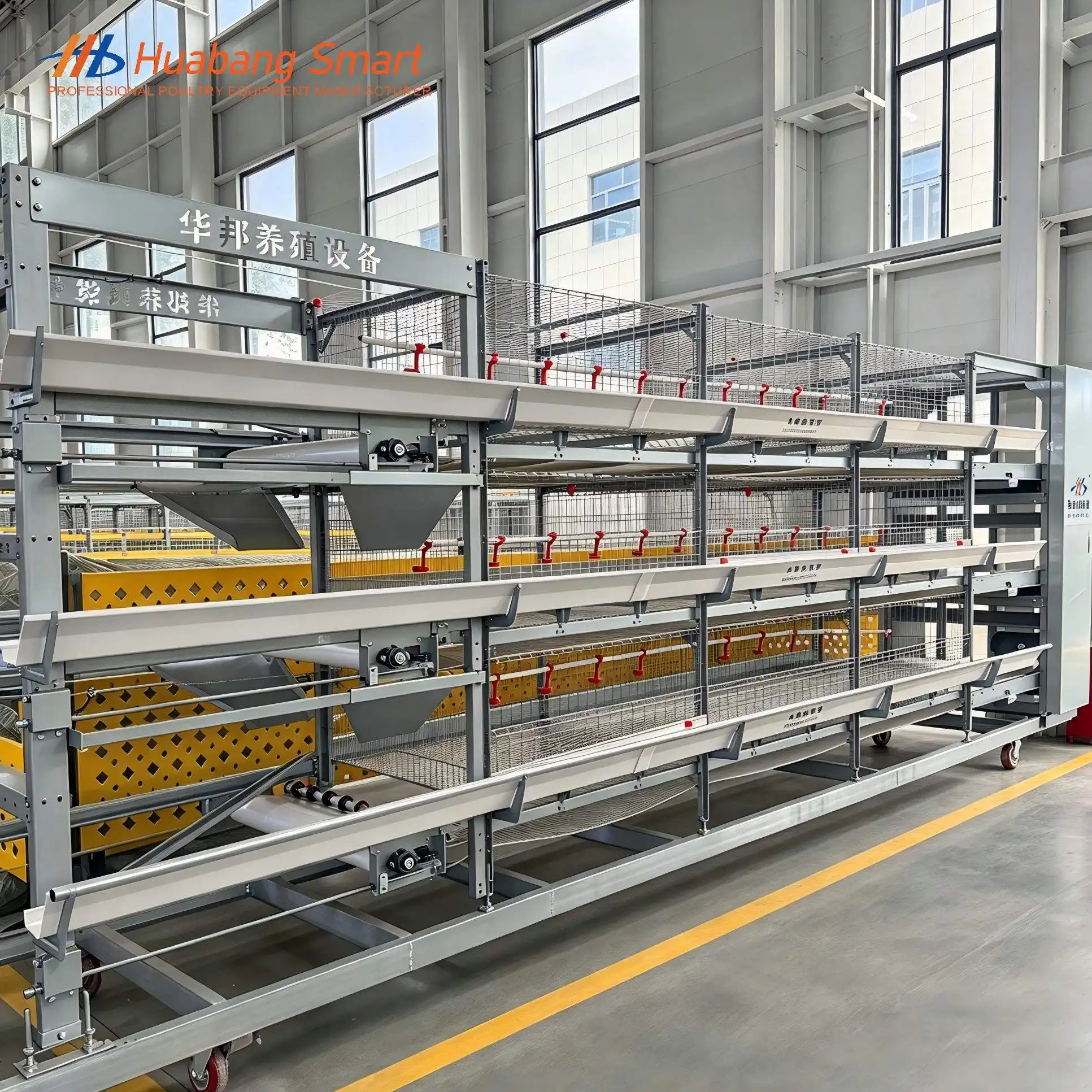
The broiler housing units made by Huabang Smart have galvanized wire mesh floors and frames made of 275g hot-dip galvanized steel. The zinc coating forms a strong metal bond that won't rust for 15 years or more, and the mesh design supports the weight of the bird without causing skin irritation on the breasts or feet.
Optimal Spacing and Drainage
The size of the mesh opening is more important than most people think at first. Too much space between plants can hurt your legs, and too little space between plants can trap manure. For broilers range in weight from day-old chicks to 2.8 kg at harvest, a wire hole of 25 mm to 30 mm has always worked well. Huabang's unit sizes—1.25m × 1m × 0.45m—give each bird an area of about 450–550 cm², which meets international standards for bird welfare density while keeping stocking rates at 25–30 kg/m², which is a commercially viable level.
The Role of Elevated Center Structures
Huabang Smart's H-type multi-tier design has a center frame that is 5 cm higher than the other tiers. This feature creates passive air channels that increase ventilation by about 30% and keep heat from building up between rows. In tropical areas, this structural detail has helped operators avoid heat stress events that usually cause a lot of deaths in the summer.
Access Considerations: Enhancing Usability and Animal Welfare in Broiler Chicken Cages
Manual vs. Automated Access Systems
Farm workers can check on the birds' health, vaccinate them, and feed them again by manually opening side doors on each row of cages. It works fine in smaller setups, but it slows things down when there are more than 20,000 birds in a facility. Data from industrial broiler farms in Southeast Asia shows that human access systems need 40% more daily work hours than automatic systems with the same number of birds.
When H-type systems have automated access, food troughs, nipple drinking lines, and movable floor panels are all part of the same process. Huabang's automatic food machine gives out programmed meals at exact times, so there is no need for people to be inconsistent. When compared to fully manual setups, this integration cuts labor costs by up to 70%.
Ergonomic Design and Worker Safety
During daily rounds with Cages For Broiler Chicken, the height of the access panel and the direction of the door swing affect how workers stand. When doors are not in the right place, they can cause repeated strain injuries, which raise secondary costs for employers through sick days and employee turnover. Huabang's cage systems are designed so that side access points are at a normal standing work height. This makes regular checks easier because inspectors don't have to bend over or reach awkwardly.
Here are the main ergonomic design ideas that Huabang's access systems are based on:
- Side panel positioning is calibrated for standing workers, eliminating the need to crouch repeatedly during health monitoring rounds.
- Door latch mechanisms use single-hand operation, freeing the other hand for handling birds or vaccination equipment.
- Retractable floor panels allow birds to move to the manure belt during harvest without manual catching, cutting wing damage by approximately 40%.
During harvest, retractable floor panels let birds move to the manure belt without having to be caught by hand. This cuts wing damage by about 40%.
Biosecurity at Access Points
Access points can let germs in if they are not controlled properly. Biofilm doesn't stick to smooth metal surfaces on door frames and locks. Huabang's system doesn't use hollow tubing or porous welds, which can trap organic matter. This makes it easy to clean up between flocks.
Cleaning and Maintenance of Broiler Chicken Cages: Best Practices and Techniques
How Cage Design Dictates Cleaning Efficiency
No matter what the written rules say, a cage system that is hard to clean will not be cleaned properly very often. Huabang's thickened panel construction makes surfaces that are flat and continuous, with few cracks where pathogens could hide between production cycles. High-pressure water and approved disinfectants can be used on the 275g hot-dip galvanized finish without damaging the surface.
For H-type broiler cage systems, this is the normal order of cleaning between flocks:
- Dry removal: Activate the manure belt to clear residual waste from all tiers before introducing water.
- Pre-soak: Apply water at low pressure to soften dried organic matter on wire mesh and frame surfaces.
- High-pressure wash: Use a pressure washer at 1,500–2,000 PSI, working top-tier to bottom-tier to prevent cross-contamination.
- Disinfection: Apply an approved poultry disinfectant at the manufacturer-recommended dilution, allowing adequate contact time before rinsing.
- Dry and inspect: Allow full air drying before placing new chicks. Inspect wire mesh for deformation or rust spots during this phase.
Following this order consistently lowers the spread of pathogens between cycles and increases the lifetime of mesh flooring.
Maintenance Scheduling and Spare Parts
The lifespan of a cage rests on regular checks rather than fixes that are done when they break. The manure belt tension, drive motor links, nipple drinker flow rates, and frame joint stability should all be checked every three months by Huabang. The foreign warranty lasts for one year and covers problems with the way it was made. With good care, it should last for 15 years or more. Every Huabang project delivery comes with access to spare parts and expert help after the sale.
Choosing the Right Broiler Chicken Cage System for Your Business Needs
Comparing Material Options
In commercial broiler applications, hot-dip galvanized steel for Cages For Broiler Chicken always works better than electro-galvanized and plastic alternatives. Electro-galvanized cages usually get structural rust in 4–6 years, but hot-dip units, like Huabang's 275g specification, can last up to 15–20 years with regular maintenance. Plastic floor panels are more comfortable, but they need to be replaced more often and can't handle as much weight from heavy breed birds.
Cage Systems vs. Traditional Floor Raising
Floor-raised broilers need to be managed with a lot of deep litter, which takes a lot of work and keeps diseases from spreading from touching the ground. The cost of litter is completely eliminated with cage systems, ammonia buildup is reduced by removing the dung belt every day, and more animals can be housed in the same amount of space. For large businesses, switching from floor housing to cage housing usually pays for itself within two to three production years through lower feed costs, fewer deaths, and less work.
Procurement Checklist for B2B Buyers
When looking at a supplier of broiler cage systems, make sure of the following things before placing an order:
- ISO9001 and CE certification documentation is current and verifiable.
- OEM/ODM customization is supported with technical drawing submissions.
- Production and delivery cycle is clearly stated (Huabang: 30–60 days standard).
- Turnkey project support includes site planning, installation guidance, and commissioning.
- After-sales service covers overseas installation support and spare parts supply.
Ensuring Long-Term Success: Ventilation, Health, and Sustainability in Broiler Cage Farming
Ventilation Strategy for Multi-Tier Systems
The air quality between cage rows has a direct effect on the Feed Conversion Ratio and the health of the animals' lungs. Ammonia levels above 25 ppm make it harder for birds to fight off sickness and keep them from gaining weight. With its 5 cm raised center structure and planned inter-tier spacing, Huabang's H-type cage layout works with negative-pressure tunnel ventilation systems that are common in commercial closed houses. Real-time sensors built into smart environmental control packages keep an eye on temperature, humidity, and ammonia 24 hours a day, seven days a week. When certain levels are exceeded, the fans automatically adjust themselves.
Sustainability and Material Choices
Hot-dip galvanized steel has a lower lifecycle carbon cost than cheaper alternatives that need to be replaced more often. When equipment lasts longer, it means fewer production runs, less shipping, and less trash to be thrown away after each turn. Huabang has 49 core technology patents, some of which are for designs that make automated feeding and air systems use less energy. This is in line with the growing pressure on commercial chicken farms to meet environmental standards in export markets.
Conclusion
Floor design, access engineering, and cleaning protocols for Cages For Broiler Chicken are not separate issues; they work together to make up a system that checks every day to see if a broiler operation regularly meets its production goals. Floors made of galvanized wire mesh keep germs away. Access systems that are both ergonomic and automated save money on labor and keep workers healthy. Systematic cleaning routines between groups protect the health of the birds and the life of the equipment. All of these needs are met by Huabang Smart's H-type multi-tier broiler housing system, which is a single, approved, and customizable product line.
FAQ
What floor mesh size works best for broilers from day-old to harvest?
Broilers can grow to be full size with a mesh opening of 25–30 mm. Young chicks are more likely to hurt their legs in wider openings, while manure stays on the floor in narrower openings. Within this range of specifications, Huabang makes galvanized wire mesh floors.
How often should the manure belt run in a broiler cage system?
Broiler systems usually run once a day, but they should run twice a day during hot months or when there are a lot of birds in the area. The reinforced PP manure belts (> 1.0 mm thickness) and high-torque drive motors made by Huabang are designed to handle the extra waste that broilers make compared to layers.
Can the cage system be configured for different farm building dimensions?
Yes. Huabang's H-type system can be set up in 3- to 8-tier configurations, and OEM and ODM customizations can be made based on technical drawings that are sent in. The 1.25m x 1m x 0.45m unit sizes can be changed to fit the widths and ceiling heights of existing buildings.
What certifications does Huabang's broiler cage system carry?
ISO9001 quality management certification and CE product certification are both held by Huabang Smart. During the technical evaluation stage of procurement, you can review these documents.
Partner with Huabang Smart for Your Next Broiler Housing Project
Huabang Smart sells broiler cage systems made of 275g hot-dip galvanized steel. These systems are fully automated, have a 15-year service life, and come with full project support in more than 100 countries. Since we are a real Cages For Broiler Chicken producer, we can take OEM/ODM orders, send sample units, and help with every installation, and offer after-sales service after the sale. To ask for a project proposal, please email our technical team at ginny260831@gmail.com or huabangsmart002@gmail.com.
References
1. Poultry Science Association. Poultry Science Journal. 2021.
2. Food and Agriculture Organization of the United Nations. Poultry Development Review. 2013.
3. World Organisation for Animal Health (WOAH). Terrestrial Animal Health Code. 2022.
4. Aviagen Group. Broiler Management Handbook. 2022.
5. National Chicken Council (USA). Animal Welfare Guidelines for Broilers. 2020.
6. Elsevier. Biosystems Engineering — Livestock Housing and Environment Special Issue. 2020.

USER EVALUATE
Here is the customer's evaluation of us
_1793001916397.webp)
(1)_1793063908900.webp)