
Cages for Broiler Chicken in Large-Scale Poultry Production
Large-scale broiler production demands more than just space — it requires a system. Cages For Broiler Chicken are specialized, high-density vertical housing units engineered for the full 42–45-day grow-out cycle of meat-type chickens. Unlike conventional floor-rearing setups, these systems isolate birds from fecal matter, automate daily feeding and watering routines, and allow farms to stack production vertically — achieving three to four times the bird density per square meter of building floor. For commercial poultry operations managing tens of thousands of birds, the right cage system directly determines feed conversion ratios, mortality rates, and ultimately, profitability.
Understanding Broiler Chicken Cages – Design and Functional Requirements
Space Allocation and Bird Welfare Standards
To meet international standards for animal care and keep production costs low, professional broiler house systems must provide 450–550 cm² per bird. This range supports a natural resting position, lowers aggression caused by stress, and helps the flock gain weight more evenly, which has a direct effect on the consistency of market grading. One of the most common mistakes in large-scale operations is overcrowding within a tier, which makes ventilation much worse throughout the cage column.
Material Selection and Structural Durability
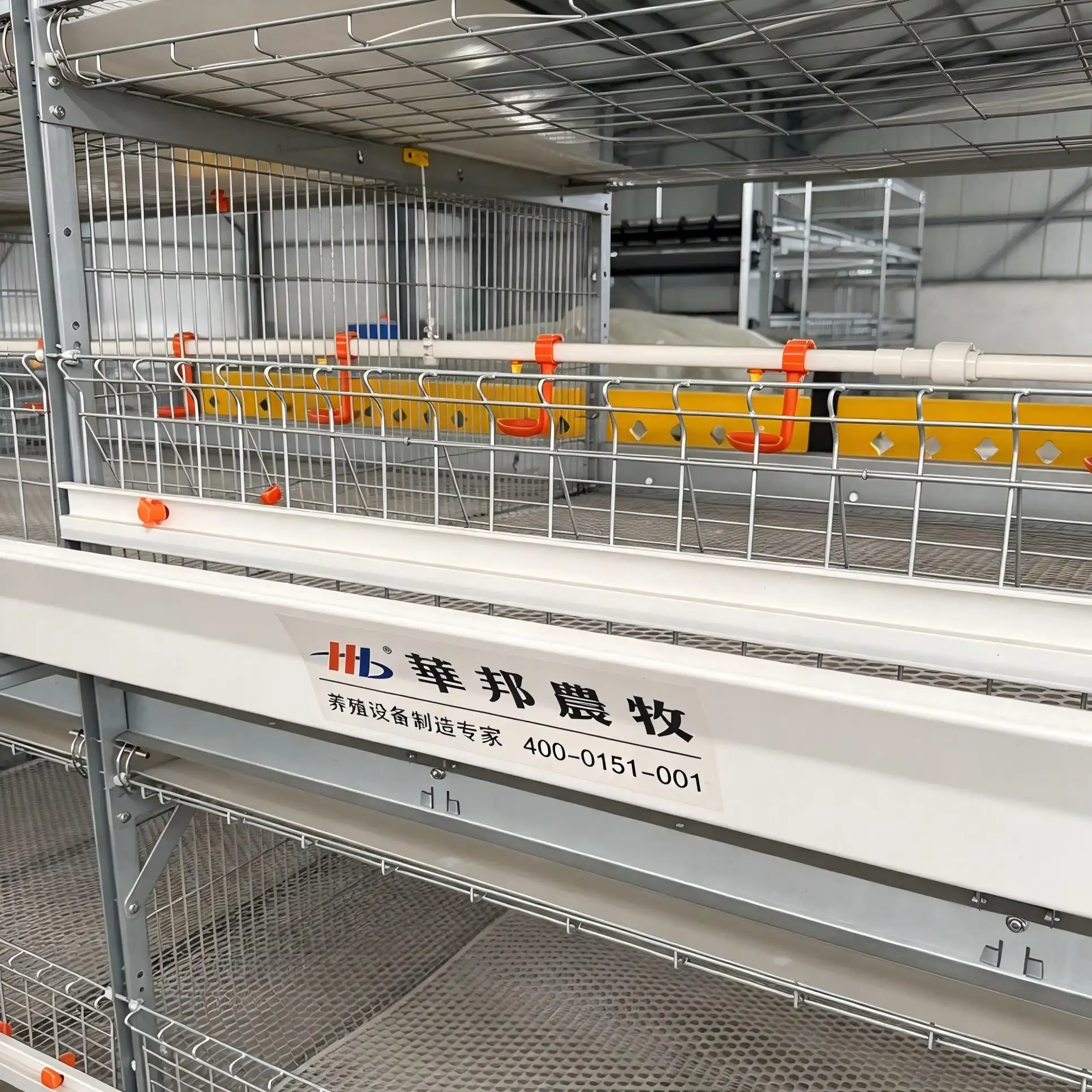
How long your investment lasts in a tough farm setting depends on the materials you use to build it. Electro-galvanized steel doesn't work as well as hot-dip galvanized steel, especially when it has a 275g/m² zinc coating. Within four to six years, electro-galvanized frames usually start to rust. Structures that are hot-dip galvanized and joined at the metallurgical level consistently last 15–20 years in a chicken coop. Huabang's cage frames are made of 3 mm extra-thick hot-dip galvanized steel and galvanized wire mesh, which gives them the strength to hold heavy-breed broilers.
Feeding, Watering, and Manure Management
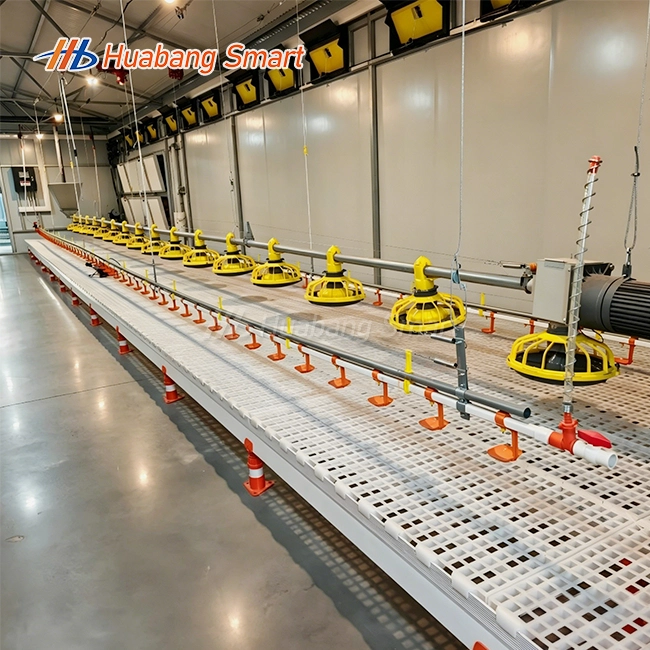
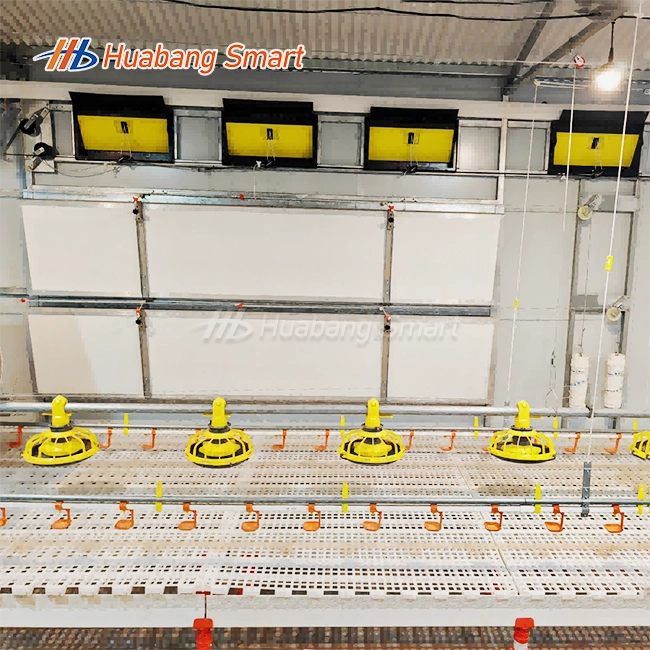
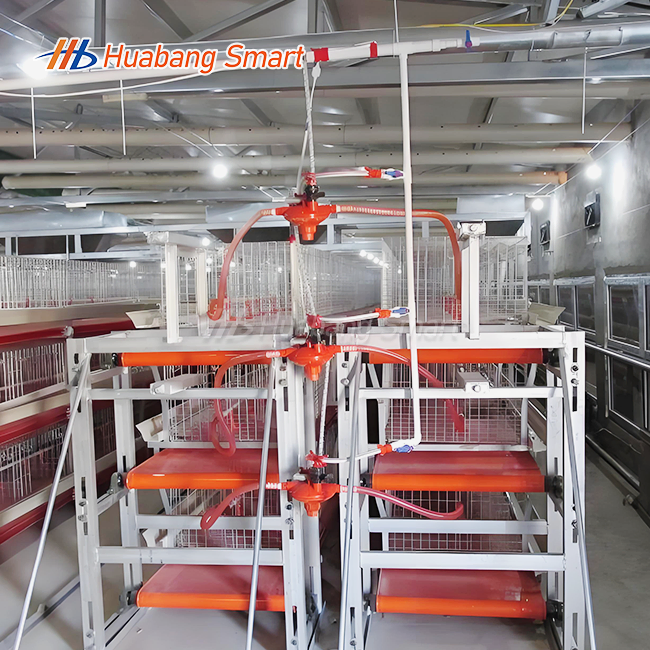
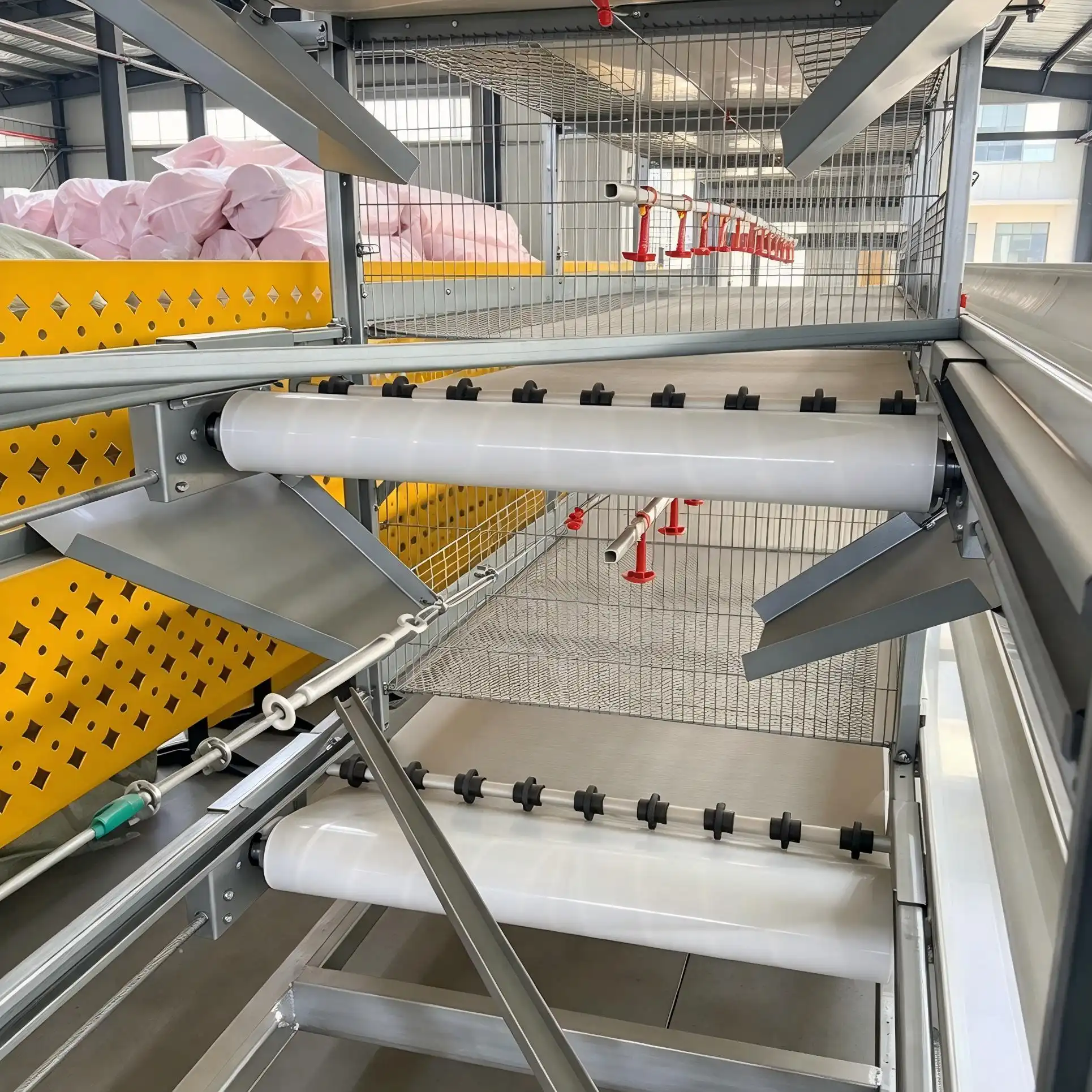
Three automatic parts work together to make a working broiler cage system: timed food troughs or pans, nipple drinking lines with pressure controls, and a manure belt. When working with broilers, the width of the manure belt is important. Reinforced PP belts that are at least 1.0 mm thick can handle the much larger amounts of waste that broilers make than layers. Getting rid of waste every day keeps ammonia levels below 25 ppm, which is the level at which it starts to hurt lung health and feed intake.
Comparison of Broiler Chicken Cage Types for Large-Scale Operations
H-Type vs. A-Type Configurations
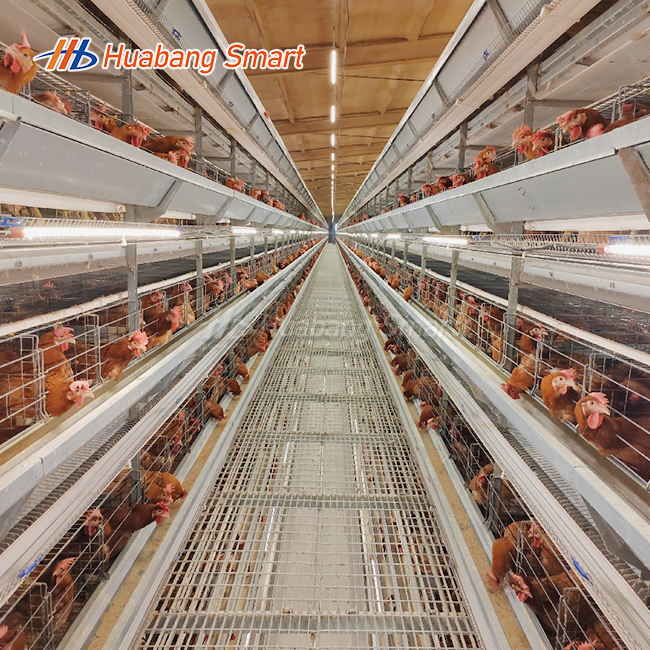
H-type multi-tier cages and A-type stepped cages are used in different types of situations. A-type cages work well in homes with open sides that are in mild temperatures and have enough natural air. H-type systems can be stacked up to eight levels high and are made for closed, climate-controlled homes. They can also be fully automated. For large-scale operations that want to keep more than 50,000 birds in each shed, H-type designs are better because they offer more density, uniformity, and integration than A-type designs.
Cage-Based vs. Floor Rearing: A Practical Comparison
It is still common to raise animals on the floor in places where labor is cheap, and land is not limited. However, the data on controlling diseases always points to Cages For Broiler Chicken as the best option. Ground-borne pathogen diseases like coccidiosis and necrotic enteritis cost the food industry hundreds of millions of dollars every year. Cage systems lower these death rates by 15–20% compared to deep litter floor systems because they raise the birds above their waste. Also, cleaning, catching, and keeping an eye on the group takes more work per 1,000 birds when they are raised on the floor.
Automated vs. Manual Feeding Systems
Hand-feeding makes food supply less consistent and makes people more dependent on labor, which are both problems that get worse as the number of people involved grows. Automatic feeding systems give out measured meals at set times, which cuts down on waste by preventing spills and over-delivery. When combined with weight monitors, these systems let feed be changed in real time based on data from the growth curve. This cuts production processes by three to five days. Just the time saved on labor alone can often pay for the equipment within two to three production runs.
How to Choose the Right Broiler Chicken Cage System for Your Poultry Farm?
Assessing Farm Scale and Tier Configuration
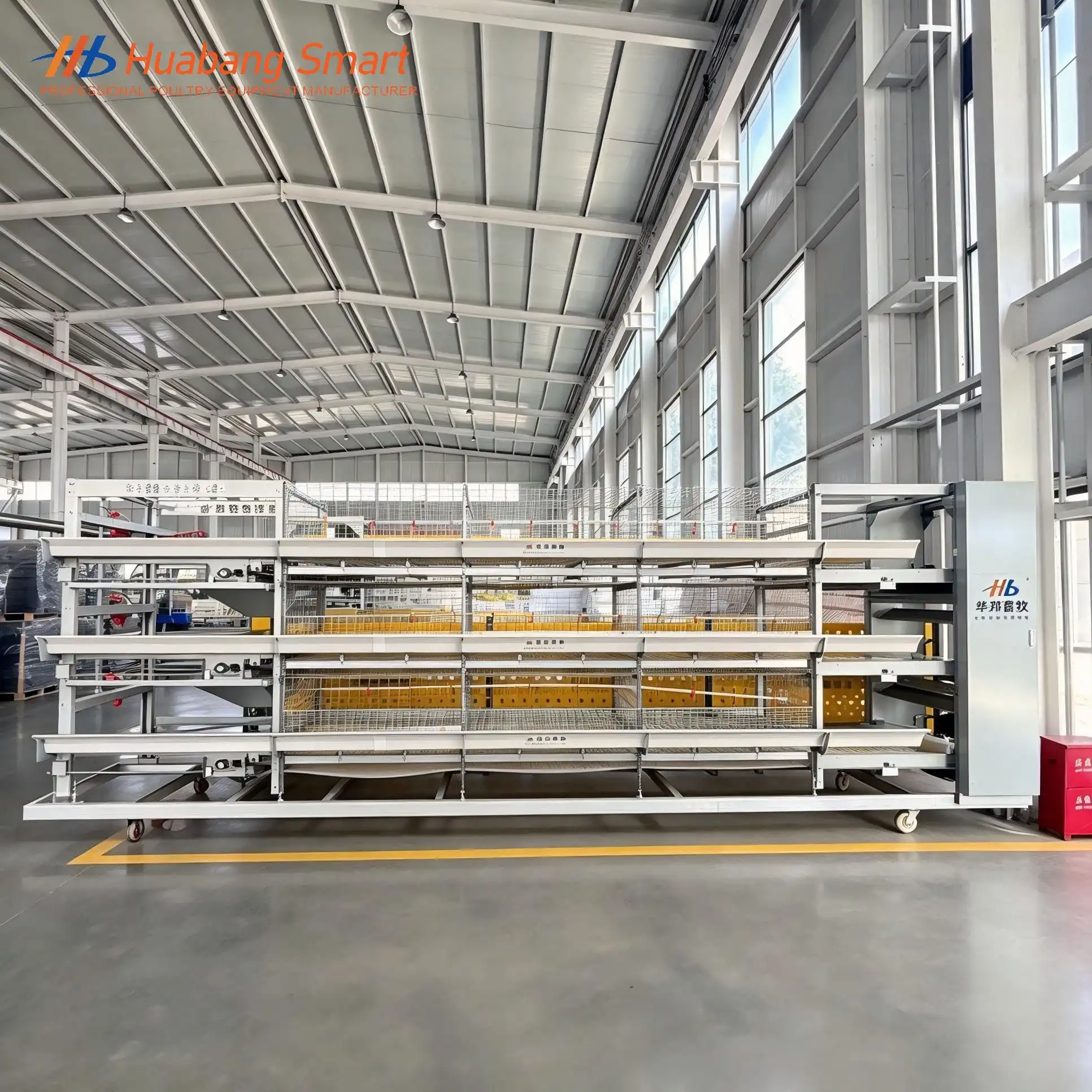
Start with the number of birds you want to house and the space you have for the building. One H-type unit from Huabang is 1.25m x 1m x 0.45m and can be set up in 3 to 8 different ways. There are a lot more birds per square meter in a 5-tier system than in a 3-tier system. Larger businesses should look at 6- or 8-tier setups with centralized environmental control to make sure that the air quality is the same on all levels.
Evaluating Climate-Specific Requirements
Managing the thermal climate is not the same in all places. In Southeast Asia, West Africa, and some parts of the Middle East, where it is tropical and humid, operations need better airflow engineering. The 5cm raised center cage structure of Huabang creates air channels between the levels, which keeps heat from building up. With automated ventilation that changes based on temperature and humidity sensors that work in real time, this design lowers the risk of heat stress even when mechanical cooling is not used.
ROI Calculation and Supplier Reliability
For this size of a purchase decision, you need to do more than just compare equipment. You need to do financial modeling as well. Some important factors that affect return on investment (ROI) are lower labor costs (Huabang's automation cuts routine labor by about 70%), lower feed costs due to better feed conversion rates (up to 8% savings from precise environmental control), and lower death rates (15–20% improvement over floor systems). Some things that should make you confident in a supplier are ISO9001 and CE certification, a production wait time (30–60 days for Huabang), OEM/ODM capabilities, and a history of exports to more than 100 countries that you can check.
Procurement and Supply Chain Considerations for Broiler Chicken Cages
Identifying the Right Manufacturer
Not every company that sells broiler cages has the same level of expert help or manufacturing quality. When choosing a Cages For Broiler Chicken maker, make sure they can make custom cages based on your technical plans, offer sample units before you commit to a full order, and give you written instructions on how to set up the cages. Huabang provides OEM/ODM customization, sample supply, and full technical documents, which makes them a useful place for EPC workers to start when they are making farm systems from scratch.
Logistics, Installation, and After-Sales Support
Buying tools internationally adds a level of complexity to handling that isn't present when buying a single unit. When ordering a lot of cage systems, find out how experienced the supplier is with export packaging, coordinating sea freight, and helping with installation in the receiving country. In international markets, Huabang offers video installation guides, on-site operational support, and local after-sales help. The company backs up all cage systems with an international warranty that lasts for one year and keeps spare parts on hand to keep production running as smoothly as possible.
Certifications and Quality Verification
Before choosing a supplier, make sure they have both ISO9001 quality management certification and CE compliance. These two marks show that the production process is controlled and that the product meets safety standards that are accepted in international markets. Huabang has both certificates and 49 core technology patents, which show that it is technically different from rivals with lower standards.
Optimizing Broiler Production Efficiency with Cage Systems
Environmental Control Integration
Intelligent broiler house management is based on sensors that measure temperature, humidity, and ammonia levels in real time. When these monitors are connected to controlled ventilation systems, they keep the growing conditions in the right ranges for ideal FCR, which are usually between 18 and 24°C and below 25 parts per million of ammonia. IoT-based weather control tools can work with Huabang's cage systems, so farm managers can keep an eye on things from afar and fix problems before they hurt the health of their flock.
Biosecurity Through Cage Design
The structure of the cage itself is a biosecurity measure. Smooth hot-dip galvanized surfaces don't let pathogens stick to them and can be cleaned with high pressure between flocks. The flexible bottom mesh design stops breast blisters and footpad sores, which are two of the most common reasons why commercial broiler carcasses get worse over time. Keeping the high quality of the meat during the 42–45 day cycle saves both the market price and the yield weight.
Preventive Maintenance and System Uptime
Unplanned shutdowns during production cycles can be avoided by scheduling repairs on feeding motors, manure belt drives, and drinking line pressure controls. As part of the commissioning paperwork, Huabang's engineering team provides maintenance schedules. With a galvanized frame that is meant to last 15 years or more and clear replacement schedules for wear parts, operations teams can plan maintenance budgets fairly accurately for production plans that span more than one year.
Conclusion
Choosing the best broiler house system with Cages For Broiler Chicken is an investment that will pay off in the long run for production. Automated, multi-tier cage systems consistently do a better job of keeping diseases under control, using feed efficiently, saving money on labor, and making the most of space. Over the lifecycle of 15 years, returns are directly affected by four key factors: the quality of the materials, the level of automation, the configuration of the tiers, and the help provided by the provider. When farms and EPC companies carefully look at these factors and match them with their environment and production goals, they set themselves up for long-term, high-yield broiler production.
FAQ
How long do hot-dip galvanized broiler cages last compared to electro-galvanized options?
The zinc layer and the steel substrate are metallurgically bonded by hot-dip galvanizing the cages. This makes a coating that lasts 15–20 years in farm conditions. Electro-galvanized (also called cold-galvanized) options usually start to rust after four to six years. Hot-dip galvanization at 275g/m² is the standard for large-scale investments in the business world.
What stocking density is appropriate for broiler cage systems?
Depending on the goal harvest weight, standard stocking density in broiler boxes is between 25 and 30 kg/m², which is about 450 and 550 cm² per bird. If you go outside of this range, the airflow inside each tier gets worse and the ammonia level rises, which both slow down feed intake and growth rates.
Can broiler cage systems be adapted to different climate conditions?
Yes. Changes that are important include changing the number of tiers, adding a ventilation system, and designing the structure to move air better. The 5cm raised center structure of the Huabang system makes it easier for air to flow between the levels, which makes it suitable for tropical markets with high humidity and temperatures.
What automation components are standard in a complete broiler cage system?
Automated chain or pan feeding machines, nipple drinking lines with pressure regulation, reinforced PP manure removal belts (≥1.0 mm thickness), and, if desired, IoT-compatible environmental sensors for monitoring temperature, humidity, and ammonia make up a full system.
Ready to Upgrade Your Broiler Housing System? Contact Huabang Smart
Enterprise-grade Cages For Broiler Chicken systems from Huabang Smart are made for large businesses and come with ISO9001 and CE certifications, as well as a specialized tech team to help customers. Huabang is a reliable Cages For Broiler Chicken supplier for large farms and EPC contractors. They have been making products for 17 years and have completed turnkey projects in over 100 countries. To get a technical proposal or help with farm layout, email our team at admin@huabangsmart.com or visit poultrycage.com right now.
References
1. Bessei, W. (2006). Welfare of broilers: A review. World's Poultry Science Journal, 62(3), 455–466.
2. Estevez, I. (2007). Density allowances for broilers: Where to set the limits? Poultry Science, 86(6), 1265–1272.
3. Lacy, M. P. (2002). Broiler Management. University of Georgia Cooperative Extension Service.
4. Mench, J. A., Sumner, D. A., & Rosen-Molina, J. T. (2011). Sustainability of egg production in the United States. Poultry Science, 90(1), 229–240.
5. National Chicken Council. (2023). Broiler Chicken Industry Key Facts. National Chicken Council.
6. Shields, S., & Raj, A. B. M. (2010). A critical review of the welfare of broiler chickens during the production cycle. Animals, 1(1), 1–17.

USER EVALUATE
Here is the customer's evaluation of us