
Chicken Cages Egg Layer H Type: Optimizing Space in Multi-Row Farms
With three to eight levels of cages stacked next to each other, the Chicken Cages Egg Layer H Type saves room on farms with more than one row. This makes the building wider without adding more hens. Aisles, airflow, moving eggs, and getting rid of manure should also be possible in the layout for it to work best. We at Huabang Smart make H-type layer cages out of hot-dip galvanized steel and set them up so that the chickens are fed, their eggs are collected, and their waste is cleaned. You can learn how the system works, how to plan rows, how to check quality, and what you need to get ready before you ask for a quote from this guide.
What Is an H Type Layer Cage System?
Core Design of the H-Type Layer Cage
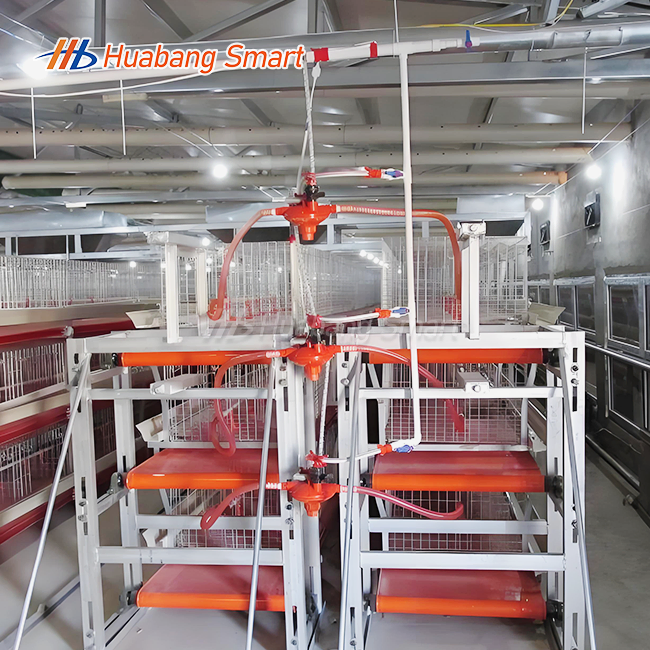
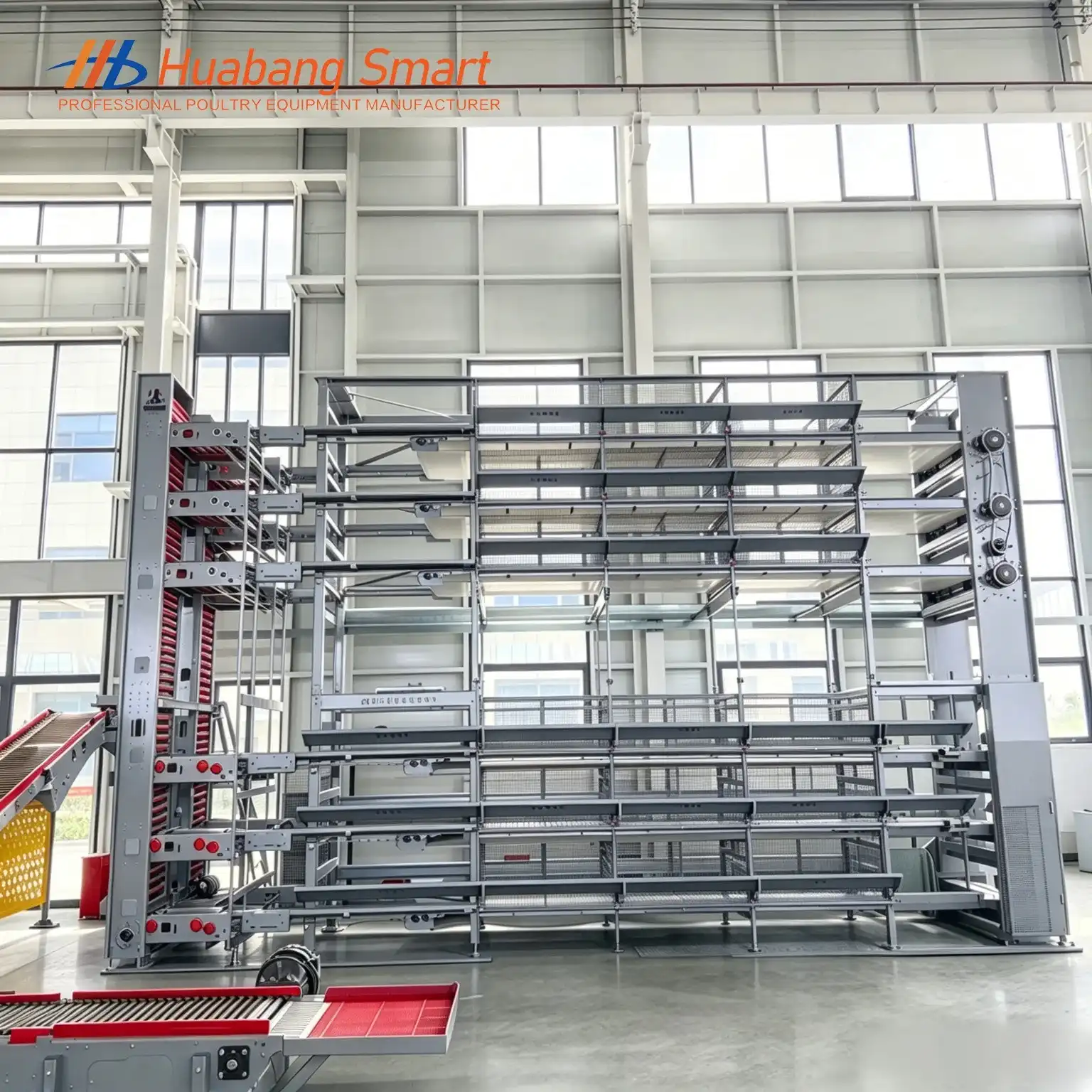
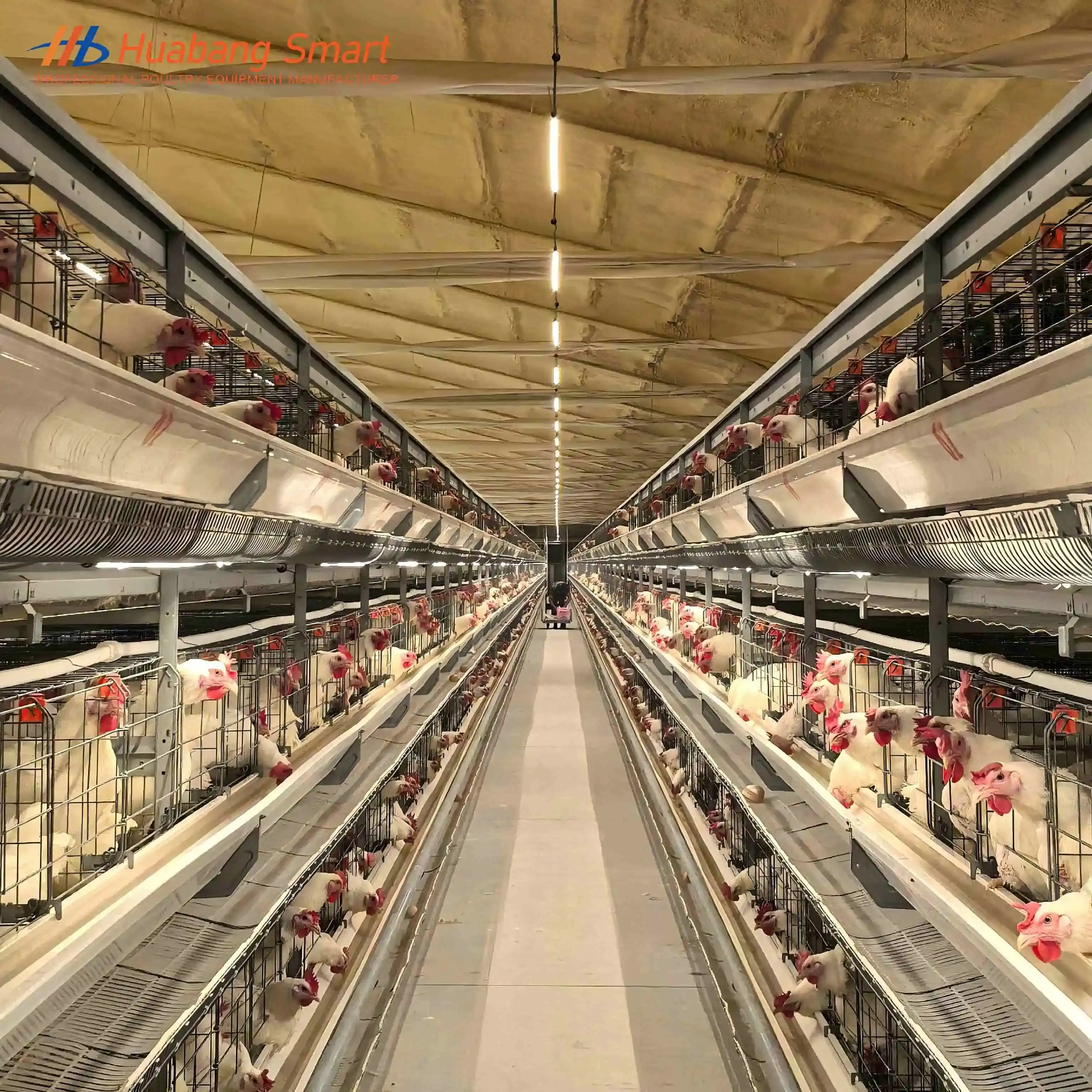
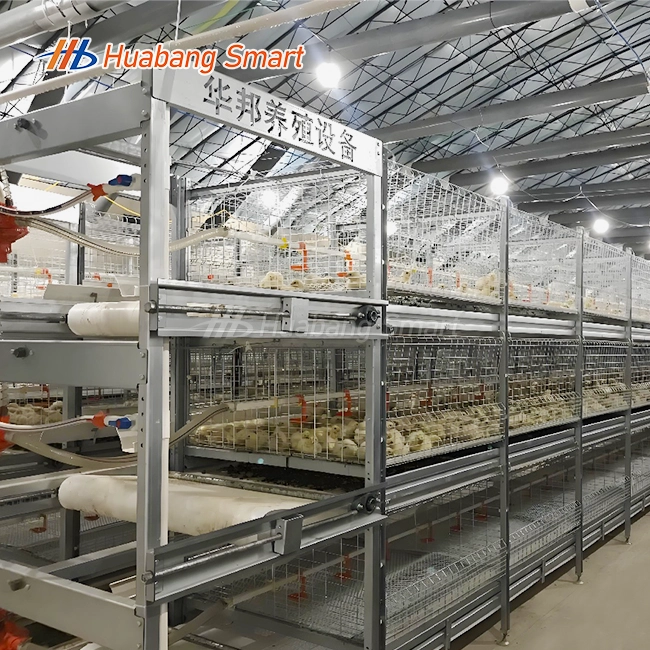
An H-type layer cage system is a raised housing unit with several levels for laying hens that are kept for business. Rows of cages that face each other make an "H" shape when cut in half. Support frames connect these rows. The design now takes into account both the building's height and its floor space. The cages in our Chicken Cages Egg Layer H Type are 1.2 m x 1.2 m x 0.45 m. There are different ways to set up each set, but they can hold between 90 and 200 hens. Each bird has 450 to 600 cm² of space, which is 70 to 93 square inches. Large and medium-sized farms like this layout because it lets one team handle many rows and keeps daily tasks the same.
Cage Structure Versus the Full Equipment Package
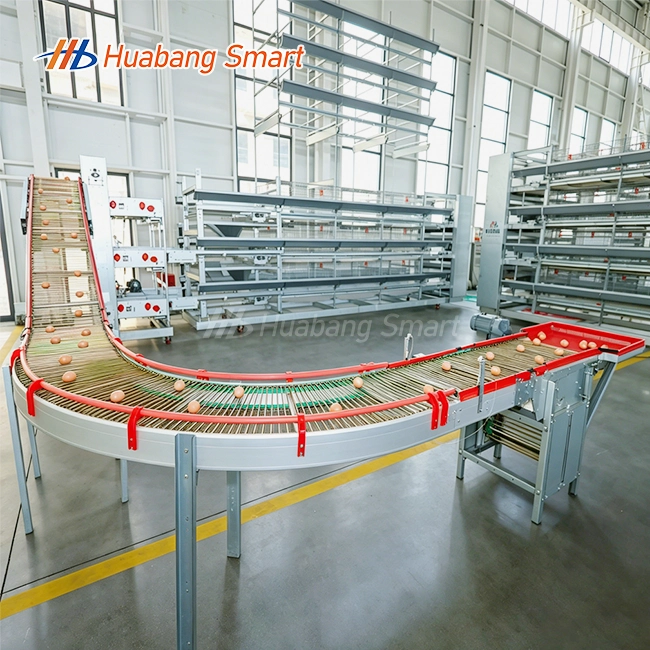
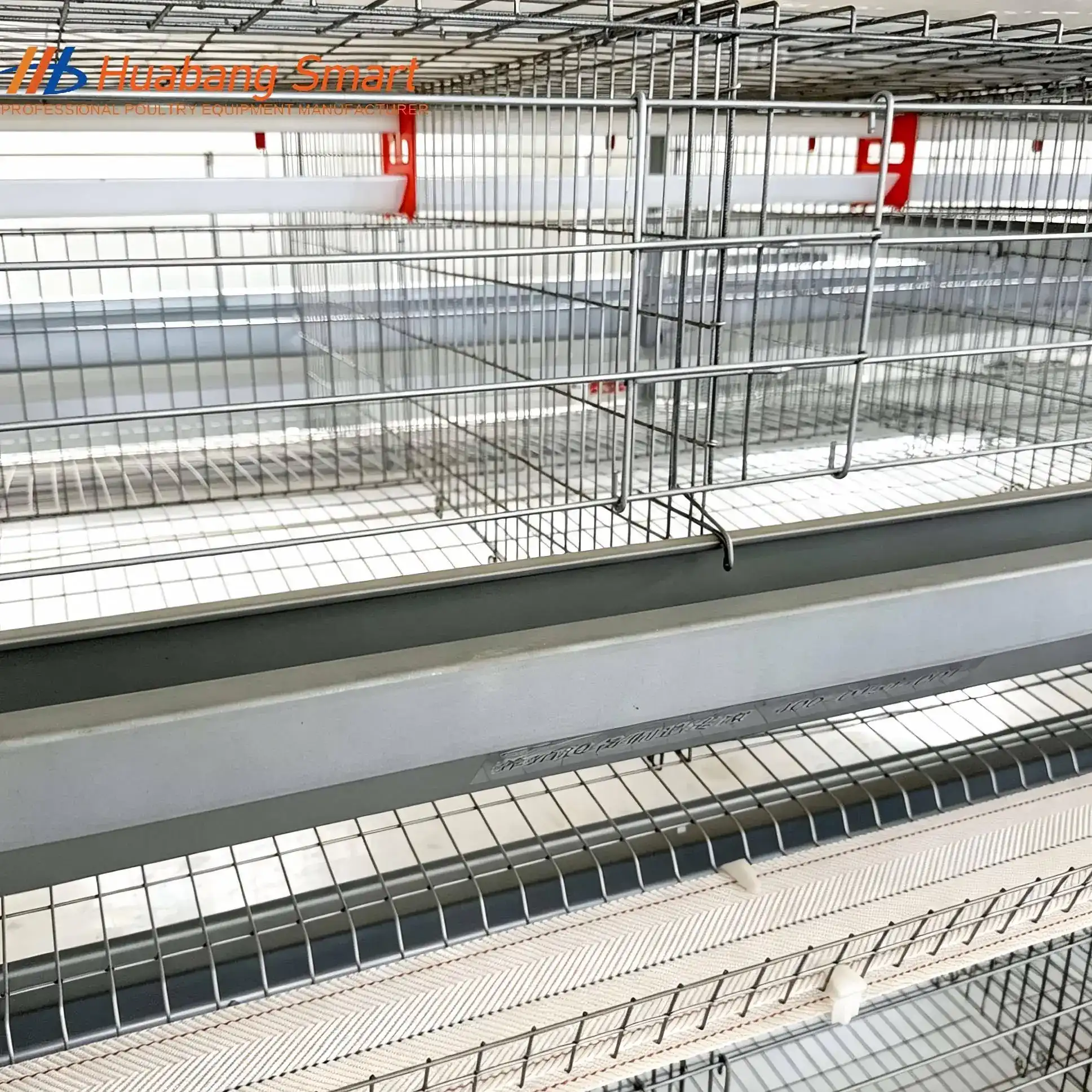
A bare cage frame is not the same as a full system. The hens are kept in the cage, and the full H-type poultry cage package comes with controls, lighting, ventilation, food, water, eggs, and cleaning out the poop. A strong PP manure belt, egg collection belts, a pressure-controlled nipple drinking system, and an automatic feeder that tips over are all in our package. Optional sensors controlled by a PLC can keep an eye on temperature, humidity, ammonia, and feed use. They can look at the information on their computers or phones. Plan and price the whole thing, not just the frame.
H Type vs. A Type and Traditional Poultry Cages
To choose between H type, A type, floor, or colony housing, you need to do more than just look at prices. They make good use of vertical space and can help on bigger farms with things like feeding, collecting eggs, and moving manure. A-type cages make it easier to get to some parts of a project, which can help it get off to a simpler start. There are laws or rules about welfare that might work better with floor systems. The three-tier and four-tier H-type designs also have different needs for airflow, structural load, and upkeep. In the U.S., people should first look at the rules in their own state. Prop. 12 in California, which was passed in 2018, says that hens that lay eggs for sale in that state can't be kept in cages. In its Egg Markets Overview, it also keeps track of what percentage of the sheep in the country are not kept in cages.
Why H Type Layer Cages Save Space in Multi-Row Farms?
Using Building Height and Parallel Rows
It costs more to build on land, so many farms grow up instead of out. You can fit more hens into the same space if it has more than one level. This is because each level adds cage space without adding floor space. You can pick a system with 3, 4, 5, 6, or 8 levels. The best choice will depend on how workers can get to the upper levels, how high the ceiling is, and how much airflow there is. In this way, big industrial farms can keep at least 100,000 birds in a single building that is kept at a constant temperature. This is most helpful in places close to cities, where there isn't much room to grow, and things cost more.
Layout Planning Beyond Bird Count
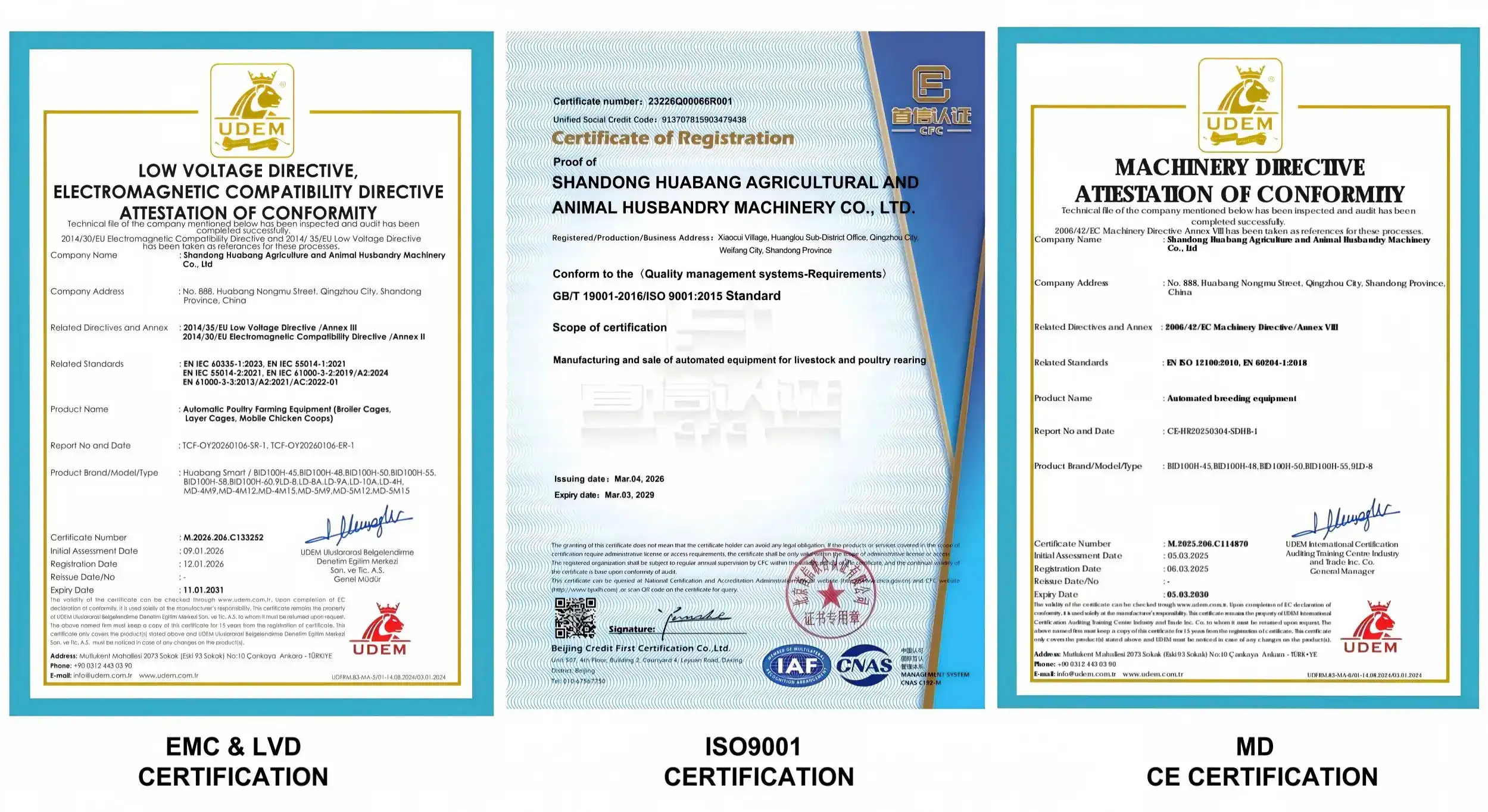
Selecting the right Chicken Cages Egg Layer H Type system starts with evaluating production targets, poultry house dimensions, layer breed, expected egg production, climate conditions, labor availability, power supply, and future expansion plans. Buyers should then assess the cage wire specifications, welding quality, frame stability, cage door design, corrosion protection, load-bearing capacity, cleaning convenience, and availability of replacement parts. For this system, the wire diameter ranges from 2.1 mm to 3.5 mm, with a tensile strength of at least 450 MPa. The frame is constructed from Q235 steel with a hot-dip galvanized zinc coating of 275 g/m². ASTM A123 provides relevant requirements for zinc coatings on iron and steel products fabricated by hot-dip galvanizing. Buyers should also request applicable ISO 9001 quality management and CE conformity documentation and verify that the Chicken Cages Egg Layer H Type system is compatible with their feeding, egg collection, manure removal, ventilation, and environmental control equipment. Proper coordination of these systems helps support efficient layer management, consistent egg collection, and convenient daily farm operations.
Planning 5,000- and 10,000-Hen Projects
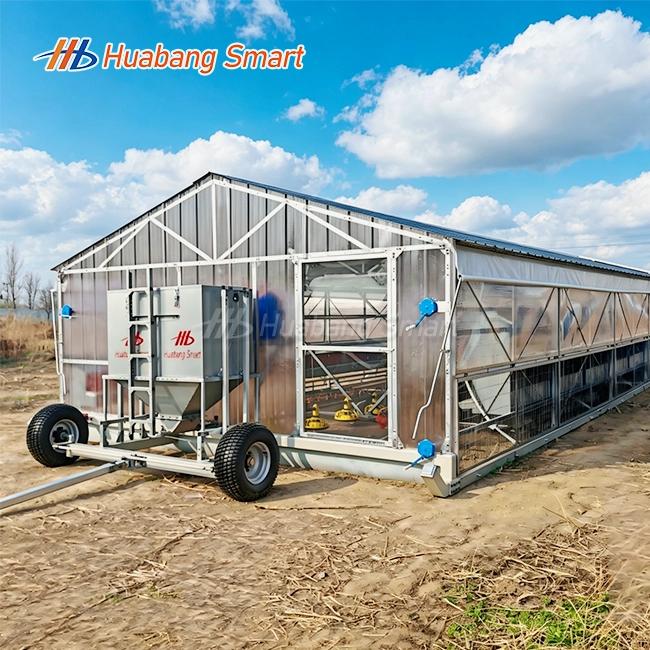
All projects, no matter how big or small, need a layout that works with the site. It depends on you: how many tiers, how far apart the cages are, and the size of your building, so we make a project for 5,000 or 10,000 hens. We'll let you know how many rows your house can hold before you decide. Just send us its length, width, and height. We check the 1.2 m x 1.2 m x 0.45 m cage module to make sure it fits your building grid. At first, a farm can have 500 birds. Later, more rows can be added until there are 100,000 or more birds.
Structure, Materials, and Automation
Galvanized Steel and Durability
Your service life will depend on the steel, the coating, the welds, and how well it was put together. The iron-zinc wire mesh in our cages is hot-dip galvanized 275 g/m², and the frame is made of 3 mm hot-dip galvanized steel that is extra thick. ISO 1461 talks about hot-dip galvanized coatings on steel that has been fabricated. Electromagnetic gauges are used to find out how thick the coatings are. There are three different finishes that buyers should know about: electro-galvanizing, hot-dip galvanizing, and painting. These finishes all handle water, manure, and washing in different ways. Wire junctions are also put through tensile tests, and burrs are checked for on the surfaces by hand. The hens' feet won't get hurt this way. Our specs say that frames should last 20 to 25 years in ammonia environments.
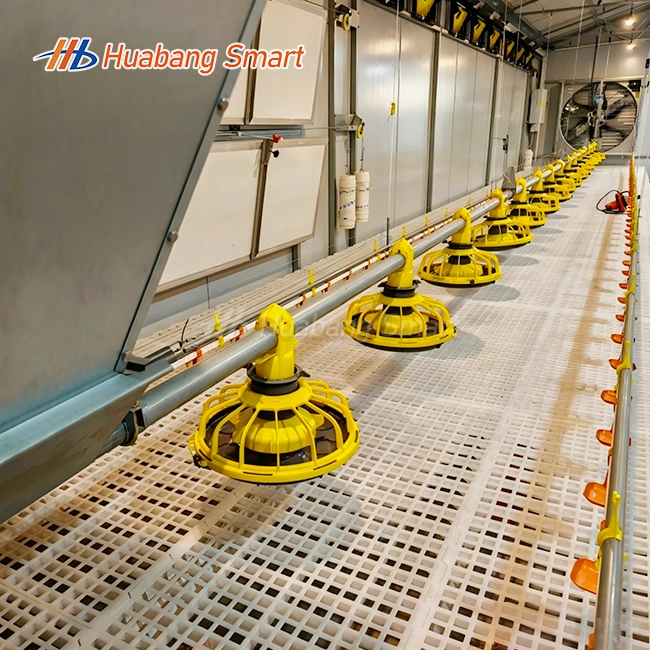
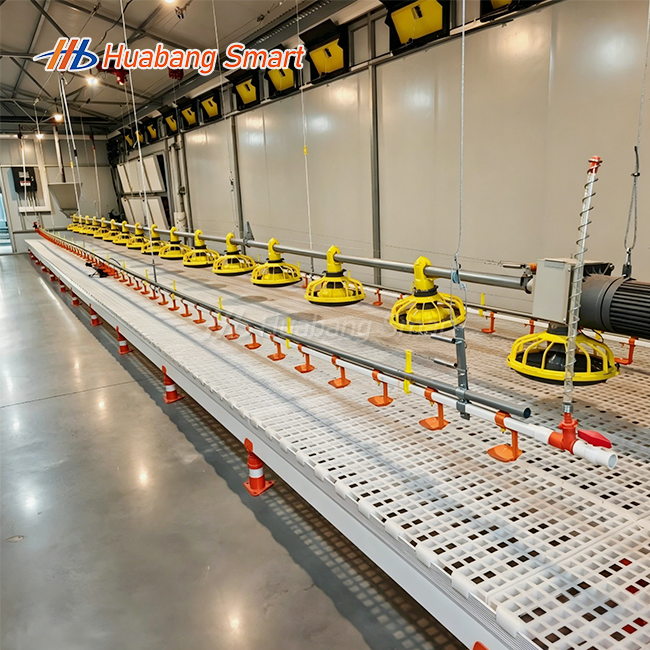
Automatic Feeding, Egg Collection, and Manure Removal
Automation does work that needs to be done over and over again. This type of feeder spreads the feed out evenly across the tiers, which cuts down on waste. A 7–9-degree slope in the bottom mesh lets the eggs roll gently onto the collection belts. Less than 0.3% of the eggs will break, which is what our rule says should happen. The PP manure belt gets rid of waste and keeps the house clean every so often. Water comes out of nipple drinkers that work with pressure. Our systems can save you up to 80% of the work that you would have to do by hand. It depends on the size of your flock, the cost of labor in your area, how stable the power is, and your plans for growth. That's why we talk to you about the right level of automation before you buy.
Ventilation and Farmhouse Design
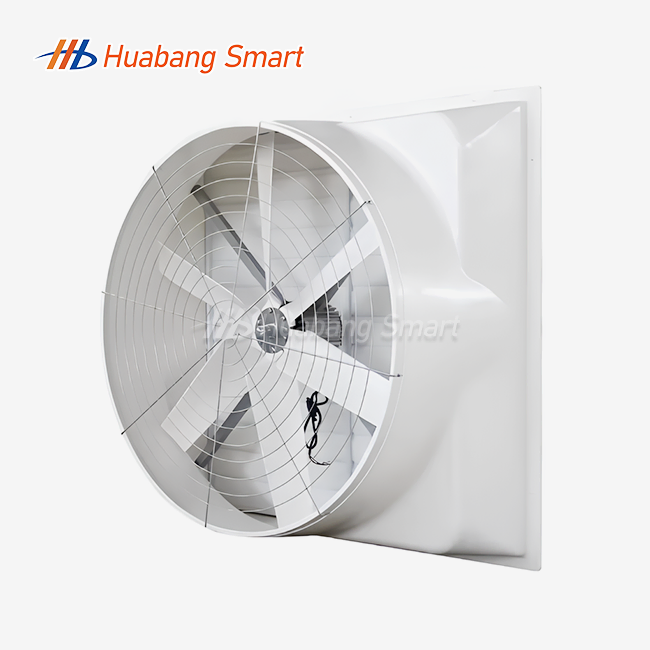
The ventilation is built in, not an extra. There should be equal amounts of airflow in all three levels of a big house to get rid of heat, moisture, dust, ammonia, and carbon dioxide. The NIOSH Pocket Guide to Chemical Hazards says that during a work shift, 25 ppm is the safest amount of ammonia to be around. A lot of farms use this level as a guide. The middle of our frame is 5 cm higher than the rest of it. This lets air flow and keeps you cool. To make the system work, cooling pads and tunnel ventilation are used. Before adding stock, it's important to check the temperature, humidity, ammonia, and air speed at each level.
Choosing, Installing, and Running the System
How to Choose the Right System?
First, explain what the project is for a Chicken Cages Egg Layer H Type. Think about the weather, the number of birds that can live in the house, the quality of the water, how reliable the power supply is, how many workers are available, and whether you are starting from scratch, replacing something, or adding on. Then, look at how many tiers there are, how big they are, how they are galvanized, and how they feed, drink, collect eggs, and get rid of waste. The cost of shipping, customs, installation, infrastructure, maintenance, upgrades, spare parts, and shipping are all added up to get the total cost of ownership. When you raise chickens for eggs, feed is usually the most expensive part. How well you feed them affects your return on investment. Ask any company that makes H-type layer cages for drawings, project references, quality records, warranty terms, and a price list that breaks down each item.
Installation and Commissioning
Before the equipment even gets there, a good installation starts. Check the approved drawings against the floor, drains, foundation points, power, water supply, airflow openings, and aisles. As soon as the rows are marked and the frames are locked in place, the cages are usually put together. After that come the lines for food and water, the egg conveyors, the manure systems, the controls, and the safety devices. The rollers, chains, and belts need to be lined up right. When you turn on the system for the first time, check the water pressure, egg movement, manure removal, emergency stops, motors, sensors, and fans on each level. In other countries, we offer video installation guides, on-site installation, farming lessons, and support after the sale in the area. We make things for 30 to 60 days.
Performance Tracking and Maintenance
Watch out for both the health of the tools and the eggs that the hens lay. Egg collection rate, breakage rate, feed conversion, feed waste, water use, manure removal frequency, labor hours, and downtime are all useful metrics. Feed delivery that isn't even, egg belt drift, leaky drinkers, slow airflow, and taking too long to remove manure are all common bottlenecks. Every week, grease the motors that move the machine, and every month, make sure the manure and egg belts are tight. Frames, fasteners, bearings, filters, sensors, and fans should all be checked often, and the most important spare parts should always be on hand. If you look at data from one month to the next, you can see where an upgrade makes sense.
Procurement Checklist and Quotation Preparation
Technical and Commercial Checks
You can compare whole systems with a checklist instead of just parts of them. Tech-wise, check the layout drawings, the number of layers, the size of the cage, the grade of steel, the galvanizing requirements, the food and water needs of the birds, how to collect the eggs, how to get rid of the manure, the environmental controls, and the number of layers. When it comes to business, you should look over the itemized quote, Incoterms, shipping, packaging, lead time, payment terms, warranty, installation, training, spare parts, and warranty. We offer free samples so that your engineers can first see how the material and finish work. Also, our warranty is good for a year. For peace of mind, write down your answers to each question.
Supplier Due Diligence
Check out the factory that gave you the quote. Find out how the company can produce, how it controls quality, what other projects it has worked on, how it can customize, how much experience it has with exporting, and how it treats customers after the sale. It is based in Qingzhou, Shandong, and Huabang Smart has been making things for 17 years. The ISO9001 and CE mark our business, and we have 49 patents on core technologies. More than 100 countries have bought from us. We can do OEM and ODM work, and you can also send us drawings to use as guides. Ask each supplier to back up what they say with proof.
What to Send for a Quotation?
The first thing you need to make a useful quote is real site data. Send the number of birds you want, the house's length, width, and height, along with any drawings you may have. Also include the country where the house will be installed, the weather, and the power conditions. After that, we suggest levels, figure out how many birds can fit in each row, set up ways for them to eat, drink, lay eggs, get rid of waste, and protect the environment, and make a technical layout. The quote should list the parts that come with the machine, the parts that don't, the delivery terms, the warranty, the spare parts, and the help with setting it up. The project is less likely to go wrong because your procurement team can compare offers more fairly.
Conclusion
There are more hens that can live in a building with a Chicken Cages Egg Layer H Type system because it has vertical tiers and parallel rows. But aisles, airflow, and how easy it is to get to equipment can also change how space is used. Hot-dip galvanized materials, solid welds, and automatic feeding, egg collection, and manure removal set the standards for how long things last and how much work they need to do. The design will work as planned if it has enough ventilation, is installed correctly, and is maintained regularly. When comparing H type, A type, and floor systems, you should think about the building's condition, the flock's size, the cost of labor, and local housing laws, like US state laws. With a procurement checklist and a site-specific layout, buyers can see how much it will really cost to own the frame instead of just the price of it.
FAQ
What does an H type layer cage system include?
The cage frame and galvanized wire mesh make up the base. To a full package can be added automatic tipping feeders, nipple drinkers, egg collection belts, a PP manure belt, ventilation links, and PLC-controlled sensors that can be used for monitoring from afar.
Can it support 5,000 or 10,000 hens?
Yes. Our plan is made up of separate parts that can be put together to fit farms with 500 hens or more than 100,000. Before you place your order for a 5,000- or 10,000-hen project, please tell us how big your house is, how many levels it has, and how far apart the rows are.
How do three-tier and four-tier designs differ?
A floor with four levels can hold more hens, but more care needs to be taken with airflow, structural load, and getting to the upper levels. Three levels work best when the ceiling is low and daily tasks are simple.
What affects the price?
The price isn't just based on the number of cages; it also depends on how automated they are, the type of steel and coating used, the number of levels, shipping, installation, and the site's infrastructure. This type of quote tells you how much each part costs based on your drawings.
Request a Quote for Chicken Cages Egg Layer H Type from Huabang Smart
Huabang Smart is a factory that sells Chicken Cages Egg Layer H Type directly to customers. They are ISO9001 and CE certified and have been in business for 17 years. They can do both OEM and ODM work. If you are looking for a Chicken Cages Egg Layer H Type manufacturer, email ginny260831@gmail.com or huabangsmart002@gmail.com with the size of your house, the number of chickens you want, and where you want them to go. We'll send you a rough draft and a quote with all the information. Go to poultrycage.com or ask us for a sample to learn more about the product.
References
1. United Egg Producers, Animal Husbandry Guidelines for U.S. Egg Laying Flocks, 2017
2. International Organization for Standardization, ISO 1461: Hot Dip Galvanized Coatings on Fabricated Iron and Steel Articles, 2022
3. USDA Agricultural Marketing Service, Egg Markets Overview, 2024
4. National Institute for Occupational Safety and Health, NIOSH Pocket Guide to Chemical Hazards, 2007
5. State of California, Proposition 12: The Prevention of Cruelty to Farm Animals Act, 2018
6. Council of the European Union, Council Directive 1999/74/EC Laying Down Minimum Standards for the Protection of Laying Hens, 1999

USER EVALUATE
Here is the customer's evaluation of us
_1793065975341.webp)