
How Chicken Feeder Anti Trampling Systems Improve Feed Access in Crowded Pens
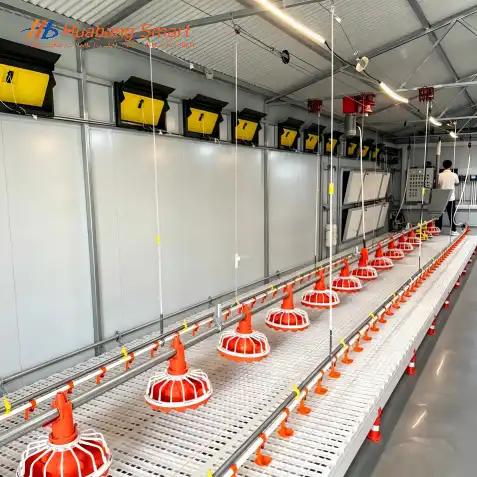
Chicken Feeder Anti Trampling systems keep birds out of the tray so they can only reach the food with their heads and necks. This makes it easier for them to get to the food in pens with a lot of birds. Birds that can't stand, scratch, or roost in the feed area leave less food on the litter and fewer droppings in the food. During the day, more birds can come to any feeding spot at any time. Bigger birds take up more space, but smaller birds eat more often. In this guide, I explain how the design works, what you should consider before buying, and how our Huabang Smart pan feeding system helps with both broiler and layer work.
How Chicken Feeder Anti Trampling Systems Work in Crowded Pens?
How Controlled Access Keeps Birds Out of the Tray?
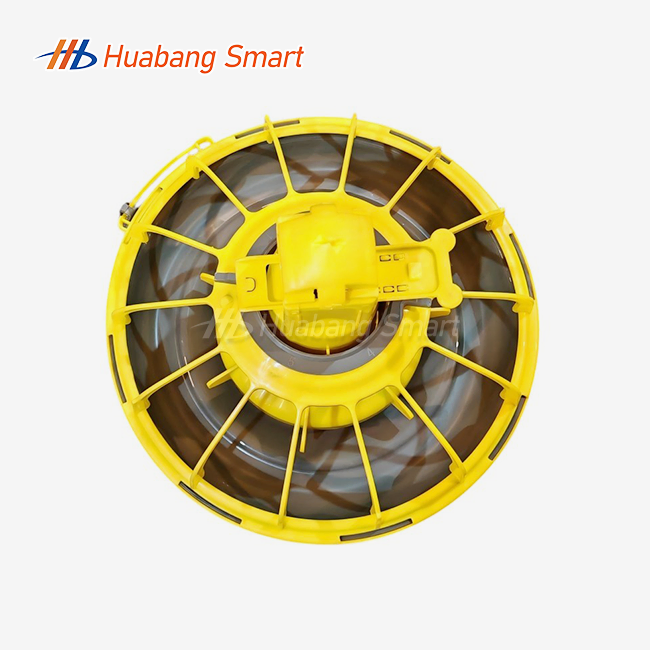
Controlled access is used in a chicken feeder to keep the chickens from trampling it. A chicken can reach the food with its head thanks to safety grills, raised pans, internal dividers, and recessed channels. It's important to do this because a bird that stands in an open tray will scratch its food outward and waste it behind. The stable bases, mounting brackets, or hanging lines keep the unit from falling over when a lot of birds push in at once. The holes can be changed so that birds of all sizes can fit, from chicks to adult layers and broilers. These features work together to keep the food in the tray, lower the risk of contamination, and clean up the area where the cats eat. Anyone can use the idea, even if there isn't a lot of complicated automation. A farm can add automation later to save time on tasks like refilling.
Why Feed Access Improves When Pens Get Crowded?
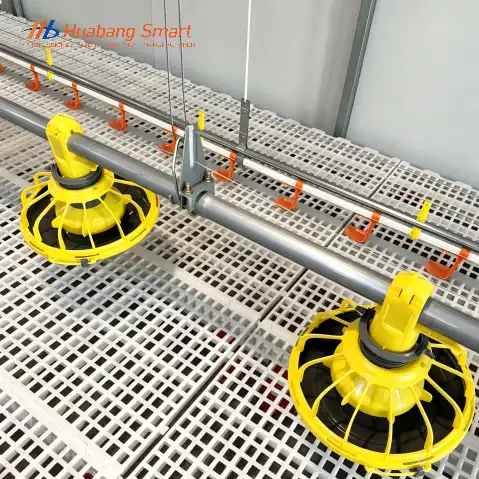
Birds that are used to being in charge will often sit at the feeder, push food to the floor, or get in the way of smaller chickens when the pen is full. Each feeding spot is better because birds can't sit on the tray itself, which keeps them from trampling. You can always get more feed because there is less spillage. The area also stays clean longer and takes less time to clean. Crowding can be fixed by good design, but not by itself. There must be a match between the distance between access points, the total feeding time, the number of animals, and where they are placed. There are breeder guides, like the Ross Broiler Management Handbook, that tell you how much feeder space to set aside and how high the pan should be based on the bird's size. I suggest that you look at the most recent guide for your breed. Everyone has a better chance of getting in when these things come together, and there is less competition between flocks.
Anti-Trampling Feeders vs. Traditional Open-Tray Feeders
Traditional feeders with open trays cost less, are easy to fill, and work well for small flocks or housing with low density. Things can also stand, scratch, fall, and get dirty. These problems can be fixed with anti-trampling feeders, which have safer openings, feed barriers, and stronger construction. They're also not the same as some other types of feeders. Automatic feeders let you choose when or how much food is sent, while treadle feeders keep people out with a mechanical lock. A pan that doesn't get stepped on can be put inside an automatic line to control how the birds get to the food. When you pick, things change. In the backyard, where adults can watch, an open feeder might work. Most of the time, commercial or crowded pens do better when they can control the feed better and waste less.
Huabang Smart Pan Feeding System: Specifications and Benefits
Feeding Capacity and Pan Design
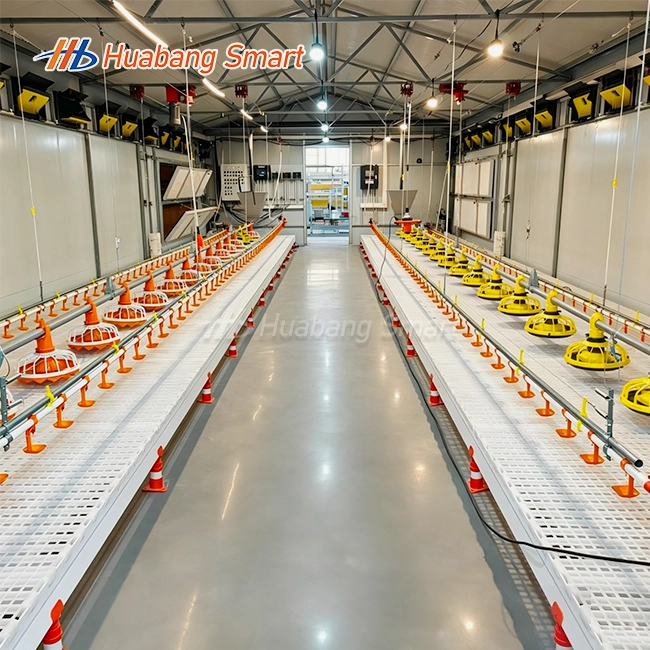
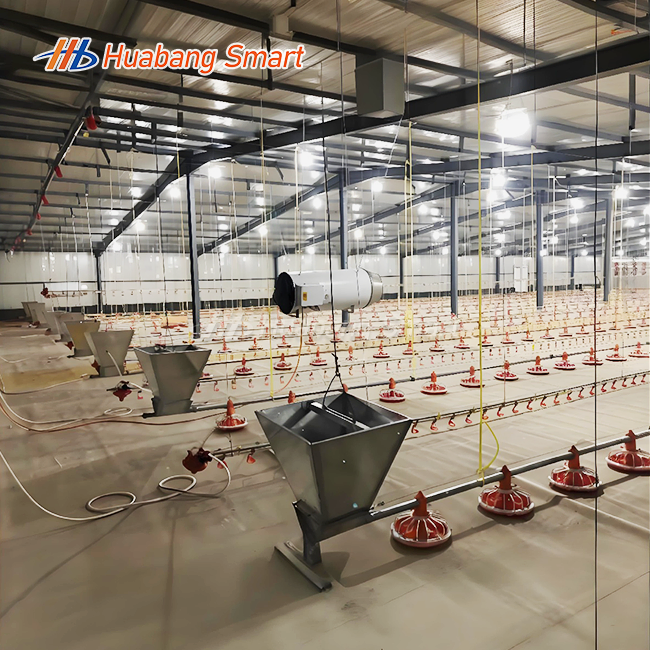
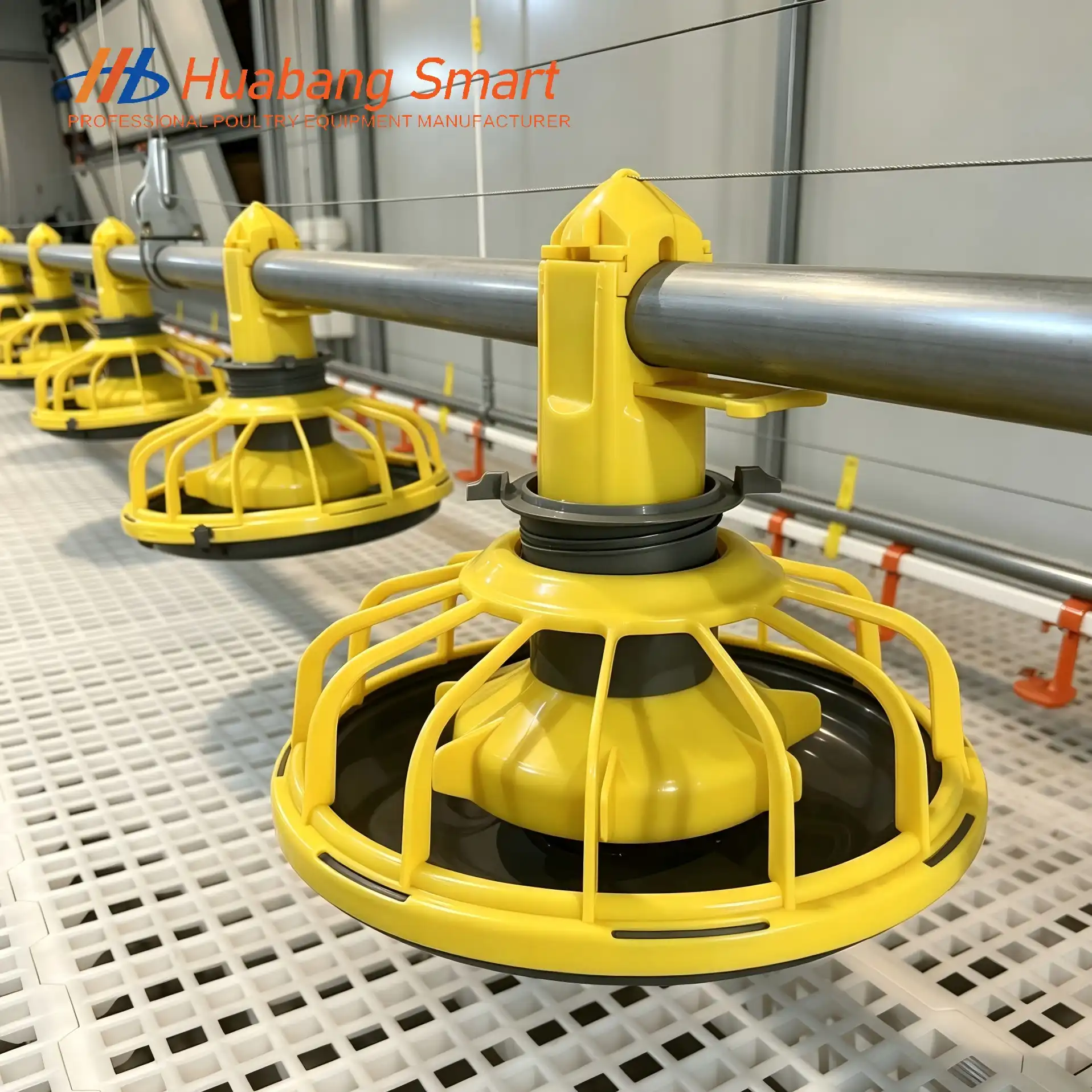
Our Chicken Feeder Anti Trampling pan feeding system lets farms feed their chickens automatically. It can feed up to 3,086 pounds, or 1,400 kg, per hour. Each 330 mm (13 inch) pan has 16 feeding cells, so birds can eat from all over the pan. An auger drive spreads the feed out evenly along the line. This gets rid of any dead spots along the house. The feeder's height can be changed with a high-precision winch, and the pan can fit birds from day-old chicks up to market weight. The system was made to work with both layer and broiler chickens.
Materials and Build Quality
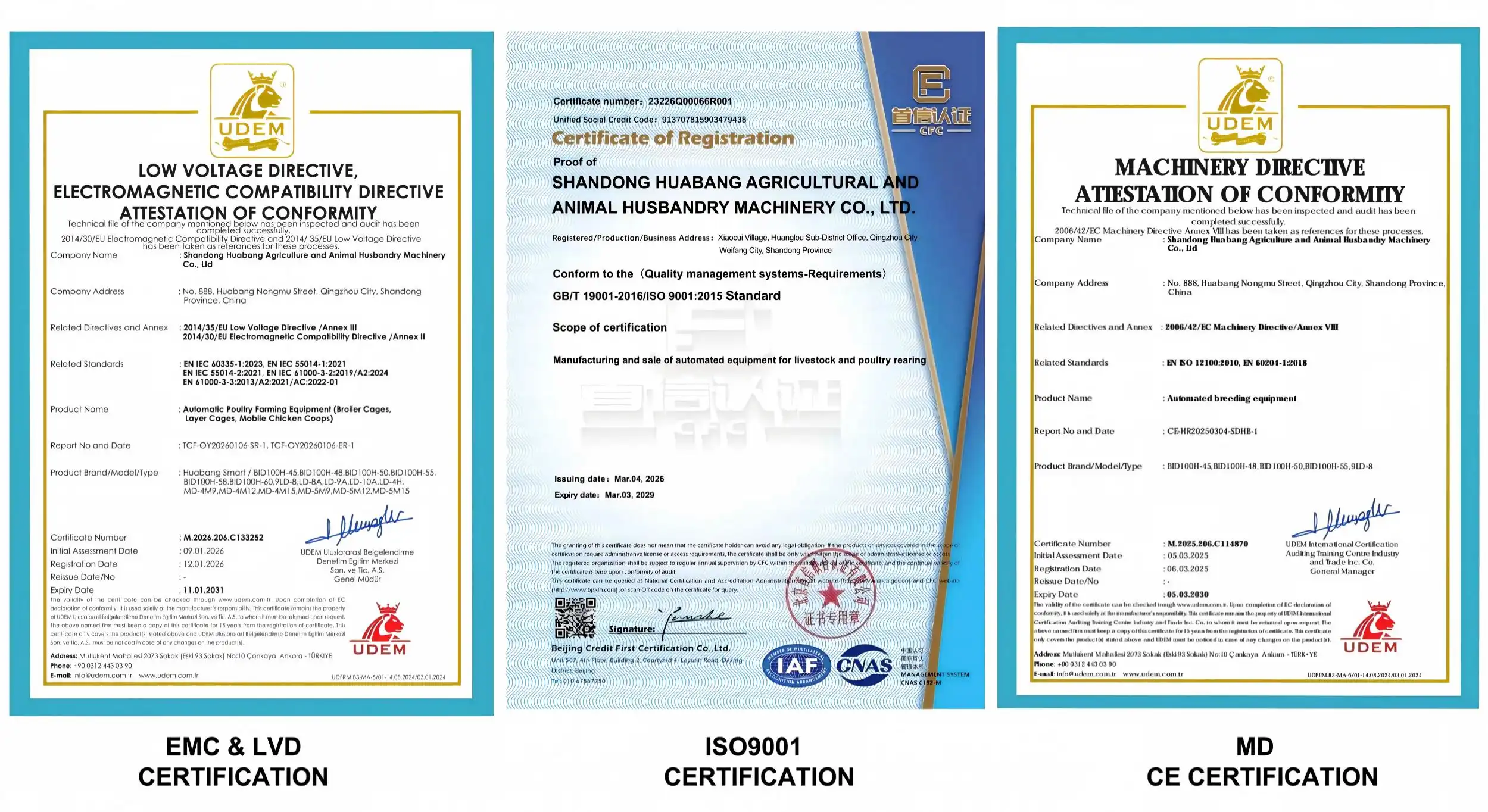
The 80 mm by 3.6 mm (about 3 inch) PVC feed pipe can handle a lot of damage every day. The pans are made of virgin food-grade PP, which is strong against pet waste and water. The carcass is less likely to get damaged if the finish is smooth and free of burrs. They follow an ISO9001 quality system and have been designing and making things for 17 years. Each system comes from that factory. The system has also been given the green light by the CE. For people in the US, they should still ask their installer about the building and electrical codes in their area. We offer a one-year warranty, and the process of making something takes thirty to sixty days.
Energy-Saving Automation and Feed Savings
Instead of scooping and carrying food by hand, food is fed automatically with a Chicken Feeder Anti Trampling. When feed is timed, it stays fresh and is given at the same time every day. Monitoring in real time can see how much feed is being used and find problems early. Smart Environmental Control Systems can talk to the system. The process that cuts down on energy use also keeps costs low. Foot traffic and contamination must stop for our product data to show that FCR goes up by 0.05 to 0.12 points and feed loss goes down by 15 to 25%. Since management can change the numbers, I believe you should test these numbers in a pen. Running a chicken farm costs a lot of money in feed, so even small FCR gains are significant.
Design Features, Installation, and Common Mistakes
Key Design Features to Evaluate Before Buying
There should be more research done on an anti-waste chicken feeder than just checking to see how big the hopper is. Check to see how long it is, how far apart the access points are, how big the opening is, what kinds of birds can use it, and how often it needs to be filled up. What's important changes trade-offs. Galvanized metal, stainless steel, food-grade plastic, and reinforced polymers are all different in how strong they are, how heavy they are, how much they cost, and how easy they are to clean. The units outside need to be able to handle UV light, drain well, keep the weather out, and stay stable when it winds. Make sure you know where it will go: on the floor, hanging from the ceiling, on the wall, on the cage, or with a feeding line compatibility. Finally, find out how to fix the machine, what parts are available, and how long it's supposed to last. A cheap feeder with lots of broken parts may cost more in the long run for a flock than a stronger one.
How to Install an Anti-Trampling Feeder Correctly?
The design will work as planned if it is installed correctly. The feeder should not be placed near a lot of people, soft or wet ground, or places where birds might splash water. Also, leave room around the feeder so that it can be cleaned and refilled. Adjust the height to fit the bird's size. As the birds get bigger, the Cobb Broiler Management Guide says that the pans should be raised so that the birds can eat without having to climb in. Our winch system lets the staff make that change. Models that are hanging, on the floor, in a cage, or on the wall should not fall over, especially when they are full. Test the barriers and openings that can be moved to see how the feed is moving. After that, watch the flock for a short time before it's fully used. Keep an eye out for leaks, blocked areas, uneven access, and issues with height.
Common Mistakes That Reduce Feed Access
Some designs may not work as well as they should, even if they are well thought out and chosen. When people choose the wrong capacity without checking how long it can be used for feeding, they set the unit too low or too high, or they use equipment meant for adult birds with chicks. If you don't put the drinker in the right spot, water will get into the feed, making it hard and bad. When you overfill, spills get worse, and the feed-control features don't work as well. Grids, barriers, and feed channels inside can get clogged with dust and buildup, so make sure you check them often. It's also good for the sheep's health to keep food away from waste. As per the Merck Veterinary Manual, oocysts that are shed in animal waste are what spread coccidiosis. Access works as long as it is cleaned often, kept at the right height, and watched while the animal is eating.
Selecting Suppliers and Planning Bulk Orders
Matching the Feeder to Your Application
Pick a farm based on the birds they have, how big their flock is, how they house them, how they run their business, and your buying goals. People who use their yards a lot want things that are cheap, have a small capacity, and are easy to clean. Homes for chicks and pullets need to have lower installation heights, smaller openings, and safe edges. The adults who lay eggs and broil need to be made stronger, fed for longer periods of time, and mounted in a stable way. If layer farms want to set goals for feeder space, they can look at the United Egg Producers Animal Husbandry Guidelines and the Hy-Line W-36 Commercial Layer Management Guide. Commercial farms with a lot of land should think about things like hiring more workers, putting in feeding lines, making the farm last, having spare parts, and making sure that each batch is the same. If a customer buys from an OEM or distributor, they should also think about branding, lead times, customization, packaging, MOQ, sample approval, and tooling.
How to Compare Anti-Trampling Feeder Manufacturers?
Before you hire a supplier for a Chicken Feeder Anti Trampling, go see their factory and see how well their goods work. When making a good Chicken Feeder Anti Trampling, the company should know how birds of different sizes need to be fed, as well as about materials, mounting systems, and changes to the design. Ask about checking the dimensions of incoming materials, making sure they are stable, keeping an eye on assembly, keeping track of batches, and inspecting before shipping. We check the quality in four different ways. Three types of tests are done to make sure the guards can hold several heavy birds without breaking. These tests include salt spray testing (ASTM B117) for metal parts, checking the size tolerances of feeding ports (a bird can fit through a hole as small as 2 mm), and chemical resistance testing against chlorine and quaternary ammonium disinfectants. Order samples and try them out in a pen that you think is normal before you buy.
Procurement Checklist for Bulk and Commercial Orders
Specification gaps that cost a lot of money can be avoided with a written checklist. Find out about the model, its size, how long it can be used for feeding, the recommended bird size, the material, how it is installed, whether it can be used outside, and how often it needs to be cleaned. Ask for paperwork about the product's quality, materials, packaging, and compliance. You should also ask about replacement parts and warranties. Look at how much they can make, if they have experience with OEMs, their lead time, their minimum order quantity (MOQ), their ability to export, and their logistics support. Before you place a large order, look at a physical sample, test it with a representative pen, read the labels and packaging, and make sure that the production units match the sample that was approved. Buyers can get help with this process, from planning the site and designing the products to getting video installation guides, having the products installed on-site, and getting help from people in the country after the sale.
Measuring Results and Long-Term Value
How to Measure Feeder Performance?
The performance should be judged by operating results, not just the price paid. Over time, keep track of the feed that is supplied, the waste that is left on the floor, the contaminated feed, how often the feed is refilled, and how long it takes to clean. Watch how many birds are at the feeder at the same time and see if any smaller or less important birds can get to it. Check the feed channel for paper, water, poop, dust, or things that have been squished together. Keep track of maintenance tasks like clearing out clogs, making repairs, and replacing parts. Next, look at the numbers and compare them to the numbers from your old feeder that was in a house like this one. The Animal Welfare Guidelines and Audit Checklist for Broilers from the National Chicken Council also talk about how birds can get food. You can use these records to get ready for an audit.
Total Cost of Ownership for Commercial Buyers
Before a business buys something, it should figure out how much it will cost for shipping, setting up, labor, feed waste, service life, and any downtime that might happen. When the price of a box is low, it may not be clear that it holds more or wears out faster. Chicken farms spend most of their money on food, so even a small drop in waste can help a lot of flocks. Designs that are flexible and modular can be used for a variety of flock sizes, stages of production, and housing layouts. Because our system is modular, you can also make small changes to it without having to buy a whole new one. When you're outside or sending something overseas, you need materials that can stand up to the weather. When you compare quotes based on full costs instead of unit prices, you can see the bigger picture better.
Why Anti-Trampling Feeders Are a Practical Upgrade?
Now, operators judge tools by how much they're worth when they're fully utilized. How much money you get back from a feeder depends on how much work it needs, how clean it is, how long it lasts, how upkeep it needs, and how long it serves you. Several of these problems can be solved at the same time by different types of Chicken Feeder Anti Trampling designs. They keep food away from the litter, so it doesn't get dirty, and they let more birds use it. Buyers can pick the shapes, holes for access, labels, boxes, and mounting systems for OEM and private-label goods. If you put the unit together correctly and take good care of it, it will work better in commercial chicken coops and give the birds more stable access to food. If your farm's pens are already full, that consistency is a good reason to move up.
Conclusion
A Chicken Feeder Anti Trampling system keeps the birds out of the tray, making it easier for everyone to get food when there are a lot of birds in a pen. This keeps birds from scratching, spilling, and getting sick, and it lets more birds get to the food. To get the most out of them, you need to make sure that the position, length, height, spacing, and number of holes are all right for the birds. Treadle and automatic feeders are both good ways to feed animals, but they do different things well. Buyers should think about the cost of ownership, the materials, the mounting, the installation, the quality checks done by the supplier, and those things. After getting the results, they should double-check them by testing samples and keeping track of what was thrown away, what was refilled, and what was cleaned. The Huabang Smart pan system meets these needs for broiler and layer houses. It can make 1400 kg per hour. It has 330 mm pans, 16 feeding cells, and 75 mm PVC pipe.
FAQ
How does a Chicken Feeder Anti Trampling design reduce feed displacement?
Birds can only use their heads and necks to get to food through feed holes, dividers, and grills. Birds can't stand on the tray or scratch the food outward, so more of it stays in the pan and less of it falls on the litter.
How is it different from a treadle feeder?
Parts of a mechanism move a treadle feeder to let food in or out. A feeder that stops birds from trampling controls how they get to the food. They work to make things better.
Does your system suit crowded pens and both bird types?
Yes. There are sixteen feeding cells in five 330 mm pans, one for each type of chicken. Still, use your breed guide to figure out how many pans you need for each animal.
Can I order OEM or customized units?
Yes. We can do both OEM and ODM work, and we can even use your drawings to make designs. It works for one year and takes 30 to 60 days to make.
Request the Right Chicken Feeder Anti Trampling System for Your Application
You can email ginny260831@gmail.com or huabangsmart002@gmail.com and tell them how many birds you want to buy, how big your flock is, how old the birds are, and how your pens are set up. We have ISO9001 and CE certifications and have been making Chicken Feeder Anti Trampling for 17 years. You can also get help with installation and OEM and ODM support from us. Ask about costs, shipping, samples, lead times, and specifics. Go to poultrycage.com to find out more.
References
1. Ross Broiler Management Handbook, Aviagen, 2018
2. Cobb Broiler Management Guide, Cobb-Vantress, 2022
3. Hy-Line W-36 Commercial Layer Management Guide, Hy-Line International, 2020
4. Animal Husbandry Guidelines for U.S. Egg-Laying Flocks, United Egg Producers, 2017
5. Animal Welfare Guidelines and Audit Checklist for Broilers, National Chicken Council, 2020
6. Coccidiosis in Poultry, Merck Veterinary Manual, 2022

USER EVALUATE
Here is the customer's evaluation of us