



Chicken Cages Egg Layer Poultry Farms Need for Efficient Egg Collection
Chicken Cages Egg Layer Poultry Farms require a system for collecting eggs that functions as a whole. There is a sloped floor in the cage that moves the eggs forward slowly at first. So, they don't have to be moved by hand; a belt or conveyor moves them. Daily routines are kept consistent by automatic feeding and watering, and the frame won't rust and will keep its shape for years. When these parts work together, farms get better results: fewer cracked eggs, shorter work hours, and cleaner goods. The floor slope of our H-type layer cages from Huabang Smart is 7 degrees, and they have automatic belts that keep the egg breakage rate below 0.3%. This guide helps buyers in the U.S. weigh their choices and make plans with peace of mind.
Choosing the Right Layer Cage Type and Size
Define Your Collection Problems First
We start our review of a project by making a list of the issues that cost the farm money. Low output is caused by a lack of space for rolling, an uneven floor, long walking distances, manure buildup, and a narrow roll-out space. A lot of work is done, eggs are dirty, and people get sick more often. I suggest a written buying brief that includes information about the flock size, the number of eggs that should be laid, the acceptable rate of breakage, the house's dimensions, the climate, automation goals, the budget, and plans for growth. If you have a house with tens of thousands of hens, a one-point drop in cracked eggs adds up quickly. With measurable goals, you can judge equipment not only by its price but also by how well it works.
A-Type vs. H-Type Layer Cages
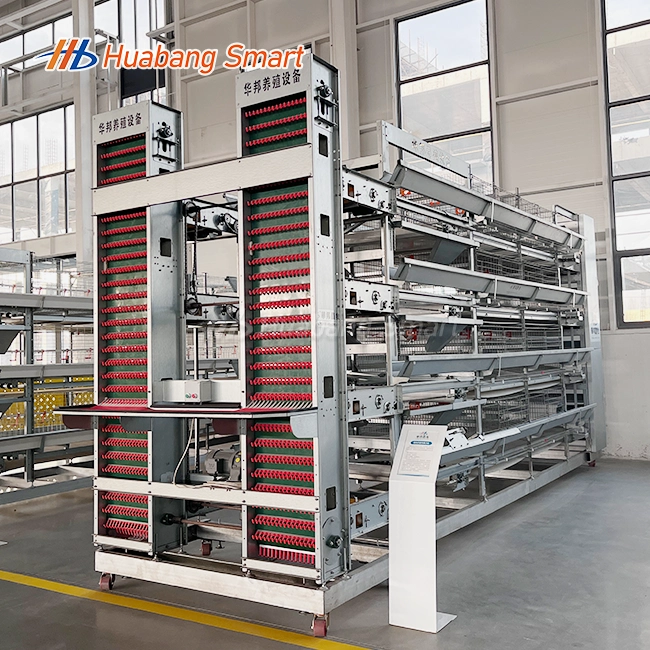
There are two main layouts used in commercial egg layer cages. A-type cages can be stacked in a ladder shape, which lets air flow between the levels. That works for open houses in hot places where airflow and heat loss are important. H-type cages stack straight up, which lets more animals live in a smaller space and makes automation stronger in climate-controlled homes. The H-type layer battery cage with automatic egg collection is what we normally sell. It comes with 3, 4, 5, 6, or 8 tiers. Comparing published research on hen housing systems shows that each one has pros and cons for welfare. California and Massachusetts are two U.S. states that also have rules about eggs sold within their borders that say they can't come from cages. Before you decide, look at the state laws and the deal with the customer.
Cage Size, Capacity, and Specifications
Not only do the outside dimensions matter; usable floor area, breed, body size, local rules, ventilation, and access to food and water are also important. Our cages are 1.2 m x 1.2 m x 0.45 m, which is about 3.9 ft x 3.9 ft x 1.5 ft, and each set can hold 90 to 200 birds. We give each bird 430–450 cm², which is about 67 to 70 square inches. The United Egg Producers guidelines list how much space each type of hen can have, so check them against your own plan.
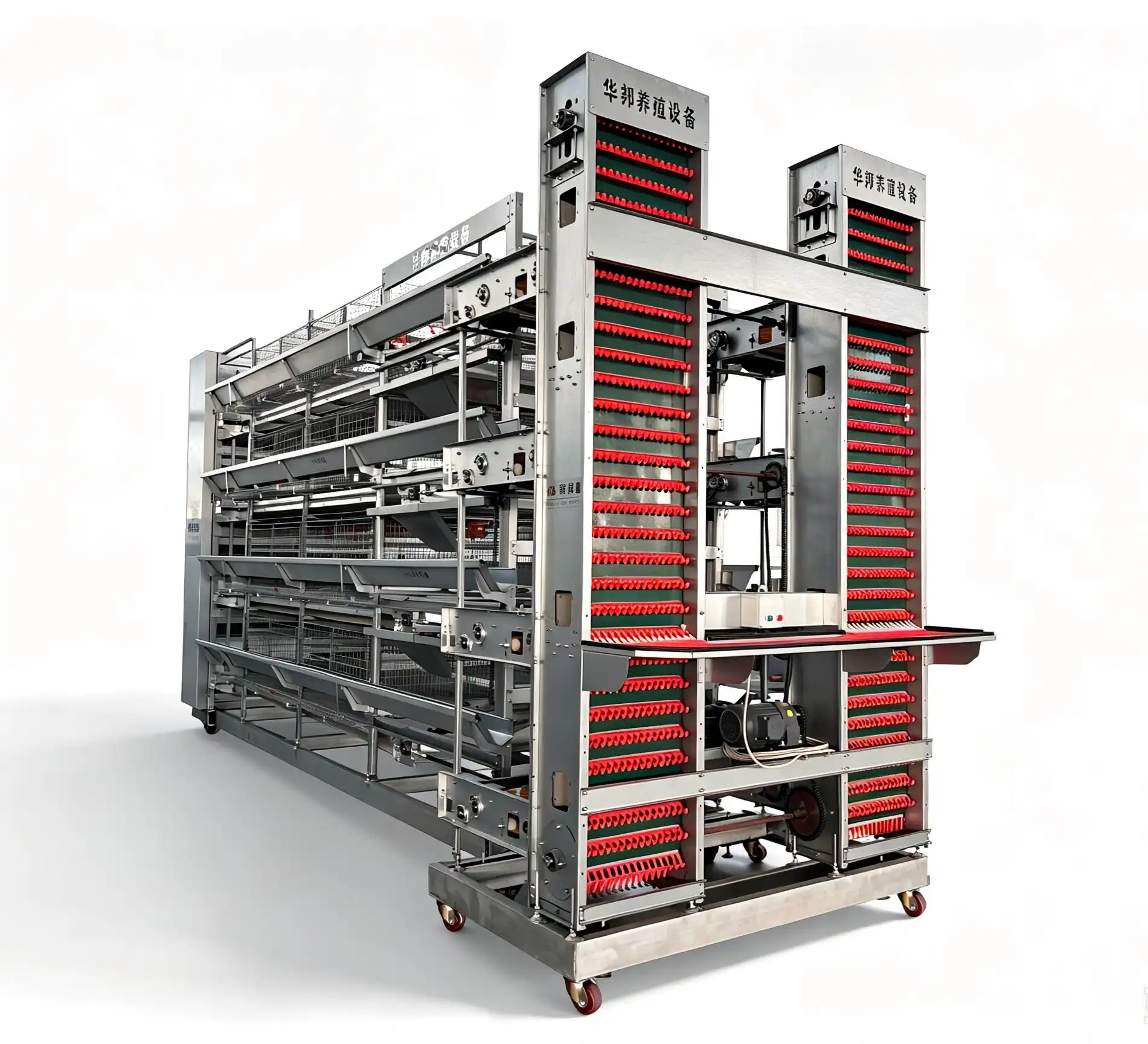
| Parameter | Specification |
|---|---|
| Frame | Hot-dip galvanized steel, 275 g/m² |
| Wire mesh | Aluminum-zinc coated, 2.15–3.8 mm |
| Floor slope | 7 degrees |
| Tiers | 3/4/5/6/8 |
| Warranty | 1 year |
Automatic Egg Collection, Feeding, and Monitoring
Manual vs. Automatic Systems
This type of cage costs less up front and can be used in places with limited technical support. They also need more time to be fed, have their eggs collected, and have their poop removed, and the quality of care varies from worker to worker. Feeding lines, nipple drinkers, egg conveyors, manure belts, and controls are all connected automatically, so workers don't have to walk as much and the results stay the same. Our systems for feeding, watering, and getting rid of manure automatically save up to 80% on labor costs. It depends on the size of your flock, the wages in your area, the number of eggs you lay, how many break, how much energy you use, and how long your equipment lasts. It's better to look at the total cost of ownership over the whole service life instead of just the purchase price.
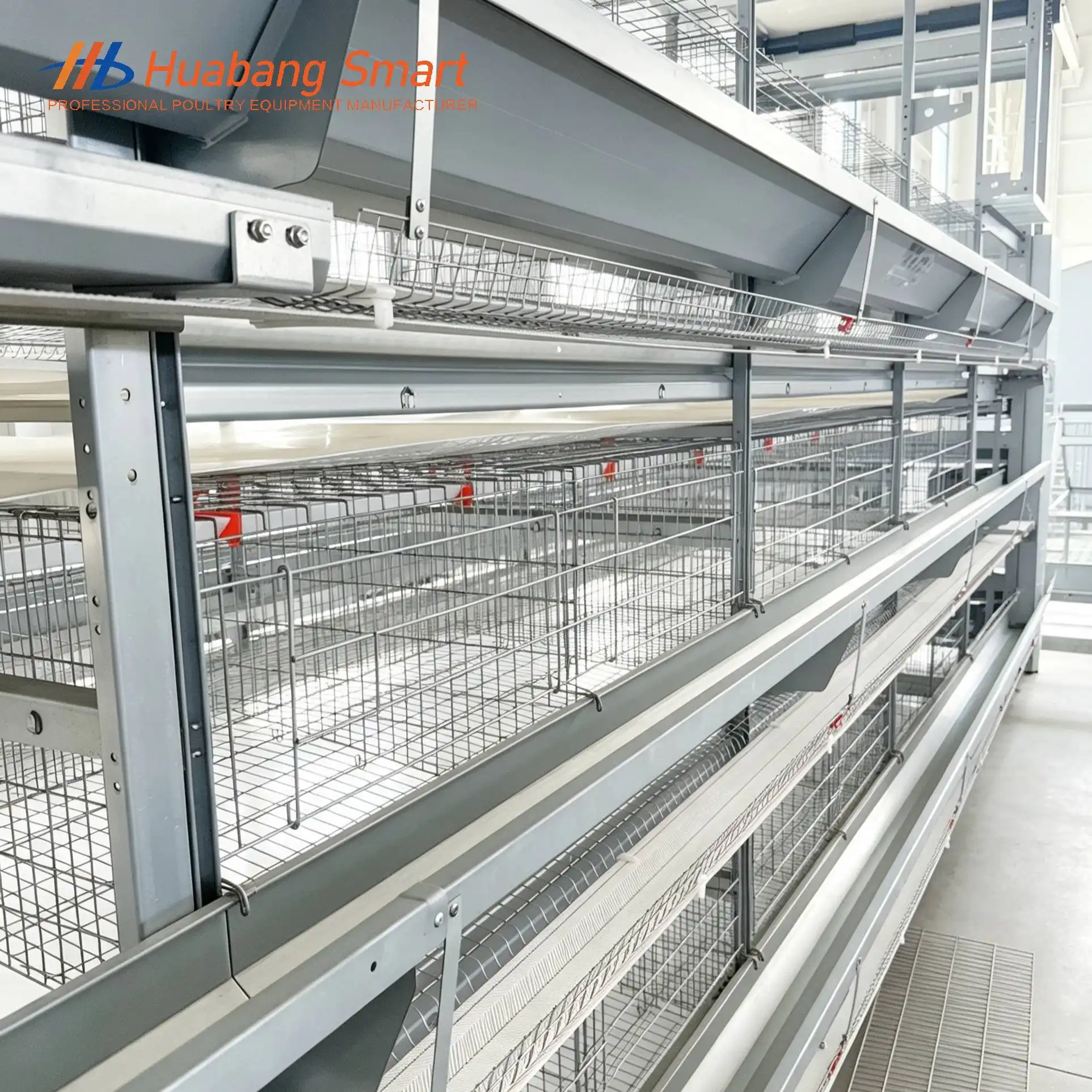
How Does Automatic Egg Collection Work?
For Chicken Cages Egg Layer Poultry Farms, equipment configuration should be based on flock size, housing layout, bird age, and daily management requirements. Small poultry operations need practical housing systems that are easy to clean, maintain, and manage, while commercial farms require more integrated solutions to support larger flocks and efficient daily operations. For farms raising 500 to 50,000 birds, the overall setup should consider cage arrangements, feeding and drinking lines, water pressure regulation, and a reliable supply of replacement parts. Automatic nipple drinkers can provide a consistent water supply for layers, breeders, and broilers when properly selected and installed according to the birds' requirements. Water pressure should also be adjusted to suit different growth stages, particularly in brooding areas where young chicks require appropriately controlled drinking conditions. For layer farms, properly designed cage systems should also allow convenient access to feed and water while supporting egg collection and routine cleaning. By matching cage configurations, drinking equipment, and management systems to the farm's actual capacity, Chicken Cages Egg Layer Poultry Farms can improve daily management efficiency, maintain consistent flock care, and support more organized commercial poultry production.
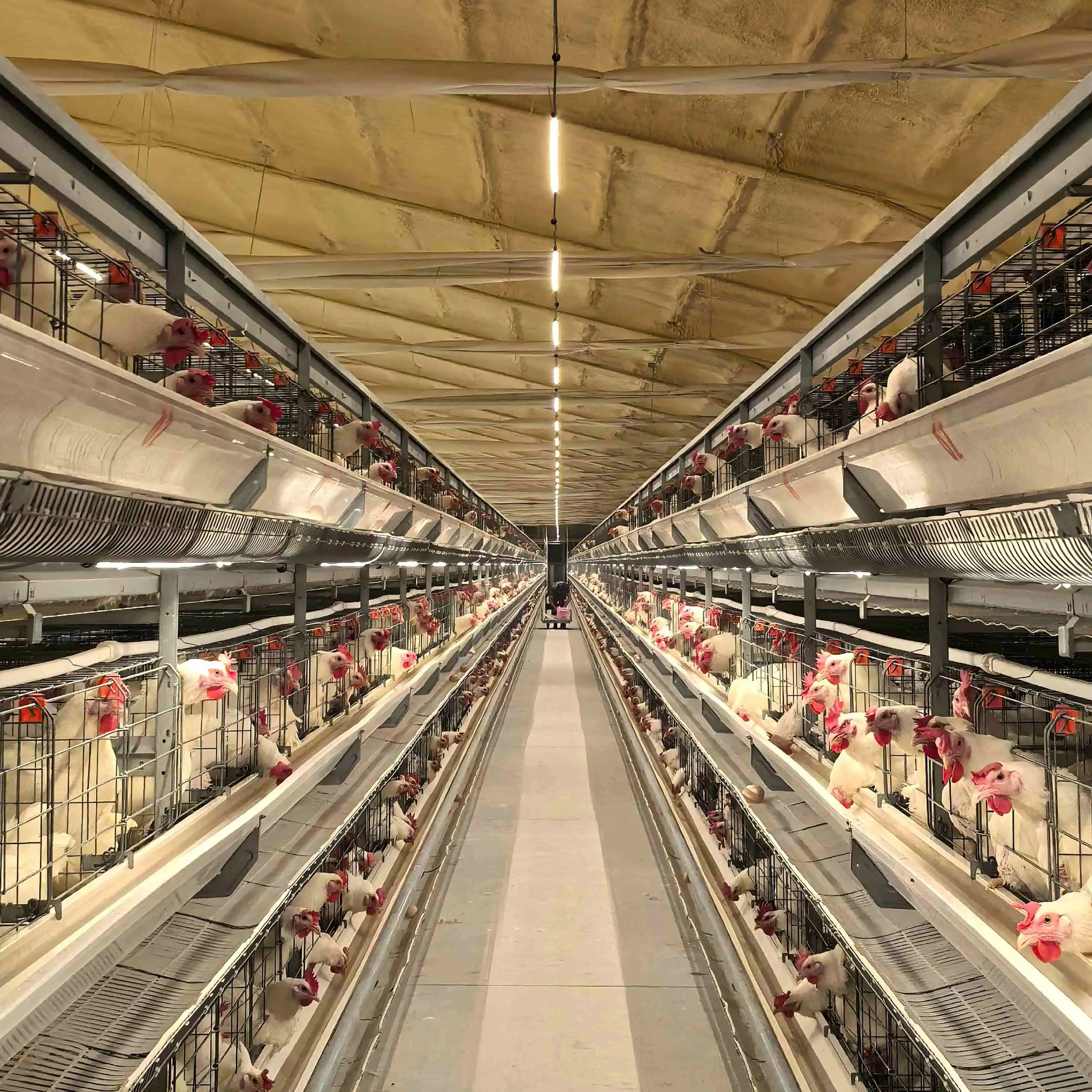
Feeding, Drinking, and IoT Monitoring
The feeding system gives out set amounts of food at set times. Nipple drinkers give hens clean, steady water that doesn't spill, which keeps the litter-free floors and trays of the cages dry. We also offer IoT sensors that can be added as extras and keep track of temperature, humidity, ammonia levels, and feed use. No matter what the weather is like outside, managers can quickly change things by reading the data on a phone or computer. Before sending the sensors out, we make sure that they are calibrated to within ±0.5% of the true value. For operations in the U.S. that have more than one house, remote readings help a small group keep an eye on each one. Ask us how the sensors work with the PLCs that are already on your farm.
Cage House Layout, Manure Control, and Farm Scenarios
Plan the Whole House, Not Only the Cages
The speed of collecting eggs depends on how the whole house is set up. It is best for designers to put service aisles, feed and water lines, egg conveyors, manure discharge points, lighting, air intakes, exhaust fans, and emergency exits all close to each other. Drops and hand carrying should be limited by the direction, speed, and transfer points of the conveyor. For egg elevators, grading or packing tools, cleaning paths, backup power, and safe access to every level, make sure there is enough space. Based on your drawings, our team plans the site and makes the product. We also give you a detailed configuration list that includes the number of parts, when they need to be installed, and how they will connect to your current infrastructure.
Manure Removal and Ammonia Control
Dog poop is moved out of the house and away from birds and eggs by manure belts. Soil-borne diseases like coccidiosis are less likely to spread when manure is kept away from hens. Also, pay close attention to ammonia. Ritz and his colleagues did a review in 2004 that was published in the Journal of Applied Poultry Research. They found that ammonia in poultry houses was linked to health and performance issues in birds. Plan your ventilation and biosecurity so that the belt cycles at the right time. The plastic we use for our manure trays is safe for food and doesn't let bacteria grow. The belt motors only need to be oiled once a month, and the tension of the belt should be checked every week to make sure it doesn't get stuck or wear out from friction.
Match the System to Your Farm Scenario
Large farms that keep their animals inside climate-controlled buildings usually choose H-shaped cages with multiple levels and climate control. Even when the weather is bad, this setup keeps the temperatures and laying rates steady. In hot places, open-house buildings are set up in an "A" shape to catch the prevailing winds. Automatic collection helps mid-sized farms that are switching from floor rearing to other methods clean up better. From 500 birds to more than 100,000 birds, our modular design can handle flocks of any size. Distributors and OEM buyers should look for stable lead times, spare parts that are all the same, packaging that is ready to export, and clear documentation. We can build OEM and ODM orders from your drawings.
Materials, Durability, and Quality Control
Hot-Dip Galvanized Frames
Humidity, ammonia, and manure all come together in Chicken Cages Egg Layer Poultry Farms, and all three are bad for steel. For strength, our frames are made of 3 mm thick Q235 steel that has been hot-dip galvanized at 275 g/m². ASTM A123 is the standard for hot-dip zinc coatings on iron and steel products. The hot process bonds the zinc to the steel. We think the frame will last 15 to 20 years, even in homes with a lot of ammonia. In the same kind of conditions, cold-galvanized options usually start to break down after three to seven years. The wire mesh panels are coated with aluminum-zinc, and the 5 cm-high center helps airflow and keeps things cool.
Wire, Welds, and Hygiene
The diameter of our wires is between 2.15 mm and 3.8 mm, which is the right size for both load capacity and foot comfort. Every weld is put under at least 45 to 50 kg of pressure before it breaks. This way, cage floors stay in place even when heavy flocks are on them. I think you should write down a cleaning schedule that includes things like dry cleaning, washing with detergent, rinsing, drying, approved disinfecting, inspection, and keeping records. Each step goes faster when troughs, drinker lines, belts, and trays are easy to get to. A clean system protects the quality of the eggs and helps keep the flock healthy.
Quality Control Before Shipment
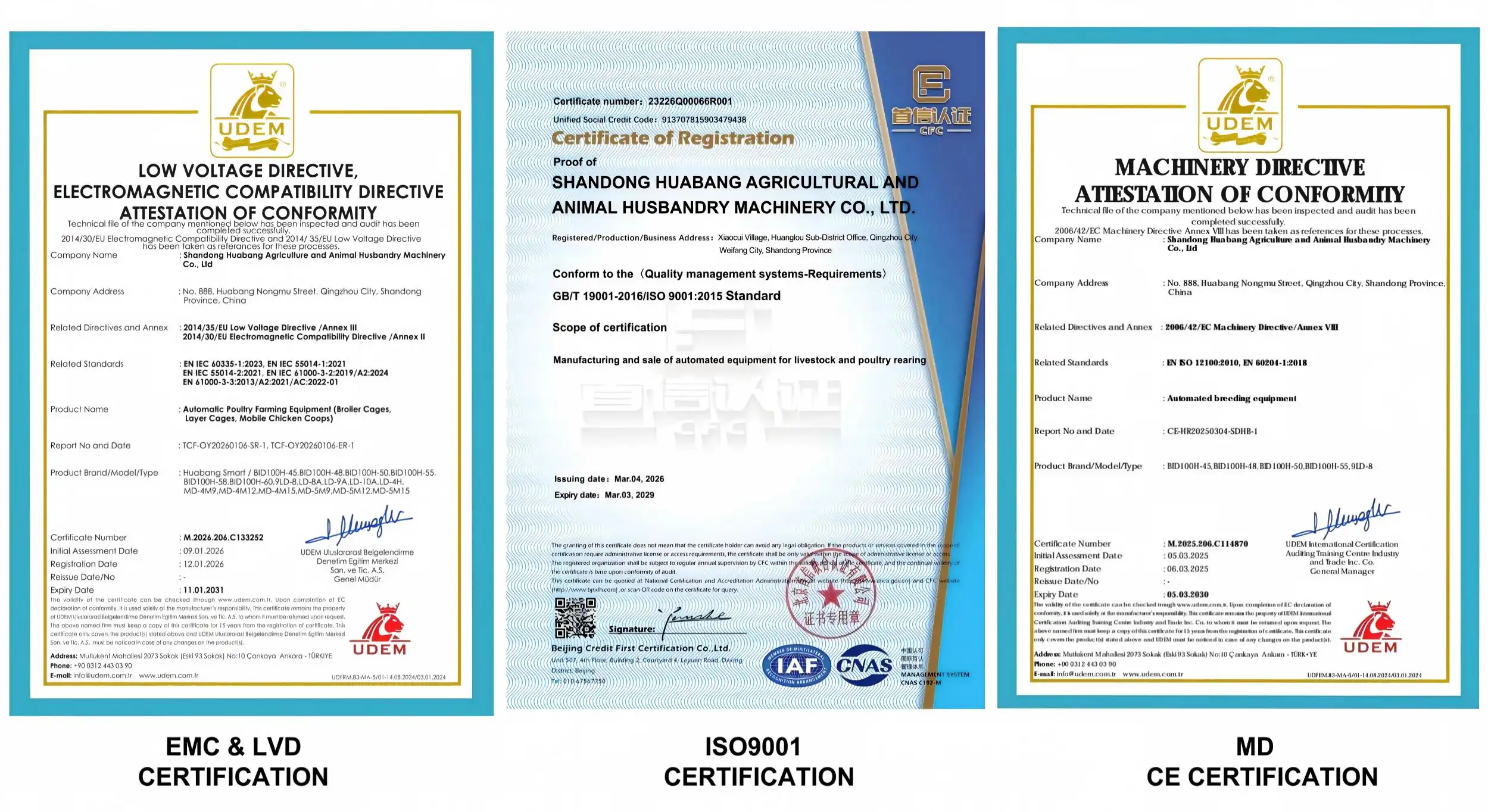
Before it leaves the factory, every system is checked. Ultrasonic gauges check the thickness of the zinc layer, and checks of the surface's smoothness find areas that could cause harm before installation. We test automation parts continuously for 48 hours and make sure the belts are lined up correctly, the motors are stable, and the sensors are calibrated to within ±0.5% of the correct value. There are 49 core technology patents that we own, and our factory is ISO 9001 certified. Our products are also CE certified. It takes 30 to 60 days to make. Buyers can ask for records of inspections. These checks help the system work as well as it should from the very first day it is used.
Supplier Selection, Installation, and Pilot Testing
Compare Suppliers on More Than Price
Check out each supplier's ability to make things, experience exporting, ability to customize, ability to help with installation, ability to provide spare parts, warranty, and ability to respond after the sale. Ask for quotes that break down the costs of the cages, food, water, collecting eggs, cleaning the poop, controls, ventilation, installation, shipping, taxes, training, and parts. Buyers in the United States should check the voltage, 60 Hz frequency, language on the control panel, local electrical code requirements, packaging, and paperwork. Get references from projects that are similar to yours. We have been designing and making things for 17 years and have customers in over 100 countries. We build right in our own factory. There is a one-year warranty on all of our systems.
Installation, Training, and Maintenance
Installation includes measuring the building, marking the rows, putting together the frame, connecting the equipment, wiring the controls, testing the system, and training the operator. Costs depend on the level of automation, the readiness of the building, the cost of local labor, and the amount of electrical work that needs to be done. We offer video installation guides, on-site setup, and local after-sales support in other countries. We also offer technical advice from the planning stage through maintenance. Set up preventative checks for motors, gearboxes, belts, rollers, drinkers, sensors, fans, and fasteners after the machine is turned on. For egg collection to keep going even if something goes wrong, make sure you have extra belts, sensors, connectors, fuses, and drinkers on hand.
Verify Performance Before Full Deployment
Before you fill the whole farm, test a test row or a house section. Find out how many eggs are collected every hour, how many eggs are broken, how many eggs are dirty, how much feed and water are used, how many eggs die, how much energy is used, and how much it costs to maintain. You should check the egg roll-out, the transfers, the airflow between the levels, the temperature spread, the emergency stops, the alignment of the belts, and the access for cleaning. Write down what the operator says during commissioning. Finding a mistake in the layout early on saves money because fixing it after thousands of hens move in costs a lot more. You can also get samples from us to check the quality of the build first.
Conclusion
To collect eggs efficiently in Chicken Cages Egg Layer Poultry Farms, you must first figure out what the farm's issues are and pick a layer cage system that works well as a whole. A-type cages work best in open, naturally ventilated homes, while H-type cages offer more space and better automation in buildings that control the temperature and humidity. A sloped floor, belts, and conveyors make it easier to move and handle the animals, and automatic feeding, watering, and manure removal eliminate the need for workers. The investment is safe in humid, high-ammonia places because the frames are hot-dip galvanized, the welds are tested, and quality checks are written down. A full house plan, an easy-to-understand comparison of suppliers, careful installation, regular maintenance, and a pilot test all show that the results will work on a large scale. Buyers can match the flock's size, climate, and rules if they look at the total cost of ownership instead of just the purchase price.
FAQ
What is the difference between A-type and H-type layer cages?
A-type cages can be stacked in the shape of a ladder and help open houses breathe better. H-type cages can be stacked vertically, which makes climate-controlled houses more dense and automates them better.
How long do hot-dip galvanized cages last?
Even in homes with a lot of ammonia, our hot-dip galvanized frames last 15 to 20 years. In the same kind of conditions, cold-galvanized systems usually start to break down after three to seven years.
How much space does each bird receive?
We give each bird 430 to 450 cm², which is 67 to 70 square inches. Different breeds and areas have different rules, so check your state's and buyer's rules.
How hard is it to maintain the manure removal system?
Simple upkeep stays the same. To avoid failures caused by friction, check the tension of the belt once a week and oil the motors once a month.
CTA: Request a Chicken Cages Egg Layer Poultry Farms Solution from Huabang Smart
Are you planning to build a new home or improve the one you have? To get a project-specific quote from a manufacturer of Chicken Cages Egg Layer Poultry Farms with 17 years of design experience, ISO 9001 and CE certification, OEM and ODM support, and on-site setup, email Huabang Smart at ginny260831@gmail.com or huabangsmart002@gmail.com or go to poultrycage.com. Send us information about where your farm is, how big your house is, how many birds you have, your automation goals, and your schedule, and our team will make a layout and configuration list just for your site.
References
1. United Egg Producers, Animal Husbandry Guidelines for U.S. Egg-Laying Flocks, 2017
2. Journal of Applied Poultry Research, Implications of Ammonia Production and Emissions from Commercial Poultry Facilities: A Review, 2004
3. British Poultry Science, Comparison of the Welfare of Layer Hens in 4 Housing Systems in the UK, 2010
4. ASTM International, ASTM A123/A123M Standard Specification for Zinc (Hot-Dip Galvanized) Coatings on Iron and Steel Products, 2017
5. USDA National Agricultural Statistics Service, Chickens and Eggs Annual Summary, 2024
6. Springer, Commercial Chicken Meat and Egg Production (Bell and Weaver), 2002

USER EVALUATE
Here is the customer's evaluation of us
YOU MAY LIKE
 VIEW MOREH Type Layer Chicken Cage
 VIEW MOREautomatic roll out nesting box for laying hens
 VIEW MOREAutomatic Poultry Broiler Fans
 VIEW MOREPoultry Chicken Feeder
 VIEW MOREChicken Tractor For Egg Layers
 VIEW MOREChicken Egg Layer Cage
 VIEW MORECooling Pads For Poultry Houses
 VIEW MOREH Frame Automatic Layer Cages