



How to Choose Mobile Chicken Coops for Changing Flock Sizes
To help you choose Mobile Chicken Coops, write down how many birds you have now and how many you want to have in three to five years. Next, make sure that range fits your capacity, your ability to move, your materials, and your supplier's support. Check to see if the furniture has usable floor space, modular add-ons, frames that won't break when you move them around a lot, and the right amount of airflow for your area. Look at how well they are built and read the warranty terms before you buy. Compare coop types based on the number of birds you have. You can also ask for a sample or a drawing. This guide explains each step and demonstrates how Huabang Smart creates large Mobile Chicken Coops for businesses that need space to expand.
Start by Defining Your Current and Future Flock Requirements
Count Today's Birds and Next Season's Growth
First, just count how many birds are there. Be sure to write down the names of your roosters, hens, broilers, and pullets. Then, add any seasonal batches or birds that you need to replace. Different types need different amounts of room. Some books on raising chickens in your own yard say that each hen should have about 4 square feet of space in the coop. When it comes to commercial broiler houses, on the other hand, birds are stocked by weight per area. A coop that size often feels too small in just one season, if you only look at today. You should write down the smallest, largest, and most common flock sizes. After that, choose a unit that can handle the full flock without losing a single one.
Plan for a Three- to Five-Year Horizon
Plan ahead three to five years so you don't have to buy new things too soon. You should decide if you want to add pullets every spring, do the same broiler batches over and over, or start a second site. It's not possible for a coop with only six birds to grow with the flock. It needs to have modular runs, walls that can be taken down, and extra nesting space. When a company grows, they usually add mobile units instead of rebuilding a barn. That's up to you. Huabang Smart comes in a range of sizes that can fit farms with 1,000 to more than 50,000 birds, so it makes sense to buy in stages. Make a plan before you ask for quotes. This way, each business will begin from the same point.
Review Your Daily Workflow Before Picking a Size
Based on size, tasks change. How often are you going to move the coop? How are you going to clean it? Where will the people who work stand? How are they going to get the food and eggs? Joel Salatin talks about a way to raise chickens on pasture where light pens move around every day. This means that the weight of the frame is very important. Bigger units work best for moves that don't happen very often or for tow tractors. Math changes when it's done by a computer. Huabang's mobile unit has systems that feed, drink, and take away the manure belt on their own. Work is cut by 70% with these systems. First, make a plan for each task. Then, see which parts pay off the fastest.
Establish the Core Buying Criteria for Mobile Chicken Coops
Measure Usable Floor Space, Not Listed Capacity
Manufacturers say how many birds can fit, but the birds only see the space that they can use. Get rid of the walls, feeders, roosts, nesting boxes, and service aisles. Then, divide the open area by the stock rate. The standard for a small flock of laying hens is 3 to 4 square feet of space inside. They have even more room in a run with a roof or a fence. Ask each seller to explain the number they give you and tell you what kind of birds they think are in it. So that nothing goes wrong, write down the numbers. Two coops with the same footprint can house very different flocks.
Check Mobility, Frame Strength, and Modular Options
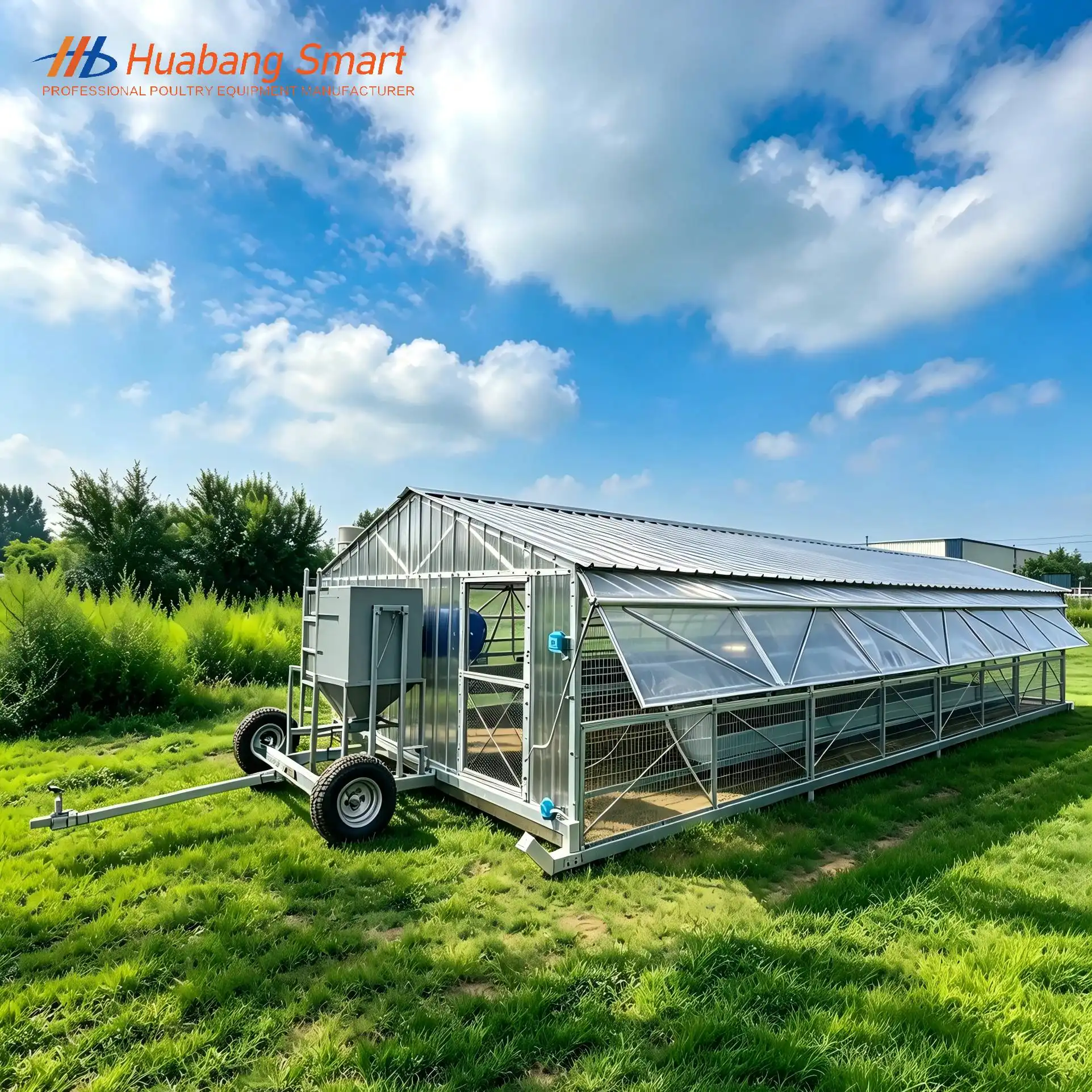
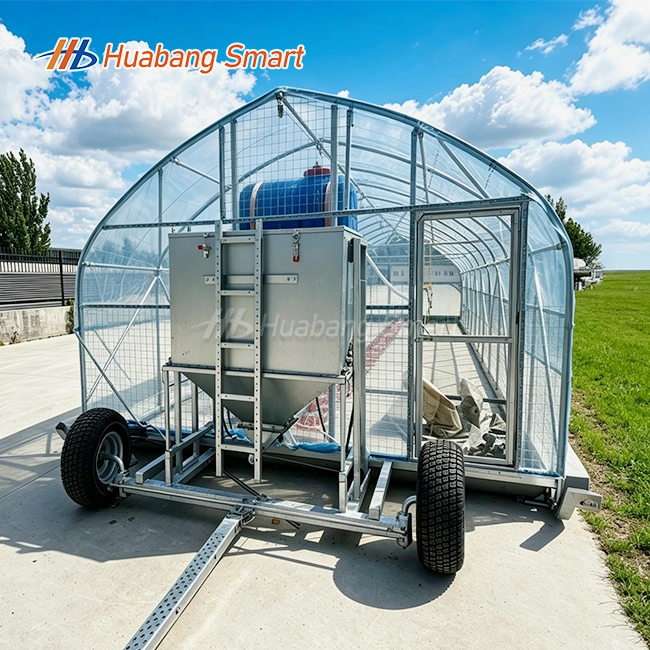
Mobility of Mobile Chicken Coops is affected by things like the size of the wheels, how high they are off the ground, any handles or tow points, the turning radius, and the strength of the frame. The coop might not move at all in wet pasture if it moves easily on a concrete pad. Test claims on real land, and don't just write down the weight of the empty unit; write down the weight of the feed and water as well. The service life is longer when flocks change because of modular features like runs that can be added and taken off, partitions that can be taken off, and extra nesting boxes. The unit from Huabang is 15 m x 5 m x 2.8 m, which is 49 ft x 16 ft x 9 ft. It's simple to move and can be changed to fit your site.
Match the Coop to Climate, Terrain, and Predators
The animals that could damage the coop and the weather decide every day if it will work. So that birds don't get too cold at roost level, air should always be moving. Some books on chicken management, like the Ross Broiler Management Handbook, say that the amount of ammonia should be kept at 10 parts per million (ppm) or less. In other words, it's important to have surfaces that are easy to clean and let air flow. To keep predators out, you need strong latches, mesh that lasts a long time, and corners that are double-riveted. The 5 cm raised middle of our frame lets air flow and keeps you cool. As the weather changes, Huabang also changes shape to adapt. In hot places, they get cooler, and in cold places, they get warmer. Also, check to see that the area has good drainage, shade, and water.
Compare Mobile Chicken Coop Types for Different Flock Sizes
Match Coop Size to Flock Growth Stage
As flocks get bigger, so do the types of coops. A basic unit for four to six chickens should have safe nesting boxes, airflow, protection from predators, a basic run, and slots for adding on to it. Look for wheels that are stronger, easier to service, and give birds seven to twelve square feet of space to nest. Most of the time, flocks of thirteen to twenty-five need stronger frames, tow points, more than one door, and run sections that can be put together in different ways. Also, commercial flocks can be used in custom or factory-direct systems that control the flow of workers, transport, batches, and standard spare parts. The deal will last longer if you pick the stage you will be in two years instead of the stage you are in now.
Compare Mobile Coops, Stationary Housing, and Chicken Tractors
All three of these options are better than the other two. In stationary housing, birds have the most space and protection from the weather. However, because they tend to stay on the same patch of ground, parasites and waste tend to build up. People who wrote the book Day-Range Poultry by Andy Lee and Patricia Foreman talk about chicken tractors. These are simple pens that can be moved by hand so that the chickens can graze. They're good for small groups and short growing seasons, but they don't provide much shelter. In the center are Mobile Chicken Coops. They can be moved, are stronger, and are better protected from the weather. Check the weight, safety, grazing ability, and whether it's good for layers, broilers, or pasture rotation before making a decision.
Where Huabang Smart's Mobile Poultry Houses Fit?
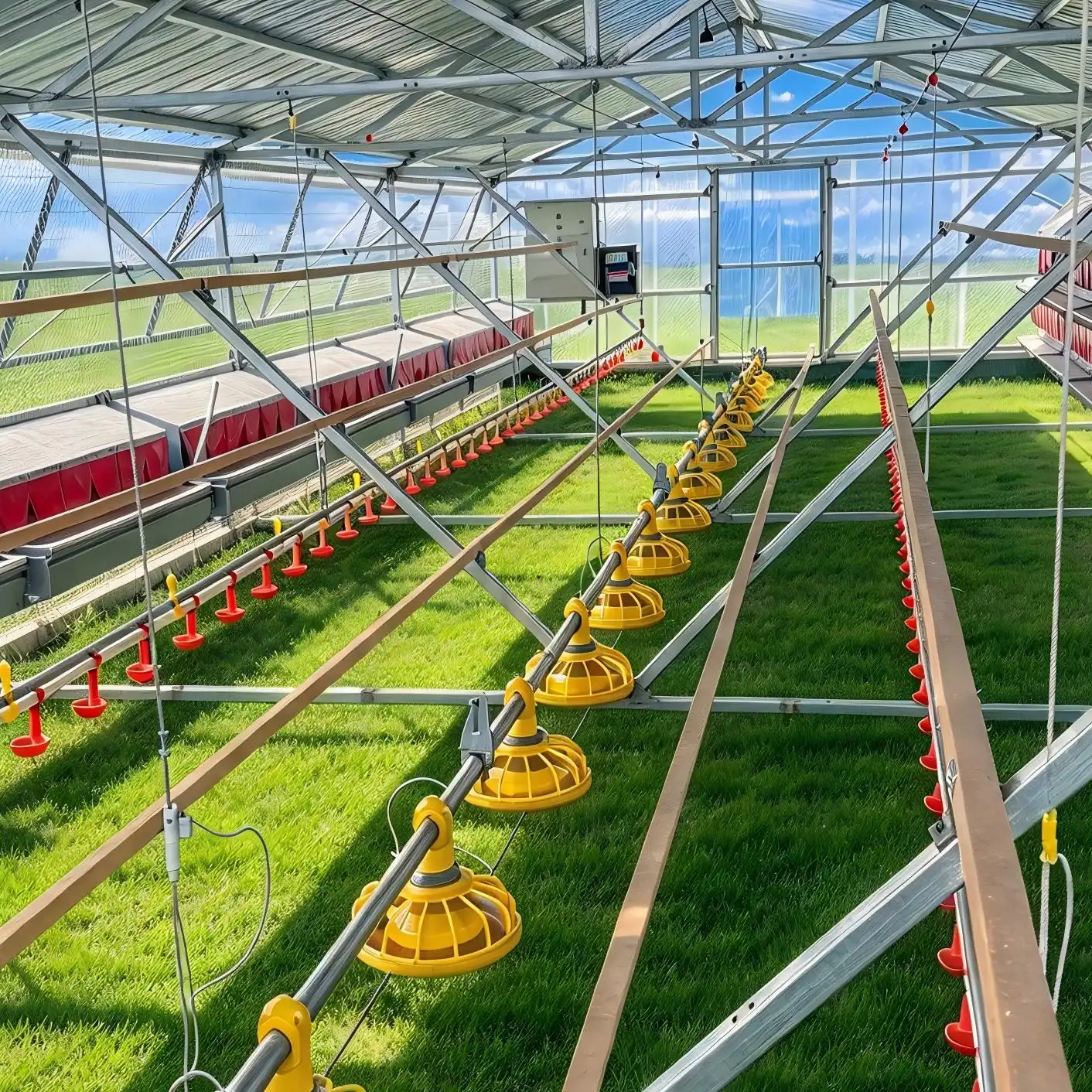
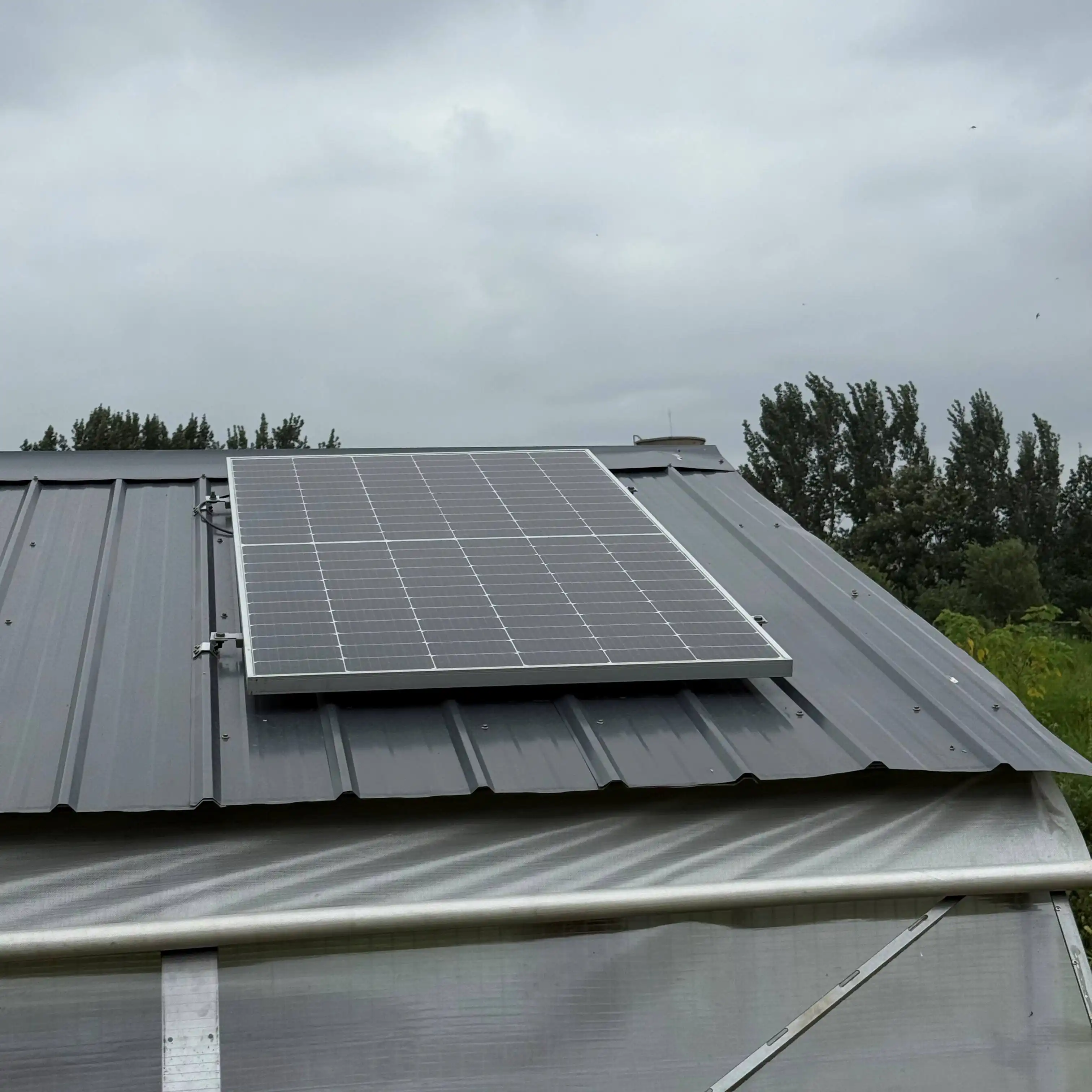
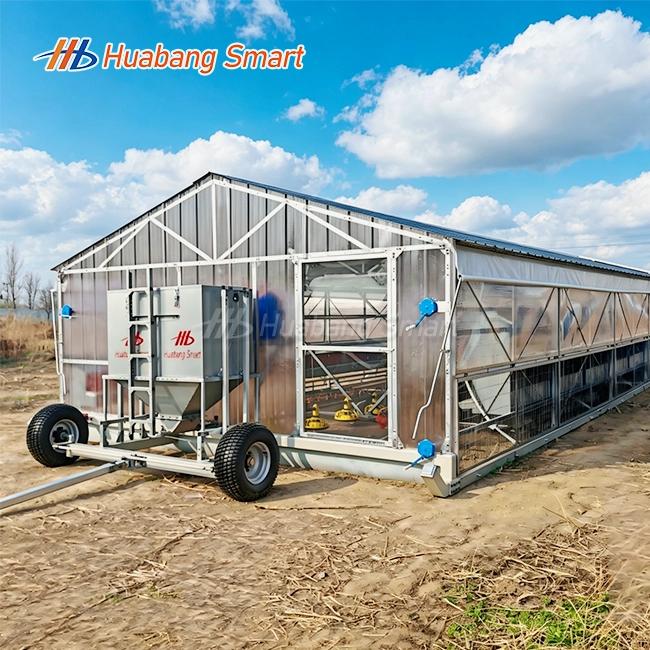
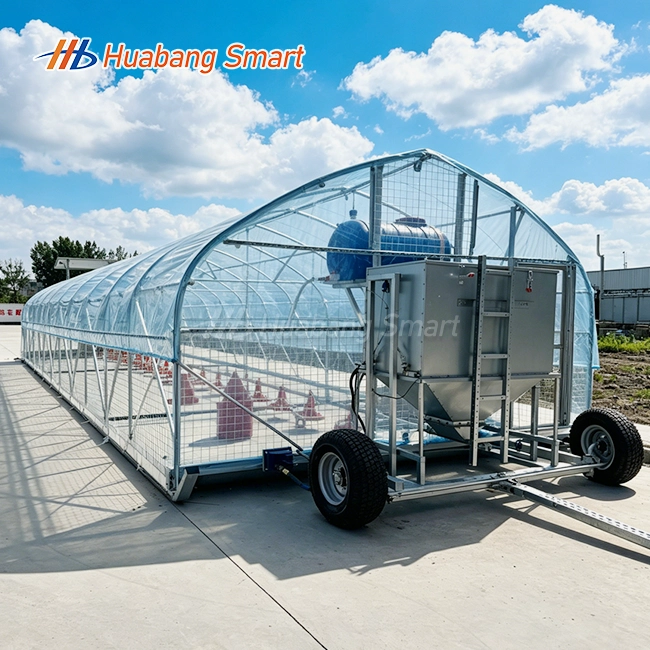
Our chicken coop that moves around is made for business use. They are all 15 m long, 5 m wide, and 2.8 m high. It has space for 700 to 900 chickens, runs on solar power, and feeds and waters the chickens automatically. Because of how the cages are set up, the broilers can be raised in a high-density, low-stress way that makes weight gain more even. Birds can't get to the poop because the floors are fully slatted. Because Huabang can do both OEM and ODM work and build from customer drawings, they can give traders, EPC contractors, and farm groups the flock sizes they want. If someone has less than 25 birds in their yard, they might want a smaller coop.
Evaluate Construction Quality, Materials, and Long-Term Ownership Costs
Galvanized Steel and Coated Mesh
How long Mobile Chicken Coops last depends on what it's made of. Zinc is poured on top of steel that has been hot-dip galvanized. The zinc stops water from getting to the steel below and rusts first. It is ASTM A123/A123M that sets the rules for these coatings. This is important because water, uric acid, and washings can damage metal in chicken coops. Hot-dip galvanized steel (275 g) and aluminum-zinc coated wire mesh cover our frame and panels. The main frame is made of 3 mm hot-dip galvanized steel that is extra thick. It claims that the galvanized building will last for 15 years. In order to compare these numbers to those for treated wood, aluminum, and composite panels, you should ask the same questions about corrosion, cleaning, and climate.
Inspect Welds, Fasteners, and Moving Parts
When the coop moves around a lot, it puts stress on its joints. Heavy corners, hinges, fasteners, and welds should all be checked often because vibrations and twisting can cause weak spots to come loose over time. Make sure that the wheel and axle assemblies can hold the frame's weight even when it's full, not just when it's empty. If you want to add on later, make sure the new parts can be bolted to the old frame using standard hardware. Over time, nonstandard parts cost more and take longer to fix. Get plans from the suppliers that show where the welds will go and how thick the metal is. Huabang gives you detailed lists of configurations and makes designs just for you based on the drawings you send them.
Weigh Warranty, Spare Parts, and Total Ownership Cost
This is just a small part of the price. Work, feed, repairs, downtime, and new parts will cost you money over the life of the coop. Before you place an order, make sure you understand the warranty terms, manuals, and availability of spare parts in each quote. Huabang offers a one-year warranty, a sample service, on-site installation, and tips on how to run a chicken farm. In other countries, they also offer video installation guides and support after the sale. It takes us 30 to 60 days to make something, so keep that in mind as you plan. Farms can save up to 8% on feed costs with our smart environment control. Many farmers get their money back when the ratio of feed to plants they grow goes down.
Compare Suppliers and Use a Practical Decision Process
Verify Supplier Credentials and Purchase Channels
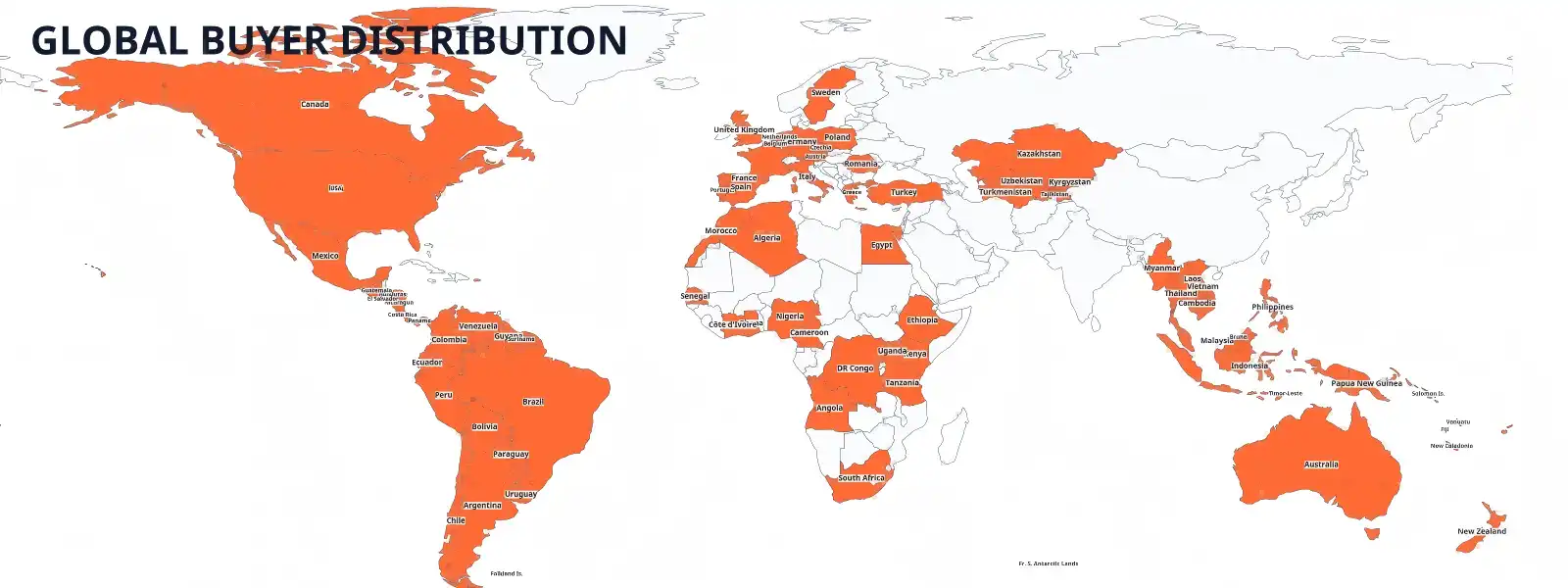
Retailers in your area, online sellers, and factory-direct sellers all have their place. Dealers in the same area can deliver small coops faster, while factories can change the sizes, brands, and materials to suit different needs. Find out about the company's credentials, how long they've been in business, their minimum order sizes, lead times, and how they handle shipping. Huabang Smart is a great company to work with because they have 49 patents, make things, and have a service network that goes to more than 100 countries. Customers who have had flocks like yours and lived in climates like yours can give you references. Not only should you look at price, but you should also look at the total value of each option, which includes support.
Write a Detailed Request for Quotation
A clear request for quotation (RFQ) leads to bids that are very much the same. Write down the number of birds, what kind they are, how big the flock is, the target area, the wheel or towing system, the need for airflow, any attached runs, the way the birds will nest or eat, branding, the weather, the destination, the amount, and any rules that need to be followed. Ask each supplier to explain what they think about capacity, packaging, delivery times, and how much it will cost to make changes. Ask for a sample unit, a pilot order, or a look over the drawings before you start full production on a bigger project. We can help you plan your site and give you a sample of our service. We can also send you a configuration list that exactly matches your RFQ.
Score Your Options and Avoid Common Mistakes
Make a weighted score sheet of your priorities, including things like size, ability to grow, mobility, performance in different climates, safety from predators, quality of construction, cost, savings on labor, and support from suppliers. Give a score to each design on your short list. Then, use samples, drawings, and information about the materials to make sure your top choices are right. Some common mistakes people make are buying at the first price, sizing only for today's flock, judging mobility by empty weight, and not making sure the vents work with the weather where they live. In the long run, it will also cost more to use weak mesh, metal that hasn't been treated, and unique fittings. The buying and farming teams are sent an easy-to-read score sheet that helps make the choice fair.
Conclusion
First, write down all the birds you have now and plan how they will grow over the next three to five years. This information will help you pick the best Mobile Chicken Coops for your flock. As the number of people living in a unit changes, it will depend on how much floor space it has, how mobile it is, how well it fits the climate, and how well it keeps predators out. For each stage of growth, there are coops of different sizes. A mobile home is not the same as a chicken tractor or a house that stays in one place. How much it costs to own something depends on the warranty terms and spare parts. It is cheaper to fix things when they are made of hot-dip galvanized steel, coated mesh, sound welds, and standard fittings. Some things that help make it fair to compare suppliers are a weighted score sheet, clear RFQs, drawings, and samples. If you don't buy something based on price alone and do empty-weight mobility checks, you can avoid making the most expensive mistakes.
FAQ
How much reserve capacity should I plan for?
Think about the largest group of people who might visit in three to five years and then check the floor space that can be used instead of the capacity listed. You can get more space without buying a new coop if you use extra nesting boxes, modular runs, and walls that can be taken down. They should let you compare prices if they give you a written stocking calculation.
How often should I move a mobile coop?
When chickens are raised on pasture, like the ones Joel Salatin talks about, the pens are usually moved every day. Bigger egg units move around every two to three days most of the time. Choose a schedule that works for the number of animals you have, the food you can give them, and the tools you have on hand. Then, choose a frame weight and wheel system that you can ride at that speed.
What should I ask a manufacturer before ordering?
Find out about the materials, trailering, animal protection, customization, warranty, delivery time, and airflow. Ask for plans, a sample unit, and a list of parts that can be used instead. Huabang Smart offers a one-year warranty, OEM and ODM support, sample service, and a production cycle that lasts 30 to 60 days.
Talk to Huabang Smart About Mobile Chicken Coops for Your Next Flock Expansion
Are you going to get more sheep? Huabang Smart is a company that makes Mobile Chicken Coops. They have 49 patents, CE certification, OEM and ODM support, and they can install them on-site. Our team will give you a quote and a sample plan after you tell us about the size of your flock, the weather, and the land. You can email ginny260831@gmail.com or huabangsmart002@gmail.com or visit poultrycage.com to find out more.
References
1. Salatin, Joel. Pastured Poultry Profits, 1993.
2. Damerow, Gail. Storey's Guide to Raising Chickens, 2010.
3. Lee, Andy, and Patricia Foreman. Day-Range Poultry, 2002.
4. Aviagen. Ross Broiler Management Handbook, 2018.
5. ASTM International. ASTM A123/A123M: Standard Specification for Zinc (Hot-Dip Galvanized) Coatings on Iron and Steel Products, 2017.
6. American Galvanizers Association. Hot-Dip Galvanizing for Corrosion Protection: A Specifier's Guide, 2016.

USER EVALUATE
Here is the customer's evaluation of us
YOU MAY LIKE
 VIEW MORELayer Hen Cages
 VIEW MOREMobile Chicken Coops
 VIEW MORECommercial Mobile Chicken Coop
 VIEW MOREautomatic roll out nesting box for laying hens
 VIEW MOREAutomatic Poultry Broiler Fans
 VIEW MOREAutomatic Chicken Feeder And Waterer
 VIEW MOREAutomatic Chicken Feeder
 VIEW MOREMobile Chicken Coop On Wheels