



Comprehensive Guide to Using Chicken Layer Cage
Modern poultry operations demand efficient housing solutions that balance productivity, animal welfare, and operational costs. A Chicken Layer Cage represents a specialized intensive housing system engineered to optimize egg production while addressing the critical challenges facing commercial farms today—escalating labor expenses, inconsistent yields, and biosecurity vulnerabilities. These cage systems separate birds from waste, automate feed delivery, and create controlled environments that stabilize production cycles. By implementing properly designed layer housing, farms can achieve substantial improvements in egg-to-feed conversion ratios while minimizing disease transmission risks common in floor-rearing operations.
Understanding Chicken Layer Cages – Types, Designs, and Key Features
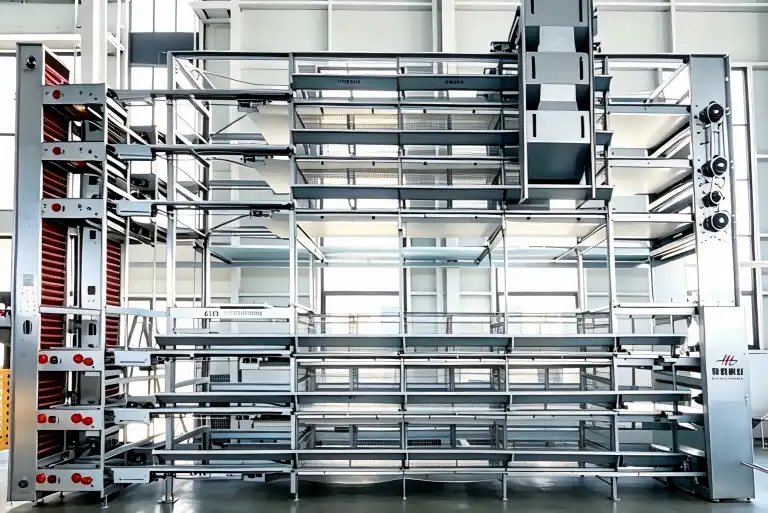
H-Type Configuration for High-Density Operations
Because they can be stacked vertically, H-type battery cages have changed the way large amounts of eggs are produced. With this set-up, farms can house 90 to 200 birds per set on three to eight floors, based on the height of the building and the climate control systems. The vertical arrangement makes the best use of space, so businesses can grow without taking up more space. This is especially helpful in places where the cost of land limits growth.
Our H-type systems are made with hot-dip galvanized steel frames that have a 275g/m² zinc coating. This makes a strong metal bond that can withstand the harsh ammonia-filled environment inside chicken houses. Standard unit sizes of 1.2m x 1.2m x 0.45m make the best use of space, meeting welfare standards while keeping production density high. The automated feeding carts give food with 0.5g accuracy to all levels, so the flock performs the same way no matter where it is in the cage.
A-Type Configuration for Natural Ventilation Environments
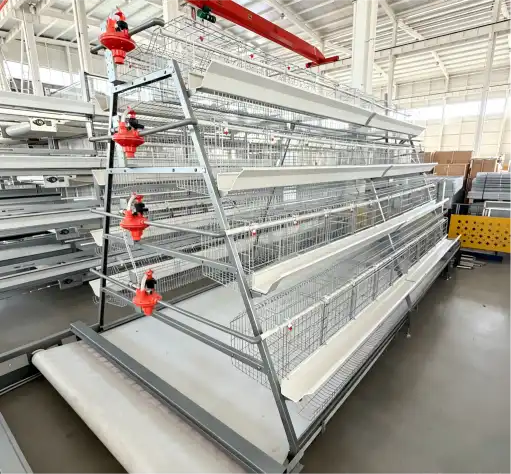
The A-type ladder setup is a useful option for working in barns that naturally vent or in places where height limits are in place. This stepped layout makes cross-ventilation easier, which lets moving air in the room control temperature and humidity without using mechanical systems. The plan works especially well in tropical and subtropical areas, where open-house systems use the wind to cool the house.
The A-type layout makes daily management tasks easier, but it doesn't offer as much density as vertical H-type systems. Each level is easy for workers to get to for upkeep and health checks. This setup works well for farms that are moving from manual systems to fully automated ones. It's a good, cost-effective middle ground while the infrastructure is being upgraded.
Material Engineering and Structural Integrity
Quality layer housing systems are different because they use better materials and are built in better ways. The aluminum-zinc covered wire mesh used to build floors gives the structure important flexibility, allowing it to hold loads of 200 to 500 kg without breaking. This flexibility stops stress cracks that often happen in hard mesh systems. This directly contributes to the guaranty that less than 0.3% of eggs will break.
The 7-9° slope angle on the cage floor was calculated scientifically and is the result of years of engineering work. When the slope is too steep, the eggs roll too fast and hit each other, breaking them. When the slope is too low, the eggs stay in the cage and get dirty or broken by the birds moving around. This specific technical detail is what sets professional-grade systems apart from cheaper ones that don't take into account the science of collecting eggs.
Benefits of Using Chicken Layer Cages in Poultry Farming
Labor Efficiency and Automation Integration
Feeding the birds by hand and collecting the eggs usually take 25 to 40 percent of the budget for running a normal poultry business. This basic problem is solved by automated layer cage systems that use a lot of machines. Precision feeding systems, 360-degree nipple drinkers, automatic egg collecting belts, and longitudinal dung removal equipment can cut the amount of work that needs to be done by up to 80% compared to floor-raising methods.
The economic impact of a modern Chicken Layer Cage system goes beyond saving labor costs. Automated feeding systems can help ensure that each bird receives a consistent amount of feed throughout the production cycle while reducing errors associated with manual feeding. Mechanical egg collection integrated into a Chicken Layer Cage system can remove eggs promptly, helping reduce contact with manure and other contaminants and potentially lowering cleaning requirements. These operational improvements can increase production efficiency and free farm managers to focus on higher-value tasks such as flock health monitoring and biosecurity management. A well-designed Chicken Layer Cage can also improve daily workflow by coordinating feeding, egg collection, and manure management. For commercial egg farms, investing in a reliable Chicken Layer Cage can therefore support more consistent production, better labor utilization, and improved long-term operational efficiency.
Biosecurity and Disease Prevention
The fact that birds are kept away from trash is a major benefit in controlling diseases. Longitudinal scraper systems remove manure from under cages automatically. This keeps ammonia levels below 20ppm, which is important for the health of both workers and chickens' lungs. Birds are constantly in contact with feces in traditional floor systems, which makes it easy for pathogens to spread and parasites to cycle.
Using cage housing systems makes it easier to clean and cleanse between production flocks in a planned way. High-pressure cleaning and normal chicken disinfectants don't damage the hot-dip galvanized surfaces, so they can be used for thorough biosecurity measures that would damage coatings that aren't as strong. This durability supports the strict cleaning schedules needed to keep environments free of pathogens between production cycles.
Production Optimization and Environmental Control
Layer cage systems make small spaces where temperature, humidity, and air flow can be precisely controlled. When these systems are connected to climate control equipment, they keep the best conditions for laying all year, so there are no changes in production caused by changes in regular temperatures. Optional IoT sensor kits keep an eye on environmental factors in real time, giving you access to temperature, humidity, ammonia levels, and feed usage data through a mobile app.
The modular design works well for both small operations with 500 birds and large industrial facilities with more than 100,000 layers. This flexibility lets farms gradually increase their production as market demand rises, without having to rebuild their entire facilities. Custom setups can be made to fit a wide range of climates, from warm high-humidity areas that need better corrosion protection to desert areas where managing dust is very important.
How to Choose the Best Chicken Layer Cage for Your Operation
Evaluating Capacity Requirements and Space Utilization
Before buying something, you need to make sure you have a good idea of your production goals and the size of the building you can use. When aiming for 450–550 cm² per bird density, operations should figure out how much total cage volume they need based on the size of their planned flock and then decide whether vertical H-type or stepped A-type configurations work best with their current equipment. Vertical systems work best in climate-controlled buildings with enough roof height. Structures that naturally vent may do better with ladder setups that improve airflow.
Building footprint restrictions often determine which configuration to use. Although they need more complex climate control to keep all levels at the same temperature, vertical H-type systems greatly increase the amount of space they can use. Knowing these trade-offs helps fit cage systems to how they are used, instead of trying to find the theoretical highest density that doesn't work on a farm.
Material Quality Assessment and Longevity Considerations
The difference between hot-dip galvanizing and cold galvanizing methods has a big impact on how long equipment lasts and how much it costs to own. In a chicken coop, cold-galvanized coats usually fail within 5 to 7 years, which means the whole system has to be replaced in the middle of operation. Hot-dip galvanizing makes a zinc-iron alloy layer that lasts 15 to 20 years with little upkeep. This means that even though the initial investment is higher, the overall costs are much lower over time.
Managers in charge of buying things should ask for specifics about the thickness of the coating—275g/m² is professional-grade protection that can be used in business settings. Inspection of the quality of the weld and the ability of the mesh to hold its strain are two more signs of industrial standards. Systems that can handle loads between 200 kg and 500 kg show that they have the engineering quality to work reliably for a long time while being stressed all the time.
Automation Level and System Integration
The choice between manual, semi-automatic, or fully automated Chicken Layer Cage systems depends on labor availability, farm size, and the amount of capital available for investment. Fully integrated Chicken Layer Cage systems that include automatic feeding, watering, egg collection, and manure removal can offer a strong return on investment for large-scale operations where labor is difficult to recruit or labor costs are high. Small farms or farms in regions with relatively low labor costs may find that semi-automatic Chicken Layer Cage configurations provide meaningful efficiency improvements with a lower initial investment. When selecting a Chicken Layer Cage, farm operators should also consider maintenance requirements, future expansion plans, and the availability of technical support. A properly configured Chicken Layer Cage can help balance automation, labor efficiency, and long-term operating costs according to the specific needs of each farm.
Importantly, automatic parts must work well with the farm's current system. Before buying something, the site needs to be carefully inspected to make sure it works with the local electrical standards, temperature control systems, and building plans. Reliable providers offer custom engineering services that change the way standard equipment is set up to fit the needs of a specific operation. This makes sure that automation gets the benefits promised and doesn't make integration harder.
Maintenance and Operational Best Practices for Chicken Layer Cages
Systematic Cleaning Protocols and Biosecurity Measures
To keep the cage system clean, structured rules must be followed regularly between groups. High-pressure washing gets rid of all the organic matter that has built up on surfaces, and approved chicken disinfectants kill any germs that are still there. The hot-dip galvanized construction can handle these harsh cleaning methods without losing its surface. This is in contrast to painted or cold-galvanized options, which need protective coatings that can be damaged by chemicals.
The first line of defense against ammonia building and pathogen spread is daily removal of dung. Automated belt systems should run on plans that are adjusted based on the size of the group and the weather. In high-density operations, these systems should usually cycle several times a day. Using portable meters to check ammonia levels on a regular basis makes sure that removal rates keep levels below 20ppm, which is the level at which breathing starts to get worse.
Preventive Maintenance and Equipment Inspections
Schedules for regular inspections find small problems before they get worse and stop production. Every week, parts of the feeding system are checked to make sure the trolley is working right and that the feed is being distributed correctly. Every month, the nipple drinker's function is checked to make sure that all levels of the cage have consistent access to water. Every three months, the cage's structure is checked for any loose connections or mesh damage that needs to be fixed.
Keeping extra parts for important parts on hand cuts down on downtime when fixes are needed. To make repairs quickly, replacement nipple drinkers, drive chain sections, and egg belt segments should be kept on hand. Building relationships with suppliers that can quickly deliver spare parts is very helpful for shipping unusual parts across international borders, especially for businesses in remote areas where there aren't many options for local sourcing.
Ventilation Management and Environmental Optimization
Managing airflow correctly has a direct effect on the health of the group and the success of the production. In order for natural ventilation systems to work best when temperatures change, the inlet and outlet configurations need to be changed with the seasons. Regular fan repair and recalibration are good for mechanical ventilation systems because they make sure that the design air exchange rates stay the same as the equipment ages.
Monitoring temperature and humidity levels throughout a Chicken Layer Cage production facility can help identify localized areas where environmental conditions fall outside the desired ranges. These changes can be addressed before they affect laying performance by adjusting airflow or adding supplemental heating or cooling. In more advanced Chicken Layer Cage operations, environmental sensors can be integrated with automated control systems that adjust ventilation rates according to real-time conditions. This helps maintain more stable environmental conditions with less manual intervention. Continuous monitoring within a Chicken Layer Cage facility can also provide useful data for identifying ventilation or climate-control problems before they become significant operational issues. By combining environmental sensors with automated management, a modern Chicken Layer Cage system can support more consistent housing conditions and efficient farm management.
Procurement Guide: How to Source Quality Chicken Layer Cages Internationally
Supplier Verification and Certification Requirements
To reduce the risks that come with doing business across borders, international procurement requires careful evaluation of suppliers. The ISO9001 certification shows that the quality management system is well-established, and the CE marking shows that the product meets European safety and environmental standards for farm equipment. These certificates give consumers basic peace of mind that makers use consistent paperwork and production methods.
In addition to formal certifications, project references and installation case studies from the supplier can be used to find out what they can actually do. Manufacturers that work with more than 100 countries in a wide range of climates have shown that they can change and solve problems, which is useful when dealing with problems that are unique to each place. Patent portfolios show whether a company is really innovative or just making the same old things. Companies that hold multiple key technology patents usually offer better technical help and product development.
Logistics Planning and Import Considerations
When buying a lot of equipment, it's important to make sure that the shipping methods, manufacturing schedules, and customs clearance procedures all work together smoothly. Production cycles usually last between 30 and 60 days, but this depends on how complicated the customization is and how many orders there are. It also takes 3 to 6 weeks for ocean freight to get to most international destinations. Air freight speeds up delivery but greatly raises landing costs, so it's only a good idea for small pilot projects or urgent replacement parts.
Different places have very different import duties, value-added taxes, and certification standards that affect the total cost of the job in addition to the price of the tools. Experienced sellers give delivered-duty-paid quotes that include all landed cost factors. This way, there are no shocks when the goods arrive at customs. Hiring customs brokers who know how to classify agricultural equipment makes sure that the right paperwork is filled out and speeds up the clearance process.
Value-Added Services and Long-Term Partnership Evaluation
Buying equipment is only one part of putting together a system that works well. Comprehensive provider services, such as site planning, thorough setup suggestions, video installation guides, and expert supervision on-site, greatly lower the risks of implementation. These services are especially helpful for businesses that are setting up automated systems for the first time or for contractors who are in charge of turnkey projects in places they don't know well.
Long-term partnership issues go beyond the initial installation. Local access of after-sales support, locations of spare parts supplies, and reaction times for expert help all have a direct effect on working uptime over the life of the equipment. When it comes to ongoing support, suppliers with regional service centers or established dealer networks are better than makers who only offer factory-based help and need to communicate across time zones.
Conclusion
Using an optimized Chicken Layer Cage system is a smart way to improve operational efficiency, biosecurity, and production capacity. This guide covers the technical factors that decision-makers need to consider when selecting the right Chicken Layer Cage system, including material specifications, automation integration, maintenance requirements, and international procurement strategies. High-quality Chicken Layer Cage systems with hot-dip galvanized construction, precise automation, and modular scalability can provide long-term value by reducing labor requirements, improving production consistency, and extending service life. For successful implementation, the capabilities of the Chicken Layer Cage must be matched to specific operational requirements, while suppliers should provide comprehensive technical support and demonstrate relevant international experience. Choosing a reliable Chicken Layer Cage can help poultry farms achieve more efficient operations and stronger long-term production performance.
FAQ
What determines the ideal cage capacity for my operation?
Capacity planning relies on how much you want to produce, how big of a place you have access to, and how many birds you want to house. Professional systems set aside 450 to 550 cm² per layer to meet standards for comfort while making the best use of room. Operations should figure out how many birds they need overall and then choose between H-type and A-type configurations based on the height of the building and its climate control options.
How often should cleaning protocols be executed?
High-pressure cleaning and chemical disinfection of all surfaces are used to clean the whole system between output flocks. During production cycles, daily removal of manure through automatic belt systems keeps things clean. The number of removals is based on the size of the flock, usually multiple rounds per day in high-density operations to keep ammonia levels below 20ppm.
What advantages do automated systems provide over manual configurations?
Fully automated systems use machines to feed, water, collect eggs, and get rid of manure, which cuts down on labor needs by up to 80%. In addition to saving money on wages, automation gets rid of mistakes made by people when distributing feed, keeps eggs clean, and, with possible IoT integration, lets you watch environmental conditions and flock success in real time.
Transform Your Egg Production with Premium Layer Cage Systems from Huabang Smart
Shandong Huabang Agricultural And Animal Husbandry Machinery Co., Ltd. has been a specialist in engineering for 17 years and works with commercial poultry farms all over the world. Our systems are CE-certified and ISO9001-compliant. They are made of military-grade hot-dip galvanized steel that lasts 15 to 20 years, have built-in automation that cuts labor costs by a huge amount, and are modular so they can be used for anywhere from 500 to over 100,000 birds. We offer full turnkey solutions that include planning the site, designing the unique setup, helping with the video installation, and supervising the technical work on-site. Our global service network covers more than 100 countries, and we offer dedicated after-sales support to make sure your business runs smoothly for a long time. Email our procurement experts at admin@huabangsmart.com to talk about your specific needs and get a detailed proposal that is tailored to your climate, infrastructure, and production goals. As a top manufacturer of Chicken Layer Cages, we offer tried-and-true solutions that are backed by 49 core technology patents and are used in Southeast Asia, the Middle East, and Europe.
References
1. Bell, D.D. & Weaver, W.D. (2002). Commercial Chicken Meat and Egg Production. 5th Edition. Springer Science & Business Media.
2. Appleby, M.C., Mench, J.A. & Hughes, B.O. (2004). Poultry Behaviour and Welfare. CABI Publishing, Wallingford, UK.
3. Hunton, P. (1995). Poultry Production: World Animal Science Series. Volume C9. Elsevier Science Publishers.
4. Sainsbury, D. (2000). Poultry Health and Management: Chickens, Turkeys, Ducks, Geese and Quail. 4th Edition. Blackwell Science Ltd.
5. North, M.O. & Bell, D.D. (1990). Commercial Chicken Production Manual. 4th Edition. Chapman & Hall, New York.
6. Keeling, L.J. & Veissier, I. (2005). Developing a Monitoring System to Assess Welfare Quality in Cattle, Pigs and Chickens. Welfare Quality Reports No. 5, Cardiff University.

YOU MAY LIKE
-
 VIEW MOREPoultry Evaporative Cooling Pad
 -
 VIEW MOREChicken Coop Feeder And Waterer
 -
 VIEW MOREFeeder And Drinker For Chicken
 -
 VIEW MOREChicken Treadle Feeder
 -
 VIEW MOREChicken Feeder 6Kg
 -
 VIEW MOREAutomatic Feeder For Chicken
 -
 VIEW MOREMobile Chicken Coop Tractor With Wheels Nest Boxes
 -
 VIEW MOREAutomatic Chicken Broiler Cage