
Feeders For Chickens Reduce Waste and Support Better Growth
Feeders for chickens are no longer just simple troughs sitting on barn floors. In modern commercial poultry operations, they represent precision-engineered systems that directly shape your flock's feed conversion ratio, daily weight gain, and overall biosecurity profile. Research published by the University of Arkansas Division of Agriculture confirms that feed costs account for 60–70% of total broiler production expenses, making waste reduction through proper feeder selection one of the highest-leverage decisions a farm operator can make. Whether you manage a 50,000-bird broiler house or coordinate equipment sourcing across multiple sites, the right poultry feeding system changes your bottom line measurably.
Understanding the Real Cost of Feed Waste in Poultry Operations
Animal waste is not a small problem. If the feeding tools in big chicken houses aren't set up right, between 5 and 15% of the feed that is given to each flock can be wasted. That's up to 15 tons of pure loss on a commercial farm that processes 100 metric tons of feed per cycle, and that's before you take into account the problems that come with wet litter and the disease pressure that spoiled feed brings.
How Feeder Design Directly Influences Growth Performance
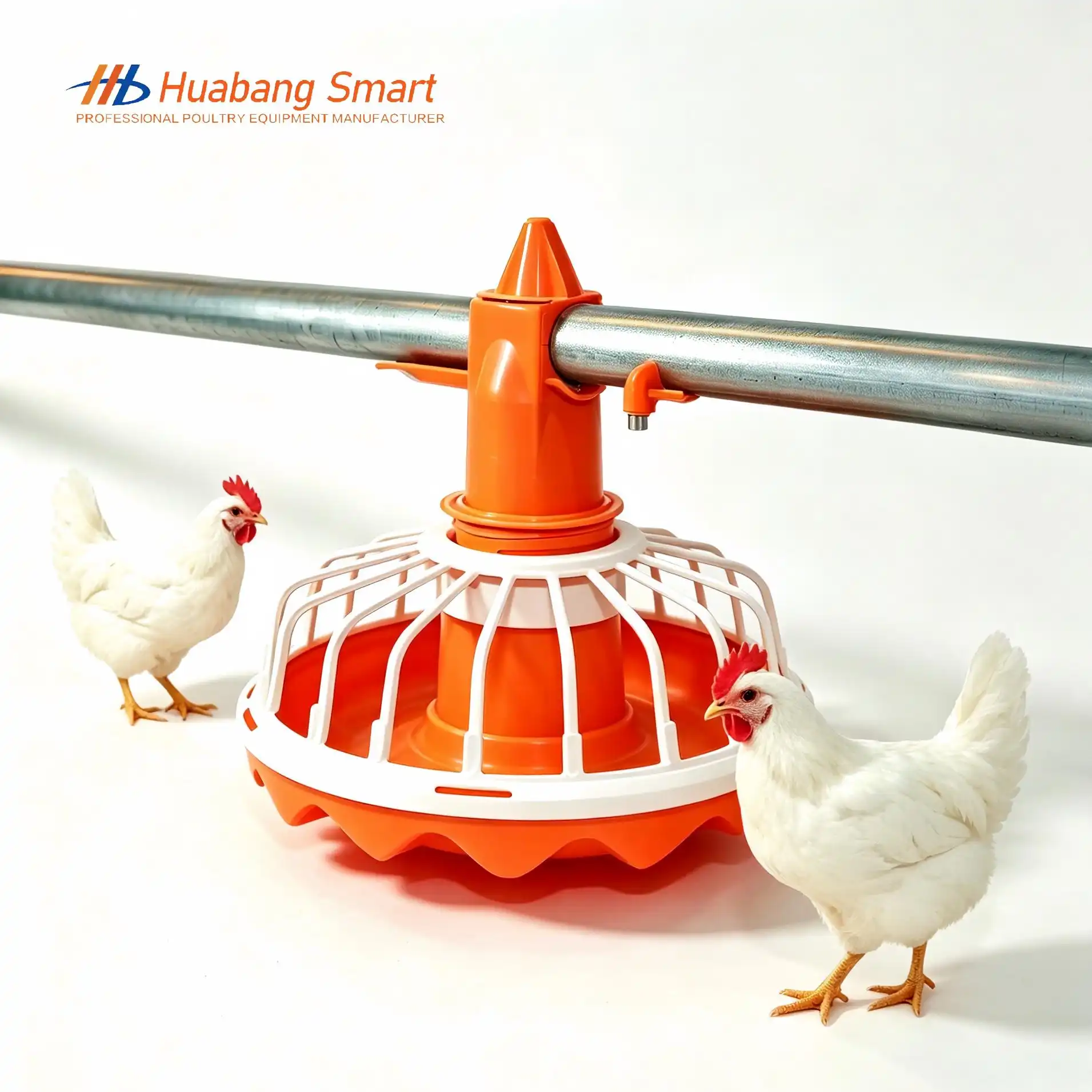
Shape of the pan, distance between grills, and depth of feed can all change how birds behave. If the feed pan isn't level, birds will scratch and bill, which means they will throw food on the litter. This behavior not only wastes food but also makes the floor of the house more damp, which is good for coccidiosis. Every bird in the group gets the same amount of food because all pan sections have equal access to feed. This lowers the weight uniformity coefficient, a measurement that has a direct effect on how the processing plant grades the birds.
The ROI Case for Automated Feeding Systems
Field data mentioned in Poultry Science (2021) shows that when operations switched from manually filling pans to automated line feeding systems, they saved 30–50% of labor per house. Besides saving time, automated Feeders for chickens with smart controls can support planned feeding programs and help prevent feed from remaining exposed overnight, which can reduce the risk of mold contamination. For large poultry operations, reliable Feeders for chickens can improve feeding efficiency while making daily management more consistent. Integrating properly designed Feeders for chickens with automated controls can therefore provide both labor-saving and feed-management benefits.
Key Criteria for Selecting Chicken Feeders at Commercial Scale
When making a B2B purchase choice, you need organized evaluation factors instead of just browsing through a catalog. The most important factors are the required operating throughput, the frequency of repair cycles, the ability to connect to current house management systems, and the safety of the materials used.
Material Durability and Hygiene Standards
Virgin polypropylene (PP) feed pans don't break down when exposed to ammonia vapor, don't need to be treated on the outside, and don't pose a risk of chemicals moving into the feed. The type of material on every touch surface in high-density broiler homes, where humidity and ammonia levels change a lot, affects both the safety of the birds and the life of the equipment.
Automation Level vs. Manual Operation Trade-offs
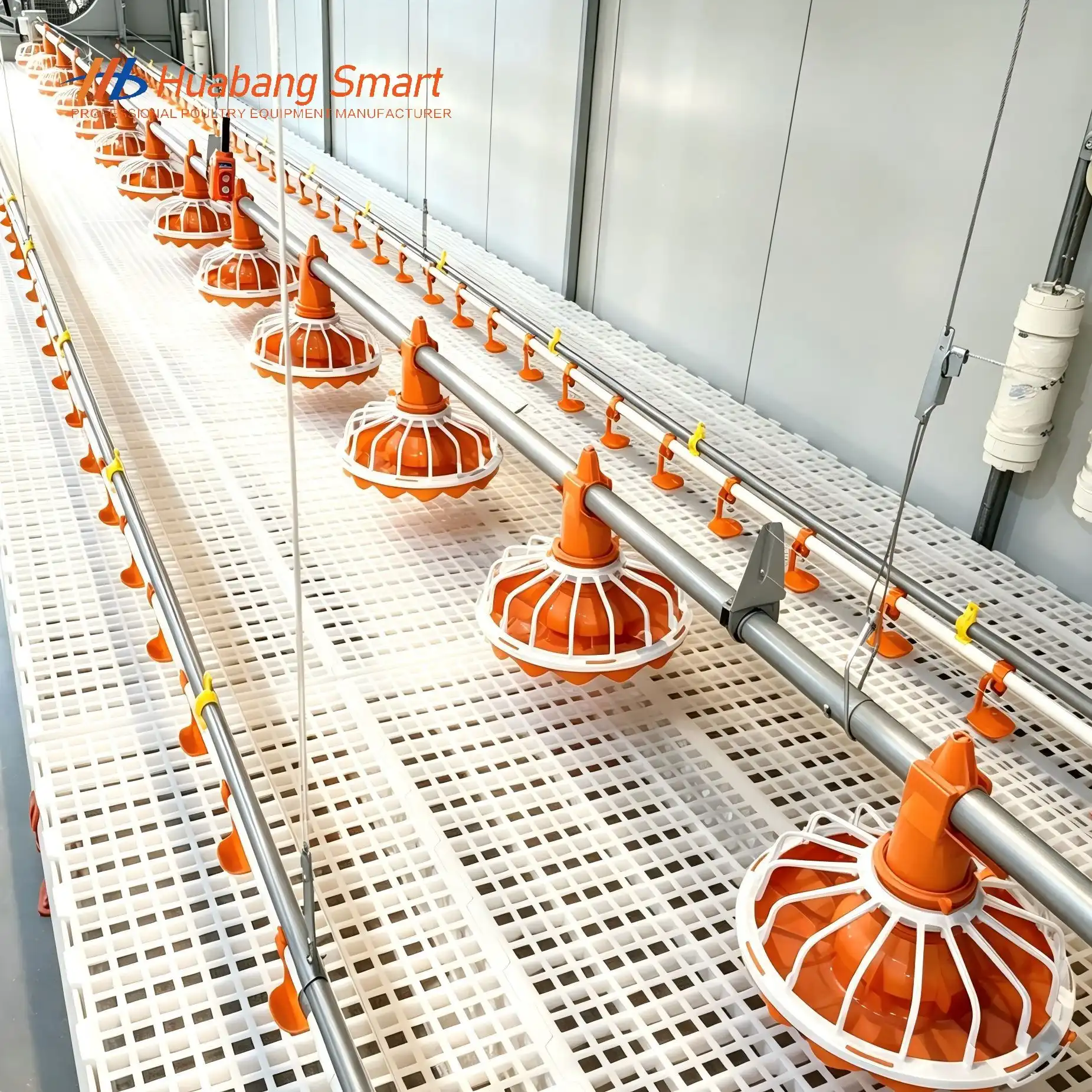
Manual tube feeders are cheaper up front, but they need daily work, and the regularity of the feed portions can vary depending on the person using them. Automated pan feeding lines get rid of both of these problems and make sure that thousands of birds get the right food at the same time. For farms with more than 20,000 birds per house, automated systems usually pay for themselves in two to three production cycles by saving money on feed and labor.
Overview of Feeder Types and Their Commercial Applications
There are different types of feeding tools used in commercial poultry businesses, and each type is best for a certain type of output. Knowing where each type does its best keeps expensive mistakes from happening when equipment specs don't match up with working needs.
Plastic pan feeders are used to raise most broilers around the world because they are light, don't react with chemicals, and can be set up in modular line setups. Breeder and layer farms still use metal trough feeders because the stronger gauge construction is worth the extra cost. Gravity-fed tube feeders work best for smaller flocks or birds in a transitional phase where access control is more important than output volume.
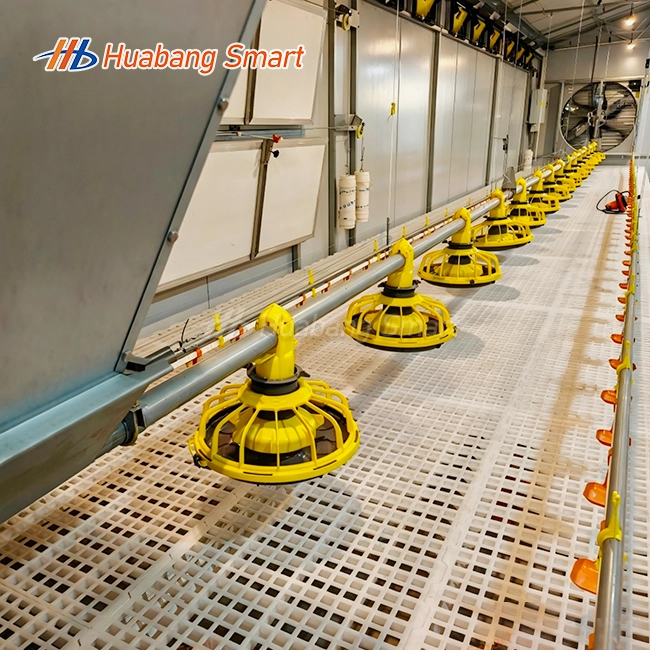
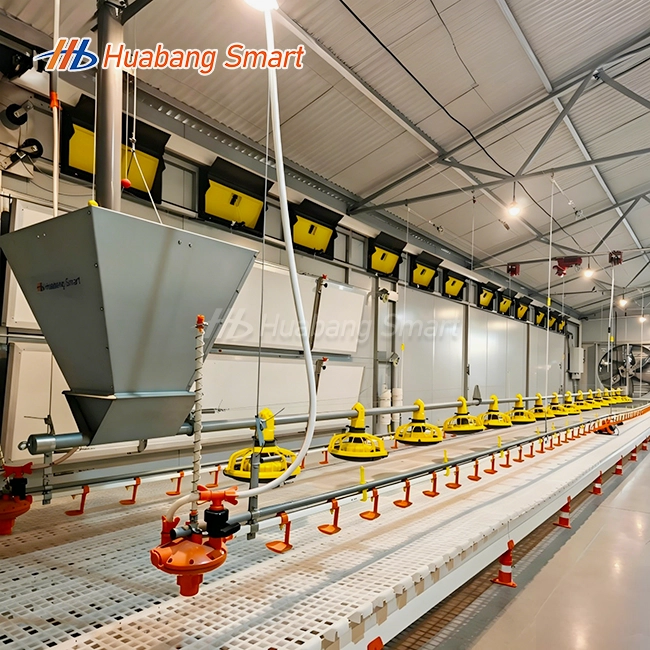
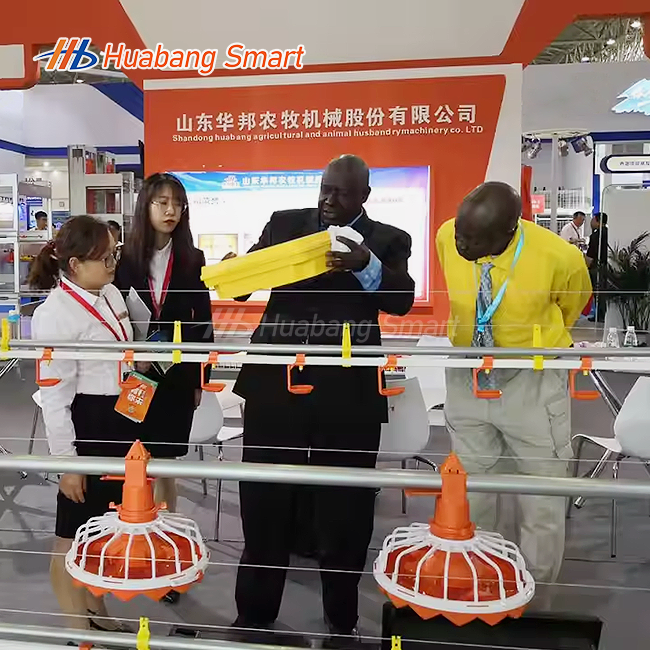
For chicken and egg farms, pan feeding line systems have become a standard choice for automated feeding operations. The Pan Feeding System from Huabang Smart is a strong example of this type of equipment, combining practical engineering with the capacity for large-scale commercial use. For farms looking for reliable Feeders for chickens, this type of automated pan system can help improve feeding consistency and reduce manual labor. Properly designed Feeders for chickens can also support efficient feed distribution across large poultry houses, making Feeders for chickens an important part of modern automated feeding systems.
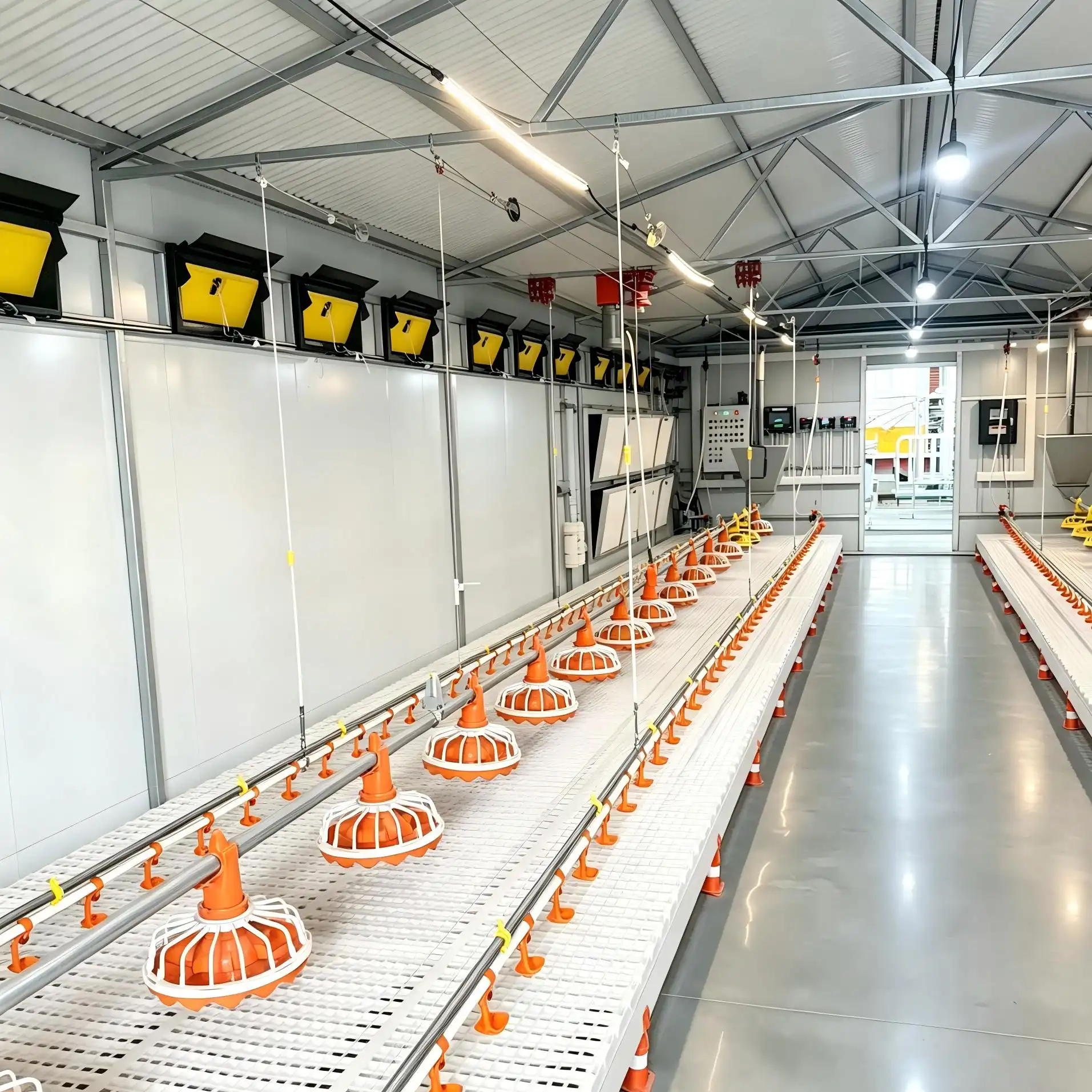
Here are some of the most important technical details about this system:
- Fully automatic operation serving broilers and layer chickens with a feeding capacity of 1,400 kg per hour
- 330mm diameter feeding pan engineered with 16 individual feed compartments, ensuring even distribution without dead zones
- 75mm diameter PVC feed pipe (wall thickness 3.6mm) delivering durability and resistance to deformation under continuous load
- High-precision winch height adjustment that adapts pan height to each growth stage, reducing crowding stress at the feeder
- Food-grade virgin PP construction — non-toxic, odorless, and corrosion-resistant for full biosecurity compliance
- Auger drive technology that eliminates uneven feeding across long line runs, improving harvest weight uniformity
- Smart control compatibility enabling timed feeding schedules, data monitoring, and integration with house management platforms
- 1-year warranty with full after-sales technical support
These technical features work together to fix the biggest problems with managing the feeding of a lot of chickens. The anti-waste grill design keeps the litter dry, the flexible structure makes it easy to set up and change, and the smart compatibility connects the feeding hardware to the digital farm management system.
Procurement Best Practices and Supplier Evaluation for B2B Buyers
At the B2B level, choosing a supplier is about a lot more than just comparing unit prices. The long-term value of a supplier relationship depends on how reliable the supply is, how good the technical documentation is, how much customization is possible, and how much support is available after the installation.
When looking at companies that make equipment for feeding chickens, give more weight to those that have international certifications that can be checked. Certification for quality control according to ISO 9001 and compliance with CE standards are basic conditions for equipment to enter regulated markets. Suppliers with documented technology patents show that they are investing in research and development (R&D) rather than just making a set of products.
Huabang Smart was founded in 2012 and has its main office in Qingzhou, Shandong Province. With 49 patents covering key technologies and ISO 9001 and CE certifications, the company has extensive experience in designing and manufacturing Feeders for chickens for commercial poultry operations. It supports OEM and ODM projects, custom drawings, and 30–60-day production schedules, allowing buyers to develop Feeders for chickens according to specific farm requirements. Its services include site planning, detailed configuration recommendations, video installation guidance, on-site commissioning, and local after-sales support in international markets. At present, Huabang Smart equipment, including Feeders for chickens, is used in more than 100 countries across Africa, Southeast Asia, Europe, and the Middle East.
Optimizing Feeder Performance to Maximize Feed Efficiency
Putting in good tools is only half of the puzzle for running a business. Every day, management procedures decide whether the equipment works at its best or starts to perform less well.
Calibration of the pan height is the most important daily adjustment that farm operators can make. During the birds' growth cycle, the lip of each feeding pan should line up with the height of their backs. Even a misalignment of 30–40 mm can be measured to make spilling rates go up. The Huabang Smart winch adjustment system makes this process quick and accurate, and it doesn't require any tools or stop production.
Cleaning regularity should also have a set schedule. In industrial hen houses, food line pans should be cleaned with approved disinfectants that are safe for PP surfaces every time the flock goes through a cycle. Checking the auger drive mechanism and feed pipe joints on a regular basis keeps them from getting clogged, which would otherwise cause uneven feeding and nutrition across the flock.
Keeping track of your feed conversion ratio (FCR) by house and by cycle gives your operations and buying teams objective data to use over time to judge how well your feeders are working. If the FCR keeps going up across rounds, it means that your feeding system is working as it should.
Conclusion
Picking the correct feeding tools affects measurable results across a poultry farm, from feed conversion ratio (FCR) and flock uniformity to litter quality and labor costs per bird. For modern commercial operations, automated pan systems are a standard choice, combining precision engineering, food-grade materials, and smart integration. Reliable Feeders for chickens can help improve feeding consistency and support more efficient farm management. The investment case becomes stronger when Feeders for chickens are selected according to the farm's capacity, feeding requirements, and automation needs. By choosing a supplier that offers proven quality, genuine customization options, and dependable after-sales support for Feeders for chickens, buyers can reduce project risks and potentially achieve a faster return on investment.
FAQ
What size feeding pan is appropriate for commercial broiler operations?
For commercial broiler houses, a 330mm diameter pan with 16 feed compartments — as featured in Huabang Smart's Pan Feeding System — suits standard stocking densities efficiently. Pan size selection should correlate with birds per linear meter of feeding line rather than total flock count alone.
How often should automated feeding lines be cleaned in commercial settings?
Between every flock cycle is the minimum standard. During production, inspect pans weekly for feed caking, moisture accumulation, or grill debris that restricts flow. A clean feeding system reduces pathogen load and supports consistent feed intake.
Are automatic feeding systems more cost-effective than manual alternatives at scale?
At flock sizes above 20,000 birds per house, automated systems consistently deliver lower cost-per-bird over a production lifecycle. Labor savings, feed waste reduction, and improved FCR typically recover capital investment within two to three production cycles.
Can treadle-style feeders prevent rodent access in commercial settings?
Sealed treadle mechanisms restrict rodent and wild bird access effectively in backyard or small-scale settings. For large-scale commercial operations, enclosed automated line systems with overhead feed pipes provide superior biosecurity against vermin at the infrastructure level.
What feed types work best with pan feeding systems?
Pan feeding systems with auger drive technology handle pellets and crumbles reliably at high throughput. Mash feed requires steeper pan geometry or reduced fill depth settings to prevent bridging and uneven flow.
Partner with Huabang Smart for Proven Poultry Feeding Solutions
Huabang Smart sells approved, large-capacity Feeders For Chickens made for business poultry operations that need to be precise and last a long time. As a direct-source producer of chicken feeding systems, we offer full OEM customization, production processes of 30 to 60 days, on-site installation support, and full after-sales service in more than 100 countries. Get in touch with our technical team right away to get a custom configuration proposal or bulk pricing for your next project. You can email us at admin@huabangsmart.com or go to poultrycage.com.
References
1. Poultry Science Association. Poultry Science Journal. 2021.
2. University of Arkansas Cooperative Extension Service. Broiler Production Cost and Returns. 2022.
3. North, M.O., & Bell, D.D. Commercial Chicken Meat and Egg Production. Springer. 2002.
4. Aviagen Group. Ross Broiler Management Handbook. 2022.
5. Food and Agriculture Organization of the United Nations (FAO). Poultry Development Review. 2013.
6. Mench, J.A. Broiler Breeders: Production, Behavior and Welfare. World's Poultry Science Journal. 2002.

USER EVALUATE
Here is the customer's evaluation of us