
How to Choose a Reliable China Broiler Chicken Cage Supplier?
Choosing a reliable China Broiler Chicken Cage supplier requires evaluating five core pillars: material certification (minimum 275g/m² hot-dip galvanization), verifiable ISO and CE credentials, demonstrated automation capability, turnkey project delivery experience, and post-installation support infrastructure. Buyers sourcing broiler rearing systems at scale cannot afford to treat this as a simple equipment purchase. The supplier you select will directly shape your farm's feed conversion ratio, biosecurity standard, labor cost structure, and long-term operational uptime. This guide walks through every stage of that evaluation process.
Understanding Why Supplier Reliability Shapes Your Farm's ROI
When raising chickens for profit, broken equipment is not only inconvenient; it costs a lot. In a 30,000-bird house, a misplaced feeder, a corroded cage panel, or a broken dung belt can cause both a rise in bird deaths and regulatory violations at the same time. The FAO's 2022 livestock systems report says that feed and labor together make up more than 75% of the cost of raising broilers. This means that any system that lowers the efficiency of feed or requires more manual work cuts directly into profits.
When buying broiler cages, reliability includes three key factors: the stability of the China broiler chicken cage across production batches, dependable logistics with standard setups typically requiring 30 to 45 days, and the supplier's ability to provide technical support after installation. For buyers sourcing a China broiler chicken cage, overlooking these factors can lead to hidden costs that are far greater than the initial price difference between a high-end and low-end supplier. Evaluating the supplier's production consistency, delivery capability, and after-sales support before purchasing a China broiler chicken cage can help reduce long-term operational risks.
Core Criteria for Evaluating Broiler Cage Manufacturers
There's more to evaluating a broiler house system provider than just looking at price lists. Material, technology, certification, and service depth are some of the things that procurement managers need an organized framework to cover. Here are the basic things that always set trustworthy makers apart from trade middlemen:
- Material specification: The cage frame and panels must use at least 275g/m² hot-dip galvanized steel. This coating weight resists ammonia corrosion and moisture penetration for a documented service life exceeding 15 years. Suppliers should provide zinc layer thickness test reports upon request.
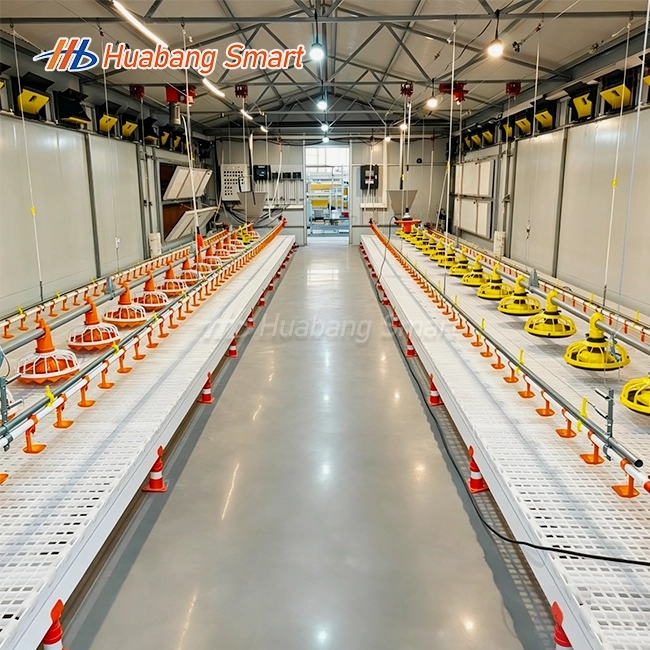
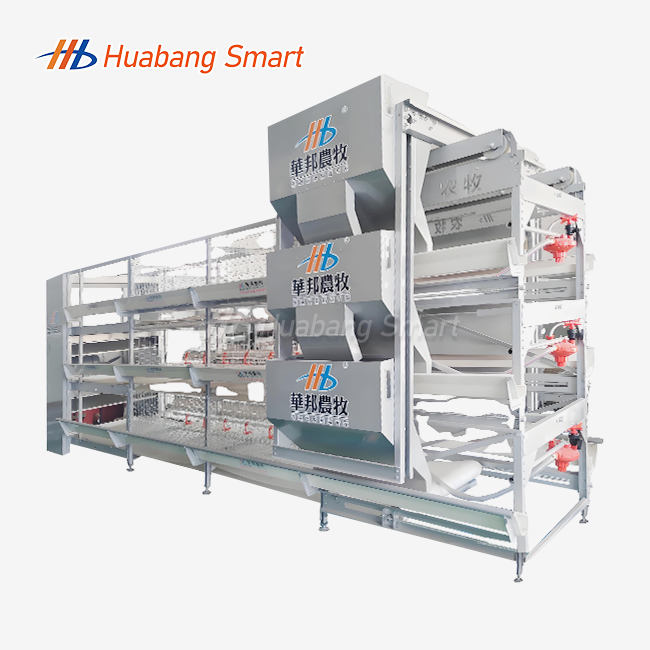
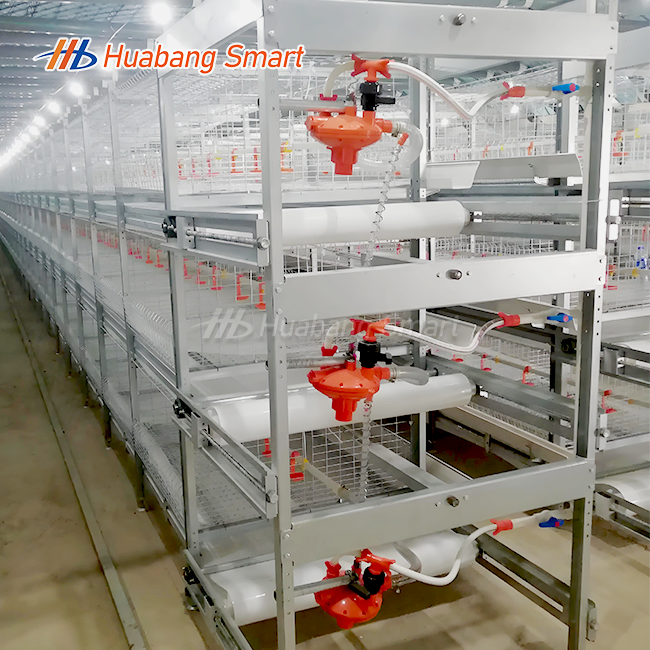
- Automation integration: A complete broiler rearing system includes an automatic feeding machine, nipple drinking lines, PP manure belt conveyors, and environmental control interfaces. Any supplier unable to deliver these as an integrated package is not equipped for large-scale farm projects.
- Certification traceability: ISO 9001 quality management certification and CE compliance are non-negotiable for buyers supplying European markets or government-backed agricultural projects. Request certificate numbers and verify them independently.
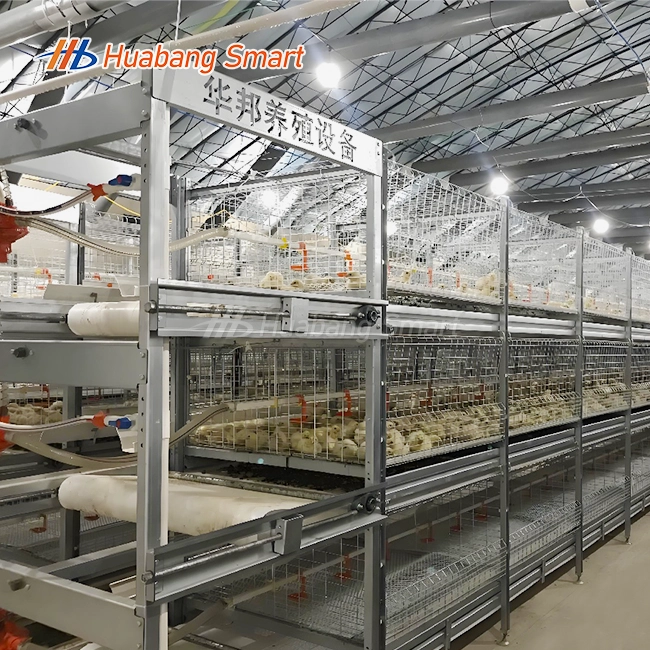
- Customization depth: The H-type multi-tier cage structure (available in 3 to 8 tiers) should accommodate cage heights of 0.45m, 0.48m, or 0.5m, with OEM and ODM configurations based on buyer-submitted drawings.
- Production and delivery capacity: A standard production cycle of 30 to 60 days is industry standard. Suppliers with verifiable factory capacity and export histories across 100+ countries present significantly lower delivery risk.
Integration of automation: A full broiler rearing system has an automatic food machine, nipple drinking lines, PP manure belt conveyors, and interfaces for controlling the surroundings. If a provider can't send these as a single package, they aren't ready for large-scale farm projects.
Comparing Broiler Cage Models: What the Specifications Actually Mean
There are a lot of different H-type broiler cage configurations on the market, and there is a big difference in performance between entry-level and engineered systems. To make good procurement decisions, you need to know which standards give real-world value.
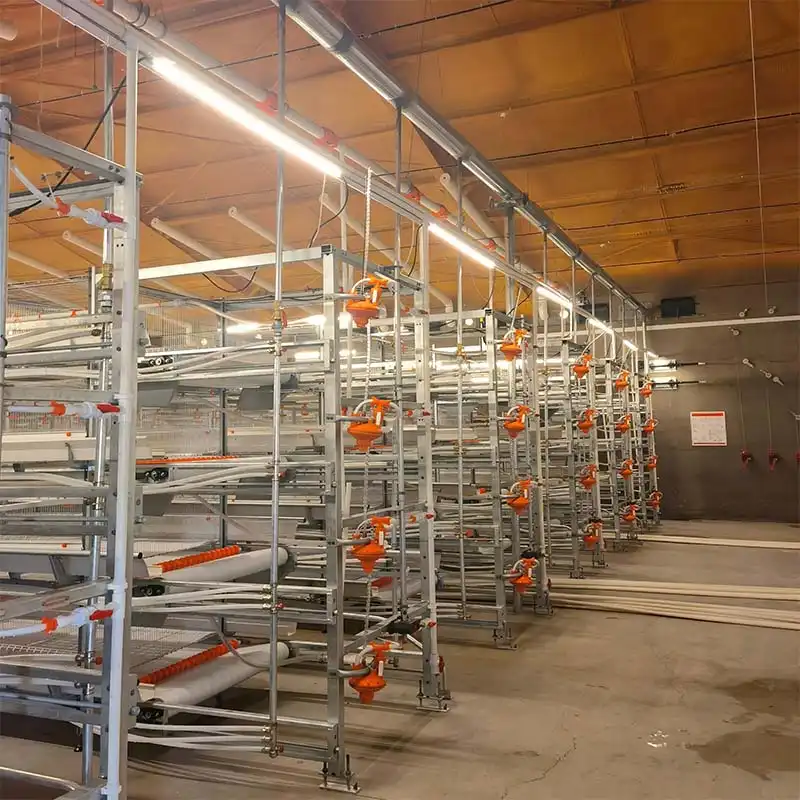
A 1.25m x 1m x 0.45m base unit is the building block of modern H-type China broiler chicken cage systems designed for high production. The fully slatted floor design and slight slope help reduce foot pad injuries that could affect meat quality, which is especially important for companies targeting EU or Halal markets. Smooth, burr-free welding points on a China broiler chicken cage further reduce the risk of breast blisters and can directly support better grading yield. For high-volume poultry operations, a well-designed China broiler chicken cage can therefore contribute to consistent bird management and product quality.
Automation's Impact on Feed Conversion Ratio (FCR)
Automated feeding systems control how much food is given with a level of accuracy that can't be achieved by hand. When birds get calibrated food at set times, they move less and use their energy to gain weight instead of doing things that aren't necessary. Compared to floor-rearing systems, this dynamic leads to FCR benefits of 0.05 to 0.1 points across multiple business deployments, which is a big gain when looked at in a larger picture.
Environmental Control and Stocking Density
Controlling temperature, humidity, and ammonia levels is necessary for high-density broiler rearing to work. Intelligent environmental controls built into cage systems keep the house at the perfect temperature and humidity, allowing the number of birds to rise from about 12 per square meter when raised on the floor to over 50 per square meter when the cages are set up vertically. In other words, three times as much can be produced on the same amount of land.
Price-to-Value Assessment
There is a wide range in the wholesale price of broiler cage systems. When comparing quotes, buyers should look at the zinc coating standard, whether automation peripherals are included, the costs of shipping and customs clearance, the costs of installation control, and the terms of the supplier's guarantee. A system with an international warranty that lasts for one year, on-site construction help, and a proven 15-year structural lifespan costs more than a cheaper option that doesn't have any of those features.
Matching Supplier Capabilities to Your Procurement Profile
There are different types of buyers with different needs when it comes to procurement. The best supplier is one whose service design fits your business scale and regional context.
Large business farms and farming investment groups need suppliers who can handle everything from site planning to detailed configuration lists, equipment supply, installation supervision, and post-installation training. For projects involving a China broiler chicken cage, contractors should be able to support both OEM and ODM requirements while maintaining consistent specifications across every project stage. International wholesalers sourcing a China broiler chicken cage also need clear technical documentation, reliable access to spare parts, and multilingual customer service. Choosing an experienced supplier of China broiler chicken cage systems can help simplify project coordination and support more consistent equipment delivery across large-scale poultry operations.
What to Request During Supplier Qualification
Before putting in a purchase order, procurement managers should ask any potential supplier of broiler equipment the following:
- Zinc layer thickness test reports and salt spray test results
- CE and ISO certificate numbers for independent verification
- A reference list of completed projects with farm scale, country, and contact details
- CAD layout drawings or 3D installation guides specific to your farm dimensions
- Written confirmation of production lead times and shipping terms
Suppliers who are willing to give samples and let customers visit the factory show a level of openness that is strongly linked to long-term dependability.
Best Practices from Successful Procurement Cases
Procurement professionals who always get reliable partnerships do a few things: they involve suppliers early in the design phase, ask for technical proposals before negotiating prices, and write performance standards into the contract. For farms in Southeast Asia, better cooling systems are usually needed, while farms in Central Asia need more protection. Instead of a one-size-fits-all list, suppliers who have experience customizing products for different regions do much better in these settings.
People who buy things often make the mistake of seeing certification as just a checkbox instead of a process for checking. There are fake or old licenses floating around in the market. A good way to protect yourself is to check certificate numbers with the organizations that issued them and ask for third-party inspection reports (from SGS or Bureau Veritas) before making the final payment.
Conclusion
Choosing the right partner for your chicken equipment is a long-term and important decision. These criteria—material requirements, automation integration, certification integrity, customization capabilities, and service depth—can help buyers narrow down suitable suppliers of China broiler chicken cage systems. When buyers apply this approach, they can reduce purchasing risks, improve potential return on investment (ROI), and build supplier relationships that can grow with their business. The difference between a reliable China broiler chicken cage manufacturer and an unreliable one is not always obvious at the quotation stage; it often becomes clear months after the China broiler chicken cage system has been installed.
FAQ
What is the realistic service life of a hot-dip galvanized broiler cage?
With a 275g/m² hot-dip galvanization coating on the frame and wire mesh, the structure will last longer than 15 years in normal chicken coop conditions. The salt spray test is like being exposed to ammonia and water for twenty years.
How does a cage system improve FCR compared to floor rearing?
Automated feeding gives birds precisely measured amounts of food at set times, so they don't have to move around as much and can use their metabolic energy to gain weight. Improvements in FCR have been measured to be between 0.05 and 0.1 points, and savings on feed costs have reached 8%.
What lead time should buyers plan for a large-scale system?
For a system that can hold 50,000 birds, production and shipping to other countries usually take 30 to 45 days. The production window may be extended to 60 days for customized configurations that need OEM drawings.
What installation support is available for overseas buyers?
To make sure that automated systems are properly calibrated during commissioning, reputable makers offer CAD plan models, 3D installation video guides, and on-site engineering supervision.
Can cage configurations be adapted for different regional climates?
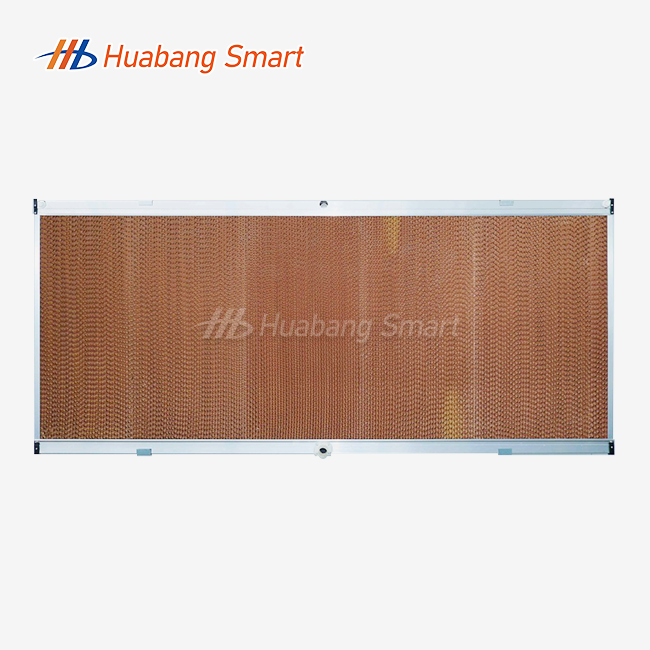
Yes. Responsible suppliers offer configurations that work with different climates. For example, for tropical areas, they offer better ventilation and cooling pad integration, and for colder climates, they offer stronger insulation panels.
Partner with Huabang Smart for Your Next Broiler Cage Project
From 2012 to now, Huabang Smart has sold combined broiler raising systems to customers in over 100 countries. As a confirmed China Broiler Chicken Cage manufacturer, we offer H-type multi-tier systems (3–8 tiers) made from 275g hot-dip galvanized steel. These systems come with smart environmental controls, automatic feeding, and the removal of manure belts. They are also backed by ISO 9001, CE certification, and a 1-year international warranty. Email admin@huabangsmart.com or poultrycage.com to get a technical estimate or a unique configuration list.
References
1. Food and Agriculture Organization of the United Nations. Poultry Sector Country Review: Global Broiler Production Systems. FAO, 2022.
2. Weeks, C.A., & Butterworth, A. Measuring and Auditing Broiler Welfare. CABI Publishing, 2021.
3. World Organisation for Animal Health (WOAH). Terrestrial Animal Health Code: Welfare of Broiler Chickens. WOAH, 2023.
4. International Finance Corporation. Good Practice Note: Animal Welfare in Livestock Operations. IFC, 2020.
5. Aviagen Group. Ross Broiler Management Handbook. Aviagen, 2022.
6. Poultry Science Association. "Effects of Cage Density and Automated Feeding Precision on Broiler Growth Performance." Poultry Science Journal, Vol. 101, 2022.

USER EVALUATE
Here is the customer's evaluation of us