
H Type Layer Chicken Cage Selection: 5 Features Buyers Should Check
Selecting the right H Type Layer Chicken Cage is one of the most consequential equipment decisions a commercial poultry operation can make. This vertically-stacked battery cage system is engineered specifically for high-density egg production, allowing farms to house 90 to 200 hens per set across 3 to 8 configurable tiers. The wrong choice leads to shortened service life, elevated labor costs, and biosecurity failures. This guide walks procurement managers, farm engineers, and equipment distributors through five features that determine long-term performance and return on investment.
1. Understanding the H Type Layer Chicken Cage: Design and Functionality
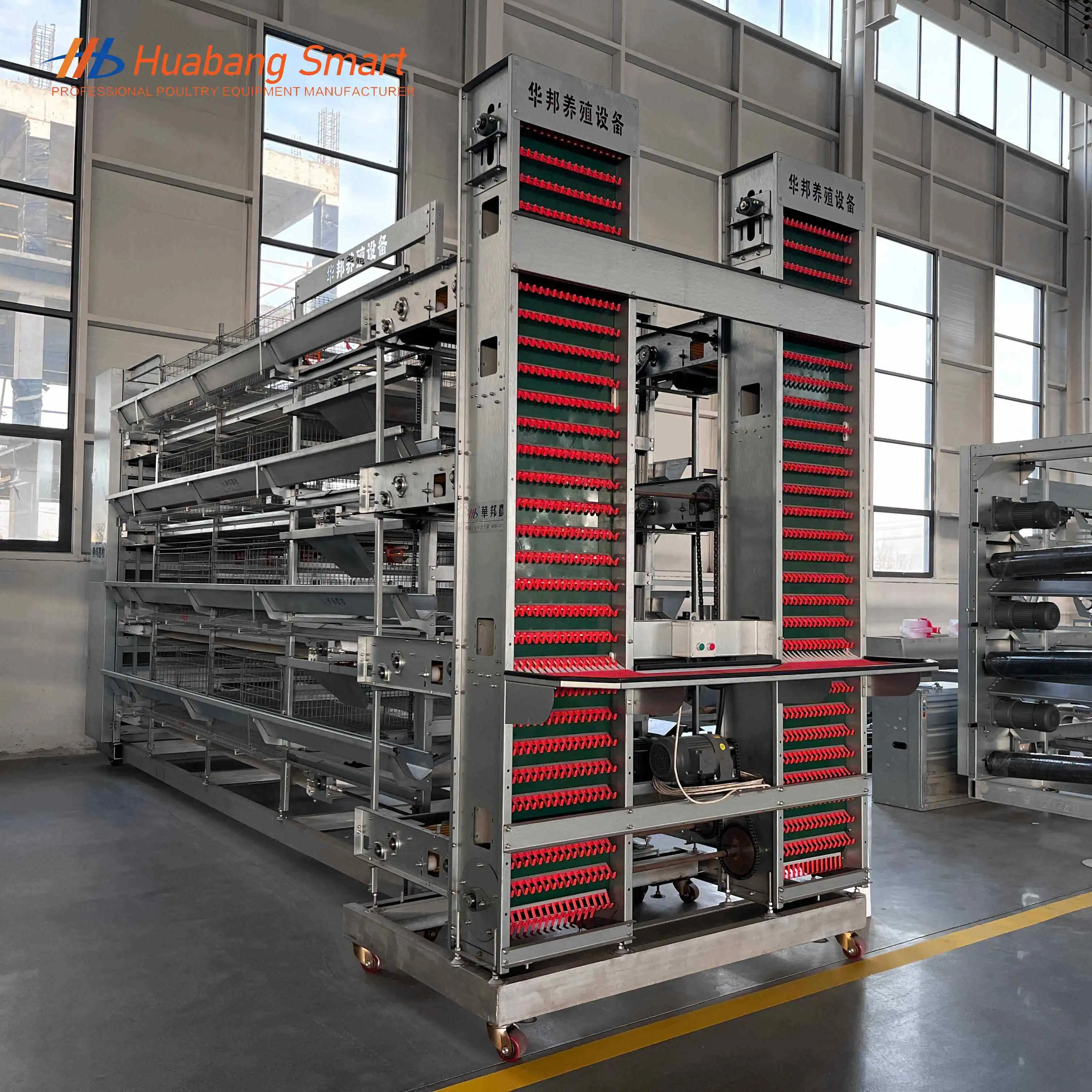
What Distinguishes the H-Type Frame Structure?
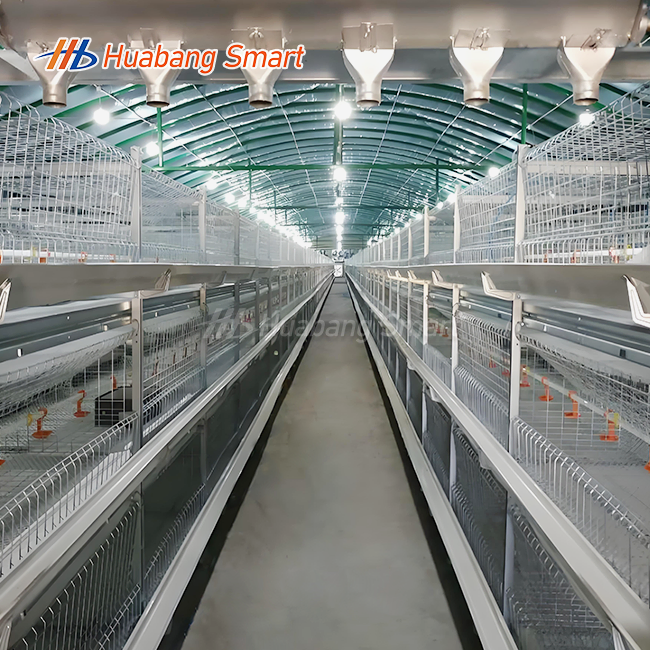
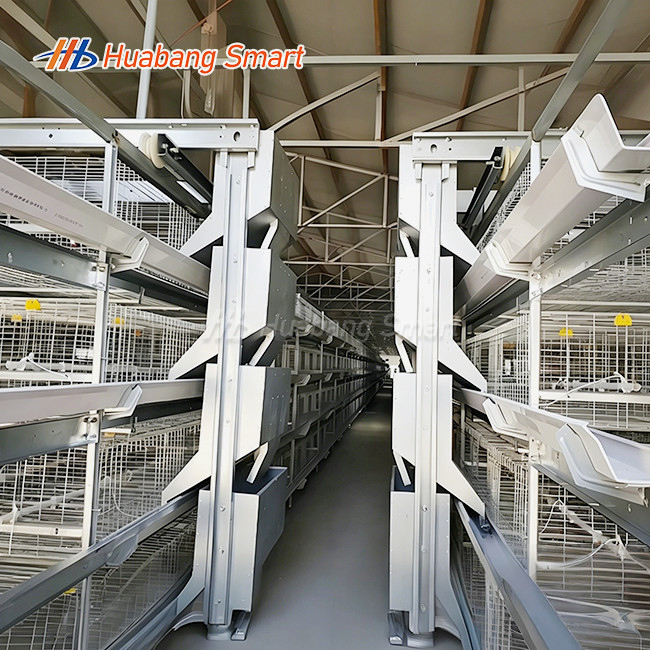
The upright columns in the H-type frame make sure that the weight of the birds is properly distributed across all three levels. A-type cages, on the other hand, tilt outward and limit the number of tiers to four or less. The H design lets you fit up to 8 levels on the same floor, which makes better use of space by over 300% without making the building bigger.
Material Composition and Why It Matters
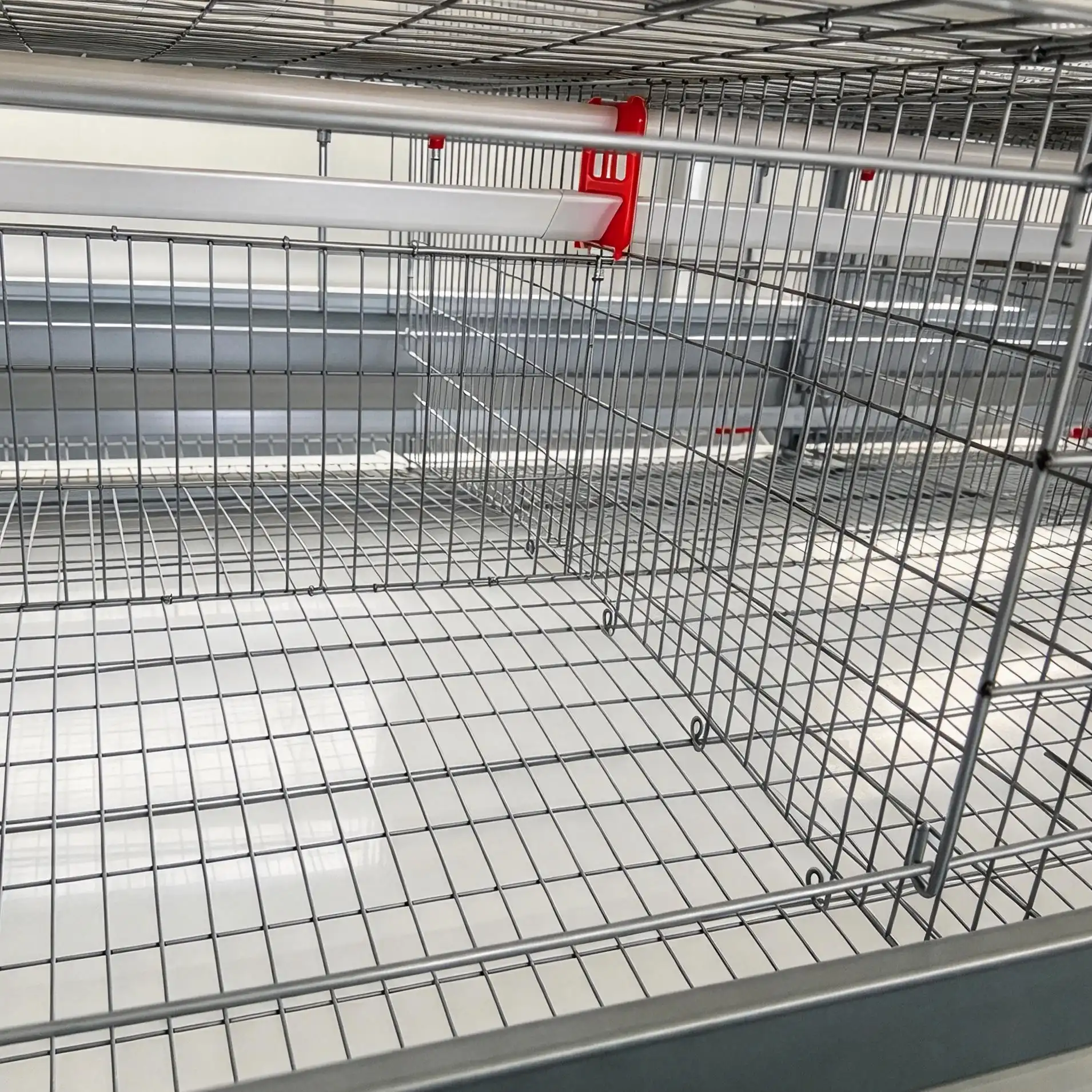
The layer cage system from Huabang Smart is made of Q235 international bridge steel that has been hot-dip galvanized 275g/m². Each unit is 1.2m x 1.2m x 0.45m and has wires that are 2.5mm to 4mm in width. The aluminum-zinc wire mesh panels won't rust in high-ammonia chicken coops for 15 to 20 years, which is a lot longer than powder-coated or electroplated options.
How Design Affects Egg Quality and Waste Control?
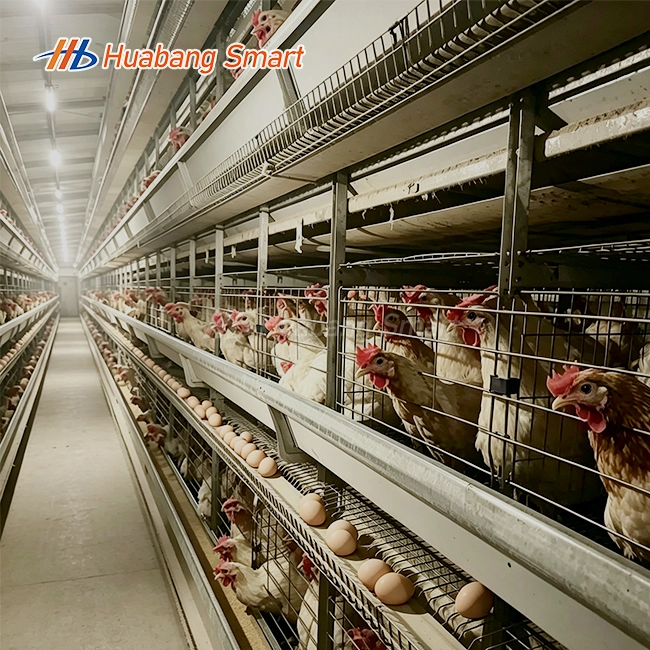
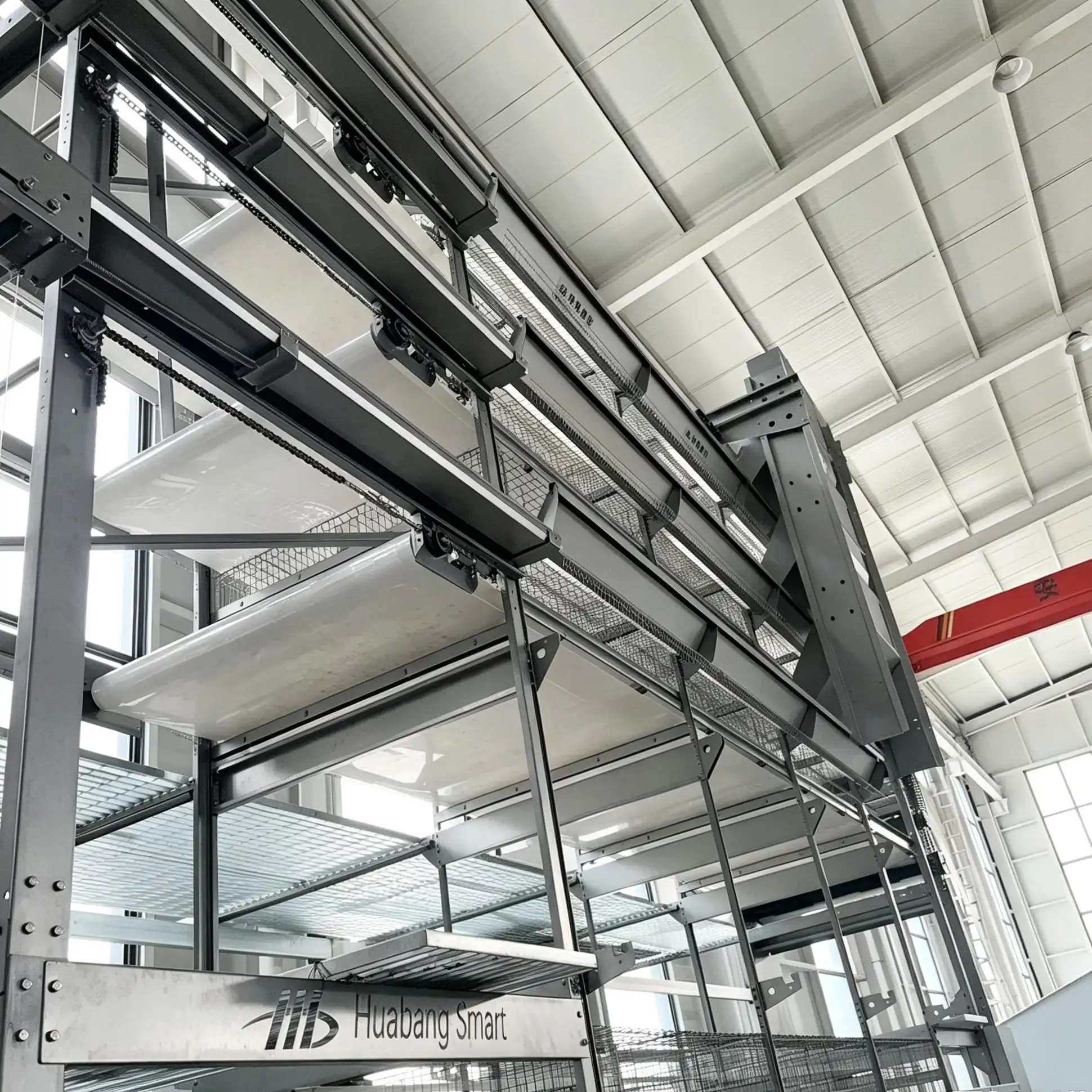
A carefully planned 7-degree slope in the bottom mesh keeps egg breakage below 0.3% and moves eggs easily onto the collection belt. PP polypropylene manure belts under each layer move waste out of the house automatically. This keeps ammonia levels low and lowers the disease pressure that kills layers.
2. Five Key Features Buyers Should Check When Selecting Layer Cage Systems
When purchasing, teams look at automated chicken pens; they usually look at price first, without looking at the five technical factors that decide the total cost of ownership. Here are the things that set a good capital investment apart from a costly replacement cycle.
- Material Quality and Coating Thickness: Verify that the steel frame carries a 275g/m² hot-dip galvanized coating, not a lighter electroplated finish. Ultrasonic gauge testing on each production batch confirms coating uniformity. Frames meeting this standard withstand continuous high-humidity and ammonia exposure for 15 to 20 years, protecting the full capital investment across the asset's service life.
- Bird Density Capacity vs. Welfare Balance: A well-designed unit accommodates 90 to 200 hens per set depending on tier configuration. Cage depth of 0.45 meters and wire spacing must align with the specific breed's body weight and welfare code requirements applicable in the target market, including U.S. UEP Certified guidelines for commercial housing.
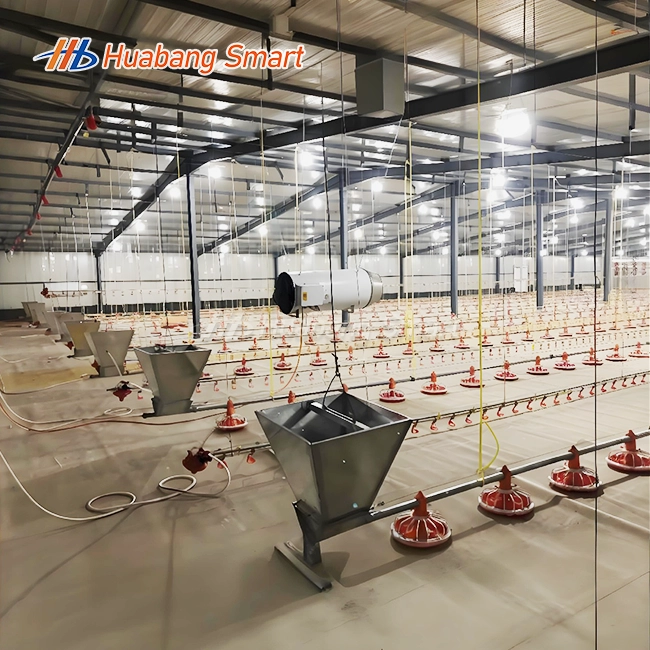
- Automation Integration: Fully automated feeding, nipple drinking, manure removal, and egg collection systems reduce labor requirements by up to 80%. Confirm that the automation components are mechanically compatible with your existing house infrastructure before ordering, particularly conveyor belt alignment and feeder track dimensions.
- Structural Load Certification: Welding joints must pass tensile load testing confirming each unit supports over 60kg without deformation. Request documentation of 72-hour salt spray test results, which simulate accelerated corrosion equivalent to several years of poultry house exposure. Frames lacking this certification fail prematurely in humid climates.
- Warranty Coverage and After-Sales Support: A 12-month international warranty backed by on-site installation guidance, video commissioning support, and accessible spare parts supply is the minimum acceptable standard for capital equipment procurement. Suppliers without documented after-sales protocols present unacceptable operational risk for large-scale facilities.
These five factors together show if an H Type Layer Chicken Cage housing system meets its expected return on investment (ROI) or creates a long-term upkeep obligation. Skipping any of them when evaluating suppliers is the main reason why farms have unplanned downtime in their first three years of business.
3. Comparing H-Type Systems with Alternative Poultry Housing
H-Type vs. A-Type Battery Cages
Because A-type cages are curved and can only have four levels, they can't hold a lot of animals vertically. The H-type column frame can hold up to 8 levels, which means that it can hold over 300% more birds per square meter of floor space. The closed-tier design also makes it easier to install the manure belt automatically, which is something that A-type systems can't do smoothly across all tiers.
H-Type vs. Aviary and Free-Range Systems
Both aviaries and free-range housing need a lot more space, and diseases can spread between birds, so more birds die in both types of housing. A study in 2019 in the journal "Poultry Science" confirmed that layers kept in cages had lower levels of Salmonella than layers kept on the floor, even when the biosecurity rules were the same. Enclosed tier systems are still the best choice for commercial operations that want to keep egg volumes steady and follow food safety rules.
Performance Benchmarks from Global Deployments
At the moment, Huabang Smart systems are working in more than 100 countries. With the right climate control, farms in Southeast Asia and the Middle East that use 8-tier configurations say that laying rates are above 90%. The closed-house design with longitudinal ventilation and automatic cooling pads keeps the microclimate fixed even when the temperature outside changes. This is very important in production areas that have trouble with the weather.
4. Procurement Considerations: How to Source a Dependable H-Type Cage Supplier
Verifying Manufacturer Credentials
Before negotiating with a seller, make sure you have proof of ISO 9001 and CE approval. These approvals show that the company follows a quality management system that has been checked and that the equipment meets European safety standards that apply to markets outside of Europe. Huabang Smart has both of these certifications and 49 patents on core technologies.
Understanding Price Variables and Customization Options
Prices for an H Type Layer Chicken Cage change depending on the number of tiers, the thickness of the wire, the automation package, and the needs for a unique drawing. OEM/ODM production can work with houses that aren't the standard size or feeder configurations. Production takes 30 to 60 days, depending on how many items are ordered and how much customization is needed. You can get bulk discounts on large sales, and you can try the service before committing to a full purchase.
Logistics, Installation, and Long-Term Support
Huawei Smart offers site planning, full setup lists, video installation guides, and help with installation on-site. The company's international service network handles local after-sales support for projects that are based outside of the United States. For project-specific technical proposals, email the team at admin@huabangsmart.com or go to poultrycage.com.
5. Best Practices for Maintaining Layer Cage Systems
Daily and Weekly Management Protocols
Every day, check the tracking line and tightness of the manure belt. Nipple drinkers should be cleaned once a week to keep mineral scale from building up and blocking the flow of water. Check the surfaces of the egg collection belt for damage that could make eggshells crack very easily. Regular review plans stop small problems from getting worse and turning into expensive operational failures.
Preventive Maintenance to Extend Service Life
Every 30 days, grease the feeder track drive motors. Get new PP manure belt pieces before the old ones break when they're loaded. Touch-up galvanizing compound should be used on any scratches on the surface that show bare steel. These steps keep the system's corrosion protection high and add 15 to 20 years to its expected working life.
Troubleshooting Common Operational Bottlenecks
Most of the time, manure builds up between tiers because the belts aren't lined up right. Make changes to the tension rollers so that the belt runs evenly across all levels. If more than 0.3% of eggs break, check the angle of the bottom mesh slope and the speed of the egg collection belt. Feed distribution gaps between tiers usually mean that the feeder auger drive is broken, not the structure.
Conclusion
It's not enough to look at material durability, bird capacity, automatic depth, structural certification, and provider support capabilities one at a time; you need to look at them all together to find the right H Type Layer Chicken Cage housing system. The H-type column cage design meets all of these needs on a big scale, which is why it is the most popular choice for large commercial egg production plants around the world. The Huabang Smart system is made of 275g/m² hot-dip galvanized steel, has full automation built in, and guarantees that less than 0.3% of eggs will break. It is a technically sound solution that is backed by 17 years of manufacturing experience. If buyers carefully consider these five factors, they will make purchases that will last for 15 to 20 years of continued use.
FAQ
How long does an H-type layer cage system typically last?
It is known that Huabang Smart's systems can last 15 to 20 years with proper maintenance and are made of 275g/m² hot-dip galvanized steel. In high-ammonia poultry houses, electroplated alternatives usually break down in 5 to 8 years, but this one lasts a lot longer.
Can the tier count be customized for existing barn heights?
Yes. The system can be set up in 3, 4, 5, 6, or 8 tiers, based on the height of the building and the number of birds that can be shot. OEM and custom drawing production are both available, and Huabang Smart's expert team can help you decide how to set up your system based on the size of your site and your practical needs.
What is the egg breakage rate guarantee?
Under normal conditions, the breakage rate stays below 0.3% thanks to the 7-degree bottom mesh slope and the precisely calibrated egg collection belt system. This is proven by checking the smoothness of egg collection during quality control checks.
What automation systems are included?
Each device has automatic feeding, drinking from the nipple, removing the PP dung belt, and collecting the eggs. When compared to traditional hand-fed cage housing, these four methods cut down on the amount of work that needs to be done by hand by up to 80%.
Is a sample available before a full order?
Yes, Huabang Smart does offer a sample service for people who want to see something in person before placing an order for the whole project.
Partner with Huabang Smart for Your Next Layer Cage Project
More than 100 countries buy H Type Layer Chicken Cage systems from Huabang Smart, which is ISO 9001- and CE-certified. These systems are used by commercial poultry farms. As a direct manufacturer of H Type Layer Chicken Cages, we can make OEM customizations, offer low bulk prices, and help with every step of the project, from planning the site to maintaining the cages after they are installed. You can email our technical team at admin@huabangsmart.com or go to poultrycage.com to get a technical proposal that is specifically made for your farm.
References
1. Lay, D.C., et al. — Poultry Science, 2011. "Hen welfare in different housing systems."
2. Shields, S., and Greger, M. — Animals, 2013. "Animal welfare and food safety aspects of confining broiler chickens to cages."
3. Van Den Brand, H., et al. — World's Poultry Science Journal, 2016. "Effects of housing systems on laying hen performance and egg quality."
4. Habig, C., and Bestman, M. — NJAS – Wageningen Journal of Life Sciences, 2018. "Poultry housing systems and their impact on biosecurity and disease control."
5. Rodenburg, T.B., et al. — Poultry Science, 2019. "Salmonella prevalence and hen welfare across commercial housing systems."
6. Food and Agriculture Organization of the United Nations (FAO) — Poultry Development Review, 2023. "Automated systems in commercial layer production: global adoption and economic outcomes."

USER EVALUATE
Here is the customer's evaluation of us