
How to Select Broiler Chicken Cages for Better Space Management
Selecting the right cages for broiler chicken housing is one of the most consequential decisions a commercial poultry operation can make. The cage system you choose directly shapes stocking density, flock health, labor efficiency, and ultimately, your profit margin. Based on industry data and hands-on farm experience, this guide breaks down every factor worth evaluating — from structural materials and tier configurations to automation compatibility and long-term ROI — so your next procurement decision is grounded in evidence, not guesswork.
Understanding the Challenges of Space Management in Broiler Chicken Farming
Space control issues in the production of broilers don't usually show up right away. The damage to the business's finances is already done by the time that crowding slows down growth or poor airflow causes heat stress. Before they choose a housing system, procurement managers and farm engineers need to have a clear picture of these structural risks.
Overcrowding and Its Impact on Flock Performance
According to a study released in the World's Poultry Science Journal, stocking rates higher than 38 kg/m² in floor systems always lower daily average weight gain and raise mortality. When there is more than one level of cages, overcrowding needs to be handled at both the cage level and the building level at the same time.
Poor Cage Design and Ventilation Deficiencies
The shape of the cage has a bigger impact on airflow than most people think. Natural airflow is slowed down by low tier heights, and cross-ventilation is blocked by rows that are close together. This leads to higher levels of ammonia, more respiratory diseases, and measurable drops in the Feed Conversion Ratio (FCR).
Inefficient Space Utilization Raises Operational Costs
Work hours go up a lot when the layout of the cage doesn't take into account aisle width, manure belt clearance, and feed line access. Most floor-rearing systems produce 18–22 birds per square meter. With the right management, well-configured H-type multi-tier systems can reach 60–80 birds per square meter of building footprint.
Core Criteria to Consider When Selecting Broiler Chicken Cages
Choosing a broiler housing system requires evaluating several interdependent factors. Prioritizing one criterion at the expense of another — for example, choosing maximum density while ignoring ventilation design — produces predictable failure points at scale.
Cage Size and Stocking Density Standards
The standard welfare benchmark for commercial broiler cage production sits at 450–550 cm² per bird at harvest weight. Huabang's H-type units measure 1.25m × 1m × 0.45m per cell, supporting 25–30 kg/m² rearing density while remaining within international welfare guidelines. Selecting cage dimensions that align with your target harvest weight prevents costly mid-cycle density corrections.
Ventilation Design as a Productivity Factor
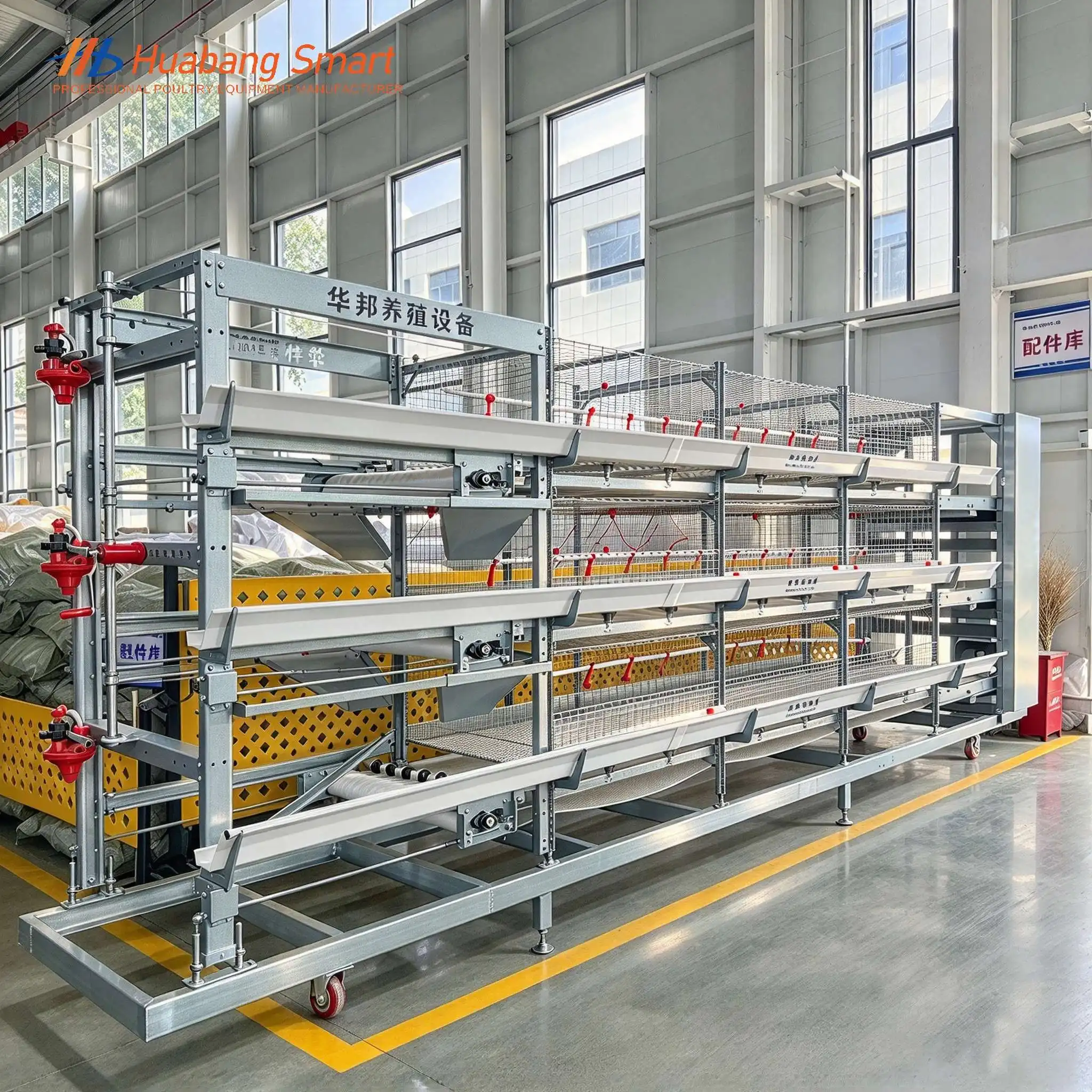
The 5cm elevated center structure in Huabang's Cages For Broiler Chicken creates natural air channels between tiers, reducing heat stress incidents even in tropical climates. When evaluating any broiler cage supplier, request documented airflow data for your specific tier count and building width — not generic claims.
Material Durability and Maintenance Costs
Hot-dip galvanized steel outperforms electro-galvanized alternatives by a significant margin. Electro-galvanized frames typically last four to six years before structural rust compromises integrity. Hot-dip galvanized frames, with their metallurgical zinc bond, provide fifteen to twenty years of corrosion resistance in high-humidity, high-ammonia barn environments. Huabang's frames use 275g/m² hot-dip galvanized steel combined with galvanized wire mesh — a specification worth verifying with any supplier you evaluate.
Automation Level and Labor Efficiency
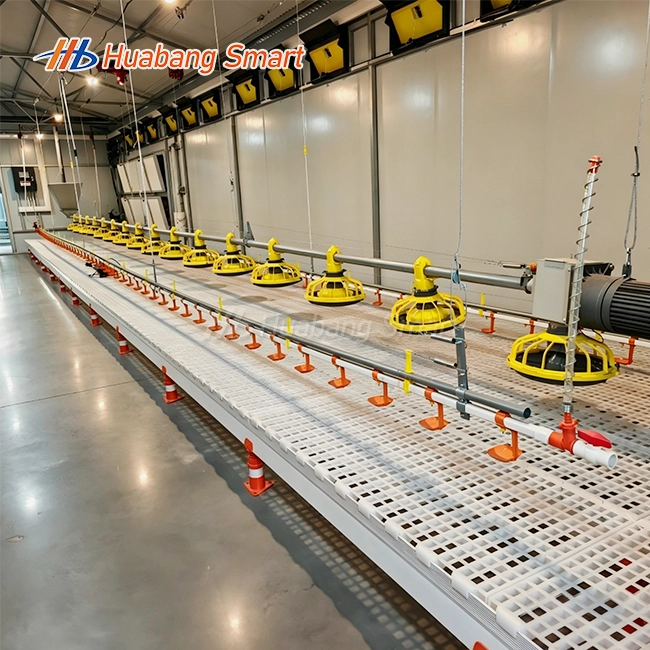
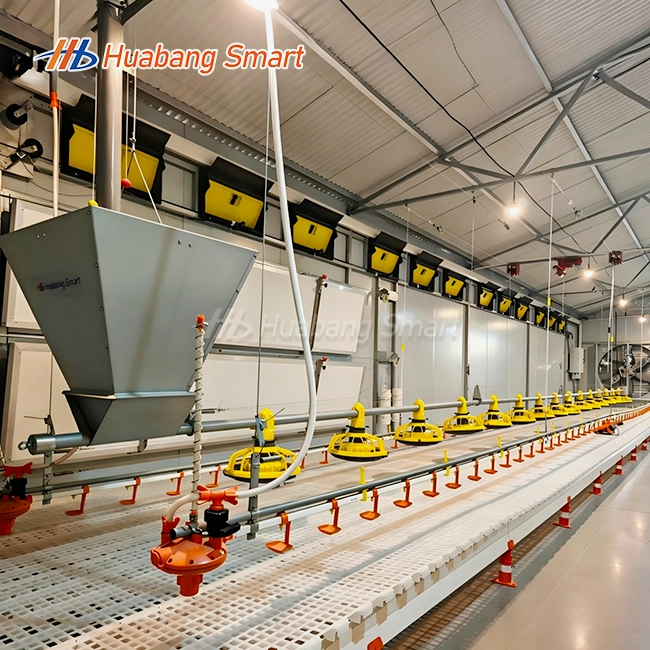
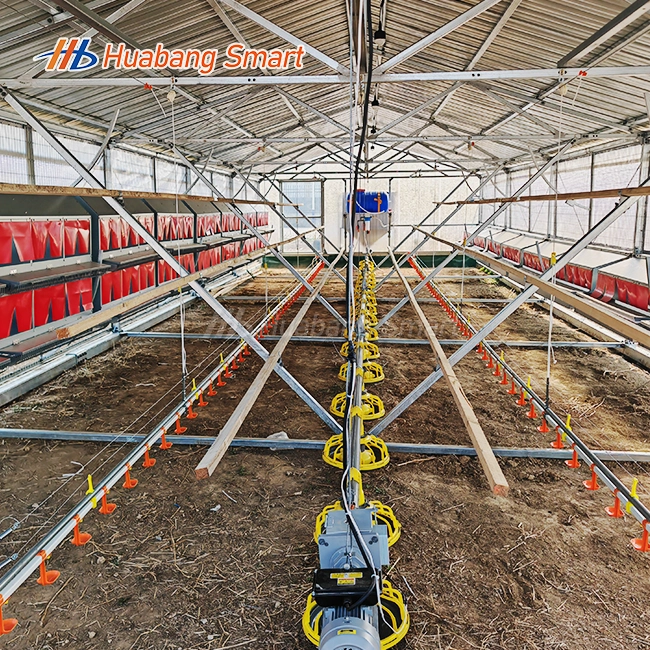
Automated feeding, nipple drinking lines, and manure belt removal are no longer premium add-ons for large farms — they are baseline requirements for competitive operations. Manual systems introduce feeding inconsistency that directly widens weight variance across a flock, complicating harvest scheduling and market grading.
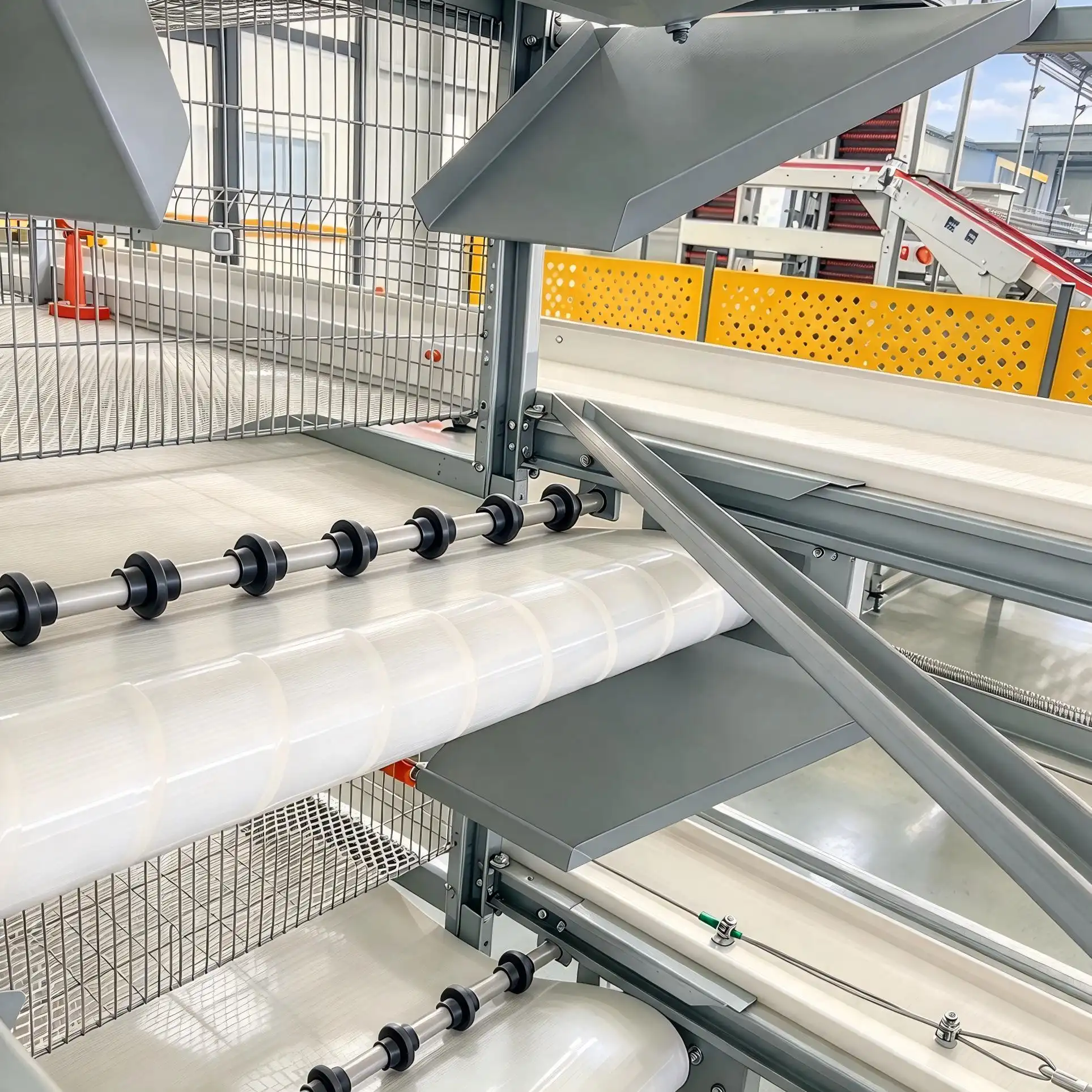
Comparing Broiler Chicken Cage Types to Optimize Farm Layout
Not every type of cage configuration works for every job. Your building's size, climate, production volume, and available capital should all play a role in your choice of cage type.
H-Type vs. A-Type Multi-Tier Systems
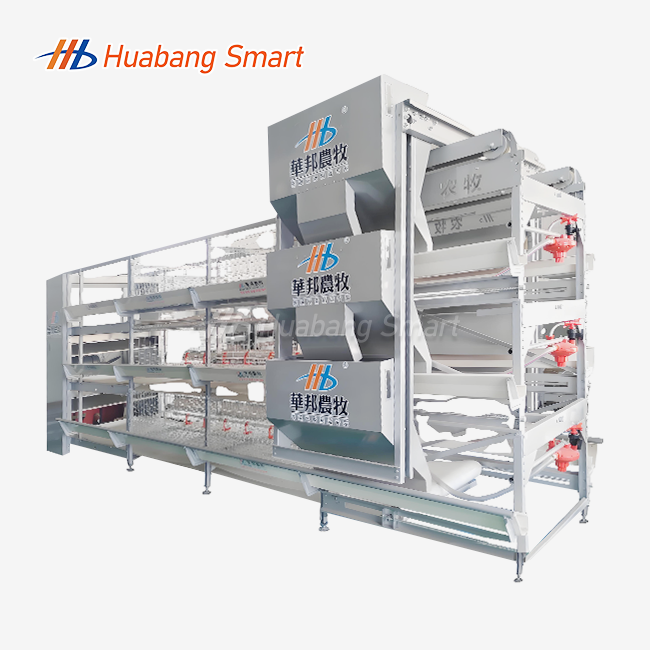
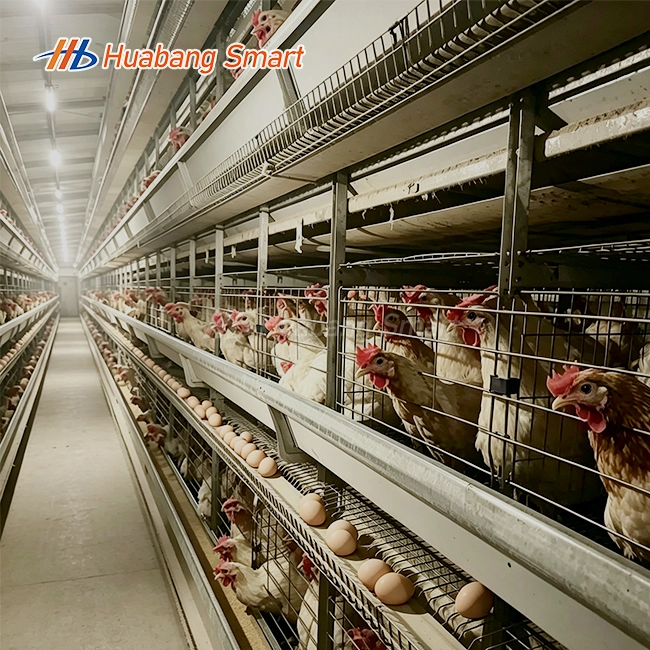
H-type battery cage systems can be stacked high in a house that is completely enclosed and has temperature control. They can handle three to eight tiers and are the best way to set them up for operations with more than 20,000 birds. A-type (stepped/pyramid) systems spread out horizontally, so each bird needs more floor space. However, they are easier to set up in houses with open sides. H-type systems are the most space-efficient way to make a lot of commercial products with automated manure management.
High-Capacity Configurations for Scalable Operations
Huabang's system can be set up to handle anywhere from 1,000 to more than 50,000 birds per installation. A standard 12m x 100m house with a four-tier H-type layout can house about 30,000 broilers while still meeting the required stocking rate. This scalability lets farm investors and EPC workers use the same designs in multiple places so they don't have to start from scratch with each project.
Energy-Efficient Cage Design and Sustainability
Automated environmental sensors built into cage systems use less energy because they keep target temperature and humidity ranges with little to no manual adjustment. Cutting down on heating or cooling cycles that aren't needed lowers running costs and helps meet the green certification goals that foreign buyers and export markets are increasingly demanding.
Procurement Considerations: How to Buy the Right Broiler Chicken Cages?
When making purchases of Cages For Broiler Chicken, it's not enough to just compare unit prices. A trustworthy supplier connection includes technical details, warranty terms, shipping times, and help after installation. These all have long-term cost effects.
Before committing to a supplier, you should think about these main procurement factors:
- Certification and quality assurance: ISO9001 and CE certification provide independent verification of manufacturing standards. Huabang holds both, with 49 registered technology patents supporting its cage system designs.
- Customization capability: OEM/ODM support based on technical drawings allows farm-specific adaptations for climate zone, building dimensions, and livestock type. This matters most for EPC contractors managing multi-country projects.
- Delivery timeline and logistics support: Huabang's standard production cycle runs 30–60 days, with export documentation and installation guidance included. For overseas projects, this predictability reduces project scheduling risk.
- After-sales service quality: A one-year international warranty paired with on-site installation guidance and long-term technical support reduces downtime risk during the critical commissioning phase.
All of these buying factors work together to show whether an investment in a cage system gives the expected return on investment (ROI) or causes ongoing upkeep costs that cut into profits over time. International projects have a lot less risk when they work with a Cages For Broiler Chicken supplier that has a history of exporting and offers technical support in multiple languages.
Maintenance and Operational Tips to Maximize Cage Space and Broiler Health
When you take care of your cage systems the right way, you protect your investment and keep the clean conditions that they are meant to provide.
Cleaning Protocols That Protect Cage Lifespan
All cage surfaces, waste belts, and feed tubs should be cleaned with high-pressure water and disinfectants every time a production cycle is over. Pathogens can't stick to smooth galvanized surfaces, and they dry quickly, so there is less time between flocks. Cleaning regularly is directly linked to lower mortality rates in later cycles.
Ventilation System Upkeep and Monitoring
To keep correct ammonia and temperature data, automated ventilation controllers need to calibrate sensors on a regular basis, usually every three to six months. Blockages in air intakes or worn belt drives on ventilation fans are common places where things go wrong that farm leaders should check every week while crops are growing.
Stocking Density Adjustments Across Growth Cycles
Young broiler chicks (days 1–14) need less cage space per bird than birds that are getting close to harvest weight. Some operations place the birds at a higher density at first and thin the flock between days 21 and 28 to keep the density at a level that is safe for the birds' welfare during the final growth phase. By planning this change into the structure of your cage, you can avoid the stress that comes from overcrowding and help the animals' weight be evenly distributed when they are harvested.
Conclusion
To choose the best Cages For Broiler Chicken housing systems, you need to think about how the animals will be treated, how long the materials will last, and how much they will cost to run in the long term. Multi-tier H-type cage configurations are consistently supported for large-scale commercial operations, especially those made of hot-dip galvanized steel and featuring built-in systems for feeding and waste management. The H-type cage system from Huabang Smart meets all of the standards in this guide. It is made of 275g/m² stainless steel, has thicker panels, and has been tested to last for 15 years. The cage system you choose today will affect your production costs for the next ten years, whether you are building a new facility or making changes to an old one.
FAQ What is the recommended stocking density for broiler cages?
Industry standards for bird care say that each bird should have 450 to 550 cm² of space, which equals 25 to 30 kg/m² of raising density at harvest weight. Going over these limits lowers the effectiveness of ventilation in each level and raises heat stress, which lowers daily weight gain and increases FCR.
How long do hot-dip galvanized broiler cages last?
With their stronger zinc bond and thicker coating, hot-dip galvanized cage frames usually last 15 to 20 years in commercial barns. Electro-galvanized options only last four to six years in the same conditions before rust breaks down the structure.
Can automated cage systems justify the higher upfront cost?
Yes, for jobs with more than 10,000 birds. According to Huabang's field data, automated methods for feeding and removing manure cut down on regular work by about 70%. Compared to human floor systems, production processes are cut by three to five days, which increases the amount of work that each building can do each year.
What features prevent breast blisters in cage-raised broilers?
Flexible plastic mesh overlays or high-density PP board floors on the base of the cage make the touch surface softer and flatter, which helps support the feet and breast meat. Huabang's method has a special bendable bottom mesh that is meant to lower the rate of carcass downgrade during the 42–45 day production cycle.
Request a Custom Cage Configuration from Huabang Smart
Smart's Cages For Broiler Chicken in Huabang For Broiler Chicken manufacturer team is ready to help you make a housing system that fits the exact size, temperature, and output goals of your farm. We offer solutions that work from the first day to the fifteenth year. Our products are ISO9001/CE certified; we can do OEM/ODM work, and we offer full turnkey project support in over 100 countries. To get a product catalog, sample, or project consultation, email our technical team at admin@huabangsmart.com or visit poultrycage.com.
References
1. Dawkins, M. S., Donnelly, C. A., & Jones, T. A. (2004). Chicken welfare is influenced more by housing conditions than by stocking density. Nature.
2. Shields, S., & Raj, A. B. M. (2010). A critical review of the welfare of broiler chickens in intensive commercial farming. World's Poultry Science Journal.
3. Sørensen, P., Su, G., & Kestin, S. C. (2000). Effects of housing on the welfare of broiler chickens. Poultry Science.
4. Olanrewaju, H. A., Dozier, W. A., Purswell, J. L., & Branton, S. L. (2010). Growth performance and physiological variables in broilers subjected to short-term elevated carbon dioxide concentrations. International Journal of Poultry Science.
5. Xiong, Y., Connelly, L., & Gates, R. S. (2017). Ammonia emissions and environmental control in broiler production facilities. Transactions of the ASABE.
6. FAO. (2019). Poultry Development Review: Broiler Production and Housing Systems. Food and Agriculture Organization of the United Nations.

USER EVALUATE
Here is the customer's evaluation of us