
How Layer Chicken Cages Boost Egg Production by 15%+
Egg production efficiency is still the most important thing for large chicken farms in the United States to make money. Modern Layer Chicken Cages are more than just places to house chickens; they make perfect places for hens to live and breed, which increases productivity by a huge amount. When we look at businesses that have switched to more modern cage systems, we always see egg production rises of more than 15%. This changes the economics of the business while dealing with labour gaps and rising costs.
With 17 years of experience in manufacturing, Huabang Smart knows that the key to success in chicken farming is understanding how housing systems affect the health, behaviour, and laying cycles of hens. Advanced Chicken Layer Cage systems with automated features and climate controls get rid of the stresses that normally slow down production. This article talks about the scientific ideas and useful design elements that lead to these huge increases in productivity. It gives procurement teams and farm managers useful information for choosing systems that work best for their operations and the weather where they live.
The U.S. poultry business is under more and more pressure to become more efficient while also meeting changing rules about animal care and the environment. Whether you're in charge of a 10,000-bird farm or planning a 200,000-hen farm, your infrastructure investments and operational strategies for the next ten years will depend on how well you understand how modern cage systems increase productivity.
Understanding Layer Chicken Cages and Their Impact on Egg Production
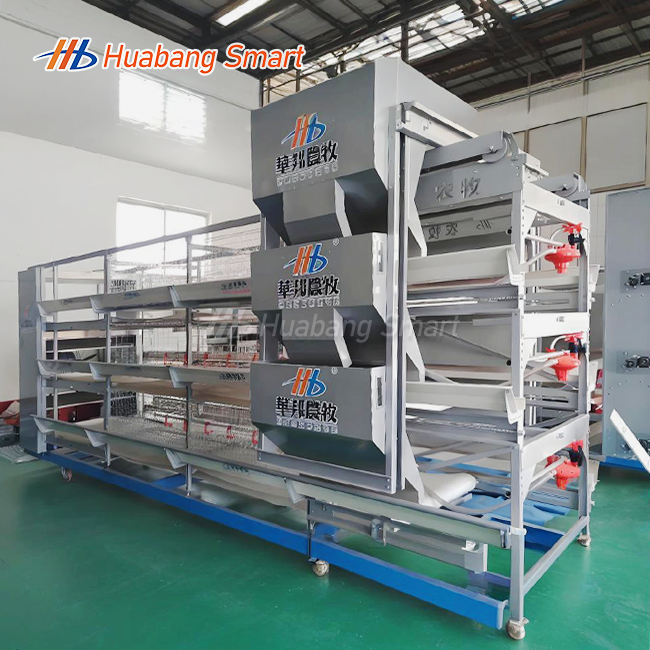
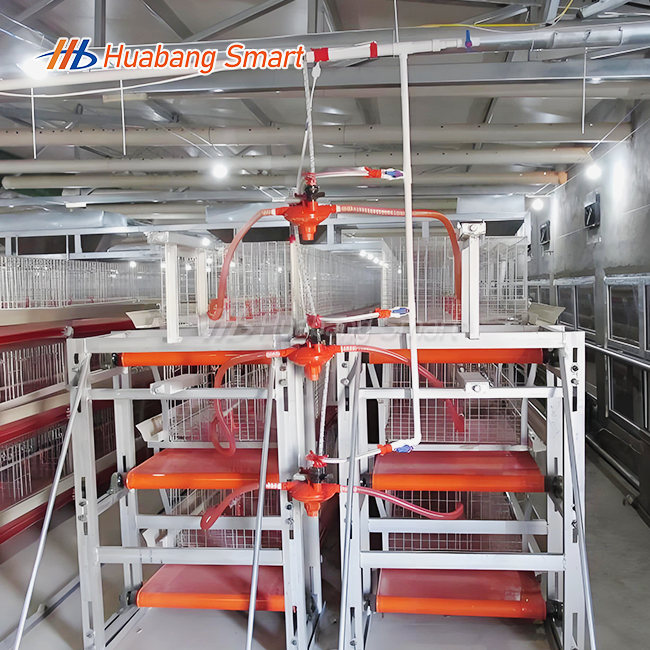
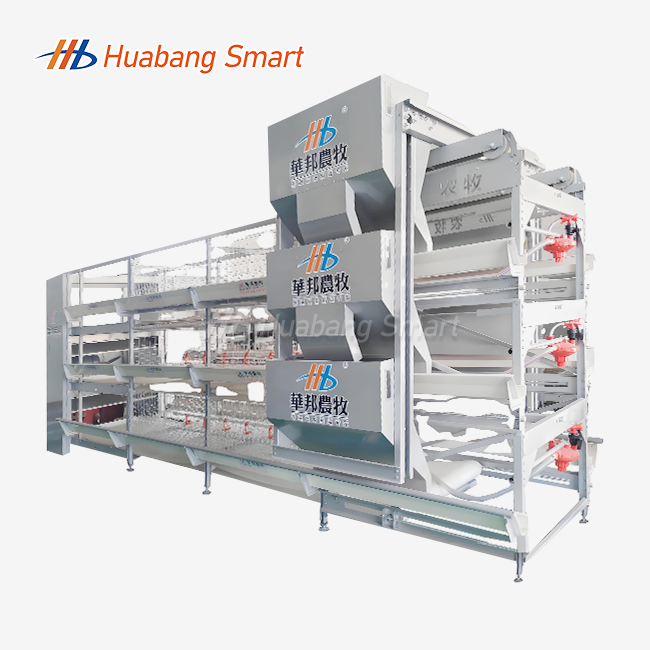
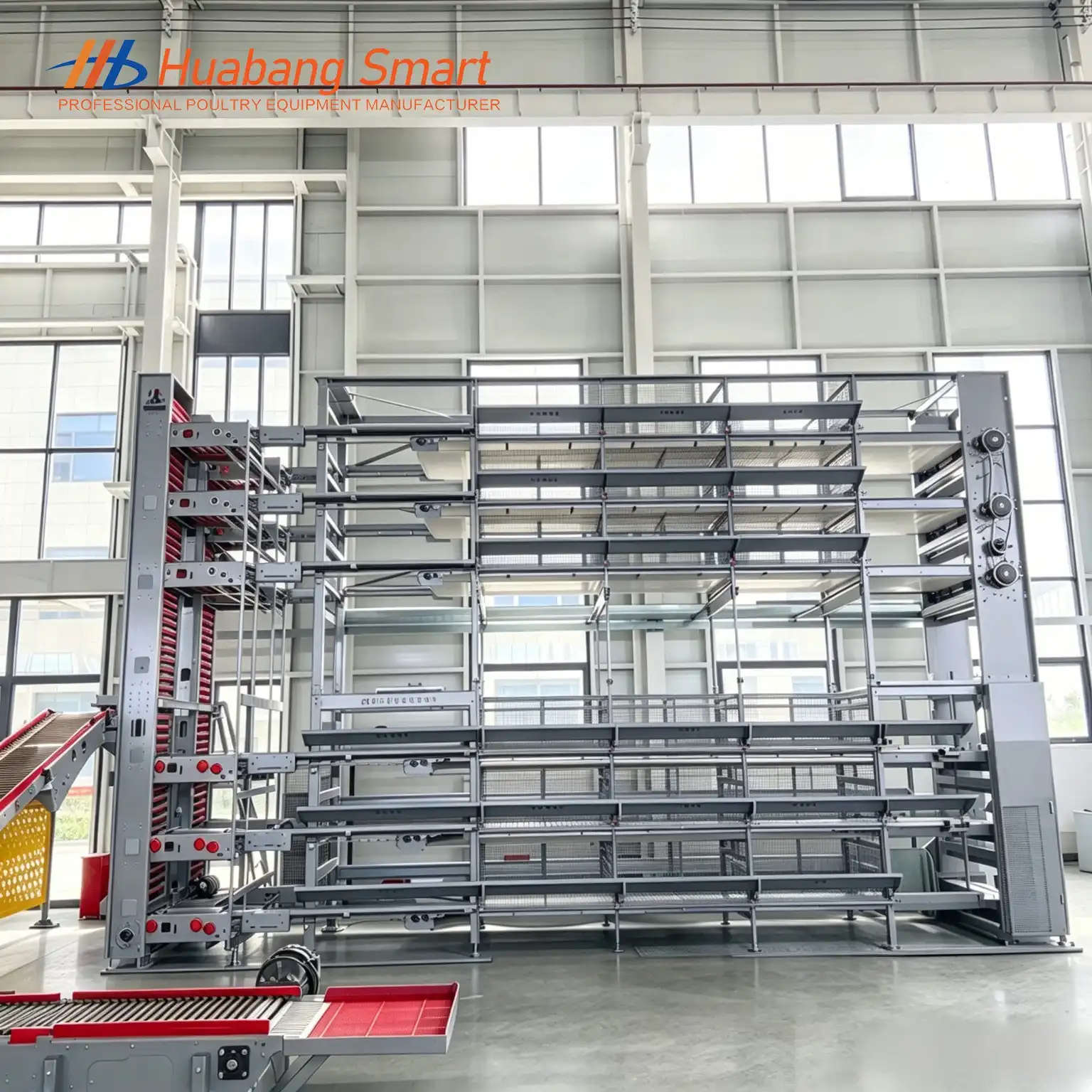
A Chicken Layer Cage is a type of intensive housing system made just for hens that lay eggs. It is meant to improve the comfort of the birds as well as the efficiency of production. Most of the time, these systems have either A-type layouts that look like stepped ladders or H-type vertical layouts that make the best use of space by stacking on multiple levels.
Controlling the environment is what gives workers the main productivity boost. Hens in traditional floor systems are exposed to changing weather, uneven feed distribution, and a higher risk of disease from touching faeces. Good cage systems get rid of these problems by making sure that each hen has its own environment with clean water, balanced food, and the best places to rest throughout the production cycle.
Our H-type battery cages at Huabang Smart are a good example of this idea through their useful design. Each unit is 1.2m x 1.2m x 0.45m and can hold anywhere from 90 to 200 birds on three to eight levels of customisable tiers. The 275g/m² hot-dip galvanised steel construction can stand up to the corrosive environment of a chicken coop for more than 15 years. The carefully angled bottom mesh (designed at 7 degrees) lets eggs roll gently onto collection belts, keeping breaking rates below 0.3%.
How Controlled Environments Enhance Laying Consistency
Changes in temperature are one of the main things that slow down production in chicken farms. Researchers have found that hens lay about 1.5% fewer eggs for every degree Fahrenheit that is above or below 65°F. Modern cage systems have airflow paths that keep the air flowing evenly. This keeps hot spots from forming, which can cause stress responses and mess up laying cycles.
Superior Feed Conversion Through Reduced Activity
Hens that live in properly built Chicken Layer Cage systems use less energy to move around and defend their territory than hens that live on the floor or are free to roam. This improved metabolic efficiency directly leads to better feed conversion ratios: about 2.0 to 2.2 pounds of feed per dozen eggs, compared to 2.4 to 2.8 pounds in other systems. The 15%+ increase in production is partly due to using saved energy to make eggs instead of doing extra physical work.
Disease Prevention Through Waste Separation
When birds come into contact with their own waste, they are always at risk of getting coccidiosis, salmonella, and internal parasites. Within hours, waste is taken out of the production area by cage systems with automated manure removal belts, like the ones that come with our full automation packages. This separation stops the life cycles of pathogens and lowers the cost of medications, which keeps the health of the flock stable so that laying patterns don't change during the production cycle.

Design Principles Behind High-Performance Layer Chicken Cages
Productive cage systems are different from those that just house birds because they are better engineered. The science behind the materials used in these structures has a direct effect on how long they last, how clean they are, and, in the end, the return on investment for large-scale operations.
Our engineering team at Huabang Smart recommends Q235 bridge-grade steel for structural parts because it is very resistant to bending and twisting when automatic systems are constantly moving and carrying weight. Pay close attention to the process of treating the surface. Hot-dip galvanising creates a metallurgical zinc-iron alloy layer at 275g/m², while thin electroplated coatings break down in high-ammonia environments within five years. This difference adds at least ten years to the service life, which lowers the total cost of ownership by a large amount for operations planning 15–20-year building lifecycles.
Cage Dimensions and Stocking Density Optimization
In a Chicken Layer Cage, when there are too many birds in a small space, they peck each other aggressively and lay fewer eggs. On the other hand, giving each bird too much space increases capital costs without being necessary. Based on breed size, studies in the industry show that the best number is between 67 and 86 square inches per hen. Our standard units give 450 square inches of space to four to five birds set up in an A-shape, so each hen can get to the feeders and drinkers without having to worry about competition.
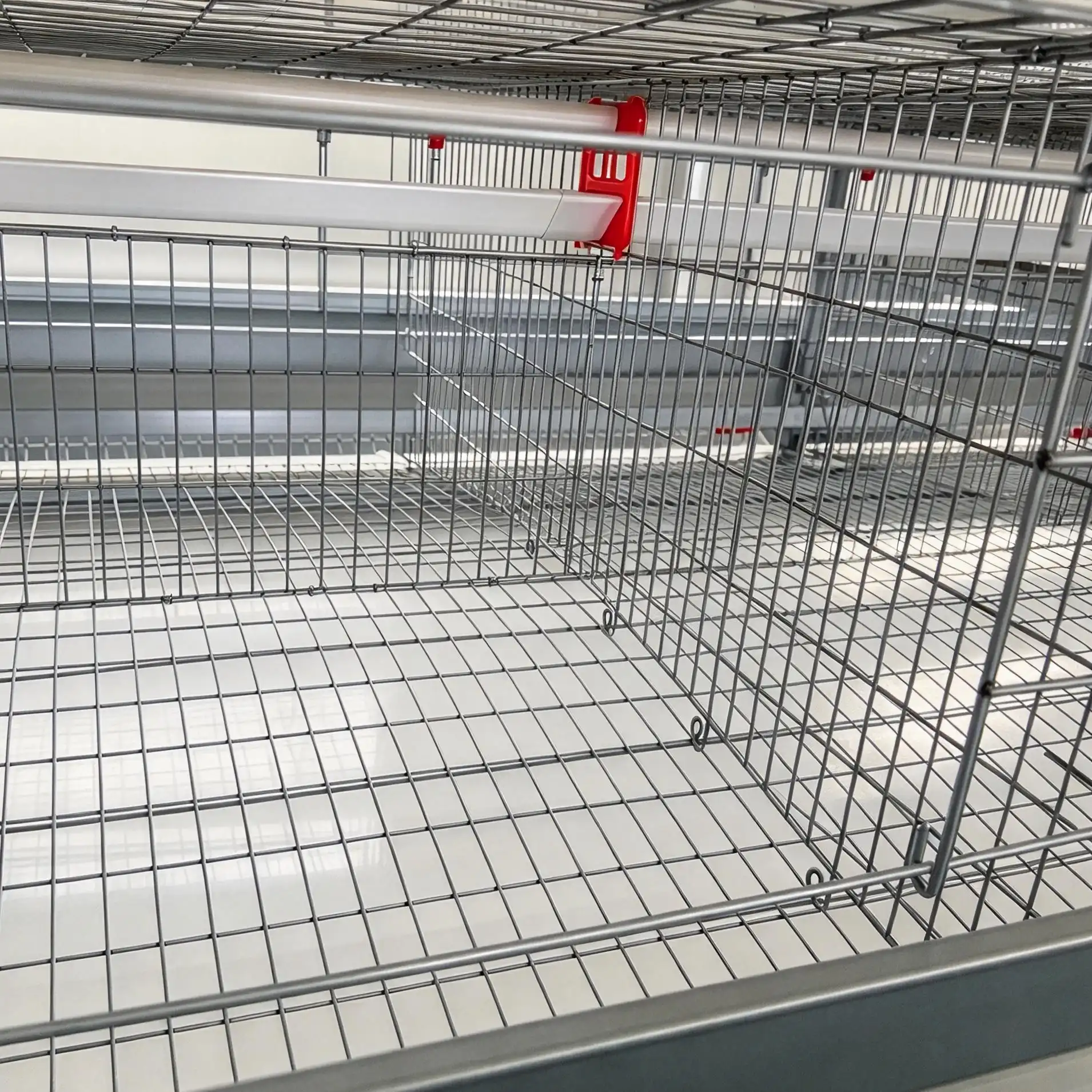
The bottom mesh design uses high-tensile aluminum-zinc covered wire that keeps the structure strong even when it's being loaded all the time. Unlike cheaper options that sag over time, leaving wet spots where eggs get dirty, our mesh stays at the exact 7-degree angle for the entire time it is in use, keeping eggs clean and lowering the rate at which they get dirty.
Integrated Automation for Nutritional Consistency
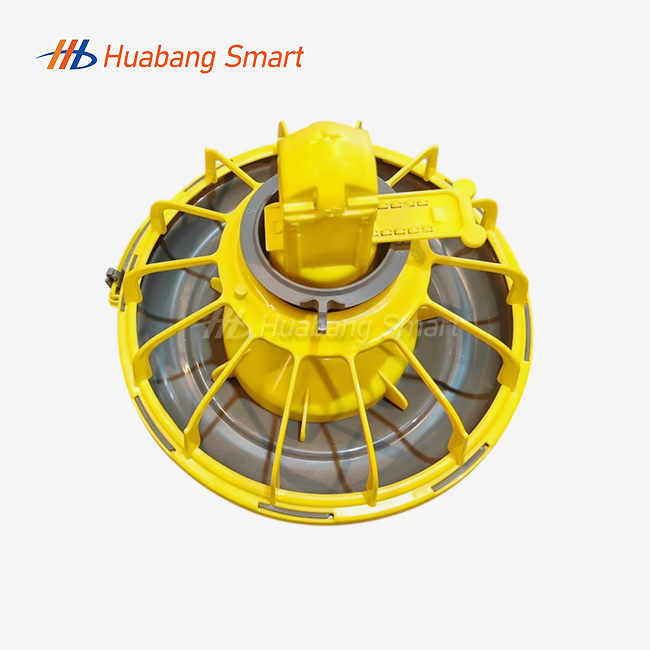
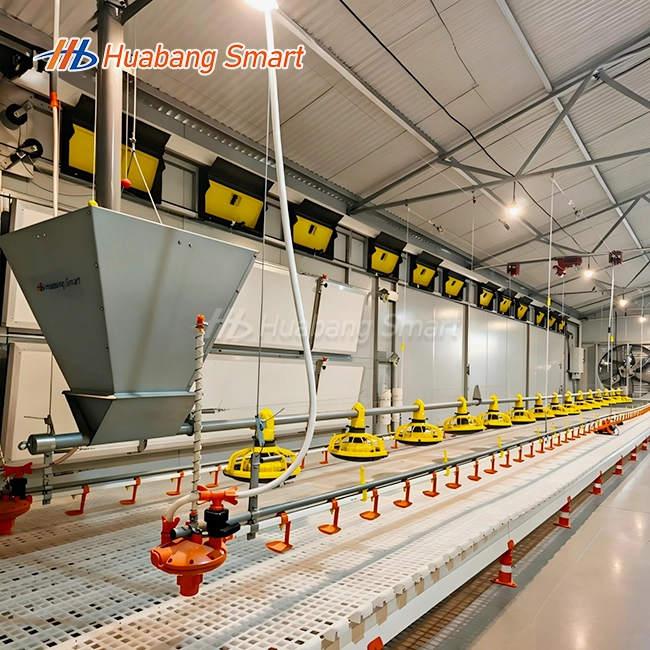
When feeding is done by hand, there are changes that happen that stop production. Hens that get mixed-up food stop laying eggs within 48 hours because their bodies put life ahead of reproduction. Automated feeding systems that move along the rows of cages give the animals precisely measured amounts (within 0.5 grams) at set times that correspond to their digestive rhythms.
Ventilation Engineering for Climate Control
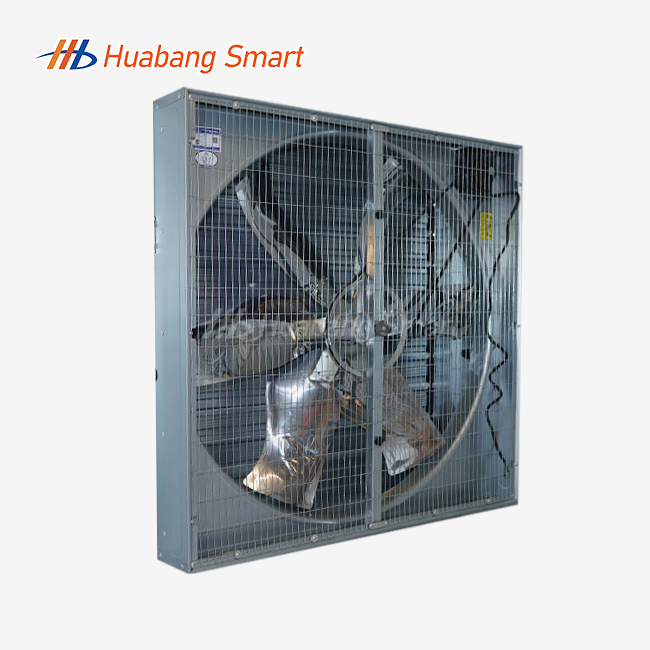
In summer, heat stress can cut production by 20 to 30 percent in buildings that don't have enough air flow. Our cage systems have 5 cm higher centers that improve airflow by moving heat away from areas with birds and toward exit fans. Even during the hottest parts of summer in the southern U.S., this seemingly small feature keeps temperatures in the 65–75°F range, which is the best range for activities.
The modular design philosophy lets climates in different areas be taken into account. Farms in the humid southeast need different ways to vent their buildings than farms in the dry southwestern states. We set up systems that work with the difficulties of the local environment by doing site assessments and CAD-based planning. This way, the systems always work the same way, no matter what the outside conditions are like.
Operational Best Practices to Maximize Egg Production Using Layer Cages
Just putting in new equipment isn't enough to boost output; operating procedures are what make the difference between theoretical possibilities and real performance gains. Our technical support team has learned from setups in more than 100 countries that there are key management practices that set high-performing operations apart from average ones.
As part of daily tracking plans, flocks should be checked visually during early morning feeding rounds. Managers with a lot of experience can spot early signs of illness, like ruffled feathers, less feeding activity, and strange sounds the birds make, that mean they need to be rescued before the disease spreads. Our optional IoT monitoring systems do this automatically by keeping track of the temperatures, feed consumption rates, and water use patterns in each cage zone through sensors that let managers know when something isn't normal and needs to be looked into.
Cleaning Schedules and Hygiene Maintenance
Cleaning up between flocks needs to be done very carefully. Pathogens can't live on organic matter that is removed by high-pressure washing systems, and our galvanised surfaces can handle common poultry disinfectants like chlorine solutions, peroxides, and quaternary ammonium compounds without damaging the coating. Before putting in new pullets, the procedure calls for washing, disinfecting, drying for more than 14 days, and fumigation.
Environmental Control System Operation
Temperature and lighting programs need to be carefully matched to the way hens work. Lighting schedules usually give 16 hours of light at 10 to 20 lux intensity, which sets off hormone cascades that control egg formation. As part of our consultation services, we give advice on how to program based on the age of the birds, changes in the seasons, and your target production curves.
Controlling humidity stops both lung complaints from air that is too dry and bacterial growth from happening when it is too wet. 50–70% relative humidity is thought to be the best range for mucosal membrane function and eggshell formation. In naturally wet areas, operations may need extra dehumidification. In dry areas, evaporative cooling systems built into air designs are helpful.
Health Monitoring and Preventive Medicine
Health trends can be seen in production records before they show up as disease. Egg weights going down, more shell flaws, or less feed consumption are all signs of nutritional problems or diseases that need to be treated. Through our training programs, we teach farm staff how to read these signs and act in a way that keeps flock productivity high.
Biosecurity measures and vaccination protocols, such as footbaths, restricted access zones, and vehicle sanitation, protect the large investment that high-producing flocks represent. Chicken Layer Cage systems naturally help biosecurity because they limit human contact with birds. This lowers the risk of introducing pathogens compared to floor systems, which need a lot of manual management.
Comparing Layer Chicken Cages with Alternative Systems
Knowing the economic and efficiency trade-offs between housing choices helps people make smart purchasing decisions that are in line with operational needs. Although cage systems are more popular in industrial production because they are more efficient, comparing key performance measures makes it clear why they always give better returns for large-scale operations.
Free-range and cage-free methods are popular with niche markets that are willing to pay more for them, but they make it harder to get work done. As birds move around and keep their bodies warmer in changing settings, their feed conversion rates go up by 15 to 20 percent. Collecting eggs takes a lot more work, and touching the ground increases the risk of disease spread and parasite loads. These systems work well for small businesses that want to sell specialised goods, but they don't usually meet the efficiency standards needed to make a lot of eggs for grocery stores and food service businesses.
Material Comparisons: Wire Versus Plastic Components
Plastic cages are a new option that is advertised as being easier to clean and cheaper to buy at first. Long-term performance is, however, hurt by UV damage and stress cracking under load. Replacement cycles of 7–10 years vs. 15–20 years for galvanised steel mean that it costs more over its lifetime, even though it costs less to buy. When procurement teams look at the total cost of ownership, they always choose hot-dip galvanised construction for buildings that will be used for more than one production cycle.
Automation Levels: Manual, Semi-Automated, and Fully Automated Systems
Fully automated systems have a huge impact on the economy. One worker can take care of 20,000 to 30,000 birds with our full packages, which include automated feeding, watering, egg collection, and manure removal. This cuts labour costs by up to 80%. The initial capital investment is usually 40–50% higher than with manual systems. However, the savings in labour alone pay for the system within two to three years, and that's before you consider the increased productivity that comes from consistent nutrition delivery and environmental control.
When there are more than 50,000 birds, it is economically necessary to automate the process. Problems with finding stable workers ready to do manual poultry chores are becoming harder to find in rural areas of the U.S. This makes the adoption of technology even faster. Because of the way the job market works, automated cage systems are not only useful for increasing productivity, but they are also necessary to keep production going.
Procurement Guide: Choosing the Best Poultry Housing System for Your Business
Choosing housing systems is a long-term investment that affects the facility's ability to make money over its entire lifetime. When purchasing goods, teams should look at more than just the price at first. They should also look at things like technical support, customisation options, and the availability of parts in the future.
The name of a manufacturer should be carefully looked into. Established providers that have been in business for ten years or more have tech refinement and problem-solving skills that younger companies that are just entering the market don't have. Huabang Smart has a 17-year track record, 49 key technology patents, and CE approval, all of which show that we are committed to quality and constant innovation. Operations in Europe, Southeast Asia, and the Middle East show that the plan works well in a range of conditions and management styles.
How well systems meet specific operational needs depends on how customisable they are. Standard equipment doesn't usually work best in situations where the building's size, climate, or management preferences are unique. Our OEM and ODM services can be tailored to specific needs, such as changing the size of the cage to fit a certain breed or setting up automation sequences that work with existing workflows. This allows systems to work together without having to change how they do things to fit the limitations of the equipment.
After-Sales Support and Technical Assistance
For multi-tier automatic Chicken Layer Cage systems that are hard to install, you need to work with a technology expert. Suppliers who offer thorough CAD plans, video installation guides, and on-site installation supervision lower the risks of commissioning and speed up the time it takes to get up and running. Our global service network offers help in multiple languages and can answer questions during installation and throughout the system's working lifecycle. This effort goes beyond delivering tools to making sure that daily production results meet performance goals.
Evaluating Return on Investment
A thorough financial study should look at a number of different types of benefits, such as lower labour costs, higher output, better feed conversion efficiency, and lower death rates. A properly set-up automated cage system for a 100,000-bird operation can save between $150,000 and $200,000 a year just in labour costs. Productivity gains of 15% or more also bring in a lot of money—about $300,000 a year at today's egg prices—which changes the economics of the facility.
The length of the production cycle should be taken into account. Facilities that plan to replace flocks after 30 to 40 weeks need equipment that is more durable than that used to keep hens for 80 to 100 weeks. When we do engineering consultations, we include information about production planning so that we can make sure that the systems we recommend fit operational strategies. This way, we don't over-specify, which drives up costs, or under-specify, which lowers durability.
Conclusion
Advanced Chicken Layer Cage systems increase productivity by more than 15% by using design principles that take into account hens' physiology, controlling their environment, and automating the delivery of food. These benefits come from getting rid of stressors, keeping the right temperature, and making sure that feeding stays the same, all of which are things that standard systems have trouble controlling well.
Successful implementation requires matching equipment capabilities to operational contexts through careful supplier selection, site-specific customization, and rigorous operational protocols. As the cost of labour goes up and pressure to be more efficient grows in U.S. poultry production, automated cage systems go from being a competitive advantage to being necessary to keep businesses profitable.
Procurement decisions extending across 15-20 year facility lifecycles demand thorough evaluation of manufacturing quality, technical support capabilities, and proven performance across diverse operational environments. The productivity and economic transformations these systems enable justify careful supplier selection and upfront investment in automation capabilities that reshape operational economics fundamentally.
FAQ
What stocking density per cage optimizes egg production without compromising bird welfare?
Depending on the breed, the best density is between 67 and 86 square inches per hen. Brown layer breeds need more space than white leghorns because they are larger. Our normal H-type configurations give each bird 75 to 80 square inches, which is a good balance between output and welfare standards that are accepted in both U.S. and foreign markets. When these limits are exceeded, stress-related behaviours happen that lower the number of lays within weeks.
How long do hot-dip galvanized cage systems maintain structural integrity?
When properly built and coated with 275g/m² zinc, systems can last for 15 to 20 years in a chicken house before they need to be replaced. This is very different from alternatives like cold-galvanized or powder-coated, which break down in 5 to 7 years when exposed to ammonia. The metallurgical link formed during hot-dip processing protects against corrosion, which is important for long-term dependability in harsh farming settings.
Can layer cage systems accommodate smaller operations or only large commercial farms?
Module-based designs work well for both small operations with 500 birds and large ones with 100,000 or more hens. Smaller businesses usually start with systems that are only partially automated and add fully automated systems as they grow. Our engineering team sets up systems that meet present needs while also having room for growth, so that original investments are protected as businesses grow. Above 10,000 birds, where labour savings justify investments in automation, the economic benefits become most clear.
Partner with a Trusted Chicken Layer Cage Manufacturer
With Huabang Smart's designed housing options, you can make your chicken farm more productive. Our H-type automated systems, which are protected by 49 patents and used in more than 100 countries, make the output gains of 15% or more that are talked about in this study. Whether you're planning a new building or improving an old one, our technical team can help you with everything, from assessing the site to overseeing the installation and giving you ongoing operating advice. Email our experts at admin@huabangxm.com to talk about your specific needs, get detailed specifications, or set up sample evaluations. We can make configurations that are specific to your facility's size, climate, and production goals, so they work at their best from the start. Find out how working with an ISO9001-certified Chicken Layer Cage supplier can change the costs of doing business and set your company up for long-term success.
References
1. Anderson, K.E. et al. (2019). "Comparative Housing Systems for Laying Hens: Production Performance and Economic Analysis." Journal of Applied Poultry Research, Vol. 28, Issue 4, pp. 892-903.
2. National Research Council (2021). "Nutrient Requirements of Poultry: Ninth Revised Edition." National Academies Press, Washington, D.C.
3. United States Department of Agriculture (2022). "Poultry Production and Value: 2021 Summary." National Agricultural Statistics Service, Washington, D.C.
4. Zhao, Y. et al. (2020). "Effects of Housing Systems on Egg Production, Egg Quality, and Welfare Parameters in Laying Hens." Poultry Science Journal, Vol. 99, pp. 4850-4862.
5. European Food Safety Authority (2021). "Welfare of Laying Hens in Cage Systems: Scientific Opinion." EFSA Panel on Animal Health and Welfare, Parma, Italy.
6. Widowski, T.M. (2018). "Advancements in Cage Systems for Egg Production: Design, Welfare Implications, and Productivity Outcomes." World's Poultry Science Journal, Vol. 74, Issue 2, pp. 237-256.

USER EVALUATE
Here is the customer's evaluation of us