
How to Select a Commercial Mobile Chicken Coop for Large-Scale Poultry Farms?
If you have a large chicken farm, choosing a Commercial Mobile Chicken Coop requires you to first consider the type of flock you have, the number of birds, the condition of the pasture, and how often you move the chickens. Then, look at the frame material, corrosion resistance, ventilation, and level of automation. Check not only the advertised bird capacity but also the actual usable capacity. Make sure the seller provides detailed plans, a warranty, replacement parts, and installation support. Finally, compare the total cost per bird over the unit's useful life rather than focusing only on the initial purchase price. Below, I'll show you step by step how we build our own mobile chicken coop at Huabang Smart.
Define Your Farm Requirements Before Comparing Coop Models
Flock Type, Density, and Certification Needs
Begin with the birds. Layer, broiler, and breeder flocks need different places to nest, eat, and breathe, and the amount of space they need changes as the birds get older. Make a list of your desired store density, the time of year you want to produce, and any certifications you want to get. If you want to sell organic eggs in the US, the USDA's 7 CFR Part 205 rules say that chickens must be able to go outside, so a design that is ready for pasture is important from the start. You won't have to pay for things you won't use if you have a short written plan. It also helps all of the suppliers give the same price for the job.
Site Conditions and Movement Frequency
After that, walk the land. Find out the size of the meadow, its slope, the type of dirt, how well it drains, the width of the gate, and how far it is from the road to the field. Hitch and wheels are put under more stress on soft, wet ground than on dry gravel. After that, choose how often you'll move. Grazing that regenerates itself every one to three days means that the animals have to be moved a lot, which puts a lot of stress on the towing system and frame. If you move once a week, the unit might not work as well as if you move every day. Set the date and time before you choose the models.
Capacity Planning and Future Expansion
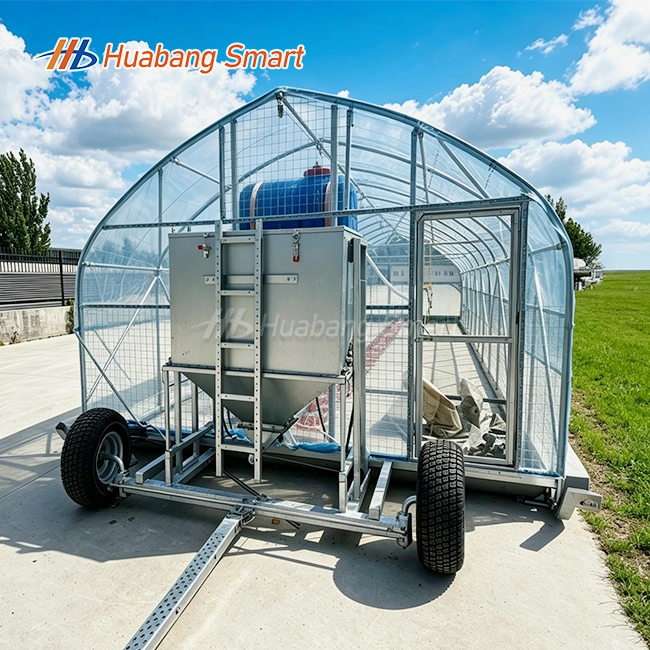
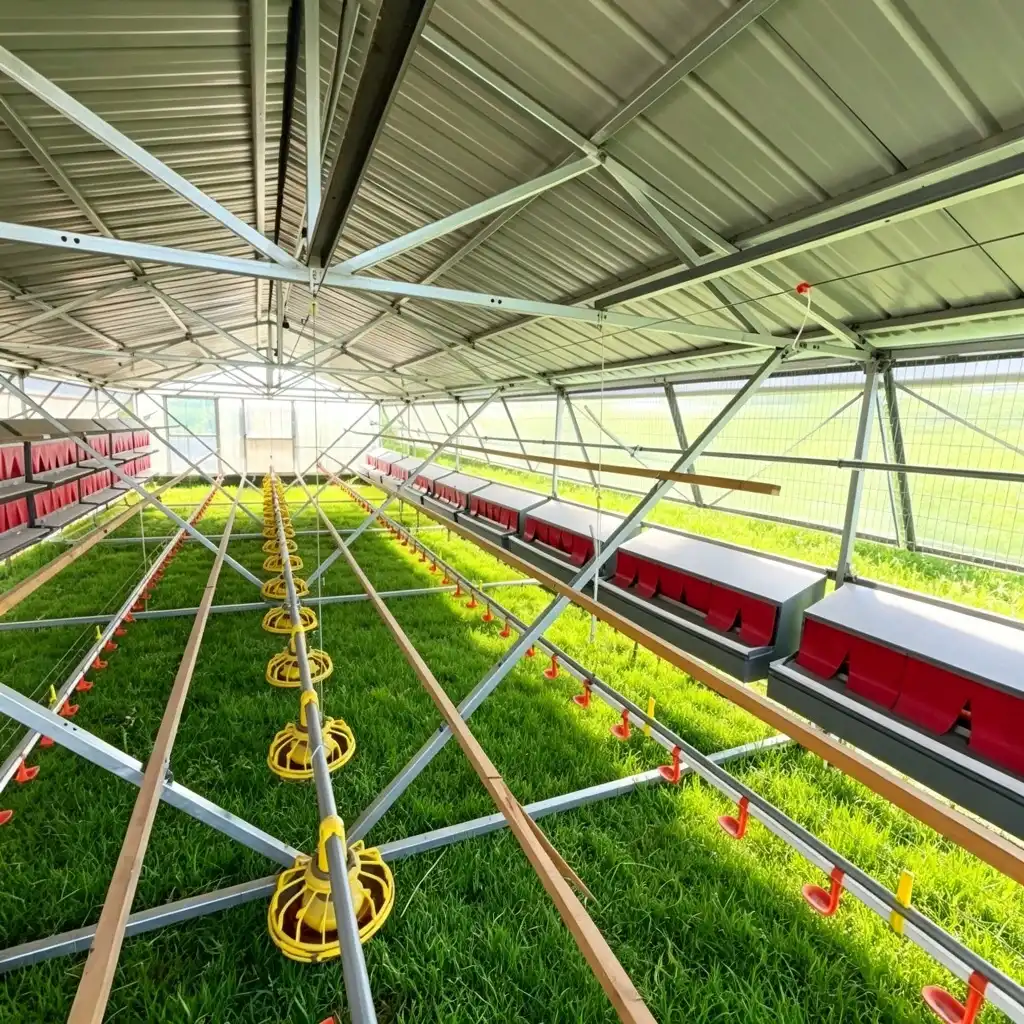
The brochure's highest bird count rarely matches what can actually be held. Measure the floor space that can be used, the length of the feeders and drinkers, and the space in the aisles for workers. Our 15m x 5m x 2.8m Huabang Smart mobile unit can house 700 to 900 birds. If your plan needs something different, you can get custom measurements. If you want to expand, find out if the units can be linked together like modules. That way, the same design can serve 1,000 birds now and many more in the future. By planning for growth now, you can avoid having to fix old models or mix models that don't work together later on.
Core Selection Criteria for a Commercial Mobile Chicken Coop
Frame Materials and Corrosion Resistance
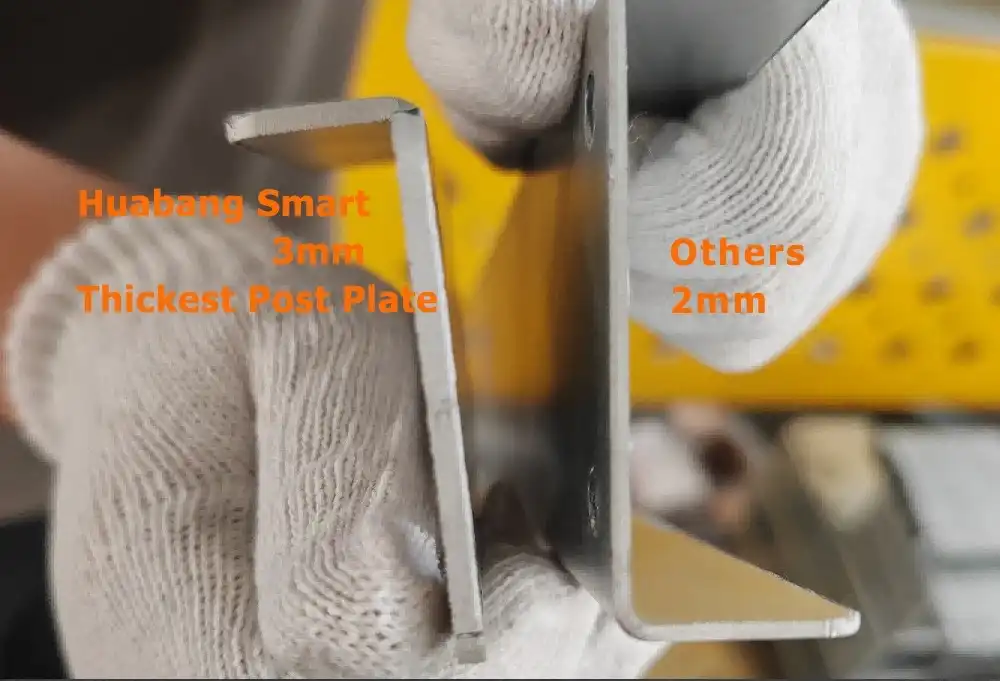
The quality of the steel determines how long a poultry house will last because it has to deal with ammonia, water, UV light, and constant movement. When evaluating a Commercial Mobile Chicken Coop, do not focus on adjectives, but ask for coating data. Standards for hot-dip galvanizing, like ASTM A123, specify the zinc coating requirements for steel, allowing you to compare products from different suppliers. The panels on our units are 275g hot-dip galvanized, the frame is made of 3mm extra-thick hot-dip galvanized steel, and the wire mesh system is aluminum-metalized with zinc. With proper care, we expect the building to last for 20 years.
Weatherproofing and Predator Protection
Outside, birds have to deal with wind, rain, and animals every day. Ground anchoring points, sealed roof joints, and tight mesh are some of the things you should look for. Has a low center of gravity. It also has heavy-duty ground stakes. With pressurized water tests, the seals on roof joints and access panels are checked to make sure they keep water out of electronics and insulation. The flock is safe because of reinforced predator-proof mesh. Electric fencing can be added as an extra safety measure in orchards or other places where animals are likely to be eaten. Always make sure the seller knows how much wind you need in your area before you place an order.
Mobility Systems and Towing Compatibility
Different types of ground are good for different types of mobile homes that move on towed wheels, skids, or modular sections. Check the total weight of the trailer, the type of hitch, the design of the axles, the ground clearance, the turning radius, and how the hitch comes off. Our system uses a hitch that works with most 40–60HP tractors and ATVs, so you can usually use things you already have. A mobile home doesn't need as much permanent infrastructure as a fixed barn, but it does need more planning for access lanes and moving. You should ask any provider for a heavy pulling weight on the ground where you live, since an empty weight on flat pavement doesn't tell you much.
Here is how our specifications line up with the criteria above:
| Parameter | Huabang Smart Mobile Unit |
|---|---|
| Capacity | 700–900 birds per unit |
| Dimensions | 15m × 5m × 2.8m (customizable) |
| Frame and panels | 275g hot-dip galvanized panels, 3mm galvanized frame |
| Mesh | Aluminum-zinc coated wire |
| Power | Solar-powered 12V/24V system |
| Automation | Feeding, watering, ventilation control |
| Warranty | One year |
| Certifications | ISO9001, CE |
This table gives your engineers and buyers a fixed set of numbers to compare against other quotes.
Ventilation, Interior Layout, and Automation
Ventilation and Climate Control
Airflow is good for birds' health. When there isn't enough airflow, humidity, dust, heat, and ammonia can build up. According to a study published in Poultry Science, higher levels of ammonia are linked to poorer performance in broilers. When selecting a Commercial Mobile Chicken Coop, check for adjustable vents, curtains, ridge holes, protected windows, and fans. The 5 cm raised center in our design improves airflow and cooling, while the solar system runs timed ventilation controls. Temperature and humidity are tracked in real time, and our product data shows that this controlkeeps temperature and humidity stable, which protects feed conversion. In harsh climates, insulation only works effectively if it allows proper airflow and prevents condensation from forming.
Interior Layout for Daily Work
Every day, a good layout saves work. Check the ramps, doors, nest boxes, perches, and aisles to make it easy to collect, inspect, load, and clean the eggs. Our raised slatted floor keeps birds off of their poop, which helps us meet our goals for antibiotic-free and clean production. UV-resistant plastic parts let in natural light, and we test them by putting them through fast aging. Take a tour of the inside with your crew or look at the drawings and picture doing everyday things like catching birds, refilling feeders, and picking up litter. It will cost you work hours every week if you have to bend over or squeeze past tools to do a job.
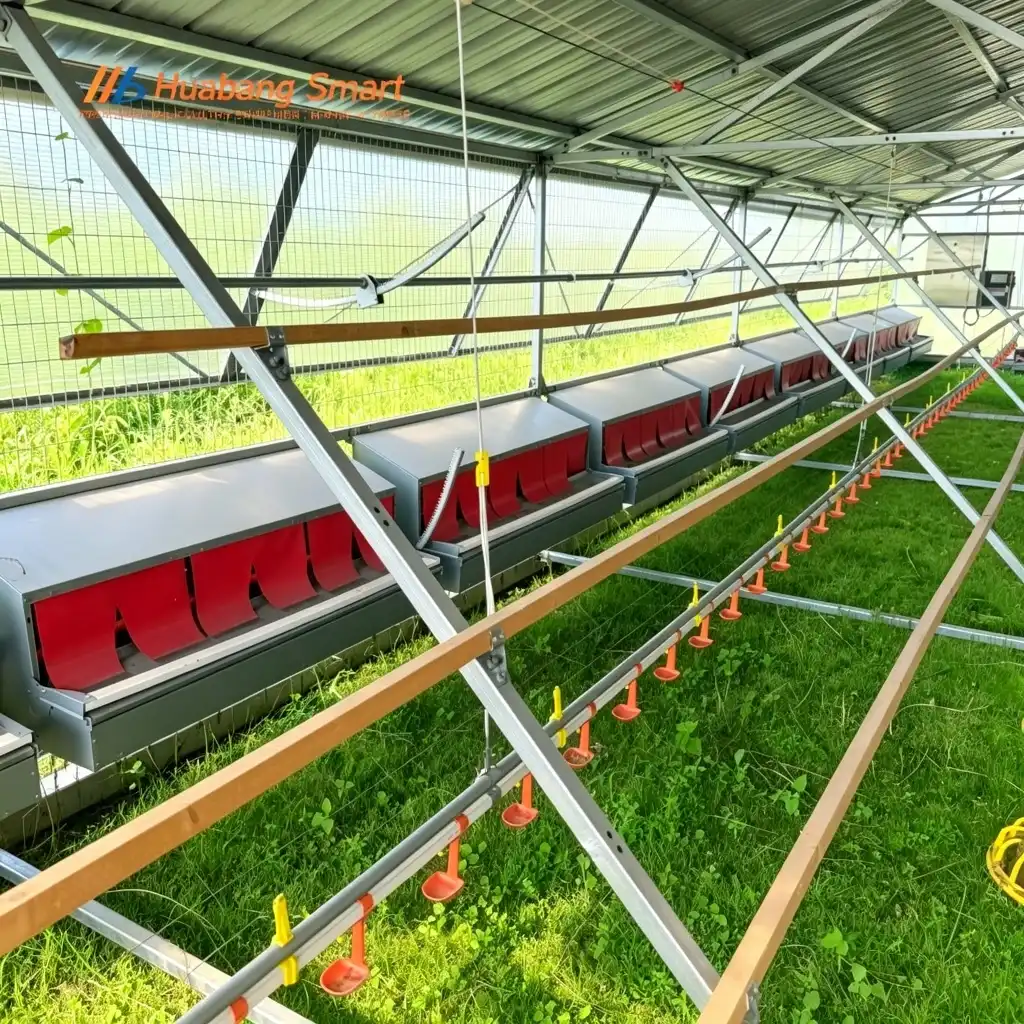
Solar Power, Feeding, and Watering Automation
Automation only makes sense when it helps with real work issues. The 12V/24V system in our mobile home is powered by the sun and controls the nipple drinking lines, automatic feeding, and timed ventilation. In remote pastures without access to the grid, that works. When compared to regular housing, our systems that feed and water animals require about 70% less work. Discover if there is a way to override the system manually, fault alerts, data logging, backup power, and extra sensors or controllers. Our solar systems have been tested in ambient temperatures from −20 °C to +50 °C and have passed every time. IoT controllers keep track of how much power the batteries are getting, which lets operators know when they need to do maintenance before something goes wrong.
Cost, Supplier Strength, and Decision Matrix
Total Cost Beyond the Purchase Price
Price tags don't always show how much something costs. Add to that the delivery, unloading, installation, towing equipment, solar and automation parts, feeders, drinkers, customization, spare parts, and upkeep. Then, split the total amount by the number of birds that can be used and the number of output rounds. Automation that saves workers' time, better use of pastures, and lower spending on permanent infrastructure are all parts of the return calculation. So are the number of repairs and the amount of downtime. Over ten years, a cheap unit that breaks down often or is hard to move may have cost more than a strong one. To make it fair when you compare offers, ask for a quote that breaks down what each line includes.
Evaluating Manufacturers and OEM Capability
A good supplier backs up what it says with proof. Ask for detailed drawings, lists of materials, instructions, guarantee terms, records of inspections, and names of people who have bought similar things in the past. Huabang Smart is a company based in Qingzhou, Shandong, that has been designing and making things for 17 years. It is certified by ISO9001 and CE and more than 50 technology patents. We can do OEM and ODM orders, and we can even make things from your own drawings. We also offer samples, installation services, and technical advice for chicken farming. It takes 30 to 60 days to make something, and our support network covers more than 100 countries. Distributors and EPC workers should also find out about minimum order numbers, the ability to repeat the process, and plans for extra parts.
Using a Weighted Decision Matrix
When evaluating a Commercial Mobile Chicken Coop, a weighted matrix helps ensure that purchasing decisions are based on practical performance rather than price or appearance alone. Consider factors such as capacity, structural durability, airflow, portability, predator protection, automation, maintenance requirements, delivery, warranty, and technical support. Assign each factor a score from 1 to 5, then calculate the weighted score for each supplier. Safety, reliability, and production continuity should carry more weight than appearance. The weighting will vary depending on the project: layer farms typically prioritize nesting facilities and egg collection, broiler farms focus more on airflow and ease of cleaning, while OEM buyers place greater emphasis on product consistency and customization. Have the farm manager, engineer, and procurement lead evaluate each supplier independently, then compare their scores to identify differences in priorities or expectations early in the selection process.
Installation, Maintenance, and Mistakes to Avoid
Preparing for Delivery and Commissioning
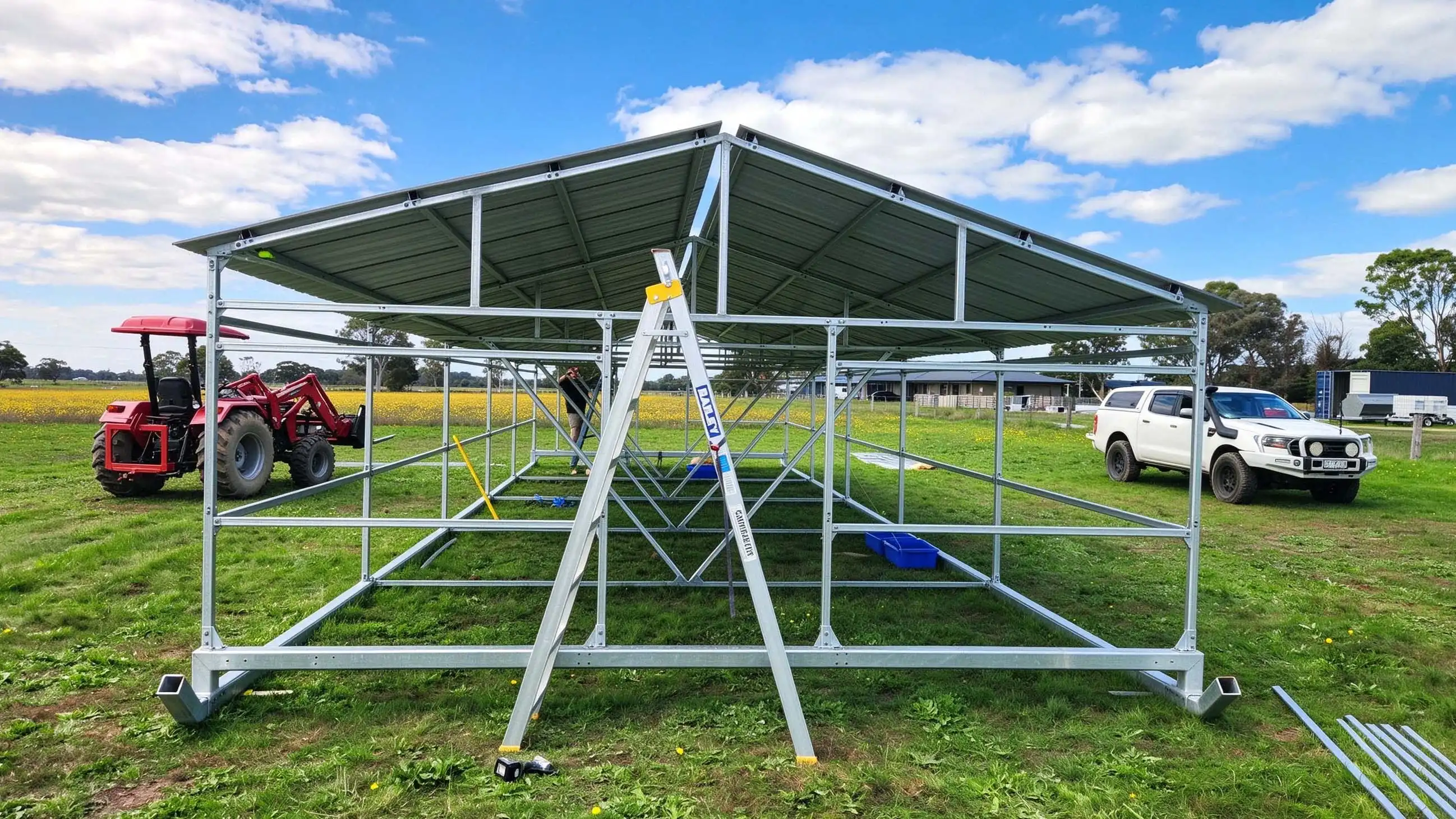
Before the truck even shows up, a good operation starts. Set up access roads, places to turn, drainage, and a level parking area. Test the doors, ramps, feeders, drinkers, ventilation, electrical parts, and predator barriers when the machine is first set up. To make sure your team knows what to expect, we offer site planning, detailed configuration lists, video installation guides, and on-site installation. There is a one-year warranty on every unit. Keep a written licensing plan because it helps you talk about upkeep and warranties in the future.
Daily Management and Preventive Maintenance
Your daily routines are easy, but you have to stick to them. Check the weather, feed, water, air settings, and the health of the group. Then, gather the eggs and make a plan for what to do next. Maintain the tires, chassis, fasteners, flooring, roof panels, fans, sensors, water lines, and controls by writing down what needs to be done. Keep important spares like sensors, pumps, and controllers on hand so that even a small problem doesn't stop work. Our units' remote battery monitoring lets us know when they need service early on. Moving the house every one to three days also keeps the manure from building up in one place, which is good for the soil.
Common Selection Mistakes
Most mistakes are caused by being too hopeful. People who buy birds don't check the stocking density, service space, or local welfare rules; they just trust the maximum bird capacity. They don't look at things like gate width, towing weight, muddy ground, or steep hills. The way they handle ventilation, drainage, and protection against predators is an option, which can hurt output and welfare. They also try to get the best deal but end up spending more on repairs, labor, and energy. Make sure you understand the requirements in writing before you sign, and make sure the style fits your license. Also, make sure you know what the warranty covers, how to get spare parts, and how long it takes for customer service to respond after the sale. Most arguments can be avoided with a short list of written replies.
Conclusion
Before choosing a Commercial Mobile Chicken Coop, you should think about the farm's flock type, stocking density, certification needs, pasture conditions, and how often the farm moves. From there, the best candidates have a proven capacity, steel that doesn't rust, protection from the weather and animals, and a towing system that works with the terrain. When they fix real working problems, ventilation, internal layout, and solar-powered feeding and watering cut down on daily work and protect bird health. Delivery, installation, extra parts, and downtime should all be included in cost comparisons. A weighted grid lets buyers compare providers based on facts. Mistakes that cost more in the long run can be avoided with planned launching, regular upkeep, and written specs. The best choice is not the biggest or cheapest unit, but the one that works reliably and has room to grow.
FAQ
What is a mobile chicken coop for business use?
The chicken coop can be moved and is made for professional farms that raise chickens on pasture. It normally has wheels or a hitch for pulling, feed, water, airflow, and cover from weather and animals.
How many birds can fit in a Huabang Smart unit?
Seven hundred to nine hundred birds can fit in a 15-meter by 5-meter by 2.8-meter box. We can also make custom sizes and build from drawings provided by customers.
Is it possible for the coop to work without power?
Yes. The solar-powered 12V/24V system powers the nipple drinking lines, automatic feeding, and timed ventilation, which works well in pastures that are far away.
Is there a warranty? How long is the lead time?
Our units come with a one-year guarantee, and it takes 30 to 60 days to make them. We can handle OEM and ODM orders, provide examples, help with installation, and give expert advice.
Request a Commercial Mobile Chicken Coop Quote from Huabang Smart
Huabang Smart is a Commercial Mobile Chicken Coop manufacturer and supplier with 17 years of design experience, ISO9001 and CE certifications, OEM/ODM support, and on-site installation. Send your flock size, site details, and drawings to ginny260831@gmail.com or huabangsmart002@gmail.com, and our team will prepare a technical proposal covering specifications, delivery time, and warranty terms. You can also visit poultrycage.com for more product details.
References
1. Miles, D. M., Branton, S. L., and Lott, B. D. "Atmospheric Ammonia Is Detrimental to the Performance of Modern Commercial Broilers," Poultry Science, 2004.
2. Food and Agriculture Organization of the United Nations, Poultry Development Review, 2013.
3. U.S. Electronic Code of Federal Regulations, Title 7, Part 205: National Organic Program, 2024.
4. ASTM International, ASTM A123/A123M: Standard Specification for Zinc (Hot-Dip Galvanized) Coatings on Iron and Steel Products, 2017.
5. Salatin, Joel, Pastured Poultry Profits, 1993.
6. USDA National Agricultural Statistics Service, Poultry – Production and Value 2023 Summary, 2024.

USER EVALUATE
Here is the customer's evaluation of us
_1793064215443.webp)
(1)_1793065123781.webp)