
Layer Hen Cages Provide Better Space Utilization for Farms
Layer hen cages have reshaped how commercial egg producers think about land and infrastructure. Rather than expanding building footprints, modern poultry operations use vertical stacking systems to multiply productive capacity within the same four walls. Whether you manage a 5,000-bird operation or a 100,000-bird facility, the right cage configuration directly determines how efficiently your floor space generates revenue. This guide breaks down the core systems, compares design choices, and outlines what procurement teams should evaluate before committing to a supplier.
Understanding Layer Hen Cages and Their Role in Space Utilization
How Vertical Housing Transforms Farm Productivity
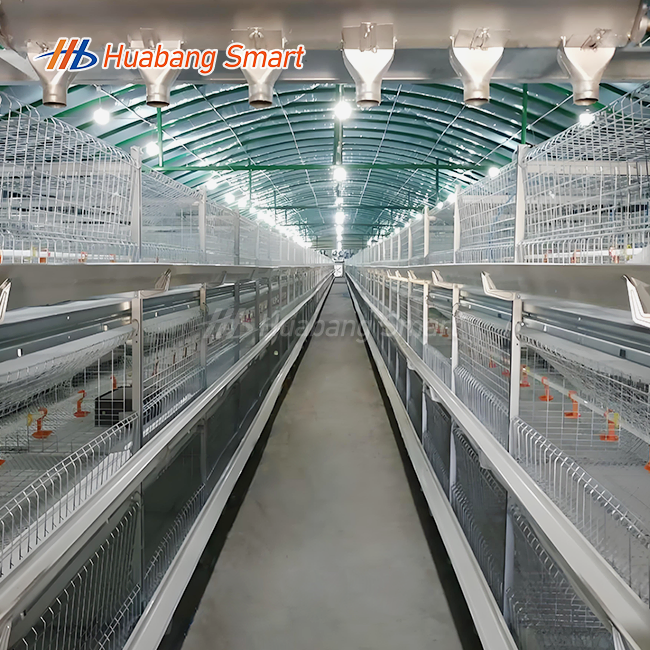
The basic engineering idea behind efficient chicken housing is easy to understand: going higher increases useful space without needing more land. For example, H-type battery cage systems can stack between 3 and 8 levels high inside a single barn, which lets up to 20 birds per square meter of floor space be kept. A study from the University of California Cooperative Extension said that well-designed multi-tier housing can improve real capacity by 300–400% compared to rearing a single-level floor in the same building shell.
In addition to increasing density, Layer Hen Cages get rid of the wasted space that comes with floor-raising setups. When birds are kept in structured tiers, there are no longer wide litter paths, scatter zones, or useless corner areas. At Huabang Smart, each unit is 1.2 × 1.2 × 0.45 m per cage module. This size is just right to make sure the birds are comfortable while also making the layout as dense as possible across any barn width.
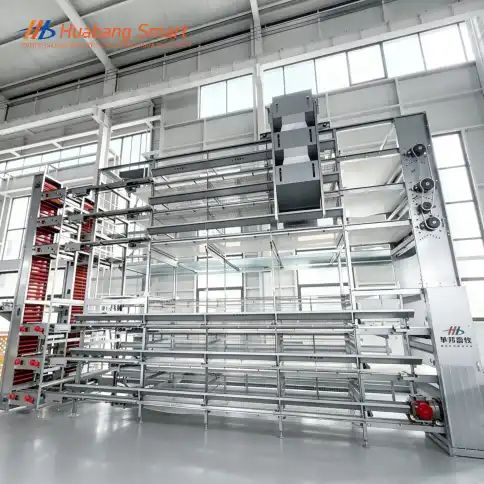
Minimum room requirements for each bird in the US, EU, and Southeast Asian markets are set by industry layout standards. These range from 450 cm² to 750 cm², based on the type of home. Knowing these standards helps farm designers figure out how many birds they can house before they buy any equipment, which saves them the money of having to make changes in the middle of a project.
Comparison of Layer Hen Cage Systems for Optimized Farming Operations
H-Type vs. A-Type: Matching the System to Your Infrastructure
In different barn settings, not all cage designs work the same. The two main types of configurations—H-type vertical battery systems and A-type ladder systems—affect space and operations in different ways.
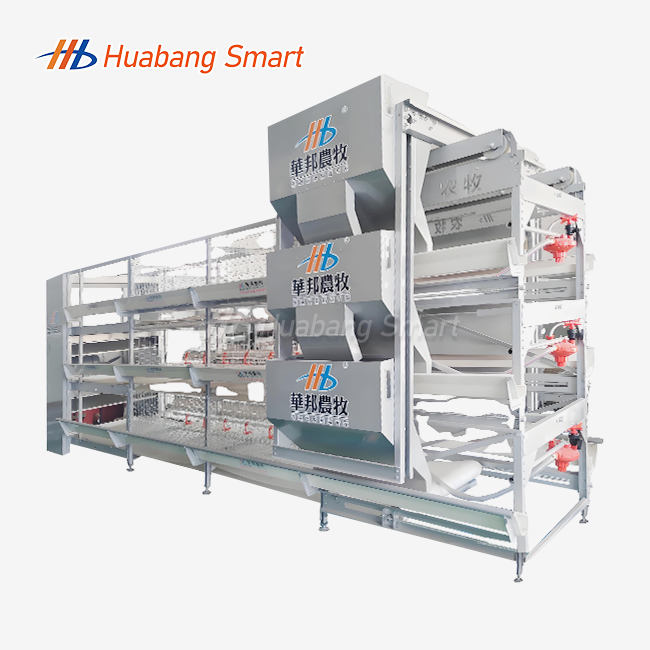
In H-type systems, manure belts, food carts, and egg collection conveyors are all routed along special passageways that run between the rows. With this parallel infrastructure plan, all service activity is centralized in a single working corridor per row. This leaves the rest of the floor space free for cage columns. The result is a layout with a lot of people that works well for climate-controlled, closed-house facilities. Huabang Smart's H-type Layer Hen Cages can hold 90 to 200 chickens across 3, 4, 5, 6, or 8 adjustable tiers. They guarantee that less than 0.3% of eggs will break because the floor of the cage is sloped at an exact 7° to 9° angle, which gently guides the eggs onto collection belts.

A-type ladder configurations spread out in a stepped pattern, which works well with open-house structures that let in natural airflow, which is common in tropical markets. The downside is a slightly lower stocking density, but this is balanced out by the fact that less infrastructure is needed and the system can work with both semi-automated and manual feeding systems.
Here are the main differences in performance that buyers should look at:
- H-Type systems offer very high feeding densities, full automation from start to finish, and modular expansion from 500 to 100,000+ birds. They are the best way to set up big-business egg farms that keep the temperature stable.
- A-Type systems work reliably in open-house settings with natural ventilation. Their ladder plan quietly controls airflow and works well with farms in hot, humid places where cage corrosion protection is very important.
- Material selection is very important. In settings with a lot of ammonia and chickens, hot-dip galvanized steel frames with a zinc covering mass of 275 g/m² last longer than 15 years without rusting, longer than cold-galvanized options that usually break down in 5–7 years.
These changes in structure and materials have a direct effect on the total cost of ownership, the amount of downtime, and the cost of upkeep over the 15–20 years that the equipment is used.
Best Practices for Maintaining Layer Hen Cages to Sustain Space Efficiency
Cleaning, Ventilation, and Environmental Monitoring
When Layer Hen Cages collect trash, experience structural corrosion, or work in temperatures that can't be controlled, they lose some of their space economy. For long-term performance, you need maintenance plans that are proactive and fit the climate where you live.
Every day, automated manure belt systems remove the waste, which stops the buildup of ammonia that speeds up frame corrosion and hurts the birds' respiratory health. Huabang Smart's longitudinal scraper systems keep ammonia levels below 20 ppm, which is in line with OSHA rules for work exposure and linked to significantly lower signs of hen stress.
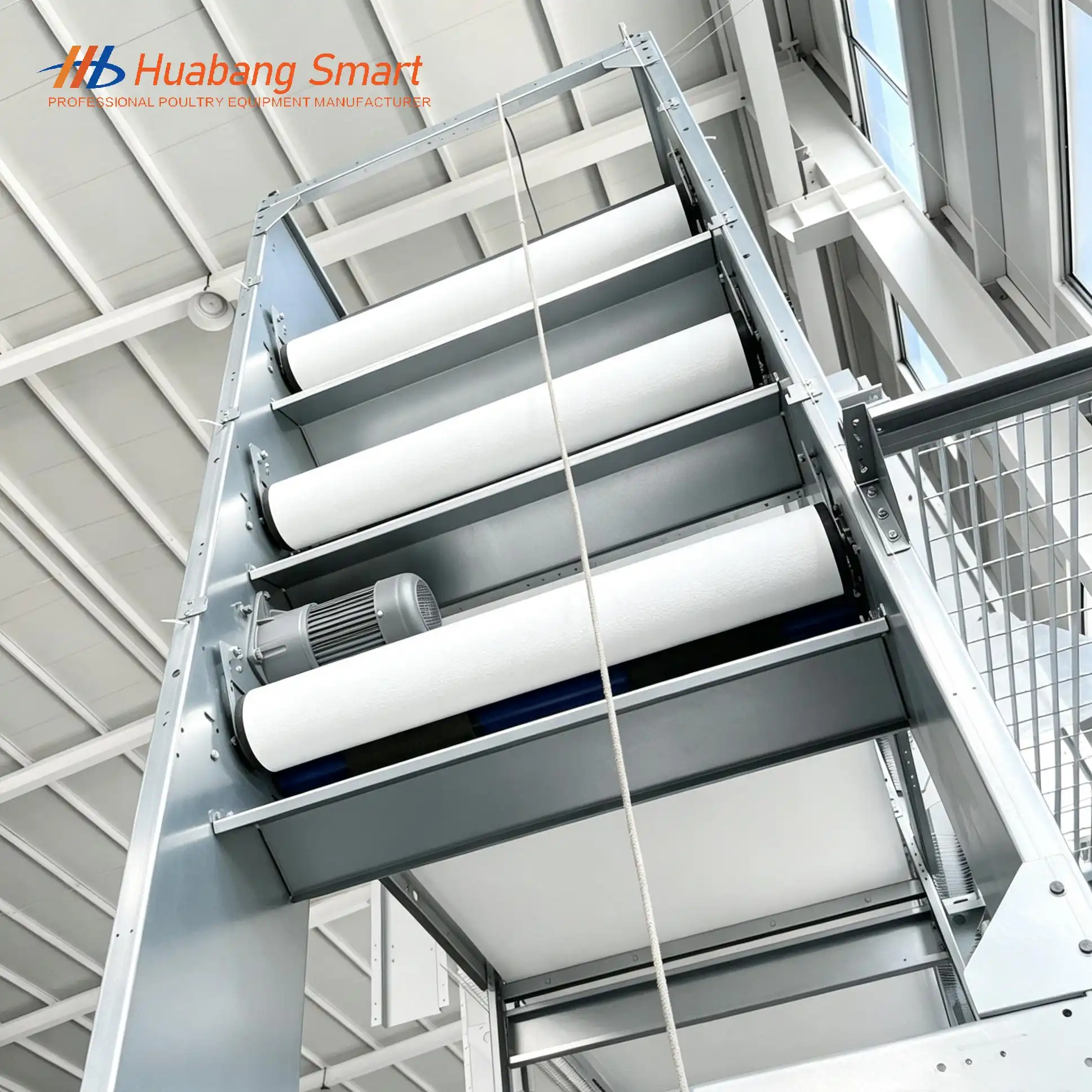
How long a cage system keeps its shape is directly related to how it is ventilated. In warm areas with a lot of humidity, farms need to make sure that air flows through every level of the cage to keep the frame surfaces from condensation, which speeds up the rusting process even on coated steel. This can be fixed by adding tunnel ventilation with negative pressure management. In dry climates, farms instead use evaporative cooling to keep the temperature stable between 18°C and 24°C, which is the best range for laying.
With the optional integration of IoT sensors that track temperature, humidity, and ammonia in real time through a mobile app or PC dashboard, farm managers can react to changes in the environment before they have an effect on the health of the flock or the structure. This ability to see ahead of time also cuts down on unexpected repair, which protects the overall layout of the housing system.
Procurement Insights: Selecting the Right Layer Hen Cage Solutions for Your Farm
Evaluating Suppliers, Customization, and Long-Term ROI
When purchasing Layer Hen Cages for large-scale businesses, procurement teams have to make a choice that will affect their finances for 15 to 20 years. The framework for review should include a lot more than just unit price.
First, make sure that the cage layout works with your barn's size, climate, and number of birds. With OEM and ODM customization, your provider can change the cage size, tier count, material requirements, and amount of automation based on your technical drawings. This means that you don't have to worry about the performance issues that come with off-the-shelf systems. Huabang Smart can make custom designs based on drawings and provide sample units before committing to the whole project. This is an important step for lowering risk when making important procurement decisions.
The whole ownership cycle needs to be taken into account in financial modeling. Peer-reviewed literature in the field of poultry science says that automated feeding systems that give feed with 0.5 g accuracy per bird cut down on waste and increase feed conversion rates (FCR) by 10–15% compared to floor feeding by hand. Full automation, which includes feeding, watering, collecting eggs, and getting rid of manure, can cut labor costs by up to 80%. This changes the ROI timelines for large-scale operations in a big way.
Support after the sale is just as important as the quality of the equipment itself. Huabang Smart offers help with site planning, video installation guides, on-site installation supervision, and a one-year foreign guarantee on the whole automatic system. Having access to spare parts and technical training makes operations less vulnerable, especially for projects that are carried out overseas and are not in the supplier's home region.
Case Studies: How Layer Hen Cages Enhanced Space Utilization on Commercial Farms
From Capacity Constraints to Measurable Gains
In Southeast Asia, a big commercial egg farm with 50,000 birds switched from A-type semi-automated cages to a full H-type 6-tier system. The change made the building 280% bigger so it could hold 280% more birds. It also got rid of the need for people to feed the birds and collect their eggs by hand, and it cut egg breakage from about 8–12% (which is typical in floor systems) to below 0.3%. Within 18 months, the business got its money back from the capital investment thanks to lower labor costs and a higher selling egg yield.
A medium-sized business in the Middle East that took care of 15,000 birds in two houses combined automated Layer Hen Cages with Internet of Things (IoT) environmental monitoring. The main problem was that heat stress made laying rates lower in the summer. By using H-type boxes with built-in temperature monitoring and ventilation control, the farm was able to keep the laying rate steady all year and cut deaths by about 30% in the first output cycle. The flexible cage design also let the capacity grow in stages without having to change the structure.
These results show a consistent pattern in commercial poultry operations around the world: structured cage systems that combine automation and environmental control make operations more efficient in ways that floor and free-range systems can't do on a large scale.

Conclusion
Space usage is not an abstract measure of efficiency; it directly affects how many eggs a barn makes, how much work it needs, and how quickly an investment pays off. When properly matched to the farm's infrastructure and operational needs, multi-tier Layer Hen Cages can turn barn space that isn't being used into useful space. The investment will continue to work well for 15 to 20 years depending on the quality of the materials, how well they work with automation, how well they can handle changes in climate, and how well the supplier can help. When farms buy cages as a system-level decision instead of a single piece of equipment, they always get a better return on investment (ROI) and less operational risk.
FAQ
What is the lifespan of a hot-dip galvanized poultry cage frame?
In ammonia-heavy chicken settings, hot-dip galvanized frames with a zinc coating mass of 275 g/m² usually last 15–20 years, which is a lot longer than cold-galvanized options.
How many birds can a standard H-type cage set accommodate?
Huabang Smart's H-type systems can hold 90 to 200 chickens per set, and the tiers can be changed from 3 to 8 levels to fit the height of the barn and the number of birds you want to house.
Can automation be retrofitted into an existing barn?
After a site assessment, modular cage designs make it possible to add automation for feeding, watering, and egg collection to structures that are already there, without having to rebuild the whole barn.
What egg breakage rate should commercial farms expect?
Well-designed systems always have breakage rates below 0.3% at peak production loads when the cage floor slope is set to between 7° and 9° and the wire tension is carefully adjusted.
What certifications should a cage supplier carry?
For global legal acceptance and structural reliability, ISO9001 quality management approval and CE compliance are the standards that are used. Both are held by Huabang Smart.
Partner With Huabang Smart for Your Next Layer Cage Project
Huabang Smart is a certified Layer Hen Cages maker with over 17 years of technical experience and systems in more than 100 countries. Their systems last longer than those made by other companies. Our H-type and A-type configurations are ISO9001 and CE certified and can be fully customized to fit your barn's size, climate, and bird count. They come with a 1-year international warranty and full on-site support. Today, send the details of your project to admin@huabangsmart.com, and our engineers will come up with the best method for you.
References
1. Appleby, M.C., Mench, J.A., & Hughes, B.O. — Poultry Behaviour and Welfare, CABI Publishing, 2004.
2. Bell, D.D. & Weaver, W.D. — Commercial Chicken Meat and Egg Production, Springer Science, 2002.
3. Fairchild, B.D. & Ritz, C.W. — Poultry Housing for Hot Climates, University of Georgia Cooperative Extension, 2009.
4. Lay, D.C. et al. — Hen Welfare in Different Housing Systems, Poultry Science Journal, 2011.
5. Narushin, V.G., Romanov, M.N., & Griffin, D.K. — Egg Quality Standards and Measurement Methods, Biosystems Engineering, 2020.
6. Xin, H. & Gates, R.S. — Environmental Management of Poultry Housing, ASHRAE Transactions, 2007.

USER EVALUATE
Here is the customer's evaluation of us