



How Does a Chicken Coop Mobile System Benefit Farmers?
A Chicken Coop Mobile system—often called a pastured poultry house or chicken tractor—is a relocatable housing unit engineered to rotate flocks across fresh pasture on a scheduled basis. Unlike fixed structures, these systems actively prevent soil degradation, reduce pathogen accumulation, and cut commercial feed dependency by up to 15–20%. For commercial poultry operations, the benefits extend further: automated feeding, solar-powered energy, and IoT-compatible monitoring translate directly into lower labor overhead, improved bird health metrics, and measurable gains in feed conversion ratio (FCR).
Understanding Mobile Chicken Coop Systems: The Basics
What Sets Mobile Coops Apart from Stationary Housing
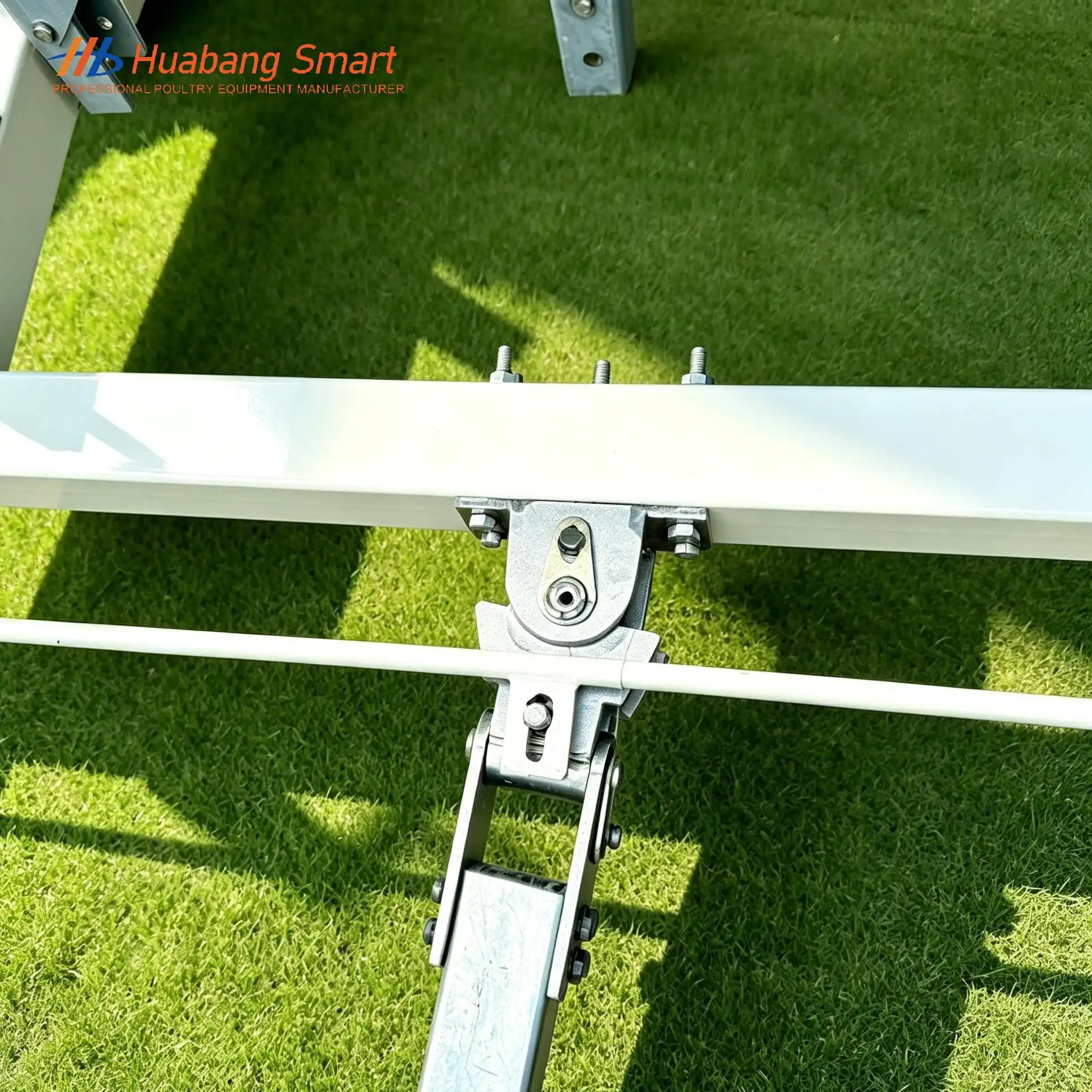
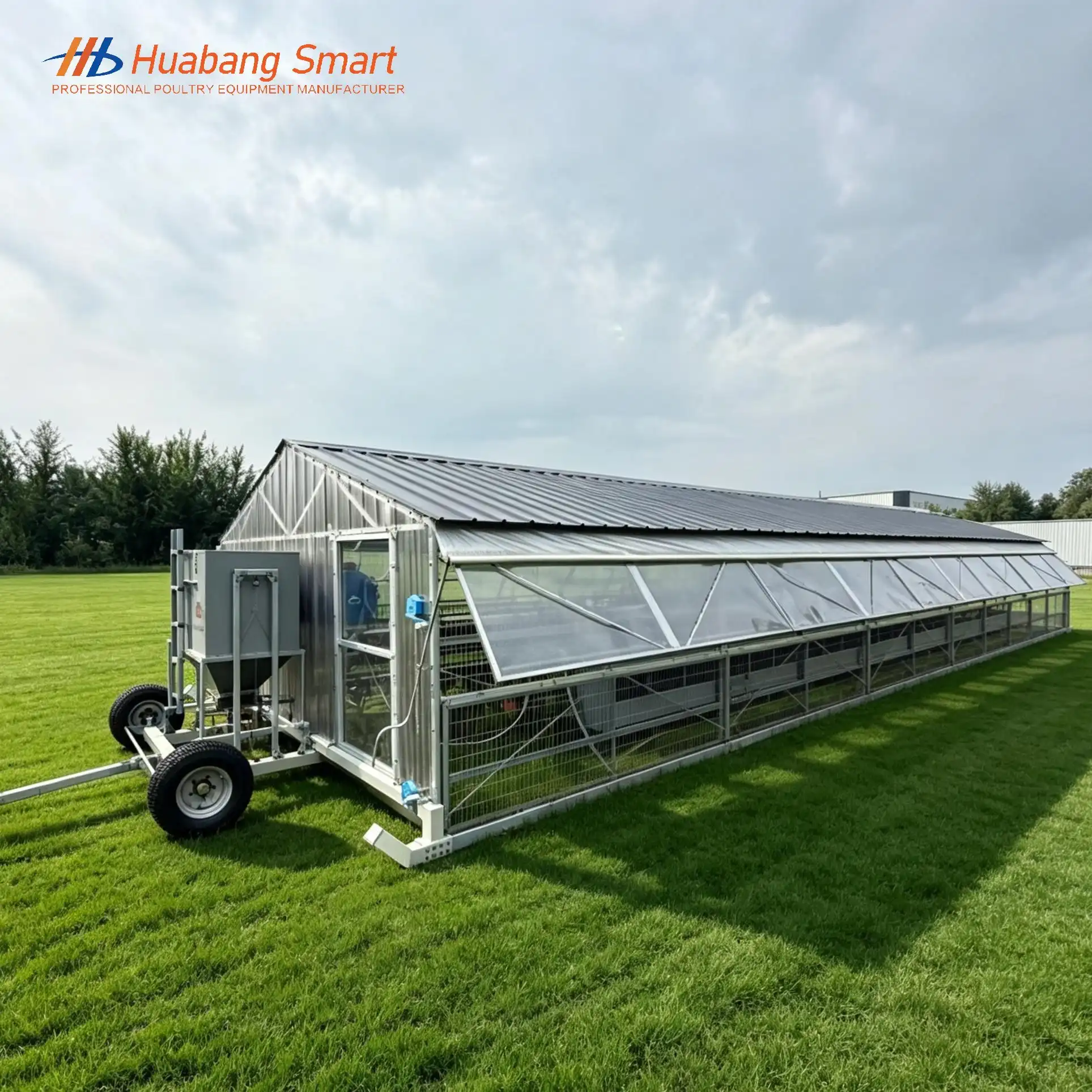
A Mobile Chicken Coop is built differently than a regular barn. It has a galvanized frame, aluminum-zinc coated mesh walls, and either wheels or skids that make it possible to move the whole thing without taking it apart. Some commercial models have electric or tractor-towed hitches, and others have hydraulic lifting systems that make them work on different types of terrain. More and more people are using these units because of a bigger change in the market. There is a lot more demand for pasture-raised chicken certifications in the U.S., and mobile housing is becoming more and more seen as a practical way to get in line without having to rebuild fixed infrastructure.
Core Components of a Commercial Mobile Unit
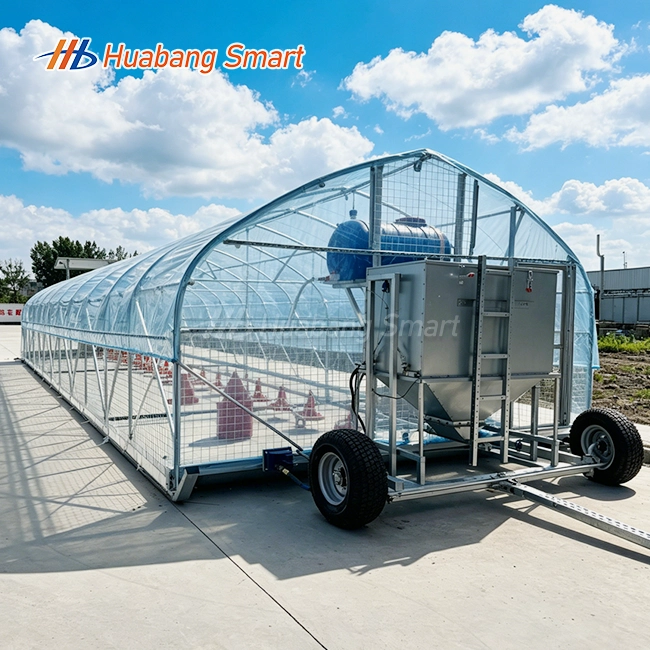
The movable Chicken Coop Mobile from Huabang Smart is 15 meters long, 5 meters wide, and 2.8 meters high. It can hold 700 to 900 birds and is made of hot-dip galvanized steel tubing, 275g galvanized frames, and aluminum-zinc covered mesh. The Chicken Coop Mobile uses a solar energy system integrated with the water supply system to power automatic feeding and drinking, making it suitable for rural pastures without grid connections. OEM/ODM services allow customers to request custom sizes, while each Chicken Coop Mobile comes with a one-year warranty, installation assistance, and guidance on daily chicken coop operation. This practical Chicken Coop Mobile solution provides flexibility for farms that need movable poultry housing and automated management.
Key Benefits of Mobile Chicken Coop Systems for Farmers
The idea behind pastured chicken housing is based on rotational movement, which has been shown to be useful in both industrial and regenerative farming settings. Moving flocks across land in a planned way lets each plot recover, lowering the amount of nitrogen that is harmful and breaking parasite cycles, especially those that involve coccidiosis, a protozoan disease that kills a lot of flocks around the world.
These are the main benefits that come with large-scale mobile poultry housing:
Soil Health and Pasture Recovery: Moving manure in a planned way spreads it out widely, using it as natural fertilizer and stopping ammonia from building up in one place. A study in the journal Agroecology and Sustainable Food Systems shows that rotating chicken grazing improves the nitrogen cycle and organic matter content of soil more than static production systems.
- Soil Health & Pasture Recovery: Systematic relocation distributes manure evenly, acting as a natural fertilizer while preventing concentrated ammonia buildup. Research published in Agroecology and Sustainable Food Systems confirms that rotational poultry grazing measurably improves soil nitrogen cycling and organic matter content compared to static production systems.
- Reduced Disease Pressure: Moving birds away from accumulated droppings disrupts soil-borne pathogen lifecycles. The reduced need for antibiotic intervention aligns with both USDA organic standards and EU biosecurity regulations, lowering input costs and compliance risk simultaneously.
- Labor Efficiency Through Automation: Integrated automatic feeding and nipple drinking systems cut daily labor requirements by up to 70%. For large-scale operations running multiple units, this reduction is operationally significant—a farm managing 10 units at 800 birds each handles 8,000 birds with a fraction of the manual workforce a stationary setup would require.
- Feed Cost Reduction: Access to fresh forage supplements commercial feed consumption. Studies indicate that pasture-raised broilers can reduce purchased feed intake by 15–20%, directly improving FCR and profitability margins.
Efficient use of labor through automation: Integrated automatic feeding and drinking systems for nipples cut the amount of work that needs to be done every day by up to 70%. For large operations with many units, this reduction is very useful—a farm with 10 units, each with 800 birds, can handle 8,000 birds with a lot less manual labor than a stationary setup would need.
Design Considerations and Best Practices for Mobile Chicken Coops
Matching Capacity to Operational Scale
It is imperative to plan group numbers effectively. The standard 15m × 5m footprint of a Chicken Coop Mobile can support 700–900 birds at welfare-compliant densities. However, operations that want to house 5,000–50,000+ birds can benefit from setting up multiple Chicken Coop Mobile units with central monitoring. For this exact reason, Huabang Smart allows for unique sizing, with farm-scale Chicken Coop Mobile setups made based on client plans, taking into account factors such as additional ventilation for tropical temperatures or more insulation panels for winters in the northern U.S. This flexible Chicken Coop Mobile configuration allows large poultry operations to expand their housing capacity according to specific production requirements.
Ventilation, Predator Protection, and Material Durability
Controlling airflow is especially important in places with a lot of humidity. A 5 cm higher centerline in the elevated center shape improves passive airflow and lowers thermal stress on birds. The aluminum-zinc coating on the mesh screens keeps predators out while still letting air flow through, and the shape of the surrounding apron stops ground predators from digging. The hot-dip galvanized steel frame from Huabang Smart has a 275g zinc layer and has been tested to last 15 years or more, even when exposed to waste all the time. This is an important durability standard for farms in the southeastern U.S. or other areas that get a lot of rain.

Procurement Insights: Choosing the Right Mobile Chicken Coop
Evaluating Total Cost of Ownership, Not Just Unit Price
When buying pastured chicken houses from a business-to-business (B2B) supplier, you need to look at the whole system, not just one item at a time. Reliability over the long term depends on things like warranty coverage, availability of extra parts, and expert support after the sale. Huabang Smart's mobile chicken coops are CE-certified and backed by 49 core technology patents. They also come with full installation instructions, such as video tutorials, on-site support options, and a specialized consultation for integrating the feed system.
Units that are already put together are good for operations that need to set them up quickly, while OEM/ODM configurations are better for farms that have specific structural or climate needs. The 30- to 60-day production cycle lets purchasing teams schedule deliveries around seasonal stocking schedules. Also, buying directly from the factory cuts out middlemen, which saves a lot of money on large orders.
Implementation and Maintenance: Maximizing Long-Term Value
Movement Frequency and Flock Disturbance Minimization
When changes are handled regularly, poultry get used to moving on time. Depending on the number of animals and the rate at which the grass grows back, industry guidelines say that the pasture should be moved every day or every other day for the best recovery and hygiene. Moving a Chicken Coop Mobile early in the morning or during periods of low activity can help lower stress levels. Full-size industrial Chicken Coop Mobile units can be moved with little trouble by a standard 40–70 HP tractor or heavy-duty UTV. For farms using rotational grazing systems, a Chicken Coop Mobile provides the flexibility needed to relocate birds efficiently while maintaining pasture management practices.
Routine Maintenance for System Longevity
Galvanized steel parts need to be checked for surface wear on a regular basis, especially where they join together. Cleaning plans should match up with each move. Trained staff can flush nipple drinkers, check feed line sensors, and look over solar panel connections in less than an hour per unit. Huabang Smart gives thorough upkeep instructions and helps clients in over 100 countries by coordinating with local after-sales technicians.
Conclusion
Commercial farms can measure and add up the benefits of a Chicken Coop Mobile system, including healthier birds, lower feed costs, less reliance on labor, and better land management. The results of both agronomic research and real-world deployments consistently show that rotating poultry systems using a Chicken Coop Mobile can be a good investment for modern livestock businesses. The operating ceiling increases significantly when the living unit itself is built to industrial standards, using durable materials, self-sufficient solar power, and automated systems. Chicken Coop Mobile systems are one of the most flexible options for farms and contractors looking for chicken infrastructure that can be expanded, certified, and prepared for automation.
FAQ
Are mobile chicken coops suitable for large commercial operations?
Yes, commercial-grade units like Huabang Smart's mobile chicken house can hold 700–900 birds each, and setups with multiple units can hold 50,000 or more birds. Unit count needs to be matched with land area and flock movement plans.
How does predator protection work in a mobile unit?
Heavy-gauge perimeter mesh aprons that move with the structure and close off ground-level entry points are used on high-quality mobile coops. Predators that fly or climb can be stopped by aluminum-zinc covered mesh plates on the walls and ceilings.
What warranty and after-sales support should I expect?
Huabang Smart backs up all of their mobile chicken coops with a one-year guarantee and offers installation help, on-site support, and long-term advice. Their after-sales network includes expert support in more than 100 languages and covers more than 100 countries.
Can mobile coops handle harsh winter conditions in the U.S.?
Models can have insulated panel layouts and can include hot waterers for tasks that need to be done in cold temperatures. Cold-climate insulation is a normal OEM/ODM choice, and custom builds can be made to fit the needs of different climates.
How long does the galvanized chassis last?
The hot-dip galvanized steel frame has a covering weight of 275g and is designed to last 15–25 years under normal rotational conditions, based on how acidic the soil is and how often it is maintained.
Partner with Huabang Smart for Your Next Mobile Poultry Project
Huabang Smart offers approved, factory-direct Chicken Coop Mobile options that are made for large businesses. Our mobile chicken coops are built to last. They have CE approval, 49 patents, and more than ten years of experience being used all over the world. Get in touch with our team right away to ask for a custom configuration or a catalog of our products. For scalable, automated poultry farming systems, Contact Us at admin@huabangsmart.com or go to poultrycage.com. We are the company you can trust to make Chicken Coop Mobile.
References
1. Fanatico, A. C., & Gurber, J. — Sustainable Poultry Production Overview, ATTRA National Sustainable Agriculture Information Service, 2014.
2. Karsten, H. D., & Patterson, P. H. — Pasture-raised poultry production, health, and welfare, Journal of Applied Poultry Research, 2010.
3. Sossidou, E. N., & Dal Bosco, A. — Pasture-based systems for poultry production: implications and perspectives, World's Poultry Science Journal, 2011.
4. Horsted, K., & Hermansen, J. E. — Whole wheat versus mixed layer diet as supplements to pigs and poultry on pasture, Livestock Science, 2007.
5. United States Department of Agriculture (USDA) — Organic Livestock and Poultry Standards Final Rule, Agricultural Marketing Service, 2023.
6. Food and Agriculture Organization of the United Nations (FAO) — Poultry Development Review: Sector Trends and Sustainability Challenges, FAO Animal Production and Health, 2014.

USER EVALUATE
Here is the customer's evaluation of us
YOU MAY LIKE
 VIEW MORECommercial Mobile Chicken Coop
 VIEW MOREFiberglass Cone Fan For Poultry
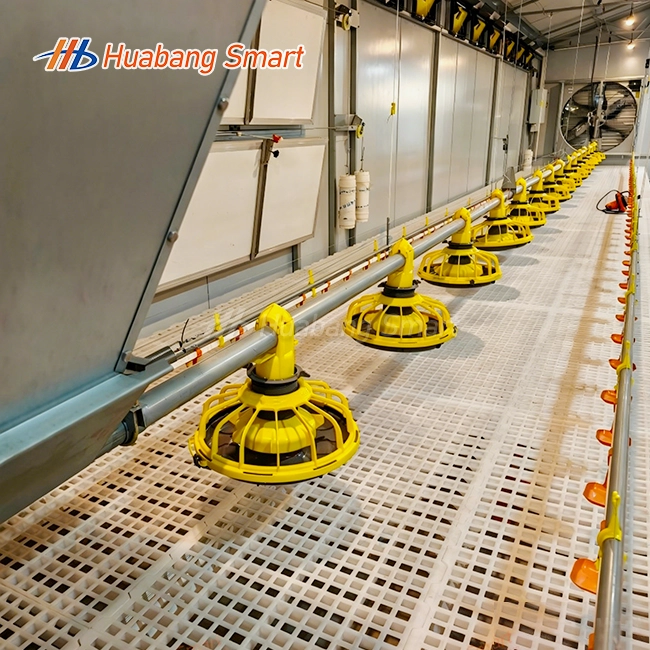 VIEW MOREChicken Waterer And Feeders
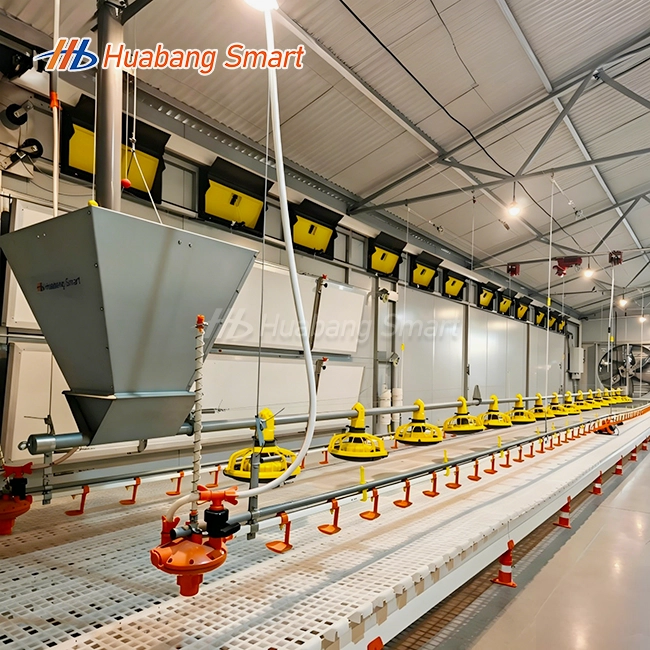 VIEW MOREElectronic Chicken Feeder
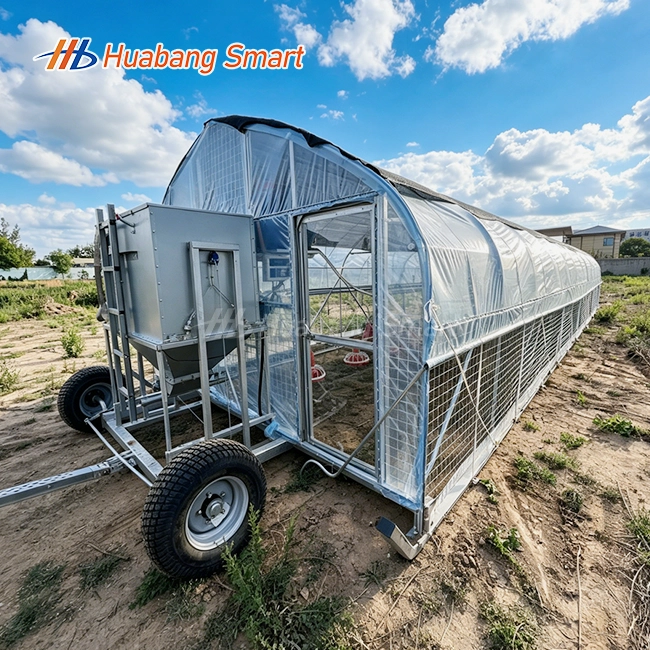 VIEW MORELarge Mobile Chicken Coop
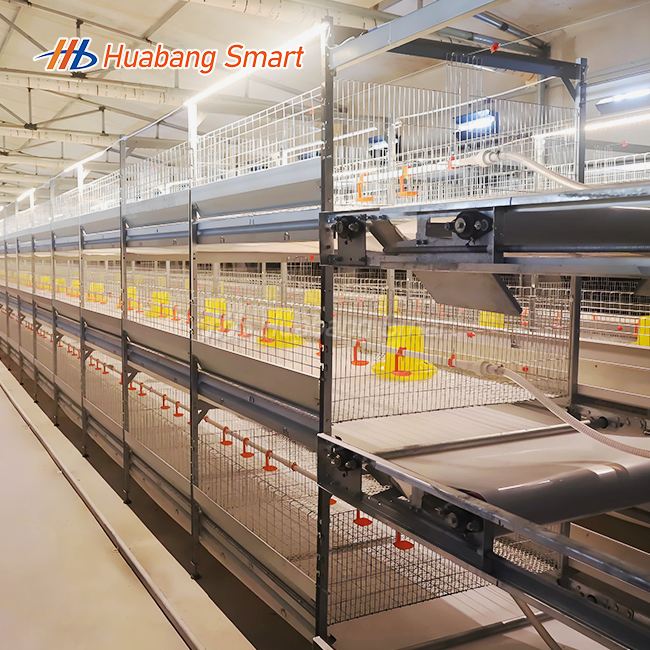 VIEW MOREH Type 3 Tier Broiler Chicken Cage
 VIEW MOREIndustrial Chicken Feeder
 VIEW MOREPoultry Cages For Layer Chickens