
Chicken Coop Mobile Units Provide Portable Farming Advantages
Mobile poultry housing has quietly transformed how commercial farms manage land, labor, and flock health. A chicken coop mobile unit — often called a pastured poultry house or portable broiler shelter — is a relocatable housing system engineered for rotational grazing and regenerative agriculture. By moving the structure systematically across pasture, producers eliminate localized soil nitrogen toxicity, disrupt pathogen cycles such as Coccidiosis, and reduce commercial feed dependency by up to 15–20%. For large-scale operations seeking scalable infrastructure, these units deliver measurable productivity gains while aligning with sustainable land stewardship.
Understanding Mobile Chicken Coop Units and Their Benefits
Stationary coops collect waste in one place, which speeds up the growth of pathogens and parasites over time. Portable chicken coops solve this problem by letting birds always have access to fresh ground, which boosts their immune systems, improves litter quality, and lowers the need for antibiotics. Rotational grazing systems are consistently linked to better flock performance and measurable soil health recovery in research published by the USDA's Agricultural Research Service.
In addition to improving animal health, relocatable coops make great use of space. When flocks are rotated on a field on a regular basis, natural fertilization and bug control help the grass grow, so manmade inputs are not needed as much. When operations with 50,000 or more birds across various places use structured rotation plans, they report big drops in the costs of feed and deaths caused by diseases.
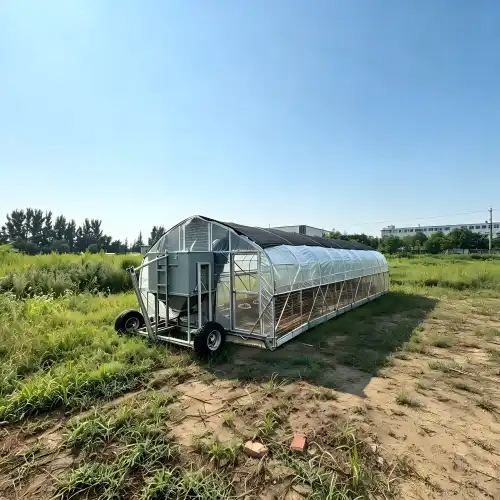
For procurement managers and engineering teams looking at scalable infrastructure, mobile chicken housing also lowers the cost of building something that will stay in one place. Without any extra civil engineering, units can be moved from one site to another, changed to fit yearly production cycles, and added on to in modules.
Design and Materials: Building Effective Mobile Chicken Coop Units
The choice of materials affects whether a portable broiler shelter works well for ten years or breaks down after just one season. Every part of the structure needs to be able to withstand rust at the building level because it is exposed to water, manure gases, and the weather outside.
The business mobile units from Huabang Smart are made with a 275g hot-dip galvanized frame and walls paired with aluminum-zinc coated mesh, making each chicken coop mobile resistant to rust and ammonia corrosion while keeping the structure strong in damp or wet environments. The standard chicken coop mobile measures 15m × 5m × 2.8m, but farms that need more space or a different footprint can request custom sizes. This flexible chicken coop mobile design allows producers to adapt the housing layout to different farm sites and production requirements.
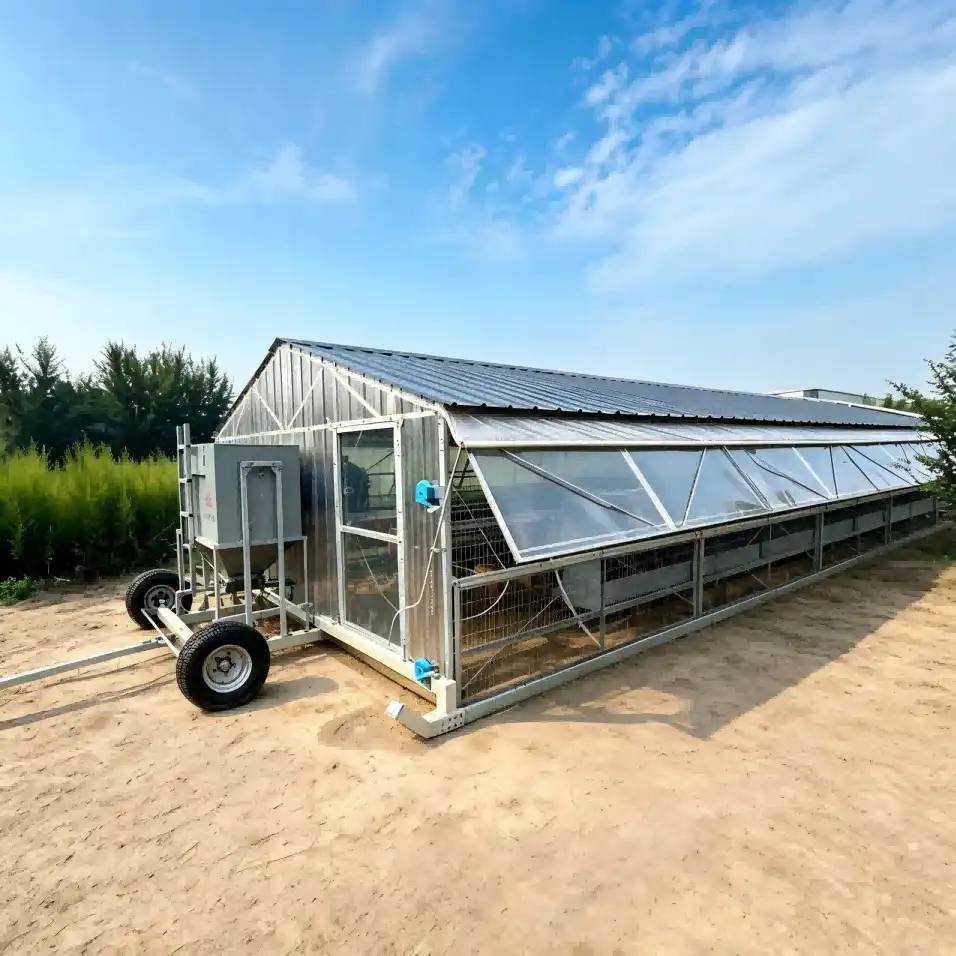
Solar-Powered Automation Reduces On-Site Energy Dependency
Each unit has a solar energy system built in that powers the systems that feed and water the animals automatically. This gets rid of the need for grid links in remote pasture areas, lowers running costs, and makes sure that feed and water are always delivered, no matter where they are.
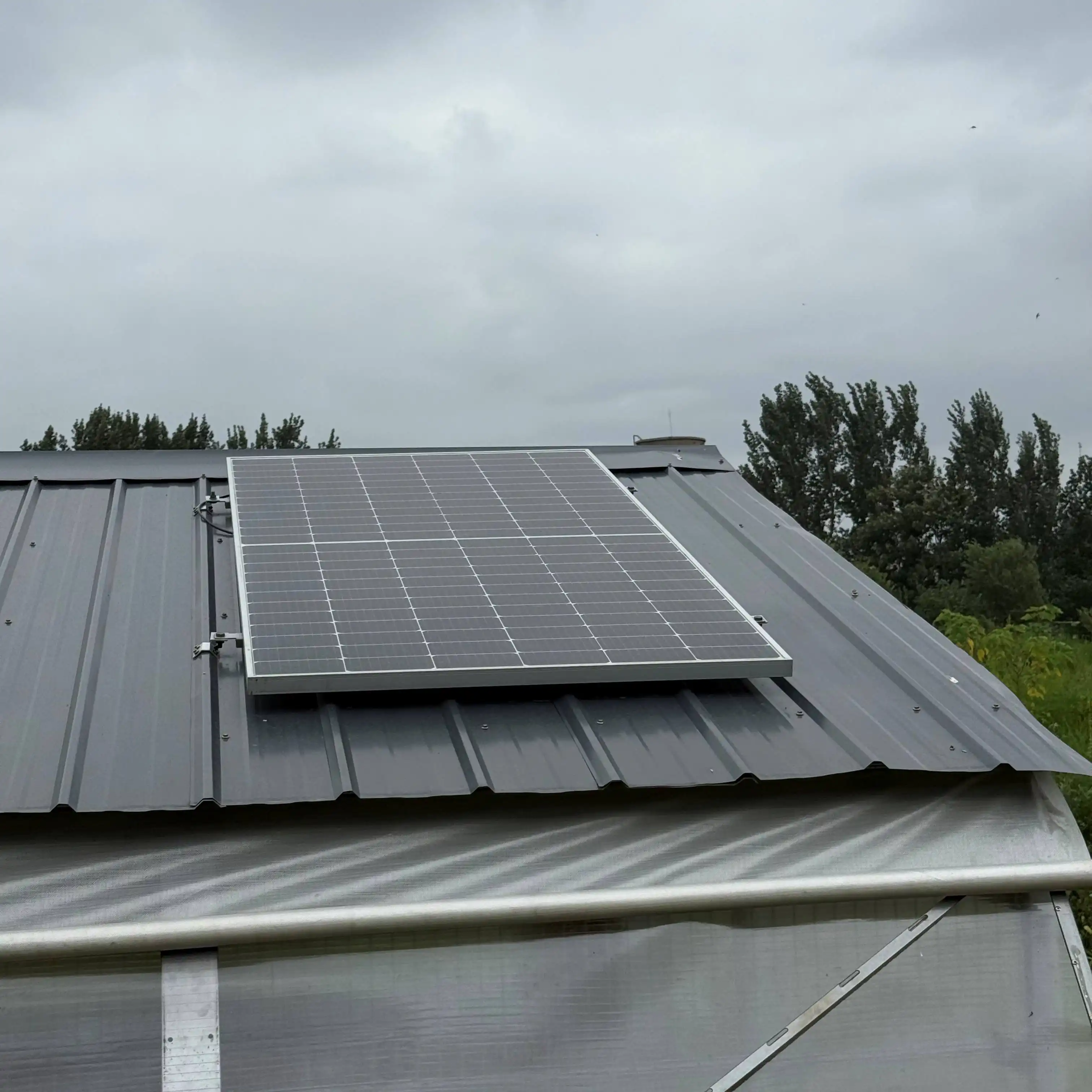
Capacity and Stocking Density Optimization
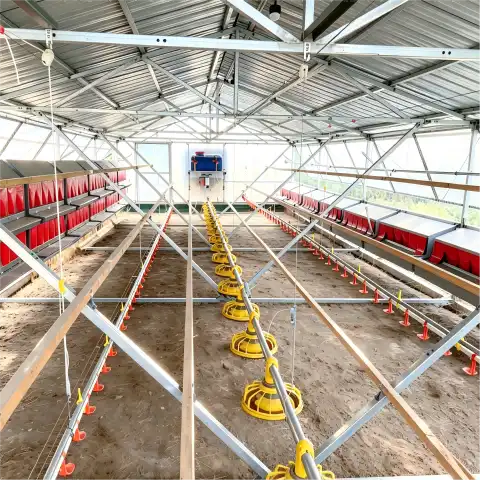
Each standard unit can hold between 700 and 900 birds, and the layout of the inside is designed to make sure that each bird has enough space to avoid stress and gain weight evenly. The structure's load is supported by hot-dip galvanized steel tubes that don't bend or wear out over rough terrain.
Safe Relocation Without Flock Disruption
The 5 cm raised center design makes air flow better during both moving and still stages. This unit is designed to be pulled by a standard tractor or heavy-duty UTV. The galvanized chassis is expected to last 15 years with proper maintenance in rotational grazing conditions.
All of these structural and mechanical factors affect how long something will last and how reliably it will work, which are two of the most important things that procurement engineers look at when they are choosing large-scale capital equipment.
Comparative Analysis: Mobile Chicken Coop Units vs. Traditional Coops
There are some big benefits to traditional stationary chicken coops when it comes to controlling the environment and keeping animals safe, but they require permanent land use commitments and pollute the soil under and around the building over time. A mobile pasture chicken house spreads the contamination over a larger area of land, which lets natural microbes break down organic waste.
Most of the time, a chicken coop mobile system is more cost-effective for medium-sized businesses when costs are evaluated over five years. Stationary infrastructure requires prepared land, concrete foundations, and dedicated utility lines, while a chicken coop mobile can avoid many of these upfront civil costs without sacrificing automation capabilities. For farms seeking greater flexibility and lower initial infrastructure expenses, a chicken coop mobile can provide a practical alternative to permanent poultry housing while supporting efficient operations.
Here are some important ways to compare Huabang Smart's mobile units:
- Automation Level: Integrated automatic feeding, nipple drinking, and water supply systems cut labor requirements substantially. Fully automated growth management reduces manual intervention and shortens production cycles.
- Environmental Control: Smart regulation of temperature, humidity, and air quality maintains optimal conditions for feed conversion ratio (FCR), with documented savings of up to 8% on feed costs in controlled deployments.
- Biosecurity Design: Smooth, easy-clean interior surfaces and hygienic structural geometry minimize pathogen accumulation — a measurable advantage for operations pursuing antibiotic reduction programs or Halal/EU compliance certification.
- Customization Scope: OEM/ODM configurations adapt to regional climate demands, from enhanced ventilation for Southeast Asian heat to insulation packages for Central Asian winters. Farm scales from 1,000 to 50,000+ birds are supported.
Because of these benefits, movable broiler shelters are a good option compared to fixed buildings for businesses that want to prioritize flexibility, biosecurity, and automation in a single system.
Procurement Guide: How to Select and Acquire Mobile Chicken Coop Units
To choose the best mobile chicken housing supplier, you need to look at their capabilities in more than one way, not just the price per unit. The following factors make a good purchasing choice for B2B buyers who run businesses on multiple sites or for EPC companies who build turnkey farm projects.
The track record of the supplier is very important when selecting a chicken coop mobile system. Huabang Smart was founded in 2012 and has its main office in Qingzhou, Shandong Province. It has worked with clients in over 100 countries to provide ISO9001 and CE-certified systems, including chicken coop mobile solutions, backed by 49 core technology patents. For normal setups, the production cycle lasts between 30 and 60 days. OEM/ODM orders for a chicken coop mobile can also be filled based on customer drawings, allowing the system to match specific farm requirements.
Key points for evaluating a purchase include:
- Customization depth: Does the supplier support dimensional variation, climate-specific packages, and capacity scaling beyond standard catalog specifications?
- Certification status: CE and ISO9001 certifications confirm compliance with international quality and safety benchmarks.
- After-sales infrastructure: Huabang Smart provides site planning, detailed configuration lists, video installation guides, on-site installation assistance, and overseas local after-sales support.
- Warranty terms: A one-year warranty on all units provides baseline procurement security, with a 15-year structural service life expectation for galvanized chassis components.
Before placing an order, procurement teams should ask for a technical plan that includes suggestions for the layout of the site and a configuration list that is specific to their bird count, temperature zone, and automation needs.
Maintenance and Security: Keeping Mobile Chicken Coops Productive and Safe
A mobile chicken unit that is well taken care of will keep working well for its entire 15-year structure life. Maintenance schedules should focus on three main areas: keeping the structure strong, keeping it clean, and keeping predators away.
Routine Sanitation Protocols
Clean all the feeding lines, nipple drinkers, and inside surfaces with disinfectants that are safe for chickens after each rotation cycle. The smooth galvanized insides and aluminum-zinc-coated mesh keep germs from getting into cracks and gaps. A regular cleaning routine helps with hygiene and lowers the number of deaths caused by diseases.
Predator Protection in Open Pasture Environments
Heavy-gauge perimeter mesh is built into the base structure of commercial mobile units from Huabang Smart. This makes a secure apron that moves with the coop. This plan keeps predators from digging without adding more field fence to each new spot.
Monitoring Mobility Components
At regular times, check the axle bearings, hitch connections, and floor support members. When kept on a regular basis, hot-dip galvanized mobility hardware will continue to work properly for 10 to 15 years under normal spinning circumstances.
By following these rules consistently, you can protect both the flock's safety and the unit's value over its useful life.
Conclusion
Portable chicken coop mobile systems are a useful and expandable solution to the problems that commercial chicken farms face with labor, hygiene, and land management. Units made with hot-dip galvanized steel, solar-powered automation, and flexible configurations give measurable returns in a range of operating conditions. A chicken coop mobile design gives modern farmers the structural durability and operational flexibility they need, whether they are managing a single rotational pasture site or multiple poultry production sites in different regions. Huabang Smart's chicken coop mobile systems meet that level consistently because they are made with technology that has been approved around the world and has been used for 17 years. For farms seeking a flexible and durable housing solution, a chicken coop mobile can provide practical support for long-term poultry operations.
FAQ
How often should a mobile pasture poultry unit be relocated?
Moving the birds every day is the usual way to improve the health of the soil and their cleanliness, but the exact plan relies on the number of birds and how quickly the forage grows back. Higher-density units might need to be moved more often to keep the soil from getting packed down and nutrient overloading certain areas.
What equipment is needed to move a commercial-scale unit?
Standard business units are made to be towed by a 40–70 HP tractor or heavy-duty UTV, based on how steep the ground is. Galvanized skids on units that can handle dips of up to 15 degrees let them work in most field conditions without any changes.
Can mobile units operate during winter?
Yes. Configurations with better insulation screens and built-in thermal management keep the inside of the building comfortable during cold months. Through OEM customization, you can get choices like heated waterer support and winter skirting.
How is predator security managed in open pasture conditions?
A protective apron that moves with the unit is made of heavy-gauge encircling mesh that is built into the base structure. This keeps digging predators away without having to set up permanent fences at each new location.
What certifications should buyers require from suppliers?
For foreign purchasing, the bare minimum is CE approval and ISO9001 compliance. The systems made by Huabang Smart have both certificates and 49 patents that protect their core technologies.
Partner with Huabang Smart for Your Next Mobile Poultry Housing Project
Huabang Smart makes Chicken Coop Mobile systems that are CE-certified and ISO9001-compliant. These systems are made from 275g hot-dip galvanized materials and have solar automation built in. They are designed to last for 15 years in all kinds of weather around the world. We are a trusted Chicken Coop Mobile manufacturer with 17 years of experience and customers in more than 100 countries. We offer OEM/ODM customization, turnkey project delivery, and installation on-site. To get a custom farm proposal right away, email our technical team at admin@huabangsmart.com or go to poultrycage.com.
References
1. USDA Agricultural Research Service. Pasture-Based Poultry Production: Environmental and Performance Outcomes. 2021.
2. Fanatico, A. C. Portable Housing for Pastured Poultry. ATTRA National Sustainable Agriculture Information Service. 2006.
3. Shields, S., & Shapiro, P. A Greener World: Pasture-Raised Poultry and Environmental Impact. Animal Welfare Institute Quarterly. 2014.
4. Moreki, J. C. Free-Range Poultry Production Systems: Challenges and Opportunities. Journal of Animal Science Advances. 2013.
5. Pousga, S., Boly, H., & Lindberg, J. E. Effect of Rotational Grazing on Poultry Performance and Soil Health Indicators. Tropical Animal Health and Production. 2018.
6. Lay, D. C., et al. Hen Welfare in Different Housing Systems. Poultry Science. 2011.

USER EVALUATE
Here is the customer's evaluation of us