
Why Is Exhaust Fan For Farm Important for Livestock Health?
A properly engineered exhaust fan for farm use is one of the most decisive factors in maintaining a productive and disease-resistant livestock environment. When barns accumulate ammonia, carbon dioxide, excess moisture, and heat, animal immunity drops — and so does your output. Studies from the University of Kentucky Agricultural Extension show that ammonia concentrations above 25 ppm can visibly impair poultry respiratory health within days. By continuously cycling stale air out and drawing fresh air in, farm ventilation fans create the stable microclimate that livestock need to grow, breed, and stay healthy through every season.
Understanding the Role of Exhaust Fans in Farm Livestock Health
How Ventilation Fans Protect Animal Welfare
Animal barns constantly release a mix of harmful gases. Ammonia from decomposing manure, hydrogen sulfide, and extra CO2 quickly build up in places that don't get enough airflow. The American Society of Agricultural and Biological Engineers released research that shows long-term exposure to ammonia levels above 35 ppm lowers feed conversion ratios in broiler chickens and makes pigs more likely to get sick. These gases are removed by a high-performance ventilation fan before they reach dangerous levels. This means that the fan is not only a pleasure object but also a health management tool.
Not only do farm vent systems get rid of gases, but they also control temperature. Wet litter in chicken coops is a great place for pathogens like Clostridium and Aspergillus to grow. Having enough airflow keeps the litter dry, lowers the number of pathogens, and lowers the need for antibiotics, all of which are issues that commercial farms are becoming more concerned about as food safety rules get stricter.
Temperature and Heat Stress Management
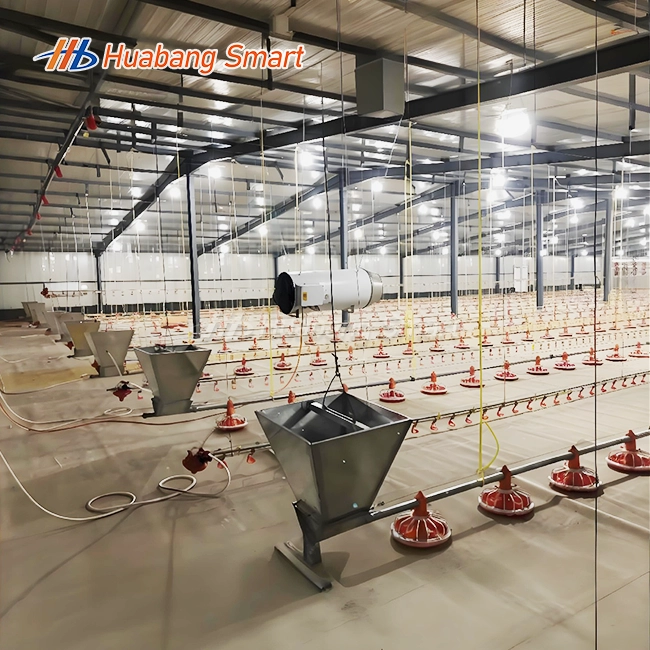
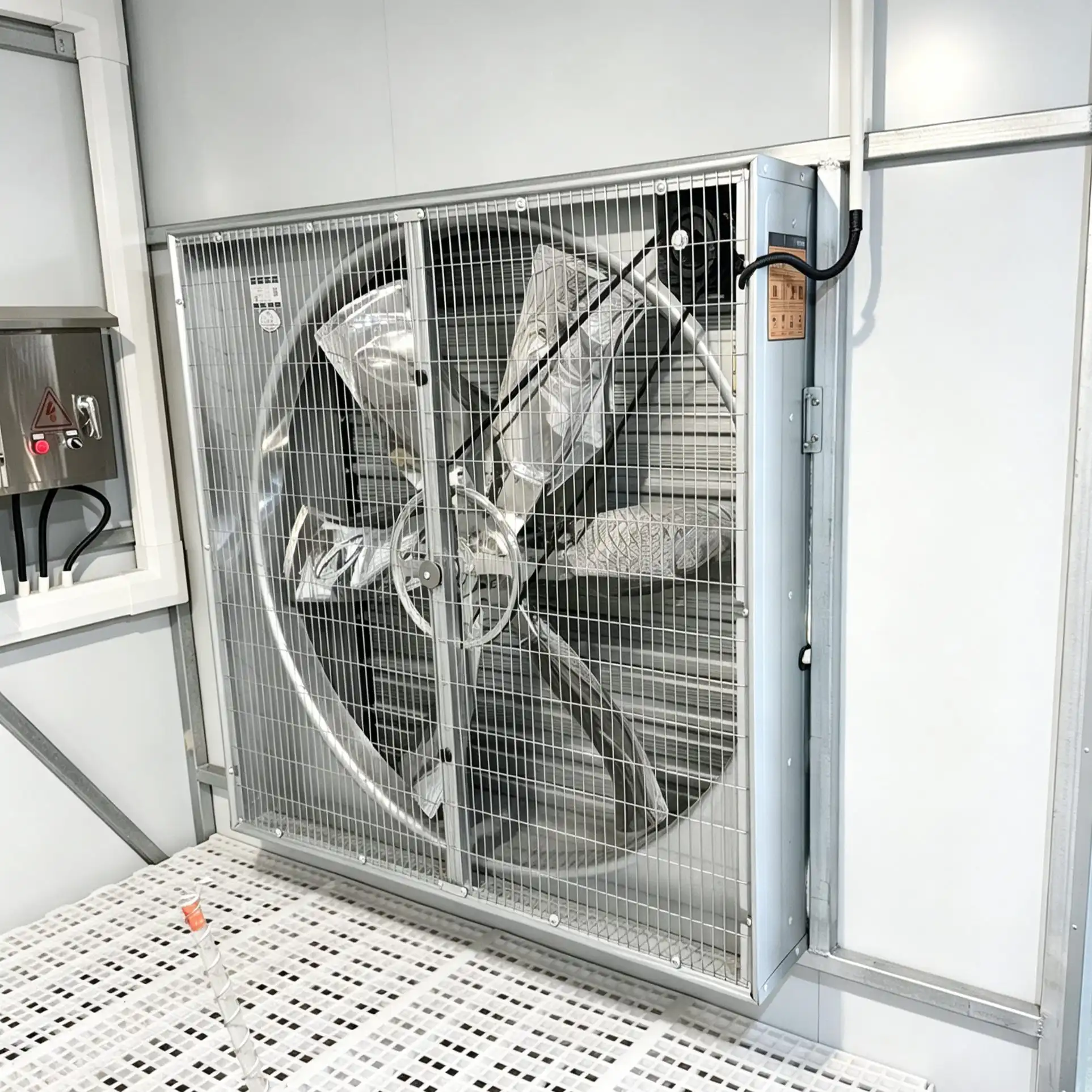
The USDA Economic Research Service says that heat stress alone can cost the U.S. cattle business more than $2.4 billion a year. When temperatures in broiler houses go above 30°C without wind-chill adjustment, birds start to pant, eat less food, and in the worst cases, die in large numbers. The standard solution in the industry is tunnel ventilation, where an exhaust fan for farm pulls air through the building at high speed to create a cooling effect along the full length of the barn. A properly sized exhaust fan for farm can support stable airflow and help reduce heat stress, while multiple exhaust fan for farm units can be installed to maintain effective ventilation across large poultry houses. This method can lower a bird's body temperature by 5 to 8°C without using cooling.
Types of Exhaust Fans Suitable for Livestock Farms
It is necessary for engineering reasons to make sure that the right fan type is used for the job.
Most of the time, axial fans are used to ventilate poultry tunnels because they move large amounts of air at low static pressure. For big, open-plan barns, they are a good value. Centrifugal fans can handle higher static pressure and work well in smaller, more enclosed spaces or for tasks that need airflow that is integrated into the ductwork. Centrifugal models work more consistently on farms with complicated duct layouts.
Energy efficiency is becoming a more important factor in buying things. Motors that work with variable-frequency drives (VFDs) can change their speed precisely based on real-time data about temperature and humidity. This can cut power use by up to 40% during cooler times. This is especially important for big businesses that need ventilation 24 hours a day.
For motors to last in harsh settings with animals, they need to be rated IP55 or IP66, and the blades need to be made of 304 stainless steel or heavy-duty galvanized steel. A fan that breaks down in two years because it was exposed to ammonia is not a good deal; it's a risk.
How to Select and Install an Exhaust Fan for Your Livestock Farm
Calculating the Right Airflow Capacity
For most types of animals, a full air exchange every 45 to 60 seconds during the hottest parts of summer is the standard. To find the answer, multiply the barn's volume (length x width x ceiling height in cubic feet) by 0.75 minutes. The answer tells you how many cubic feet per minute (CFM) your air system needs to work at a minimum. Most industrial farms make the most frequent and expensive mistake when installing fans: they are too small.
Installation and Maintenance Essentials
When placed correctly, performance is maximized. To make a smooth airflow path, fans should be put at the low end of a tunnel-ventilated barn, and air intakes should be placed at the other end. Electrical connections must meet NEC standards, and all wiring should be done with tubing that is waterproof and approved for use in farm settings.
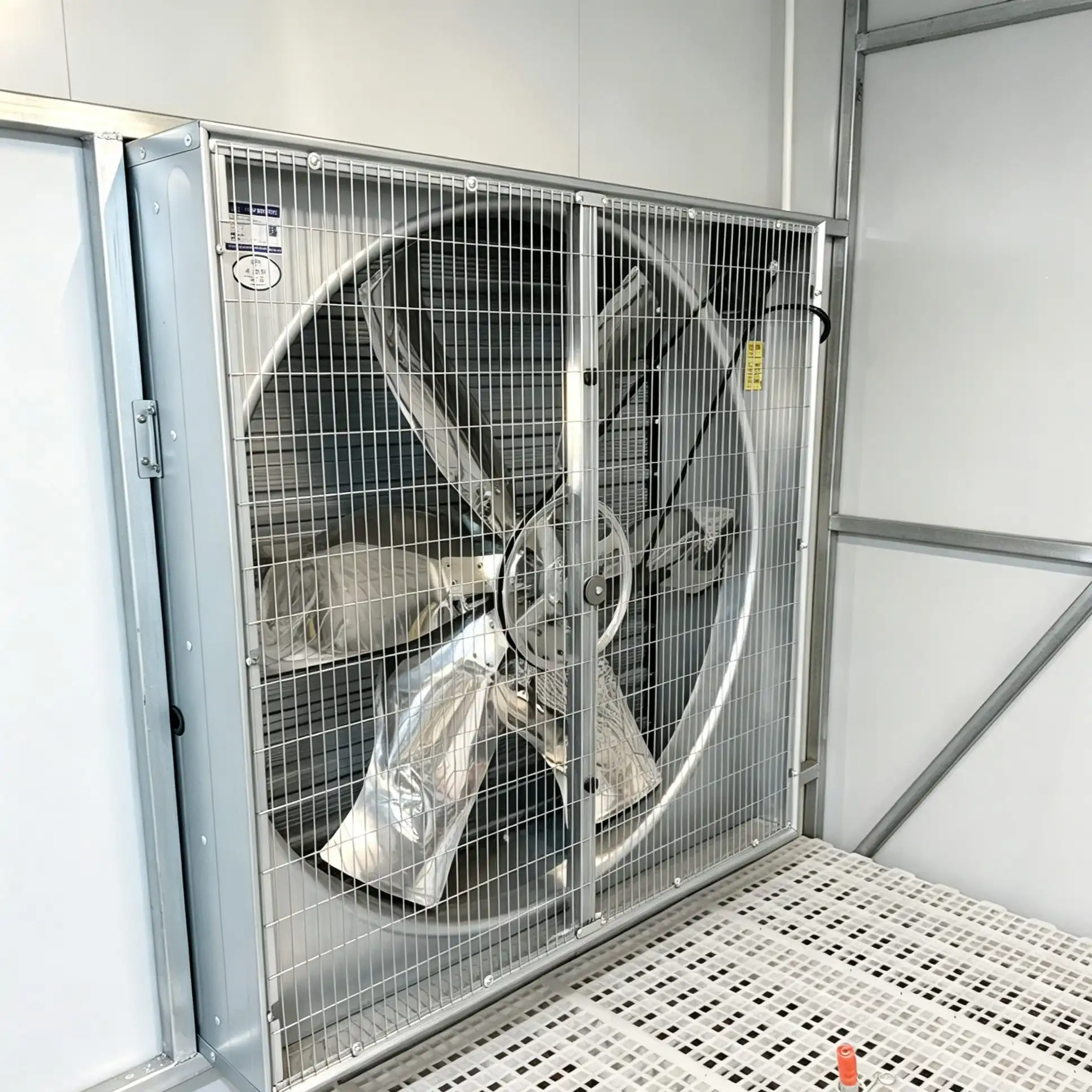
Maintenance discipline keeps an exhaust fan for farm running smoothly and efficiently. According to AMCA performance data, a dust buildup of just 3 mm on fan blades can lower airflow by as much as 30%, making regular maintenance essential for any exhaust fan for farm system. The bare minimum for long-term reliability is cleaning once a month in areas with heavy dust from chickens, checking the tension of belt-driven exhaust fan for farm models every three months, and checking the motor load once a year. These routine inspections help keep each exhaust fan for farm operating reliably and maintain consistent ventilation performance.
Comparing Exhaust Fans: Making an Informed Procurement Decision
Farm-Specific Design vs. General Ventilation Products
Standard ventilation fans for factories are not made to work with animals. Farm-specific units have coatings that don't rust, gravity-fed or centrifugal screens that keep out backdrafts and pests when the unit isn't in use, and dynamically balanced blade assemblies that have been tested to G2.5 standards to stop bearing wear caused by shaking. Over the course of 5–8 years, these differences matter a great deal.
Procurement managers should check that suppliers have AMCA approval for airflow performance data, CE marking for safety compliance, and ISO 9001 production consistency when they are reviewing vendors. When it comes to farm projects abroad, warranty coverage, availability of spare parts, and the ability to get expert help from afar are all very important.
Huabang Smart Evaporative Cooling System: An Integrated Solution
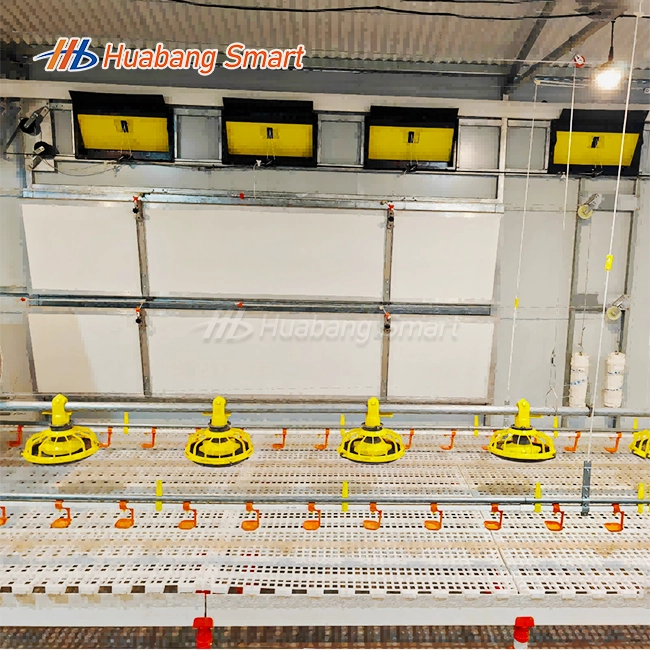
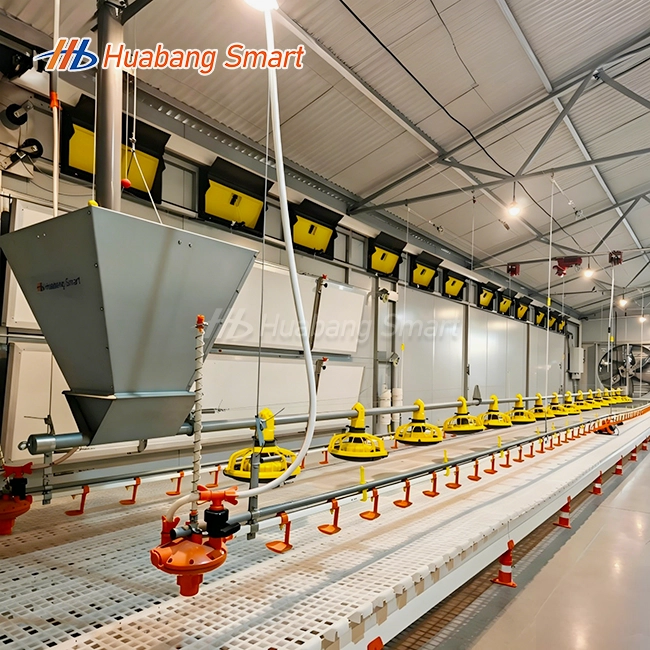
The main benefits of Huabang Smart's evaporative cooling and air system, which is made especially for industrial cattle farms, are listed below:
- Customizable Dimensions — Fans and cellulose fiber cooling pads are available in multiple sizes to match diverse barn structures, from compact poultry houses to large-scale cattle facilities, ensuring precise system fit without structural modification.
- 5–15°C Effective Temperature Reduction — Evaporative cooling technology lowers ambient barn temperature by 5–15°C, directly relieving heat stress in broilers, layers, and swine during peak summer months.
- Operating Cost at 1/10 of Air Conditioning — The system runs at a fraction of conventional cooling costs, making 24/7 operation economically viable for large-scale farms without compromising on thermal management.
- 5–8 Year Service Life with Minimal Maintenance — High-quality cellulose fiber pads and premium motor fans are engineered to withstand continuous humidity and ammonia exposure, reducing replacement frequency and total ownership cost.
- Dual Air Quality Function — The system simultaneously filters airborne dust and dilutes harmful gases, delivering cleaner air to the animal breathing zone rather than simply moving heat around.
- Modular Installation Design — The system assembles and integrates quickly with existing barn infrastructure, reducing installation downtime and enabling straightforward field maintenance by farm technicians.
These benefits make it possible to control the most common environmental control problems in intensive cattle farming, such as heat stress, poor air quality, high energy bills, and extensive maintenance work, through one unified platform. This system from Huabang Smart uses a 3mm hot-dip galvanized steel frame with a 5cm raised center design to improve airflow and can be integrated with an exhaust fan for farms for more effective ventilation management. With 49 core technology patents and CE certification, the system provides a reliable solution for farms using an exhaust fan for farm to maintain stable environmental conditions. For large-scale operations, combining automated controls with an exhaust fan for farm can further improve ventilation efficiency and reduce manual maintenance requirements.
Maximizing Livestock Health Through Proper Farm Ventilation Strategies
Environmental management that works well blends heating, humidity tracking, exhaust ventilation, and automatic settings into a single system. When IoT-enabled ventilation controllers were combined with tunnel exhaust systems in Southeast Asian poultry farms, feed conversion ratios went up by 12 to 18%, and the number of respiratory diseases dropped by a measurable amount within two grow-out cycles.
Huabang Smart's smart Environmental Control Systems can keep an eye on temperature, humidity, and ammonia levels in real time, which lets the fan speed be changed automatically without any help from a person. This cuts down on the need for labor, makes things more consistent, and creates thorough operational data trails for analyzing farm performance—something that modern farming investment groups are asking for more and more as a standard.
Conclusion
Airflow is not an afterthought in livestock farming; it is essential for animal health, productivity, and profitability. A well-designed farm exhaust system equipped with an exhaust fan for farm can remove harmful gases, manage heat stress, reduce pathogen-friendly humidity, and provide the stable microclimate animals need to reach their full genetic potential. When evaporative cooling, IoT automation, and durable construction are combined with a reliable exhaust fan for farm, these systems can deliver a measurable return on investment (ROI) and make the investment worthwhile for a wide range of farm sizes and species. For large-scale operations, selecting the right exhaust fan for farm is also important for maintaining consistent ventilation performance and long-term operating efficiency.
FAQ
How often should farm ventilation fans be cleaned?
In poultry environments, monthly blade cleaning is strongly recommended. Even a thin dust layer reduces airflow efficiency by up to 30%, directly affecting barn temperature and air quality.
Can exhaust fans work alongside evaporative cooling pads?
Absolutely. Tunnel ventilation fans paired with evaporative cooling pads form the most effective heat stress management system for livestock. The fans pull air through water-saturated cellulose pads, dropping barn temperature by 5–15°C through evaporation.
What airflow rate do poultry houses require?
Broiler houses typically require 0.6–1.0 CFM per bird during summer peak conditions. Total barn CFM should enable complete air exchange within 45–60 seconds.
Are VFD-compatible fan motors worth the investment?
For large-scale operations, yes. VFD motors adjust speed based on real-time conditions, cutting energy consumption by up to 40% during moderate weather while maintaining precise environmental control.
How long do quality farm ventilation fans last?
With proper maintenance, premium corrosion-resistant fans in livestock environments last 5–8 years. Regular cleaning, belt tension checks, and annual motor inspections are the key maintenance practices.
Partner with Huabang Smart for Your Farm Ventilation System
Huabang Smart delivers trusted exhaust fan for farm solutions engineered for commercial livestock operations worldwide. As an experienced exhaust fan for farm manufacturer, we offer customizable sizes, CE-certified durability, evaporative cooling integration, and full turnkey support — from system design to on-site installation. Contact our technical team today at admin@huabangsmart.com or visit poultrycage.com to request a free consultation and tailored farm ventilation proposal.
References
1. American Society of Agricultural and Biological Engineers (ASABE). Ventilation of Agricultural Structures. ASABE Standards, 2018.
2. Midwest Plan Service. Mechanical Ventilating Systems for Livestock Housing. Iowa State University Press, 2017.
3. University of Kentucky College of Agriculture. Poultry Environmental Management Guide. UK Extension Publications, 2020.
4. USDA Economic Research Service. Heat Stress and Livestock Productivity Losses in U.S. Agriculture. ERS Report, 2019.
5. Air Movement and Control Association International (AMCA). Standards for Fan Performance and Testing in Agricultural Applications. AMCA Publication 211, 2021.
6. National Institute of Food and Agriculture (NIFA). Improving Air Quality in Confined Animal Feeding Operations. USDA-NIFA Research Report, 2022.

USER EVALUATE
Here is the customer's evaluation of us