



Maximizing Broiler Growth with the Right Broiler Chicken Cage
Maximizing broiler growth hinges on selecting housing systems that support rapid weight gain, efficient feed conversion, and effective disease prevention. Modern Broiler Cage systems—particularly H-type multi-tier designs constructed from 275g hot-dip galvanized steel—can provide structural integrity, automation integration, and biosecurity features for high-density meat production. A well-designed Broiler Cage system can help address labor inefficiencies, environmental management challenges, and mortality risks associated with traditional floor-rearing operations. When procurement teams evaluate Broiler Cage systems, they are investing not merely in equipment but in a comprehensive housing and production platform that can improve operational efficiency. Selecting a durable Broiler Cage with suitable automation and environmental management features can support more consistent production outcomes. For large-scale poultry operations, a properly configured Broiler Cage can also provide a more organized housing environment while helping producers manage feeding, watering, and daily flock care more efficiently.
Understanding Broiler Cages and Their Impact on Growth
What Defines a Modern Broiler Chicken Cage System
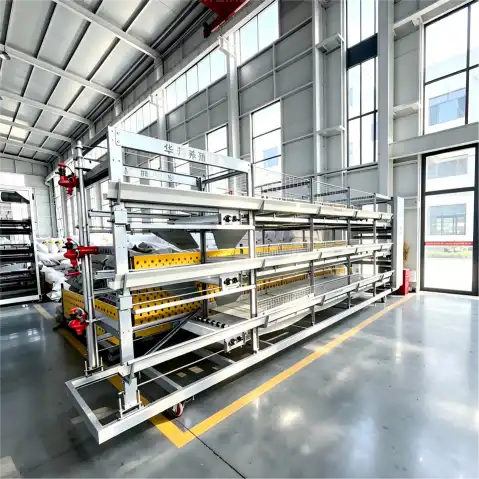
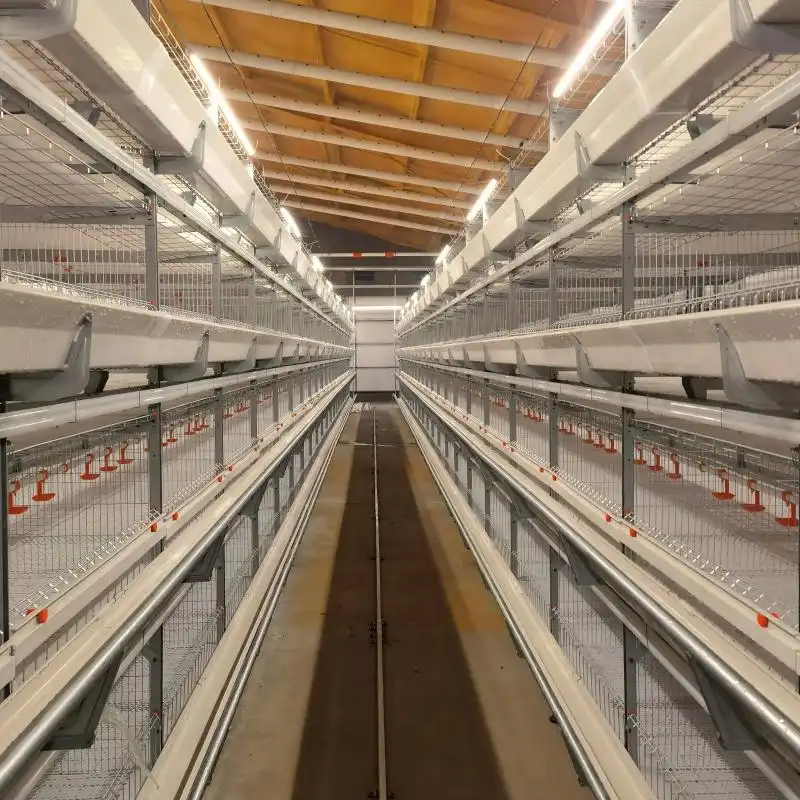
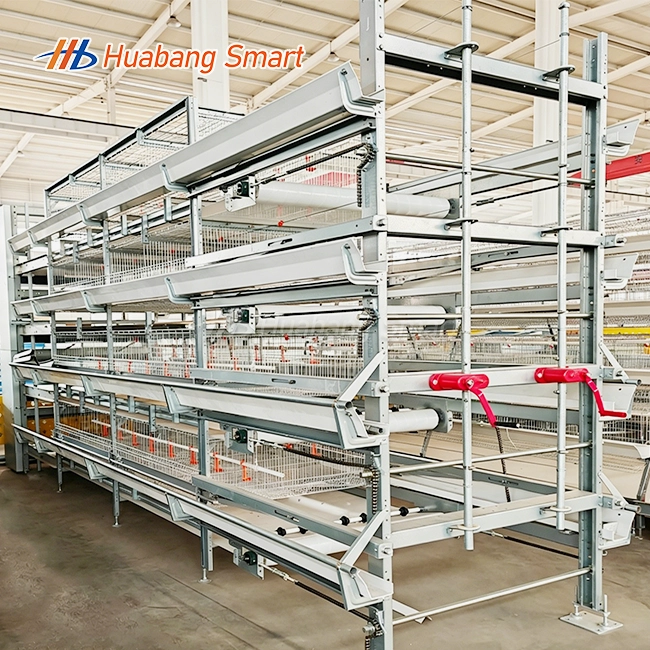
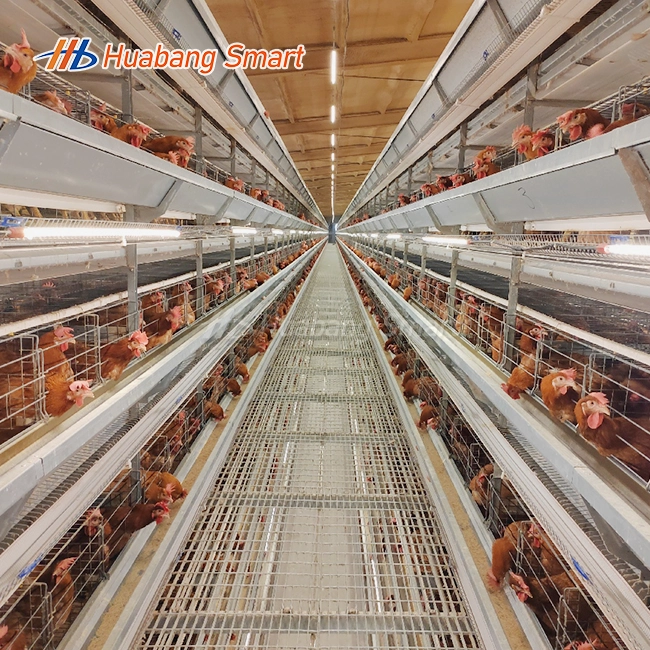
The purpose of a Broiler Chicken Cage is to raise meat chickens from hatching to market weight, which usually takes 35 to 45 days, in a controlled, high-density environment. These cages have multiple levels (usually three to eight levels) that physically separate birds from manure through slatted plastic floors and automated belt systems. This is different from floor systems where birds are close to bedding and waste. This separation greatly lowers the risk of coccidiosis, necrotic enteritis, and lung pathogens that grow in places with a lot of ammonia. The 1.25m x 1m x 0.45m H-type arrangement makes the best use of vertical space, so farms can have 30 to 50 birds per square meter instead of 10 to 12 in floor systems. This makes the land three times more productive.
How Cage Design Influences Feed Conversion and Growth Uniformity
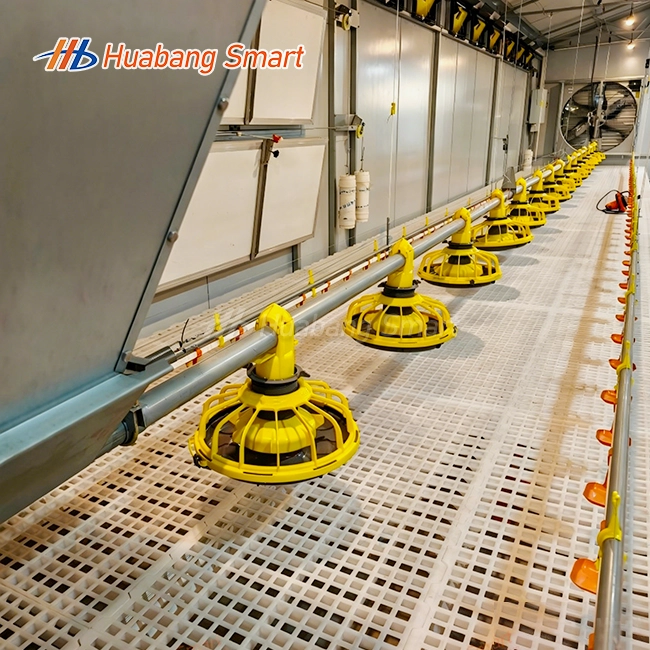
For growth to happen, animals must always have access to food and water and use as little energy as possible. Automatic feeding trolleys that are built in deliver exact meals at set times, which cuts down on feed waste by up to 12% compared to hand distribution. Nipple drinking systems give animals clean water whenever they need it, which helps prevent gut health problems that can be caused by dirty pools. Moving around is limited in cages that are the right size, so metabolic energy goes toward building muscle instead of doing things that aren't necessary. This usually leads to a 0.05 to 0.1 point increase in feed conversion ratios. Temperature and humidity control systems keep the right temperatures in the right areas for digestion and appetite. This directly speeds up daily weight gain and flock uniformity, which are important factors for meeting target market weights within shorter production cycles.
The Role of Material Quality in Long-Term Performance
For materials to last in a chicken coop, they need to be able to fight corrosion, hold big loads, and keep up with hygiene standards over years of use. Premium systems use Q235 international bridge steel that has been hot-dip galvanized to get a zinc layer thickness of 275g/m². This standard increases the service life to 15 to 20 years, even when exposed to high levels of ammonia. Cold-galvanized options break down in three to five years. Thickened cage walls keep the structure stable in multi-tier setups that house thousands of birds. They stop the frame from deforming, which makes it harder for birds to breathe and for manure to be removed. CE certification and ISO 9001 compliance make sure that international safety and quality standards are met. This gives procurement professionals peace of mind that the product will be legal in all global markets.
Key Features to Consider When Choosing a Broiler Cage
Structural Materials and Anti-Corrosion Engineering
The material used to manufacture a Broiler Cage is one of the most important factors affecting its durability and performance. Hot-dip galvanized steel with a 275g coating can provide improved resistance against the corrosive effects of ammonia, moisture, and organic acids commonly found in poultry housing environments. An extra-thick 3mm steel frame can help a Broiler Cage support the loads associated with multi-tier configurations while maintaining structural integrity through repeated cleaning processes. More advanced Broiler Cage designs may also incorporate a 5 cm raised center structure to improve airflow and cooling, helping reduce heat stress during warmer periods. When evaluating a Broiler Cage supplier, buyers should verify the zinc coating thickness through material documentation and inspect weld consistency, as these details can indicate manufacturing quality and long-term reliability. Choosing a well-manufactured Broiler Cage with durable materials and consistent construction can help support stable poultry housing operations.
Integrated Automation for Labor Reduction
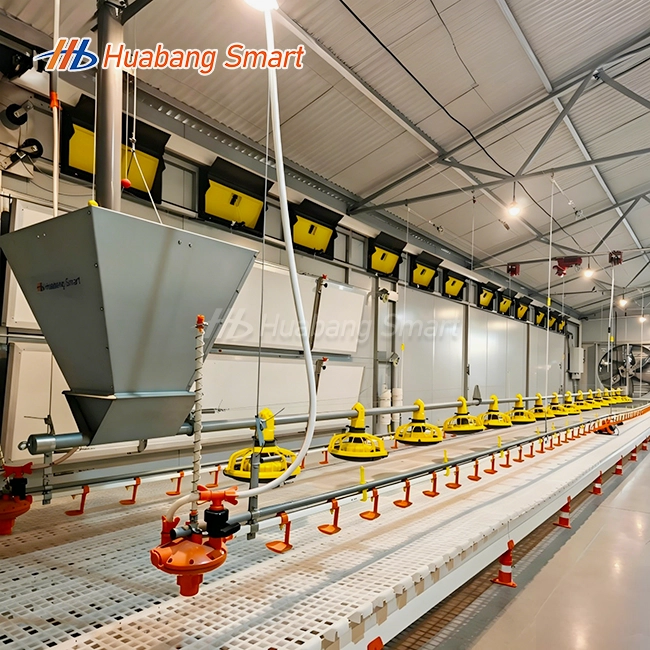
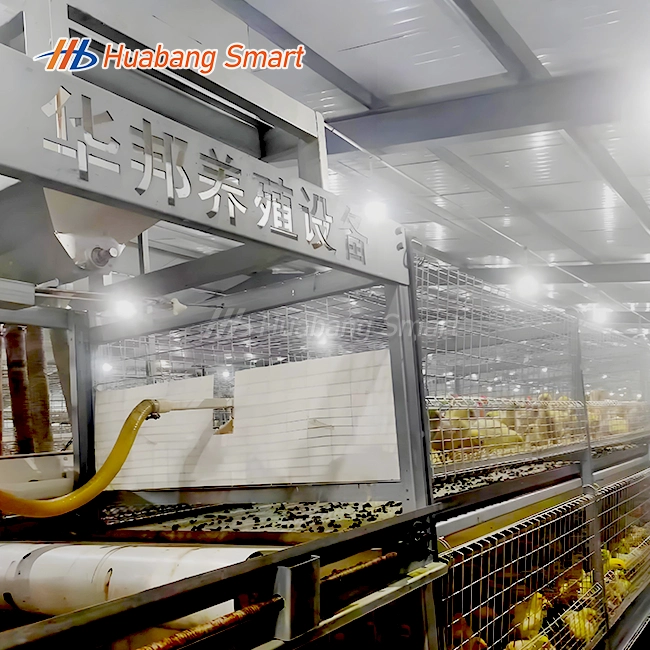
In traditional chicken farms, 20% to 30% of the costs of running the business come from labor. Modern automatic cage systems deal with this stress by fully automating the process. Automatic feeding tools move along the rows of cages and give the right amount of feed based on the age of the flock and its nutritional needs. This gets rid of the need for workers to fill buckets by hand and cuts the workforce by 70%. Under each level, manure removal lines take the waste to central collection points every 24 to 48 hours. This keeps the ammonia levels low without having to scrape the floors by hand. Nipple drinking lines that can be reached from all angles keep you hydrated all the time and stop water from spilling, which can make conditions good for pathogen growth. These connected systems turn routine farm tasks that required a lot of work into easier management tasks. This lets staff focus on things like checking on the flock and figuring out their health instead of doing the same physical work over and over again.
Ventilation Architecture and Climate Adaptability
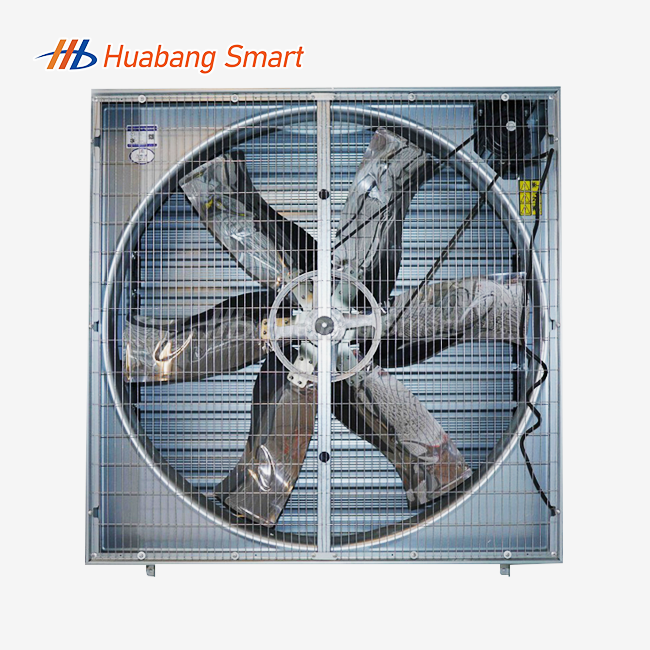
Controlling the environment is what determines whether genetic growth potential is turned into real performance. For closed-house operations, cage systems have air paths that work with motorized fans and evaporative cooling pads to keep the cage cool. The slatted floor design encourages airflow up and down, keeping birds cool and dry and bringing fresh air to each level. Customizations based on climate, like better cooling systems for Southeast Asia's humid climate or insulation packages for Central Asia's cold winters, make sure that temperatures stay stable in a wide range of deployment locations. Real-time tracking sensors keep an eye on temperature, humidity, and ammonia levels. They set off automatic changes that keep the ideal conditions: 18°C to 24°C for fully grown broilers, 50% to 70% relative humidity, and ammonia levels below 20 ppm. This precise control of the surroundings helps keep feed intake and metabolic efficiency steady, even when the weather changes outside.
Sizing, Density, and Welfare Compliance
Careful planning of dimensions is needed to find a balance between stocking density and animal welfare rules. Standard Broiler Cage units that are 1.25m x 1m x 0.45m can hold 20 to 30 birds, depending on the weight that is wanted for harvest and the welfare standards in the area. The height requirement gives you enough headroom for a natural standing position and stops you from jumping too high, which can hurt your legs. Plastic floor meshes have grid spacing that is just right to support feet without giving them blisters or burns on the hocks, which are common flaws that lower the value of the carcass. The buying teams have to make sure that the sizes of the cages are in line with local rules (for example, EU Directive 2007/43/EC says that the highest density can't be higher than 42 kg/m²) and the approval needs of export markets. Height choices that can be changed (0.45m, 0.48m, 0.5m) give you the freedom to meet different legal standards while making the best use of the building's volume.
Comparing Broiler Cage Systems to Traditional Methods
Operational Efficiency: Cage Systems Versus Floor Rearing
In traditional floor-rearing methods, birds are kept on bedding material in single-level barns. This requires considerable land and labor for bedding management, feed distribution, and waste removal. Compared with these systems, a multi-tier Broiler Cage system can make more efficient use of available floor space. Vertical stacking can increase the effective use of housing space, allowing farms to expand production without necessarily acquiring additional land. This is an important consideration in areas where land is expensive or agricultural space is limited. A properly designed Broiler Cage can also support more controlled feeding and environmental management, which may help improve production efficiency. In addition, the organized structure of a Broiler Cage can make manure removal, ventilation management, and routine flock monitoring more systematic. For commercial poultry farms, selecting an appropriate Broiler Cage system can therefore contribute to better space utilization and more efficient daily management. A well-configured Broiler Cage can also provide a scalable housing solution for operations seeking to increase production capacity while making better use of existing facilities.
Economic Analysis: CAPEX Versus Long-Term ROI
The initial investment for automated cage systems is about 40% to 60% more than the initial investment for floor-rearing infrastructure. This is a real worry for buying decision-makers who are trying to stick to a budget. Full financial modeling, on the other hand, shows a faster return on investment through cost savings and increased productivity. 60% to 70% less in labor costs saves $30,000 to $50,000 a year for a plant that can hold 10,000 birds. Better feed conversion rates save 8% to 12% on feed costs, which are the biggest changeable cost in broiler production. With higher store levels, the same-sized building can make three times as much money in one production cycle. Fewer deaths and better quality carcasses cut down on costs and get higher prices in markets that care about quality. When looking at the net present value over the 15-year life of the equipment, cage systems are 18% to 25% better than floor systems. This means that they are better for medium to big commercial companies that want to make money over the long term rather than spending as little as possible up front.
Automatic Versus Manual Systems: Quantifying Labor Impact
Within the same type of Broiler Cage system, the choice between automatic and manual configurations has a major impact on operational efficiency and labor requirements. In manual systems, workers have to push feed carts between cage rows, adjust drinking lines by hand, and use mechanical switches to operate belt systems. These tasks can take three to four hours per day for a 5,000-bird section. With a fully automated Broiler Cage system controlled by centralized PLCs, these routine tasks can be reduced to monitoring activities that require significantly less staff time. This allows workers to focus on higher-value responsibilities such as health surveillance and data analysis. Case studies from multi-site agricultural operations indicate that automation can also support centralized management structures, allowing technical teams to oversee distributed farm networks through remote-monitoring dashboards. For international agricultural development projects and EPC companies managing turnkey installations across multiple countries, an automated Broiler Cage system can provide greater operational consistency despite differences in labor availability and skill levels. Selecting an appropriately automated Broiler Cage can therefore help improve labor efficiency, simplify management, and support scalable poultry production.
Procurement Guide: How to Select and Purchase the Right Broiler Cage
Identifying Qualified Manufacturers and Certification Requirements
The choice of supplier affects both long-term satisfaction and the dependability of system performance. Internationally known certifications, like ISO 9001 for quality control systems and CE marking for health, safety, and environmental protection standards, show that a company meets the requirements. Check to see if providers have their own engineering teams and don't just resell imported parts. This will make sure that you have access to expert help for customization and fixing problems. Companies that have been in the business for more than 15 years have a lot of experience in material science, structural engineering, and research on chicken welfare, which helps them make better products. Ask for proof of their patent portfolios; companies with 40 or more patents show they can really innovate compared to companies that just make products. Site visits to factories show how quality control is done, from where the steel comes from and how it is galvanized to welding standards and quality checks for the finished product. These are things that paper certifications alone can't show.
Customization Capabilities and Regional Adaptation
Standardized cage layouts don't always work best in different climates, farm sizes, and ways of running the business. Leading providers offer OEM and ODM services, and they build systems based on drawings and specs given by the customer. This customization goes beyond sizes and includes changes that are specific to the climate, such as better ventilation and misting systems for tropical deployments, insulation packages and heating integration for cold regions, and features that keep dust out for dry environments. Cage density configurations change based on local welfare laws and market tastes. For example, higher densities are used for low-cost commodity production, while lower densities are used for high-end welfare-certified goods that command higher prices. Standardization across facilities is good for procurement teams that work with farming companies that have multiple sites, but EPC contractors need to be able to adapt to different client needs within the same project. Check to see if the supplier can deliver engineering drawings, structural calculations, and integration plans by the due date for the proposal. These are signs of technical depth that will help custom implementations go smoothly.
Warranty Terms, Installation Support, and After-Sales Infrastructure
Equipment guarantees protect you financially if the equipment breaks down early, but they vary a lot from one dealer to the next. Standard guarantees cover manufacturing flaws for one year, while warranties that last three to five years show that the maker trusts the product to last. Make sure you understand what the warranty covers. Does it cover replacement parts, technician visits, and freight costs for shipping parts? Installation services are especially helpful for buyers from other countries who don't know how to set up complex automated systems. Comprehensive support includes advice on how to prepare the site, control of the installation, staff training programs, and help with commissioning to make sure systems meet design performance standards before handover. Long-term operational continuity depends on the infrastructure set up after the sale. Suppliers with service networks in more than 100 countries can respond faster and ship replacement parts for less money than those who need international freight for every service request. Access to emails (like admin@huabangsmart.com for technical questions) and the ability to provide support in multiple languages make it easier for people in different time zones and languages to communicate, which is very important for agricultural development projects in emerging markets.
Maintenance and Operational Best Practices for Maximized Growth
Daily Hygiene Protocols and Disease Prevention
For biosecurity to work effectively, there must be regular cleaning practices that prevent pathogens from accumulating around the Broiler Cage system. Visual checks should be performed every day to identify mortality, feeding problems, and clogged drinkers that require immediate attention. Manure removal belts in a Broiler Cage system should be operated at least once every 24 hours, with more frequent removal considered during hot weather when ammonia production can increase. Smooth metal surfaces are easier to clean and can reduce areas where contaminants accumulate, but they still require routine cleaning with approved disinfectants. Comprehensive sanitation procedures for a Broiler Cage system may include disassembly for deep cleaning, equipment disinfection, and building sanitation before a new flock is introduced. These practices can help reduce disease pressure and support responsible antibiotic-use strategies. Maintaining a clean Broiler Cage environment is therefore an important part of overall flock health management and farm biosecurity. Regular inspection and sanitation of the Broiler Cage system can also help maintain a cleaner production environment between growing cycles.
Feeding System Calibration and Feed Quality Management
The accuracy of the feeding equipment has a direct effect on the FCR's performance and the evenness of growth. Automatic feeds are calibrated once a month to make sure they give the right amount of ingredients while taking into account changes in ingredient density and wear and tear on the machines. Hopper sensors and feed level alarms keep stock from running out, which would mess up feeding schedules and cause growth that isn't as efficient as it should be. It is important for feed storage systems to keep out moisture and pests that could lower the nutritional value and add mycotoxins. Specifications for buying feed ingredients should match the performance of the cage system. High-energy, nutrient-dense formulations help genetic potential grow in controlled environments where less activity lowers maintenance energy needs. Nutritional talks with feed mill partners help make the best formulas for cage-reared broilers so that they can reach their goal weights with the least amount of feed and nitrogen loss into the environment.
Ventilation Maintenance and Environmental Monitoring
Without preventative upkeep, Environmental Control Systems lose their ability to do their jobs. Fan belts, bearings, and motors need to be inspected every three months and replaced once a year, according to the manufacturer's instructions. Mineral layers and organic growth build up on cooling pad media, which lowers the efficiency of evaporation and airflow. Cleaning the media once a month and replacing it once a year keeps it cool. Over time, temperature and humidity monitors become less accurate, so they need to be checked every year against laboratory-grade reference equipment. Generators or battery banks that work as backup power protect against power grid failures that could cause huge losses due to heat stress within hours in the summer. IoT-enabled controllers continuously log data, which creates historical records that show seasonal patterns and equipment performance trends. This lets maintenance be planned ahead of time, which stops failures during key production times. This proactive approach cuts down on the number of emergency service calls, downtime, and damage to flock investments by keeping the environment stable.
Conclusion
To choose the best Broiler Cage systems, you need to weigh the initial purchase price against long-term operating costs, make sure the equipment fits the requirements of your region, and work with manufacturers that provide reliable technical support and a global service network. Modern H-type multi-tier Broiler Cage designs made from 275g hot-dip galvanized steel can offer durability, automation integration, and biosecurity features that help transform broiler production from a labor-intensive process into a more precisely managed operation. When procurement teams prioritize quality materials, customization capabilities, and comprehensive service support, they can select a Broiler Cage system that supports long-term operational efficiency. A properly designed Broiler Cage can help reduce labor requirements, improve productivity, and maintain consistent production conditions. Choosing a reliable Broiler Cage manufacturer with strong engineering capabilities and after-sales support can further reduce operational risks and improve the long-term value of the investment.
FAQ
What cage dimensions suit different farm scales?
Standard 1.25m x 1m units work well for farms with between 5,000 and 50,000 birds when set up in three- to eight-tier configurations. Three- to four-tier systems work best for smaller operations because they need less support and ventilation infrastructure. On the other hand, six- to eight-tier systems allow large commercial farms to get the most out of their building height and reach bird densities of 40 to 50 per square meter. Custom height adjustments (0.45m, 0.48m, 0.5m) are made to meet regulatory needs and set harvest weights. For example, shorter cages are used for birds that weigh less than 2 kg, and taller configurations are used for birds that weigh more than 3 kg.
How frequently should cleaning occur to control disease?
To keep ammonia levels below 20 parts per million, manure belts should be used every day. During hot weather, when microbes work faster to break down waste, they should be used twice a day. Weekly high-pressure washing of cage surfaces stops biofilm from forming. Full between-flock sanitation includes disinfecting all equipment, fogging the building, and allowing enough time for pathogens to die off, usually at least seven to ten days.
Can existing buildings accommodate multi-tier cage installations?
Most standard chicken coops can be converted to cage systems without any problems. All that needs to be done is some changes to the airflow, the wiring for automation equipment, and the structure if the original plans didn't account for multiple levels of loads. Before installing equipment, engineering studies check the roof height, floor load capacity, and level of environmental control to see what changes need to be made.
Partner with Huabang Smart: Your Trusted Broiler Cage Supplier
At Huabang Smart, we have 17 years of experience as expert engineers developing smart livestock solutions for large poultry farms around the world. Our H-type broiler chicken cage systems are made with 275g hot-dip galvanized steel and come with 49 patents. They are approved to ISO 9001 and CE standards and have fully integrated technology for feeding, watering, and removing waste. We work with more than 100 countries in Europe, Southeast Asia, and the Middle East to make sure that the setups we send them are perfect for their temperatures, farm sizes, and government rules. Our full-service model includes planning the site, thorough technical documentation, video installation instructions, on-site commissioning support, and global after-sales networks that make sure the business will be successful in the long run. Email our technical team at admin@huabangsmart.com to talk about your project needs, get detailed specifications, and find out how our turnkey solutions can make your broiler production more efficient and profitable.
References
1. Appleby, M.C., Mench, J.A., and Hughes, B.O. (2004). "Poultry Behaviour and Welfare." CABI Publishing, Wallingford, UK.
2. Estevez, I. (2007). "Density Allowances for Broilers: Where to Set the Limits?" Poultry Science, Volume 86, Issue 6, pp. 1265-1272.
3. Kristensen, H.H. and Wathes, C.M. (2000). "Ammonia and Poultry Welfare: A Review." World's Poultry Science Journal, Volume 56, Issue 3, pp. 235-245.
4. Lacy, M.P. and Czarick, M. (1998). "Mechanical Brooding Equipment: Selection, Operation, and Maintenance." Cooperative Extension Service, University of Georgia.
5. Newberry, R.C. and Hall, J.W. (1990). "Use of Pen Space by Broiler Chickens: Effects of Age and Pen Size." Applied Animal Behaviour Science, Volume 25, Issue 1-2, pp. 125-136.
6. Zuidhof, M.J., Schneider, B.L., Carney, V.L., Korver, D.R., and Robinson, F.E. (2014). "Growth, Efficiency, and Yield of Commercial Broilers from 1957, 1978, and 2005." Poultry Science, Volume 93, Issue 12, pp. 2970-2982.

USER EVALUATE
Here is the customer's evaluation of us
YOU MAY LIKE
 VIEW MORECooling Fan For Poultry Farm
 VIEW MOREChicken Waterer And Feeders
 VIEW MOREElectronic Chicken Feeder
- VIEW MORECommercial Chicken Feeders
 VIEW MOREMoveable Mobil Chicken Coop
 VIEW MOREBroiler Chicken Cage For 500
 VIEW MOREAutomatic Chicken Broiler Cage
 VIEW MOREChicken Cage For Layers Poultry Farming