



Top 5 Benefits of Using Mobile Chicken Coops
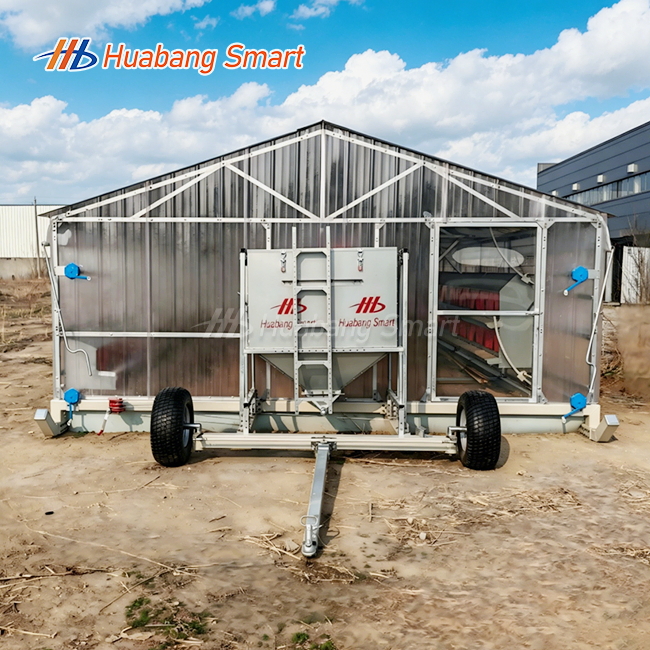
Mobile Chicken Coops, which are also called chicken trucks or pastured poultry shelters, are a big change in how business chickens are housed. These movable systems solve long-lasting problems in the industry, like the buildup of pathogens, the need for more workers, and growing consumer demand for products that are welfare-certified. These units make flock health, operating efficiency, and return on investment better for large-scale farmers, agricultural companies, and industrial farming operations that want to grow without damaging the environment. They do this by combining mobility with automation.
Benefit 1 – Enhanced Animal Welfare Through Mobility
Access to Fresh Pasture Reduces Stress and Disease Pressure
Moving Mobile Chicken Coops every 24 to 72 hours makes sure that the birds can always eat clean food, which greatly reduces their exposure to soil-borne diseases like coccidiosis and internal parasites. This practice mimics how animals naturally search for food, which lowers signs of stress and improves the general mood of the group. Research from free-range farms in Europe shows that rotational systems can cut the use of antibiotics by up to 40% while keeping the same level of productivity as confined systems.
Advanced Ventilation Supports Optimal Growth Conditions
Modern chicken houses that can be moved around have designed ventilation that keeps the amount of ammonia below 10 parts per million at the bird level, even when it's very hot outside. The units from Huabang Smart have a 5 cm raised center that improves airflow and cooling, keeping people from getting respiratory problems and heat stress. This stable climate directly leads to better feed conversion rates and even weight gain across the group.
Data-Backed Welfare Improvements Drive Market Premiums
Verified welfare certifications help commercial businesses that use pastured systems get higher prices—often 30% to 50% more than regular goods. Animal welfare standards are getting stricter in big retail stores and foreign markets. This is because of the need for natural behaviour expression, lower stocking density, and constant pasture access. Because of these things, Mobile Chicken Coops is a valuable asset for companies that want to reach high-value market segments.
Benefit 2 – Superior Predator Protection and Security Features
Integrated Defense Mechanisms Minimize Livestock Loss
Predation is a big problem for poultry farms, especially those that raise chickens in semi-intensive or free-range settings. Animal pests like raccoons, foxes, eagles, and dogs can do a lot of damage to homes that aren't properly protected. Professional-grade Mobile Chicken Coops have several layers of defence, including aluminum-zinc coated wire mesh with holes big enough to keep predators out, safe multi-point locking mechanisms that need to be manipulated with care, and raised floors that get rid of entry points at ground level.
Mobility as a Dynamic Security Strategy
Static housing becomes an obvious target for predators, but relocatable units can be moved out of the way of known predator routes or high-risk areas. This mobility throws off predators' learning patterns and makes them less likely to attack again and again. Agricultural operations in places where there are a lot of predators say that losing livestock dropped by up to 80% after switching from fixed to mobile housing systems. Another layer of operational resilience is being able to quickly move flocks that are at risk to safer places during bad weather or security threats.
Structural Durability Withstands Determined Attacks
Huabang Smart's mobile units have frames that are 275g hot-dip galvanised, which makes them very resistant to being broken into. The chassis and structure parts are strengthened to withstand a lot of outside force, which protects against both opportunistic and continuous predator tries. With its strong construction, low-profile aerodynamics, and special earth-anchor points, this structure stays stable even when there is a lot of wind, and it still keeps predators out.
Benefit 3 – Flexibility in Placement and Land Use Optimization
Rotational Grazing Enhances Soil Health and Farm Productivity
Moving Mobile Chicken Coops around a pasture in a planned way keeps nitrogen from building up in one place and keeps the soil from getting too compacted. The manure is also spread around as a natural fertiliser. Over time, this natural method makes the field better, which lets more animals live there without hurting the environment. Agricultural research shows that rotational systems can increase a farm's carrying capacity by 15% to 25% compared to continuous grazing or confinement operations if they are managed correctly.
Customization Supports Diverse Operational Scales
There are a lot of different sizes and shapes of commercial Mobile Chicken Coops, from small ones for farms with a lot of different animals to big ones that can hold 700 to 900 birds each. Huabang Smart lets you change the dimensions beyond the normal 15m x 5m x 2.8m footprint. Their OEM and ODM services make it possible to perfectly match the dimensions with the site's terrain, the weather, and the production process. This gives procurement professionals the freedom to choose equipment that works well with current systems and can also be expanded in the future.
Adaptability Across Climate Zones and Terrain Types
Modern Mobile Chicken Coops can be designed to meet the specific needs of each region's climate, whether they are being used in temperate areas that need better insulation or tropical areas that need better ventilation. Moving housing to shady areas during high heat or warm areas during cold weather gives operating benefits that aren't possible with fixed buildings. This ability to change lowers the costs of extra heating and cooling while keeping the plants in the best conditions for growth all year.
Benefit 4 – Simplified Maintenance and Operational Efficiency
Corrosion-Resistant Materials Extend Service Life
Because they are exposed to ammonia, water, and organic matter, industrial chicken settings are naturally corrosive. The hot-dip galvanised steel tubes used in Huabang Smart's construction mean that it will last at least 15 years without breaking down much. Salt spray testing proves that these materials keep their structural stability much longer than painted or lightly coated options. This means that they don't need to be replaced as often and cost less overall.
Automated Systems Reduce Labor Requirements by 70%
Adding solar-powered systems for automatic feeding, drinking from nipples, and removing manure belts cuts down on daily work by a huge amount. Remote management of flock health and growth factors is possible with automated weight monitoring and weather control systems. This automation makes it possible for one person to successfully handle multiple mobile units. This changes the economics of pasture-based chicken production and makes it possible to scale up commercially in ways that weren't possible with manual systems before.
Moving from manual tasks that require a lot of work to automated mobile systems has immediate operational benefits. Farm managers say that daily chores take a lot less time, which frees up workers to do more valuable tasks like marketing, talking to customers, and planning for the farm's growth. Smooth surfaces and parts that can be taken off make cleaning easier, which speeds up repair work even more.
Modular Design Facilitates Field Repairs and Component Replacement
Field serviceability is one of the main design principles used to make professional Mobile Chicken Coops. Standardised parts, easy-to-reach fasteners, and modular subsystems make it possible to fix things quickly, without the need for special tools or a lot of downtime. Huabang Smart offers detailed video installation guides and expert help to make sure that operations can keep up to 100% uptime even in faraway places. This serviceability factor is especially helpful for big operations that have to manage many units spread out over a lot of land.
Benefit 5 – Cost-Effectiveness and Enhanced ROI for Procurement
Competitive Lifecycle Economics Favor Mobile Systems
The original investment for Mobile Chicken Coops might look the same as for good stationary homes, but lifecycle research shows that they have big benefits. Better flock health means lower veterinary costs, better environmental conditions mean lower feed conversion ratios, and higher prices for pasture-raised products usually mean a positive return on investment (ROI) within 12 to 18 months. In commercial settings, studies have shown that mobile systems are 20% to 35% more profitable in the long run than traditional housing.
Procurement Flexibility Through Customization and Scalability
With Huabang Smart's direct factory model, there are no markups for middlemen, and customers can make a lot of changes. Professionals in procurement can describe exact configurations that meet practical needs. These can be anything from simple units that need to be moved by hand to fully automated solar-powered systems that are monitored by IoT. Options for buying in bulk, stepped shipping schedules, and flexible payment terms all work with limited capital budgets and allow for planned fleet growth as operations grow.
Turnkey solutions that include site planning, installation support, and operator training lower the risk of implementation and speed up the time it takes to start making money. The CE approval and 49+ patents that Huabang Smart has protect its quality and intellectual property. Its one-year guarantee and global after-sales network in 100+ countries make sure that customers can get help for a long time.
Feed Cost Savings Amplify Profitability
For pastured systems, having access to fresh forage and natural insect protein can cut the need for commercial feed by 15% to 20%. When added to the 8% savings on feed costs that can be made by using smart environment control to improve the feed conversion ratio, these improvements mean big long-term savings for the business. Over the normal service life of mobile housing equipment, the money saved on feed alone will often be more than the initial investment.
Conclusion
Mobile Chicken Coops are life-changing for commercial poultry farms because they improve animal welfare, protect animals better from predators, give farmers more practical freedom, lower upkeep costs, and strong financial returns. Mobility, technology, and environmental control can all work together to make a production system that meets both economic needs and changing consumer demands for eco-friendly, welfare-approved goods. Mobile housing systems are a tried-and-true way for farms to be more efficient while also having less of an effect on the environment. They are backed by both field experience and new tech ideas.
FAQ
What movement frequency maximizes pasture benefits?
Moving the birds every day is best for high-density grill operations because it gives them access to fresh food and keeps the dirt from breaking down in one place. Rotation times can be pushed back to 48 to 72 hours by using layer processes with lower filling densities. Specific timing depends on the number of animals, the season, and how quickly the pasture recovers. Visual assessments of forage loss and manure buildup help make schedules work in real life.
How do mobile co-ops perform in extreme weather conditions?
Professional units are built to handle tough weather. In colder climates, insulated designs with thermally wrapped watering systems keep things working, and in warmer climates, better airflow and solar-powered cooling systems keep things cool. Getting ready for a storm means setting up earth anchors and, if necessary, temporarily moving to safe places. Huabang Smart's customisation process takes into account the needs of different climates when creating specifications.
What installation support is available for bulk procurement?
Full services include evaluating the site, planning the layout, providing video installation guides, and providing on-site installation help. The technical teams teach the operators how to do daily tasks, follow maintenance rules, and fix problems. For foreign projects, responsive service is available throughout the equipment's lifecycle thanks to bilingual help and local after-sales networks.
How does mobility enhance biosecurity compared to stationary housing?
Rotational methods break pathogen cycles by giving flocks at least 21 days of rest in the field between moves. This stops the growth of parasites and lowers the risk of diseases spreading through the dirt. When all-in/all-out flock management is used with mobile systems, they achieve better biosecurity results than continuous-use stationary facilities, lowering the number of diseases and the need for antibiotics.
Partner with Huabang Smart for Advanced Mobile Poultry Solutions
Huabang Smart is one of the best Mobile Chicken Coops suppliers and has been in the business for 17 years. They offer commercial-grade movable chicken housing that is designed to be as productive and long-lasting as possible. Our systems are made of hot-dip galvanised steel, are automated by solar power, and can be set up in a variety of ways to accommodate 700 to 900 birds per unit. We offer turnkey solutions that include planning the site, installing the equipment, and giving the operators full training. Our products are CE-certified and have 49 patents. Purchasing managers who are looking to buy Mobile Chicken Coops for sale can take advantage of our direct factory prices, OEM/ODM services, and after-sales support in more than 100 countries around the world. Email our technical team at admin@huabangsmart.com to talk about your specific operational needs and get a detailed proposal with options for bulk pricing.
References
1. Fanatico, A. (2018). Sustainable Poultry Production: Commercial Pastured Poultry Systems. Sustainable Agriculture Research and Education.
2. Horsted, K., & Hermansen, J. E. (2017). Welfare and production aspects of organic broiler production in mobile housing systems. British Poultry Science, 58(3), 245-253.
3. Van Horne, P. L. M., & Bondt, N. (2020). Competitiveness of the EU poultry meat sector: Cost analysis and international comparison. Wageningen Economic Research Reports.
4. National Sustainable Agriculture Information Service. (2019). Pastured Poultry: Housing, Equipment, and Management Considerations. ATTRA Publication.
5. Dawkins, M. S., & Layton, R. (2021). Engineering positive welfare: Integrating animal behavior into housing design. Applied Animal Behaviour Science, 235, 105-115.
6. Zeltner, E., & Hirt, H. (2016). Factors influencing ranging behavior in laying hens and effects on welfare. World's Poultry Science Journal, 72(2), 259-268.

USER EVALUATE
Here is the customer's evaluation of us
YOU MAY LIKE
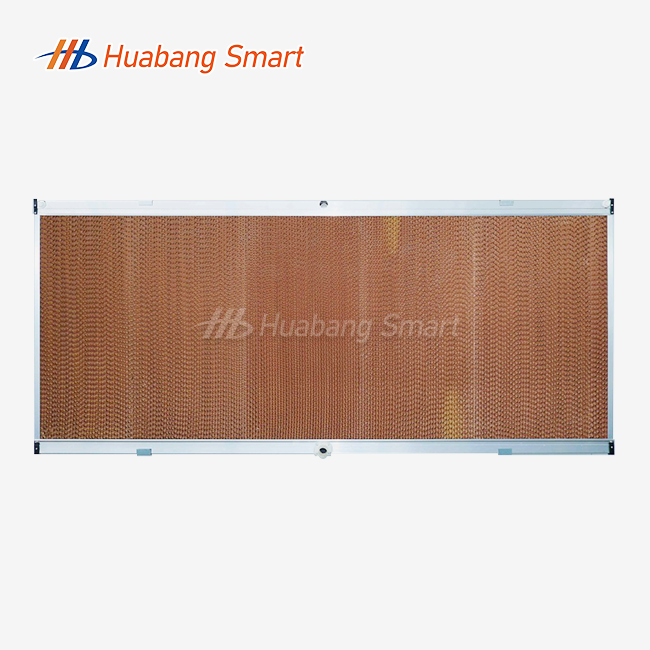 VIEW MOREPoultry Evaporative Cooling Pad
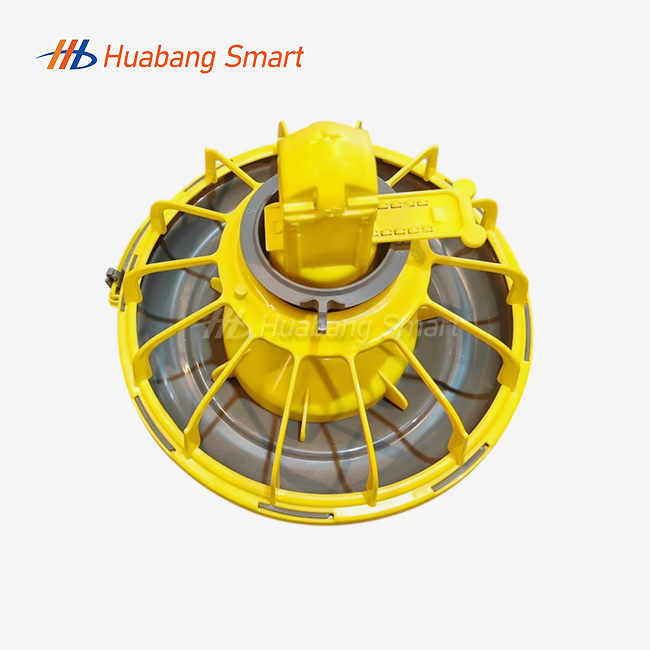 VIEW MOREChicken Feeder 6Kg
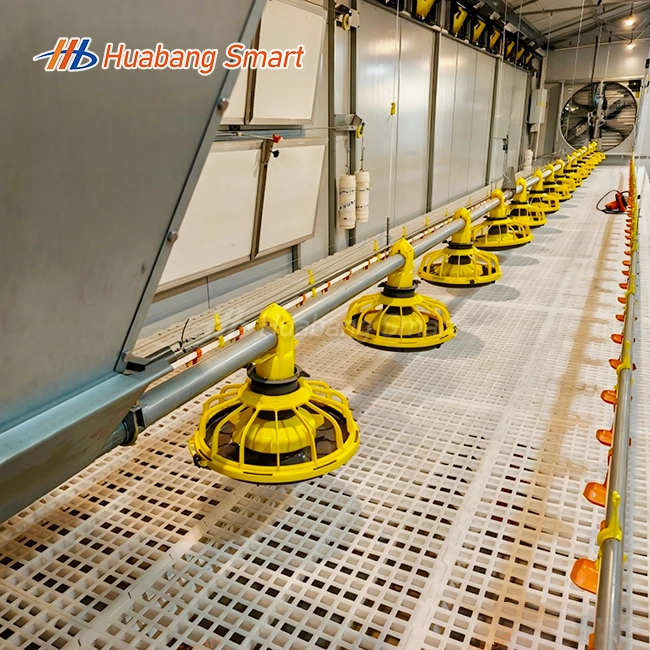 VIEW MOREChicken Feeder Anti Trampling
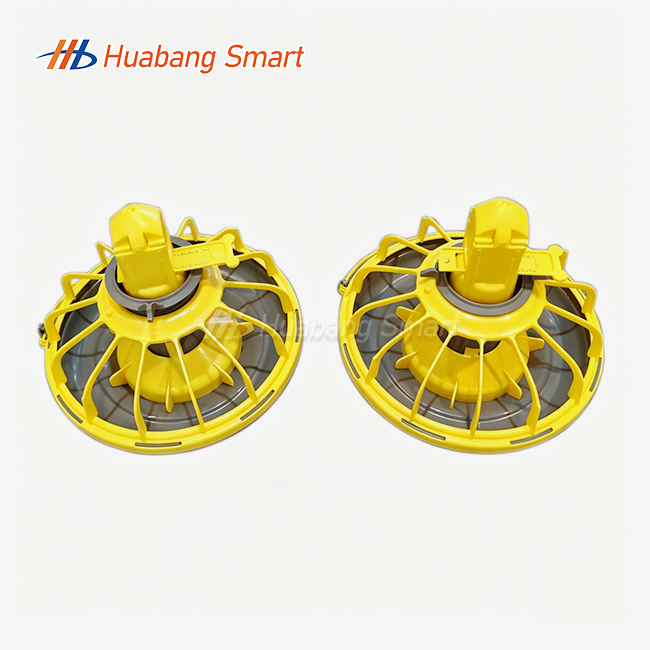 VIEW MOREPlastic Chicken Feeder
 VIEW MOREMobile Chicken Coop Tractor With Wheels Nest Boxes
 VIEW MOREChina Broiler Chicken Cage
 VIEW MOREPoultry Cages For Layer Chickens
 VIEW MOREChicken Cage For Layers Poultry Farming