
Which Automation Features Reduce Labor in Broiler Cage Farming?
Automatic feeding and manure removal reduce the most labor in broiler cage farming, followed by nipple drinking, climate control, and monitoring. A Chicken Cage Broiler Automatic system links these functions in one multi-tier unit, so workers spend less time carrying feed, filling water, and shoveling waste. Huabang Smart reports labor reductions of up to 70% with its H-type system. The real result depends on bird capacity, house layout, and local wages. Below, we show how each feature works, how to measure savings, and how to choose the right setup.
Conventional broiler production needs steady manual work: feeding, watering, flock checks, manure handling, ventilation changes, cleaning, loading, and record keeping. An integrated system takes over the repetitive parts, so your staff can focus on flock health and management. Farm owners, purchasing teams, distributors, and engineers planning a new house or an expansion will find practical guidance below.
What an Automatic Broiler Cage System Includes
What Is an Automatic Broiler Cage System?
An automatic broiler cage system includes cages, as well as sensors, lighting, ventilation, airflow, and central controls. The birds are fed and watered automatically, and the manure is removed. A simple box is just for birds. An automated system also does things on a set plan, like putting chicks to sleep, bringing food, watering when needed, changing the temperature, picking up manure, and keeping an eye on things with alarms. When you order our Chicken Cage Broiler Automatic, the batteries keep the birds off the ground at different levels. That makes it less likely that they will be exposed to ammonia and diseases like coccidiosis that are spread by dirt. Not as much work needs to be done by hand because of automation, but it can't replace daily checks on the flock, maintenance, hygiene, or vet supervision. People who want to buy should not only look at a few machines, but the whole system.


Why Labor-Saving Automation Matters
Work takes a lot of time and money on a broiler farm, and the jobs that are done over and over again take the most time. It's also fun to do things by hand. There isn't enough food for everyone, and water checks are missed on busy days. Every day, the same water and feed are brought in on time by machines. Even so, you should think about the number of birds that can be housed, the number of birds that need to be housed, the layout of the building, how much energy it uses, how easy it is to maintain, and any local rules that apply. Before you buy cage housing, find out what the rules are in your state and for your customers. Each market has its own rules and buying standards.
Chicken Cage Broiler Automatic Specifications
The Q235 hot-dip galvanized steel in our Chicken Cage Broiler Automatic system has a 275 g/㎡ zinc coating. Huabang Smart says the building will last for 15 years. Your cage can be 1.25 m x 1 m x 0.45 m, but it can also be 0.48 m or 0.5 m tall, and it comes with 3 to 8 tiers. A wire can be anywhere from 2.15 mm to 3.5 mm in size, and it can pull apart more than 450 MPa. Each square meter of stocking should have 15 to 25 birds. The frame is made of 3 mm extra-thick stainless steel, and the middle is 5 cm raised to let more air flow. It is approved by ISO9001 and CE, and it comes with a guarantee for one year.

Core Automation Features That Cut Daily Work
Automatic Feeding Systems
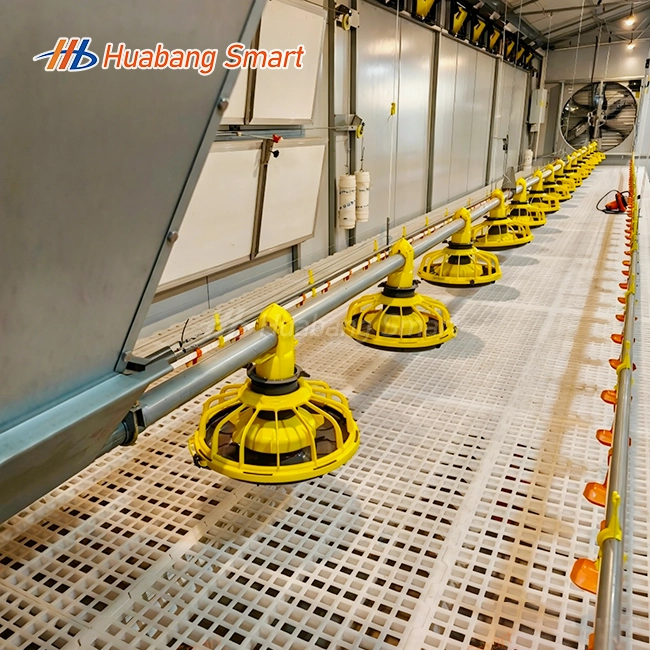
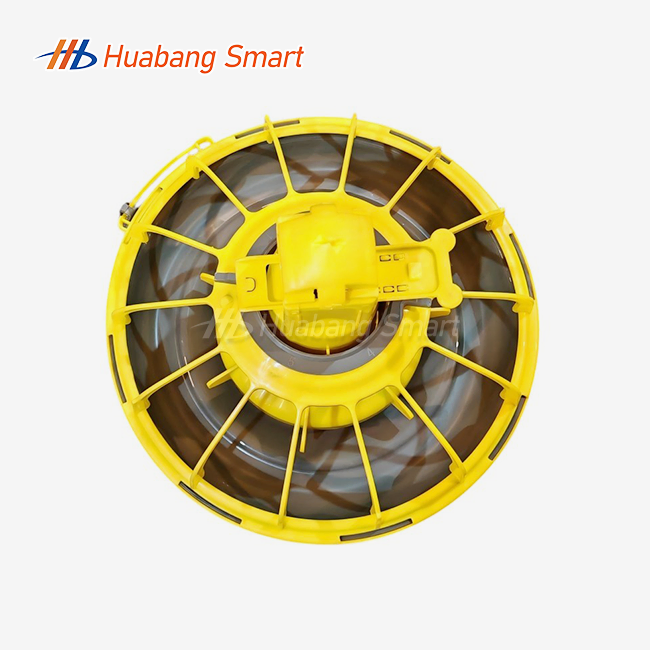
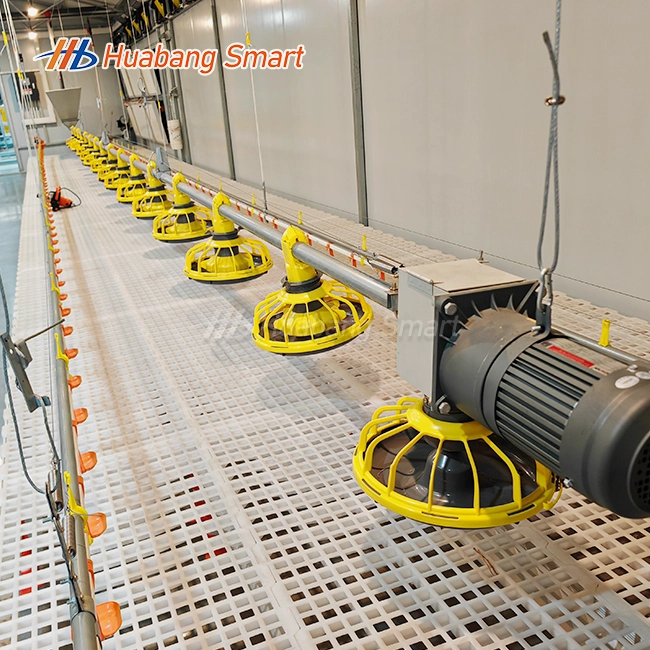
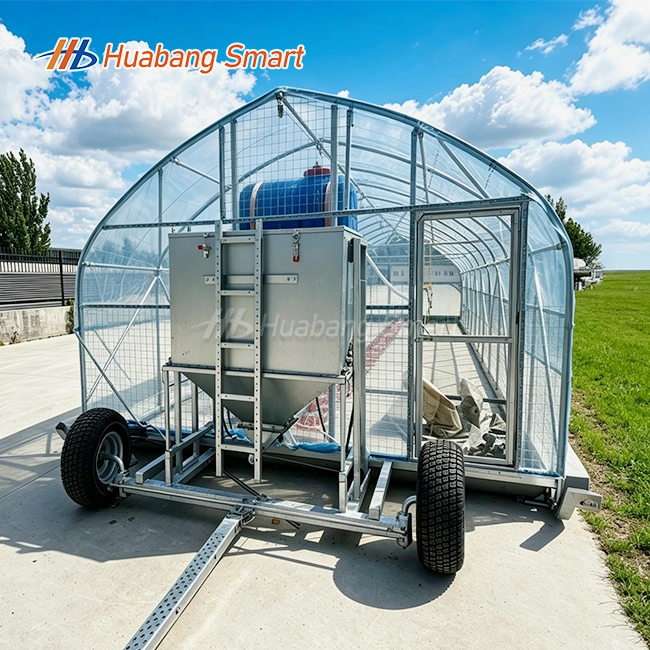
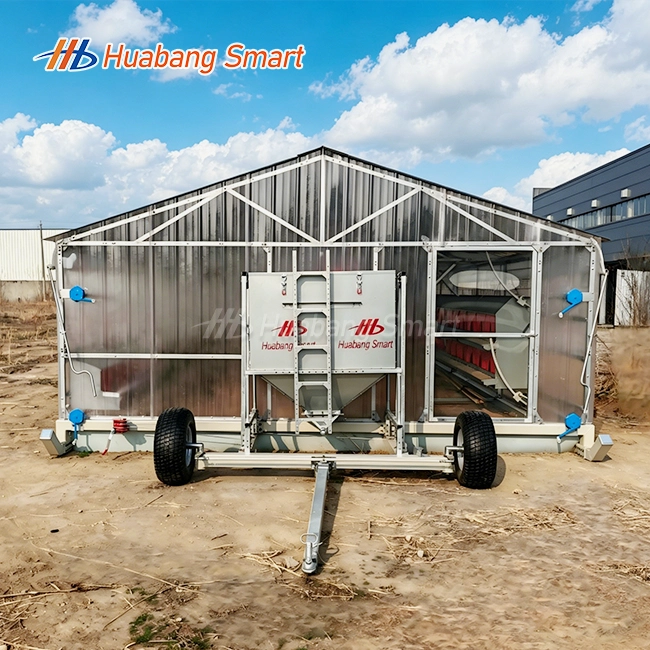
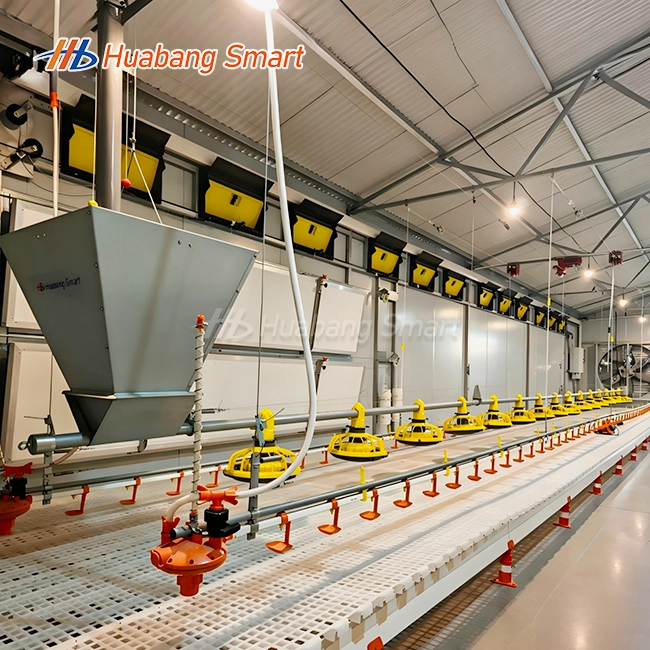
One of the easiest ways to save time is feeding. Large hoppers or augers move feed from bins or bulk hoppers to each row of cages. No one will have to carry sacks or fill tubs by hand. Feed is brought to each level of our system by moving hoppers. A high-precision auger design keeps waste from feed to less than 1%. Because deliveries happen at set times, they are always the same, which helps the birds gain weight regularly. As you compare suppliers, you should find out how much they can deliver, how fast, how much power their motor has, how they control it, how resistant it is to corrosion, how easy it is to get spare parts, and what happens if the power goes out. A good design also minimizes spills and stops in the feed.
Automatic Drinking Systems
If birds touch nipple drinkers, they can get water from them. This means that water containers don't have to be filled and opened by hand. A full line has a pressure valve, water lines, nipple drinkers, meters, cleaning spots, drains, and a tank or pump. How easy it is for birds to drink and whether the line leaks depends on the pressure and height of the feeder. This way, you won't have to hand out vitamins and vaccines by hand because our drinking lines can also take meds. To keep bacteria from growing, staff still need to clean lines, clear out clogged nipples, and make sure that water flows freely in every house. Filters, pressure gauges, and alarms make these checks go more quickly.

Automatic Manure Removal
The tiers of the cage deposit waste on polypropylene belts. On a set plan, the belts take trash from the house to a place where it can be picked up or composted. People won't have to dig under the cages this way. To keep the air quality stable and avoid ammonia spikes, we suggest running our belts every one to two days. They work 98% of the time to get rid of ammonia. Cleaner homes are also ready for the next flock more quickly. When picking a belt system, you should think about the material, the thickness, the width, the load capacity, the drive setting, how resistant it is to rust, and how easy it is to get replacement parts. Part of regular maintenance is making sure that the tension, alignment, rollers, and motors are all in good shape.
Ventilation and Environmental Control
Controllers for the environment change things like fans, air intakes, cooling pads, and heaters based on set rules and sensor readings. There is no longer a need to make changes by hand as birds age and the weather changes. One person can't handle all the changes in big homes or farms with lots of homes, so the job is harder to do. The temperature, humidity, and ammonia levels in our system are all monitored, and the system also makes changes on its own. The 5 cm higher center structure also allows air to flow and keeps you from getting too hot in the summer. We make sure that the temperature, insulation, and airflow are just right for your space. Still, controllers need to be calibrated, have backup power, and be checked out physically in order to work well.
Control Systems, Sensors, and Monitoring
A central control system takes care of food, checking the water level, lights, ventilation, clearing manure, and setting alarms. Temperature, humidity, feed levels, water flow, power status, and how the equipment is working are all sent by sensors. This way, small problems can be fixed before they stop production. Mobile alerts, daily reports, remote monitoring, and dashboards for more than one house can all be part of a local panel, depending on the project. Our tools for keeping an eye on things tell us how much water, food, and the environment there is. Automatically keeping track of weight also helps us figure out when to gather. Before you buy, make sure you know about the software's features, contact needs, data ownership, alarm reasoning, and human override options.
Measuring Labor Savings and Return on Investment
Which Automation Features Deliver the Greatest Labor Savings?
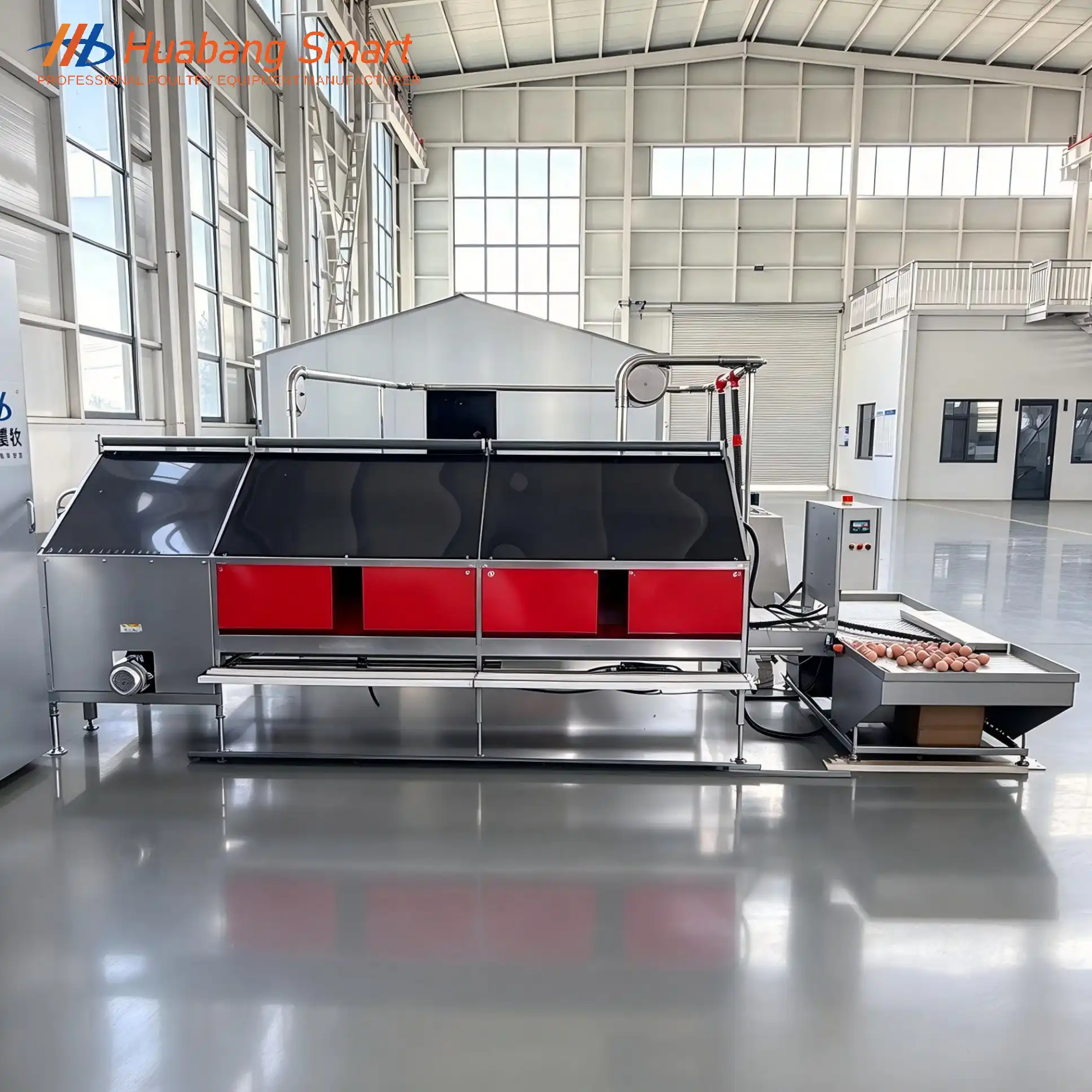
The most money is generally saved by feeding animals and getting rid of their waste, since these tasks are done instead of regular, hard work. With automatic drinking, you don't have to handle water as much. Alarms, lights, controls for airflow, and data tools all save time when making reports and changes. They also lower the chance of failures that cost a lot of money, like losing power or water. According to Huabang Smart's product data, up to 70% less work needs to be done with a fully automatic setup. If you harvest with floors that slide or bottoms that tilt instead of catching by hand, you can clear a house in hours with 80% fewer injuries. The real outcomes depend on the farm's size, the pay, the plan, and how far apart the service areas are.
Cage Farming Versus Floor Farming
See how cage and floor systems change the amount of work, room, food access, cleaning, air flow, investment, and management that needs to be done for birds. Birds are kept away from trash in boxes. We know that when 15 to 25 birds are kept per square meter, the death rate drops from 5 to 7 percent in floor systems to less than 3 percent. These two types of cages are different in how many levels they have, how tall they are, how much they can hold, and how hard they are to set up. It takes more work to build a multi-tier system than a single-tier system, but the single-tier system is easier to check. When you ask for prices, write down all the things you need. Such as, "Chicken Cage Broiler Automatic" refers to the functions that are put in, while "battery cage" refers to the building. You can also pick based on what the market thinks and the rules for support where you live.
How to Estimate Labor Savings and ROI
A simple way to start is with this equation: annual labor savings = reduced labor hours × loaded labor cost per hour. Writing down how many hours were spent feeding, cleaning, checking, and taking care of 1,000 broilers before and after installation is important. After that, things like bird counts, production cycles, energy use, maintenance, equipment life, and depreciation are added to make a full ROI model. It's also important to look at indirect benefits. In this case, our product data shows that the supply of feed and water is steadier, there is less downtime, and feed conversion rates can rise by as much as 8%. See what each supplier's number comes from, and then check it against the ones you already have. ROI changes based on things like salaries, how much energy costs, the plan, and how well the business is run.
Choosing, Installing, and Planning Your System
How to Choose the Best Automatic Broiler Cage System
Start by describing the situation: is it a new build or an addition? What are the birds like? How big is the house? What is the weather like? How much does the work cost? What tools are already there? How many levels the cage has, how many animals can fit on each level, how much food and water can be put in, how the waste belts work, how big the fan is, how much power it needs, and what the controls do. Plans should show utility lines and service permits. Not only should you look at the price of the tools, but also how much it will cost you to own them. This includes shipping, setting up, training, power, maintenance, spare parts, and the chance of having to shut down. Next, look at how much experience the supplier has with exporting, their warranty, their references, their engineering support, and their paperwork. It costs more for a low quote if there isn't much help. We check the water, power, and foundations that are already there to make sure that the changes will work with the spot you already have.
Installation, Commissioning, and Maintenance
It's important to do things the right way if you want good results. It usually goes like this: measure the building, finish the plan, erect the cage frames, connect the water and feed lines, set up the manure conveyors, add ventilation and controls, finish the wiring, test the machine, and train the workers. Installing something incorrectly loses time and raises the risk of something breaking. We help plan the site, make setup lists and video installation guides, install the equipment on-site, and take care of the chicken coop. Things that need to be taken care of are the water lines, belts, fans, sensors, panels, augers, nipples, motors, and gears. A lot of failures happen because of bad wiring, tuning, clogs, low water pressure, belts that aren't aligned right, or bad training. Back-up power, manual overrides, important extra parts, and written directions should always be on hand.
Commercial Applications and Project Planning
According to the buyer, "Match the system to the buyer." Small farms can begin with a modular unit that can be used for feeding, drinking from nipples, basic climate control, and moving manure. This unit can be made bigger if needed. We made our design so that it can be used on both large commercial sites with more than 50,000 birds and small farms with only 1,000 birds. Large farms need a lot of feed, the ability to control multiple houses, a way to keep track of temperatures from afar, and standard spare parts. People who buy from distributors, EPC contractors, or OEMs can ask for OEM/ODM production, custom sizes, designs made from your drawings, manuals, and electrical specifications that are specific to their area. You can get samples, and it takes 30 to 60 days to make them. Any custom project should be based on your building plans, your capacity goals, the weather, and how much technical help you need.
Conclusion
Feeding, drinking, removing waste, controlling temperature, and watching over the birds all work together as one system in Chicken Cage Broiler Automatic farming. This is where labor cost savings are greatest. Automatic feeding and manure removal save the most money because they eliminate repetitive, labor-intensive tasks. Drinking lines, sensors, and alarms further reduce the need for routine checks and minimize the risk of operational problems. When calculating potential savings per 1,000 broilers, buyers should consider equipment ownership, feeding, and maintenance costs. Cage and floor systems have different requirements for labor, space, and animal welfare. Buyers need to ensure that their selected equipment is compatible with their farm layout, climate conditions, farm size, and local regulations. Long-term cost savings also depend on proper installation, operator training, spare parts availability, and warranty support.
FAQ
What saves the most labor in a broiler cage house?
Animals that are fed and cleaned of their waste automatically save the most work because they don't have to do these heavy chores as often. Ventilation controls and alarms mostly cut down on the number of times that changes need to be made and the risk of running.
Can a smaller farm use a Chicken Cage Broiler Automatic system?
It can be used for both small farms with 1,000 birds and commercial sites with more than 50,000 birds because it has options for 3 to 8 levels.
How do the cage, feeder, drinker, and belts work together?
Each level has hoppers that hold food, nipples that hold water, and belts that hold manure. Sensors and controllers make changes to the house.
How often should the manure belts run?
Every one to two days. Running the plastic belts will help keep the air quality stable and keep the ammonia levels from getting too high.
Does the system support automatic medication?
Yes. People who work in the water lines make sure that vitamins and medicines get to the right places.
What information do you need for a quotation?
Please tell us how many birds there are, how big the house is, the electricity in the area, the weather, the amount of automation, where the house is going, and what needs to be done for installation. We can also help you compare prices, extra parts, customer service, and the total cost of ownership.
Plan a More Efficient Automatic Broiler Cage Project
Do you need a Chicken Cage Broiler Automatic Supplier for 10,000, 50,000, or more broilers? Based on how your farm is set up, Huabang Smart can send you a project-based idea, technical plan, and price. They are certified by ISO9001 and CE, offer OEM/ODM options, and can help you set up. More than 100 countries have hired us to build their homes based on the plans you give us. For more information, go to poultrycage.com or email ginny260831@gmail.com or huabangsmart002@gmail.com with your capacity, building plans, and where you want to send the cage.
References
1. Ross Broiler Management Handbook (Aviagen), 2018
2. Broiler Management Guide (Cobb-Vantress), 2022
3. Poultry – Production and Value Summary (USDA National Agricultural Statistics Service), 2024
4. Poultry Development Review (Food and Agriculture Organization of the United Nations), 2013
5. Welfare of Broilers on Farm (EFSA Journal), 2023
6. ISO 9001:2015 Quality Management Systems – Requirements (International Organization for Standardization), 2015

USER EVALUATE
Here is the customer's evaluation of us