



Chicken Cage Broiler Automatic Solutions for Commercial Poultry Farms
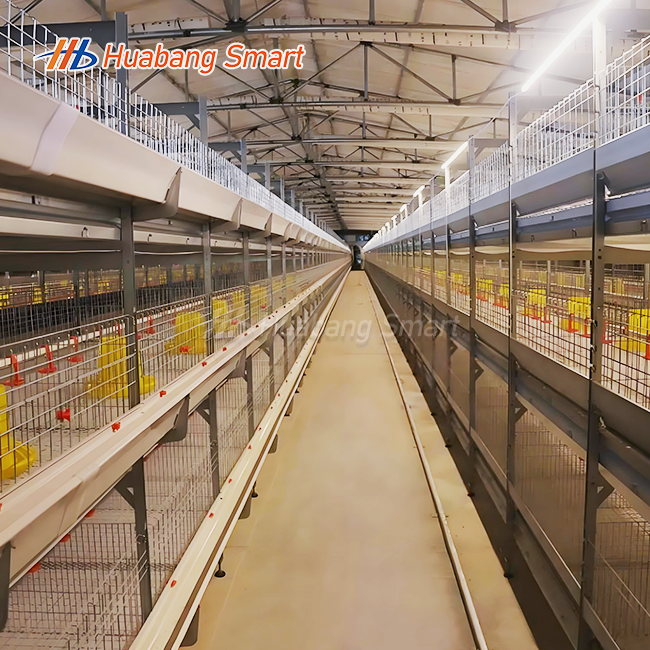
A Chicken Cage Broiler Automatic system gives commercial poultry farms one connected solution for housing, feeding, drinking, manure removal, and climate control. Instead of handling each task by hand, farm teams run a multi-tier H-type cage line that delivers feed and water on schedule and clears manure on a set cycle. Our system uses a 3mm hot-dip galvanized steel frame with a 275g/㎡ zinc coating. It has a standard cage size of 1.25m × 1m × 0.45m and a stocking density of 15–25 birds per square meter. This guide explains how it works, how to plan capacity, and how to choose a supplier.
How a Chicken Cage Broiler Automatic System Works
The Operating Principle
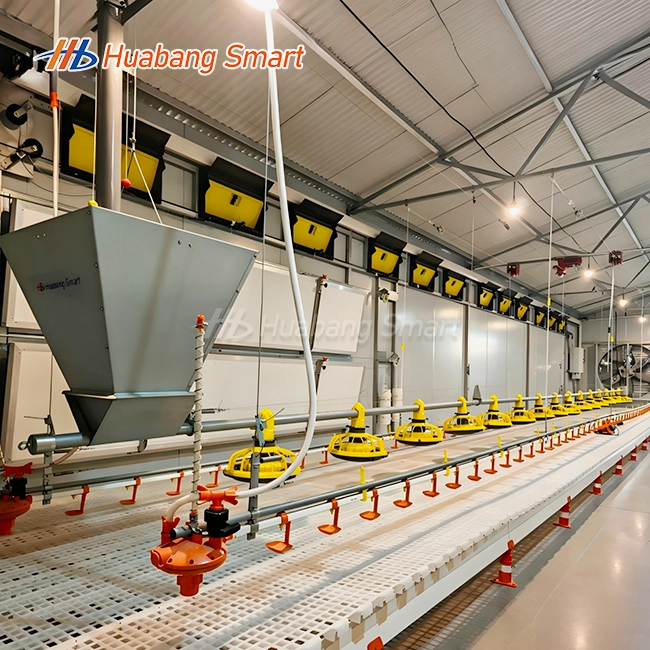
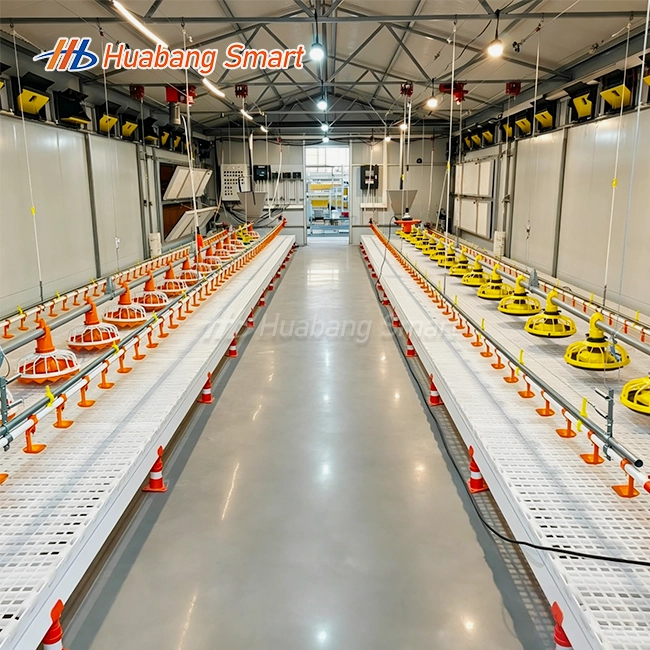
A Chicken Cage Broiler Automatic system is made up of many tools that all work together to take care of the same group. Feed is moved to each level of the cage by built-in traveling hoppers. It keeps water from spilling and gives you clean water when you need it. Manure bands made of plastic take droppings outside of the house at set times, usually every one to two days. Temperature, humidity, and ammonia levels are all monitored by sensors, which make changes happen on their own. I always remind people who buy from me that each subsystem needs to be able to hold the same number of birds. If the feed line serves more birds than the water line, the water line sets the maximum.
Key Components of a Complete Production Line
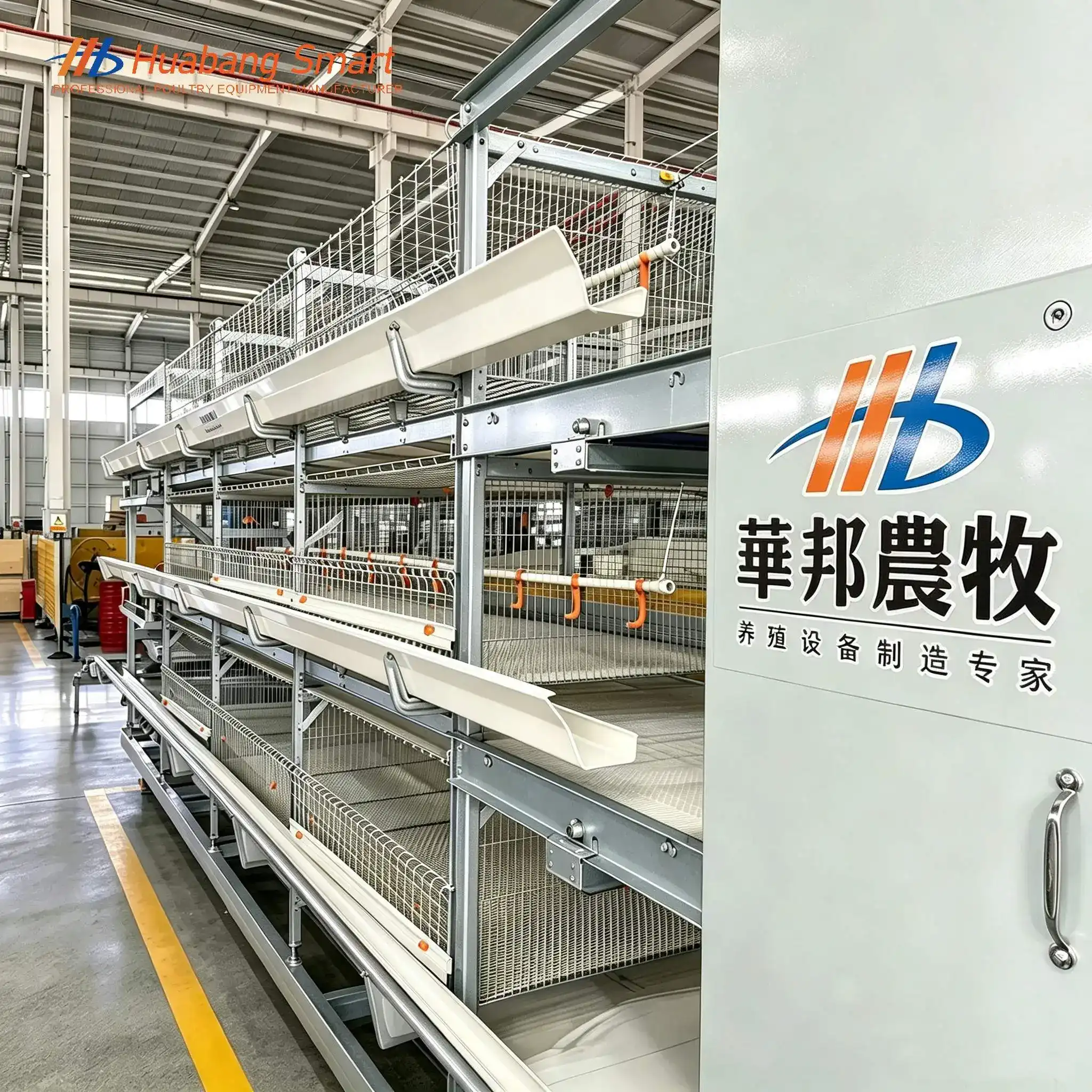
A full line isn't just cage frames and mesh panels. At least three to eight levels make up a Chicken Cage Broiler Automatic system. A collection system, PP manure belts, environmental sensors and controllers, and an automatic feeding system are also part of it. When we plan the site, we think about how to heat, cool, and ventilate the house based on how it is built. They should check how well the different parts work together, how easy it is to get repairs and extra parts, and how good the motor and gearbox are. Before you place your order, we give you a full configuration list to make sure you understand everything. A plan that is based on projects also makes it easier to set up later on.
Materials and Structure
It depends on the material you use and how long a cage line will last in a place with a lot of smoke and water. The frame, panels, and wire mesh are all made of hot-dip galvanized Q235 steel that weighs 275g/㎡. The frame is made of extra-thick 3 mm steel. The plan is for this cover to last for 15 years. The lines are more than 450 MPa strong when pulled apart. Their thickness is between 2.15 mm and 3.5 mm. Socks won't fall off or change shape because the floor mesh can hold a lot of them. It's easy to clean smooth metal surfaces because they don't let germs grow. A center that is 5 cm raised lets more air flow through, which lowers heat stress in the summer.
Planning Capacity and Choosing a Cage Configuration
Cage Dimensions, Capacity, and Farm Planning
Figure out how many birds you want to catch, how much they are worth on the market, and the rules in your area. A simple cage from us is 1.25m long, 1m wide, and 0.45m, 0.48m, or 0.5m high. How many birds should be stocked at a time depends on the market weight and the birds' health needs. There may be fifteen to twenty-five birds per square meter. Also, don't think of theoretical capacity as the same thing as useful capacity. Give birds room to grow, die, and get to their places of service. The longest roof, widest aisle, airflow, feed storage, water needs, and electrical loads are some of the other things that affect the plan. Our plan is made up of separate parts that can be put together to fit farms with 1,000 birds or more than 50,000 birds. Market weights can range from 2 kg to 3 kg, and cage heights can be made to fit those weights.
A-Type vs H-Type Broiler Cage Systems
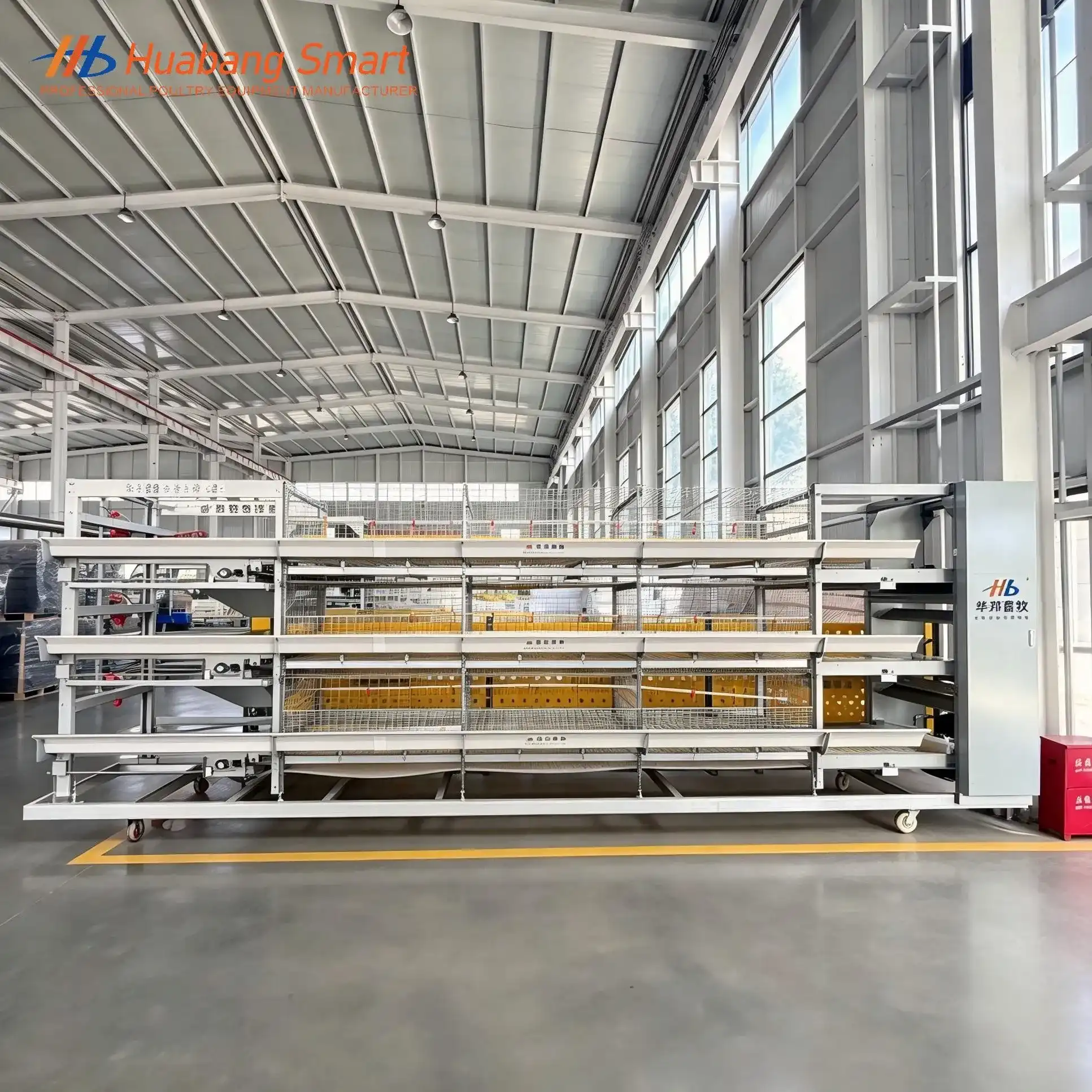
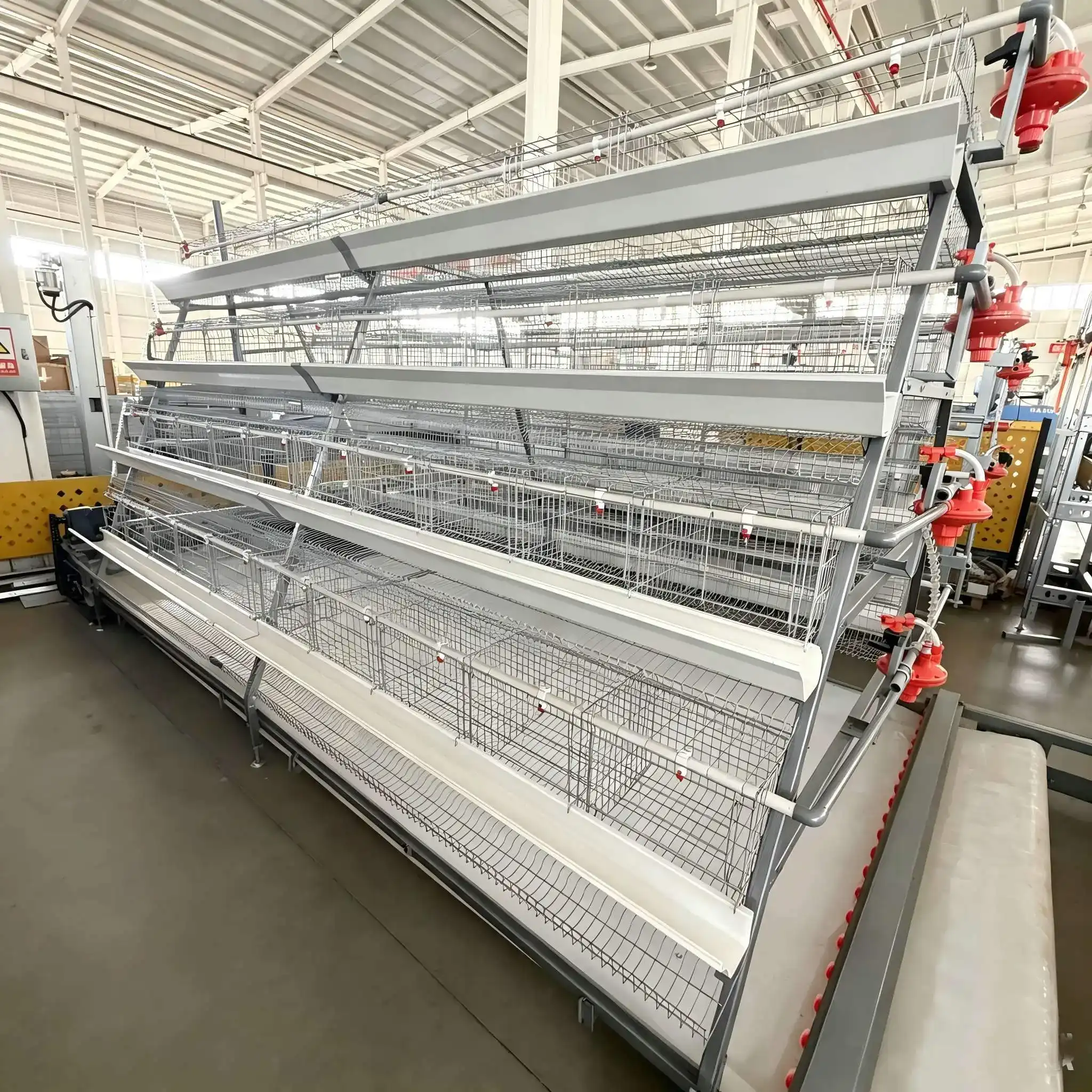
A-type systems are simpler, which makes it easier for birds to get in, and they are easier to set up. They work well for homes and farms that aren't too big or too small. When you stack cages vertically with an H-type device, you make better use of space and can make more. In other words, they can be used for bigger business tasks. There are 3, 4, 5, 6, 7, or 8 tiers in our Chicken Cage Broiler Automatic line. They are set up in an H shape. An H-type installation needs the structure to be carefully planned, with good ventilation, manure to be removed reliably, and maintenance to be able to get to the area when it's needed. Not just the price of the house, but also how much it will cost to run, how big it is, how many workers are available, and any plans for growth.
Comparison With Other Rearing Methods
An automatic cage line is a better way to use space, make sure animals get enough food and water, get more work done, and keep manure under control than floor raising. Birds don't get coccidiosis or other diseases that are spread by soil because they don't touch it. Cages also have some bad points. They need power that works, clean water, trained staff, and a plan for what to do in case something goes wrong. The National Chicken Council says that broilers are not kept in cages in the US, but on litter floors. US buyers should look at installer contracts, buying programs, and local rules before they choose cages. Make sure you know the rules about aid and what the market expects early on. They are different in each place.
Performance Benefits for Commercial Farms
Labor and Feed Efficiency
When you raise chickens, the most expensive thing is the food, so even small wins add up. With a high-precision auger system, less than 1% of the feed goes to waste at each level of the system. Birds don't have to fight as much because they get fed at set times and amounts. This helps them gain weight more evenly. The cost of labor has gone down by 70% since feeding, watering, and picking up manure are now done automatically. This frees up staff to check on the flock's health. Birds don't have to use as much energy to stay warm or cool when the temperature stays the same. This lets them use more of their energy to grow. You're getting up to 8% more people from feeds.
Environment, Biosecurity, and Mortality
A lot of heat, a lot of humidity, and ammonia can all make birds sick. Aviagen's Ross guidance often sets an ammonia goal of 10 parts per million, so it's important to clean up the manure often. Our PP conveyor belts get rid of waste 98% of the time. Birds can't touch the manure if the floors have all the slats in place. This breaks the cycle of pathogen transmission. Galvanized surfaces that are smooth are easy to clean. The amounts of temperature, humidity, and ammonia are all monitored in real time by sensors, which then make changes on their own. When this is done, the death rate drops from 5–7% in floor systems to less than 3%. People also need less medicine when they don't have as many diseases.
Flock Monitoring and Harvesting
Digital dashboards with centralized tracking show data on how much water is taken in, how much feed is used, and the environment. The staff is warned before a small issue affects the whole flock. Weight tracking that is done automatically keeps track of growth curves, so you don't have to guess when to plant crops. When birds are caught, they are gently put on conveyor belts by bottoms that tilt or floors that slide. Being hit with your hands is 80% more likely to hurt you than this. It's not hard to clean out a whole house; it only takes hours. Every year, more rounds of output can be done with less break between them.
Choosing, Pricing, and Avoiding Mistakes
How to Choose the Right System
First, discuss your production plan in detail, including the local climate, building type, working conditions, flock size, bird breed, target market weight, breeding frequency, and future expansion plans. When selecting a Chicken Cage Broiler Automatic system, compare the number of tiers, cage dimensions, feeding and drinking efficiency, manure removal, ventilation performance, energy consumption, operating efficiency, and material quality. It is also important to calculate the total investment, covering equipment costs, shipping, installation, utilities, labor, maintenance, spare parts, and expected service life. For projects in the US, confirm the local voltage, frequency, and electrical standards before placing an order. Based on your production requirements, we can provide OEM/ODM equipment and customized designs, adjusting cage height, tier numbers, and system configurations to suit your poultry house.
Price and Procurement Considerations
The price depends on the number of birds, the type of cage, the number of levels, the material used, the level of automation, the feeding and drinking equipment, how the manure is handled, the climate control, the customization, the shipping, and the installation. Find out if the price includes everything or just the tools. A clear price includes the motors, sensors, controllers, tools, extra parts, warranty, and setting up the system. It takes us 30 to 60 days to make something, and we guarantee it for a year. You can make changes to your order and talk to the factory directly when you buy from them. That way, you can see how the stuff and work are done before you place a bigger order.
Common Mistakes to Avoid
It's not smart to choose the best price without researching it first. If the price is low, it may not come with motors, controls, service, extra parts, or expert support. The second mistake is thinking that more can be done than is possible. Third, not paying attention to the building's edges, such as the height of the roof, the width of the aisles, the strength of the base, the water supply, and the power capacity. The fourth one doesn't have a plan B. Birds are safe when the power goes out because of backup generators, written instructions, and training for the people who use them. A lot of people also check customer service too late, after the sale. Before you place an order, you should find out about both the response time and the availability of spare parts.
Supplier Evaluation, Installation, and Support
Evaluating a Manufacturer or Supplier
You should look for people who can do engineering work in-house, make things, have experience with commercial poultry projects, and know how to make plan drawings, equipment schedules, and technical figures. Check the galvanizing, the accuracy of the welds, how well the motor and gears work, the quality of the controls, and the ways that the tests were done. People from other countries who want to buy something should also look at the export packaging, paperwork, manuals, sample projects, and voltage compatibility. People in more than 100 countries use Huabang Smart goods, which has been designing and making them for 17 years and has 49 key technology patents. It is also ISO9001 and CE approved. One skilled partner can take care of the cages, food, water, controls, service, and cleaning out the waste.
Installation Guide and Implementation Plan
Before you get there, check the building's size, supports, power, water, drains, air holes, and moving tools. The first parts of installation are marking the rows and putting up the supports. After that, the cages are filled with rabbit food, water, and poop. The controls and weather systems are the last ones. Test each part of the system by itself before the full-load test. At the start-up phase, you should check the water pressure, nipple flow, belt tracking, sensor accuracy, sirens, and emergency stops. Here are some of the things we do to help projects: site planning, product design, detailed configuration lists, video installation guides, on-site installation, and local support after the sale in other countries. When you become an operator, you learn how to use both automatic and human modes, as well as how to do daily checks, clean, and fix problems.
Maintenance and Troubleshooting
Every day when you check on your flock, you should check the temperature, humidity, airflow, alarms, strange noises, manure buildup, feed delivery, water pressure, nose function, and motor heat. When you do maintenance once a week or once a month, you should check the gearbox, flush the water lines, test the sensors, and look over the spare parts. Problems like feed not being spread out properly, drinkers leaking, manure belts slipping, and air that isn't stable happen a lot. When you need to, switch to manual backup and follow the steps written down to fix the problem. If you're having problems with electricity or controls, call qualified technical support. Our team tells you how to run a chicken coop after the building is done.
Conclusion
People who buy a Chicken Cage Broiler Automatic system should think of it as a whole production line, not just a place for chickens to live. There must be the same amount of food, water, dung belts, sensors, airflow, and birds that can fit in each cage. It is important to plan capacity based on service access and local rules. H-type tiers work best for bigger projects that need more space. The pros are discussed in this article. Some of the pros are less than 1% feed waste, 98% manure removal efficiency, death rates below 3%, up to 70% less work, and softer harvesting. People who buy things still need to think about things like stable power, trained staff, and regional rules for welfare. You shouldn't just look at price when making a purchase. You should also look at the total cost, the bill of materials, the quality of the materials, help with installation, and service after the sale.
FAQ
How does the system help with bird harvesting?
Floors or bottoms that tilt and move slowly move birds along a conveyor belt. If you do this instead of hand-catching, you will get injured 80% less often, and the catch-out will happen faster.
Can the cages hold broilers up to 3 kg?
Yes, market weights of 2 kg to 3 kg can fit in cages that are made to fit. It can hold more than 450 MPa of tension, so even when there are a lot of stockings on it, it doesn't sag.
What mortality rate can I expect?
When set up this way, death rates are less than 3%, but they're between 5 and 7% in floor setups. The air gets better because birds stay away from manure.
How often should the manure belts run?
You should run the PP manure belts every day or every other day. This keeps the air clean and stops the amount of ammonia from going up.
Request a Chicken Cage Broiler Automatic Proposal
The Chicken Cage Broiler Automatic systems that Huabang Smart makes are H-type and are made of 3mm hot-dip galvanized steel. They offer OEM/ODM design, samples, installation service, and a one-year warranty. Please email ginny260831@gmail.com or huabangsmart002@gmail.com with the address of your farm, the size of your house, the number of birds you want to raise, and their market weight. Our engineers will come up with a price, a plan, and a list of all the possible setups. Go to poultrycage.com to learn more about the product.
References
1. Aviagen. Ross Broiler Handbook, 2018.
2. Aviagen. Environmental Management in the Broiler House, 2018.
3. Cobb-Vantress. Broiler Management Guide, 2018.
4. World Organisation for Animal Health. Terrestrial Animal Health Code, 2023.
5. Food and Agriculture Organization of the United Nations. Poultry Development Review, 2013.
6. National Chicken Council. Broiler Chicken Industry Key Facts, 2024.

YOU MAY LIKE
-
 VIEW MOREpoultry automatic nesting box with egg conveyor
-
 VIEW MOREautomatic laying nest for chicken
-
 VIEW MOREChicken Coop Water Feeder
-
 VIEW MOREMobile Chicken Coop Tractor With Wheels Nest Boxes
-
 VIEW MORELarge Mobile Chicken Coop
-
 VIEW MOREMulti Tier Broiler Chicken Cage
-
 VIEW MOREChicken Feeder Machine
-
 VIEW MOREChicken Feeder