
Chicken Feeder Anti Trampling Designs for Reducing Feed Waste
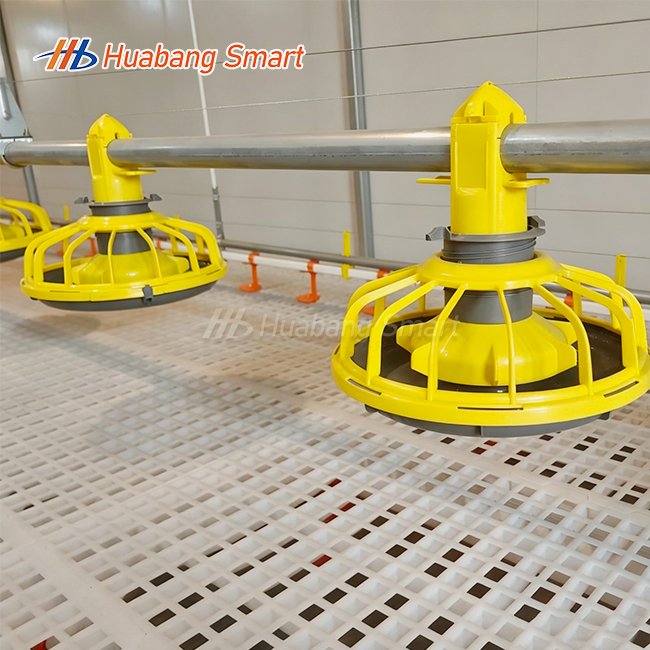
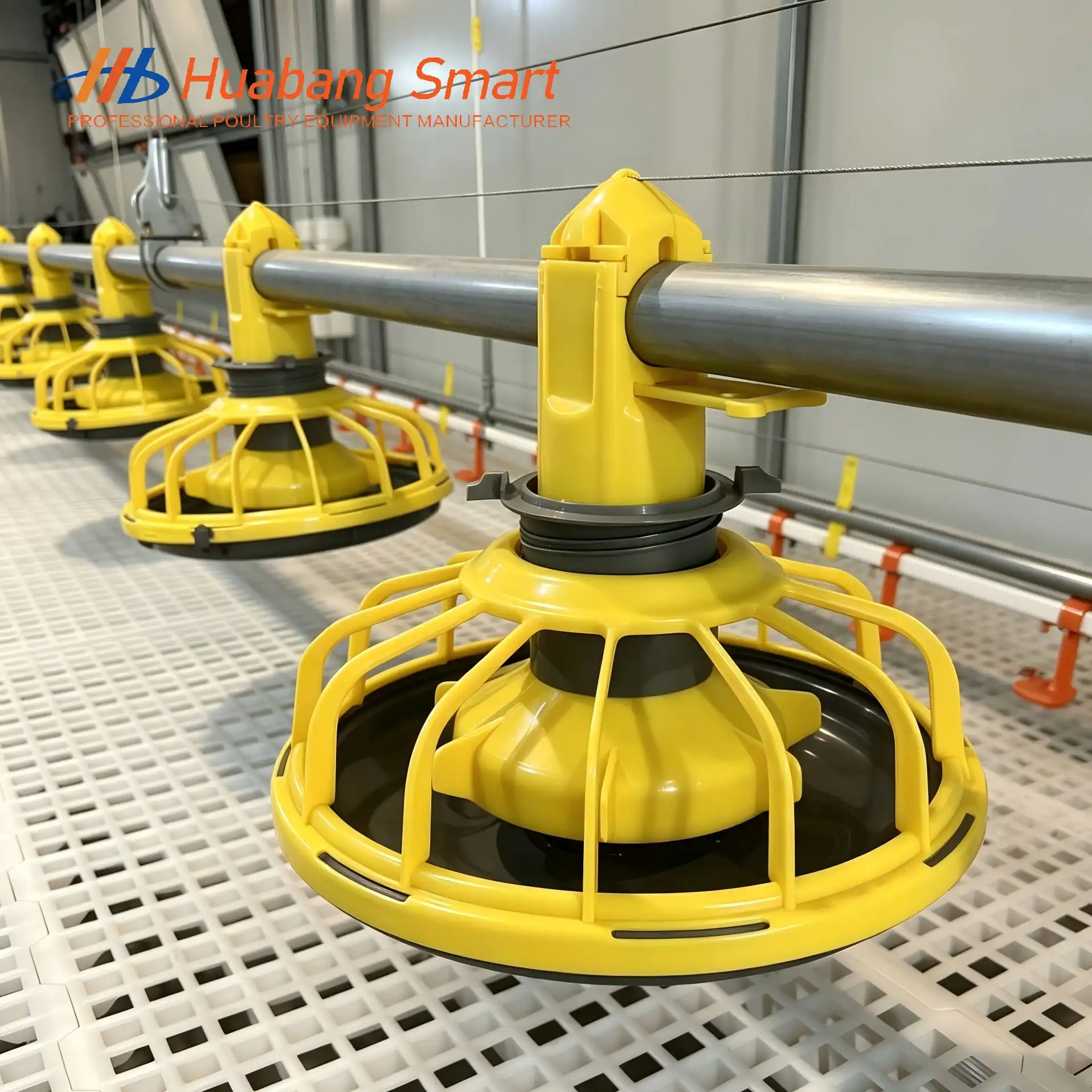
By preventing birds from standing in, walking through, or roosting on the feed, Chicken Feeder Anti Trampling designs lower feed waste. Birds can't scratch or flick food onto litter if there are vertical grills, partitions, raised bases, or the right height of the feeder. If there is less spilled food, there will be less litter that is dirty and wet. This is how Huabang Smart's automatic pan feeding system works in broiler and layer houses. It has 330mm pans, 16 feeding cells per pan, and can feed 1400 kg per hour. I'll explain how the designs work and how to pick one below.
Why Does Feed Waste Start at the Feeder?
The simple reason for most trash is birds using an open surface to eat.
How Chickens Turn Feed Into Litter?
Birds scratch, peck, and flick their beaks sideways all the time. This is known as "billing out." When the tray is open, the birds can step in the food and mix it with their droppings and bedding. A lot of the time, cats don't eat the litter, and wet litter makes coccidiosis and ammonia problems more likely. When there are a lot of birds, the dominant ones push the others aside and scatter the food as they move. Pan height is also important. Birds can get into a pan that is set too low, and chicks can't eat comfortably in a pan that is set too high. I suggest that you start every review of a feeder by watching how the birds actually use it. Most spills can be explained by how the birds use it.
What Waste Costs a Poultry Farm?
Feed is the most expensive part of raising chickens. According to Leeson and Summers in Commercial Poultry Nutrition, it's about 60% to 70% of the cost of production. This means that small leaks add up quickly. We have information about our products that shows the Huabang Smart pan feeder can cut feed loss by 15 to 25 percent and raise the feed conversion ratio (FCR) by 0.05 to 0.12 points. Don't use those numbers as exact numbers; the results will depend on breed, density, and management. Feed that gets spilled also costs money to clean up and attracts rodents and wild birds. Even a small increase in FCR is important when there are thousands of birds and many flock cycles.
What a Chicken Feeder Anti Trampling Design Actually Does?
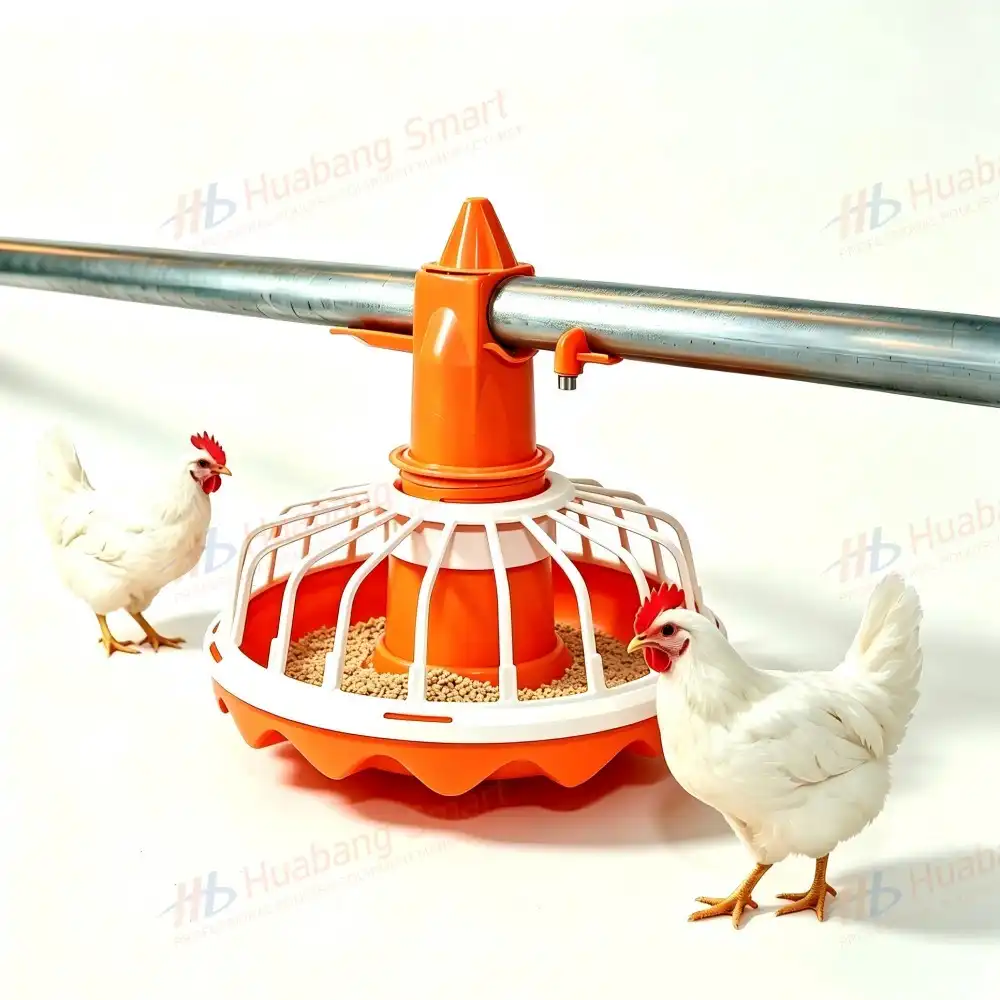
A Chicken Feeder Anti Trampling design is a strong structure that keeps birds from resting, standing, or walking on the food tray. The vertical grills, anti-roosting cones, and partition shapes make it possible for a bird to only use its head and neck to get to the food. Some anti-roost covers have a steep, self-shedding slope of more than 60 degrees that birds can't use to perch. This kind of feeder is also known as an anti-waste or no-waste feeder. The shape is more important than the label, so look at the openings, walls, and slope angles for real before you buy. Anti-trampling controls access and doesn't need to be automated. However, combining the two works best in large homes where refilling by hand takes time.
Core Design Features That Reduce Feed Waste
The following features are each aimed at a different behavior that sends feed to the floor.
Grills, Partitions, and Restricted Openings
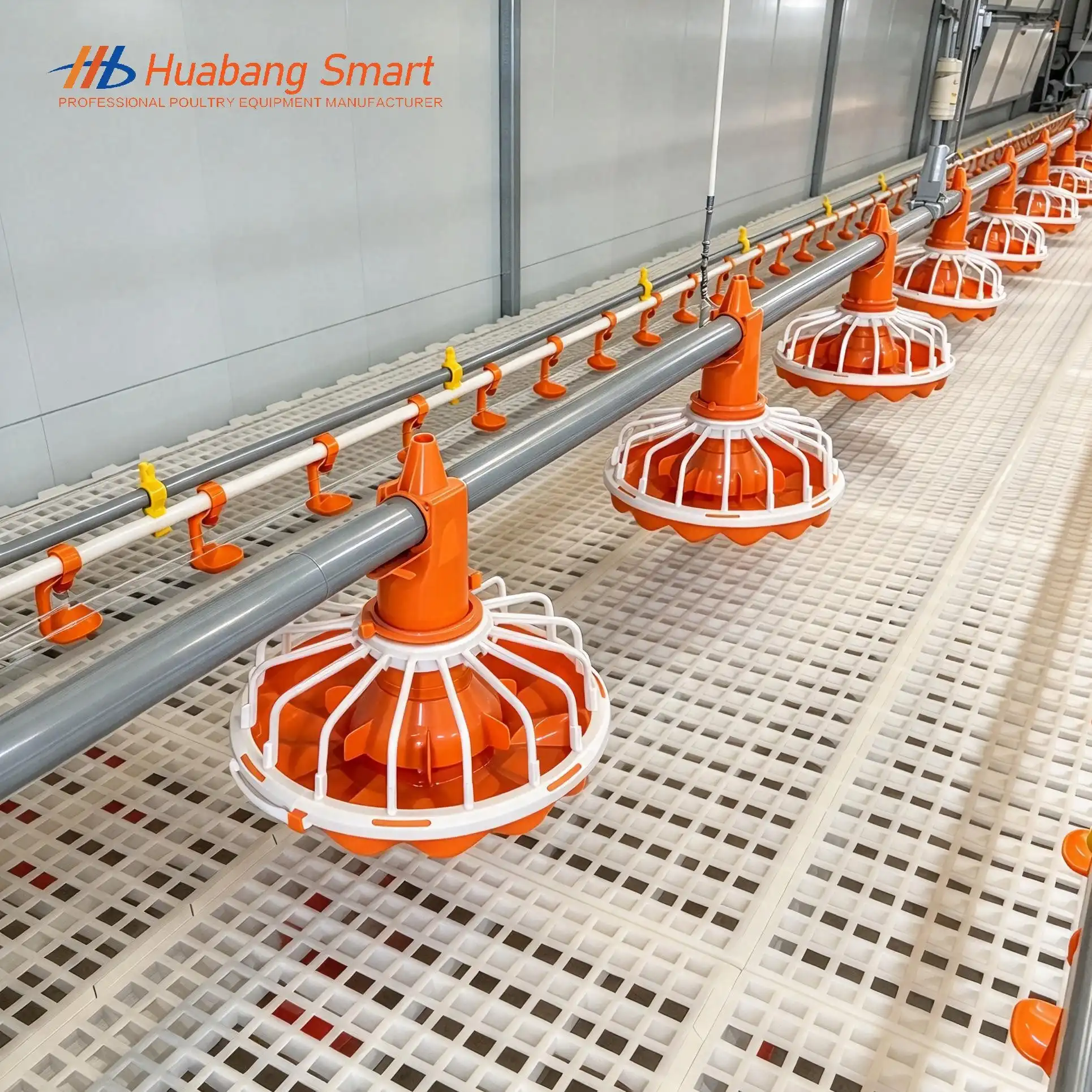
An anti-waste feeder is made up of vertical grills and walls. They divide the pan into feeding spots so each bird has its own place to eat, and they stop birds from flicking their bills to throw food away. Take care with the opening size. When openings are too wide, birds can get inside. When openings are too narrow, birds can get squished and get hurt. Tolerances in dimensions are also important. We check the quality of the food ports and find that even a 2mm difference can let a bird get into the tray. A carcass's quality is protected during processing when its edges are smooth and free of burrs.
Raised Bases and Correct Feeder Height
Feed that is kept off the ground with a Chicken Feeder Anti Trampling stays away from bedding and droppings. Once the height is set, the pan stays at the right level as the birds get bigger. Aviagen and Cobb's broiler management guides say to set the pan lip so that it's about level with the birds' backs and raise the feeder as the flock grows. Because Huabang Smart's system uses a high-precision winch, only one person is needed to change the line from day-old chicks to market weight. Birds can't tip over or drag food out of pans that are stable and level. During the grow-out cycle, keeping the food up high helps keep the litter dry.
Smooth Surfaces, Easy Cleaning, and Even Feed Flow
Smooth surfaces don't have as many corners where mold, droppings, and wet food can gather. Huabang Smart's pans are made of food-grade virgin polypropylene (PP), which doesn't react with acidic litter or air that is high in ammonia. Chemical resistance testing makes sure that disinfectants based on quaternary ammonium and chlorine don't break down surfaces or get into food. Flow is also important. Birds will pull food over the edge of pans that are too full, so the auger line makes sure that each pan stays at the same level. It saves work to have pans that are easy to clean between flocks. Get a sample from any supplier so you can try the cleaning method for yourself.
How Anti-Trampling Feeders Compare With Other Feeder Types?
You should make the right choice based on which problem costs you more: lost feed, lost labor, or both.
Versus Open Trays and Troughs
Open troughs and trays are cheaper up front and work well for small flocks that someone watches all day. They let birds in freely, so they stand on the food, scratch it up, and make a mess of it. It takes more work to clean, and wasted feed raises the cost of buying it. An anti-trampling pan costs more, but it saves you money in the long run because your cats will eat less, the litter will stay dry, and you will spend less time cleaning. For a commercial house, look at the total cost over a year, including the price you paid for it, the expected feed loss, the labor, and any parts that need to be replaced. If you waste food every day, a cheap tray can cost you more in the long run.
Versus Automatic Feeders Without Access Control
Feed is delivered on a set schedule by automatic feeders, which cuts down on work. If birds can still get into the pan, they don't stop waste on their own. The stronger setup has both: an automatic line that fills the pans and a pan that keeps birds from trampling it. This is how Huabang Smart's pan feeding system works. It is fully automatic and has anti-trample grills built into the same unit. First, decide which is worse: uncontrolled access, refilling work, or both. It can be hard for both in large broiler and layer houses, where feeding thousands of birds by hand takes hours and food falls out of open pans.
Plastic Versus Metal Construction
Plastic pans are better for floor-raising homes because they are lighter, won't rust, and can handle acidic litter. Metal parts are strong and don't bend easily, but they need coatings to protect them in air that is high in ammonia. Think about UV light, cleaning chemicals, shipping weight, and the chance of breaking it. The main parts of Huabang Smart's system don't rust in damp, ammonia-filled homes because they are made of brand-new PP pans and 75mm × 3.6mm PVC feed pipe. Salt spray testing according to ASTM B117 is a way to measure how much corrosion a metal part has. Instead of taking the phrase "weather-resistant" at face value, ask suppliers for test reports.
Huabang Smart Pan Feeding System: Specifications and Fit
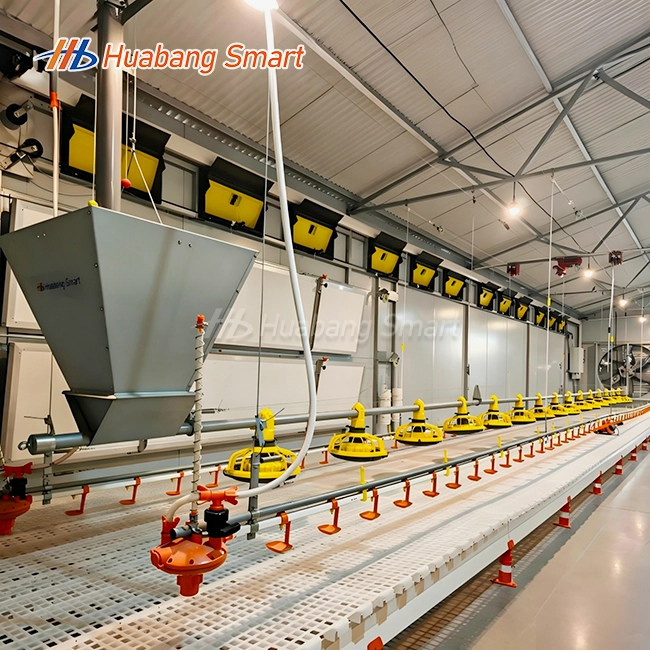
The Huabang Smart automatic pan feeder for chicken farms uses the above design ideas in the following way.
Capacity, Pans, and Automation
The feeding output of a Chicken Feeder Anti Trampling system is 1400 kg per hour. Each pan is 330 mm across and has 16 feeding cells, so many birds can eat at once without one opening being too crowded. In big houses, fast delivery is important because all the birds should get to the food at about the same time, which helps keep the flock uniform. With an auger drive, the feed moves evenly along the line. Automatic, timed operation also saves electricity and time that would have been used for feeding by hand. The number of pans I use depends on the number of birds I have, their breed, and the length of the house. Then I compare the number of cells per bird to your genetics guide.
Materials and Construction
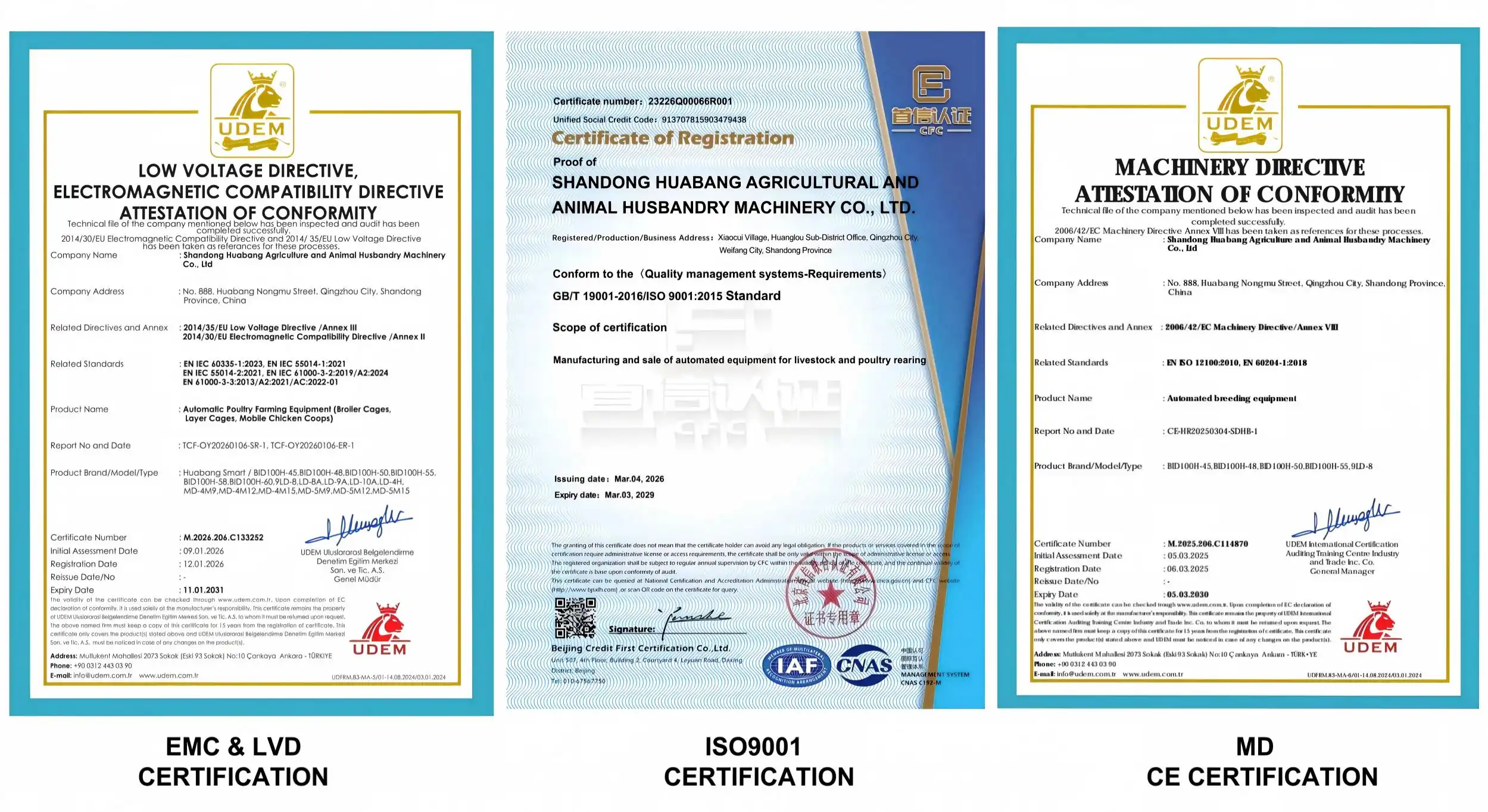
The 75mm × 3.6mm PVC pipe used in the feed line is high-impact resistant, as stated in our specifications. Food-grade virgin PP with a smooth, burr-free finish and high-density construction that meets ASTM D256 standards is used to make pans. The anti-roost angle is greater than 60 degrees, which keeps birds from perching on the surface. Static load testing shows that the guards can support the weight of several large birds without deforming, and dimension checks make sure that the feeding ports are within the acceptable range. It is made with an ISO9001 quality system, and the company is CE-certified. There is a one-year warranty, and the production cycle lasts between 30 and 60 days.
Broiler and Layer Applications
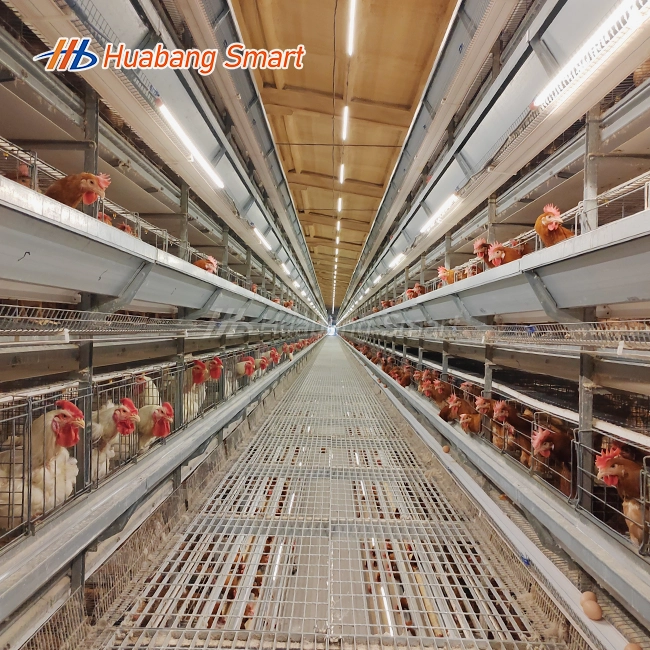
Because both broiler and layer chickens can use this Chicken Feeder Anti Trampling system, we made it. Grills keep birds from pecking out in industrial broiler houses, which helps them gain weight evenly. The partitions make sure that all the birds have equal access to the food, even when there are dominant birds that would scratch out the best food. The raised anti-scratch base keeps feed from getting wet in free-range and organic settings. The light, modular design makes it easy to set up quickly in both fixed homes and mobile coops. The system is also linked to Huabang Smart's smart Environmental Control Systems, which lets managers keep an eye on how much feed is being used and find problems early on.
Verifying Performance and Choosing a Supplier
Before you buy something big, you should make sure it works first.
Run a Baseline and Field Trial
Do the math to show that you've saved money. Before installation, write down how much feed was delivered, how much was expected to be used, how much was visible spillage, how many hours were spent cleaning, and the size of the flock for a normal cycle. Then put the new pans in a house with chickens of the same breed, density, and feed, and look at the results. Keep track of events like FCR, litter moisture, and refills. Because breed, age, and management can change results, you should also write down the conditions. A trial switch at one house costs less than a switch at the whole farm, and it gives your investment team proof that it can check. Huabang Smart can help you make a trial plan and tell you what metrics to keep track of.
Questions to Ask a Manufacturer
A short list helps keep talks with suppliers on track. Check the usable capacity, the number of feeding cells per pan, the feed formats that can be used, the test reports, the warranty terms, the lead time, the spare parts, and the installation support. Huabang Smart has a one-year warranty, a production cycle of 30 to 60 days, ISO9001 and CE certifications, and 49 core technology patents that cover the whole line of products. Before you approve a purchase order, make sure you get technical drawings and a configuration list. Also, find out how the supplier handles changes between batches. Clear written answers make delivery less of a surprise.
OEM, Installation, and After-Sales Support
For big projects, you need more than just tools. Huabang Smart can handle both OEM and ODM orders, and they can even make designs from your drawings if you need them. Site planning, product design, detailed configuration lists, video installation guides, on-site installation, and local support after the sale are all part of the services. The company was started in 2012 in Qingzhou, Shandong, and has 17 years of experience in designing and making things. It has customers in over 100 countries. That means that U.S. contractors, integrators, and distributors only have to deal with one partner for layout, delivery, training, and technical support after the installation is done.
Conclusion
Most of the waste at the feeder comes from birds scratching, pecking out, and stepping into open trays. Designs for a Chicken Feeder Anti Trampling use grilles, walls, raised bases, and the right height to make it hard to get to the head and neck. Even feed flow and smooth surfaces help keep litter clean and dry. These feeders are more expensive than open trays, but they cut down on the daily feed loss that drives up production costs. When paired with automation, they also cut down on the work needed to refill them. The approach is shown by Huabang Smart's pan system, which has 16 feeding cells, 330mm pans, 75mm PVC pipe, and an output of 1400 kg per hour. Savings of 15 to 25 percent on feed loss and 0.05 to 0.12 points in FCR depend on the management, so a baseline and field trial are the best ways to be sure before a larger rollout.
FAQ
What is the best way to reduce chicken feed waste?
Pair an anti-trampling pan with the right height, make sure it's full, and clean it often. Birds can't stand in or flick out food from grills, and automatic filling makes sure that each pan is always full. Before and after installation, look at the spillage and FCR.
How does an anti-trampling pan feeder work?
Birds can only use their heads and necks to get to food when there are vertical grills and walls. A slope of more than 60 degrees gets rid of birds that are sitting on top, and a raised base keeps food off the litter. Birds are also protected by edges that are smooth and free of burrs.
Does the Huabang Smart pan feeder suit both broilers and layers?
Yes. The system was designed to work with both broiler and layer chickens. A high-precision winch can change the height from day-old chicks to market weight, and OEM or ODM changes can be made to fit the layout of your home. The pan count is the same as your stocking density.
How much feed can the pan system save?
The data we have on our products shows that there is 15 to 25 percent less feed loss and FCR gains of 0.05 to 0.12 points. It depends on the breed, the number of animals, and how they are managed, so do a baseline test and a field trial first.
Get a Chicken Feeder Anti Trampling Quote From Huabang Smart
Are you looking for a company that makes Chicken Feeder Anti Trampling and also helps with design, delivery, and installation? Huabang Smart has been making products for 17 years, is ISO9001 and CE certified, and has a pan feeding system designed for broiler and layer houses. They also offer OEM and ODM options. To get product information, email ginny260831@gmail.com or huabangsmart002@gmail.com with the size of your house and the number of birds you want to house.
References
1. Ross Broiler Management Handbook, Aviagen, 2018
2. Cobb Broiler Management Guide, Cobb-Vantress, 2018
3. Commercial Poultry Nutrition, Leeson and Summers, 2005
4. Commercial Chicken Meat and Egg Production, Bell and Weaver, 2002
5. ASTM B117 Standard Practice for Operating Salt Spray (Fog) Apparatus, ASTM International, 2019
6. ASTM D256 Standard Test Methods for Determining the Izod Pendulum Impact Resistance of Plastics, ASTM International, 2010

USER EVALUATE
Here is the customer's evaluation of us