



How to Configure H Type 3 Tier Broiler Chicken Cage for Broiler Growth
Before you set up an H Type 3 Tier Broiler Chicken Cage for your chickens to grow, you should choose their breed, size, and market weight. Then match the size of the cage to how much room there is for airflow, food and water, and getting rid of waste. Each Huabang Smart unit is 125 cm × 100 cm × 45 cm (about 49 × 39 × 18 inches) and can hold 15 to 18 broilers. The final count will depend on how much the birds weighed when they were killed. Next, check the steel's coating, line up the feeder belts and tracks, and test everything before the chicks arrive. Last, look at the three- and four-tier options based on how tall your building is and what the weather is like there.
Start With Production Targets and Cage Structure
We start by making sure the system works for your birds, building, and goals, since every farm is different.
Define Your Production Requirements First
Before you ask for a quote, write down the number of birds you want, their breed, the length of their cycle, their final market weight, and the number of days they will be leased. There are weight goals for each age group in breed guides from Aviagen and Cobb. This helps you come up with numbers that make sense. The planning formula is simple: required cage capacity = target number of broilers ÷ planned occupancy rate. Take the case of 20,000 broilers that are 95% full. They need room for 21,053 birds. If each cage holds 16 birds, that's about 1,316 cage units, or 439 three-tier columns. There is a difference between rated capacity and operating capacity at market weight. For this reason, a cage that can hold 18 small birds might only be able to hold 15 bigger birds. As well as room for future growth, make sure there is room for service aisles, fans, and maintenance access.
Understand the H-Frame Structure
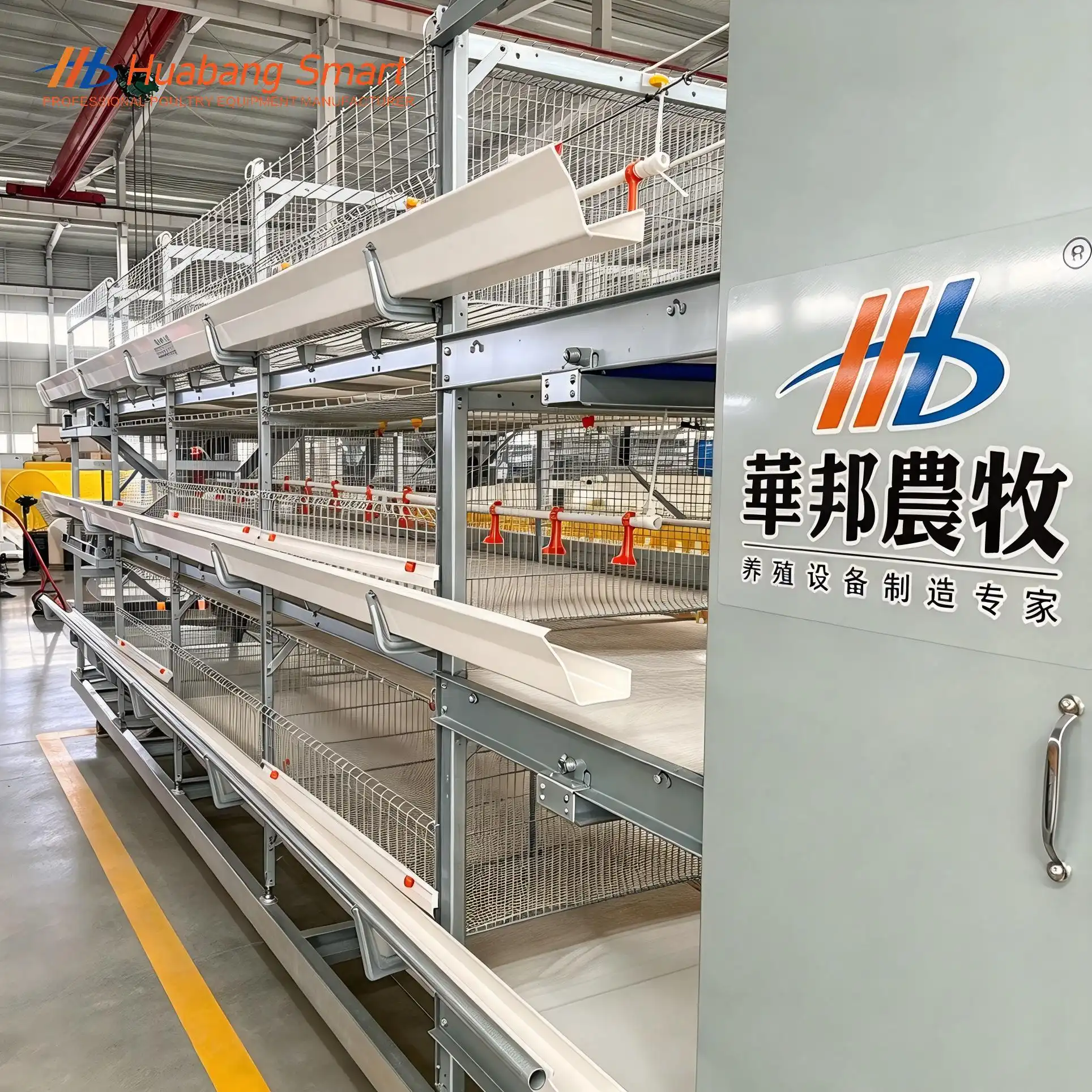
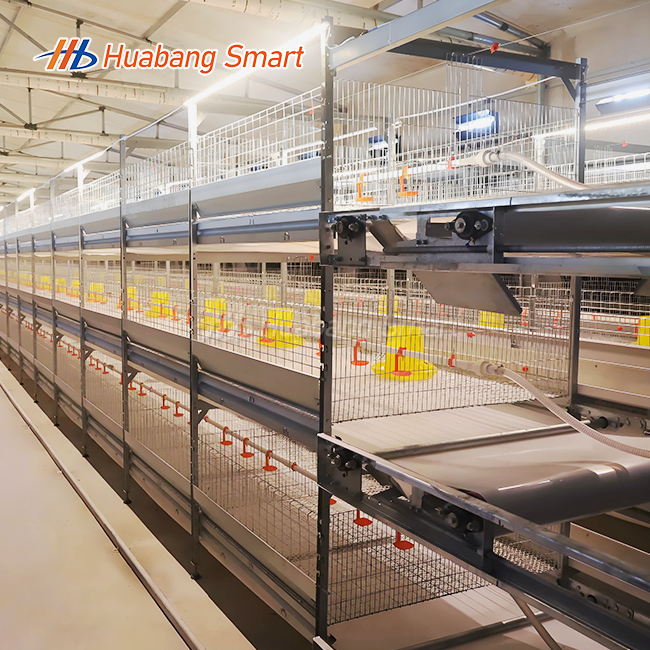
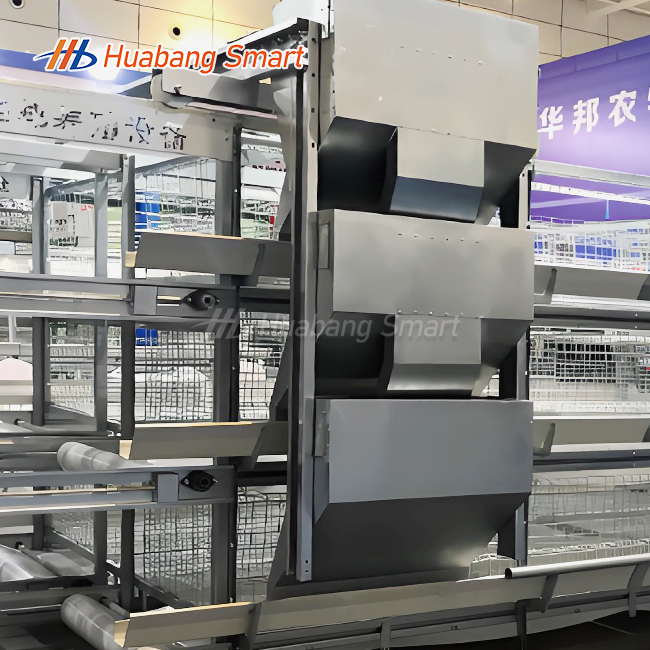
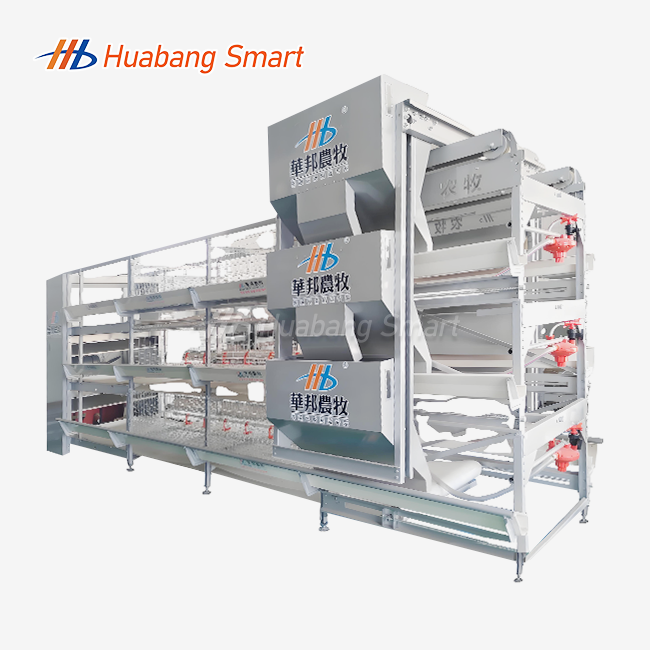
The H Type 3 Tier Broiler Chicken Cage has two levels that are stacked on top of each other on steel column. Smart makes the frame out of 3 mm hot-dip galvanized steel. There is 275 g/m² of zinc on the frame and mesh. You can't use an A-type layout with an H-frame's central feeding track and manure belt under each tier as well. A full system includes cage walls, doors, nipple drinking lines, a PLC-controlled chain feeder, PP manure belts, drive units, and sensors. To judge a supplier, check how well the wires hold weight, how consistent the welds are, and how nice the coating is. Also, look at how the edges are finished. Skin and feathers can get hurt by the rough edges of wires. One more thing that helps airflow through the cage is the 5 cm high center.
Verify Dimensions, Capacity, and Specifications
Do not just ask for the number of birds; also ask for the whole number. It's 1.25 m long, 1 m wide, and 0.45 m, 0.48 m, or 0.5 m tall. The H-type line has three to eight levels. One unit has 1.25 m² of floor space, which means that there are 12 to 14.4 birds per square meter of floor space, or 15 to 18 birds. There are several ways to find out how many people can fit in a section, tier, row, or house. You can also ask about the aisle width, drinking line height, and building clearance. It's best to show grids, fans, inlets, silos, water tanks, and control areas in either 2D or 3D. It costs a lot less to fix a mistake on the drawing than to move steel that has already been delivered.
Configure Feeding, Drinking, and Climate Control
All three levels should get the same amount of feed, water, and fresh air after the building is set up.
Match Feeding and Drinking to the Cage
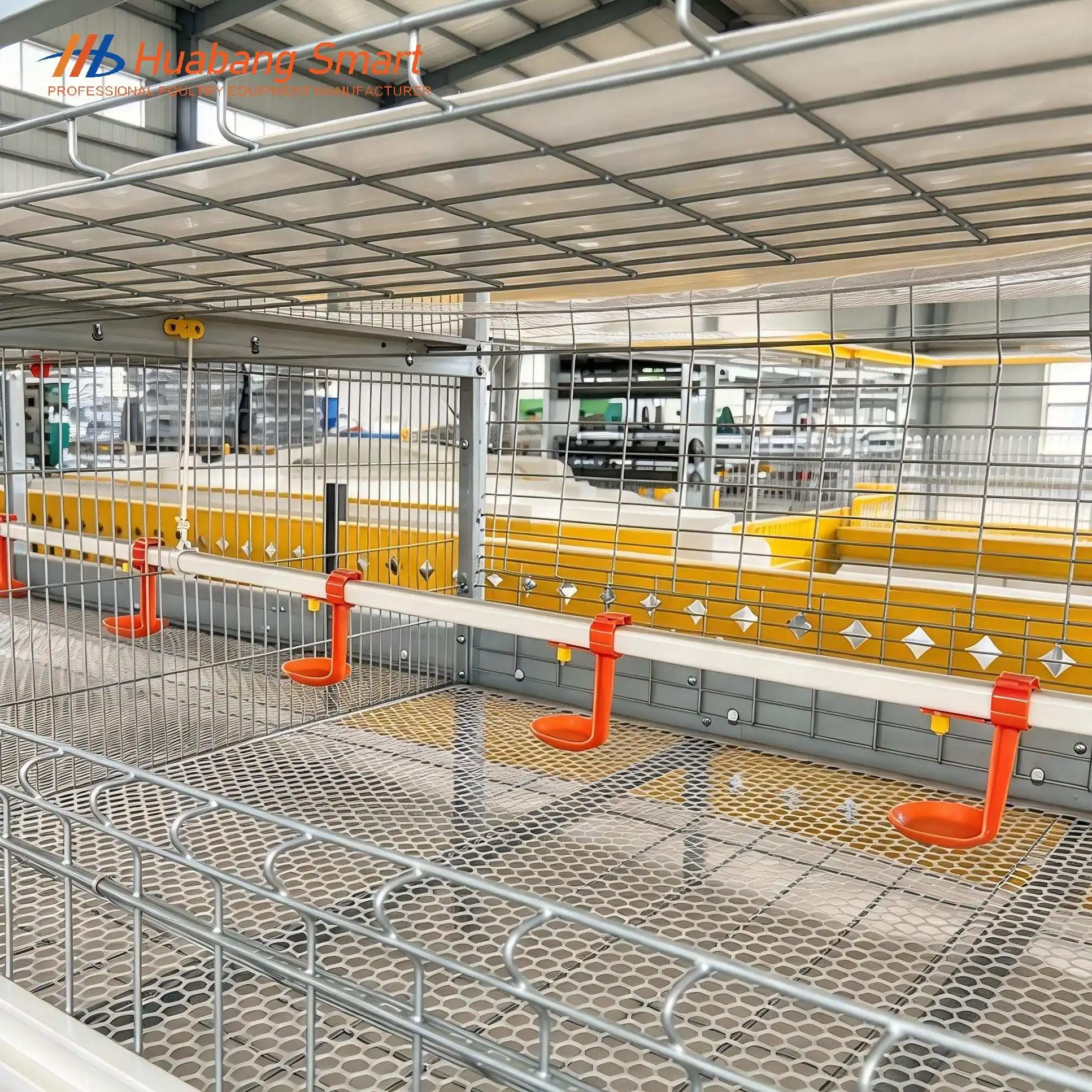
Everyone in the flock needs to get the same amount of water and food, or the flock will grow in different ways. The auto-chain feeder moves along the central track and gives birds food based on their age and weight. It is controlled by a PLC. So, there isn't much feed waste. You can change the height of nipple drinkers so that you can lower them for chicks that are just one day old and raise them as they get bigger. Flow rates of 60 to 80 ml per minute per nipple are maintained by safety valves. The nipples don't get clogged because they are filtered and flushed regularly. On your drawings, you should show where the trough is, how high the nipple is, how wide the cage is, how much space there is between the tiers, and how to get to the cage for maintenance. A daily growth curve is added by weight sensors in some cage units. So, it will be clear right away if the animals eat less or put on weight.
Plan Ventilation, Lighting, and Climate
The top, middle, and bottom levels of an H Type 3 Tier Broiler Chicken Cage all need to be able to get air without letting birds get cold or leaving dead spots near the manure. You can let air into the cage through a tunnel or cut it open. Make sure the fans and airflow holes are the right size for your climate and the length of your home. Put the temperature and humidity sensors at different cage heights instead of just one in the middle if you want to use a stacked system. Because warm air rises, this is the case. It should be easy to see enough to clean, check on feeding, and get to in case of an emergency. Birds should be able to get to every level without workers getting in the way. Before you place your order, talk to your ventilation engineer about the final layout. The flow of air is affected by how the cage is built.
Adapt the Configuration to Your Climate
Things change because of the weather. Huabang Smart has a 50 cm tier height and wider cross-ventilation openings to help cool down places that are above 35°C (95°F). Farms in cold areas can ask for changes to the frame that work with insulation and closed-off side panels that keep the coolness in during the summer and keep the heating working as well as it should. UV-stabilized manure belt material and bearings that don't get dirty can be used in dry, sunny places. When you ask for a proposal, let them know what the weather is like where you are. Things need to be different in the summer on the Gulf Coast and in the winter in the north. Take a look at the welfare rules too. EU Directive 2007/43/EC sets the limit at 33 kg/m². 18 birds in a 1.25 m² space weigh 36 kg/m², or 2.5 kg each. So, the number of birds is based on the final weight.
Set Up Manure Removal, Hygiene, and Durability
Cages and dirty air slow down growth, so taking care of the manure and making sure the materials are good both need the same amount of attention.
Configure Manure Removal
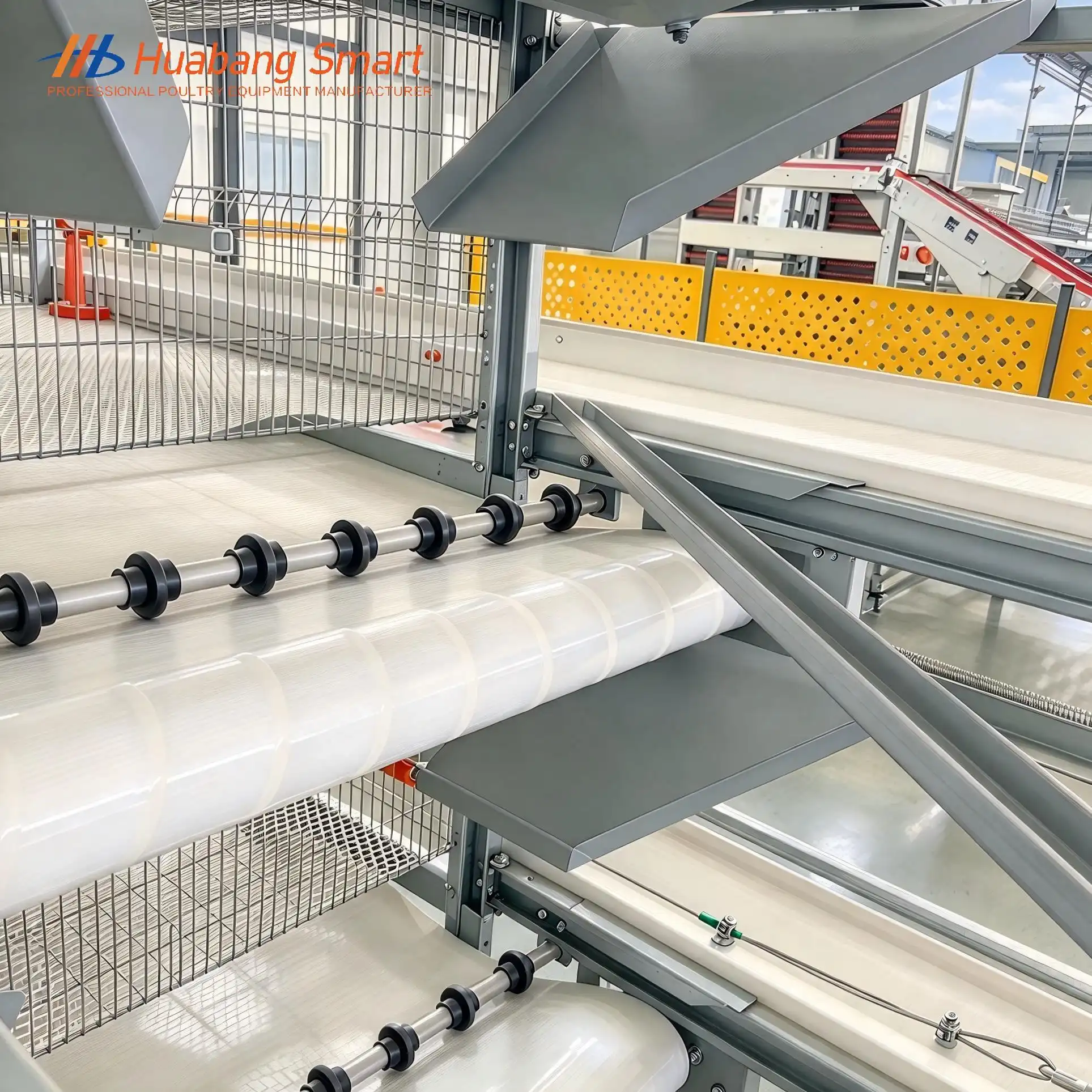
Manure changes the amount of work, the smell, and the risk of disease. Along with each level of Huabang Smart is a PP belt. The removal takes place on time, usually twice a day, thanks to a control system. This helps keep the level of ammonia below 20 parts per million. The Journal of Applied Poultry Research is run by Ritz and his coworkers, who study poultry. They say that high levels of ammonia can hurt birds' lungs and make them do worse. Line up, tighten, and power the belts to make sure that trash goes out safely at the end of the house. Safety features on the motor and the automatic centering of the belt help keep the track from moving and the motor from getting too hot. In order to keep ammonia levels from rising when manure is wet, you should fix any nipple or regulator leaks right away. Every day, you should look for leaks, clogs, broken wires, and strange droppings.
Build In Biosecurity
Birds stay away from droppings on a floor with all the slats in place. This stops the spread of coccidiosis, E. coli, and Salmonella. Each level is its own clean area because it has a place for manure to go below it. Between cycles, you can take the frame apart to give it a deep clean. Biofilm sticks better to smooth galvanized surfaces than to rough or porous ones. Quaternary ammonium sanitizers and high-pressure washing don't hurt the parts' structure. Rats and wild birds can't get to the food or flocks because of the raised structure. This is important because wild birds can spread diseases like avian flu and Newcastle. Add places where people can move around safely and bathrooms at the front door to finish the plan.
Check Durability and Quality Testing
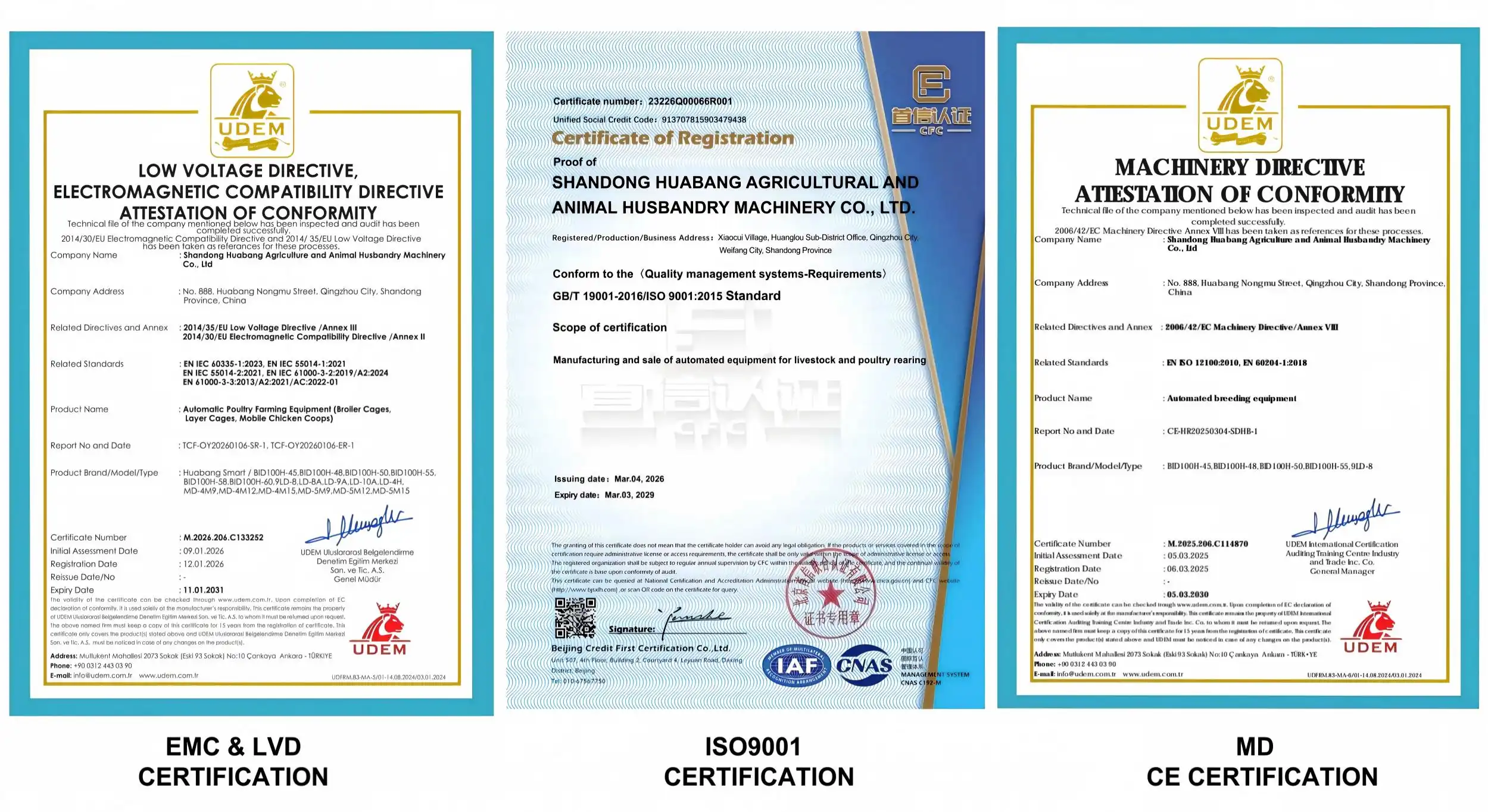
Ammonia, humidity, and being washed all the time in chicken coops are bad for steel in an H Type 3 Tier Broiler Chicken Cage. We test our production batches with salt spray for 72 hours, tensile testing to make sure the mesh joints can hold at least 500 N, and ultrasonic zinc thickness testing to make sure they meet the 275 g/m² zinc thickness standard. To find out how long something will last, it is tested 1,000 times. This includes motors and systems that center belts. Checkers also look for zinc slag or edges that are too sharp and could hurt birds. The company is ISO9001 and CE certified and has 49 patents on core technologies. Getting test records from more than one source is better than just being told something will last.
Install, Compare, and Source Your 3-Tier Cage System
How well the plan works on your farm will depend on how it is installed, which tier you choose, and which supplier you choose.
Install and Commission Step by Step
First, set up the site. Check that the floor is level and strong, that the power and water lines are finished, that there is drainage, and that it is easy for deliveries to get to. Then, draw lines between the cages, put the frame together, connect the feed and water, wire the drives and sensors, and add safety guards. Before the chicks come, test everything to make sure it works. Check the temperature at the tier level, the emergency stops, the alarms, the water pressure, and how the belt moves and the motor turns. You can get site planning, configuration lists, video installation guides, on-site installation, and farming tips from Huabang Smart. To set up and use a 20,000-bird house, a professional team needs 10 to 15 days. The exact time needed depends on how ready the house is and how much automation it has.
Compare 3-Tier and 4-Tier Systems
If you build a taller 4-tier cage, it should be able to hold more birds per square meter, and it should also be easier to check on. A three-tier system works well for homes that aren't very tall, have some automation, or put a lot of importance on being easy to get to. Find out how much it costs to use, how much energy it needs, how much manure it needs to be cleaned, and how much it costs to keep up over time. In 2004, Dawkins and others published a paper in Nature that said the conditions of the chickens' housing had a bigger effect on their well-being than the number of birds in the cage. In other words, you should check the size and cleanliness of the air as well as the number of birds. For farms that need to keep the weather under control and reach their high capacity goals, four tiers may work best. However, for many small and medium-sized businesses, three tiers work better.
Evaluate Suppliers and Use a Final Checklist
Don't just look at the cheapest machinery to find a good supplier. Look at the factory's size, engineering skills, experience exporting, test records, warranty, and the number of spare parts that are available. Since it began in 2012 in Qingzhou, Shandong, Huabang Smart has sold goods in more than 100 countries. It can be made in 30 to 60 days; we can do OEM and ODM work from your drawings, and it comes with a warranty for 12 months. When you get a quote, you should be clear about the house's size, what it will be used for, the breed, its market weight, its number, where it will be put, the Incoterms that will be used, the feed and manure it needs, and how it should be set up. Before giving the go-ahead, make sure that the size of the flock, the number of tiers, the layout for water and feed, the design of the belt, the fans, the electrical needs, the set prices, the delivery terms, the training, and the spare parts all match.
Conclusion
To set up an H Type 3 Tier Broiler Chicken Cage for broiler growth, you must first decide how much food you want to make. The needed capacity depends on the number of birds, their breed, their market weight, and how many are in the flock at any given time. Though, the rated capacity and the operating capacity at market weight are not the same thing. The H-frame structure, 275 g/m² galvanized steel, and checked dimensions make sure that access, hygiene, and air quality are the same on all levels. This is made possible by the automatic feeder, nipple lines, and manure belts. Adapts to the weather by adding higher levels to keep things warm or enclosed panels to keep things cold. This is done with sensors placed at different heights to keep things stable. Once everything is up and running, there is an honest comparison of three-tier vs. four-tier and supplier checks of test records, warranty details, and quote details. These steps show how the design of the cage affects the birds' comfort, their steady growth, and the cost of keeping the cage running.
FAQ
What is an H type 3 tier broiler cage?
An H-frame made of 3 mm galvanized steel holds three levels of cages stacked on top of each other. The broilers are automatically fed, nipple-fed, and given manure belts from the day they are born until they are ready to be sold.
How do I calculate capacity?
How many broilers do you want to buy divided by how many birds will live in each unit? One unit can hold 15 to 18 birds, depending on their slaughter weight.
How long does installation take?
It depends on how the house is set up, how big the system is, whether it's automated, and how quickly the technician can come out. In 10 to 15 days, a professional crew can finish a 20,000-bird house.
Can the cage be customized?
Yes. They can do both OEM and ODM work, and they can even make designs from your drawings. They can also change the height of the tiers and the equipment for feeding, drinking, cleaning, and automating the process.
What should my quotation request include?
Tell them the destination, the Incoterms, the size of the house, the number of houses you need, how you'd like them to be fed and poop, and how you'd like the installation to be done.
Request a Configuration Proposal for Your H Type 3 Tier Broiler Chicken Cage Project
Based in Huabang, Smart makes direct H Type 3 Tier Broiler Chicken Cages and has 49 core technology patents, OEM and ODM support, and a 12-month warranty. The business has ISO9001 and CE marks. Please email ginny260831@gmail.com or huabangsmart002@gmail.com with the size of your house, the size of your target flock, the market weight, the weather, and the location of the delivery address. After that, our team will make a plan, figure out how much space you need, and send you a quote. You can go to poultrycage.com to get samples and find out more about their products.
References
1. Aviagen, Ross Broiler Management Handbook, 2018
2. Cobb-Vantress, Cobb Broiler Management Guide, 2018
3. Council of the European Union, Directive 2007/43/EC Laying Down Minimum Rules for the Protection of Chickens Kept for Meat Production, 2007
4. Ritz, Fairchild, and Lacy, Implications of Ammonia Production and Emissions from Commercial Poultry Facilities: A Review, Journal of Applied Poultry Research, 2004
5. Dawkins, Donnelly, and Jones, Chicken Welfare Is Influenced More by Housing Conditions Than by Stocking Density, Nature, 2004
6. National Chicken Council, Animal Welfare Guidelines and Audit Checklist for Broilers, 2017

USER EVALUATE
Here is the customer's evaluation of us
YOU MAY LIKE
_1793064215443.webp) VIEW MOREmulti-hole chicken nesting box
(1)_1793065123781.webp) VIEW MOREbackyard chicken nesting box
 VIEW MOREautomatic egg collection nesting box
(1)_1793071559822.webp) VIEW MOREanti egg pecking nesting box
 VIEW MOREPoultry Evaporative Cooling Pad
 VIEW MOREH Type 3 Tier Broiler Chicken Cage
 VIEW MOREChicken Cage Broiler Automatic
 VIEW MOREBroiler Cage