



Electric Chicken Feeder Systems for Consistent Feed Delivery on Farms
You don't have to feed the chickens by hand with an Electric Chicken Feeder because it has a motor that does it. That set time makes sure that all the birds get fresh food, keeps things from spilling, and limits the time that staff has to spend in the house. The flock will do best when its feeder size, power source, way of being controlled, and living conditions are all just right. You can read about how these systems work, the most important specs, and the Huabang Smart pan-style system in this guide. Things I buy, set up, and take care of for farms and business-to-business projects are also something I talk about.
How an Electric Chicken Feeder Delivers Consistent Feed?
Why Consistent Feed Delivery Matters on Modern Poultry Farms?
As a matter of fact, feed often makes up more than half of all the costs of keeping chickens. It costs a lot to feed everyone the same amount. Every day is different when troughs are filled by hand, so birds at the end of a line may have to wait longer for food. Feed also spills out more when it sits in open containers. The issues get worse when there are many houses or sites that are far apart and staff have to go back and forth between them. This helps the birds grow evenly and keeps daily records more accurate because they know when they can get food. Now there are more people who can check on the flock and make sure they are healthy.
What Is an Electric Chicken Feeder and How Does It Work?
An Electric Chicken Feeder is a powered machine that gives chicken food at set times, for a set amount of time, or based on a measured amount. As for how it works, it might have a rotary plate, an auger, a conveyor, or some other way of dispensing. Some of the most important parts are the housing, motor, controller, power supply, outlet, and hopper. Bigger commercial systems can have sensors, alarms, and monitoring from afar added. At a certain time, it moves food to a pan or trough and then stops by itself. It depends on the type of feed, how the hopper is built, how strong the motor is, how it is calibrated, and how often it is fed.
Benefits of Using Electric Chicken Feeders on Farms
It takes less time for staff to fill the feeders every day because the feed is delivered at set times by electric feeders. This helps farms with a lot of chicken coops, not enough workers, or tight schedules for getting things done. With the right size and calibration, you can cut down on spills and overfeeding. Pests can't get to the feed either because it is controlled and the hoppers are sealed. The biosecurity guidelines from the World Organization for Animal Health stress how important it is to keep wild birds and rodents away from chicken farms. But the feeder is only one part of the process. How the birds behave, the type of food they eat, how the pan is designed, how high it is set up, and how often you clean all affect how the birds can get to their waste and where they can go.
Power Options and Key Specifications
Battery, Solar, and Mains Electricity
A chicken feeder that runs itself can be powered by batteries, solar panels, mains electricity, or a mix of the three. Battery models are simple to set up and work well for small, mobile, or off-grid sites. However, you should check the battery often. Solar systems have panels, a charge controller, and storage for use outside from a distance. The results depend on how much sunlight there is, the time of year, and how much power the battery has. Most of the time, mains power with a battery backup is best for businesses because it keeps the feeding going even when the power goes out. Before you decide, look at how much power it uses, how long it runs, how long the backup lasts, how exposed it is to the weather, and how well it works with the rest of the nearby infrastructure.
Key Specifications for Selecting an Electric Chicken Feeder
Hopper's price and amount don't tell the whole story. It's important to keep the usable capacity in mind along with the daily feed needs and flock size. Next, check how well the motor works, how accurate the dispensing is, and how flexible the timer is. Dust, bridging, wet feed, and particles of different sizes can all cause jams. Ask about designing to avoid jams and testing the output. Outside units need to be kept safe from rain, humidity, UV light, and temperature changes. As part of the whole system, not as an add-on, check the controller's quality, how loud it is, how easy it is to clean, its backup power, spare parts, and how easy it is to clean.
Matching Feeders to Farm Size and Application
Most of the time, people with a backyard or a small flock need small Electric Chicken Feeder units that are easy to clean and have simple timers. Medium-sized farms usually need hoppers that are bigger, motors that are stronger, and a number of units that can work together. Large companies need lines that can handle a lot of work, have multiple feeding points, centralized control, alarms, and parts that can be fixed. Distributors, integrators, and OEM buyers should make a list of things they need, such as documentation, packaging, spare parts, private labeling, production capacity, and technical support that lasts for a long time. Before placing an order, buyers in the U.S. should also ask the supplier about voltage, plug type, and electrical needs in their area.
Huabang Smart Pan-Style Electric Chicken Feeder
Core Specifications of the Pan Feeding System
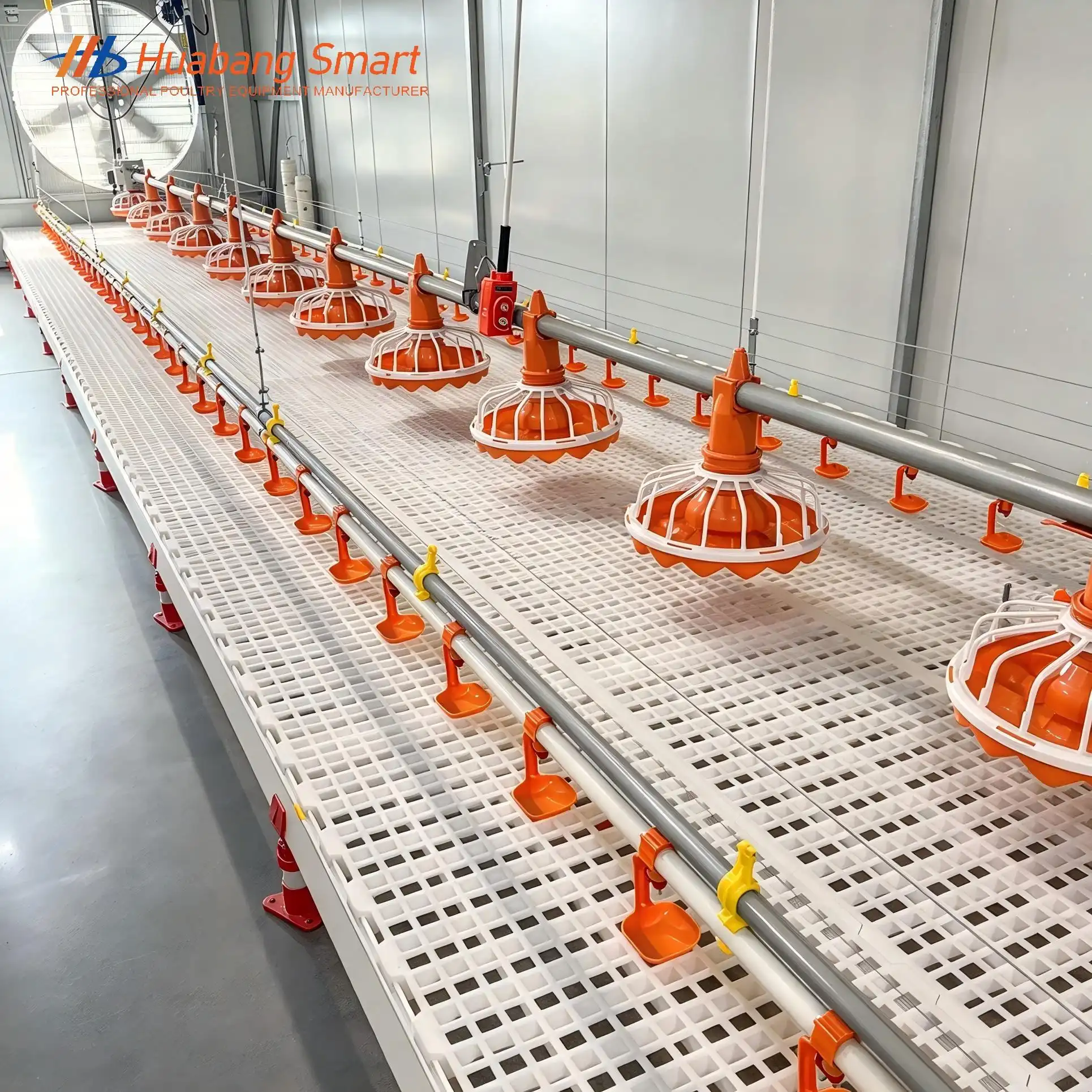
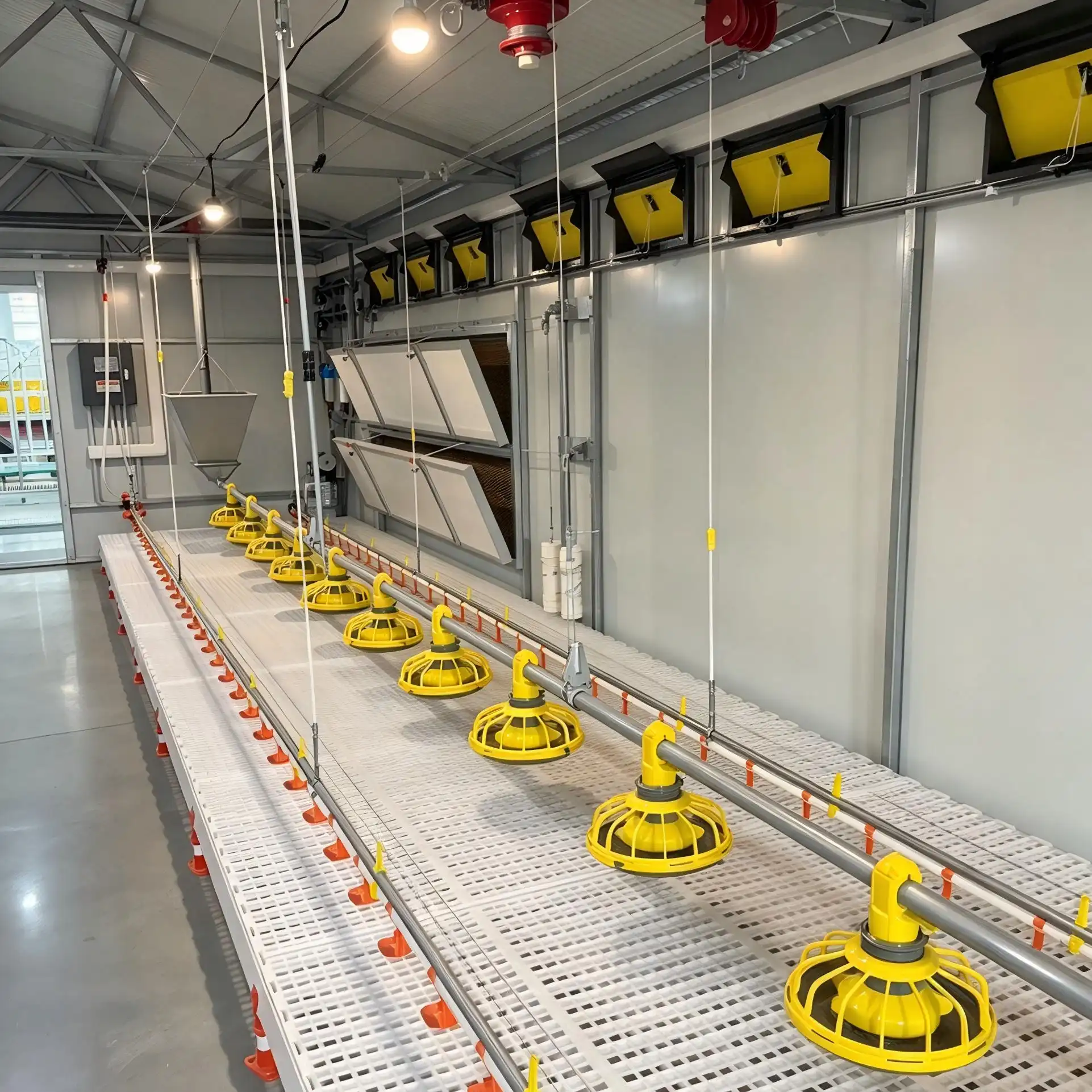
The Huabang Smart brand, which is made by Shandong Huabang Agricultural And Animal Husbandry Machinery Co., Ltd., is a pan feeding system for layers and broilers that does everything by itself. It can feed a lot of birds at once (1400 kg/h). The feed pan is made of virgin PP that is safe for food and has 16 cells that are 330 mm across. The 75 mm x 3.6 mm PVC feed pipe is strong and will last a long time. The frame is made of 3 mm hot-dip galvanized steel. The system is certified by ISO9001 and CE and supports OEM/ODM. It also comes with a 1-year warranty.
Design Features That Support Consistent Feeding
Here are some reasons why this system is good and how each part works in the house.
- Precision height adjustment: A high-precision winch raises and lowers the feeding line to match each growth stage. Birds of different sizes reach feed easily, and crowding stress around the feeding stations drops. Matching pan height to bird size keeps feed access consistent from the first weeks through market age.
- Even distribution: An auger drive moves feed along the line to every pan station. This removes dead zones, so birds at the far end of the house receive feed just like birds near the hopper. More even access supports uniform flock development, which improves weight uniformity and harvest consistency.
- Anti-waste grill: The engineered grill structure blocks feed loss from the pan. Less spillage keeps litter dry, and dry litter lowers the risk of disease problems such as coccidiosis, which is linked to damp bedding. Lower waste also protects feed spending, the highest cost in most poultry budgets.
Three problems that often happen in production are fixed by these benefits: uneven access, wasted feed, and litter that is too wet. Each person in the house gets the same amount of food because they work together.
Materials, Build Quality, and Smart Integration
The pan is made of brand-new polypropylene, which doesn't smell, is safe, and doesn't rust. It's easier to clean smooth surfaces, which is good for keeping business buildings clean. The 3 mm hot-dip galvanized steel frame can handle air that is high in humidity and ammonia, and the PVC pipe will last for a long time. The light, modular pieces make it simple to put together and change the layout of homes that stay put or mobile coops that move around. Programmable logic controllers can be connected to the system to set up operations to run at certain times. Data monitoring helps keep an eye on performance and changes when animals are fed.
Installation, Maintenance, and Troubleshooting
Installation and Operation
Place the unit somewhere flat, dry, and simple to get to. The hopper and outlet should be at a good height for the flock. Don't let water, rats, or birds get into the control boxes, connectors, or cables. After loading the feed, do a test cycle to make sure the output is correct before you use it for real. Huabang Smart helps with installation by planning the site, making a system that is just right for your building, giving you configuration lists, video guides, remote support, and, for big projects, sending technicians to your site. Taking clear notes will help your team follow along.
Routine Maintenance
While the power is off, clean the feed contact surfaces. Also, keep water away from the motors, circuit boards, and electrical connections. Every so often, check the feed levels, the timer's accuracy, the mounting hardware, the batteries, the wiring, the seals, the motor noise, and the feed levels. The smooth PP pan surface makes it easier to clean, and checking on the moving parts every so often keeps the machine from having to be shut down too often. Note down the service dates and the parts that were changed. That log shows you which parts wear out first over time, so you can order new ones before they stop the feed. A one-year warranty covers issues with the way the item was made and parts that break down with normal use.
Troubleshooting and Power-Failure Protection
Most issues with an Electric Chicken Feeder happen when the power goes out, the timer is set wrong, the wrong feed is used, parts get clogged or worn, or the environment isn't properly protected. If the feed stops, check the battery, power source, controller, feed level, outlet, motor, and end of the line in that order. A damp feed, particles that are too big, too much filling, bad alignment, or weak torque are often to blame for jams that happen over and over again. Make sure you don't miss any cycles if the power goes out. You can do this by having a backup battery, solar charging, an alarm system, a manual override, or a written emergency feeding schedule. Don't just test the length of the backup on paper; do it in real life too.
Buying Guide and Long-Term Value
Buying Guide for Farms and B2B Procurement
Set the number of birds, where they will eat, what kind of food they will eat, when they will be fed, how much power is available, and how long the service is expected to last. Then, look at how much power it gives off, how accurate it is, how much energy it uses, how long the backup lasts, how water-resistant it is, how long the warranty lasts, and how good the customer service is. Total cost of ownership tells you more about an item's long-term value than just its price. It takes into account things like shipping, batteries, repairs, downtime, and replacement parts. With the help of a written supplier questionnaire, quotes are kept comparable.
Working with a Manufacturer, Factory, or Wholesale Supplier
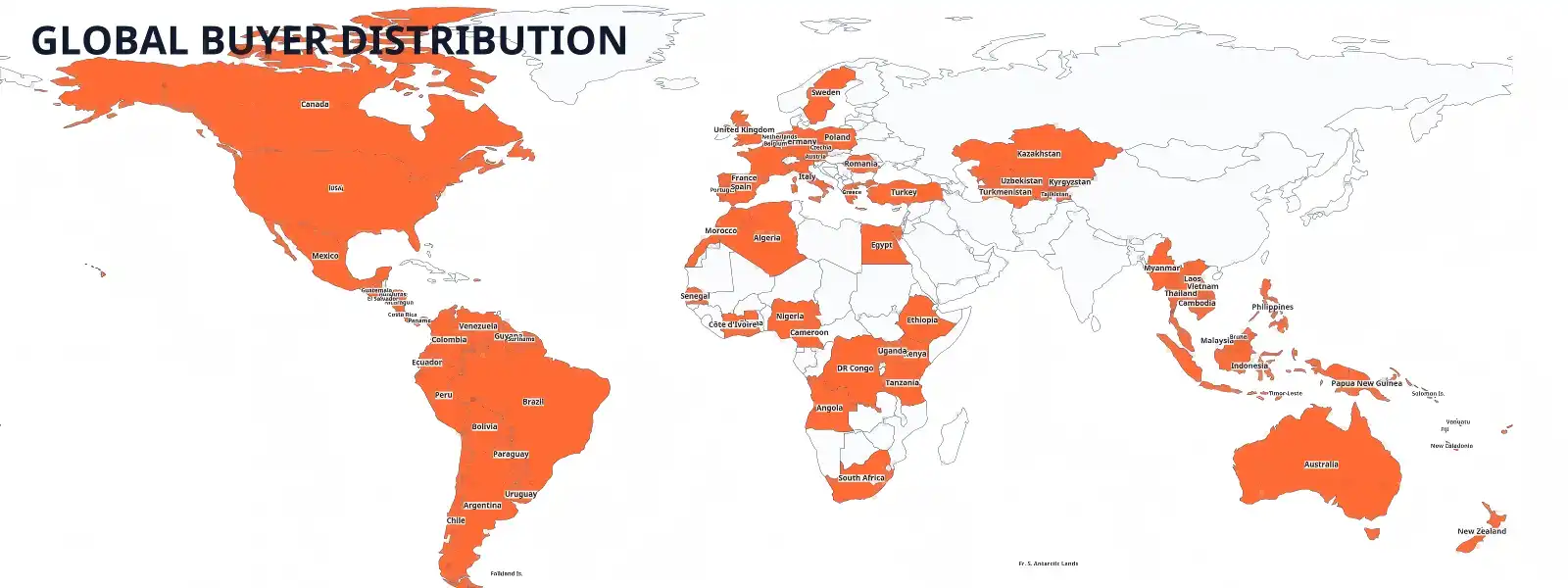
If you need to place a large order, work with a factory directly, or work on a business project, you should do so. Check out how well they can make things, test them, keep an eye on quality, have experience exporting, package them, do the paperwork, and help customers after the sale. Before you place your order, make sure you understand the test approval, minimum order quantity, lead time, who owns the tools and spare parts, inspection steps, and delivery terms. This company, Huabang Smart, has been making things for 17 years. They work with both OEM and ODM clients, and you can give them drawings to use to make new designs. It usually takes 30 to 60 days to make something. There are over 100 countries in our international network of after-sales service.
How to Choose the Best Electric Chicken Feeder for Your Operation?
Make sure the gear fits the number of birds, the type of food, the weather, the power source, and the management goals. A small farm might only need a small unit with a timer. When running a large layer or broiler operation, you need strong motors, centralized control, and close attention. At sites that are connected to the power grid, power from the mains can be paired with a battery backup. At sites that are farther away, solar power may work better. Weather protection and corrosion resistance are important for things that are used outside or in damp places. Before giving the go-ahead, make sure you know about the capacity, output consistency, timer performance, backup power, anti-jam features, cleaning access, spare parts, and supplier support.
Long-Term Farm Efficiency and Future Trends
The hardware, power, feed storage, delivery layout, programming, maintenance, and training for the operators must all work well for a long time. Be sure to keep track of feeding times, actual output, waste levels, jams, and parts that need to be replaced. It's good that houses will be bigger in the future because these records show problems that happen over and over again. Over time, the market wants more precise measurements, the ability to monitor from afar, IoT connectivity, maintenance that is planned ahead of time, and commercial systems that are made up of separate modules. People should think about how useful and easy to fix something new before they buy it. This idea is connected to the PLC and monitored through the pan system's data.
Conclusion
Consistent feed delivery helps keep flocks uniform, cuts down on waste, and makes better use of farm workers' time. To make sure the Electric Chicken Feeder works, the farm's size, power source, anti-jam design, and weather protection must all be compatible with it. Batteries, solar power, and plug-in power all work well in different places. Commercial homes are most likely to have mains power with a backup. The Huabang Smart pan system has a PLC connection, 16-cell 330 mm pans, an output of 1400 kg/h, and a galvanized frame. It shows how these features can be used in bird and chicken houses. Setting up carefully, cleaning often, and making backup plans will help you feed your animals on time, and comparing prices based on the total cost of ownership is more accurate than just price.
FAQ
What is the difference between an electric feeder and an automatic feeder?
An electric feeder is any feed bin that has a motor running it. Automatic feeders can also be used with mechanical and gravity systems.
How often should I schedule feeding?
Based on the age of the flock, the stage of production, the type of feed, and how the farm is run, make the schedule. There isn't a single setting that all flocks will like.
What usually causes feeder jams?
The most common ones are wet feed, particles that are too big, too much filling, and not enough alignment. If you keep getting jams, it could be because the design doesn't work with that type of feed.
Can battery or solar feeders be depended on?
Yes, as long as it's the right size and is well taken care of. Businesses should check to see if the service is available and how much backup space is available.
Can Huabang Smart customize its feeding system?
Yes. We can do OEM and ODM work, and you can also send us drawings to use as guides. It usually takes 30 to 60 days to make something, but it depends on how you want it made.
Request the Right Electric Chicken Feeder Solution for Your Farm or Project
Send an email to ginny260831@gmail.com or huabangsmart002@gmail.com to talk to a company that makes Electric Chicken Feeders and offers OEM/ODM customization about your layer or broiler project. Our team will come up with a configuration based on the size of your flock, the type of feed, the power source, the number of chickens you want to send, and where they will be sent. We are certified by ISO9001 and CE, offer a one-year warranty, and can help you set up your order. Go to poultrycage.com to find out more.
References
1. Aviagen, Ross Broiler Management Handbook, 2018
2. Cobb-Vantress, Cobb Broiler Management Guide, 2021
3. Food and Agriculture Organization of the United Nations, Poultry Development Review, 2013
4. World Organisation for Animal Health, Terrestrial Animal Health Code, 2023
5. International Organization for Standardization, ISO 9001:2015 Quality Management Systems, 2015
6. European Parliament and Council, Machinery Directive 2006/42/EC, 2006

USER EVALUATE
Here is the customer's evaluation of us
YOU MAY LIKE
 VIEW MORECommercial Mobile Chicken Coop
 VIEW MOREchicken coop nesting box
_1793065975341.webp) VIEW MOREchicken laying nest box
 VIEW MOREautomatic egg collection nesting box
 VIEW MOREPoultry Evaporative Cooling Pad
 VIEW MORECooling Pad For Poultry Farm
 VIEW MOREChicken Cage Broiler Automatic
 VIEW MORE2000 Capacity Broiler Chicken Cage