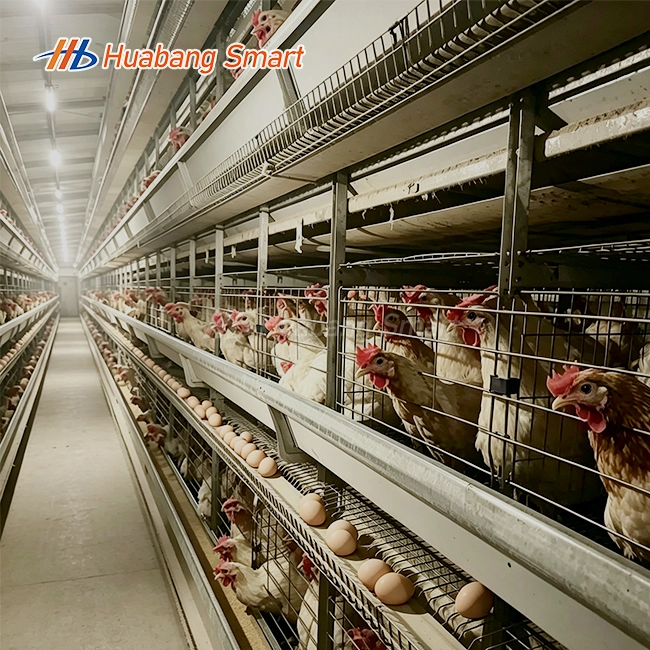

Chicken Laying Nesting Box for Breeder Farm Egg Collection Efficiency
A chicken laying nesting box for breeder farms makes it easier to collect eggs because it leads hens to a clean, safe place to lay their eggs and quickly moves them away from litter and other birds. This means there are fewer broken eggs on the ground and more clean, healthy eggs for the hatchery. For efficiency, the nest needs to be the right size, be easy to clean, have a routine for collecting eggs, and be set up in a way that works with the house. One more thing that automated systems do is get rid of the need to carry eggs to a collection point. It explains how nests work, how to compare options, and how to plan a project.
How Breeder Farm Nesting Boxes Work?
How a Commercial Breeder Nest Handles Eggs?
Because a commercial breeder nest is quiet and closed off, a hen can go in, lay her eggs, and leave without bothering other birds. What to do next is up to the system. The egg stays in the tray of a manual nest until someone comes to get it. It gets out of a nest that rolls away and lands on a soft surface. It then goes to an egg belt in an automatic nest, which lets it go outside. When you spend less time in the nest, you spend less time with pecking hens, litter, and manure. As per USDA rules, dirty or cracked shells are defects, so hatcheries often throw away cracked eggs because they aren't good enough to hatch. This is important for fertile eggs.
Key Components That Affect Egg Quality
The nest has many parts that all do different things. The hens can't get into the pen or settle down until the walls are built. The egg is kept safe and can roll on a mat that goes inside the nest. A curtain over the door blocks light from the room and soothes the hen. Ventilation holes keep the air from getting too hot or too wet. The support frame holds the weight of the nest and determines its height. The collection interface connects the nest to the egg line. It only takes one weak link to break the whole thing. A worn mat can break the eggs even if they are in the right place. Well-marked rows let you keep track of eggs by flock, house, tier, and time.
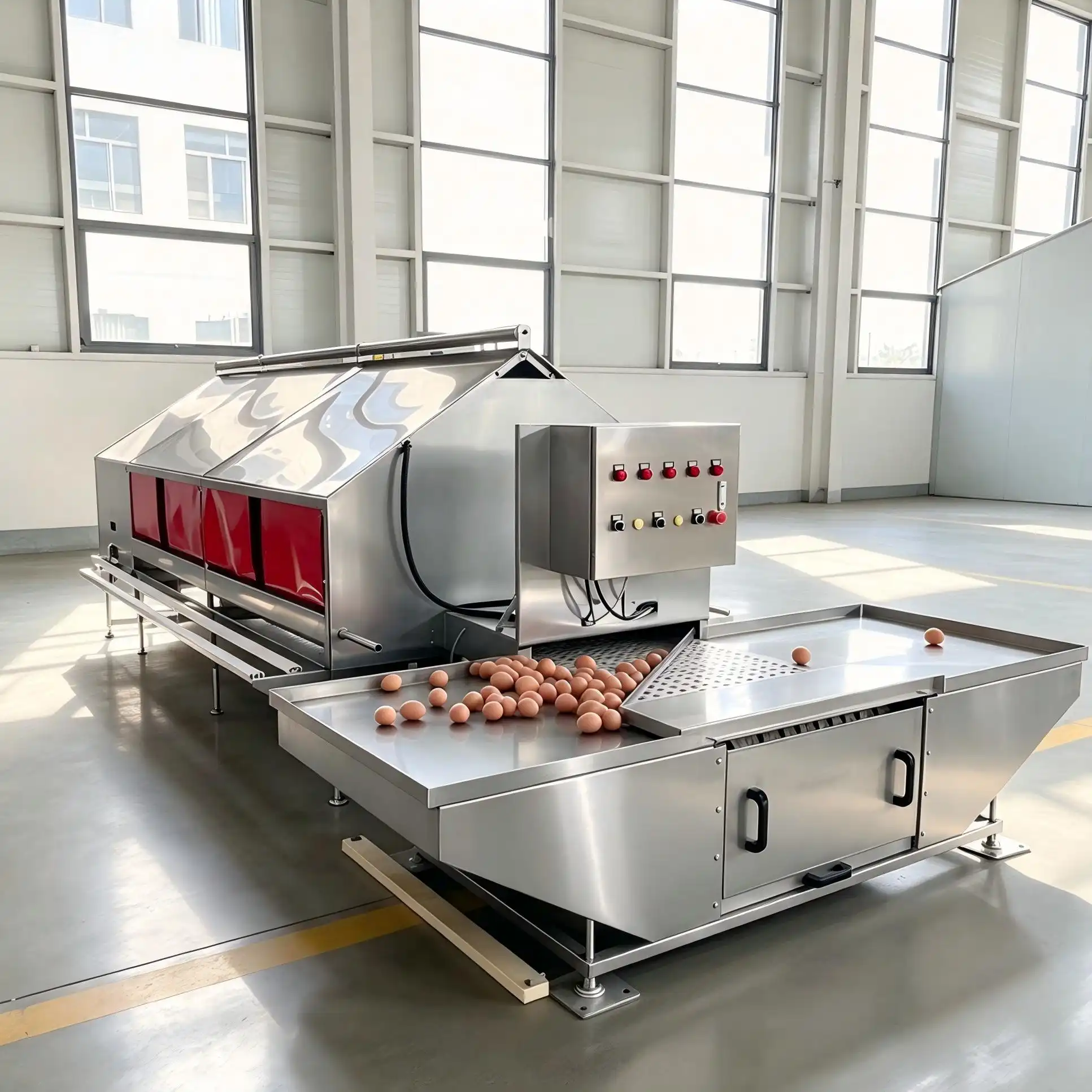
Dimensions and Design Requirements
The nest should be the right size for the type of hen you have, its body size, how it acts with its flock, and how your house is set up. Breeders like Aviagen and Cobb-Vantress include information on how to build nests in their management guides. There isn't a single ratio that works for all flocks because the numbers are different for each strain. When the nest is too small, the eggs fall to the ground, and their shells crack. It costs more and takes up more space on the floor if it's too big. See how high the nest is, how well it ventilates, how deep the tray is, how easy it is for workers to get in and out, and if it has padding. How things are inspected, cleaned, and used changes depending on whether they are on a single or double level. To get engineering drawings and data on capacity, you should ask the supplier for them. Do a flock test before the full installation if you can.
Manual, Rollaway, and Automatic Nesting Systems Compared
Manual Nests: Lower Cost, Higher Labor
The cheapest and easiest to set up nests are the ones that you do yourself. Several times a day, people pick up eggs by hand. This method works well for small farms and homes where the cost of labor is low. The trade-offs are time and risk. The hens can peck, soil, or crack the eggs when someone comes to the nest. More work needs to be done for every extra house because more people need to walk down the aisles to pick eggs. As long as the farm collects the eggs often and trains staff to be gentle with fertile eggs, manual nests can still work for pilot houses and little money.
Rollaway Nests: Gentler Egg Handling
The floor of a rolling nest is padded and slopes down. The hen's egg rolls off of a tray or a belt before she can get to it. Things like these don't happen as often when the slope, padding, and tray alignment are set right. If the ground is too flat, the eggs may stay in the nest, and if it is too steep, the eggs may break when they hit the ground. Providers should be asked to add information about the slope angle and cushioning to the drawings. Rollaway nests cost more than simple manual nests, but the savings from not losing as many eggs and not having to make as many trips to get them can help make up some of the cost.
Automatic Nest Systems with Egg Belts
Egg belts, conveyors, motors, and controls that work with automatic systems in a chicken laying nesting box for breeder farm make the rollaway idea even better. No one goes inside the house to watch the eggs get from the nest to a place where they can be collected. That saves time, makes sure that collection times are always the same, and reduces the number of people walking through the flock area, which can spread disease. First, it costs more, and the drives, rollers, and belts need to be fixed more often. Large homes, lots with more than one house, and farms that want to grow can all use these systems. Before you choose between plastic, galvanized steel, and hybrid designs, you should think about how big your flock is, how much labor costs, how high the house needs to be, how clean it needs to be, and how you plan to grow in the future. Check out the whole cost of ownership instead of just the price per unit.
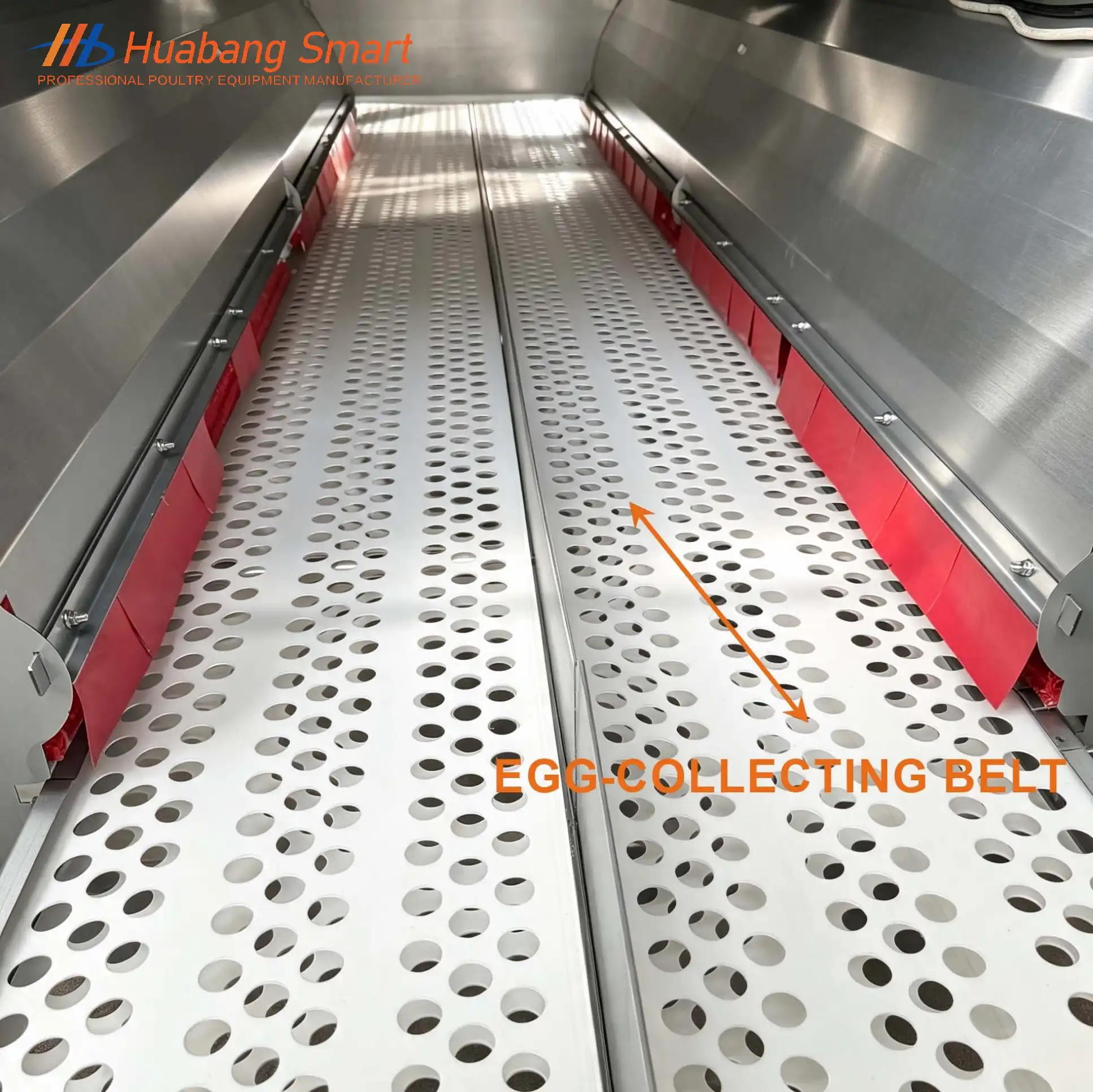
Huabang Smart Automatic Nest: Specifications and Core Advantages
Size, Material, and Frame
The zinc, aluminum, and magnesium plate in our chicken laying nesting box for breeder farm projects turns it into a nest on its own. Each one is 1.2 m long, 1.4 m wide, or 1.88 m with the perch, and 2 m high with the perch. It weighs 40 kg and has room for 120 birds. In chicken coops, you can find ammonia and water. This plate can handle that corrosive air for longer than a regular steel sheet. The frame that holds it up is made of 3 mm hot-dip galvanized steel. The middle of the nest is raised 5 cm, which lets air flow under it. This keeps the eggs dry and cools them down in the summer.
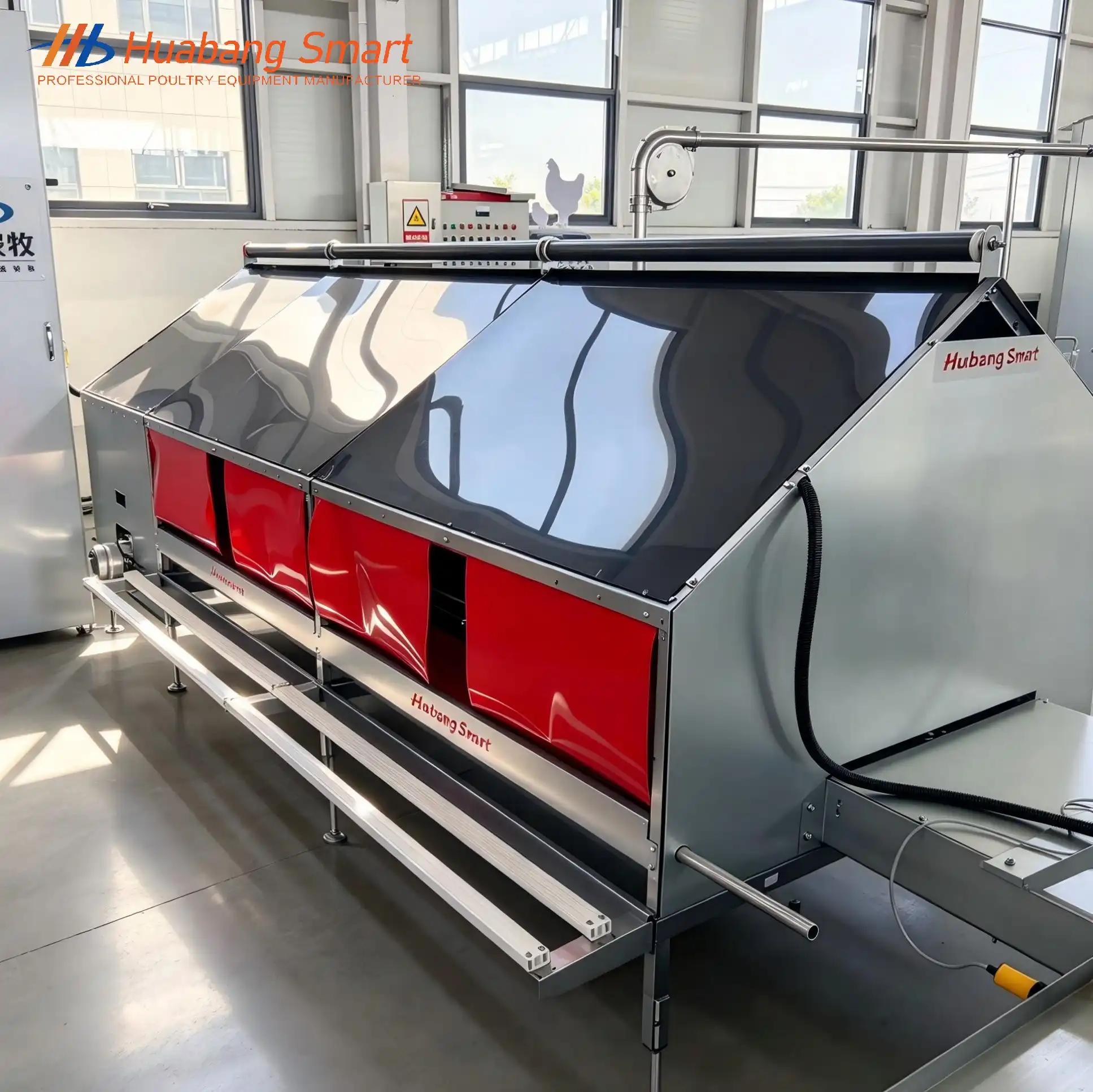
Motor and Egg Belt Drive
The first motor has 0.4 kW of power, and the second has 0.75 kW of power. Because the load is spread out, the belt can pull on long egg lines without putting extra stress on either end. This means the eggs arrive at the place where they will be collected at a steady rate. The back of the egg belt changes its own tension to stop it from moving to the side. This keeps the belt in the middle during long shifts and gets rid of the need to re-adjust it by hand. Because the belt is open, feathers and other dry things that don't belong in the shell can fall off. If you add nest units to make the house longer, our team can change the motor output to make it fit.
Core Advantages for Breeder and Layer Houses
If you want to know why this automatic nest system is a good idea, read on.
- Anti-breakage egg rolling: Eggs roll softly onto the belt through a buffer-type arrangement instead of dropping or sliding hard. Without that buffer step, eggs crack or draw pecking more often when they meet the belt directly. With standard feeding control, breakage stays below 0.3%, which protects the number of settable eggs per house.
- Intelligent anti-broody lifting: After dark, a built-in mechanism lifts the nest body. This discourages hens from roosting in the nest overnight, which reduces dirty eggs and droppings buildup. Hens that sleep in the nest soil it, so lifting removes that habit. Staff spend less time washing nests each morning.
- Integrated build and labor saving: The egg-collecting platform, laying nest, storage box, and conveying tail section sit in one unit that connects to most automated egg collecting lines without extra adapters. Automatic collection takes workers out of manual picking, which saves labor hours and keeps egg output consistent in every production cycle.
Broken eggs, dirty eggs, and long hours of work are three problems that breeder houses often have.
Cleaning, Biosecurity, and Egg Collection Efficiency
Cleaning and Biosecurity Routines
The nests in a chicken laying nesting box for breeder farm need to be clean for the birds to lay eggs. The staff should clean up the mess every day by getting rid of the dirty nesting materials, runoff, feathers, and broken eggs. If you can, wash the mats and trays that can be taken out of the nest separately from the rest of it. It is easier to clean and sanitize surfaces that are smooth, don't have pores, and don't have many cracks or sharp edges. Table egg farms in the US have to follow steps in the FDA egg safety rule to clean up and get rid of rodents. A lot of breeder farms have rules that include steps like these. Having the trash picked up by itself also helps because fewer people come in and bring germs into the house. Write down when you will clean as part of your biosecurity plan and do it.
Maintenance Checks That Prevent Downtime
When you walk through it every day, you catch small mistakes right away. The entryways, dividers, egg transfer points, belts, rollers, fasteners, and support structures of the nest should all be checked. Near the nests, keep an eye out for wet litter and any water leaks. Eggs get dirty where it's damp. You can see which parts break down first by writing down what you need to do for house and flock. Auto nests need to have the motor wiring, the lifting mechanism, and the tension of the belt checked every so often. During setup and start-up, our technical staff will show you how to change these settings. It has a warranty that lasts for one year. If you have common spare parts on hand, you can fix things faster when they break.
Tracking Data to Improve Collection Efficiency
To make progress, you need to start with a baseline. It's important to keep track of how many eggs are laid every day, how many are dirty or cracked, how often the eggs are collected, and the hatchery's acceptance rate. If hens don't want to lay their eggs in the nest, they will do so somewhere else, like on the floor. These numbers show where the problems are, such as not enough nests, bad placement, poor lighting, hard access, or trays and belts that aren't lined up right. Don't buy new gear until you've fixed things like flock guidance, walking routes, lighting, and too many people during peak hours. If you want to know what worked and what didn't, look at the results over the whole production period. Researchers who study shell quality, like Roberts (2004), have found a link between the state of the shell and economic loss. This means that crack rate increases of any size are important.
Choosing a Supplier and Planning the Installation
How to Choose the Right Nest?
You can choose between a small house that needs to be built by hand, a large site that needs to be automated, a new build, a retrofit, or a project for a distributor. Then, compare the sizes, shapes, number of tiers, collection method, egg safety, cleanliness, material durability, how easy it is to set up, and whether or not it comes with spare parts. Figure out how much it will cost you to own the product, taking into account things like shipping, import fees, less work, replacement parts, and how long it will last. You don't have to rebuild the whole system to add our nest to automated egg lines that are already set up. This is always the case, no matter if the farm uses floor-raising houses, multi-tier cage systems, or mixed breeding systems. We also add nest units that are the right length for your home.
Supplier and OEM Procurement Considerations
To make sure the quality of the nesting materials stays high, buy from a reputable company. If you have any technical questions, they will answer them quickly. A list of spare parts, packing lists, inspection records, datasheets, and assembly drawings should all be asked for. Don't just look at prices; also check how full the containers are, how much they can produce, and how long it will take to deliver. Since 2001, Huabang Smart has been designing and making products. It is ISO9001 and CE certified, has 49 patents on core technologies, and ships straight from its factory. If you send us your drawings, we can make OEM or ODM items for you. Usually, it takes 30 to 60 days to make them. Talk to suppliers who have worked on breeder projects like yours and get their references. Also, make sure the paperwork you sign follows the rules in your area for electrical work and imports.
Implementation Plan for a New or Upgraded House
When you have a plan, tech risk goes down. First, you should figure out how big the house is, how many chickens you have, how many eggs you want to lay, how much airflow there is, and where the walking paths are. Next, decide how to get the items and plan out the space you'll need, how the levels will be set up, where the workers will stand, and where the conveyor belt will go. After that, the nest is used, eggs are moved, the flock does things, and service access is checked in a test installation before it goes live to everyone. Show your employees how to get things, clean them, check them, and fix them. Lastly, look over the information about the hatchery, the work, and the quality of the eggs. You can use what you learn in later houses. To help with this process, we offer product design, configuration lists, video installation guides, on-site installation, and support in other countries after the sale.
Conclusion
When clean eggs are taken from the nest quickly and with as little handling as possible, they work best in a breeder house. A well-sized chicken laying nesting box for breeder farm use reduces floor eggs, cracks, and contamination, while rollaway and automatic designs reduce contact with litter and hens. Making a nest by hand costs less but takes more work. On the other hand, belts and motors in automatic systems do the work and keep the collection steady. The build doesn't rust, the eggs don't break, and there is no downtime because of night lifting, self-adjusting belts, and buffered egg rolling. Because data is tracked and things are cleaned and fixed every day, the results stay the same. People should make sure that the type of nest, its capacity, and the supplier's support all match with the house, the flock, and the long-term cost of the nest.
FAQ
Is there a standard hen-to-nest ratio?
The ratio doesn't have to be the same on every farm. It depends on the breed, body weight, nest design, peak laying behavior, and number of times collected, so make sure you do what the breeder tells you to do. There is room for about 120 birds in each set in our nest.
How do rollaway nests compare with manual nests?
They cost less, but you have to do more work, and the eggs stay out in the open longer. Hens can't get to eggs if the rollaway nest has the right slope and padding. Eggs won't get pecked or messed up.
Which material works best for a nest box?
Metal, plastic, and a mix of the two are used to make some builds. The body of our nest is made up of a zinc-aluminum-magnesium plate on a 3 mm hot-dip galvanized frame. For example, it can handle ammonia and water.
Can the nest join an existing egg line, and how often should I clean it?
It can connect to most automated egg collection lines without any extra adapters. Let us know what you want so our engineers can make sure it fits. Check the belts and nest parts every day and clean them as your farm's rules say to.
Request a Chicken Laying Nesting Box for Breeder Farm Quote from Huabang Smart
Here is a chicken laying nesting box for breeder farm from Huabang Smart that comes straight from the factory. These boxes have been designed and made by them for 17 years. They are ISO9001 and CE certified and can do both OEM and ODM work. Our engineers will make a plan for the nest layout, motor setup, and delivery based on the length of your house, the number of birds that live in it, and the breeder strain. It's made over 30 to 60 days. Go to poultrycage.com or email ginny260831@gmail.com or huabangsmart002@gmail.com to start your project.
References
1. Aviagen, Ross Parent Stock Handbook, 2018
2. Cobb-Vantress, Cobb Breeder Management Guide, 2018
3. USDA Agricultural Marketing Service, Egg-Grading Manual (Agricultural Handbook 75), 2000
4. Journal of Poultry Science, "Factors Affecting Egg Internal Quality and Egg Shell Quality in Laying Hens," 2004
5. Commercial Chicken Meat and Egg Production (Bell and Weaver, Springer), 2002
6. U.S. Food and Drug Administration, Prevention of Salmonella Enteritidis in Shell Eggs During Production, Storage, and Transportation (Final Rule), 2009

USER EVALUATE
Here is the customer's evaluation of us
(1)_1793063908900.webp)
(1)_1793065123781.webp)