
H Type Layer Chicken Cage for High-Density Commercial Egg Farms
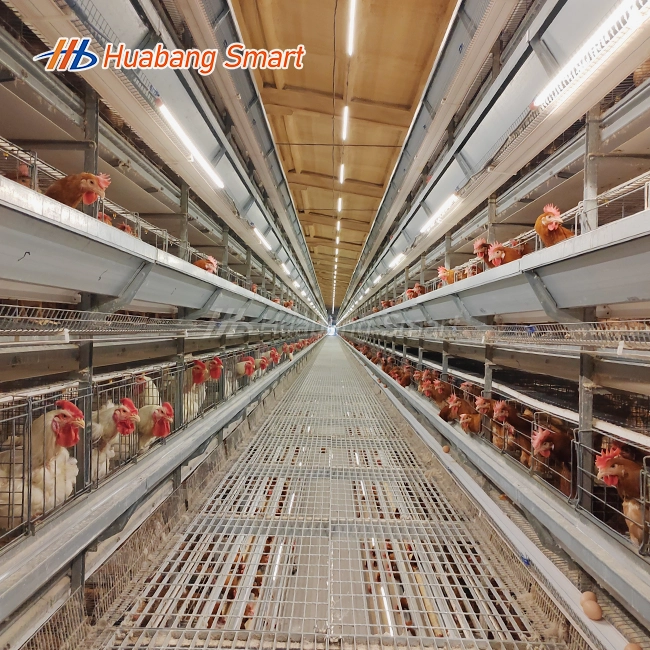
If you manage a large commercial egg operation, you already know that housing density directly affects your bottom line. The H Type Layer Chicken Cage is a vertically-stacked, automated poultry housing system built specifically for high-density egg production. Unlike conventional flat-deck or A-type setups, this system stacks up to 8 tiers high, multiplying your usable bird capacity by over 300% within the same floor area. With full automation covering feeding, watering, egg collection, and manure removal, it addresses the labor, hygiene, and productivity challenges that matter most to commercial farm operators.
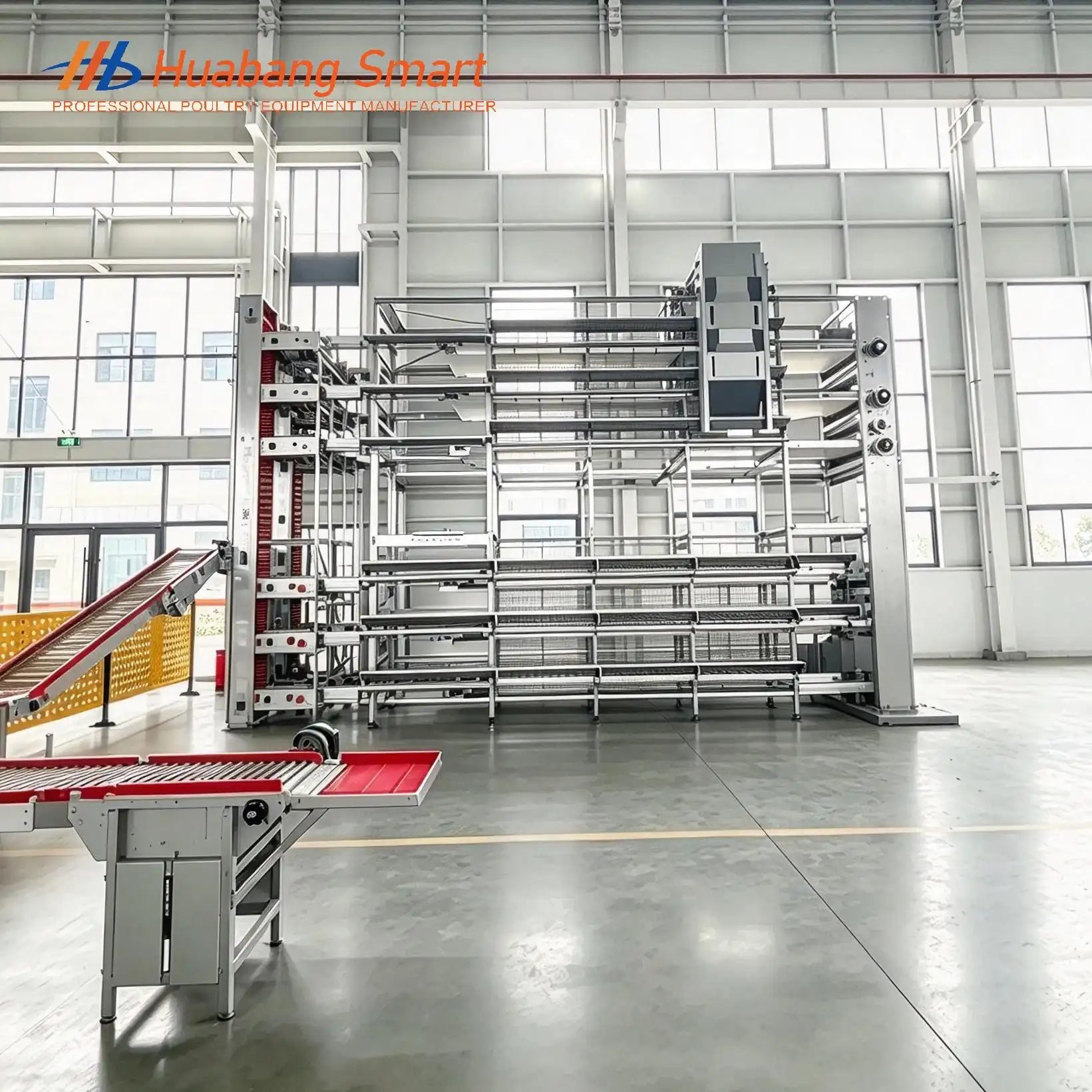
Understanding the H Type Layer Chicken Cage: Features and Benefits
From the number of hours of work needed each day to the quality of the eggs over time, the design of a layer cage system affects everything. This system is different in these ways.
Structural Design and Core Materials
Each cage unit is 1.2 meters long, 1.2 meters wide, and 0.45 meters thick. It is made of Q235 bridge-grade steel that has been hot-dip galvanized at 275g/m². For 15 to 20 years, the aluminum-zinc wire mesh walls will not rust in high-ammonia chicken houses. The diameters of the wires run from 2.5 mm to 4 mm, which makes them stable under constant operating stress. The 5 cm raised center shape makes air move better through all levels, which directly helps with laying.
Egg Collection and Hen Welfare
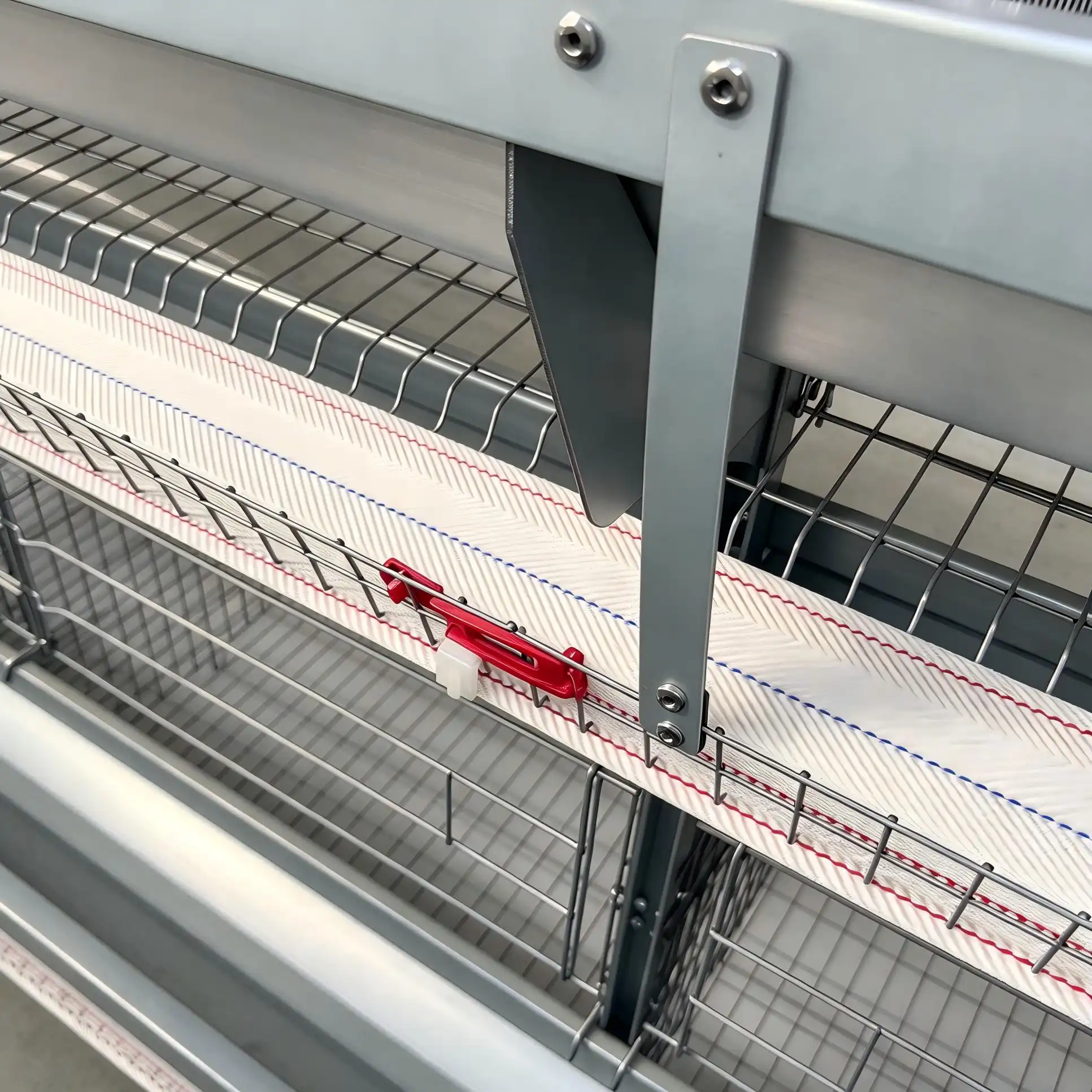
A carefully planned 7-degree rise in the bottom mesh lets the eggs roll easily into the collection belt without any help from a person. This slope cuts down on tiny cracks in the shell and keeps the guaranteed egg cracking rate below 0.3%. Smooth, burr-free surfaces keep feathers and legs from getting hurt, which leads to fewer hen deaths and more uniform production output across multiple levels.
Ventilation and Environmental Performance
The closed-house, longitudinal ventilation design keeps the air quality high by circulating fresh air around the building all the time. The ammonia level stays low thanks to the PP plastic manure bands that run under each level. This is important because ammonia levels above 25 ppm are known to lower the number of eggs laid by commercial groups and raise their risk of getting lung diseases.
Installation, Maintenance, and Lifespan: Ensuring Long-Term Performance
A method that is set up correctly pays for itself. It costs you money in downtime and repairs if it's not installed correctly.
Site Preparation and Installation Process
For a multi-tier H Type Layer Chicken Cage, the floor must be level and the structure's load-bearing ability must be checked before it is put in place. For projects in other countries, Huabang Smart offers video installation guides, detailed configuration lists, and on-site installation help. The production cycle lasts between 30 and 60 days, which gives procurement teams enough time to get the site ready.
Routine Maintenance Protocols
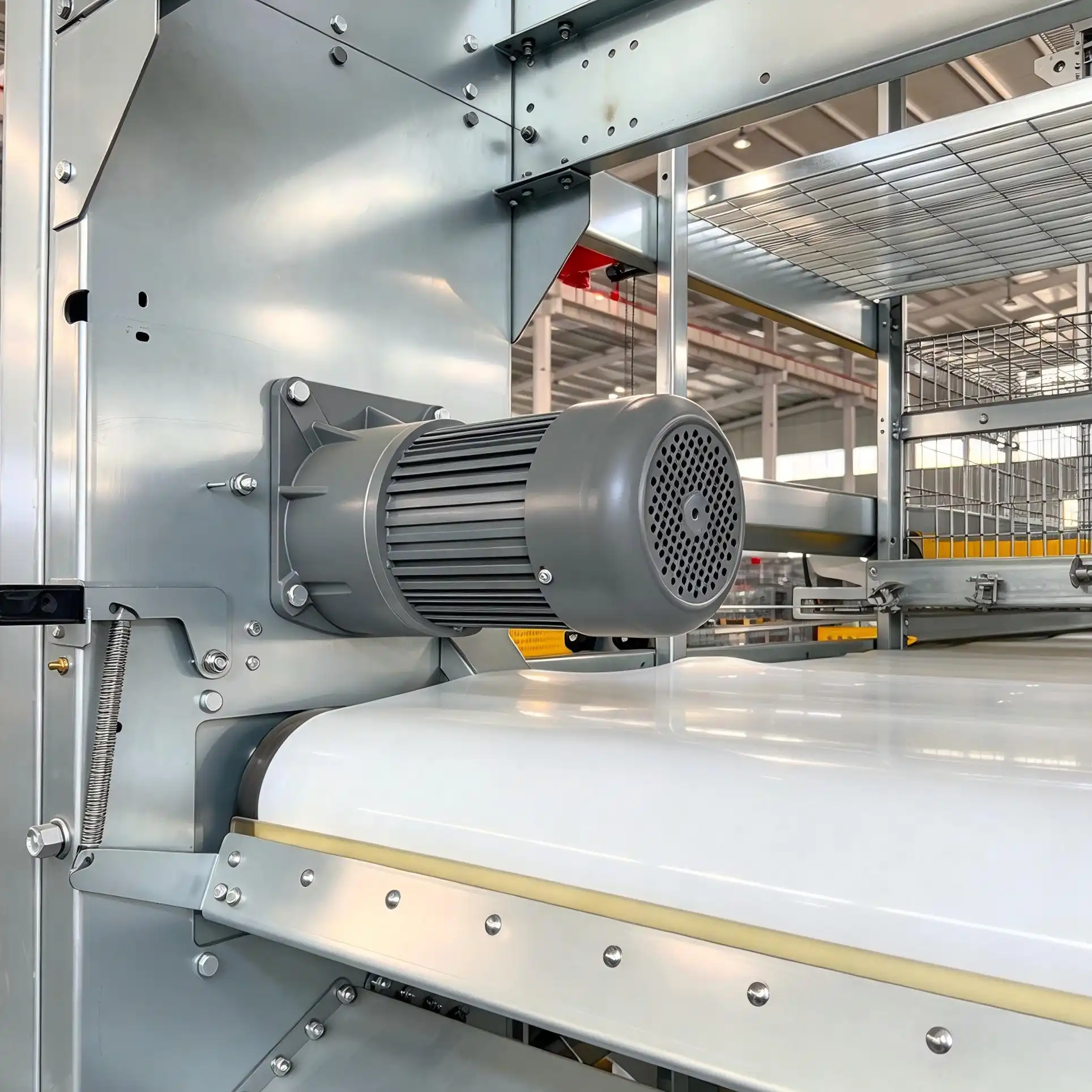
Misalignment of the dung belt, which is one of the main reasons for unexpected downtime, can be avoided by checking the tracking of the belt every day. The automatic systems keep going smoothly by checking the nipple drinker lines and feeding auger motors once a week. To protect the galvanized coating, the cage walls should be cleaned with low-pressure water every time the flock is moved.
Material Durability and Lifecycle Cost
Hot-dip galvanization at 275g/m² is a much better way to protect against corrosion than electro-galvanization, which usually only carries 60–80g/m². If the structure is well taken care of, it will last longer than 15 years. This cuts the per-cycle cost of housing by a lot, which is a number that procurement managers use to judge the value of capital equipment investments.
Comparing H Type Layer Chicken Cage with Other Cage Systems: Decision-Making Insights
Every cage method isn't right for every job. Knowing the changes in structure and function will help you make the right choice.
H Type vs. A Type Cages
A-type cages are set up at an angle, back-to-back, and usually only have three to four levels. They work pretty well for smaller flocks, but when they get too big, they stop working well. H-type systems can be stacked straight up and down, and they can hold up to 8 tiers, each with its own separate manure belt. Cross-contamination between floors is stopped, which is better for cleanliness and can't be done with an A-type design. The H-type design is normal for farms with more than 50,000 birds.
Automated vs. Manual Feeding Systems
One worker is needed for every 3,000 to 5,000 birds per shift, which adds up quickly on a large scale. On H-type cages, the chain-driven automatic feeding system gives each bird on all levels the right amount of food at the same time. Feed conversion rates get better when birds get the same amount of food every time instead of fighting for it. Up to 80% less work needs to be done, which has been seen to happen on farms around the world that use this method.
Energy Efficiency and Safety Considerations
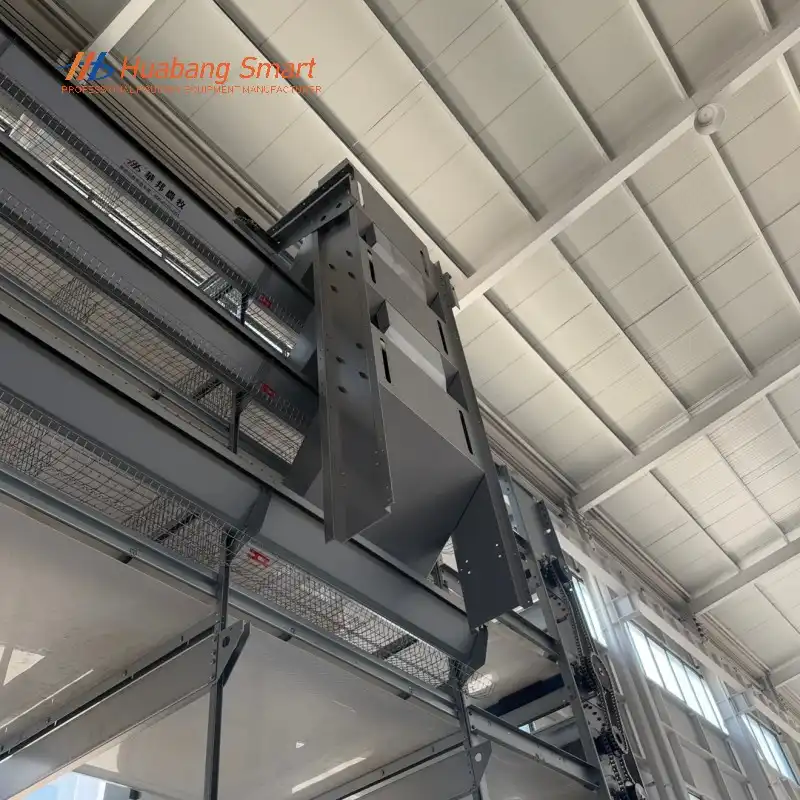
Because a single drive motor controls the whole row, H-type systems use less energy per bird than cages that are powered separately. The closed structural frame also makes it less likely that the equipment will fall over when it's loaded, since each unit can hold more than 60 kg without deforming. This structural integrity is important in places where there are a lot of earthquakes or where barn conditions change a lot.
Procurement Guide: How to Source High-Quality H Type Layer Chicken Cages for Your Business?
Procurement decisions at this scale involve more than just unit price.
Evaluating Manufacturer Credentials
Look for ISO 9001 and CE certifications for an H Type Layer Chicken Cage as baseline requirements. Huabang Smart carries both, along with 49 core technology patents. A manufacturer with 17 years of design and production experience in livestock equipment provides traceability and accountability that newer entrants cannot match. Request factory audit documentation or third-party inspection reports before committing to large orders.
Customization, OEM/ODM, and Pricing
Standard configurations cover 3, 4, 5, 6, and 8-tier options, each scalable from 90 to 200 birds per set. OEM and ODM production is supported, including custom cage dimensions based on client drawings. For B2B buyers sourcing at volume, bulk pricing structures and flexible payment terms are available. A 12-month international warranty covers all mechanical and structural components. Sample units are available before full orders are placed.
After-Sales Support and Installation Services
Overseas buyers receive video guides, remote commissioning support, and access to local after-sales teams in key markets. Spare parts availability is built into the supply agreement. This matters because equipment downtime during peak laying cycles directly translates to revenue loss. Huabang Smart's service model is designed to minimize that risk from day one.
Maximizing ROI with H Type Layer Chicken Cages: Practical Tips and Industry Insights
To get the most out of your investment, you need to use the right tools and follow the right steps.
Labor and Feed Cost Reduction
A commercial farm with 100,000 birds and manual labor systems might need between 40 and 60 workers. With full H-type automation, the same operation usually needs 8 to 12 people to run. At the current rate of pay for farm workers in the U.S., that difference saves a lot of money each year. By providing exact amounts, automated feeding also cuts down on wasteful feed, which drops the feed conversion ratio over the production cycle.
Productivity Benchmarks from Global Deployments
In Southeast Asia and Eastern Europe, farms that use H-type vertical layer systems report laying rates that are always above 90% as long as environmental controls are kept up to date. The enclosed design keeps the temperature and humidity stable, which are the two factors that have the most direct effect on how consistently commercial flocks lay eggs.
Future Trends in Layer Housing Technology
IoT-based monitoring is now being built into layer cage systems, which lets mobile dashboards track feed intake, water intake, and manure belt performance in real time. Huabang Smart's systems are made to work with the Internet of Things, which means that your current investment can grow with the technology instead of being replaced by it.
Conclusion
The H Type Layer Chicken Cage fixes the main issues that big commercial egg farms have with production: they need a lot of workers, they don't make good use of space, they can't keep the environment under control, and the quality of the eggs goes down. The steel used for this system is 275g/m² hot-dip galvanised steel. It is fully automatic and has ISO 9001 and CE approvals. It is a clear investment in long-term infrastructure that will pay off. The design is modular and scalable, so you can change it to fit your needs without having to buy more land. This is true whether you run one farm or several farms in different places.
FAQ
What is the primary structural advantage of H-type over A-type cages?
H-type cages can be stacked vertically up to 8 levels high, and each level has its own manure belt, so there is no cross-contamination between levels. H-type systems are much better for large-scale operations that focus on biosecurity because A-type systems can only have 3 to 4 angled tiers and don't have this hygiene separation.
How long does the cage system typically last?
If you hot-dip galvanise at 275g/m² and take care of the structure, it will last for 15 to 20 years. This lasts a lot longer than electro-galvanized options, which usually break down after 5 to 8 years of continuous use in a poultry house.
Can the system be customized for different farm layouts?
Yes. Tier configurations can have anywhere from 3 to 8 levels, and plans from clients can be used for OEM/ODM production. It's possible to change the method to fit different barn sizes, climates, and flock growth goals.
What is the typical egg breakage rate?
When the system is set up and kept up properly, egg breakage stays below 0.3%. This is made possible by the 7-degree sloped bottom, the smooth mesh surfaces, and the automatic belt collection, which gets rid of the drop impact that happens when things are moved by hand.
What after-sales support is available for international buyers?
In key export markets, Huabang Smart offers video installation guides, online expert support, on-site installation help, and local after-sales service. All mechanical and structural parts are covered by a 12-month warranty.
Request a Custom Quote from Huabang Smart — H Type Layer Chicken Cage Supplier
The production goals for your farm should have equipment that is built to meet those goals. Huabang Smart has been making H Type Layer Chicken Cage systems for 17 years and is ISO 9001 and CE certified. They also offer full support from planning the site to training after the installation. Get in touch with our team right away to get a custom configuration proposal and low bulk pricing. To get your price right away, email us at admin@huabangsmart.com or go to poultrycage.com.
References
1. Appleby, M. C., Mench, J. A., & Hughes, B. O. — Poultry Behaviour and Welfare, CABI Publishing, 2004.
2. United States Department of Agriculture (USDA) — Poultry Production and Value Summary, NASS, 2023.
3. Lay, D. C., et al. — "Hen Welfare in Different Housing Systems," Poultry Science, 2011.
4. National Chicken Council — Animal Welfare Guidelines for Broilers and Layers, NCC, 2022.
5. Food and Agriculture Organization of the United Nations (FAO) — Poultry Development Review: Intensive Systems, FAO, 2013.
6. International Finance Corporation (IFC) — Good Practice Note: Animal Welfare in Livestock Operations, World Bank Group, 2014.

USER EVALUATE
Here is the customer's evaluation of us