



How to Choose a Chicken Feeder and Waterer for Different Flock Sizes
Choosing the right chicken feeder and waterer has a direct effect on the health of the flock, how well feed is converted, and the long-term costs of running the business. When large poultry farms have hundreds or thousands of birds, a drinking or feeding system that doesn't work right can waste water, cause diseases to spread, and cost a lot of money in labour. This guide uses tested technical criteria and real-life procurement experience to help procurement managers, farm engineers, and EPC contractors find the right drinking and feeding equipment for different flock sizes, from small starter flocks to large grill and layer production facilities.
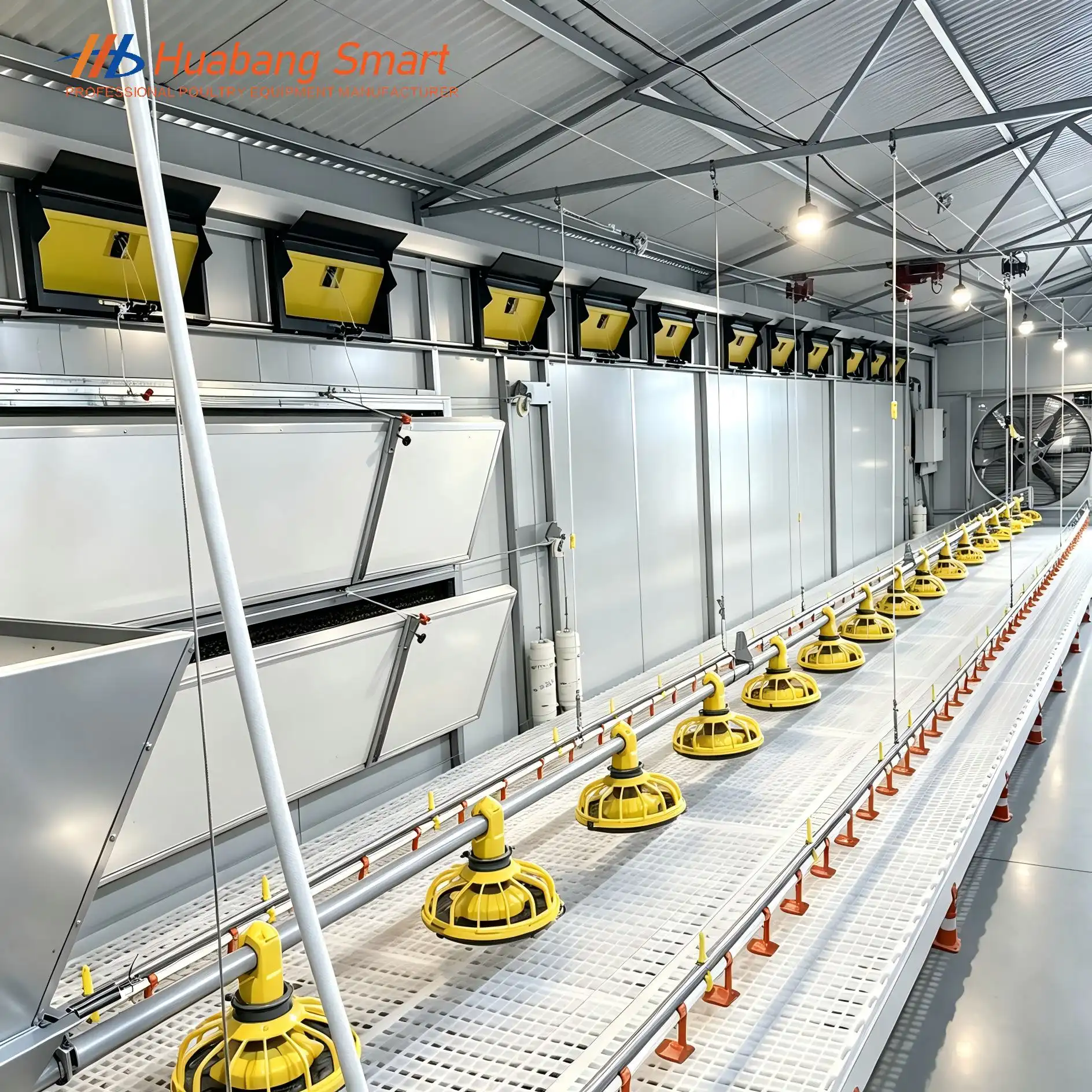
Understanding Flock Sizes and Their Impact on Feeder and Waterer Selection
The size of the flock is the most important thing to consider when planning the equipment for feeding and watering birds. If you get this wrong, you will either not feed enough birds or spend too much on capacity that isn't being used.
Small Flocks: Under 500 Birds
Compact units that can be serviced by hand or entry-level automatic drinkers are best for small businesses. Bell drinkers and tube feeders that are fed by gravity are cheap and easy to clean. The most important thing here is how often you do hygiene maintenance. Smaller systems need to be checked every day to keep biofilm from building up. Even so, equipment still has to be able to handle corrosion from manure gases and moisture.
Medium Flocks: 500–5,000 Birds
At this level, refilling by hand becomes a waste of time and effort. Medium-sized businesses usually need nipple drinker lines that are partially automatic and have pressure controllers. Spreading out measured amounts through feed chain devices lowers waste and spoilage. System modularity is important here—as the number of birds increases with the seasons, the infrastructure should be able to grow without having to be completely replaced.
Large Commercial Operations: 5,000+ Birds
Large chicken houses, layer farms, and breeding programs need watering and food lines that are fully controlled and closed-loop. The USDA's 2022 Census of Agriculture says that all automatic drinking systems are used in U.S. poultry farms that raise an average of 150,000 birds per cycle. It is not possible to manage this many people by hand. Facilities must be able to run continuously 24 hours a day, seven days a week, with remote monitoring and quick sanitation protocols.
Key Criteria for Choosing Chicken Feeders and Waterers
To choose the right tools, you have to look at a lot of scientific and practical factors at the same time. If you choose the wrong material or flow rate, the whole system could fail.
Material Durability and Corrosion Resistance
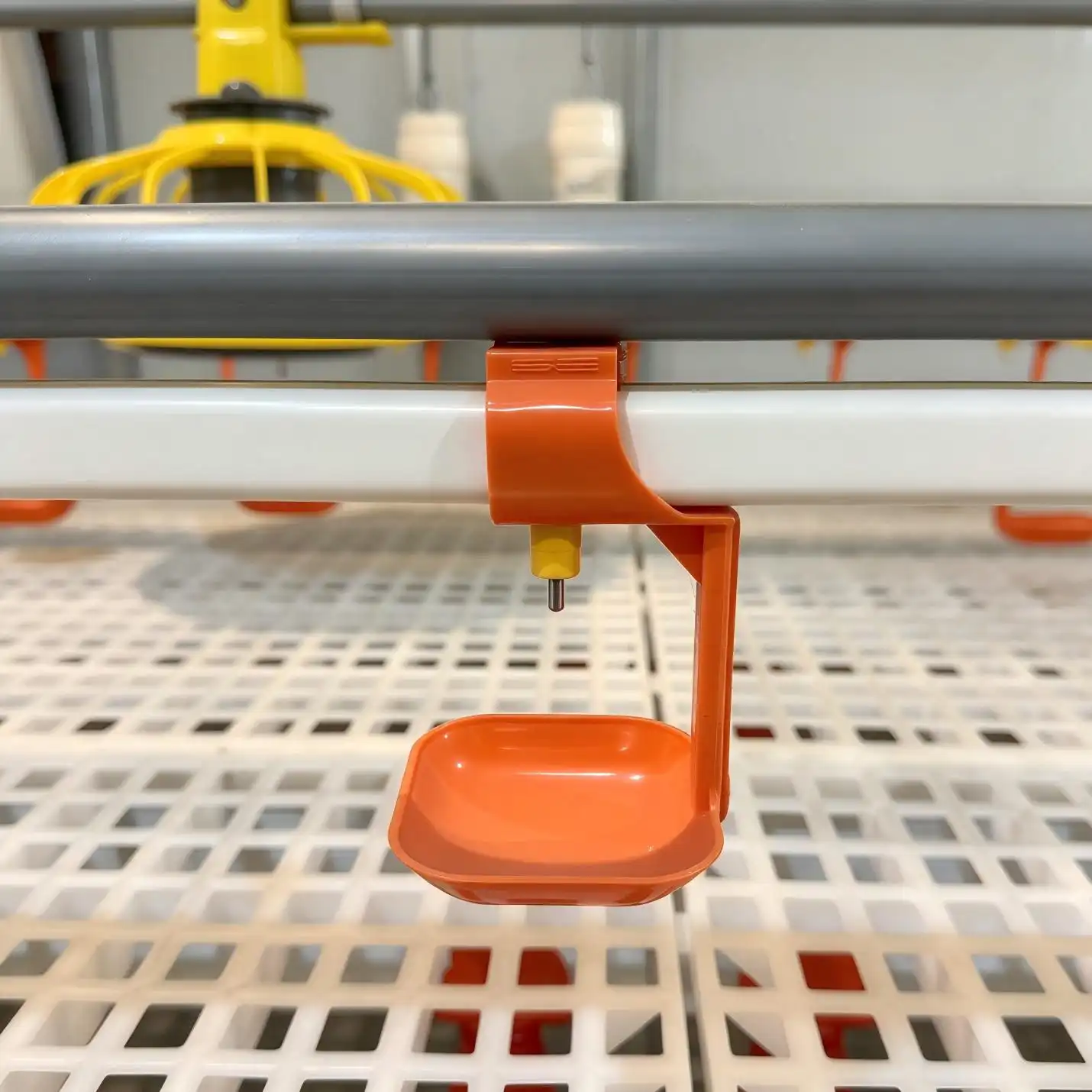
Equipment in chicken coops is exposed to ammonia, hydrogen sulphide, high humidity, and manure directly. Plastic parts made for agricultural use work fine in small systems, but 304 stainless steel nipple drinkers are needed for high-density commercial lines. Precision-grade 304 stainless steel is used to make Huabang Smart's nipple drinker units, which have been proven to last for over five years in high-humidity farm settings. This is a direct answer to one of the most common equipment failure points in the industry.
Flow Rate Calibration by Bird Age and Type
The rate at which water flows out of a chicken feeder and waterer has a big effect on how well the birds are hydrated and how wet the litter is. Lack of flow rates during peak heat dries out groups; too much flow makes litter wet, which raises the level of ammonia and pathogens. The following flow rate standards should be set by procurement teams:
- Chicks and pullets that are one day old: 0.3 to 0.8 L/min per nipple unit
- 1.5 to 2.5 L/min per nipple unit for growing broilers and mid-cycle layers
- 10 to 20 L/min per nipple unit for mature breeders and high-density finishing operations
These levels match up perfectly with the changeable flow settings that come with Huabang Smart's nipple drinking system. By matching these values to the age and stage of production of the birds, problems with underperformance and trash control can be avoided further down the line.
Hygiene Architecture and Biosecurity Design
The water supply is always getting dirty because open trough drinkers let feed particles, dust, and faeces get into it. Wageningen University research confirms that closed-loop nipple drinker systems lower the risk of waterborne pathogen exposure by preventing any contact with the environment. The sealed nipple design stops bacteria and algae growth, which are two things that make water quality worse in regular bell drinkers just days after cleaning them.
Matching Solutions to Procurement Needs: Supplier and Product Comparison
Unit price is not the only thing that goes into B2B procurement decisions. The total cost and risk of a project are affected by lead time, OEM capability, support after installation, and system certification.
Evaluating Nipple Drinker Systems for Scale
A nipple drinking system that can hold 12 to 15 birds per unit, like Huabang Smart's 360° trigger-activated design, gives birds exact water when they need it without any drip waste. Compared to open ditch options, this design theory cuts water use by over 30%, which directly lowers energy costs and the amount of wet litter that ends up in the ground. For a grill house with 50,000 birds, that productivity gap means that costs are cut by a certain amount each production cycle.
Turnkey Procurement vs. Component Sourcing
A lot of procurement managers look at component-level sourcing at first as a way to cut costs. Putting together the layout of the pipes, the control of pressure, the spacing of the drinkers, and the calibration of the flow across a commercial-scale barn requires engineering coordination that most component suppliers can't provide. Implementation risk is greatly reduced when the supplier provides site planning, configuration documentation, installation video guidance, and support after the system is up and running. Within a 30–60 day production cycle, Huabang Smart provides full pipeline configuration, including custom layouts made to fit specific barn sizes and flock density needs.
Certification and Compliance Verification
Before signing a contract with a supplier, procurement teams should ask for ISO9001 quality management certification and proof that the product meets CE standards. These certificates show that the ways the products are made meet international quality standards and that the machines are safe to use in businesses. Suppliers who don't have these qualifications put projects at risk of not following the rules. This is especially true for government-funded farm development programs and businesses that sell goods in foreign markets.
Effective Maintenance and Usage Guidelines for Longevity and Performance
How long a Chicken Feeder And Waterer lasts depends a lot on how well it was installed and how well it is taken care of. If pressure controls are not set properly or water lines are not cleaned regularly, even the strongest stainless steel nipple system will not work as well as it should.
Installation Best Practices by Flock Size
Nipple line height needs to change as birds get bigger. If you set the lines too high, younger birds can't get to them, and if you set them too low, birds will peck at them too much, which will make more drip waste. Modular systems have snap-fit connectors that let you change the height without using any tools. This helps maintenance teams when the production cycle changes.
Cleaning and Sanitization Protocols
During busy production, automatic drinker lines should be flushed with clean water every day and cleaned once a week with approved chicken disinfectants. Full line disassembly and acid washing are common ways to get rid of mineral scale and biofilm that has been left over between flock cycles. Every 48 hours, feeders should be checked out in person to make sure that the pouring holes are clear.
Monitoring System Performance Over Time
Most of the time, flow rate drift is the first sign of nipple drinker wear. Maintenance teams can find units that aren't working right before they affect group water by comparing real output to set rates every month. Every three months, PVC and PP pipeline parts should be checked for damage caused by UV light, joint separation, and loss of pressure in exposed areas.
Procurement Strategy: Where and How to Buy Chicken Feeders and Waterers?
3D composite decking can be used on patios, decks, porches, garden steps, and raised bases as long as drainage, airflow, and foot traffic are planned for ahead of time. Lay the board flat on muddy or waterlogged ground. Soil will grow faster on top of it, even if it's rough.
You can't use the board by the pool just because the company says it won't slip when it gets wet. Why is there more water? Because the board has more dirt and water than the yard. It doesn't matter how the surface feels as long as it drains well and doesn't hold water. It is very important to make sure the board is soft enough to walk on, that the screws are straight, and that there are directions on how to clean it without using chemicals. A board might pass grip tests, but people may not like it if the screw heads are too high.
- Factory-direct pricing cuts down on markups for middlemen and lets customers negotiate directly for customisation, which is very important for OEM and ODM customers who want to use their own pipeline designs.
- A 30- to 60-day production lead time helps with project timing for building new farms and expanding existing ones.
- On-site installation mistakes can be avoided with technical documentation like configuration lists and installation videos. This is especially important for projects that are being sent overseas.
- After-sales support in more than 100 countries makes sure that replacement parts, technical advice, and maintenance instructions are always available for as long as the system is in use.
This question has more than one right answer. Because of this, the most important answer changes for each type of buyer.
Conclusion
Any outside surface of a Chicken Feeder And Waterer will get algae, moss, mold, pollen, grease, and food on it over time. This movie is so good that even stamped decks like it. Some soaps and detergents leave behind slippery residue that can be even worse than the dirt they were meant to get rid of. Things get worse when the bolts don't fit together and rust or scrap metal builds up in the holes. Also, it's worse when the holes get clogged or don't drain well.
FAQ
How many nipple drinkers do I need for a flock of 50 chickens?
At a standard ratio of 12–15 birds per nipple unit, a flock of 50 chickens requires a minimum of 4 nipple drinkers. For safety margin and to account for simultaneous peak demand periods, specifying 5 units is standard practice in commercial flock management.
How often should automatic nipple drinker lines be cleaned?
Active production lines should be flushed daily and sanitized weekly. Between flock cycles, full disassembly and acid wash are recommended to remove mineral deposits and biofilm. Maintaining this schedule extends system lifespan and protects flock health.
Can nipple drinker systems be customized for specific barn layouts?
Yes. Suppliers with OEM and ODM capability — including Huabang Smart — provide customized pipeline configuration based on your barn dimensions, flock density, and housing type. This covers cage systems, floor-rearing operations, and multi-tier aviary arrangements.
What certifications should I require from a poultry equipment supplier?
ISO9001 quality management certification and CE compliance are the baseline requirements for commercial procurement. These confirm standardized manufacturing processes and equipment safety for international deployment.
What causes flow rate problems in nipple drinker systems?
Mineral scale buildup, worn trigger mechanisms, and incorrect pressure regulator settings are the primary causes. Monthly flow rate measurement and quarterly pipeline inspection catch these issues before they affect flock performance.
Request a Custom Configuration from Huabang Smart — Trusted Chicken Feeder And Waterer Manufacturer
Read this list to find out what risks come with a Chicken Feeder And Waterer sample or buy order before you agree to it. To get your price right away, email us at admin@huabangsmart.com or go to poultrycage.com.
References
1. USDA National Agricultural Statistics Service. 2022 Census of Agriculture: Poultry Production Data. United States Department of Agriculture, 2023.
2. Xin, H., & Puma, M. C. L. Water Consumption and Management in Poultry Production. Iowa State University Extension, 2004.
3. Elson, H. A. Poultry Housing and Equipment. Food and Agriculture Organization of the United Nations, 2015.
4. Demmers, T. G. M., et al. Water Use Efficiency in Broiler Production Systems. Wageningen University & Research, 2018.
5. North, M. O., & Bell, D. D. Commercial Chicken Meat and Egg Production (5th ed.). Springer Science & Business Media, 2002.
6. Lay, D. C., et al. Biosecurity and Disease Prevention in Commercial Poultry Operations. Purdue University Cooperative Extension Service, 2011.

USER EVALUATE
Here is the customer's evaluation of us
YOU MAY LIKE
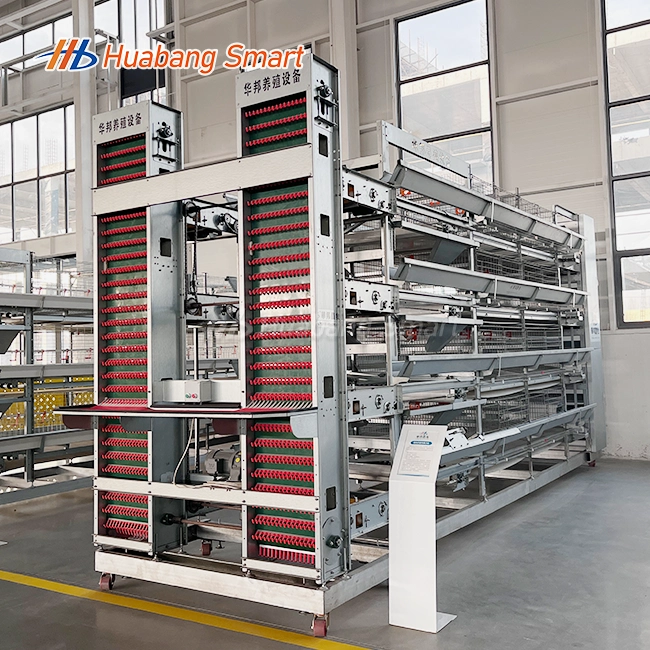 VIEW MOREH Type Layer Chicken Cage
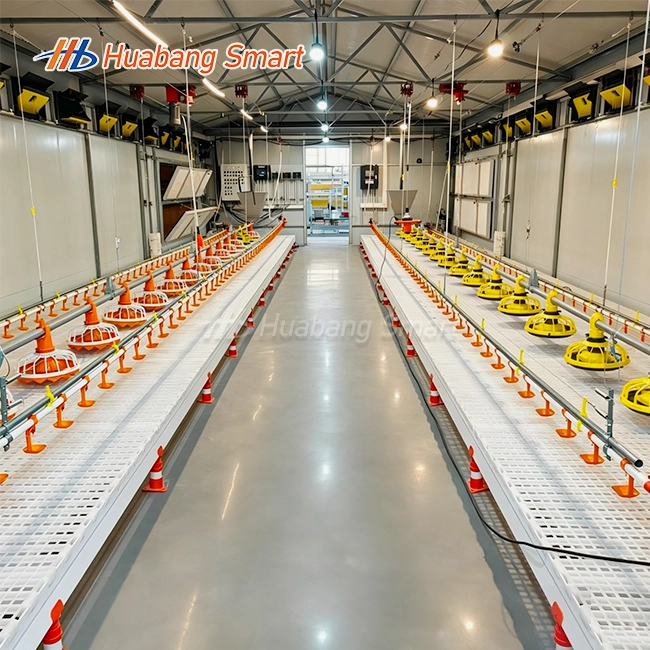 VIEW MOREAutomatic Chicken Feeder System
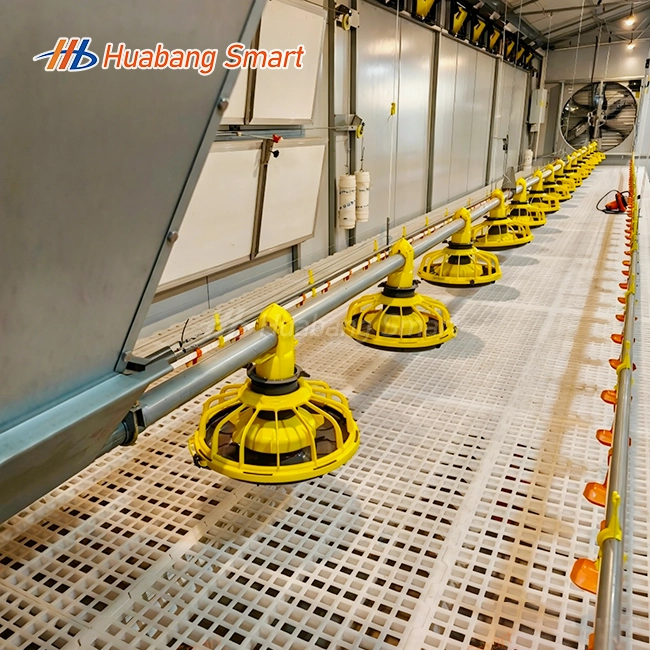 VIEW MOREAuger Feeder Chicken Layer
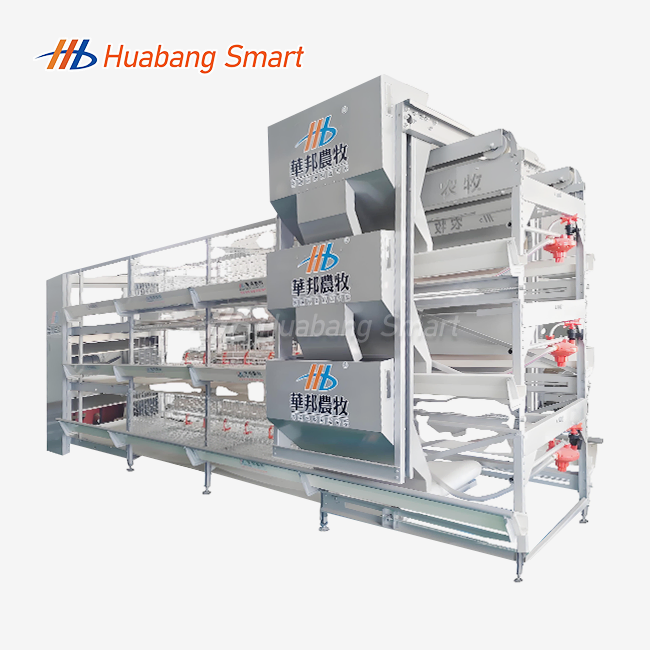 VIEW MOREChicken Cages For Broilers
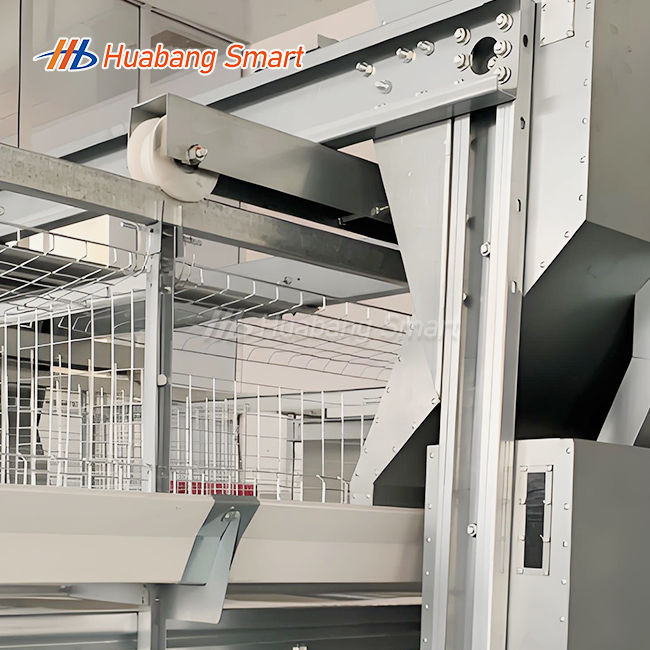 VIEW MOREAutomatic Broiler Chicken Cage
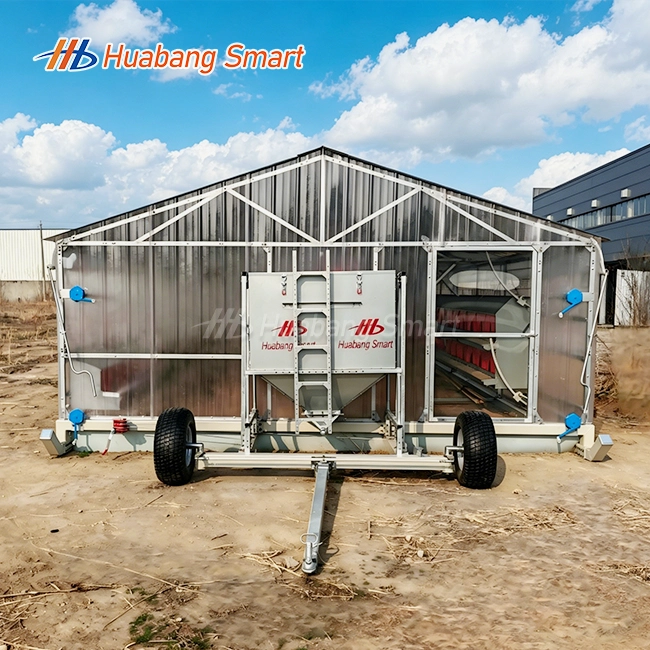 VIEW MOREChicken Tractor For Egg Layers
 VIEW MORELayer Cages Egg Chicken Poultry Farm
 VIEW MOREChicken Cage For Layers Poultry Farming