
How to Select an Electric Chicken Feeder for Automated Poultry Houses
Start with your flock size, feed type, and house layout when choosing an Electric Chicken Feeder for automated poultry houses. Then look at the feed output capacity, pan design, material strength, power compatibility, and how it needs to be installed. It's not enough to compare prices; you should also look at service, certification, and total cost. Before you increase the amount of feed, test the feeder with your own feed. A pan-style system works well in layer and broiler houses. One example is the Huabang Smart model, which has a 3mm hot-dip galvanized steel frame, a 16-cell feed pan, and an output of 1400 kg/h. This guide uses simple language to walk you through each step.
Why an Electric Chicken Feeder Matters in Automated Poultry Houses
What Does an Electric Chicken Feeder Do?
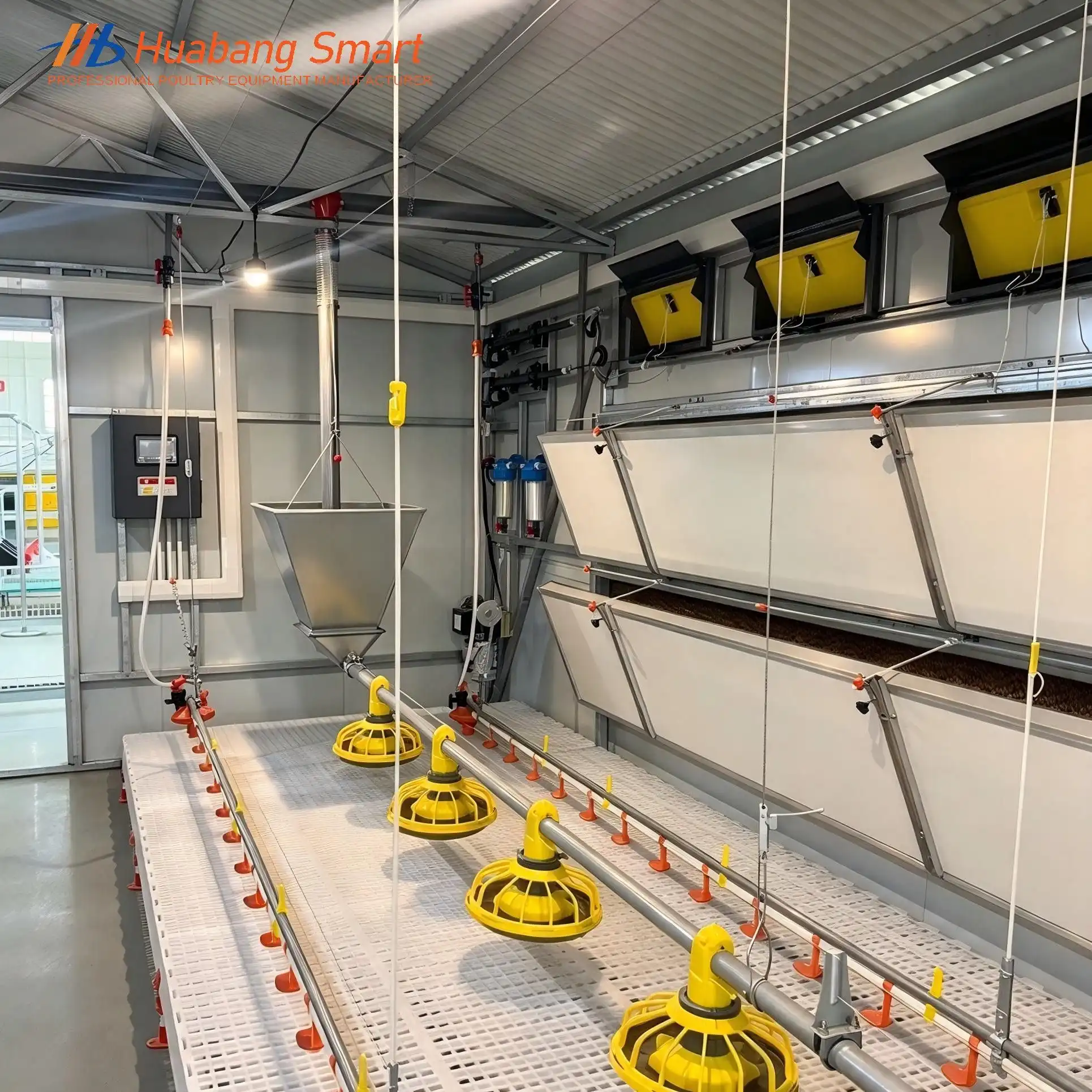
The use of an Electric Chicken Feeder eliminates the need for hand feeding. The feed is stored in a hopper. An auger is turned by a motor, and the feed moves along a line to the pans. The feeding times are set by a timer or programmable logic controller (PLC), which makes sure that each bird gets fresh food at the right time. Most of the time, 60 to 70 percent of the total cost of raising chickens goes to feed. The US produces a lot of chicken, as shown by data from the USDA. This means that even small amounts of waste add up over many birds. Workers don't have to carry bags and fill troughs for as long when lines are automated. The flock will be less bothered if fewer people walk through the house.
Electric Feeders Versus Other Automatic Chicken Feeders
There are a lot of different kinds of automatic chicken feeders. Gravity feeders drop feed based on weight, and you can't change the timing. Battery and solar units work well in small coops and out in the middle of nowhere, but their hoppers don't hold much feed. Feed is moved by mechanical systems that don't use electronics. In the commercial group, there is an electric pan system. One hopper can serve all of the pans in a line because it has power to drive the auger and is linked to a controller. That central control is more important than portability in a house with thousands of birds. Smaller units are good for hobby flocks, but they can't feed as many birds as a commercial system.
How the Huabang Smart Pan Feeding System Fits
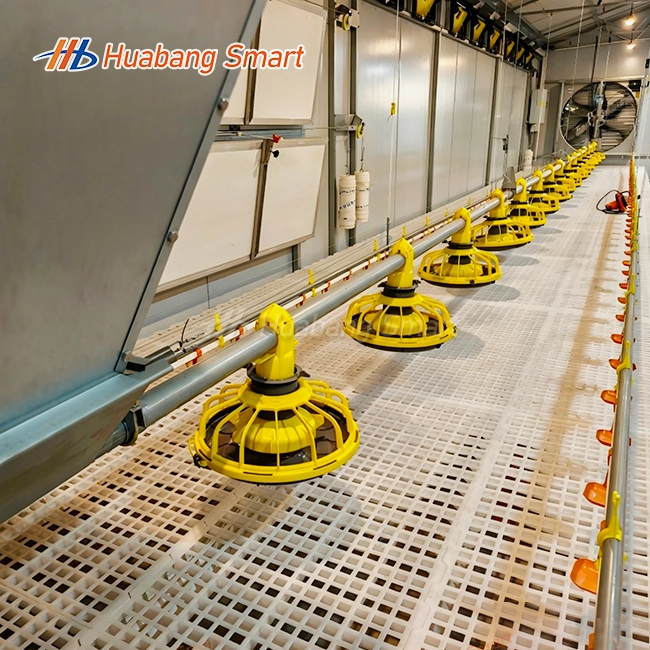
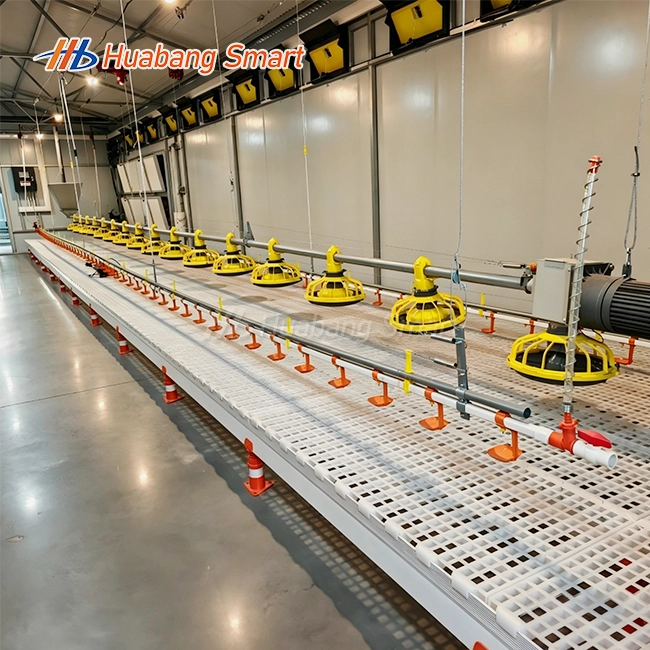
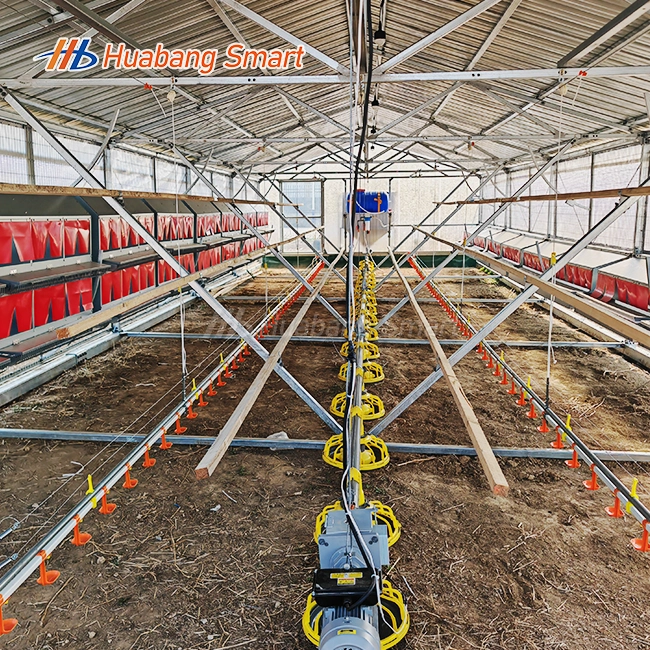
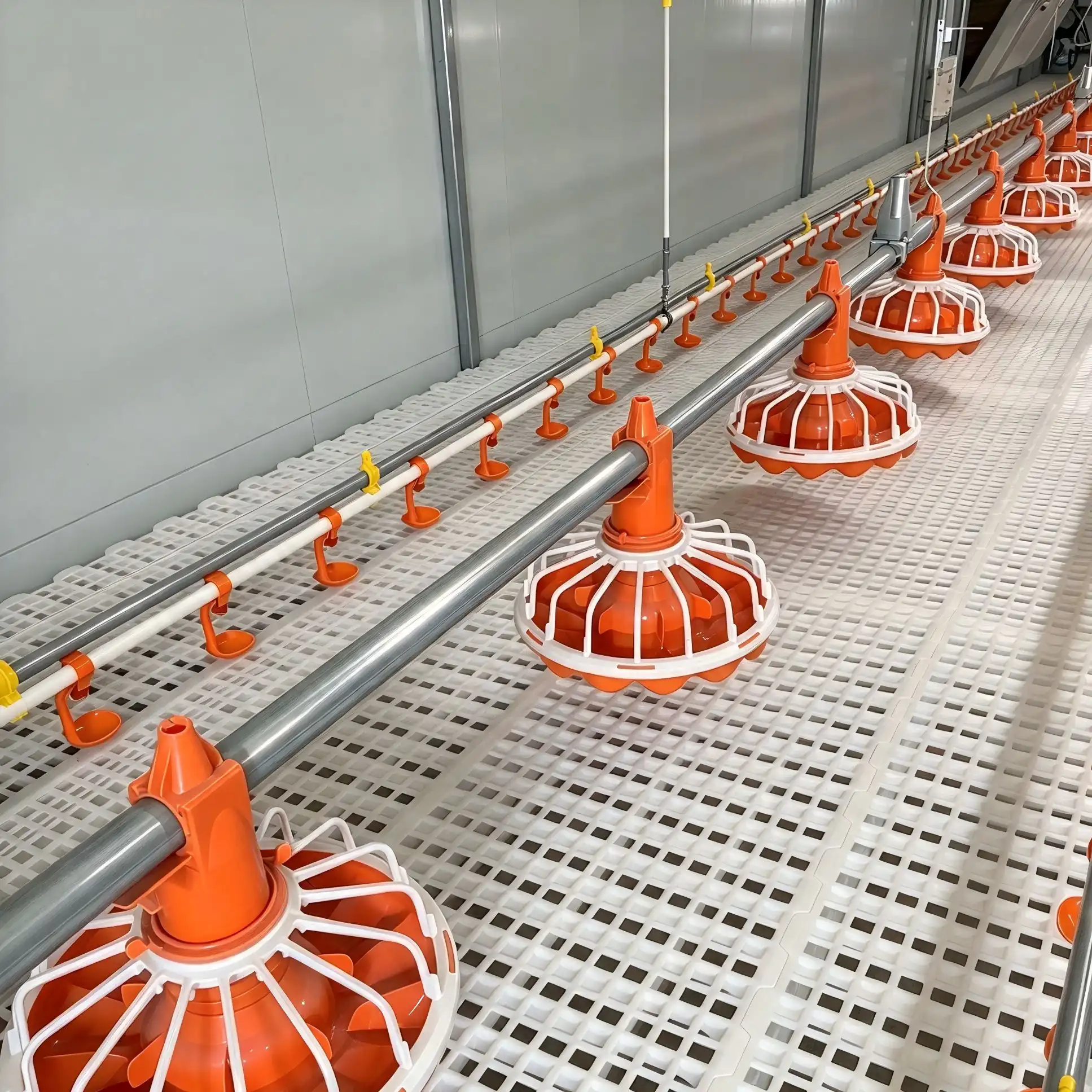
Our pan feeding system is made for farms that raise layers and broilers. The feed rate can reach 1400 kg/h, which is equal to 700 kg in 30 minutes at full capacity. Each 330mm pan has 16 cells and is made of virgin PP that is safe for food. The 75 mm × 3.6 mm PVC feed pipe was chosen because it will last a long time. For different stages of growth, a high-precision winch changes the line height, and an auger drive sends feed to each pan station. The system is linked to PLCs so that it can run at set times. A 3mm hot-dip galvanized steel frame doesn't rust in air that is high in ammonia. These parts work together to make a commercial house feeding line that is fully automatic.
Define Your Needs and Set the Core Selection Criteria
Map Your Flock and Poultry House
First, write down the facts. Write down the number of houses, the length of each house, the breed of birds, the age range of the birds, the size of the flock, and how much food is used each day. Keep track of how many people work each shift and how often you fill up the hoppers. Also, look at the weather. Dust, humidity, changes in temperature, and the pressure of rodents can all shorten the life of equipment. There are goals for feeder space and feeder height in the breeder guides from Aviagen (Ross) and Cobb. Because those goals change with age and stress, I suggest that you use the guide for your own birds. This kind of clear brief stops lines that are too small, extras that aren't needed, and uneven feeding. It also tells the maker what they need to know to make the system the right size.
Match Capacity, Pan Design, and Feed Type
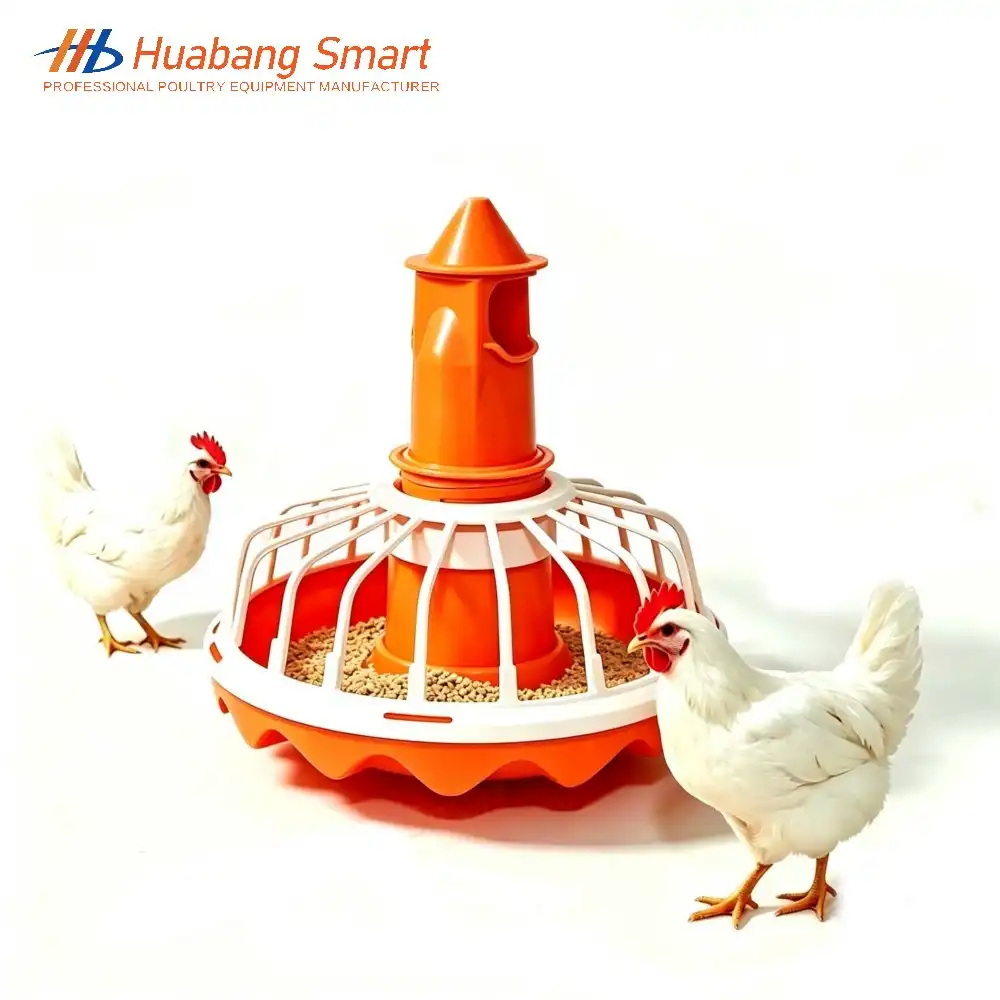
Capacity should cover your feeding windows so that the motor doesn't have to run all the time. With a rating of 1400 kg/h, all pans can be filled quickly in big homes. The shape of the pan is also important. The 330 mm pan has 16 cells, so birds can eat together. A grill design keeps them from scratching the food onto the litter. The disease coccidiosis is linked to wet bedding and is less likely to happen if the litter is dry. The supplier should tell you how the system works with your feed type, like mash, crumble, or pellets. You should also test it with a piece from your own mill. The bulk density changes based on the feed form, and the flow through the line is affected by the bulk density.
Check Materials, Accuracy, and Cleaning Access
How long an Electric Chicken Feeder line lasts in a house full of water, dust, and ammonia depends on the material used. Food-grade virgin PP is safe, doesn't smell, doesn't rust, and has a smooth surface that is easy to clean. A 3mm hot-dip galvanized steel frame makes the structure stronger and less likely to rust. An auger drive makes sure that each pan station gets the same amount of feed. That gets rid of dead zones and helps the flock grow and gain weight evenly. Instead of judging by price or how something looks, ask for specification sheets and then test the claims with samples and a real-world situation. Simple-to-reach areas cut down on cleaning time and the number of spots that get missed.
Check Power, Compare Options, and Plan Installation
Verify Power Compatibility and Backup
Power details take longer than most buyers think they will. Before you order, make sure you know the voltage, frequency, wattage, type of wiring, and length of the cable. Many farms in the US use 60 Hz power, while other markets use 50 Hz. Please let us know which standard you are using in the first question, and we will confirm the configuration. Getting a CE mark means that something is safe for the European market. US buyers should still check the electrical code and insurance requirements in their area. Find out what happens when the power goes out: does the controller stick to its schedule? Does the line start up again on its own? A lot of big farms also put a backup generator on the house panel. Ask your supplier to keep track of these tests.
Compare Electric, Gravity, Battery, and Solar Options
Make sure the technology works with the site. Gravity feeders are cheap and work well in small, covered coops, but you can't change the times or amounts they give. Battery and solar models can be used in places where there isn't access to grid power, but their hopper sizes and charging capacities are limited. A commercial building with grid power can use an electric pan line. It gives birds food on time, can connect to a controller, and can feed many birds. Types of options should be compared based on flock size, existing infrastructure, labor, climate, and maintenance staff. If you have a house with a lot of birds, make sure the line works well with your current feed bins, ventilation, and house controls.
Plan Installation and System Integration
As important as good design is good installation. Plan where the hopper will go, how high the lines will be, how to get to the power, how to protect the cables, how to ground the system, and how far away it should be from water and cleaning chemicals. Our light, modular parts are easy to put together and can be changed later to fit different layouts, whether they are in permanent homes or mobile coops. We help with planning the site, design a custom system, give you a detailed configuration list, and show you how to install everything on video. Our technical team can help you from afar, and certified technicians can go to sites that are more complicated. Start up the line before it's fully used. Test the amount of feed, the accuracy of the timer, the operation of the motor, the emergency stop, and your actual feed. Fix small problems in one house first before you use the same plan for the whole farm.
Protect the Line with Hygiene, Maintenance, and Troubleshooting
Plan for Moisture, Dust, and Biosecurity
Equipment in chicken coops is exposed to water, dust, feathers, feed residue, and chemicals used for cleaning. Pick parts that won't rust, and keep electrical parts away from direct spray. Animals like wild birds and rodents can't get to the feed when it's stored or given out because it's timed. This keeps the feed fresh and stops pathogens from getting in. This is important in the US because avian flu outbreaks since 2022 have made biosecurity a top priority for farms that raise animals for food. The smooth PP pans are easy to clean, and the dry litter around the pans is good for the birds' health. Set up a wash cycle that keeps the motors and control boxes safe, and remove any stale feed from the line before it hardens.
Build a Simple Maintenance Routine
Regular work stays light with an Electric Chicken Feeder thanks to well-built structures. Every so often, check the winch, auger drive, and motor, which are all moving parts. Check the settings, cables, and fasteners, and clean everything that touches the feed. Keep track of every check so you can find patterns quickly. When you place an order, ask for a parts list. Keep spare parts on hand for things that break. We stand behind our system with a one-year warranty that covers flaws in the way it was made and broken parts that happen during normal use. Our after-sales network covers more than 100 countries. Also, I think you should ask for operator training during commissioning so that your team knows how to safely shut down the machine.
Spot and Fix Common Operating Problems
Power loss, wrong timer settings, feed jams, motor overload, leaks, and uneven distribution are the main causes of most problems. Feed that is too wet, foreign objects, hoppers that are too full, low line height, or not cleaning enough are common causes. When something stops, you should work your way out from the source. Check the power, the fuse, the cables, and the controller first. Then look for blockages in the feed path. Change the big parts only after these steps are done. The Ross and Cobb guides say to set the pan height so that it is at the back level of the birds. This will cut down on spills and crowding. Record early performance data so that you can change parts and match more than one line.
Evaluate Suppliers, Costs, and Your Buying Checklist
Judge Manufacturer and OEM Capability
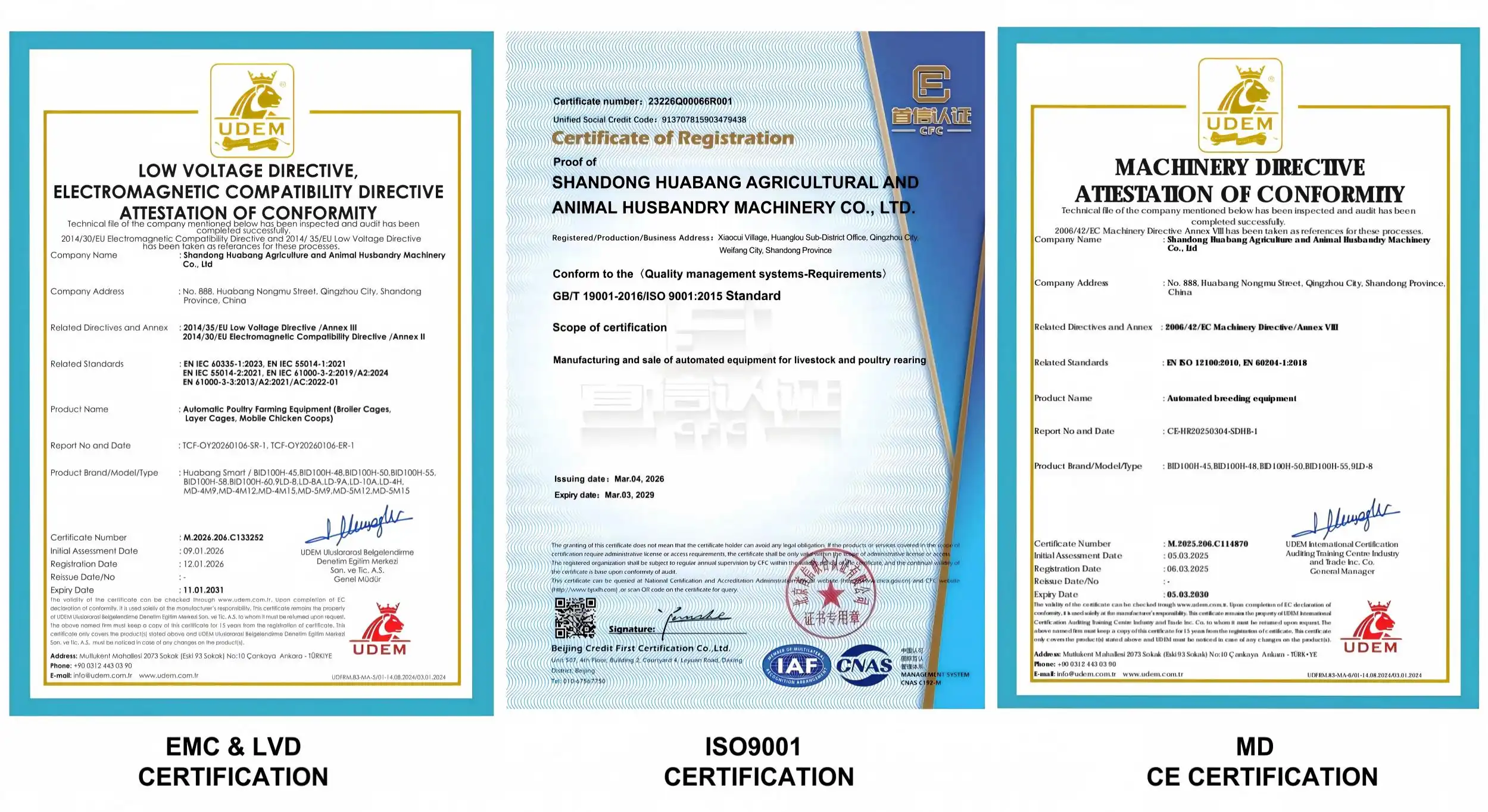
Do not look at the catalog. Check to see if they have experience with production, quality control, export markets, test records, and a supply of spare parts. Huabang Smart has been designing and making products for 17 years and is certified by ISO9001 and CE. The company also has 49 patents on core technologies. ISO 9001 tells quality management systems what they need to do. When something has the CE mark on it, it means that it meets European standards, like the Machinery Directive for machines. A direct factory may be able to make more changes, while a local distributor might have parts in stock. As part of an OEM or ODM project, you should agree in writing on the branding, packaging, control interfaces, drawings, lead time, and minimum order quantity. Depending on the changes you make, our production cycle lasts between 30 and 60 days.
Calculate Total Cost and Return
The unit price doesn't tell the whole story. Include the cost of setting up, starting up, electricity, cleaning, labor, spare parts, shipping, duties, and any downtime that might happen. Then make a list of the benefits: less waste from feed, less work, more stable feeding, and cleaner feed. In one house, do a pilot test and record the feed conversion ratio (FCR), the number of hours worked, and the amount of feed lost before and after. It gives you a payback number based on your own farm, not an estimate of how much you will sell. When there are a lot of birds and the weather is bad, higher-spec systems really pay off because downtime costs a lot. Because we are a factory-direct supplier, we can quote the system without any extra trading layers.
Follow a Step-by-Step Buying Checklist
Follow this order. Set the flock size, number of houses, feed type, daily volume, feeding schedule, climate, and voltage as the first thing you do. Second, ask for datasheets that list the specs, materials, dimensions, warranty, installation, and spare parts for the product. Third, test the systems that made the short list with your own feed. Fourth, look at the total cost to land, the lead time, and the service support. Fifth, make sure you write down the steps for making a claim, shipping, and payment terms. One more step is needed for projects in the US: make sure you know how the local electrical code applies. The final choices are different for medium-sized farms, large businesses, distributors, and OEM buyers. Your engineers, buyers, and farm owners can compare bids on equal terms if you keep the answers on one sheet.
Conclusion
The first step in choosing an Electric Chicken Feeder is to gather information about your flock, the layout of your house, the type of feed you use, and the weather. Next, make sure that the capacity, pan design, and materials meet your needs. Also, make sure that the power works and that the backup works. If your site has the right infrastructure, you can compare electric pan lines with gravity, battery, and solar options. Installing, cleaning, and maintaining equipment should be planned early on because ammonia, dust, and moisture can shorten its life. When something goes wrong, power, controls, and the feed path are often the first things that are checked. Look at a supplier's experience, certification, OEM terms, and service. Before going big, test one house to see how much feed is wasted, how long it takes to work, and how much it pays back. These standards can be used in layer and broiler houses with a pan-style system that has 16-cell 330mm pans, PVC pipe, and a 3mm galvanized frame and can handle 1400 kg/h.
FAQ
What is the best Electric Chicken Feeder for a large poultry farm?
Pick based on feed output, pan layout, compatibility with controllers, material strength, availability of spare parts, and support from the supplier. Our pan feeding system can handle up to 1400 kg/h and works in both layer and broiler houses. This means that large flocks get food quickly and evenly along the line.
How do I prevent feed jams?
Use dry feed that works with your system, don't fill hoppers too much, and get rid of any debris before filling. Every so often, clean the feed path. Before running the line at full speed, test each new feed form, like mash, crumble, or pellet.
What should I check when a feeder stops working?
Begin where it all began. First, check the power, the fuses, the cables, and the settings on the controller. Next, check the motor for overload and the feed path for blockages. Check the parts before you replace them, and call your supplier if the problem comes back.
Is a commercial pan system suitable for backyard flocks?
Our system is aimed at commercial farms that raise layers and broilers. A backyard flock of a few birds doesn't need a 1400 kg/h line very often. A smaller battery or gravity feeder will usually fit better and cost less.
Request an Electric Chicken Feeder Quote from Huabang Smart
Huabang Smart is a direct Electric Chicken Feeder manufacturer that has been designing and making products for 17 years. Our engineers will come up with a configuration and quote based on the size of your flock, the layout of your house, the type of feed you use, and the voltage standard you send to ginny260831@gmail.com or huabangsmart002@gmail.com. You can look at our full line of products at poultrycage.com as well. We help with OEM and ODM projects, video installation guides, and service after the sale in other countries.
References
1. Aviagen. Ross Broiler Management Handbook. 2018.
2. Cobb-Vantress. Broiler Management Guide. 2018.
3. Food and Agriculture Organization of the United Nations. Poultry Development Review. 2013.
4. International Organization for Standardization. ISO 9001:2015 Quality Management Systems – Requirements. 2015.
5. European Parliament and Council of the European Union. Directive 2006/42/EC on Machinery. 2006.
6. USDA National Agricultural Statistics Service. Poultry – Production and Value 2023 Summary. 2024.

USER EVALUATE
Here is the customer's evaluation of us