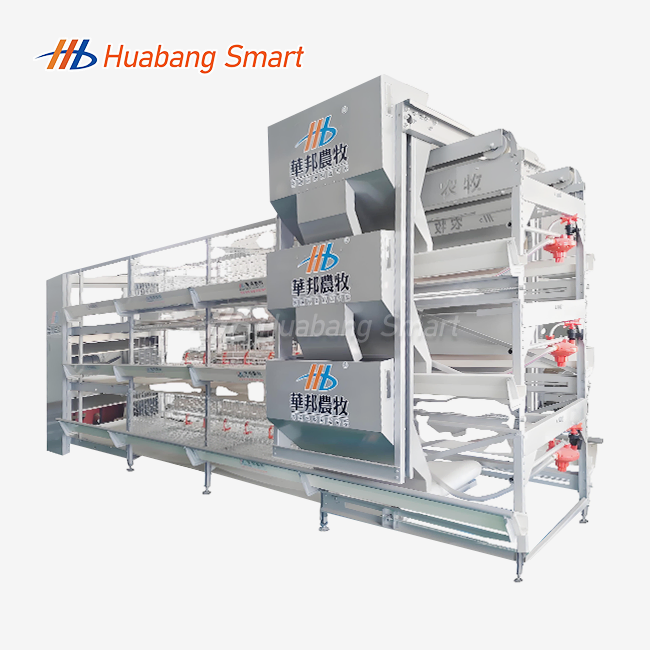

Poultry Automatic Nesting Box with Egg Conveyor for Large Layer Farms
A poultry automatic nesting box with egg conveyor can be used by large layer farms to move eggs carefully from the nest to the packing room. The eggs are laid on a sloped floor, and they roll onto a belt. After that, the belt takes the eggs away so no one has to pick them up. Because of this design, eggs stay cleaner longer and break less often. They make a unit with zinc, aluminum, and magnesium plates that can tilt 8°, breaks less than 0.3% of the time, and comes with a one-year warranty. You can use this guide to buy the system, choose one, and learn how it works.
It was made for people who want to know more about the gear before they ask for a quote, like farm owners, buying teams, engineers, contractors, and distributors.
How the Nesting System Works and Why Large Farms Adopt It?
How the System Moves Eggs from Nest to Packing Room?
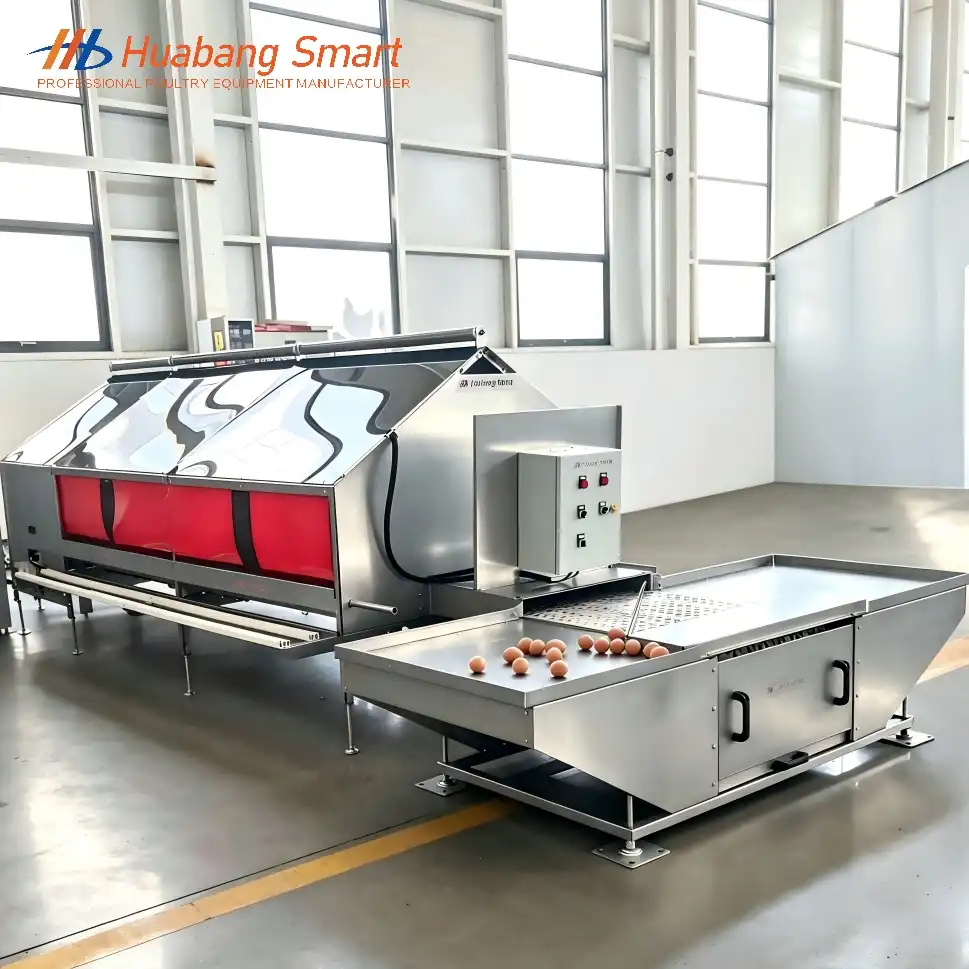
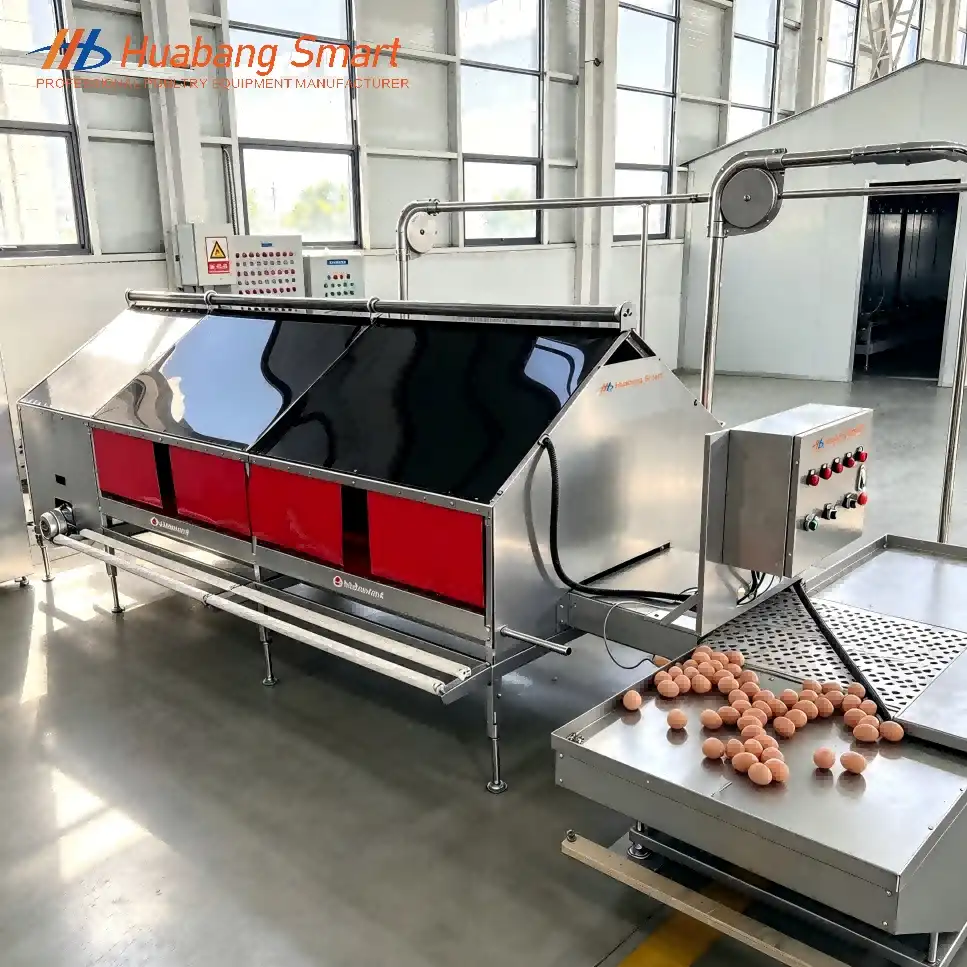
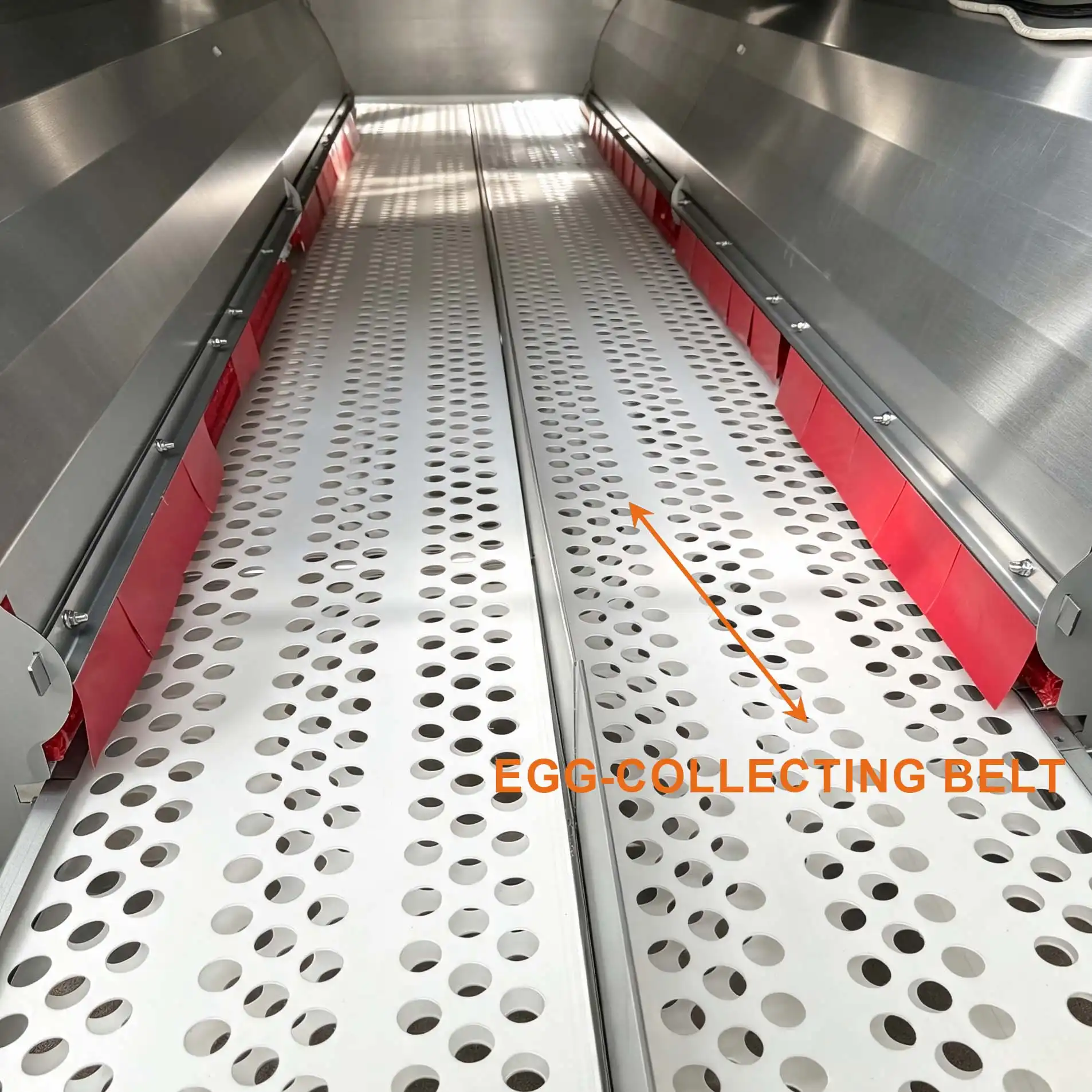
There is a place to lay eggs, a platform for collecting eggs, a storage box, and a conveyor belt all in one automatic nest. There is an 8° sloped floor where the hens lay their eggs when they get inside. Since there is weight on the platform, each egg falls to the belt below it. The belt moves the eggs from one row to the packing room, which is in the middle of the line. Every day, fewer hands touch each egg because the path stays the same. Farms can choose between single- or double-sided rows and single- or double-tier layouts if the building is big enough, the flock is big enough, or the collection room is in the right place.
Business and Production Benefits for Large Layer Farms
To gather by hand, you have to go through the house more than once, which takes time as the flock grows. An electric belt moves the work to one place, so a small group of people can care for more hens. To keep cracks and dirt from showing up, move slowly and don't touch the item too much. American Egg Board (NASS) says that every year the US makes more than 100 billion eggs. This means that even small losses add up quickly. Under the FDA Egg Safety Rule, farms with 3,000 or more hens must also keep eggs at 45°F or less for 36 hours after they are laid. That schedule works because the goods get to the packing room quickly. Write down the number of hours worked for every 1,000 hens, the number of floor eggs, the number of cracked eggs, and the time the hens rested. This will help you figure out the gain.
Automatic Nest Versus Traditional Chicken Nest Box
Hand-built nest boxes are good for small flocks, but they make it hard to get the eggs at the right time and are hard to use on large farms. From a simple roll-away nest to an egg tray, people still carry trays by hand. The eggs are sent to a central line by a nest with a built-in conveyor belt. This line can connect to sorting and packing equipment, so it gets longer as the house does. Sort the options by how far they are, how long they take to clean, how likely they are to break, and how well they fit together. The number of tiers should match the height of the building and how easy it is to get to services. A study from 2002 in Poultry Science looked at ways to make furnished cages less likely to crack. That's proof that the way the egg moves affects how much damage it gets.
Huabang Smart Nesting Box Design and Specifications
Key Specifications at a Glance
Engineers and buyers can look at this table to see if our unit's main specs match up with house plans.
| Parameter | Detail |
|---|---|
| Material | Zinc-aluminum-magnesium plate |
| Length | 1.2 m |
| Width | 1.4 m (1.88 m with perch) |
| Height | 2 m, including perch |
| Internal nest | 1.19 m long, 0.4 m wide |
| Nest tilt angle | 8° |
| Motors | Front 0.4 kW, rear 0.75 kW |
| Capacity | Around 120 hens |
| Egg breakage rate | Less than 0.3% |
| Weight | 40 kg per set |
| Warranty | 1 year |
The poultry automatic nesting box with egg conveyor unit can be made longer to fit the length of your chicken coop, so it can be used for both short and long shapes.
Material and Structural Design
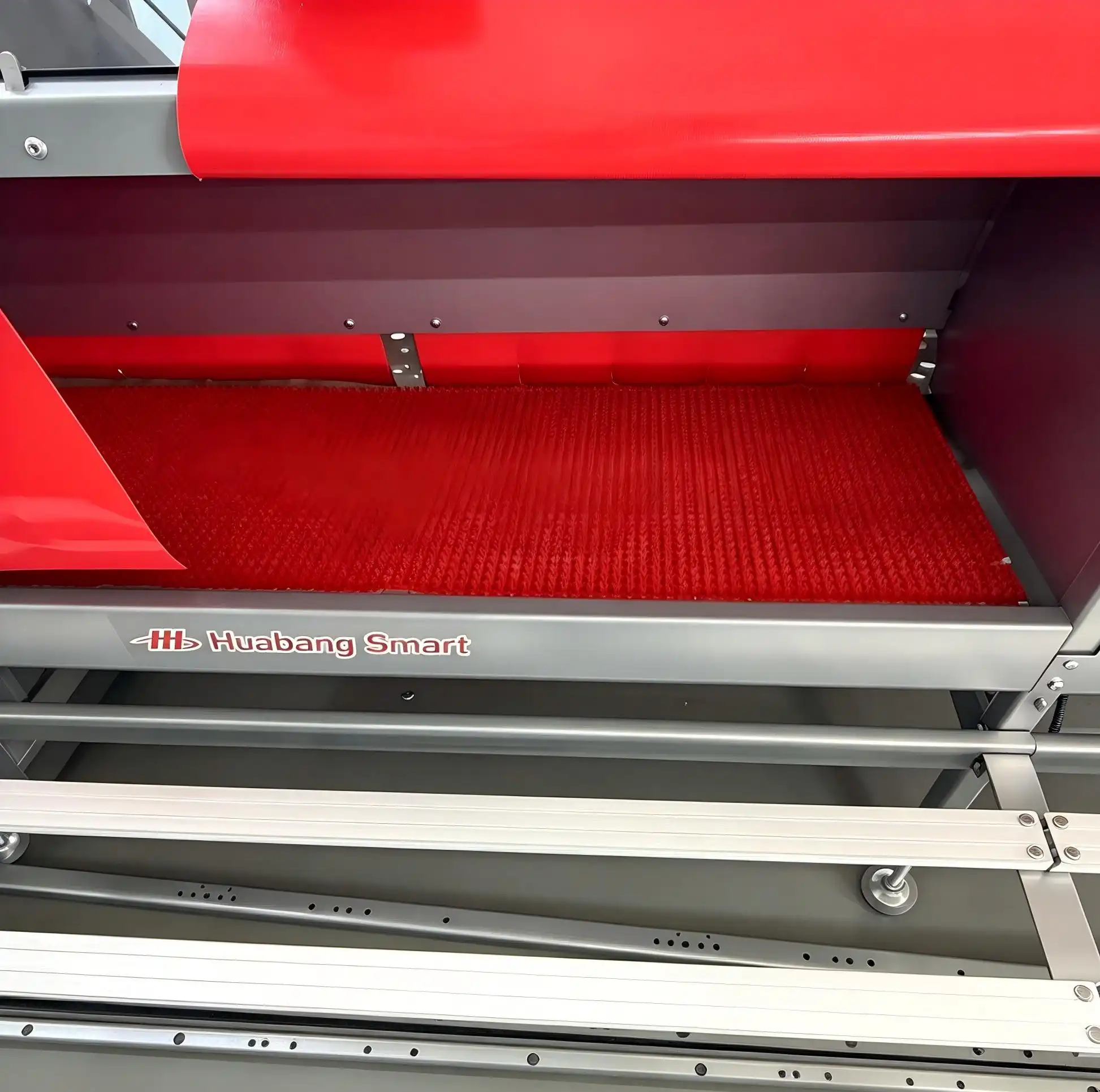
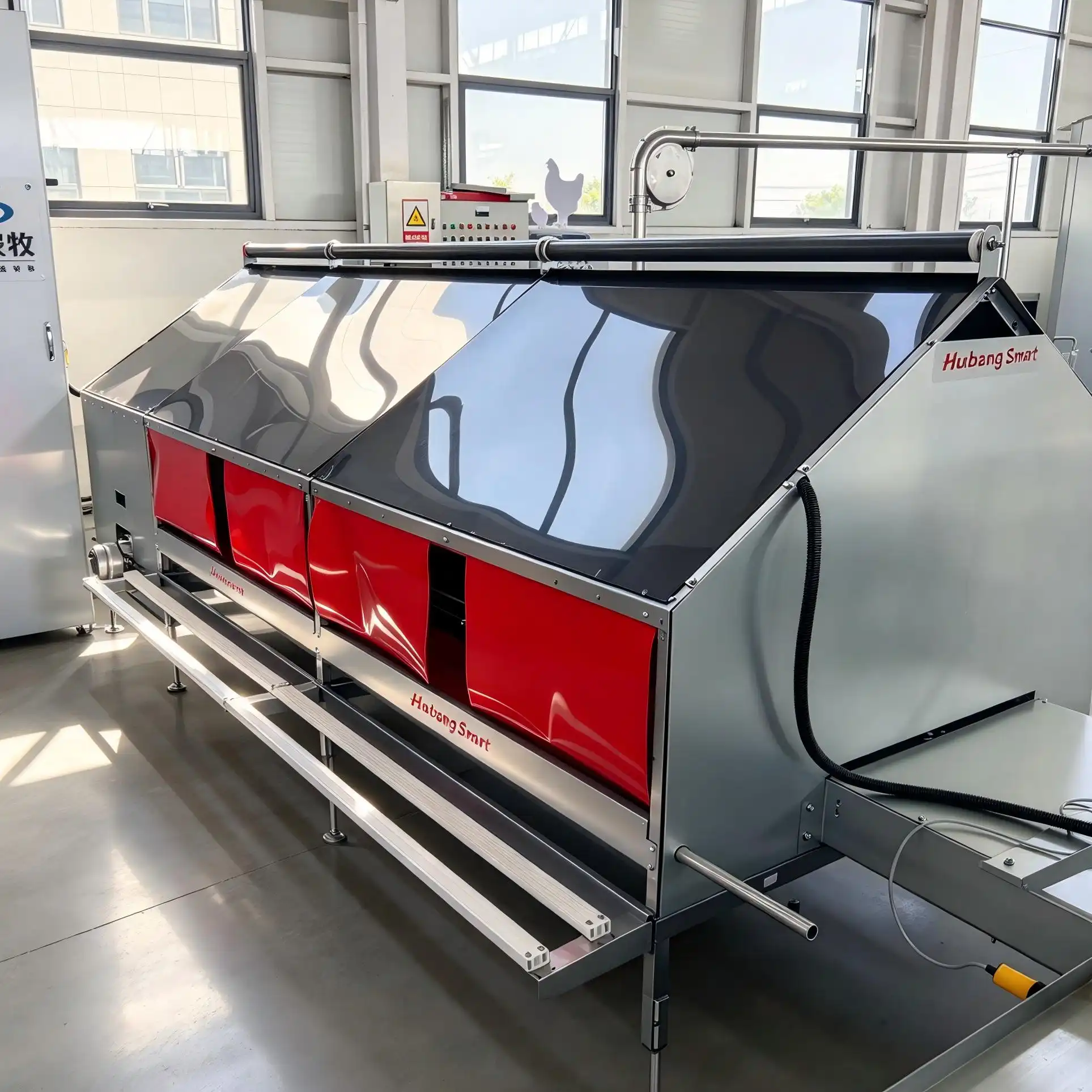
The steel that doesn't rust is covered with a zinc-aluminum-magnesium plate, which is what the body of the nest is made of. The frame has to be strong enough to be washed over and over because chicken coops have a lot of water, ammonia, and manure. The 8° tilt lets the eggs roll off the area where they were laid, and before they hit the belt, they are slowed down by a set of buffer rollers. Each frame is on a raised platform that lets air flow under the body of the nest. There should be more airflow around the area where the animal is lying so that it doesn't get too wet and allow bacteria to grow. The hens can sit on the perch, which makes the unit 1.88 m wider.
Anti-Breakage Rolling, Anti-Broody Lift, and Belt Control
Every day, layer farms have to deal with problems. Three features help them. The structure that stops the eggs from breaking is designed to move them slowly and gently, and it also stops pecking damage as much as possible. The smart anti-broody lift moves the body of the nest up at nite so that the hens can't sleep in it. So, the eggs stay clean and free of poop. The back of the belt has real-time tension adjustment and automatic deviation correction that make sure it runs straight. This saves time because workers don't have to set it up by hand as much. If the belt moves side to side, the edges will fray, and eggs will get stuck. This control keeps uptime safe. The motor in the front has 0.4 kW, and the motor in the back has 0.75 kW.
Selecting, Installing, and Applying the System
How to Choose the Right Nesting System?
First, you need to decide how big your flock will be, how your house will be set up, how you will produce your eggs, and how you will grow. Don't just use simple ratings. Find the unit count by multiplying the number of hens by the length of the house. The math is easy because each unit has about 120 hens, and the layout backs this up. Think about the material you pick if you live in a damp place. In different ways, engineering plastics, galvanized steel, and stainless steel can all stop corrosion. Check the electrical requirements, the voltage in the area, and the way the controls work. Not just the price per unit, but also how much it costs to own the whole thing and where to find replacement parts. Because of this, a good supplier will give you drawings and written specs.
Installation Steps and Commissioning
Before the equipment even gets there, a good installation starts. Check the floor's level, the way it's anchored, the service aisles, the lighting, the power supply, the ventilation, and the drainage. Also, make sure you know how to get to the collection room. On-site, crews put together frames and nest floors, align the belt, mount supports for it, fit drive units and safety guards, and connect the controls. To test the conveyor, first run it without any eggs on it. Then, test it with real eggs moving through it. Show the workers how to clean, turn off the machine in an emergency, check the belts, and find problems. In other countries, Huabang Smart offers planning for the site, configuration lists, video installation guides, installation on-site, and support in the country after the sale.
Where the Unit Fits: Cage Systems and Breeder Houses?
For business use, the unit can be put in either an A-frame or an H-frame-shaped battery cage. The belt can handle changing loads of eggs and won't get stuck when a lot of eggs are being laid at once. Bird nests with slatted floors are also good for this because feathers and litter dust make the floor a mess. That buildup doesn't hurt the drive motor because of the self-correcting belt. Small farms and breeder hens that do large-scale breeding can also use it. You can change the number of units to fit your home. The nest, egg platform, storage box, and tail structure are all part of the same unit, so it can connect to different automated egg collection lines in regular hen houses.
Hygiene, Maintenance, and Performance Checks
Hygiene, Biosecurity, and Floor-Egg Control
Eggs won't be clean just because they are scanned in a poultry automatic nesting box with egg conveyor. These things should last a long time and be easy to clean. Also, make sure that the staff can get to the belts, corners, transfer points, nest pads, and the area under the structure. Getting rid of broken eggs, manure, and litter quickly is important. While motors and electrical parts are being cleaned, they need to be kept safe. Other things that can affect floor eggs are being trained with a pellet, the amount of light, how easy it is to get to the nest, how many birds are in it, and the quality of the litter. A study from 2006 in British Poultry Science looked at how dirty the eggshells were in aviaries, standard cages, and cages with furniture. It was found that the type of housing changes how clean the shells are. As part of your biosecurity plan, clean the nest and the belt. Set up separate paths for clean and dirty things, and after installation, keep track of the floor eggs and dirty eggs.
Maintenance Checklist and Troubleshooting
Every day, make sure the belt is straight, any strange noises or vibrations are fixed, and the machine isn't overheating. Also, check for broken eggs or other debris, safety guards, and emergency stops. Once a week or once a month, check the motor mounts, electrical connections, nest pads, corrosion points, fasteners, rollers, and level of the belt. Many problems happen with these machines: the belt moves, slips, eggs pile up, the motor gets too hot, and heavy things break. Check to see if each fault is caused by the load, the alignment, the design of the transfer, the electrical conditions, or the way the flock is managed. Before we put the conveyor belt in place, we check to see that it is straight and measure how much it can stretch and rip. When elongation is low, re-tensioning is less likely to happen. Ask what the belt is made of and how it's sewn when you look at it. There should always be extra motors, sensors, rollers, and belts you can use.
Measuring Performance After Commissioning
Before you install the machine, make a list of the number of hours worked, the number of eggs collected each day, how often they are collected, the rate of floor eggs, cracked eggs, dirty eggs, and the cost of maintenance. Keep track of how many nests are used, how many eggs are laid per 1,000 hens, how long the conveyor belt goes up and down, how many hours of work are done, and how many spare parts are used once the machine is up and running. As part of the acceptance process, the belt should be tested for low, normal, and peak egg flow, as well as at transfer points and for egg quality and safety. The USDA Egg-Grading Manual from 2000 tells you how to judge flaws in the shell and quality, so your team can use the same rules to count eggs that are broken or dirty. As more birds are gathered, change how often you gather them, how fast the belt moves, and how you train them.
Procurement and Project Support for Global Buyers
What to Include in Your Request for Quotation?
A provider can make a good offer if the request is clear. Send the number of sheep, house plans, row layout, conveyor route, location of the collection room, electrical standards, delivery location, installation expectations, warranty needs, and spare parts needs. Not only price, but also engineering documents, experience with layer farms, quality control, export packaging, shipping terms, and help after the sale. You should write down your questions and ask for details, test plans, installation drawings, and guides. Plan production to happen at the same time that the building is finished so that crews are ready to unload and set up equipment when it comes in. Most of the time, it takes us 30 to 60 days to make something.
Why an Integrated Solution Reduces Project Risk?
There are often problems with installation when nests, belts, and controls come from different companies. This is because they don't always work well together. An integrated plan shows how many nests will be used, how long the conveyor will be, how powerful the motor will be, what controls will be used, and how the collection room will be set up. That makes it easier to set up, train operators, and talk to people after the sale. For small farms, roll-away or short-conveyor systems that are small may work best. For medium and large operations, it's usually best to use layouts with more than one row, two levels, or grading lines that are connected. Custom engineering is necessary for buildings that aren't standard, long conveyor routes, multiple collection rooms, unique materials, and voltage that is different in different areas. If you need to, you can add more units to a modular system without having to buy a whole new egg collection system.
Huabang Smart Manufacturing, Certification, and Support
You can tell that the layer equipment made by Shandong Huabang Agricultural And Animal Husbandry Machinery Co., Ltd., which sells under the brand name Huabang Smart, was made in Qingzhou, Shandong Province, in 2012. We have 49 patents on core technologies and have sold to more than 100 countries. We also have ISO9001 and CE certifications. For buyers, ISO 9001:2015 has rules for quality management systems. When they look at a supplier, they can ask to see the certificate. We are a direct factory that can do both OEM and ODM work. We can also work with drawings you give us. There is technical support and help with installation from our technicians. For one year, you can get the nesting box for free.
Conclusion
A poultry automatic nesting box with egg conveyor moves eggs from the nest to the packing room along a set path. This gets rid of the need to pick up and handle eggs by hand, and it helps follow rules like the FDA's 45°F, 36-hour cooling rule. One type of nest, an integrated unit with a conveyor, doesn't connect to equipment for sorting and packing; it grows with the length of the house. More than 0.3% of the Huabang Smart unit is said to have broken. This is because it has an 8° tilt, anti-breakage rolling, anti-broody lift, and self-correcting belt control. Before you use it, make sure it's the right size, carefully install it, clean and maintain it regularly, and check how well it works against a baseline. Users can compare suppliers on more than just price when they have clear drawings and planning that work together.
FAQ
How many hens does one unit serve?
Each Huabang Smart unit has room for about 120 hens. For a flock of about 1,000 hens, we can divide the number by nine. The exact number will depend on how long the house is, how the rows are set up, and how you plan to grow. Sheep can be added as the house gets longer.
What egg breakage rate can I expect?
Less than 0.3% of eggs that meet our standards break. The real results also depend on how well the belt is maintained and how good the shell is. Keep track of how many cracked eggs there were on your farm before and after the installation. This will help you see how things have changed.
Which housing systems does the unit fit?
The unit can be used with slat breeder nesting, A-frame cages, and H-frame cages. There are main lines that connect to it, so eggs don't have to be moved by hand from the nest to the packing room.
What information do you need for a quotation?
Email admin@huabangsmart.com with the number of birds, the length and drawings of the house, the electrical standard, the country where the house is going, and the best time to deliver it. When someone buys OEM or ODM goods, they should come with their own drawings and any branding or packaging needs.
Request a Quote for a Poultry Automatic Nesting Box with Egg Conveyor
Are you going to build a new layer house or fix up an old one? Huabang Smart offers a poultry automatic nesting box with egg conveyor. They have direct factory prices, OEM and ODM options, a warranty that lasts for one year, and trained professionals who can help with technical issues. Send us your house plans and the number of birds to ginny260831@gmail.com or huabangsmart002@gmail.com, and our team will come up with a project plan. Go to poultrycage.com to find out more about the item.
References
1. Federal Register, 2009 – Prevention of Salmonella Enteritidis in Shell Eggs During Production, Storage, and Transportation
2. USDA National Agricultural Statistics Service, 2024 – Chickens and Eggs Annual Summary
3. USDA Agricultural Marketing Service, 2000 – Egg-Grading Manual (Agricultural Handbook 75)
4. British Poultry Science, 2006 – Bacterial Eggshell Contamination in Conventional Cages, Furnished Cages and Aviary Housing Systems for Laying Hens
5. Poultry Science, 2002 – Egg Quality in Furnished Cages for Laying Hens: Effects of Crack Reduction Measures and Hybrid
6. International Organization for Standardization, 2015 – ISO 9001:2015 Quality Management Systems: Requirements

USER EVALUATE
Here is the customer's evaluation of us
_1793001916397.webp)