
Revolutionize Your Egg Production: Durable, Fully Automated Layer Cage Systems
Egg farming for profit has quietly become a field of engineering. Labour is hard to come by, margins are low, and buyers now expect production that can be tracked and cares about safety. A well-designed chicken layer cage is at the center of that shift. It determines how many birds can be kept in a barn, how often eggs are gathered, and how long the equipment lasts in the harsh conditions of a poultry house. This guide shows you how to tell the difference between a system that really lasts and one that quietly drains your budget after a few seasons.
Why Modern Poultry Farms Need a Smarter Chicken Layer Cage?
Disease isn't usually the only reason why poultry farms fail. They fail because of all the lost feed, broken eggs, rusty frames, and workers who can't keep up with the group size.
The Hidden Cost of Outdated Housing
Over time, old cage systems rust, sag, and become out of alignment, which quietly raises the rate of egg breaking and lowers the grade of the eggs. A lot of the time, farms take these losses without finding out where they came from. A good chicken layer cage keeps the tiers level, the wire mesh tight, and the weight evenly spread across each row, season after season. This stops the slow bleed.
Labor Shortages Are Reshaping the Industry
In many places, it's hard to find skilled poultry workers, which drives up wages while output stays the same. Feeding, watering, and collecting eggs by hand take a lot of time that owners can't always spare. Automated cage systems do these boring, repeated jobs automatically, so workers can do things like supervision, health checks, and maintenance instead of actual work.
What Buyers Should Look For?
Built to Endure: The Engineering Behind Our Hot-Dip Galvanized Frames
Ammonia-heavy, humid poultry houses punish ordinary steel. The coating method used on a frame determines whether it lasts two decades or barely survives one.
Hot-Dip vs Cold Galvanization
By immersing steel in liquid zinc, hot-dip galvanisation creates a thick, 275g/m² layer that is metallurgically bound and lasts much longer than electroplated options. When exposed to ammonia, cold-galvanized frames become weak after about five years, but hot-dip structures stay strong for over fifteen years. This means that the difference in cost isn't significant over the life of the equipment.
Mesh Strength and Egg Safety
When a tier is fully filled, it can hold between 200 and 500 kilograms, so the aluminum-zinc coated wire mesh bends a little instead of breaking, and in a Chicken Layer Cage system, this controlled flexibility is particularly important because it cushions the eggs during the rolling process, reducing crack rates while maintaining the structural integrity needed for long-term commercial use. This controlled flexibility protects the eggs as they roll, which keeps the number of breaks low without losing structural stiffness over large areas of caging.
Lifespan and Total Cost of Ownership
| Frame Type | Typical Lifespan | Corrosion Behavior | Long-Term Cost |
|---|---|---|---|
| Cold-Galvanized Steel | 4–6 years | Rusts quickly under ammonia | High (frequent replacement) |
| Hot-Dip Galvanized Steel | 15–20 years | Forms a permanent zinc barrier | Low (single long-term investment) |
Amortized across two decades, hot-dip systems cost noticeably less per bird housed than cheaper alternatives that demand repeated rebuilding.
Automation That Pays for Itself: Feeding, Watering, and Egg Collection
25–40% of a layer farm's running costs are usually spent on labour. Putting the three most common daily jobs into machines changes that equation right away.
Precision Feeding Trolleys
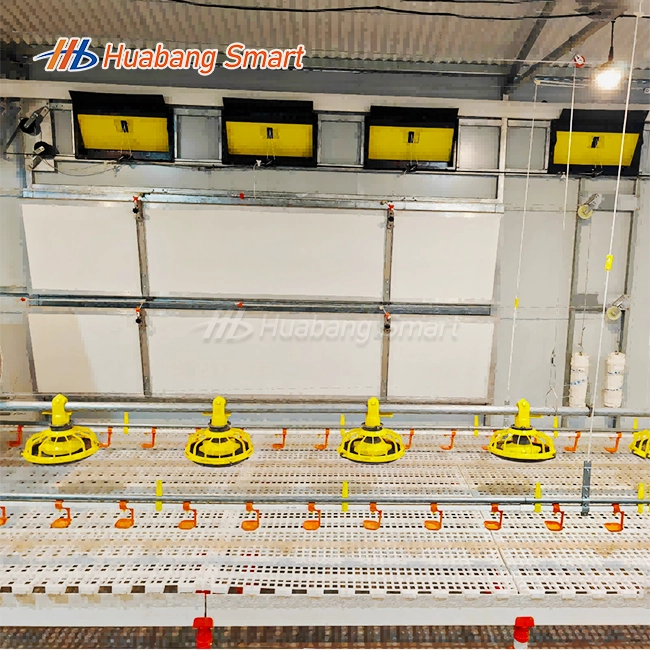
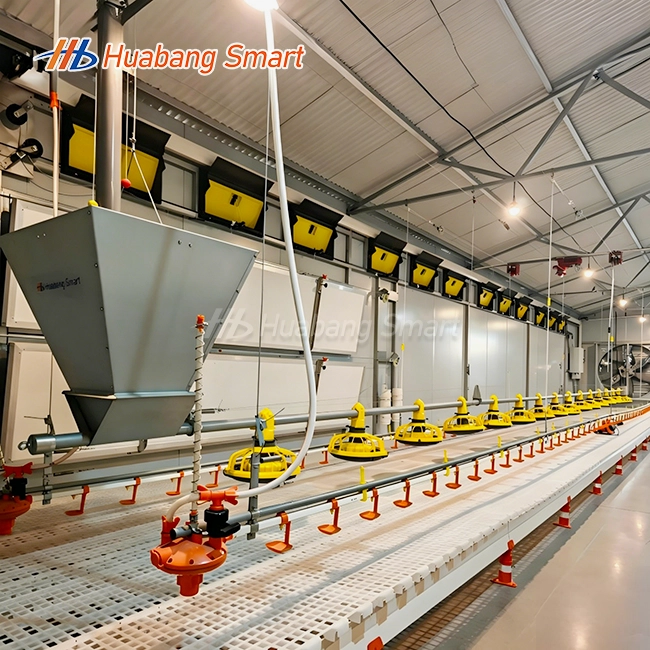
Automated feed trolleys move along the length of each level and give out measured food with an accuracy of about 0.5g per bird. This consistency keeps the birds from being overfed or underfed, which can happen when you scoop food by hand. This keeps egg sizes stable and cuts down on feed waste, which hurts profits across big groups.
Nipple Drinker Hydration
Enclosed nipple drinkers installed in a Chicken Layer Cage system give water when it's needed without pooling or spilling, so manure and hay stay dry all the time. Bacteria and fly populations are slowed down by dry litter, which indirectly improves flock health without any extra work from farm staff.
Mechanical Egg Collection and Manure Removal
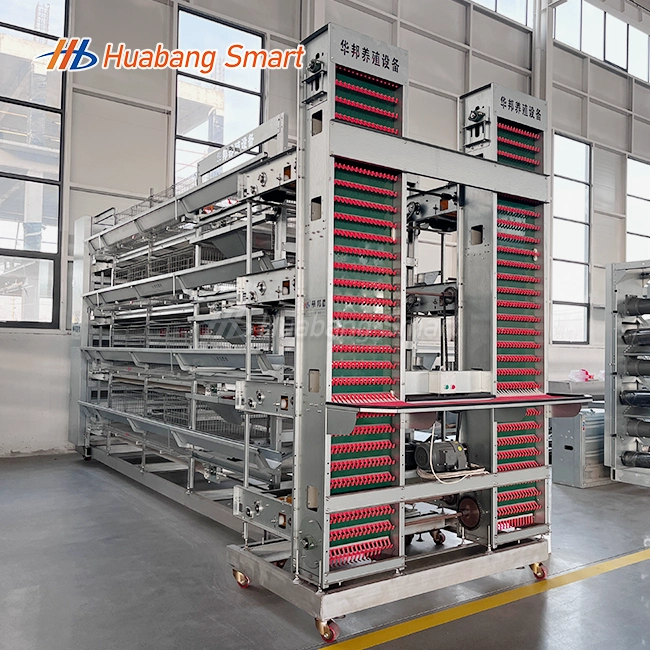
A floor with an angle of seven to nine degrees rolls eggs onto a conveyor belt with very little movement, so less than 0.3% of them break. Paired scrapers remove manure on a regular basis, which keeps the ammonia level below 20ppm and protects the health of the birds' lungs and the comfort of the workers inside the barn.
Choosing the Right Configuration: H-Type vs A-Type Layouts
No single cage arrangement suits every building. Matching the configuration to your structure prevents wasted vertical space or unnecessary ventilation costs.
| Feature | H-Type (Vertical) | A-Type (Ladder) |
|---|---|---|
| Best Suited For | Climate-controlled, large-scale barns | Naturally ventilated, height-limited houses |
| Density | Up to 200 birds/m² across 3–8 tiers | Moderate, efficient staggered layout |
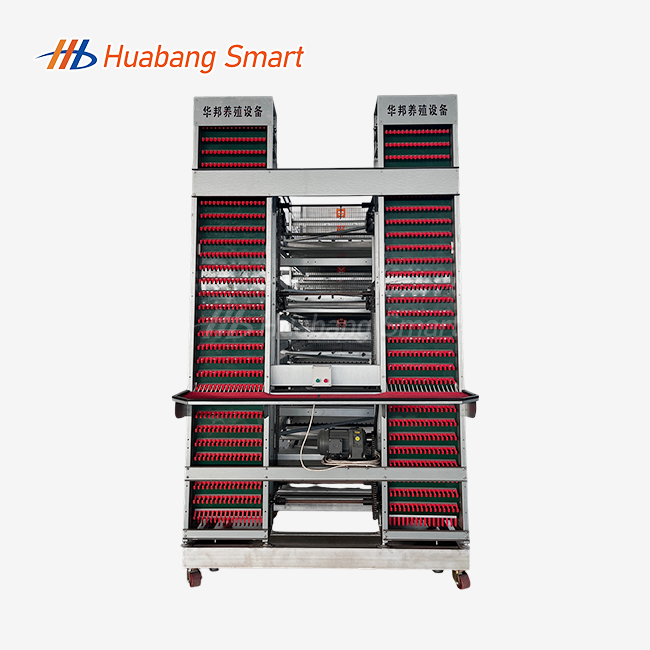
| Automation Level | Fully integrated feeding, collection, and manure removal | Semi-automatic or manual-compatible |
| Scalability | Modular, 500 to 100,000+ birds | Standard-sized poultry houses |
H-Type for Climate-Controlled Barns
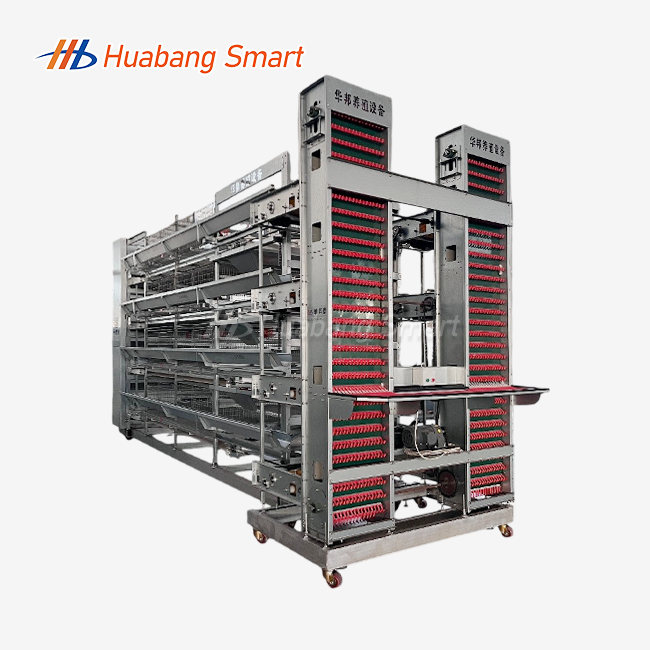
Vertical H-Type stacking works best in closed, environmentally controlled buildings where temperature and air flow stay the same no matter how high the tiers are, and for a Chicken Layer Cage system, this configuration maximizes bird density per square meter of floor space, significantly reducing construction costs per bird while maintaining consistent access to feed and water across all tiers. The plan helps farms with limited land the most because it increases the number of birds that can live there without increasing the size of the building. This lowers the cost of building for each bird.
A-Type for Naturally Ventilated Houses
When airflow depends on open sides or a breeze, the staggered A-Type layout makes sure that every level can get fresh air. It works well for smaller businesses or retrofits that can't afford full temperature control but still want organised, partly automatic production.
Scaling From Small Farms to Turnkey Projects
A starter farm for 500 birds and an industrial complex for 100,000 birds can both use the same engineering base because the Chicken Layer Cage parts are modular. Adding rows makes it possible to expand capacity without having to start from scratch or redesign the entire housing system.
Smart Technology: IoT Monitoring for Healthier Flocks
Physical technology solves problems with labour, and connected monitors solve problems with sight, letting barn owners run their businesses from afar with a lot more accuracy.
Real-Time Environmental Tracking
Sensor networks installed in a Chicken Layer Cage send continuous readings of temperature, humidity, and ammonia to a mobile app. This lets managers know when conditions become too dangerous. Guesswork and regular human checks are replaced by this constant monitoring, which provides data owners with information they can act on right away from anywhere.
Predictive Health Analytics
Small drops in the amount of food eaten often happen several days before someone becomes sick. Early warnings from monitoring software let farm managers know about these patterns, so they can get veterinary care for the birds before a small problem spreads to the whole flock and lowers egg production.
Energy Savings Through Automated Climate Control
Fans and heaters that are connected to weather sensors change on their own instead of running on set times. When compared to older climate systems that had to be controlled by hand, farms that use this method usually save between 30% and 40% on electricity.
Biosecurity and Bird Welfare in High-Density Housing
Most of the time, cleanliness and density are at odds with each other. The well-thought-out design of the box keeps both in balance, so neither is lost.
Ammonia Control and Hygiene
Automated manure scrapers get rid of waste before it builds up, which stops the buildup of ammonia that hurts birds' lungs and speeds up frame corrosion, and in a Chicken Layer Cage facility, this waste removal system is essential for maintaining air quality, reducing respiratory disease risk, and extending the service life of the galvanized cage components. Pathogens are less likely to spread between cages that are next to each other when the housing is cleaner, which is a big plus in dense, multi-tier arrangements.
Reducing Stress-Related Yield Loss
Lighting that stays on, steady ground, and easy access to water all reduce the long-term stress that slows down laying rates. Even if the quality of the food stays the same, birds that live in cages that aren't well taken care of and have uneven floors or water that flows in and out of them less often lay eggs.
Compliance With ISO and CE Standards
Certified manufacturing processes make sure that the load ratings, welded joints, and wire spacing all meet international standards. More and more, farms that export eggs or sell to regulated retail chains need this paperwork to pass buyer audits and meet the rules for cross-border trade.
Partnering with a Trusted Chicken Layer Cage Manufacturer
Equipment is only half the investment. The manufacturer's engineering depth and after-sales support determine whether a system performs reliably for its full intended lifespan.
Custom Engineering for Local Conditions
Different areas have very different voltage requirements, storm risks, and general weather conditions. Instead of forcing a one-size-fits-all solution, a company that offers OEM/ODM customisation for Chicken Layer Cage systems can adjust the frame coatings, sealing, and insulation packages to meet the specific needs of a particular building.
Global Support Network
Instructions for installation, a supply of extra parts, and expert supervision on-site are just as important as the quality of the initial build. Farms that work in different countries gain from providers that have been working with a wide range of conditions and markets for a long time.
Retrofitting Existing Farms
After a site assessment, modular automation parts can often be added to existing buildings. This saves owners the cost of tearing down and rebuilding the whole thing. This path for retrofitting lets farms that are already up to date update them gradually as their budgets allow.
Conclusion
Durability and automation are no longer options for commercial egg farms; they are now necessary to stay profitable as labour costs rise and buyer expectations become stricter. To protect both the health of the flock and the margin, hot-dip galvanised frames, precise food, automatic collection, and linked environmental tracking all work together. If you choose the right chicken layer cage configuration for your building and climate, it will give you 20 years of reliable output without having to pay for repairs over and over again.
FAQ
How long does a hot-dip galvanized layer cage typically last?
With proper installation and routine upkeep, hot-dip galvanized frames commonly last fifteen to twenty years, substantially outperforming cold-galvanized alternatives that corrode within roughly five years under ammonia exposure.
Can automation be added to an already-built poultry house?
Yes. Modular feeding, watering, and collection components can usually be retrofitted after a site assessment confirms building dimensions, power supply, and structural compatibility with the automation hardware.
Is the A-Type or H-Type layout better for a small farm?
A-Type suits naturally ventilated, height-limited buildings common on smaller farms, while H-Type fits climate-controlled barns aiming for maximum vertical density and full automation integration.
Ready to modernize your poultry operation?
Huabang Smart, a trusted chicken layer cage manufacturer, supplier, and factory serving international markets, designs customized automated systems for farms of every scale. Reach our engineering team at admin@huabangsmart.com for a tailored quote.
References
1. World Poultry Science Association — Journal publications on cage housing systems and layer welfare standards.
2. Food and Agriculture Organization (FAO) — Reports on sustainable poultry housing and biosecurity in intensive production systems.
3. International Egg Commission — Industry briefings on automation trends in commercial egg production.
4. American Society of Agricultural and Biological Engineers (ASABE) — Standards on poultry housing structural design and ventilation.
5. Poultry Science journal (Oxford Academic) — Peer-reviewed studies on ammonia exposure and layer hen productivity.
6. World Organisation for Animal Health (WOAH) — Guidelines on biosecurity practices in high-density livestock housing.

USER EVALUATE
Here is the customer's evaluation of us